
For startups and small businesses, high-quality backlinks are a goldmine for building authority and driving traffic. The challenge is finding them without a massive budget or a dedicated team. Resource pages—curated lists of helpful links on a specific topic—are one of the best places to start. They offer editorially-vouched-for links that search engines love. This article is your map to that goldmine. We will show you precisely how to use Screaming Frog for resource page link building, helping you efficiently find and secure backlinks that make a real impact on your site's growth and visibility.
Key Takeaways
- Prioritize broken link building for higher success rates: Use Screaming Frog to find 404 errors on a prospect's resource page. Reaching out to report a broken link provides immediate value to the site owner, making them more likely to add your suggested resource as a replacement.
- Use targeted Screaming Frog settings to save time: Instead of crawling entire websites, use List Mode to analyze a pre-qualified list of URLs. Configure custom extractions to automatically pull contact information and filter for specific keywords to quickly identify the best opportunities.
- Create a repeatable system before you automate: Document your process and create outreach templates first. Once you have a proven manual workflow, use an AI agent to manage the entire campaign, from finding prospects to tracking results, allowing you to scale your efforts effectively.
What is Resource Page Link Building?
Link building is a core part of any successful SEO strategy, but it can feel overwhelming, especially for small businesses. Resource page link building is one of the most straightforward and effective ways to get started. It involves finding web pages that list helpful resources on a specific topic and getting your own website included on that list.
Think of it this way: someone has already created a curated list of the best tools, guides, or articles in your niche. Your goal is to show them that your content deserves a spot on that list. When they add your link, you gain a valuable backlink that can drive referral traffic and signal to search engines that your site is a credible source of information. This guide will walk you through how to use a tool called Screaming Frog to find these opportunities efficiently.
What are resource pages?
At their core, resource pages are web pages that compile links to useful resources on a specific topic. Website owners create these pages to provide extra value to their audience, acting as a helpful directory for a particular subject. You might see them titled "Useful Links," "Helpful Resources," or "Further Reading." For example, a blog about home gardening might have a resource page linking to top seed suppliers, soil testing kits, and gardening apps. The links are curated and meant to be genuinely helpful, which is why a link from one of these pages is so valuable. They are an editorial vote of confidence in your content.
Why resource pages are a win for small businesses
For startups and small businesses, resource pages are a goldmine. Getting links from these pages can directly enhance the authority of your website and improve your search engine rankings. Because the links are contextually relevant and editorially placed, search engines view them as high-quality endorsements. This strategy is also highly scalable. Unlike guest posting, which requires creating unique content for every opportunity, resource page link building focuses on promoting a single, high-value piece of content you already have. It’s an efficient way to build a strong backlink profile without a massive budget or a dedicated team, making it a perfect fit for resource-constrained businesses.
How MEGA AI automates this process
Finding the right resource pages is the most time-consuming part of the process. Using tools like Screaming Frog can streamline the identification stage, but you still have to manage the outreach and follow-up. This is where automation comes in. Our AI-powered SEO agent, Lindsay, handles the entire workflow for you. Lindsay doesn't just find potential pages; she vets them for quality, finds contact information, and manages the outreach needed for acquiring backlinks. For small business owners who know they need to invest in SEO but don't have the time, it’s like having an expert on your team who takes care of the entire process from start to finish.
Set Up Screaming Frog for Resource Page Discovery
Before you can find valuable resource pages, you need to get your primary tool, Screaming Frog, set up correctly. Think of it as preparing your workspace. A clean, organized setup makes the actual work of finding link opportunities much smoother and more efficient. This initial configuration is key to running targeted crawls that give you the exact data you need without wasting time or computer resources.
We’ll walk through the essential steps: installing the software, choosing the right crawl settings for this specific task, and optimizing a few key configurations to ensure your crawl is as effective as possible. Taking a few minutes to get these details right will save you hours of sorting through irrelevant data later. For small business owners and marketers wearing multiple hats, this kind of efficiency is non-negotiable. Let's get your Screaming Frog crawler ready to go.
Install and configure Screaming Frog
First things first, you need to get the Screaming Frog SEO Spider tool on your computer. You can install the software on Windows, macOS, or Linux. The free version lets you crawl up to 500 URLs, which is often enough to get started or analyze smaller sites. For more extensive link-building campaigns, the paid version unlocks unlimited crawling and advanced features.
Once installed, the basic configuration is straightforward. You can start a crawl by simply entering a website URL and hitting ‘Start.’ For resource page link building, however, we’ll be diving into more specific settings to make your search targeted and effective. The goal isn't just to crawl a site but to crawl it with a clear purpose.
Choose your crawl settings
To find resource pages efficiently, you need to tell Screaming Frog exactly what to look for and what to ignore. In the configuration menu, you can adjust the crawl scope to save time and focus your efforts. For example, you can limit the crawl depth to prevent the spider from going too deep into a large website. Setting a maximum depth of two or three is often sufficient to find top-level resource pages without getting lost in the site’s architecture. This simple adjustment ensures you’re not wasting resources crawling pages that are unlikely to be useful for your campaign.
Optimize your user agent and storage mode
Two final settings will make your crawls more powerful. First, consider changing the user agent. By default, Screaming Frog identifies itself as such, but you can configure it to mimic Googlebot. This can sometimes reveal pages that are shown specifically to search engines.
Second, for larger crawls, switch from Memory to Database storage mode. This setting tells Screaming Frog to save crawl data to your computer's hard drive instead of its RAM. This is essential when you crawl large websites, as it prevents the program from slowing down or crashing. It’s a small change that makes a huge difference in performance and reliability.
Find Resource Pages Using Screaming Frog
Once you have Screaming Frog set up, you can start the hunt for high-quality resource pages. This process involves finding potential pages, crawling them to gather data, and then filtering that data to create a prioritized list of outreach targets. Think of it as digital prospecting. You’re sifting through the web to find the best opportunities that align with your business. This methodical approach ensures you spend your outreach time on websites that are most likely to give you a valuable backlink.
Use List Mode for targeted crawling
Instead of letting Screaming Frog crawl an entire website in Spider Mode, you’ll want to use List Mode. This setting lets you upload a specific list of URLs to analyze. It’s perfect for this task because you’ll be gathering potential resource page URLs from various websites, not just one.
To get started, you first need a list of potential pages. You can find these using advanced Google search operators like inurl:resources + "your keyword" or intitle:"helpful links" + "your keyword". Once you have a list of URLs, open Screaming Frog and switch the mode from ‘Spider’ to ‘List’. From there, you can paste your list of URLs and start the crawl. This targeted approach saves time and focuses the tool’s power only on the pages that are most likely to be link-building prospects.
Set up custom extractions to find resource pages
Custom extraction is a powerful feature that lets you pull specific pieces of information from the pages you crawl. You can configure Screaming Frog to find pages that contain certain phrases, like "suggest a resource" or "submit a link." This helps you quickly identify pages that are actively looking for new links.
You can also use this feature to extract contact information, like email addresses or social media profile links, which you’ll need for your outreach later. To keep your data clean, it’s also a good idea to use the URL rewriting feature to remove any tracking parameters from the URLs you crawl. This ensures you’re working with clean, canonical URLs and avoids duplicate data in your final report.
Apply filters and search operators
Screaming Frog has built-in filters that make it easy to sort through your crawl data. After your crawl is complete, you can use the search bar in the top right to filter for pages that have specific words in their titles, H1s, or body content. For example, searching for "resources" will instantly show you all the pages from your list that contain that word.
You can also analyze the context of existing links on these pages. By clicking on a URL in the main window and then selecting the ‘Inlinks’ tab in the bottom window, you can see which pages are linking to it and what anchor text they use. This gives you valuable insight into how other sites perceive that page and whether it’s a good fit for your own link.
Analyze and filter external links
One of the most effective resource page link-building tactics is broken link building. This involves finding resource pages that have broken outbound links and offering your own content as a replacement. It’s a win-win: you help the site owner fix a broken link, and you get a relevant backlink in return.
To do this, run your list of resource pages through Screaming Frog. Once the crawl is done, go to the ‘External’ tab and sort by ‘Status Code’ to find all the 404 errors. This gives you a list of broken links. You can then use the ‘Inlinks’ tab to find which resource page contains that broken link. This is your opportunity to reach out, report the broken link, and suggest your own resource as a perfect replacement. This broken link building strategy is a favorite among SEOs because it provides immediate value to the website owner.
Key Screaming Frog Features for Finding Resource Pages
Screaming Frog is a powerful tool, but its true value comes from knowing which features to use for specific tasks. For resource page link building, you don't need to use every single function. Instead, focusing on a few key capabilities will help you find the best opportunities quickly and efficiently. Think of it as your specialized toolkit for prospecting. By zeroing in on features that help you analyze links, find broken pages, and extract key information, you can turn a massive list of potential sites into a prioritized list of genuine prospects. This is especially important for small businesses where time is a critical resource.
This focused approach saves you from getting lost in endless data tabs and reports. We'll concentrate on four specific features that are essential for this workflow. You'll learn how to extract anchor text to understand the context of existing links, how to find broken links that create an easy "in" for your outreach, how to pull contact information directly from the crawl, and how to analyze page titles to qualify your targets at scale. Mastering these functions will streamline your entire process, making your link-building efforts much more effective. It turns a complex technical tool into a straightforward system for finding high-quality link opportunities.
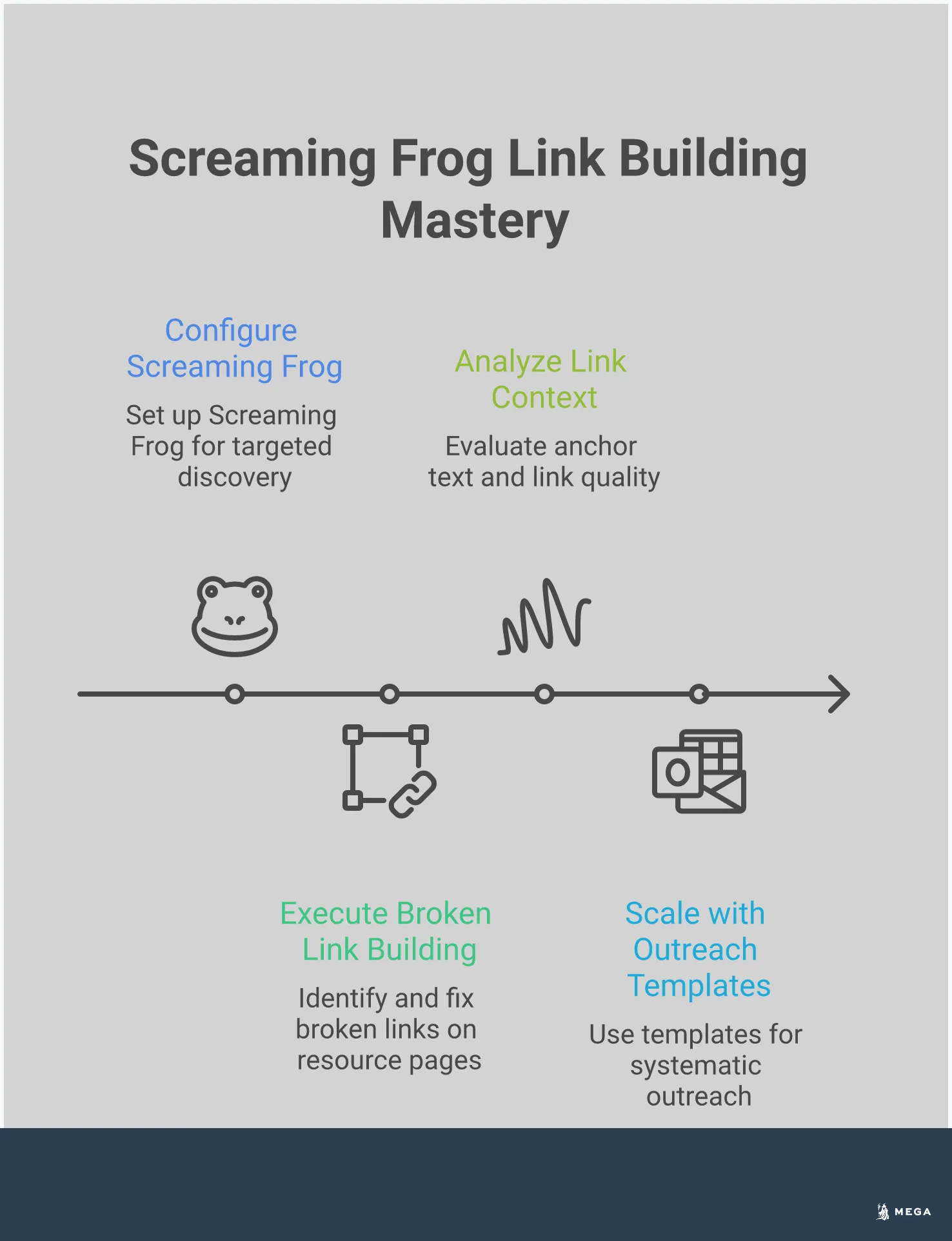
Extract anchor text
Anchor text is the clickable text in a hyperlink, and it gives you valuable clues about why a site owner chose to link to a specific resource. Screaming Frog lets you see the anchor text used for all links pointing to a URL you're analyzing. In the bottom window, the 'In Links' tab shows a list of pages linking to a selected URL, along with the exact anchor text and directives used. By reviewing the anchor text on a resource page, you can understand the language and framing the site owner prefers. This insight helps you tailor your outreach email, suggesting how they might describe your resource when they add it to their page.
Find broken links with response codes
Broken link building is one of the most effective ways to earn a spot on a resource page. The strategy is simple: you find a link that no longer works, notify the site owner, and suggest your resource as a replacement. The Screaming Frog SEO Spider tool helps you find broken links on many websites at once, making the process much faster. After crawling a list of resource pages, you can filter by status code to find all the "404 Not Found" errors. This gives you a perfect, value-first reason to start a conversation. You’re not just asking for a link; you’re helping them improve their website.
Extract contact information
Finding the right person to email can be the most time-consuming part of link building. Instead of manually searching every website, you can use Screaming Frog to find contact details for you. By using the custom extraction feature, you can configure the tool to look for specific elements like email addresses or links to contact pages. This setup uses simple patterns (like regex) to scrape this information from the HTML of the pages you crawl. While it won't find an email on every site, it can pull hundreds of contacts from a large list, which significantly streamlines your outreach efforts.
Analyze page titles and content
Not every page with "resource" in the URL is a true resource page. You need to qualify your prospects, and the best way to do that at scale is by analyzing their page titles and content. Search engines evaluate the content of pages to understand their relevancy, and you can do the same. After a crawl, you can view all the page titles, H1s, and meta descriptions in Screaming Frog's interface. A quick search for terms like "resources," "links," or "useful sites" helps you filter your list down to the most promising candidates. This lets you review on-page content in bulk before you spend time on manual analysis.
Analyze and Filter Your Resource Page Results
Once your crawl finishes, you'll have a mountain of data. The next step is to turn that raw data into a focused list of high-potential link-building targets. This analysis phase is where you separate the valuable opportunities from the dead ends. By carefully filtering your results based on quality and relevance, you ensure your outreach efforts are directed where they’ll have the most impact. It takes some patience, but a methodical approach here will save you a lot of time and frustration later.
Export and organize your crawl data
First, you need to get your findings out of Screaming Frog and into a format you can work with. A spreadsheet is perfect for this. Use the tool’s feature to bulk export all external links, which will save the data into a CSV or Excel file. This file will contain everything you need, including the source URL (the resource page) and the destination URL (the external link). Organizing this information in a spreadsheet allows you to sort, filter, and add notes as you evaluate each prospect. It creates a clean workspace for your analysis and a master document for your outreach campaign.
Evaluate domain authority and relevance
Not all links are created equal. Your goal is to get backlinks from websites that are both authoritative and relevant to your industry. While Screaming Frog doesn't provide third-party domain authority metrics directly, you can use its internal Link Score to see how important a page is within its own site. Remember that Google’s core algorithm, known as 'PageRank', was built on the idea that links act as votes of confidence. A link from a well-respected site passes more authority. As you review your list, prioritize pages from websites that are established leaders in your niche. A relevant link from a smaller, focused blog can often be more valuable than a generic link from a massive, unrelated site.
Check traffic quality and engagement
A link on a page that no one ever visits won't do you much good. Beyond authority, you need to consider if the resource page gets actual human traffic. If you have access to analytics tools, you can look for signs of a healthy, engaged audience. Screaming Frog can even connect to the Google Analytics API to pull in data. A page with consistent traffic, low bounce rates, and good time-on-page is a much better target. These metrics suggest that the website’s audience finds the content valuable, and a link from that page is more likely to send relevant referral traffic your way. This is a key indicator of a high-quality link opportunity.
Prioritize your targets
Now it’s time to bring everything together and create your final outreach list. Start by filtering your spreadsheet to remove any low-quality or irrelevant sites. Then, sort your remaining prospects based on a combination of authority, relevance, and traffic potential. Your top-tier targets should be the pages that check all three boxes. These are the opportunities you’ll want to focus on first with a highly personalized outreach approach. Creating a prioritized list ensures you spend your valuable time on the prospects most likely to provide a meaningful backlink, making your entire link-building strategy more efficient and effective.
Create an Outreach Strategy That Works
Once you’ve used Screaming Frog to build a solid list of potential resource pages, the real work begins. Finding opportunities is one thing; successfully converting them into backlinks requires a thoughtful outreach strategy. A generic, mass-emailed template won’t cut it. Your approach needs to be personalized, value-driven, and persistent to stand out in a crowded inbox and build genuine connections with other site owners. This is where you move from data collection to relationship building, a critical step for any small business looking to grow its authority.
Craft a personalized outreach email
A generic email is easy to ignore. A personalized one shows you’ve done your homework. Before you hit send, take a few minutes to research the person or company you’re contacting. Your email should clearly and concisely explain who you are, why you’re reaching out, and what’s in it for them. Start by referencing the specific resource page you found. Then, introduce your content and briefly explain why it would be a valuable addition for their audience. A personalized outreach email can dramatically increase your response rate and is the foundation of successful link building. Keep it short, friendly, and focused on providing value.
Define your value and build a relationship
Your outreach should never feel like a one-sided request. Instead, frame it as a mutually beneficial partnership. Clearly define your value proposition by explaining how your resource improves their existing page. Does it cover a topic in more depth, offer a unique perspective, or provide a helpful tool their readers would appreciate? You could also point out a broken link on their page (which you can find using Screaming Frog) and suggest your resource as a replacement. This approach shows you’re invested in helping them improve their site, not just in getting a link. It’s the first step in building a professional relationship that could lead to future collaborations.
Plan your follow-up sequence
People are busy, and inboxes are overflowing. It’s common for a well-crafted email to get missed on the first try. That’s why a polite and persistent follow-up sequence is crucial. Don’t assume a lack of response is a "no." Plan to send a gentle reminder a week after your initial email, and perhaps one more a week or two after that. Each follow-up should be brief and serve as a simple nudge. This persistence often pays off. Planning your follow-up strategy ahead of time ensures you stay organized and don’t let promising opportunities fall through the cracks.
Use social media to your advantage
Your outreach doesn’t have to start and end with email. Use social media to warm up your contacts before you even reach out. Follow the company or the specific contact person on platforms like LinkedIn or X (formerly Twitter). Engage with their content by leaving thoughtful comments or sharing their posts. This helps build name recognition, so when your email lands in their inbox, they might already be familiar with you. This simple step can transform a cold outreach into a warmer introduction, making the person more receptive to your request. It’s a low-effort way to engage with potential link partners and build rapport.
Common Screaming Frog Mistakes to Avoid
Screaming Frog is a powerful tool, but a few common slip-ups can derail your resource page link-building efforts. Getting the technical details right from the start ensures your hard work pays off with high-quality backlinks. Here’s what to watch out for to make sure your time is well spent.
Avoid technical configuration errors
Your crawl configuration sets the foundation for your entire project. An incorrect setting can lead to incomplete data, getting your IP address blocked, or crashing the program. Before you start, double-check your settings. Ensure you’re respecting robots.txt, managing your crawl speed to avoid overloading a server, and allocating enough memory for the crawl. As the team at Screaming Frog notes, failing to set expectations with your configuration is a big mistake. Taking a few minutes to configure your crawl correctly saves hours of frustration later.
Don't ignore broken links
When you crawl a resource page, pay close attention to any outbound links that return a 404 "Not Found" error. These broken links are a golden opportunity. Instead of just asking for a link, you can reach out to the site owner to let them know about a broken link on their page. This makes your email helpful, not just self-serving. You can then suggest your own resource as a perfect replacement. This approach shows you’ve done your homework and provides immediate value, dramatically increasing your chances of getting a positive response and a new backlink.
Focus on quality over quantity
It’s tempting to gather a massive list of potential resource pages and send out hundreds of emails. However, effective link building is about quality, not quantity. One link from a highly relevant, authoritative website in your niche is worth more than dozens of links from low-quality directories. Use Screaming Frog to gather data, but use your judgment to filter the results. Prioritize pages that are a genuine fit for your content and have a strong reputation. For a small business with limited time, focusing on the best opportunities yields much better results.
Steer clear of outreach spam triggers
Your outreach email is your first impression, so make it a good one. Avoid generic templates that scream "spam." Personalize each message by mentioning the site owner’s name and referencing their specific resource page. Ensure your own website is secure and professional, as no one will link to a site that loads insecure content from http:// sources. A clean, professional email from a trustworthy domain is less likely to get caught in spam filters. Taking the time to craft a thoughtful message shows respect for the person you’re contacting and makes them more likely to consider your request.
Scale Your Link Building with Automation
Finding resource pages with Screaming Frog is a powerful technique, but it can be time-consuming. For small businesses and startups where every minute counts, scaling this process is essential. Automation helps you move from manually finding a few links to building a consistent, high-impact link-building engine. By creating repeatable systems and using the right tools, you can save time, reduce manual errors, and focus on the strategic parts of growing your business. The goal is to turn a manual task into a streamlined operation that consistently delivers results.
Build efficient processes and templates
The first step toward scaling is to create a repeatable process. Link building is most effective when it’s consistent, and templates are the key. Start by creating a master spreadsheet or project management board to track every website you identify. Document key information like the contact person, outreach dates, and status. Next, craft a set of outreach email templates for your initial pitch, a polite follow-up, and a thank you message. While these are templates, make sure to include placeholders for personalization, like the site owner’s name and a specific compliment about their resource page. This system makes the outreach process much faster.
Use MEGA AI's Lindsay agent to acquire links
Once you have a process, you can hand it off to an automation tool to do the heavy lifting. This is where MEGA AI’s SEO agent, Lindsay, comes in. Instead of spending hours sending emails and tracking follow-ups, you can let an AI agent manage the entire outreach campaign. Lindsay can take the list of resource pages you found with Screaming Frog and execute your outreach strategy automatically. The agent can also handle the discovery phase by performing competitor analysis to find high-value link opportunities, freeing you from the tactical work of acquiring backlinks.
Automate your workflows and data
True automation connects all the pieces of your workflow. Instead of manually exporting data from Screaming Frog and pasting it into a spreadsheet, you can set up systems that move information automatically. This reduces the chance of human error and ensures your data is always up to date. MEGA AI’s platform provides a centralized task management system where you can see everything your agent is working on, giving you complete visibility. Automating your workflows saves time and provides more accurate data, helping you make better strategic decisions for your SEO efforts.
Measure Your Link Building Success
Once your outreach emails are sent, the work isn’t over. Tracking your efforts is the only way to know if your strategy is working and where to focus your energy next. Measuring success isn't just about counting new links; it’s about understanding their impact on your business goals, like increased traffic and better search rankings.
Consistent monitoring helps you refine your approach. You can see which types of resource pages respond best, which email templates get the most replies, and how long it takes for a new link to affect your site's performance. This data-driven approach turns link building from a guessing game into a predictable growth channel.
What KPIs should you monitor?
Focus on metrics that truly reflect progress. While the total number of backlinks is a common starting point, it’s more important to track the number of unique referring domains. Getting ten links from one website is less valuable than getting one link from ten different high-quality websites.
Beyond the numbers, look at the quality of these new links. Are they from websites relevant to your industry? Do these sites have strong domain authority? Also, monitor the impact on your own site’s performance. Keep an eye on organic traffic to the pages you’re building links to and track any improvements in keyword rankings. These KPIs give you a complete picture of your campaign's health.
Set a realistic timeline for results
Link building is a long-term strategy, not an overnight fix. It takes time for your outreach to get responses, for links to go live, and for Google to recognize and reward those new links. All parts of your SEO need to work together; great links won't help much if your site has major technical issues or poor content.
A good benchmark is to look at your competitors to understand the link velocity in your industry. At MEGA AI, we find that most of our users see tangible organic traffic growth within three to nine months of consistent effort. Be patient and focus on building a steady stream of high-quality links over time rather than expecting a sudden spike in traffic.
Find the right tools for link tracking
To monitor your KPIs, you’ll need a few tools. Google Search Console is a free and essential resource for seeing which sites link to you and how your organic traffic is trending. For more detailed analysis of referring domains and competitor backlinks, you might use dedicated SEO platforms.
While Screaming Frog is excellent for finding link opportunities, a platform like MEGA AI helps you manage the entire process. Our SEO agent, Lindsay, not only acquires backlinks but also tracks progress in a centralized dashboard. This gives you complete visibility into the work being done and the results it generates, saving you from juggling multiple tools and spreadsheets.
Related Articles
- Link Building 101: Definition, Types & Best Practices
- Basics of Link Building: Guest Blogging, Broken Link Building, Skyscraper Technique, and Resource Page Link Building - MEGA SEO | Blog
- Link Building Strategies: The Complete Guide
- How to Use Ahrefs for Resource Page Link Building
- 9 Effective Link Building Strategies for 2025
Frequently Asked Questions
What kind of content works best for resource page link building? The most successful content is something genuinely useful that a site owner would be proud to share with their audience. Think of comprehensive guides, original research studies, free tools or calculators, or detailed tutorials that solve a specific problem. The key is to create a piece of content that is more thorough or helpful than what is already listed on the resource pages you find.
Is the free version of Screaming Frog enough to get started? Yes, the free version of Screaming Frog is a great starting point. It allows you to crawl up to 500 URLs, which is plenty for running targeted campaigns, analyzing smaller websites, or simply learning the process. You can accomplish everything discussed in this guide with the free tool. You would only need to consider the paid version if you plan to run very large-scale crawls on a regular basis.
How do I know if a resource page is high-quality? A high-quality resource page is on a website that is relevant to your industry and has a good reputation. When you look at the page, it should feel well-maintained, not like a forgotten list of links from years ago. Check to see if the other resources listed are also credible and helpful. If the page is linking out to spammy or low-quality sites, it's best to avoid it.
How many outreach emails should I expect to send to get one link? Link building is a numbers game, and response rates can vary widely. It's realistic to expect to send many personalized emails to secure a single high-quality link. Success depends on the quality of your resource, the personalization of your outreach, and your persistence with follow-ups. Instead of focusing on a specific number, focus on creating a consistent process for finding prospects and sending thoughtful emails each week.
Can I use this strategy for a brand new website with no authority? Absolutely. Resource page link building is one of the best strategies for new websites because it's based on the merit of your content, not your existing domain authority. When you reach out, you are offering a valuable resource that can improve someone else's website. This provides a compelling reason for them to link to you, even if your site is new, and it's an effective way to start building your foundational backlinks.