
What if you could have an expert handling your SEO or paid ads without the high cost of an agency or the complexity of juggling multiple tools? This is the promise of autonomous AI agents—intelligent systems that manage entire marketing workflows for you, from strategy and planning to execution and optimization. This isn't just another piece of software to learn. It's a new way to operate, designed specifically for small businesses that need to scale efficiently. By offloading complex, time-consuming tasks, you free up your team to focus on the core work that drives your business forward, turning chaotic growth into a controlled, predictable process.
Key Takeaways
- Recognize the symptoms of reactive operations: Constant fire-fighting, disconnected systems, and team burnout are signs that your manual processes can no longer support your company's growth.
- Adopt a proactive management style: Build a stable foundation for growth by setting clear, measurable goals, monitoring performance with accurate data, and establishing open communication to address issues before they become crises.
- Implement AI agents for scalable execution: Use autonomous solutions to manage complex workflows like SEO and paid ads, which provides full operational visibility and frees your team to focus on high-level strategy.
The Hidden Cost of Rapid Growth: Why Scaling Creates Chaos
Growth is the goal, but when it happens fast, it can feel like you're losing the plot. One minute you're celebrating new customers, and the next you're buried in operational issues you never saw coming. If this sounds familiar, you're not alone. When a business starts scaling, control is often the first thing to go. Suddenly, you have multiple systems that don't talk to each other, disconnected data, and far too many manual processes.
The strategies that got you here won't get you there. Processes that worked perfectly for a small team start to break under pressure, creating bottlenecks that slow everyone down. This is where the hidden costs of growth appear. Common pitfalls like cash flow mismanagement, hiring too quickly, and letting the customer experience slide are often symptoms of a deeper problem: your operations can't keep up with your success.
This constant state of catch-up forces you into a reactive management style. Instead of executing a clear strategy, you spend your days putting out fires. This isn't just stressful; it's expensive. Businesses often spend significantly more on emergency fixes than they would on proactive planning. The chaos isn't a sign of success; it's a sign that your systems are holding you back. To scale effectively, you need a new approach that brings clarity and control back to your operations, especially for complex functions like SEO and paid ads.
What Happens When a Business Scales Too Fast
Rapid growth feels like success, but it often brings a hidden partner: chaos. As your customer base expands and operations become more complex, the very things that got you here can start to hold you back. Without the right systems in place, you can quickly find yourself dealing with operational friction, slowdowns, and a frustrating lack of clarity. The key issues usually fall into three main categories that can stall even the most promising businesses.
Disconnected systems lead to operational issues
As you grow, you add new tools to solve new problems—a CRM here, an accounting software there, separate platforms for your marketing campaigns. Soon, you have a patchwork of disconnected systems. As marketing expert Neil Patel explains, scaling companies often end up with "multiple systems, disconnected data, and way too many manual processes." This fragmentation means your teams are working in silos, critical information doesn't flow freely, and you spend more time trying to piece together a complete picture than actually using the data to move forward. This creates inefficiencies and makes a single source of truth impossible to maintain.
Manual processes become bottlenecks
The manual workflows that worked for a team of two become major bottlenecks for a team of ten. Tasks like compiling weekly sales reports, updating customer information across different platforms, or manually managing ad spend are not just tedious; they don't scale. As your volume of work increases, these repetitive tasks consume more of your team's time, pulling them away from strategic work that drives growth. This is where business process automation becomes essential, as it helps streamline operations and reduce the burden of these time-consuming tasks.
You lose visibility into daily operations
When your data is scattered across disconnected systems and your team is buried in manual tasks, you lose sight of what’s really happening day-to-day. You can't easily track key performance indicators or get a clear, real-time view of your operations. This lack of visibility forces you into a reactive mode, where you're constantly putting out fires instead of steering the ship. As Neil Patel puts it, "Once you get real visibility into how your business runs, you stop reacting and you start optimizing." Without that clarity, making strategic decisions becomes a guessing game at a time when precision is most critical.
How to Know If Your Business Is Operating Reactively
Operating reactively means you’re letting the day run you, instead of the other way around. It’s a state of constantly responding to urgent issues as they appear, rather than following a plan to prevent them. While it’s a common phase for growing businesses, staying in this mode is a recipe for burnout and stalled progress. If your daily operations feel more like putting out fires than building something great, you might be stuck in a reactive cycle. Recognizing the signs is the first step toward shifting your approach and scaling with intention.
You're always playing catch-up
Does it feel like you’re constantly one step behind? When you’re in reactive mode, your to-do list never seems to get shorter, and your team is always rushing to meet the next deadline. This constant sense of urgency leads to rushed decisions, poor communication, and frequent delays. Instead of moving forward, you spend all your energy just trying to keep your head above water. This isn't just stressful; it’s an unsustainable way to run a business and a clear indicator that your current processes can’t handle the demands of growth. It's a fast track to team burnout.
You lack a clear strategic direction
When you don’t have a plan, you simply react to whatever comes your way. A reactive business often lacks a clear, long-term strategy that guides its decisions. Every new email, customer request, or market shift can send you in a different direction because there’s no roadmap to keep you on course. This makes it difficult to prioritize tasks, allocate resources effectively, or even know if you’re working on the right things. Without a strategic plan, your business is simply drifting instead of purposefully moving toward its goals.
You're stuck in crisis management mode
If every small hiccup feels like a full-blown emergency, you’re likely operating in crisis management mode. This happens when you only respond to issues after they’ve already become problems. Your team lurches from one urgent task to the next, with no time for thoughtful planning or preventative measures. This environment is not only chaotic but also prevents any real progress. You’re so busy dealing with the consequences of past decisions that you never get a chance to make better ones for the future. True leadership involves anticipating challenges, not just reacting to them.
Your team struggles with time management
A reactive management style creates chaos for the entire team. When priorities change daily or even hourly, it becomes impossible for employees to manage their time effectively. They can't plan their workload or focus on deep work because they’re constantly being pulled in different directions to handle the latest "emergency." This leads to wasted effort, missed deadlines, and widespread frustration. If your team consistently struggles with time management, it may not be their fault—it’s often a symptom of a reactive system that sets them up to fail.
Why Traditional Solutions Fail During Growth
The strategies and tools that helped you launch your business often become the very things that hold you back during a growth spurt. What once felt efficient can quickly turn into a source of friction, creating more manual work and operational headaches. As your company expands, you need systems that can grow with you, not ones that buckle under pressure.
Many businesses find that their existing software, agency partnerships, and internal processes simply weren't built for scale. They are either too rigid, too complex, or too disconnected to support a larger, faster-moving operation. This forces teams into a reactive cycle of fixing problems instead of proactively building for the future.
Rigid tools can't adapt to your needs
Many standard business tools are designed with a specific, one-size-fits-all workflow in mind. When your business was small, it was easy enough to adapt your processes to fit the software. But as you scale, your needs become more unique. You might add new services, target different customer segments, or experiment with new marketing channels. Rigid tools can’t pivot with you.
This lack of flexibility forces you to create manual workarounds, which are inefficient and prone to error. Instead of your tools supporting your growth, you end up spending valuable time trying to make them work. A truly scalable business solution should adapt to your evolving strategy, not dictate it.
Complex setups derail your scaling efforts
As you try to add more capabilities to your operations, you might find that each new tool or service comes with a steep learning curve and a complicated setup process. Onboarding a traditional marketing agency can take weeks, and configuring a new piece of software can pull your team away from their core responsibilities. This initial complexity is a significant drag on momentum.
The problem only gets worse as you grow. According to marketing expert Neil Patel, "As companies expand, they end up with multiple systems, disconnected data, and way too many manual processes." Each new system adds another layer of complexity, making it harder to get a clear view of your business and slowing down your ability to make quick decisions.
Poor integrations create more problems
When your tools don't communicate with each other, you create information silos. Your marketing platform has one set of data, your sales CRM has another, and your customer support software has a third. This fragmentation makes it impossible to get a single, accurate view of your customer journey or business performance. Your team is left to manually export, import, and stitch together data, a process that is both time-consuming and unreliable.
Processes that worked when your team was small quickly become unsustainable. As one Forbes article notes, "Processes that worked well while your team was small may not suffice once your business scales." Without seamless integrations, you’re making critical decisions based on incomplete or outdated information, which is a recipe for chaos.
How to Assess Your Current Systems Before You Scale
Before you can grow your business effectively, you need a clear picture of where you stand right now. Pushing for growth with inefficient systems is like trying to build a skyscraper on a shaky foundation. It only magnifies existing problems and creates more chaos. Taking the time to assess your current operations isn't about slowing down; it's about building a stable launchpad for sustainable growth. This internal review helps you identify the friction points that are already holding you back, so you can address them before they become major roadblocks. By understanding your workflows, team challenges, and data accuracy, you can make strategic changes that allow you to scale your operations smoothly.
Audit your operations to find inefficiencies
Start by taking an honest look at your core business workflows. How do you move a customer from a new lead to a closed sale? What are the steps involved in launching a marketing campaign or fulfilling an order? Documenting these processes helps you see where time is wasted on manual tasks or unnecessary steps. For example, if your team is copying and pasting data between three different applications to onboard one client, that’s a clear inefficiency. The goal is to optimize your processes before you add more volume. A clunky workflow that’s manageable with ten customers a month will quickly become a breaking point with one hundred.
Ask your team about their daily pain points
Your employees are on the front lines every day, and they know exactly where the operational snags are. Sit down with them and ask what frustrates them most. Which tasks feel repetitive or take far too long? Are they constantly waiting on information from another person or department to get their work done? These conversations are invaluable for uncovering hidden bottlenecks. When you just "go with the flow" and react to problems as they arise, you're not building a scalable system. Engaging your team helps you shift to a more proactive approach, solving small issues before they snowball into major crises that stall your growth.
Analyze your data and reporting for accuracy
You can't make smart decisions about the future if you can't trust your current data. Take a hard look at how you track key business metrics. Are your financial reports, sales dashboards, and marketing analytics accurate and up-to-date? If you’re relying on manual data entry and complex spreadsheets, the risk of human error is high. Scaling with inaccurate information is a recipe for disaster, leading to poor budget allocation and missed opportunities. Remember that reactive management driven by emergencies and bad data costs significantly more than planning ahead with reliable insights. Ensure your reporting gives you a clear and truthful view of business performance.
Map your processes to find bottlenecks
Visualizing your workflows is a powerful way to spot bottlenecks. A bottleneck is any point in a process where work piles up because the next step can't handle the volume. For example, if one person is responsible for approving all ad creative, they can easily become a bottleneck as your marketing efforts expand. Create simple flowcharts for your most critical operations, like content creation or customer support. This exercise will clearly show you where work gets stuck and which parts of your system are not ready for increased demand. The processes that served you well as a small team often need to be redesigned to support a larger, growing business.
Why Full Visibility Is a Game-Changer
When you're scaling, you can't fix problems you can't see. The chaos of growth often obscures the small cracks in your operations that can turn into major issues down the line. Gaining full visibility isn't just about having more data; it's about having the right information to regain control and grow with intention. It’s the difference between navigating with a map and driving in the dark.
Find where time and money are wasted
As your business grows, it's easy to lose track of where every dollar and hour goes. Control is often the first casualty of rapid scaling. What once felt efficient can quickly become a source of waste, hidden by rising revenue. Full visibility acts like an x-ray for your business, exposing the areas that are draining resources. It helps you pinpoint which marketing campaigns aren't delivering ROI or which manual tasks are consuming your team's valuable time. By identifying these inefficiencies, you can trim operational costs and reallocate your budget and team efforts toward activities that actually drive growth.
Use real-time data to spot inefficiencies
Waiting for end-of-month reports to assess performance is a recipe for falling behind. In a fast-moving market, real-time data is essential for staying agile. It allows you to spot problems the moment they arise, not weeks later after the damage is done. Think of it as an early warning system for your operations. For example, an AI agent can monitor your ad spend and automatically shift budget away from a low-performing campaign in real-time. This immediate feedback loop transforms how you manage your business, allowing you to leverage analytics to make quick, effective adjustments that prevent small issues from becoming costly mistakes.
Make informed decisions, not reactive guesses
The ultimate benefit of full visibility is the shift from reactive guessing to informed, strategic decision-making. When you have clear, actionable insights at your fingertips, you no longer have to rely on gut feelings to guide your strategy. You can confidently invest in the marketing channels that are proven to work, optimize your sales funnel based on actual customer behavior, and plan for the future with a clear understanding of your business's health. This data-driven approach reduces risk and empowers you to build a scalable foundation for long-term success, turning growth into a predictable process rather than a chaotic scramble.
What to Look for in a Scalable Business Solution
Choosing the right tools to grow your business is like laying the foundation for a house. If you choose materials that can't handle the weight of a second story, you'll run into serious problems down the line. Similarly, if your business solutions aren't built for scale, they will crack under the pressure of growth, leading to disconnected data, manual workarounds, and operational chaos. A scalable solution isn't just about handling more customers; it's about creating a system that grows with you, making your operations more efficient, not more complicated.
The goal is to find a platform that acts as a central hub for critical functions, automating the repetitive work so you can focus on strategy. Instead of adding more software and more complexity, a truly scalable solution simplifies your workflow. It provides clear insights from a single source of truth and handles the heavy lifting behind the scenes. This allows you to maintain control and visibility even as your customer base, team, and revenue expand. Look for tools designed to streamline processes and deliver actionable insights, turning growth into a manageable process rather than a constant fire drill.
Consolidated management and insights
When your tools are scattered, so is your data. You waste valuable time logging into different platforms and trying to piece together a complete picture of your business performance. A scalable solution brings everything under one roof. This consolidated approach gives you a single dashboard to monitor key activities, from marketing campaigns to customer interactions. With all your information in one place, you can spot trends, identify what’s working, and make faster, more informed decisions without getting lost in a dozen different browser tabs.
AI automation to reduce manual work
As your business grows, so does the list of repetitive tasks that consume your team's time. Manually updating content, managing ad bids, and sending follow-up emails become significant bottlenecks. A solution with strong AI automation takes these tasks off your plate. It can handle everything from keyword research and content generation to optimizing your ad spend across platforms. This frees your team to focus on high-impact activities like strategy, customer relationships, and creative development, allowing you to accomplish more without hiring more people.
Integrated financial and business intelligence tools
Your marketing efforts don't exist in a vacuum. They directly impact your sales, revenue, and overall financial health. That's why a scalable solution should offer integrated tools that connect your marketing data with your business intelligence. When your paid ads platform can communicate with your financial software, you get a clear view of your return on investment. This integration helps you understand the true cost of customer acquisition and the lifetime value of your clients, ensuring your growth is not just fast but also profitable.
Better reporting for strategic planning
Data is only useful if you can understand it. Vague reports and confusing metrics lead to poor decisions and wasted resources. A scalable solution provides clear, actionable reporting that translates complex data into straightforward insights. Look for tools that offer customizable dashboards and automated reports on the key performance indicators that matter most to your business. This allows you to track progress toward your goals, identify areas for improvement, and build a proactive strategy based on solid evidence rather than guesswork.
How to Shift from Reactive to Proactive Management
Shifting from a reactive to a proactive management style is one of the most significant changes you can make when scaling your business. Reactive management feels like you're constantly putting out fires, responding to crises as they happen. You’re always a step behind, and your team’s energy is spent on damage control instead of growth. This approach might work when you’re small, but it quickly leads to burnout and chaos as you expand. You end up making rushed decisions based on incomplete information, and your team loses sight of the long-term vision because they're too busy dealing with the immediate problem in front of them.
Proactive management, on the other hand, is about anticipating challenges and opportunities. It involves building systems that help you plan strategically and catch potential problems before they escalate. Instead of reacting to the day, you’re shaping it. This doesn’t mean problems disappear entirely, but it does mean you have the structure in place to handle them without derailing your entire operation. Making this shift requires a conscious effort to implement new habits and systems focused on foresight and planning. It’s about moving from a mindset of "what's happening now?" to "what's next, and how can we prepare for it?". The following steps are foundational to making this transition.
Set clear, measurable goals
Without a destination, any path will do—and that’s a recipe for reactive chaos. Setting clear, measurable goals gives your business a North Star. It defines what success looks like and ensures every action your team takes is intentional and aligned with the bigger picture. When your objectives are specific and quantifiable, you can track progress and make data-informed adjustments along the way. This clarity eliminates the guesswork that often leads to rushed, reactive decisions. For a scaling business, this alignment is critical. It transforms your team from a group of individuals working on separate tasks into a cohesive unit moving toward a shared vision, making it easier to prioritize work and allocate resources effectively.
Monitor performance with key metrics
Once you have clear goals, you need a way to measure your progress. This is where key performance indicators (KPIs) come in. Monitoring the right metrics gives you a real-time dashboard for your business’s health, allowing you to spot trends and identify potential issues before they become full-blown crises. While it might seem easier to skip investing in monitoring tools, this approach often leads to higher costs in the long run as small problems grow into expensive emergencies. Consistently tracking KPIs related to your operations, finances, and customer satisfaction provides the data you need to make proactive adjustments, whether it’s optimizing a process, reallocating your budget, or addressing customer feedback.
Empower your team to take initiative
You can’t be everywhere at once, especially as your business grows. A proactive culture depends on empowering your team to take ownership and make decisions. When employees feel trusted to solve problems on their own, they are more likely to address issues at the source instead of waiting for instructions. This not only speeds up problem-solving but also frees you from the bottleneck of being the sole decision-maker. To empower your team, provide them with clear guidelines, the resources they need, and the psychological safety to take calculated risks. This shift moves your team away from a passive, "wait and see" mindset and toward one of active engagement and accountability.
Open communication channels to spot issues early
Poor communication is a hallmark of reactive environments. When information is siloed, small issues can fester unnoticed until they erupt into major problems that demand immediate attention. Establishing open and consistent communication channels is essential for spotting trouble early. This can include regular team check-ins, a centralized project management tool, and an open-door policy where team members feel comfortable raising concerns. When your team can communicate freely and transparently, you create a feedback loop that brings potential issues to light quickly. This allows you to address them proactively while they are still small and manageable, preventing the last-minute scrambles that define reactive work.
How AI-Powered Solutions Help You Scale
When you're trying to grow, the last thing you need is more complexity. AI-powered solutions are designed to simplify your operations, not just automate them. Instead of juggling multiple tools or expensive agencies, you can use intelligent systems that act as extensions of your team. These platforms handle entire workflows, from planning to execution, giving you back the time and mental space to focus on the bigger picture. They provide the structure and support needed to scale your business methodically, replacing chaos with clarity and control.
Let autonomous agents handle complex tasks
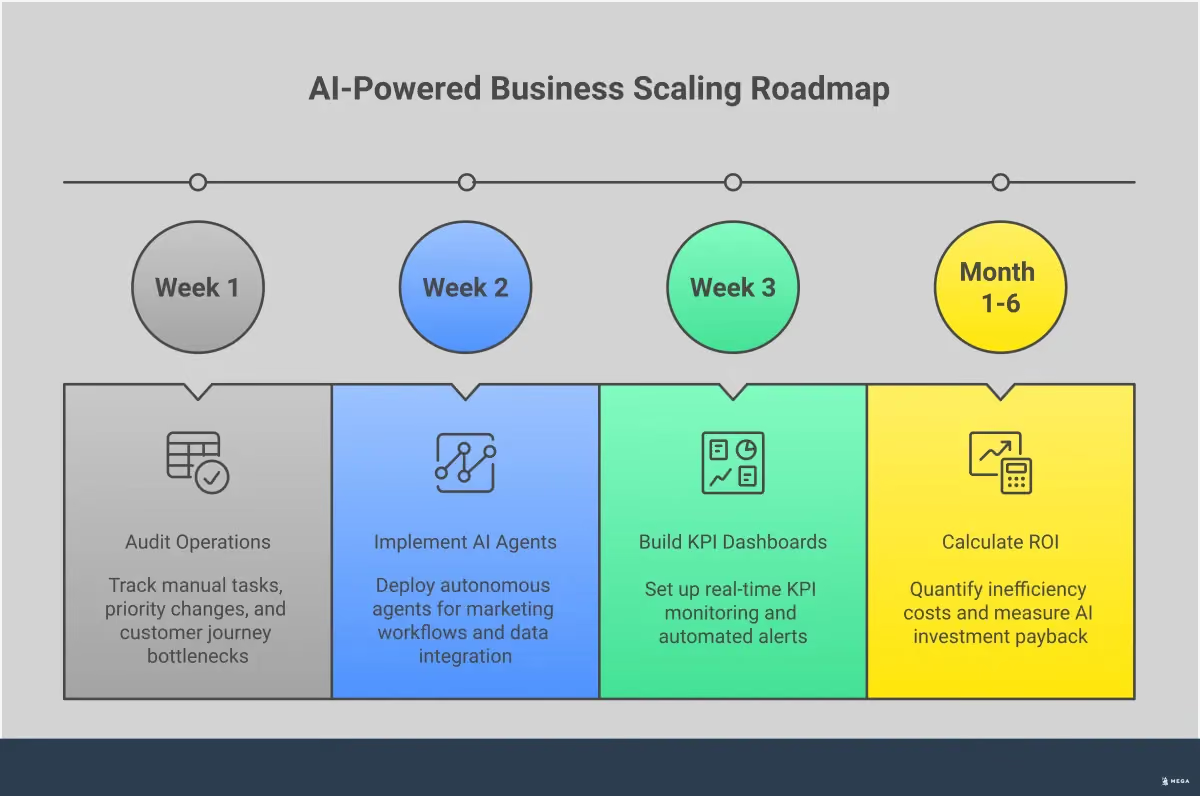
Think of an autonomous agent as an intelligent partner for your business. Instead of just performing a single, repetitive action, these AI systems can manage complex, multi-step processes on their own. For example, an AI-powered growth agent can plan, launch, and optimize a complete SEO or paid advertising campaign without constant direction. This means tasks like keyword research, content creation, and budget allocation are handled for you. This allows you and your team to step away from the tedious, day-to-day management and concentrate on strategic initiatives that drive real growth.
Gain complete visibility into your operations
You can't improve what you can't see. As a business grows, it's easy to lose track of what's actually happening across different departments and campaigns. AI-powered platforms solve this by consolidating data and providing clear, real-time insights into performance. Instead of guessing which marketing efforts are paying off, you get transparent reporting that shows exactly what tasks are being done and how they are impacting your goals. This level of visibility is crucial for identifying bottlenecks, spotting new opportunities, and making informed decisions that keep your business moving in the right direction.
Get full-service execution without the overhead
Scaling often feels like a choice between hiring an expensive agency or building an in-house team. AI solutions offer a third option: full-service execution without the high overhead. These platforms bundle the expertise of strategists, analysts, and creators into a single, cost-effective service. You get comprehensive management for critical functions like SEO and paid ads at a fraction of the traditional cost. This model makes high-level marketing accessible for small businesses, providing the power of a dedicated team without the associated management burden and expense.
What to Expect When Implementing a Scalable Solution
Adopting a new solution is a significant step, and it’s natural to wonder what comes next. While the goal is to reduce chaos, the implementation phase requires clear communication and realistic expectations. Understanding the timeline for results, how automation will affect your team, and what the transition looks like will help you manage the process smoothly and set your business up for sustainable growth.
What's the timeline for seeing results?
The timeline for results depends on the strategies you're implementing. For instance, a paid advertising campaign can generate data and traffic almost immediately, allowing for quick adjustments. However, a strong SEO strategy is a long-term investment. Building organic authority and ranking for competitive keywords takes time, with most businesses seeing meaningful traffic growth within three to nine months. A truly scalable solution focuses on creating sustainable, long-term success, not just short-term spikes. It’s about building a foundation that delivers consistent results over time, allowing you to grow predictably without hitting a ceiling.
How automation reduces team overwhelm
One of the biggest benefits of a scalable solution is its ability to reduce team burnout. When your business grows, manual tasks multiply, leaving your team buried in repetitive work instead of focusing on high-impact activities. AI-powered automation acts as an extension of your team, handling the tedious but necessary tasks that consume so much time. For example, an AI agent can manage keyword research, content updates, and ad campaign adjustments autonomously. This frees your team to think strategically, talk to customers, and work on the core parts of the business that drive real growth.
Set realistic expectations for the transition
When you first implement a new system, control can feel like the first thing you lose. It’s important to remember that the initial phase is about shifting from reactive problem-solving to proactive optimization. The system needs time to integrate with your operations and gather data before it can start delivering insights. Once you gain real visibility into how your business runs, you can stop reacting to daily fires and start making strategic improvements. To make this transition easier, it helps to understand the process from the start and set clear goals for what you want to achieve.
Making the Investment: Cost vs. Value
Choosing to invest in a new platform is a major decision for any growing business. It’s easy to look at the price tag and see it only as an expense. However, the right technology is an investment in your company’s future stability and capacity to scale. It’s about trading a short-term cost for long-term value, like operational clarity and sustainable growth. The alternative is continuing to patch problems with manual workarounds, which only deepens the chaos as your business expands.
Instead of asking, "Can we afford this?" a better question is, "What is the cost of not having this?" When you’re stuck in a reactive cycle, you’re already paying a price in the form of missed opportunities, team burnout, and operational friction. A strategic investment in an automated solution isn't just about adding a new tool. It's about building an operational infrastructure that supports your growth instead of holding it back. By shifting your perspective from cost to value, you can make smarter decisions that prevent chaos and set your business up for success.
Understand pricing models for growth technology
When you start looking at solutions, you’ll find that pricing models vary widely. Some platforms charge per user, while others bill based on usage, which can lead to unpredictable costs as you scale. For small businesses, a flat-rate subscription model offers clarity and predictability. You know exactly what you’re paying each month for a defined set of services. This approach allows you to budget effectively without worrying about surprise fees. Solutions designed for growth often provide a scalable, integrated way to streamline processes, reduce manual work, and gain insights. MEGA AI’s pricing follows this model, giving you full access to an autonomous agent for a simple monthly fee.
Calculate the true cost of inefficiency
The sticker price of a new tool is obvious, but the cost of inefficiency is often hidden. As business leader Neil Patel notes, "When your business starts scaling fast, control is the first thing you lose... you can't improve what you can't see." Without clear visibility, you can’t spot the bottlenecks and wasted resources that are quietly draining your budget. Think about the hours your team spends on repetitive marketing tasks or the sales you miss because your strategy isn't optimized. That lost time and revenue is the true cost of inaction. Calculating your opportunity cost helps put the value of automation into perspective. An autonomous agent takes these tasks off your plate, freeing your team to focus on core business functions.
Budget for a sustainable growth infrastructure
Your budget shouldn't just cover today's needs; it should build a foundation for where you want to be tomorrow. A sustainable growth infrastructure is built on configurable, AI-powered solutions that can adapt as your business evolves. Instead of buying a collection of disconnected tools, focus on integrated platforms that consolidate key functions. For marketing, this might mean starting with an autonomous SEO agent to build your organic presence. As your revenue grows, you can add a Paid Ads agent to accelerate customer acquisition. This phased approach allows you to build a powerful, scalable marketing engine over time, ensuring your systems support your growth at every stage.