Your online presence is an extension of your professional brand. When managed thoughtfully, it can open doors to new opportunities and help you build a strong network. When neglected, it can create unintended obstacles for your career. The key is to be proactive, not reactive. Instead of worrying about what not to post, you can focus on building a positive digital footprint that supports your goals. This guide will show you how. We’ll explore how to set boundaries, use privacy settings effectively, and create a social media presence that strengthens your professional reputation and works in your favor.
Key Takeaways
- Assume everything you post is public and permanent: What you share online can be seen by anyone, including clients and employers, and it's nearly impossible to erase completely. This digital footprint directly shapes your professional reputation.
- Build a positive online presence intentionally: Go beyond just avoiding mistakes. Use your social media to share industry insights and professional achievements. This helps you control your narrative and build a reputation that supports your career.
- Clarify the rules for yourself and your team: Whether you're an employee or a business owner, a clear social media policy is essential. It removes guesswork by defining professional boundaries and protects both individual careers and the company's brand.
How Does Personal Social Media Affect Your Career?
The lines between our personal and professional lives have blurred, and nowhere is this more obvious than on social media. What you post on your personal accounts can have a significant impact on your career, for better or for worse. Social media holds immense power in shaping personal and professional reputations, creating a digital footprint that follows you from one job to the next.
Maintaining a solid professional reputation is vital for career growth, and what you share online can either support or undermine it. Even when you're off the clock, your posts, comments, and likes contribute to how you are perceived by colleagues, clients, and potential employers. Think of it this way: you are always representing your company, even on your personal accounts. An employer has a right to protect their brand and corporate values, and they can take action if an employee's online behavior reflects poorly on the business.
Professionals who misuse social media can face serious setbacks, including damage to their reputation and obstacles in their career advancement. This isn't just about avoiding obvious missteps. It's about understanding that your online presence is an extension of your professional identity. For small business owners, this principle is doubly important. Just as an individual's posts can affect their career, a business must proactively manage its online reputation to thrive in today’s competitive landscape. Your digital presence, and that of your employees, directly influences how customers see your brand.
How Your Posts Impact Your Professional Reputation
The line between our personal and professional lives has become increasingly blurred, and social media is often at the center of it. What you share on your personal accounts can have a direct and lasting impact on your career and your company's brand. For small business owners, your personal profile is often an extension of your business, making it even more critical to manage your online presence carefully. Every post, comment, and picture contributes to a larger narrative about who you are.
Potential clients, partners, and employers frequently look at social media to get a sense of a person beyond their resume or company website. An unprofessional post can undermine the credibility you’ve worked hard to build. It’s not about creating a fake persona online; it’s about being mindful that your digital actions have real-world consequences. A strong professional reputation is essential for growth, and a careless approach to social media can put that at risk. Thinking before you post is the first step in protecting your career.
Your digital footprint is permanent
One of the most important things to remember about the internet is its long memory. Once you post something, it can be difficult, if not impossible, to erase it completely. As Mass Planner notes, "it can be challenging to remove it completely, and it may resurface at the most inconvenient times." Even if you delete a post, screenshots can be saved and shared without your knowledge. This permanent record, or digital footprint, follows you throughout your career. A comment made years ago could be taken out of context and affect a future job opportunity or business deal. Managing your online presence starts with acknowledging that what you share today could be seen by anyone tomorrow.
When personal opinions create professional problems
It’s easy to feel like your personal social media is a private space, but in reality, it’s a public forum. Sharing strong personal opinions, especially on sensitive or controversial topics, can create professional challenges. According to Agile Ideation, this can lead to "serious problems, especially when personal opinions are shared publicly, potentially alienating colleagues or clients." For business owners, a controversial post could drive away customers who don't share your views. For employees, it could create tension with coworkers or management. It’s crucial to consider how your content might be perceived by a diverse audience that includes your professional network.
How posts can affect career opportunities
Your social media profiles are often one of the first places recruiters and hiring managers look after receiving your application. What they find can either support your candidacy or raise red flags. Careless social media use can directly harm your career prospects, as "employers often review candidates' online presence before making hiring decisions." A profile filled with inappropriate content or complaints about a previous job can quickly disqualify you. This scrutiny doesn't end once you're hired. A single ill-advised post can damage your reputation within your company and create obstacles to your career advancement.
Can Employers Monitor Your Personal Social Media?
The question of whether an employer can look at your personal social media is a common one, and the answer is nuanced. While you have a right to your personal life, anything you post publicly can be seen by anyone, including your current or potential employer. The key is understanding where the lines are drawn between private expression and professional conduct, as your online activity can have a real impact on your career.
What are the legal boundaries for employers?
Generally, employers are free to view any information you make public. If your profile is not set to private, your posts, photos, and comments are fair game. Social media holds immense power in shaping both personal and professional reputations, which is why employers pay attention. While some laws protect employees from being fired for certain online activities, such as discussing work conditions with colleagues, these protections are specific. For the most part, what you share publicly can be used to evaluate your judgment and alignment with company values.
When your personal account becomes a work concern
Your personal account becomes a professional issue when your activity negatively impacts the business. Even on a personal account, you are still representing your company. As one expert notes, it is an employer's right to let go of people that don't properly reflect their brand and corporate values. This can happen if a post is discriminatory, harasses a coworker, reveals confidential information, or criticizes the company in a way that isn't legally protected. The concern for employers is how your public behavior might affect team morale, client relationships, and the company's overall reputation.
Know your rights and your employer's expectations
Understanding your rights and your employer’s rules is the best way to protect yourself. Professionals who misuse social media can face serious setbacks, so it's wise to be proactive. Start by finding and reading your company’s social media policy. If one doesn’t exist, pay close attention to the company culture and professional conduct guidelines. Companies should also do their part by setting clear rules and providing education on proper social media behavior. This creates a shared understanding where employees know the expectations and employers can apply their policies fairly.
What Types of Content Lead to Professional Consequences?
The line between personal expression and professional liability can feel blurry online. While social media is a space for connection and sharing, certain types of posts carry more risk to your career than others. Understanding which content can cause problems is the first step toward protecting your professional reputation. It’s not about censoring yourself, but about being mindful of how your digital footprint is perceived by colleagues, clients, and current or future employers.
Political and controversial posts
Sharing your views on sensitive political or social issues can feel important, but it can also create friction in a professional setting. Strong opinions can alienate colleagues, clients, or managers who hold different beliefs. While you have a right to your perspective, it’s wise to consider how it might be interpreted by your professional network. A post that seems reasonable to you could be seen as divisive by a potential employer, impacting your chances before you even get an interview. The goal is to ensure your online presence doesn't unintentionally close professional doors.
Inappropriate photos and content
What you post visually creates a lasting impression. Photos or videos depicting illegal activities, excessive partying, or offensive behavior can seriously damage your professional image. Many employers review social media profiles as part of their hiring process, and what they find can influence their decision. Think of your public profiles as an extension of your resume. If you wouldn't show a photo to a hiring manager in an interview, it’s probably best not to post it publicly where they can easily find it.
Sharing confidential information or complaints
Venting about a tough day at work or a difficult client is a common impulse, but doing it online is a mistake. Airing grievances about your job, colleagues, or company can be seen as unprofessional and disloyal. Even worse, sharing confidential company information—like client details, internal strategies, or unreleased product info—can have legal consequences and will almost certainly cost you your job. These actions break trust and can create serious professional repercussions that follow you throughout your career.
Common social media mistakes to avoid
Sometimes, the biggest risks come from simple oversights. Failing to check and adjust your privacy settings can leave your personal content exposed to a wider audience than you intended, including employers. Engaging in heated online arguments, even on personal time, can reflect poorly on your judgment and temperament. One of the most effective habits to build is simply pausing before you post. Taking a moment to consider how your words or images might be perceived can help you avoid many common and entirely preventable mistakes.
Can You Get Fired for a Social Media Post?
The short answer is yes, you can absolutely be fired for a social media post. Even if you post on your personal time from your personal account, your online activity can have direct professional consequences. Many people assume their personal social media is a private space, but once something is posted online, it can be seen, shared, and saved by anyone.
What you share reflects not just on you, but also on your employer. As one expert noted, "even if it's your personal account, you are still representing your company. And it is an employer's right... to let go of people that don't properly reflect their brand and their corporate values." This is especially true for small businesses where team members are highly visible representatives of the brand. Understanding the connection between your online presence and your employment is the first step in protecting your career. The following sections break down how this works and what it means for you long-term.
At-will employment and social media
In the United States, most employees work under a principle called at-will employment. This means that an employer can terminate an employee for any reason, at any time, as long as the reason is not illegal, such as discrimination based on race, religion, or gender. A social media post that an employer finds offensive, unprofessional, or damaging to the company’s reputation can be considered a valid reason for termination. Your personal posts are not typically protected speech in a private workplace, so an employer has significant leeway to act if they believe your content negatively impacts the business, its culture, or its public image.
How posts are used as evidence
It’s easy to think of a social media post as a fleeting thought, but in a professional context, it can become permanent evidence. Screenshots, shares, and comments can document your activity indefinitely. If a post comes to your employer’s attention, it can be used in disciplinary proceedings or as justification for termination. According to one analysis, "a mistake on social media can lead to maintaining a solid professional reputation being vital for career growth, and carelessly using social media can put it at risk." This digital trail can be used to show a pattern of poor judgment or a conflict with company values, making it difficult to dispute any resulting actions.
The long-term impact on your career
The consequences of a problematic social media post can extend far beyond your current job. A single careless post can damage your professional reputation for years to come. Many recruiters and hiring managers now conduct social media screenings as part of their background check process. A history of unprofessional content can cause you to be passed over for future opportunities without you ever knowing why. Professionals who misuse social media can face serious setbacks, including legal trouble and significant obstacles in their career advancement. Building a positive and professional online presence is a much better strategy for long-term career health.
What's in a Corporate Social Media Policy?
A corporate social media policy isn't meant to control your personal life. Instead, it’s a framework designed to protect both you and the company. For employees, it clarifies expectations and helps you avoid career-damaging mistakes. For business owners, it’s a vital tool for safeguarding your brand’s reputation while respecting your team's freedom. These policies typically outline what is considered confidential company information, define the company's stance on harassment and discrimination online, and provide guidance on how to represent the company if you choose to identify yourself as an employee.
Understanding this document is the first step in managing your online presence responsibly. It removes the guesswork by establishing clear boundaries between personal expression and professional conduct. Whether you're an employee wanting to protect your job or a founder looking to build a strong company culture, a well-defined social media policy is a cornerstone of modern professional life. It ensures everyone is on the same page about how online actions can have real-world consequences for the business and individual careers.
Find and read your company's guidelines
The first and most important step is to locate and thoroughly read your company’s social media guidelines. These rules exist to help you, not to catch you in a mistake. Companies can foster a professional online environment by setting "clear rules and providing education on proper social media behavior." This document is usually found in the employee handbook or on an internal HR portal. If you can't find it, ask your manager or HR representative. For business owners, this highlights the need to not only create a social media policy but also make it easily accessible to your team during onboarding and beyond.
Align your posts with company culture
Even on a personal account, "you are still representing your company." Think of your online presence as an extension of your professional identity. It is an employer's right to protect their brand and ensure employees properly reflect their corporate values. This doesn’t mean you can’t have personal opinions. It means exercising good judgment. Before you post, consider if the content aligns with the professional image you want to project and the culture of the company you represent. A post that is inflammatory, discriminatory, or unprofessional could create a conflict, regardless of your privacy settings.
Manage your social media presence effectively
Taking control of your online narrative is a key professional skill. Since maintaining a solid professional reputation is vital for career growth, it's helpful to "think before posting, keeping in mind the potential reach and impact of online content." Make it a habit to periodically review your profiles from the perspective of a potential employer or client. Are your public-facing posts, photos, and comments representing you well? Managing your presence also involves using privacy settings strategically and being selective about who you connect with. A thoughtful approach ensures your social media activity supports your career goals rather than undermining them.
How to Protect Your Professional Reputation Online
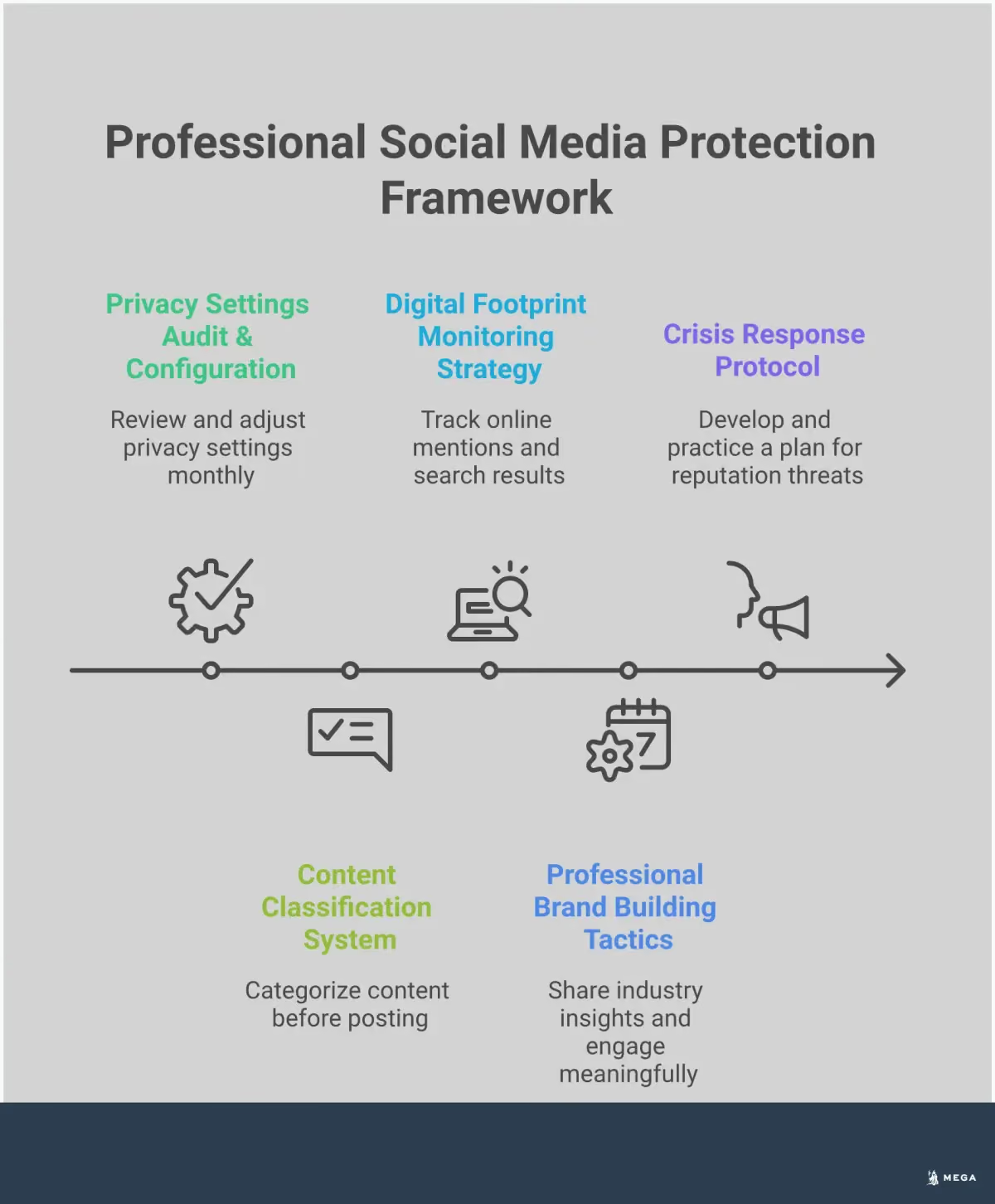
Managing your online presence is a key part of modern professionalism. It’s not about creating a bland or inauthentic persona; it’s about being intentional with what you share and how you present yourself to the world. By taking a few strategic steps, you can ensure your social media activity supports your career goals and protects the reputation you’ve worked hard to build. A proactive approach helps you control your own narrative and build trust with clients, colleagues, and potential employers.
Set boundaries between personal and professional
It's easy for the lines between your personal and professional life to get blurry online. To avoid potential issues, it’s wise to establish clear boundaries. This might mean having separate social media accounts for personal and professional use. For example, you could use LinkedIn to share industry insights and career updates while keeping your Facebook or Instagram profile for friends and family. Deciding what you’re comfortable sharing on each platform helps you maintain control over your digital footprint and ensures your personal updates don't create professional complications.
Use privacy settings and review your content
Your social media accounts come with powerful privacy tools, and it’s a good idea to use them. Take some time to review your privacy settings on each platform to control who sees your posts, photos, and personal information. It's also helpful to think before you post, keeping in mind that online content can spread quickly and unexpectedly. Periodically search for your name online to see what information is publicly available. This simple audit can help you find and remove old posts or photos that no longer reflect your professional image.
Build a positive digital presence
Protecting your reputation isn’t just about avoiding negative content; it’s also about proactively building a positive one. Social media holds immense power in shaping how you are perceived professionally. You can build a strong personal brand by sharing content that highlights your expertise and passion for your field. Post articles relevant to your industry, celebrate professional achievements, and engage in thoughtful discussions. By consistently sharing valuable content, you establish yourself as a knowledgeable professional and create a digital presence that works in your favor.
What Small Business Owners Should Know About Employee Social Media
As a business owner, your team's online activity can feel like a minefield. An employee's personal post can inadvertently reflect on your brand, impacting customer perception and even your bottom line. While you can't control everything your team does online, you can guide them toward responsible social media use that protects both their professional reputation and your company's. The goal isn't to police personal lives but to establish a clear framework that prevents misunderstandings and minimizes risk. A proactive approach helps ensure your team’s digital footprint supports the professional reputation you’ve worked hard to build.
Create a clear social media policy
The first step is to establish clear guidelines. A formal social media policy removes ambiguity and sets a baseline for what is expected. This document should outline rules on sharing confidential company information, define how employees should identify themselves if they discuss work, and explain the consequences of harassment or discriminatory content. As one source notes, companies should "contribute by setting clear rules and providing education on proper social media behavior." A well-defined social media policy serves as a reference point for your team and a protective measure for your business.
Balance employee freedom and brand protection
Maintaining a solid professional reputation is vital, and your employees' online actions can play a part. However, it's important to strike a balance that respects their personal freedom while protecting your brand. Your policy should focus on behavior that directly impacts the workplace or your business, such as disclosing trade secrets, harassing coworkers online, or making defamatory statements about the company. Policing personal political views or unrelated opinions can damage morale. The key is to clearly define the line where personal activity becomes a professional concern, ensuring your guidelines are reasonable and tied to legitimate business interests.
Train employees on professional online conduct
A policy is only effective if your team understands it. Regular training helps translate the rules into real-world practice. Instead of just handing over a document, discuss the policy with your team. Providing specific examples of appropriate and inappropriate posts can help illustrate the boundaries in a practical way. You can walk through scenarios during onboarding or in a team meeting. This educational approach helps cultivate a professional online environment where employees feel confident in how they represent themselves and, by extension, your company. This training reinforces that the policy is about shared responsibility, not just top-down rules.
Using Tech to Manage Your Online Reputation
Managing your online reputation doesn't have to be a manual, time-consuming task. Technology offers powerful ways to monitor your digital footprint and proactively shape your professional image. For small business owners, this is doubly important, as your personal reputation is often intertwined with your brand's. By using the right tools and strategies, you can protect your career and ensure your online presence aligns with your goals.
Automated tools for monitoring your brand
Setting up systems to monitor your name and your business online is a crucial first step. Simple tools like Google Alerts can notify you whenever your name is mentioned, but for a more complete picture, you’ll want something more robust. Modern social media management tools have evolved into comprehensive platforms that help with everything from scheduling content to moderating engagement and managing a crisis. These systems allow you to keep a finger on the pulse of online conversations, giving you the chance to address issues before they escalate and amplify positive mentions.
Develop a proactive management strategy
Maintaining a strong professional reputation requires a proactive approach, not a reactive one. It’s essential to think before posting, keeping in mind that your digital footprint is largely permanent. Start by defining what you want your professional brand to represent. What are your core values and areas of expertise? Create a content strategy around these themes. This doesn't mean your profile has to be sterile; it just means being intentional about the image you project. Regularly audit your profiles to ensure they reflect your current professional goals and remove any old content that no longer aligns with your brand.
Use AI for consistent brand alignment
Artificial intelligence can be a powerful ally in maintaining a consistent and professional online presence. AI-powered tools can analyze your content for tone, clarity, and alignment with your brand’s voice before you even hit "publish." For business owners, this ensures that every piece of content, from a social media update to a blog post, reinforces your brand identity. At MEGA AI, our AI-powered growth agent autonomously plans and optimizes content, ensuring it consistently hits the right notes for your audience. This level of automation helps you build a cohesive and professional digital presence at scale, freeing you up to focus on running your business.