
You know you need to advertise online, but the potential cost is a major hurdle. A traditional paid search marketing agency can charge thousands of dollars per month, a steep price for many small businesses. This leaves you with a tough choice: risk a significant portion of your budget on an agency or attempt to manage complex ad platforms yourself and risk wasting money on ineffective campaigns. This article breaks down the real costs of paid search, what you get for your money, and explores a modern, AI-powered alternative that delivers expert results without the traditional agency price tag.
Key Takeaways
- Paid search provides immediate visibility: A paid search partner manages your ad campaigns from start to finish, connecting you with customers who are actively searching for your services right now.
- Choose a partner based on expertise and transparency: When evaluating options, look for proven experience and clear reporting processes. A realistic budget that covers both management fees and ad spend is essential for achieving a positive return.
- AI platforms offer an efficient, cost-effective alternative: AI-powered solutions provide the full-service management of a traditional agency but with the speed and cost-efficiency of software, making professional ad management more accessible for small businesses.
What Is a Paid Search Marketing Agency?
A paid search marketing agency, often called a PPC (pay-per-click) or SEM (search engine marketing) agency, is a team of specialists who manage your company's online advertising campaigns. Their main job is to drive immediate, high-intent traffic to your website by placing ads on platforms like Google and Bing. Think of them as your expert partners in navigating the competitive world of digital ads.
Unlike SEO, which focuses on earning organic traffic over time, paid search aims for instant visibility. When someone searches for a product or service you offer, a paid search agency works to ensure your ad appears at the top of the results page. They handle the entire process, from initial strategy to ongoing optimization, so you can connect with customers who are actively looking to make a purchase. This approach allows small and local businesses to compete for attention right away, even against larger players in their market.
What They Do
An agency’s work is a continuous cycle of strategy, execution, and refinement. They start by getting to know your business and goals to develop a comprehensive campaign plan. Their key services include in-depth keyword research to find the terms your ideal customers are using, writing persuasive ad copy that grabs attention, and optimizing your landing pages to encourage conversions. They also manage your advertising budget, making strategic adjustments to maximize your return on investment. Essentially, they handle all the technical details of your paid advertising campaigns so you can focus on running your business.
How They Work
The process behind paid search revolves around an auction system. It starts with keywords, which are the words and phrases you bid on that are relevant to your business. When a user types a query into a search engine, an automated ad auction takes place in milliseconds. This auction determines which ads are shown and in what order. It’s not just about who bids the most money. Search engines also consider your ad’s Quality Score, which measures the relevance of your keyword, ad copy, and landing page. A higher Quality Score can lead to better ad positions at a lower cost.
What Services Do Paid Search Agencies Offer?
When you partner with a paid search agency, you’re hiring a team to manage your advertising from start to finish. Their goal is to get your business in front of the right customers at the moment they’re searching for what you offer. A good agency handles the entire lifecycle of your ad campaigns, from initial brainstorming and strategic planning to ongoing optimization and detailed reporting. They combine market research, creative skills, and data analysis to turn your ad spend into tangible results, like leads and sales.
Develop Campaign Strategy
Before a single ad is written, a paid search agency starts with strategy. They work with you to understand your business goals, whether that’s increasing website traffic, generating leads, or driving online sales. They’ll help you identify your ideal customer and determine the best platforms to reach them, such as Google Ads or Meta. This foundational step ensures your campaigns are built on a solid understanding of your market and objectives. A clear PPC campaign strategy acts as a roadmap, guiding all future decisions about keywords, ad copy, and budget allocation to give you the best chance of success.
Research Keywords and Create Ads
With a strategy in place, the agency dives into keyword research. They identify the specific search terms your potential customers are using and help you choose the right ones to bid on. This process is crucial for ensuring your ads appear in relevant search results. Next, they handle the creative work of writing compelling ad copy and designing visuals that grab attention and encourage clicks. The goal is to create ads that not only attract users but also persuade them to take action, effectively turning clicks into conversions. This blend of analytical research and creative writing is at the heart of a successful paid search campaign.
Manage Budgets and Optimize Performance
Launching a campaign is just the beginning. A paid search agency provides ongoing management to make sure your budget is spent effectively. They continuously monitor campaign performance, A/B test different ad variations, and adjust bidding strategies to maximize your return. This includes optimizing for specific locations through geo-targeting and refining audience segments to reach the most qualified buyers. This active campaign optimization is a dynamic process that helps improve results over time, ensuring your ad spend works as hard as possible to grow your business and avoid wasted dollars on underperforming ads.
Analyze Campaign Data and Report Results
To measure success and justify your investment, agencies track and analyze a wide range of data. They focus on key performance indicators (KPIs) like click-through rate (CTR), cost per click (CPC), conversion rate, and return on ad spend (ROAS). They compile this information into regular, easy-to-understand reports that show you exactly how your campaigns are performing. This data-driven approach provides transparency and accountability, offering clear insights into what’s working and where there are opportunities for improvement. These reports are essential for making informed decisions and refining your overall marketing strategy.
How Much Does a Paid Search Agency Cost?
Figuring out the cost of a paid search agency is a top priority for any small business. The price isn't a simple, one-size-fits-all number; it depends on how the agency structures its fees, the scope of your campaigns, and your total ad spend. While management fees can run a few thousand dollars per month, your actual ad spend is a separate and often larger cost. Let's look at the common pricing models and factors that will shape your total investment.
Understand Agency Pricing Models
Most paid search agencies use one of a few common pricing structures. The most frequent is a percentage of ad spend, where the agency charges a set portion—typically 10% to 20%—of your monthly budget. Another popular option is a flat monthly fee, which gives you a predictable cost regardless of how much you spend on ads. This model is great for businesses that need stable, consistent campaign management. Some agencies offer performance-based pricing, tying their fees to specific goals like generating leads or sales. This aligns the agency’s success directly with yours, but it can be a more complex arrangement.
What Influences the Price?
Several key factors determine what an agency will charge. The primary one is the scope of work. Managing a single Google Ads campaign is very different from running integrated paid ads campaigns across Meta, TikTok, and LinkedIn. The price will increase if the agency is also responsible for creating ad copy, designing graphics, or building landing pages. Your monthly ad spend also plays a big role, as larger budgets require more intensive management and optimization. Finally, an agency's reputation and the competitiveness of your industry can affect the cost, as more experienced firms and tougher markets demand a higher premium.
How to Budget for Paid Search
When you're planning your budget, remember to account for both the agency's management fee and the money spent directly on ads. For a small or medium-sized business, a realistic starting point for a total paid search budget is often around $5,000 per month. This figure covers both the ad platform costs and the agency's fee, which is the minimum many experts suggest to achieve significant results. Before you commit, it’s important to understand exactly what services are included in the agency's fee to avoid any surprises. This clarity helps you accurately compare different proposals and find a partner that fits your financial plans.
How to Choose the Right Paid Search Agency
Finding the right partner to manage your paid search campaigns is a big decision. The right agency can feel like an extension of your team, while the wrong one can be a drain on your budget and time. To make a confident choice, focus on three key areas: their proven expertise, the technology they use, and their approach to communication. Evaluating these aspects will help you find a partner who not only understands paid search but also understands your business.
Verify Their Experience and Expertise
A strong track record is non-negotiable. Look for an agency with a history of success, especially with businesses similar to yours in size or industry. Ask for case studies or examples of past campaigns. A good agency should be able to clearly explain how they manage a budget, target specific locations for local businesses, and select the right keywords for your ads. Don't just take their word for it; ask them to walk you through their process. Their answers should give you a clear sense of their strategic thinking and whether their approach aligns with your business goals.
Review Their Technology and Tools
The tools an agency uses can tell you a lot about their process and commitment to transparency. A modern agency should provide a client dashboard or regular, detailed reports that let you see exactly how your campaigns are performing. Ask if they conduct a comprehensive PPC audit at the beginning of your engagement. This shows they are invested in understanding your current setup and finding opportunities for improvement. The right technology ensures that decisions are based on data, not guesswork, and gives you the visibility you need to trust that your investment is being managed effectively.
Look for Clear Communication and Transparency
A successful partnership is built on clear communication. During your initial conversations, pay attention to the questions they ask. A great agency will want to understand your business, your customers, and your long-term goals, not just your ad spend. They should provide a clear plan and be transparent about their reporting process. You should know who your point of contact is and how often you’ll receive updates. A good partner will proactively adjust campaigns based on performance data and communicate those changes to you, ensuring you’re always aligned on strategy and results.
Common Paid Search Challenges for Small Businesses
Paid search can be a game-changer for growth, but it’s not always a straightforward path, especially for small and local businesses. A few common hurdles can make it feel like an uphill battle. Understanding these challenges is the first step toward overcoming them, whether you manage campaigns yourself, hire an agency, or explore a new kind of solution. Here are the three biggest obstacles small businesses face.
Working with a Limited Budget
Many small business owners believe paid search is only for players with deep pockets. While platforms like Google Ads are pay-to-play, you don't need a massive budget to get results. The real challenge is maximizing every dollar. With a limited budget, there’s little room for error. Wasted spend on irrelevant clicks can drain your resources quickly. The key is to be strategic, focusing on specific keywords, tight geographic targeting, and compelling ad copy that attracts the right customers. Effective PPC budget management is less about how much you spend and more about how efficiently you spend it.
Facing Tough Competition
As a small business, you’re often competing against larger brands in the search results. These competitors may have bigger budgets and dedicated teams, allowing them to bid aggressively on top keywords. Trying to outspend them is rarely a winning strategy. Instead, the challenge is to find your unique advantage. This means getting creative with your approach by focusing on long-tail keywords that larger competitors ignore, dominating a specific local service area, or writing ad copy that speaks directly to a niche audience. A solid competitive analysis helps you identify these opportunities and carve out your own space in a crowded market.
Lacking In-House Time and Expertise
Paid search platforms are powerful, but they aren't simple. Mastering the complexities of Google Ads or Meta Ads requires significant time and specialized knowledge. For a business owner already wearing multiple hats, becoming a paid search expert is often out of the question. Running successful campaigns is an ongoing process of monitoring performance, testing ad creative, adjusting bids, and staying current with platform updates. This lack of dedicated time and in-house expertise is a primary reason businesses struggle to see a positive return on their ad spend and eventually seek outside help.
Paid Search Agency Myths vs. Reality
When you're exploring paid search, it's easy to run into conflicting advice. Some say it's a magic bullet for growth, while others warn it's a money pit best left to huge corporations. The truth is usually somewhere in the middle. Let's clear up a few common myths to help you understand what to really expect when working with a paid search agency or platform.
The Truth About Cost and ROI
A common fear is that paid advertising is simply too expensive for a small business budget. While it’s true that campaigns require investment, the idea that it’s unaffordable is a myth. Effective paid search is designed to be scalable and can be tailored to fit various budgets. The real conversation isn’t about cost, but about return on investment (ROI). A low-cost campaign that brings no customers is expensive, while a higher-cost campaign that generates significant profit is a smart investment. The key is finding a partner that can manage your budget efficiently to deliver measurable results, making every dollar count.
How Long It Really Takes to See Results
Many business owners associate digital marketing with long, slow timelines, but that’s more true for SEO than for paid search. One of the biggest advantages of pay-per-click (PPC) advertising is its speed. Unlike organic strategies that can take months to build momentum, paid search campaigns can provide immediate visibility and start driving traffic to your website almost as soon as they’re launched. While it takes time to test and optimize for the best possible ROI, you don’t have to wait long to see the initial impact of your ads appearing at the top of search results.
Agency vs. In-House: What's the Right Fit?
It’s easy to think you have only two options: hire a massive, expensive agency or figure it all out yourself. This isn't the case. While large agencies have vast resources, they aren't always the best choice for a small business that needs focused attention. For many small businesses, the expertise and resources an agency provides are invaluable and nearly impossible to replicate with a small in-house team. The goal is to find the right kind of partner for your specific needs—one that fills your knowledge gaps, respects your budget, and has a clear process for getting results.
Traditional Agency vs. AI-Powered Alternative: Which Is for You?
Choosing how to manage your paid search campaigns is a major decision for any small business. You can partner with a traditional marketing agency, which brings a team of human experts to the table, or you can use a modern, AI-powered platform that automates the entire process. Both paths can lead to growth, but they offer very different experiences in terms of cost, speed, and control. Understanding these differences is the first step toward finding the right fit for your business goals and budget.
The Pros and Cons of a Traditional Agency
Hiring a paid search marketing agency gives you access to a dedicated team of specialists. These professionals handle everything from campaign strategy and keyword selection to budget management and ad creation. A good agency provides strategic oversight and human intuition, helping you navigate competitive markets. They become an extension of your team, offering personalized advice and regular check-ins.
However, this hands-on approach comes with drawbacks. The primary barrier for many small businesses is cost, with agency retainers often starting at several thousand dollars per month. The human element can also slow things down; communication, approvals, and campaign adjustments all take time. Finding a reputable agency with a proven history of success also requires a significant investment in research and vetting.
How AI-Powered Solutions Compare
AI-powered alternatives represent a new approach to paid search management. Instead of a human team, these platforms use autonomous agents to plan, launch, and optimize your campaigns. For example, MEGA AI’s Paid Ads agent works around the clock to manage your advertising across platforms like Google and Meta. It handles keyword research, audience targeting, and creative testing without needing constant human direction.
This model offers a unique level of transparency and control. You can see every task the AI performs and choose to approve changes manually or enable an autopilot mode for faster execution. The system uses massive datasets to make decisions, removing guesswork and optimizing for performance in real time. It’s a full-service solution that combines the strategic scope of an agency with the efficiency of software.
A Look at Cost, Speed, and Efficiency
When you compare the two models directly, the differences in cost, speed, and efficiency become clear. Traditional agencies are a significant investment, often costing small businesses up to $5,000 per month or more. AI-powered platforms deliver similar full-service management at a fraction of the cost, making professional-grade advertising accessible. You can review a transparent pricing structure without negotiating complex retainers.
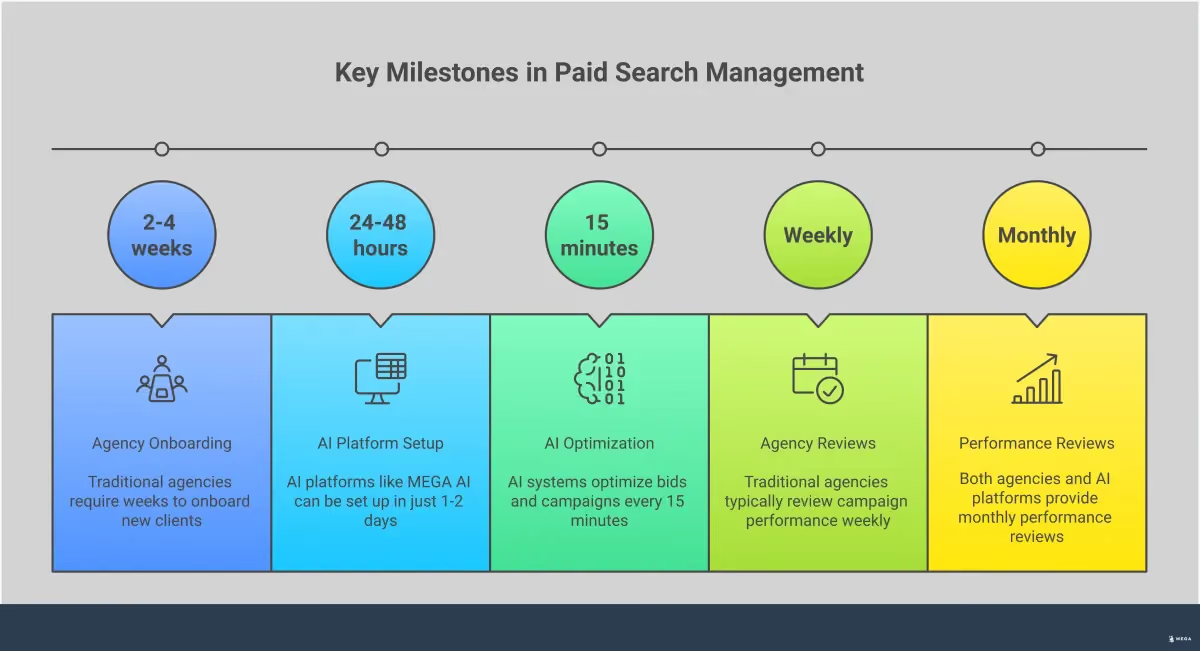
Speed is another key advantage. While an agency might take weeks to onboard and launch a campaign, an AI agent can get started in as little as 24 hours. This agility extends to optimization, as the AI can adjust bids, shift budgets, and test new ad variations instantly based on performance data. This continuous optimization cycle helps improve your campaign's Quality Score, which can lead to better ad placements at a lower cost.
How to Measure Paid Search Success
Whether you partner with an agency, use an AI platform, or manage campaigns yourself, you need a clear way to measure success. Tracking your performance helps you understand if your investment is generating real business value. It’s not just about getting clicks; it’s about getting the right clicks that lead to customers. By focusing on a few key performance indicators (KPIs), you can see what’s working, identify areas for improvement, and make informed decisions to grow your business. This data-driven approach ensures your marketing budget is spent effectively and helps you justify your paid search strategy over the long term.
Key Metrics to Track
To understand how your campaigns are performing, you need to track the right metrics. Start with these essential KPIs to get a clear picture of your success. The ultimate goal is to see how your ads generate leads and sales. Tracking your conversion rate shows you how effectively your campaigns turn clicks into valuable customer actions. Another critical metric is Return on Ad Spend (ROAS), which measures the revenue you earn for every dollar you spend. This tells you directly if your campaigns are profitable. Also, keep an eye on your Click-Through Rate (CTR) to see if your ad copy and targeting are resonating with your audience, and monitor your Cost Per Click (CPC) to ensure you're acquiring traffic efficiently.
Set Realistic Performance Goals
Setting goals is essential, but they need to be realistic. If you’re just starting, your numbers won’t look like those of a business that has been running paid search for years. The best approach is to use your own data to create measurable targets. If you have past campaign data, use it to establish a baseline. If not, you can look at industry benchmark numbers to get a general idea of what to expect for metrics like CTR or conversion rate. Remember, these are just guides. Your primary goal should be continuous improvement from your own starting point, not hitting an arbitrary number on day one. Focus on making steady progress month over month.
Monitor Your Long-Term Growth
Paid search success is a marathon, not a sprint. While daily check-ins are useful for catching major issues, your focus should be on long-term trends. A single bad day doesn’t mean your strategy has failed. Look at your performance on a weekly and monthly basis to identify meaningful patterns. Are your conversions trending up? Is your ROAS improving over the quarter? Monitoring your long-term growth helps you understand the true Return on Investment (ROI) of your campaigns. This broader perspective allows you to make strategic adjustments, like reallocating budget to consistently high-performing campaigns or refining your keyword strategy based on months of data, not just a few days.
When Should You Hire a Paid Search Agency?
Deciding to bring on a paid search agency is a major step for any business. It’s an investment of trust and money, and the timing has to be right. If you’re wondering whether it’s the right move for you, the decision usually comes down to three key areas: your business’s readiness for growth, your team’s current capacity and skills, and whether your budget aligns with your goals for a return on investment. Thinking through each of these points will help you make a clear, confident decision.
Signs Your Business Is Ready
One of the clearest signs you’re ready for paid search is when your organic efforts, like search engine optimization, have hit a plateau or aren't delivering results fast enough. If you have a great product and a website that converts visitors into customers but you’re struggling to attract enough traffic, paid ads can provide an immediate stream of potential buyers. This is especially true if you’re preparing for a peak season, launching a new product, or just received funding and need to demonstrate growth quickly. When you have a solid foundation and are ready to scale, a paid search strategy can act as a powerful accelerator.
Assessing Your In-House Capabilities
For many small businesses, marketing is handled by a small team—or even a single person—wearing multiple hats. Take an honest look at your team’s time and expertise. Managing paid search campaigns effectively requires a specific skill set and consistent attention. While it’s a smart move for small businesses to compete with larger players, doing it poorly can waste a lot of money. If your team is already stretched thin and doesn't have deep experience in keyword research, ad copywriting, and bid management, outsourcing to experts can be the most efficient path forward. This frees your team to focus on what they do best.
When the Budget and ROI Align
Hiring a paid search agency involves two separate costs: the agency’s management fee and your actual ad spend. It’s important to be realistic about the investment required. Many experts suggest you need to spend at least $5,000 per month on ads alone to gather enough data and see significant results. Before you commit, make sure you have a budget that can support both the agency and the ad campaigns for several months. The goal isn’t just to spend money; it’s to generate a positive return. When you’re financially prepared to invest in a way that allows for meaningful optimization and growth, you’re in a strong position to partner with an agency.
Your Next Steps in Paid Search Marketing
Whether you decide to hire a traditional agency or use an AI-powered platform, the next step is to prepare your business for a successful partnership. Getting your strategy and goals in order beforehand will ensure you hit the ground running and get the most value from your investment. It helps you and your new partner speak the same language from day one.
Prepare Your Business for a Partnership
A strong paid search partner, whether human or AI, will manage the technical details of your campaigns. They handle everything from keyword selection and budget management to ad placement and geo-targeting. Before you start, have a clear understanding of your own business. Know your ideal customer, your core products or services, and what makes you different from the competition. If you need quick results and want to control your ad spending, a focused paid search campaign is an excellent choice. For the best results, many businesses find that combining PPC with a long-term SEO strategy delivers both immediate wins and sustainable growth.
Set Clear Goals from Day One
You can’t measure success if you haven’t defined it. Before launching any campaign, you need to establish clear Key Performance Indicators (KPIs). These are the specific metrics you’ll use to track progress and determine if your ads are working. Not every metric is relevant for every campaign, so setting clear goals is essential. Key performance indicators like click-through rate (CTR), conversion rate, and return on ad spend (ROAS) are crucial for monitoring campaign health. Tracking your conversion rate, for example, shows you exactly how well your ads are generating leads or sales. This data allows you and your partner to make informed decisions and optimize for what truly matters.