
As a small business, you often face a tough choice for your advertising: hire a costly agency or try to manage everything yourself. Agencies can deliver results but often come with high monthly fees and long-term contracts that are out of reach. The DIY route saves money but consumes your valuable time and requires a steep learning curve. Paid media marketing automation offers a better way forward. It acts as a bridge, giving you the power of an agency through intelligent software. It handles the complex optimizations and campaign management, delivering professional-grade results for a fraction of the cost, making it accessible for everyone.
Key Takeaways
- Automate Repetitive Work to Reclaim Your Time: Use automation to manage time-consuming tasks like bid adjustments and budget allocation, freeing you to concentrate on the creative and strategic planning that only a human can provide.
- Use Data-Driven AI for Better Performance: Automation platforms analyze real-time data to make intelligent decisions, resulting in more precise audience targeting, optimized ad spend, and a higher return on your investment.
- Start with a Clear Strategy and Accurate Tracking: Automation amplifies your existing efforts, so it's essential to have a solid plan and proper conversion tracking in place before you begin. This ensures the technology is optimizing for the right goals.
What Is Paid Media Marketing Automation?
Paid media marketing automation uses software to manage and optimize your advertising campaigns with minimal manual work. For small business owners, this means you can stop spending hours tweaking bids or analyzing reports. The technology handles tasks like budget allocation, audience targeting, and creative testing, freeing you to focus on growing your business. It makes sophisticated advertising strategies accessible, even without a dedicated marketing team.
How automated advertising works
Automated advertising uses artificial intelligence (AI) and machine learning to improve campaign performance. Instead of you manually setting rules, these systems analyze vast amounts of data in real time to make decisions. For example, an AI can see which of your ads are performing best and automatically shift more budget toward them. It can also adjust your bidding strategy throughout the day to ensure you’re paying the optimal price for each click. This continuous learning process handles complex optimizations, making your campaigns more effective over time.
Core features of automation platforms
When looking for a paid media automation tool, certain features are essential. A good platform should let you manage campaigns across channels like Google and Meta from one place. It should use AI to handle complex tasks like bidding and audience segmentation, which helps you get a better return on your investment. Look for tools that provide clear, automated reporting so you can easily understand performance. Many platforms, like MEGA AI's Paid Ads Agent, also offer services like designing new ad creative, giving you a full-service solution.
The role of AI in campaign decisions
The real power of paid media automation comes from how AI informs campaign decisions. AI algorithms analyze customer data—like demographics and browsing history—to identify and target your ideal audience with precision. This ensures your ads are shown to people most likely to be interested in your products. AI also excels at optimizing bids by predicting the likelihood of a conversion and adjusting your bid accordingly. This data-driven approach removes guesswork from your advertising, leading to more efficient spending and a higher return on ad spend (ROAS).
Why Use Paid Media Marketing Automation?
For small business owners and startup founders, managing paid advertising can feel like a full-time job. Between campaign setup, audience targeting, bid management, and performance analysis, the tasks are endless. This is where paid media marketing automation comes in. It helps make your advertising campaigns smarter and more efficient by handling the repetitive, data-intensive work you would normally do by hand. This isn't just about saving a few hours a week. It's about leveraging technology to make better decisions, reach the right customers, and get a higher return from every dollar you spend. Think of it as having an expert on your team who works 24/7 to ensure your campaigns are always performing at their best. By automating the tactical work, you free yourself up to focus on the bigger picture: your brand, your message, and your overall growth strategy. It bridges the gap for businesses that need agency-level results without the agency price tag, making professional-grade advertising accessible to everyone.
Save time and improve efficiency
One of the most immediate benefits of automation is the time it gives back to you. Manually managing ad campaigns involves constant monitoring and adjustments. Tasks like A/B testing ad creative, adjusting bids based on performance, and compiling reports can consume your entire day. Automation platforms handle these duties continuously in the background. An AI-powered agent can launch and manage campaigns, optimize your budget, and test creative variations without your direct involvement. This allows you to step away from the granular details and focus your energy on strategic planning and other critical business functions that require a human touch.
Sharpen your targeting and personalization
Reaching the right audience is critical for any successful ad campaign. Paid media automation uses AI to analyze vast amounts of data on user behavior, interests, and demographics to identify your ideal customers with incredible precision. This goes far beyond simple targeting options. The system can identify patterns and create audience segments that you might never discover on your own. This data-driven approach ensures your ads are shown to people who are most likely to be interested in your products or services, leading to more effective campaigns and a better experience for potential customers who see relevant, personalized ads.
Optimize costs and increase ROI
Wasting money on ads that don't perform is a common frustration for marketers. Paid media automation directly addresses this by optimizing your ad spend in real time. The software constantly analyzes campaign performance and automatically allocates more budget to the ads, channels, and audiences that are delivering the best results. It simultaneously reduces or stops spending on underperforming campaigns. This process of continuous budget optimization minimizes waste and ensures your money is working as hard as possible. The result is a lower cost per acquisition and a higher return on ad spend (ROAS), making your marketing efforts more profitable.
Scale your campaigns across channels
Managing ad campaigns across multiple platforms like Google, Meta, and LinkedIn can quickly become complex and overwhelming. Each platform has its own interface, rules, and best practices. An automation tool acts as a centralized hub, allowing you to launch, manage, and analyze your campaigns across all channels from a single dashboard. This makes it much simpler to execute a cohesive, multi-channel strategy. For small teams, this capability is a game-changer, enabling you to expand your reach and scale your advertising efforts in a way that would be impossible to manage manually.
Top Tools for Paid Media Marketing Automation
MEGA AI: The autonomous paid ads agent
MEGA AI offers an end-to-end solution with its autonomous Paid Ads agent, designed to be accessible for businesses of all sizes. The platform allows you to upload ad content in bulk across Meta, Google, and LinkedIn at the same time. From there, it can automatically remix your content to create hundreds of ad variations, complete with translated voiceovers and captions for different markets. One of its core strengths is its ability to automatically shift your budget between campaigns, ensuring your ad spend is always allocated for the best possible performance. By handling the entire process from creation to optimization, MEGA AI helps small and local businesses save time, operate more efficiently, and improve the profitability of their advertising campaigns.
Comparing enterprise platforms
Enterprise-level platforms like Resulticks offer deep analytics and tracking capabilities. They can follow individual user journeys from an ad click to a final sale, providing granular data on how people interact with your campaigns. These tools are powerful for large organizations that need to analyze complex customer behavior across many touchpoints. However, enterprise solutions often come with a steep learning curve and a significant price tag, which can be a barrier for smaller businesses. While they provide detailed insights, their complexity might be more than what a startup or local business needs to get started and see a return on their investment. It's important to weigh the advanced features against your team's resources and budget.
Channel-specific automation tools
Many advertising platforms, like Google and Meta, have their own built-in automation features. These tools can be useful for optimizing campaigns within a single channel. However, relying solely on these native tools can sometimes lead to a lack of control or transparency. The hidden costs of paid media automation can appear as your budget is spent in ways that don't fully align with your broader business goals. Managing automation across several different platforms separately can also create data silos, making it difficult to get a clear, unified view of your overall performance. A centralized tool often provides a more strategic advantage.
Essential features in an automation tool
When evaluating paid media automation tools, look for a few key features. The platform should be easy to use, incorporate AI for smart bidding, and allow for precise audience targeting. Good reporting and analytics are also critical so you can understand what’s working. While automation is powerful, it works best when guided by human strategy. The best tools handle the repetitive, data-heavy tasks, freeing up your team to focus on creativity and high-level planning. A successful marketing automation strategy finds the right balance between machine efficiency and human insight, ensuring your campaigns remain authentic and effective.
How to Implement Paid Media Marketing Automation
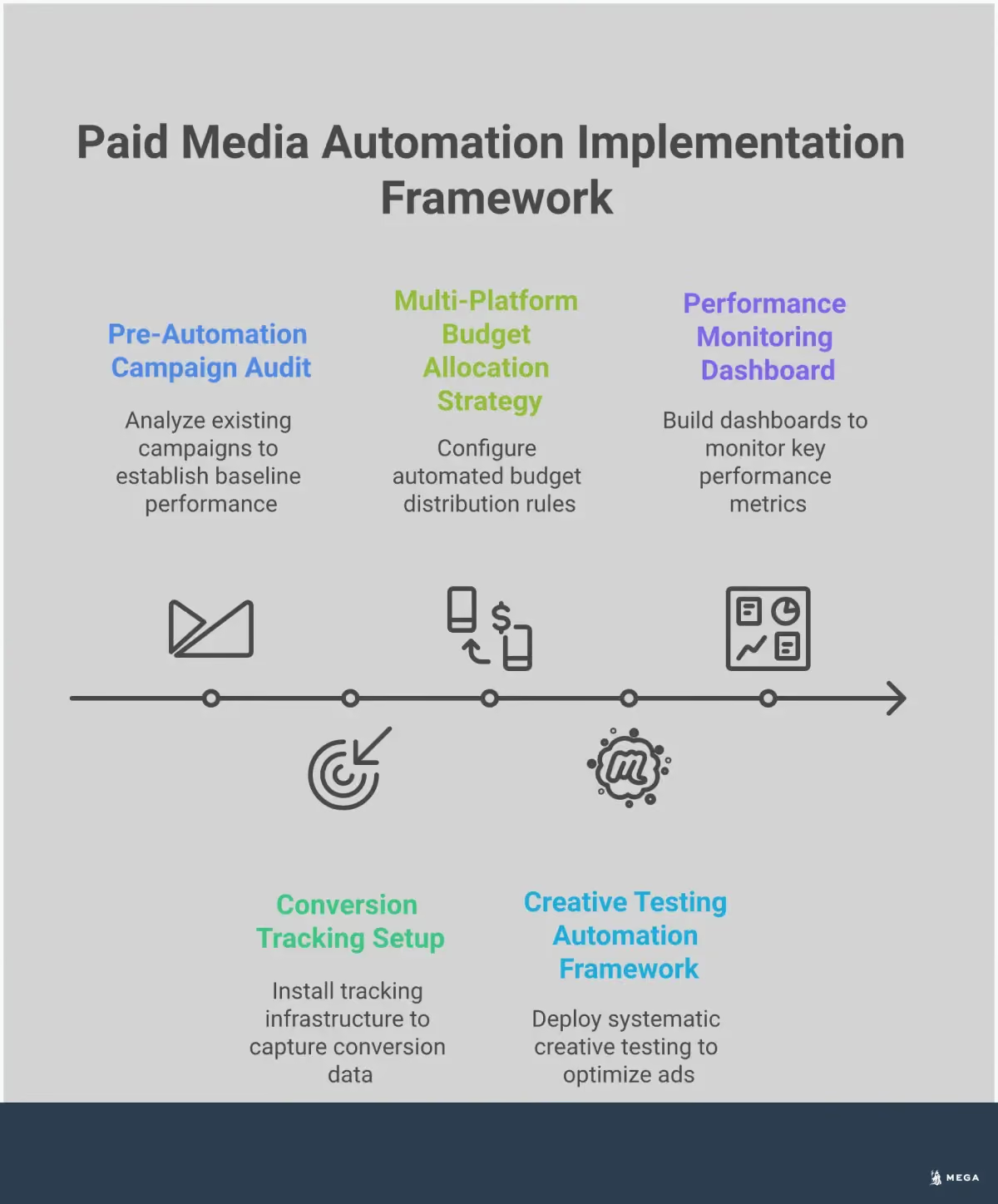
Adopting paid media automation is a structured process, not a single switch you flip. It involves laying the right groundwork so the technology can deliver on its promise of efficiency and better results. By following a few key steps, you can set up your campaigns for a smooth transition to an automated workflow, ensuring the AI has everything it needs to start optimizing on your behalf. This approach helps you move from manual campaign management to a smarter, more scalable advertising strategy.
Assess your current advertising strategy
Before you automate anything, you need a clear picture of your current advertising performance. Automation is a powerful amplifier; it will scale what’s already working but it won’t fix a broken strategy. Start by reviewing your existing campaigns to identify your top performers and your weakest links. Look at core metrics like your cost per acquisition (CPA) and return on ad spend (ROAS) to establish a baseline. Understanding these numbers helps you set realistic goals for your automation platform and measure its impact accurately. If a campaign is unprofitable now, pouring automated budget into it won't make it successful.
Set up tracking and measurement
Effective automation runs on clean, accurate data. Without it, your platform is flying blind. The first step is to ensure you have robust tracking in place across your website and ad channels. This means correctly installing tools like the Meta Pixel and Google Ads tag and setting up specific conversion events. You need to tell your platform what a successful outcome looks like—whether it’s a form submission, a product purchase, or a phone call. This data provides the feedback loop that AI agents use to learn which ads, audiences, and channels are driving real business results, allowing them to make informed decisions about where to allocate your budget.
Integrate with your existing workflows
The right automation tool should feel like a natural extension of your marketing efforts, not a complicated system that disrupts them. Look for a platform that integrates seamlessly with the ad networks you already use, like Google, Meta, and LinkedIn. MEGA AI’s Paid Ads Agent, for example, connects directly to these platforms to manage campaigns. Consider how much control you want to retain. Many businesses prefer a system that offers both a fully autonomous "autopilot" mode and an option for manual approval, giving you the flexibility to review changes before they go live. This ensures the technology adapts to your workflow, not the other way around.
Prepare your team for success
Even the most advanced AI needs human oversight. Before you launch, make sure your team—or just you, if you’re a solo founder—understands the tool’s capabilities and how to interpret its actions. This doesn’t require becoming a data scientist, but it does mean knowing where to find performance reports and understanding the strategic goals you’ve set for the AI. For small businesses, this is about building trust in the system. Scheduling a product demo is a great way to get your team comfortable with the platform and ask questions. When everyone understands the role of automation, it becomes a trusted partner in achieving your growth goals.
How to Measure the Success of Your Automation
Once your automated campaigns are running, you need a clear way to know if they're working. Automation isn’t about setting and forgetting; it’s about setting a system in motion that learns and improves based on performance data. Measuring success involves looking at a mix of metrics that tell you not only if you're making money but also how efficiently your campaigns are operating and where you can find opportunities for growth. It's the difference between guessing and knowing.
By tracking the right numbers, you can validate your strategy, justify your ad spend, and give your automation platform the data it needs to make smarter decisions. This process helps you understand the direct impact of your efforts on your business's bottom line and ensures your investment is working as hard as you are. The goal is to create a feedback loop where performance data informs automated actions, which in turn generate new data, leading to a cycle of continuous improvement. Without this measurement layer, even the most advanced automation is flying blind.
Tracking ROAS and conversions
The most direct way to measure the success of a paid ad campaign is by tracking conversions and Return on Ad Spend (ROAS). A conversion is the specific action you want a user to take, like making a purchase or filling out a form. ROAS measures the gross revenue generated for every dollar spent on advertising. For example, a ROAS of 4:1 means you earned $4 for every $1 you spent.
This metric is essential for understanding the immediate financial return of your campaigns. Automation platforms use ROAS to determine which ads are most effective, allowing them to allocate more budget to high-performing campaigns and pause those that aren't delivering value. It’s a straightforward indicator of whether your ads are profitable.
Key performance indicators (KPIs) for automation
While ROAS tells you about profitability, other paid media key performance indicators (KPIs) offer deeper insights into campaign performance. Metrics like Click-Through Rate (CTR), Cost Per Click (CPC), and Cost Per Acquisition (CPA) help you understand how users are interacting with your ads. A high CTR, for instance, suggests your ad creative and targeting are resonating with your audience.
Monitoring these KPIs helps automation tools make granular adjustments. If a campaign has a low CTR, the system might test new ad copy. If the CPA is too high, it might refine the audience targeting. These metrics are the signals that guide an AI agent’s day-to-day optimization tasks.
Measuring long-term profitability
While ROAS is great for short-term analysis, Return on Investment (ROI) helps you understand the overall profitability of your marketing efforts over time. ROI considers not just ad spend but all associated costs, including tools, labor, and the cost of goods sold. This gives you a more complete picture of whether your paid media strategy is contributing to sustainable business growth.
Another important long-term metric is Customer Lifetime Value (CLV), which predicts the total revenue a single customer will generate over their entire relationship with your business. When you acquire customers with a high CLV, a lower initial ROAS can still be highly profitable in the long run.
Metrics for ongoing optimization
The true power of automation lies in its ability to use performance data for continuous improvement. The metrics you track aren't just for monthly reports; they are the fuel for real-time optimization. An automation platform constantly analyzes data points like conversion rates, engagement, and cost metrics to make decisions.
For example, MEGA AI’s Ads Agent can automatically shift budget from a low-performing campaign on one platform to a high-performing one on another. This dynamic approach ensures your ad spend is always working as efficiently as possible. Effective marketing automation KPIs are crucial for ensuring your strategies remain effective and adapt to changing market conditions.
Common Pitfalls to Avoid in Paid Media Automation
Paid media automation can transform your advertising, but it’s not a "set it and forget it" solution. Like any powerful tool, it requires a smart approach to get the best results. By understanding the common challenges, you can sidestep them and build a more effective, scalable advertising strategy. The key is to view automation as a partner that handles the heavy lifting, freeing you up to focus on high-level strategy and creative thinking. It magnifies your existing efforts, so a strong foundation is essential. Let's walk through the most common pitfalls and how you can avoid them to ensure your automated campaigns are set up for success from day one.
Avoiding common setup mistakes
One of the biggest mistakes is automating a flawed strategy. If your current ad campaigns aren't performing well, adding automation will likely just help you lose money faster. Before you flip the switch, take the time to audit your existing ad accounts. Look for underperforming ads, targeting issues, or messaging that doesn't connect with your audience. Think of it this way: automation is the engine, but your strategy is the steering wheel. Make sure you’re pointed in the right direction first. Fix broken funnels, clarify your value proposition, and confirm your targeting is accurate. Once you have a solid, profitable process, you can use automation to scale it efficiently and reliably.
Finding the right balance of automation and human input
Automation is brilliant at executing tasks, analyzing data, and optimizing bids, but it can’t replace human creativity and strategic insight. Don't let your campaigns sound robotic. Your brand’s unique voice and your deep understanding of your customers are your greatest assets. Use automation to handle the repetitive work, which gives you more time to develop compelling ad copy, design eye-catching visuals, and craft your overall marketing strategy. Successful marketing requires a partnership between human and machine. Let the AI manage budget allocation and test ad variations, but rely on your team to set the creative direction, interpret complex results, and make the final strategic calls. This balance ensures your campaigns are both efficient and genuinely engaging.
Staying compliant with data privacy
In an era of increasing data privacy regulations, compliance isn't optional. Laws like GDPR in Europe and CCPA in California have strict rules about how you can collect, store, and use customer data. Ignoring these can lead to heavy fines and damage your brand's reputation. When setting up your automation, you must build data privacy into the foundation of your process. This means being transparent with your audience about what data you're collecting and why. Ensure your tools and workflows are configured to obtain proper consent before tracking users or adding them to marketing lists. Prioritizing your customers' privacy is essential for building trust and achieving long-term success.
How to maintain quality as you scale
As your campaigns grow, it can be challenging to maintain the same level of quality and attention to detail. Automation makes it possible to manage hundreds of ads across multiple channels, but it also makes it easy for small issues to multiply. The key to scaling successfully is to maintain strong human oversight. While an AI agent can handle the day-to-day optimizations, a person should still be responsible for the overarching strategy. Regularly review performance reports, analyze trends, and look for opportunities to refine your approach. A platform like MEGA AI allows you to choose between full autopilot and manual approval, giving you the control to scale your advertising without sacrificing quality. This ensures your campaigns remain effective as your business grows.