
The market is full of AI tools that can write a headline or generate an image. While helpful, these tools still require you to be the strategist, the campaign manager, and the analyst. A truly effective approach goes beyond simple assistance. This article explores how to use AI for Facebook ads through an autonomous agent that plans, launches, and optimizes your campaigns for you. Instead of just giving you pieces to assemble, this system manages the entire workflow from start to finish, acting as a dedicated member of your team who works around the clock to hit your goals.
Key Takeaways
- Let AI manage your entire campaign strategy: Go beyond using AI for just ad copy or images. A true AI agent can handle the full process, from audience targeting and budget management to creative testing and optimization.
- Define success with clear metrics and proper tracking: Before you start, install the Meta Pixel and decide on your key performance indicators (KPIs), like Return on Ad Spend (ROAS), to give the AI clear goals to work toward.
- Balance automation with human oversight: You can choose between full autopilot for speed or manual approval for more control. Start with manual oversight to learn the process, then enable more automation to achieve faster results.
Why Use AI for Your Facebook Ads?
Running Facebook ads can feel like a full-time job. Between defining audiences, writing copy, designing visuals, and constantly monitoring performance, it’s easy for a small business owner to feel overwhelmed. This is where artificial intelligence comes in. Think of AI not as a complex technology to master, but as a dedicated assistant that handles the heavy lifting of your ad campaigns.
AI-powered tools are designed to process vast amounts of data and make smart, real-time decisions that would be impossible to manage manually. This efficiency is a game-changer for lean teams. Research shows that AI-powered automation can increase productivity by up to 40%, freeing you up to focus on other parts of your business. Instead of getting lost in the details of Ads Manager, you can let AI find your ideal customers and optimize your campaigns for you.
Ultimately, the goal of advertising is to generate a positive return. AI excels at this by taking the guesswork out of budget allocation and bidding. It continuously analyzes which ads are driving results and automatically shifts your spend toward the top performers. This data-driven approach is why some local businesses see a 20–30% better ROI after implementing AI.
Beyond just managing budgets, AI also helps you connect with your audience on a deeper level. It can test hundreds of creative variations—different headlines, images, and calls to action—to learn exactly what resonates with your customers. This process of dynamic ad creation leads to more relevant, personalized ads and higher engagement rates. By using AI, you’re not just running ads; you’re building a smarter, more effective marketing engine for your business.
What Are the Benefits of Using AI for Facebook Ads?
Using AI for your Facebook ads is about more than just setting things on autopilot. It brings a layer of data-driven intelligence to your campaigns, refining everything from who sees your ads to how much you spend on each click. For small businesses, this means you can achieve results that were once only possible for teams with large budgets and deep analytical resources. AI helps you make smarter decisions faster, ensuring your ad spend is working as efficiently as possible to grow your business. It handles the complex analysis and repetitive tasks, freeing you up to focus on your products, services, and customers.
Target the Right Audience, Automatically
One of the biggest challenges in advertising is making sure your message reaches the right people. AI removes the guesswork from this process. Instead of relying on broad demographic data, AI algorithms analyze thousands of signals—like user interests, online behavior, and past purchases—to identify individuals most likely to be interested in what you offer. For example, Meta’s Dynamic Ads use AI to show specific products from your catalog to people who have already shown interest. This means your ads are not only seen by more relevant audiences but are also personalized to their specific journey, leading to better engagement and higher conversion rates.
Let AI Manage Your Budget and Bids
Effectively managing an ad budget can feel like a full-time job. AI-powered tools can automate this entire process. They monitor your campaign performance in real time and make continuous adjustments to your bidding strategy and budget allocation. If one ad is performing exceptionally well, the AI can automatically shift more of the budget toward it to maximize results. Conversely, it can pause or reduce spending on underperforming ads to prevent wasted money. This ensures your budget is always allocated to the campaigns and creatives that deliver the highest return on ad spend (ROAS), without you needing to check in constantly.
Get Real-Time Insights and Adjustments
Data is only useful if you can understand and act on it. AI excels at turning complex performance data into clear, actionable insights. Instead of you having to sift through endless reports to spot trends, AI can automatically identify what’s working and what isn’t. For instance, it might highlight that your ads perform best with a specific audience segment on weekends or that a particular headline is driving the most clicks. Many platforms, including Meta Ads Manager, offer automated insights that provide recommendations for improving your campaigns, allowing you to make quick, informed adjustments to your strategy.
Test and Optimize Creatives at Scale
Finding the perfect combination of ad copy, visuals, and calls to action often requires extensive testing. AI makes this process faster and more effective. It can generate dozens of variations of your ad creatives—testing different headlines, images, and body text—and run them simultaneously to see which combinations resonate most with your audience. This is far more efficient than manual A/B testing. AI tools can analyze the performance of each element and quickly identify the winning formula. This continuous optimization loop ensures your ad creative stays fresh and effective, helping you avoid ad fatigue and maintain strong campaign performance over time.
What AI Tools Can You Use for Facebook Ads?
The right AI tool can streamline everything from writing ad copy to optimizing your budget. Some tools are specialized for a single task, like generating images, while others offer a complete, end-to-end solution. Understanding the different types available will help you build a tech stack that fits your business goals and saves you time.
MEGA AI’s Ads Agent: Your Autonomous Ads Agent
Think of the Ads Agent as your dedicated paid ads manager, powered by AI. Instead of just providing suggestions, MEGA AI’s Paid Ads Agent is an autonomous system that comes up with a strategy and executes it for you. The Ads Agent handles the entire process: launching campaigns, managing your budget, optimizing audience targeting, and testing ad creative. It’s designed for busy founders and small business owners who need an expert to manage their ads from start to finish, letting them focus on other parts of their business. The Ads Agent connects to your accounts and gets to work, delivering results without the need for constant manual input.
AI Tools for Creative and Design
Coming up with fresh ad visuals can be a major bottleneck. AI image generators help you create unique concepts and visuals for your ads in minutes, even if you don’t have design experience. You can generate multiple variations of an image to see what resonates with your audience or create entirely new scenes that would be difficult or expensive to photograph. This allows you to test more creative ideas faster and find out how to scale winning Facebook Ads without burning through your budget on professional photoshoots or stock images.
AI Platforms for Copywriting
If you’ve ever stared at a blank page wondering what to write, AI copywriting tools are for you. These platforms can help you brainstorm and write compelling ad copy that grabs attention. Simply input a few details about your product and target audience, and the AI will generate headlines, primary text, and calls to action. Many platforms, like HubSpot’s free AI Facebook Ad Generator, can produce several options, giving you plenty of material to A/B test. This saves time and helps you discover new messaging angles you might not have considered.
AI Solutions for Analytics and Optimization
Making sense of ad performance data can be overwhelming. AI analytics tools connect to your Facebook Ads account and sift through the numbers to find patterns and opportunities. These platforms can identify which audiences are performing best, suggest budget adjustments, and highlight underperforming ads that need to be paused. By using AI, you can build more effective strategies for improving Facebook conversions with precise targeting and data-backed decisions. This helps you move beyond guesswork and optimize your campaigns based on real-time insights.
How to Use AI for Ad Copy and Creatives
Creating compelling ad copy and eye-catching visuals is one of the most demanding parts of running a successful Facebook ad campaign. For small businesses, this can feel like a constant battle against the clock and a limited budget. AI tools change this by acting as a creative partner, helping you generate ideas, write copy, design images, and produce videos at a scale that was previously out of reach.
An autonomous AI agent like MEGA AI’s Ads Agent takes this a step further. Instead of just providing tools, it executes the entire creative process for you. It can design new creative, write multiple ad variations, and test them to find what truly connects with your audience. This allows you to move from concept to a fully optimized campaign without getting bogged down in the manual work of creative production and testing.
Write Ad Copy for Any Campaign Goal
Writer’s block is no match for AI. You can use AI copy generators to produce a wide range of ad copy, from punchy headlines to persuasive body text and clear calls-to-action. The key is to provide the AI with specific inputs. Give it details about your product, the pain points of your target audience, and your brand’s tone of voice. The more context you provide, the more relevant and effective the copy will be. This process not only saves time but also provides fresh angles you might not have considered, helping you create compelling ad copy for any goal, whether it’s driving sales or generating leads.
Create Visuals with AI
You no longer need a dedicated design team to produce high-quality ad visuals. AI image generators can create unique, professional-looking images from simple text descriptions. You can describe a scene, a style, or a concept, and the AI will generate visuals for you to use in your ads. The same goes for video. Some AI tools can produce a complete video ad from just a product URL or a basic script, handling everything from generating the voiceover to selecting stock footage. This makes it possible for any business to incorporate engaging video content into their campaigns, which is essential for capturing attention on a crowded platform like Facebook.
Run Dynamic A/B Tests on Your Creatives
The true advantage of using AI for creatives is the ability to test at scale. Manually setting up A/B tests for every combination of headline, image, and call-to-action is incredibly tedious. AI automates this entire workflow. It can generate dozens of creative variations and systematically test them to identify the top performers. An AI agent can then automatically shift your budget toward the winning ads, ensuring your ad spend is always working as efficiently as possible. This data-driven approach to creative optimization removes the guesswork and helps you find the perfect ad formula much faster.
Generate Multilingual Content for Global Reach
If you have ambitions to reach customers in different countries, AI can be an invaluable asset. It can translate your ad copy into multiple languages with a high degree of accuracy, helping you create localized campaigns that resonate with international audiences. This goes beyond simple text translation. AI can also generate translated voiceovers and closed captions for your video ads, making your content accessible to a global audience. This capability allows you to scale your campaigns internationally without the high cost and logistical challenges of hiring professional translators for every market you want to enter.
How to Set Up an AI-Powered Facebook Ad Campaign
Setting up your first AI-powered Facebook ad campaign is more straightforward than it sounds. The process is about giving the AI the right foundation to work from—connecting your data, defining your goals, and setting the parameters. Once you complete these initial steps, the AI can take over the day-to-day management, optimizing your campaigns for the best possible results. Think of it as creating a playbook for your new AI marketing assistant to follow.
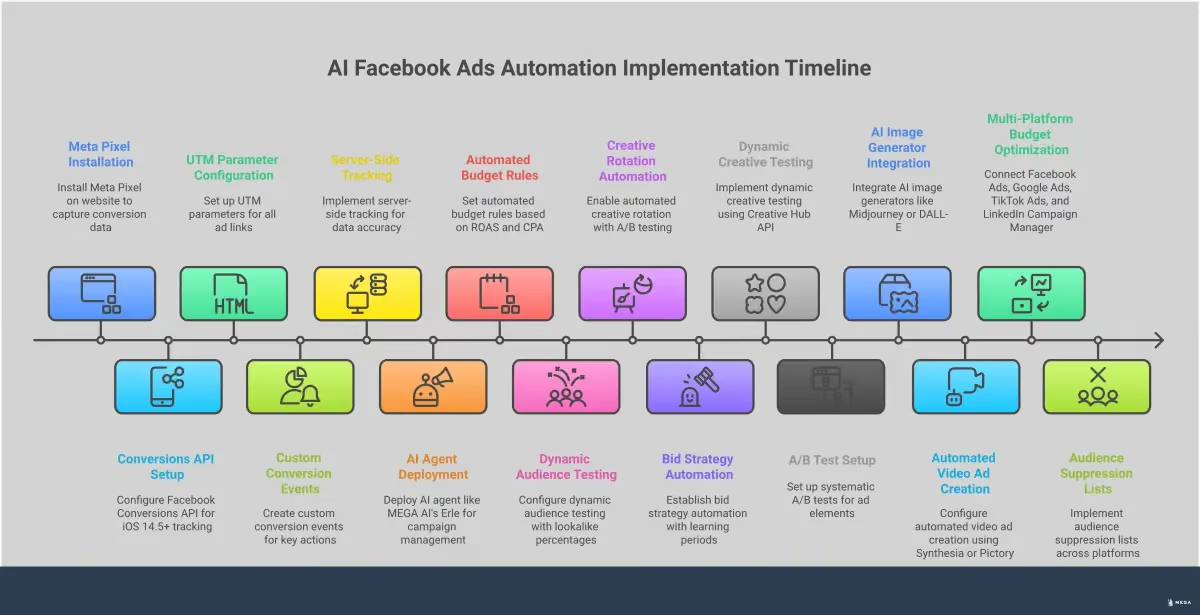
Connect Your Ad Platforms and Set Up Tracking
Before an AI can optimize your ads, it needs data. The first step is to connect your Facebook Ads account to your chosen AI platform. This gives the tool access to your campaign information. Just as important is setting up proper tracking. This means installing the Meta Pixel on your website to monitor conversions, traffic, and user behavior. An AI agent like MEGA AI’s Ads Agent can even help implement pixels and tag managers for you. This tracking is the bedrock of AI optimization, as it provides the real-world performance data the system needs to make smart decisions about your ads.
Define Your Audience with AI
Guessing who your ideal customer is can be a drain on your budget. AI helps you move from guesswork to data-driven targeting. You can start by providing the AI with a broad description of your target customer, and it will test different segments to find who responds best to your ads. Over time, the AI learns and refines its approach, identifying high-converting audiences you might have missed. By analyzing user data, AI can build dynamic, personalized ads and improve your Facebook conversions with precise targeting, ensuring your message reaches the people most likely to become customers.
Set Rules for Automated Budgeting
One of the most powerful features of AI is its ability to manage your ad spend efficiently. Instead of manually checking your campaigns every day, you can set automated rules for the AI to follow. For example, you can create a rule to automatically increase the budget for an ad set that has a high return on ad spend (ROAS) over the last week. Conversely, you can set a rule to pause an ad if its cost per result gets too high. Platforms like MEGA AI’s Paid Ads agent handle this autonomously, shifting your budget to the best-performing campaigns to maximize your return.
Turn On Automated Creative Testing
Finding the right combination of ad copy and visuals can feel like a constant battle. AI automates this entire process. You can upload your creative assets—images, videos, and headlines—and the AI will generate hundreds of variations to test. It then runs these variations in small-scale tests to see which ones perform best, automatically allocating more budget to the winners. This continuous A/B testing ensures your ads stay fresh and effective without requiring you to spend hours creating and monitoring tests yourself. It’s a simple way to let the data decide what creative works best for your audience.
Best Practices for Optimizing Facebook Ads with AI
Launching an ad campaign is just the first step. The real work begins with optimization, and this is where AI truly shines. AI-powered tools can process performance data in real time, identifying patterns and opportunities that would take a human analyst hours or days to uncover. This allows for constant, small adjustments that compound over time to improve your campaign results. Instead of guessing which ad creative is working best or who to target next, you can rely on data-driven decisions made by an intelligent system.
These practices aren’t reserved for enterprise-level companies with huge budgets. For small and local businesses, using AI for optimization means you can compete more effectively and make every dollar of your ad spend count. An autonomous paid ads agent can manage these complex tasks for you, acting as a full-time campaign manager that never sleeps. It continuously refines your campaigns to help you achieve your business goals, whether that’s generating leads, driving sales, or building brand awareness.
Which KPIs to Monitor with AI
While you can track dozens of metrics, AI is particularly good at focusing on the Key Performance Indicators (KPIs) that directly impact your bottom line. These typically include Return on Ad Spend (ROAS), Cost Per Acquisition (CPA), and Click-Through Rate (CTR). An AI tool doesn’t just show you these numbers on a dashboard. It interprets them in the context of your goals. For example, it can identify if a high CTR isn’t leading to conversions and suggest potential issues. Meta’s own Advantage+ suite offers automated insights, but a dedicated AI agent can take those recommendations and execute them for you.
Use Automated Rules to Manage Campaigns
Automated rules are simple “if-then” commands that your AI agent follows to manage your campaigns 24/7. For instance, you can set a rule to automatically pause an ad if its CPA rises above a specific amount or to increase the budget for a campaign that is delivering a high ROAS. This practice prevents you from wasting money on underperforming ads and ensures you’re scaling your most successful ones without delay. It’s like having a vigilant campaign manager who instantly acts on performance data, making sure your budget is always working as efficiently as possible.
Create Retargeting and Custom Audiences
AI excels at identifying and segmenting audiences with a precision that is difficult to achieve manually. You can use it to create powerful custom audiences, such as people who have visited your website, engaged with your posts, or abandoned a shopping cart. From there, AI can build lookalike audiences, finding new potential customers who share characteristics with your best existing ones. This ensures your ads are shown to people who are most likely to be interested in your products or services, which improves conversion rates and lowers your acquisition costs.
Optimize Your Budget Across Platforms
Your customers don’t just live on Facebook. They might be searching on Google, watching videos on TikTok, or networking on LinkedIn. An advanced AI agent can manage your advertising budget across all these platforms from a single place. It analyzes which channels are providing the best return and can automatically shift your spend to the highest-performing campaigns, regardless of the platform. This holistic approach to budget optimization ensures your marketing dollars are allocated for maximum impact, helping you grow your business more effectively. You can review different pricing options to see how a service like this fits your needs.
How AI Helps with Ad Compliance and Policies
Navigating ad policies can be a major hurdle for any advertiser. One wrong word or image, and your campaign gets rejected, stalling your momentum. This is where AI becomes an invaluable partner. Instead of manually cross-referencing every piece of ad copy against dense policy documents, AI can automate the initial review process. It acts as a smart filter, flagging potential issues before you even submit your ad. This proactive approach not only saves you time but also helps maintain a healthy ad account status, reducing the risk of frustrating rejections and delays. Platforms like MEGA AI build these compliance checks directly into their workflow, giving you a safety net as you create and launch campaigns.
Automatically Review Content for Policy Issues
Think of AI as your first line of defense against ad rejections. It can analyze your ad copy, images, and landing pages to spot common red flags that violate Facebook’s advertising policies. For example, AI can detect prohibited language related to sensitive topics, check for misleading claims, or flag images that don’t meet platform standards. By identifying these potential problems early, you can make corrections before the ad goes into the official review queue. This significantly cuts down on the back-and-forth with Meta and helps get your campaigns live much faster.
Understand AI Content Labeling Rules
As AI-generated content becomes more common, platforms are creating new rules around its use. Meta now requires advertisers to disclose when they use AI to create or realistically alter images, video, or audio in ads, particularly for sensitive topics like social issues or politics. Staying on top of these evolving requirements is critical. While you are ultimately responsible for proper labeling, some AI tools can help by reminding you of these obligations during the ad creation process. Being transparent about your use of AI not only ensures compliance but also builds trust with your audience.
Keep Up with Meta’s Ad Guidelines
Ad policies aren’t static; they change to reflect new regulations and platform priorities. It’s a full-time job just to keep up. An AI-powered system is continuously updated with the latest advertising guidelines from platforms like Meta. This means the recommendations and automated checks it performs are based on the most current rules. Instead of you having to read every update Meta publishes, the AI incorporates that new knowledge into its process. This helps you stay compliant without needing to become a policy expert yourself, letting you focus on your business strategy.
Maintain a Consistent Brand Voice
While AI is a powerful tool for ensuring technical compliance, it can’t replace your unique brand identity. It’s essential to always review and refine any AI-generated content to make sure it aligns with your brand’s voice and values. AI is there to assist and streamline, not to take over completely. Your human insight is what makes your brand relatable and authentic. This final review step ensures your ads not only follow the rules but also resonate with your target audience in a way that feels genuine to your business.
What Metrics Define Success for AI-Powered Ads?
Using AI to manage your Facebook ads doesn’t mean you can set it and forget it entirely. While the AI handles the complex, moment-to-moment decisions, you still need to define what success looks like. The right metrics act as your guide, telling you whether your AI-powered campaigns are hitting their marks or need a course correction. Focusing on the right data ensures your ad spend is driving real business growth, not just generating clicks. It’s about measuring what matters so the AI can optimize for results that directly impact your bottom line.
Key Performance Indicators for AI Campaigns
When you let AI take the wheel, you can focus on the key performance indicators (KPIs) that truly measure business health. Instead of getting lost in vanity metrics like impressions, concentrate on numbers that show a clear return. The most important KPI is often Return on Ad Spend (ROAS), which tells you how much revenue you generate for every dollar spent. An AI can be trained to optimize for a target ROAS, turning a break-even ad account into one that earns five times the ad spend. Other critical metrics include Cost Per Acquisition (CPA) and Conversion Rate, which show how efficiently you’re gaining new customers.
Set Up Automated Reports and Insights
One of the biggest advantages of using AI is its ability to process vast amounts of data and deliver actionable insights without manual effort. You no longer need to spend hours buried in spreadsheets. Platforms like MEGA AI’s Ads Agent provide automated reporting that highlights what’s working and what isn’t. You can also use Meta’s built-in tools, such as the Automated Insights in Ads Manager, to get AI-driven recommendations. Setting up these reports allows you to monitor performance at a glance and trust that your AI agent is making data-backed decisions to improve your campaigns over time.
Measure ROI and Cost-Effectiveness
For any small or local business, the ultimate measure of success is profitability. AI is exceptionally good at maximizing your return on investment (ROI) by intelligently allocating your budget. It can automatically shift spending away from underperforming ads and toward the ones that are driving the most conversions. Many businesses see a 20–30% better ROI after implementing AI because it removes guesswork and emotional decision-making from budget management. By focusing on ROI, you ensure your advertising efforts are a cost-effective engine for growth, not just an expense.
Track Creative Performance
AI can generate and test hundreds of ad creatives, but how do you know which ones are resonating with your audience? Tracking creative performance is key. Pay attention to metrics like Click-Through Rate (CTR), which indicates how compelling your ad is, and engagement rates (likes, comments, and shares). A good AI tool will not only test different images, headlines, and copy but will also learn from the results. It identifies the top-performing elements and creates new variations based on them, continuously refining your creative strategy. This process helps you reduce the time and effort needed to find winning ads and achieve better results.
Should You Choose Manual Control or AI Autopilot?
One of the biggest questions for small businesses using AI is how much control to hand over. Should you let the AI run the show on autopilot, or should you manually approve every decision? The right answer depends on your goals, your comfort level with technology, and how much time you can dedicate to managing your campaigns. AI advertising tools can help local businesses compete with larger companies by automating complex tasks and optimizing campaigns around the clock. Platforms like MEGA AI are designed to act as an autonomous agent, but they still give you the final say. You can choose to enable a full autopilot mode for maximum speed and efficiency or opt for a manual approval workflow that keeps you in the driver’s seat for every major change. This flexibility allows you to find the perfect balance between AI-driven performance and human-led strategy. The key is understanding the trade-offs. Full automation offers speed and continuous optimization, which is ideal for busy founders and small teams. Manual control provides a layer of brand safety and is a great way to learn, but it can slow down the testing process. Ultimately, the choice is about finding a process that saves you time while delivering the results you need to grow your business.
Full Automation vs. Manual Approval: Which to Choose?
Choosing full automation means letting the AI make real-time decisions to optimize your ads. This is the fastest way to see results, as the system can test creatives, adjust bids, and shift budgets instantly based on performance data. For instance, MEGA AI’s data shows that customers who use its autopilot feature see results twice as fast. This approach is ideal if you’re short on time and trust the AI to manage the day-to-day tasks. On the other hand, manual approval gives you complete control. You review and greenlight every suggestion the AI makes, from new ad copy to audience targeting changes. This is a great option if you want to learn the ropes of paid advertising or if your brand has very specific messaging guidelines.
How to Set Up Human Oversight
Even if you choose an automated approach, human oversight is still important. AI is excellent at executing tasks, but you provide the strategic direction. You can maintain control by setting clear ground rules for the AI to follow. Start by establishing firm budget caps and defining your core campaign goals. Schedule regular check-ins to review performance reports and ensure the AI’s actions align with your business objectives. With a platform that offers full transparency, you can see every task the AI performs, giving you peace of mind. This way, you can focus on strategy while your AI agent handles the detailed work.
How Automation Levels Affect Performance
The level of automation you choose directly impacts your campaign’s performance and speed. When an AI has more freedom to operate, it can gather data and learn more quickly. Continuous learning allows the AI to refine audience segments, identify the best-performing ad creatives, and optimize your budget with greater precision. An AI ad creator can also strategize how to improve targeting over time by analyzing user data and making adjustments on the fly. While manual oversight is valuable for brand alignment, allowing for more automation often leads to faster improvements and a better return on your ad spend.
Common Challenges (and Solutions) for AI in Facebook Ads
Using AI for your Facebook ads can feel like having a superpower, but it’s not without its challenges. Like any powerful tool, you need to know how to handle it to get the best results. From generic ad copy to runaway budgets, a few common hurdles can pop up. The key is to use an AI system that acts as a strategic partner, not just a content generator. A simple tool might create repetitive ads or target audiences too broadly, which wastes your time and money. A more advanced AI agent, however, learns from your campaign data to make smarter decisions over time. It helps you move past the initial setup and into a continuous cycle of optimization.
Many small businesses find that while AI promises efficiency, it can also create new problems if not managed correctly. For example, an AI that only generates content without understanding performance metrics can quickly burn through your budget with ads that don’t convert. Similarly, if the AI’s targeting isn’t precise, you could be reaching thousands of people who have no interest in your product. The goal isn’t just to automate tasks; it’s to automate success. This means finding a solution that can identify what’s working, double down on it, and cut what isn’t—all while giving you the final say. Let’s look at some of these common challenges and how to address them with the right approach.
How to Avoid Repetitive Content
One of the first issues you might notice with simple AI tools is that they produce generic or repetitive ideas. When your ads look and sound like everyone else’s, it’s hard to capture attention. The solution is to use an AI that doesn’t just write copy but also learns from performance. Instead of just generating more ideas, a sophisticated paid ads agent creates variations of your best-performing creative and tests them automatically. This approach ensures your content evolves based on what your audience actually responds to, keeping your campaigns fresh and effective.
How to Fine-Tune Audience Targeting
Finding your ideal customer on a platform as vast as Facebook can be difficult. AI can analyze huge amounts of data to identify potential customers, but a broad approach can still waste your ad spend. To solve this, use AI to analyze your existing customer data and build effective lookalike audiences. A smart AI tool will then test different audience segments and automatically shift your budget toward the ones that deliver the best results. This data-driven process moves beyond guesswork, allowing you to continuously refine your targeting with precision.
How to Accurately Measure Performance
With AI running multiple tests and campaigns, you can quickly find yourself buried in data. It’s easy to get overwhelmed and lose sight of what’s actually driving growth. The solution is an AI platform that provides clear, automated reporting and insights. Instead of just giving you raw numbers, the right tool translates performance data into actionable recommendations. This can significantly increase your team’s productivity by showing you exactly which campaigns are working and why, freeing you up to focus on strategy instead of spreadsheets.
How to Maintain Quality in Automated Campaigns
Automation is meant to save you time, but a “set it and forget it” mindset can lead to off-brand messaging or low-quality ads. To maintain control, look for an AI system that offers a human-in-the-loop or manual approval option. For instance, MEGA AI allows you to choose between a full autopilot mode or a workflow where you approve every change before it goes live. This hybrid approach gives you the efficiency of automation while ensuring every ad aligns with your brand strategy and quality standards.