Your social media feed is a busy street. If your business only shows up once or twice a week, potential customers will walk right past. A daily social media post is how you keep your digital doors open. It ensures your brand is consistently visible, giving you the maximum opportunity for your audience to see you, remember you, and engage with you. This guide provides a simple, repeatable plan so you can show up for your customers every day without feeling overwhelmed.
Key Takeaways
- Make consistency your main goal: Posting daily tells social media algorithms that your account is a reliable source of fresh content, which improves your visibility and helps you stay relevant with your audience.
- Build a system to prevent burnout: Rely on content pillars to guide your topics, batch-create posts in focused sessions, and use scheduling tools to maintain a consistent presence without the daily pressure.
- Use analytics to guide your strategy: Track key metrics like engagement and reach to understand what resonates with your audience. This data allows you to move beyond guesswork and create more content that drives results.
Does Daily Posting on Social Media Really Matter?
Posting on social media every day might feel like a chore, but it’s one of the most effective ways to keep your business top-of-mind. Think of your social media feed as a bustling street. If your shop is only open once or twice a week, potential customers are likely to walk right past and visit the competitor who’s always there. Daily posting ensures your brand is consistently visible, giving you the maximum opportunity for your audience to see and remember you.
This consistency does more than just catch your audience's eye; it also sends positive signals to social media algorithms. Platforms like Instagram and Facebook want to show users fresh, relevant content. When you post regularly, the algorithm recognizes your account as active and valuable, making it more likely to show your posts to a broader audience. This increased reach is essential for growing your following and attracting new customers in a crowded digital landscape.
Beyond visibility, daily posts are your chance to build a real connection with your community. Each post is an invitation for your followers to engage through likes, comments, and shares. This interaction isn't just a vanity metric; it’s proof that your content is resonating. A well-planned social media strategy turns daily posting from a simple task into a powerful tool for building brand loyalty and driving meaningful conversations.
How Consistency Feeds the Social Media Algorithm
Social media algorithms can feel like a mystery, but their goal is simple: to keep users engaged by showing them relevant, timely content. When you post consistently, you directly align your strategy with this goal, and the platforms take notice. Think of it as building a relationship with the algorithm; the more you show up, the more it trusts you to provide value to its users.
Regular posting signals to the algorithm that your account is active and a reliable source of fresh information. An account that posts daily is seen as more current and relevant than one that posts sporadically. This increases the likelihood of your content being prioritized and shown to a broader audience. This consistent activity helps your brand stay fresh and keeps you top-of-mind, not just for your followers, but for the algorithm itself.
Consistency also creates a powerful feedback loop. Every post is an opportunity for your audience to interact through likes, comments, and shares. These actions are strong engagement signals that tell the algorithm your content is resonating with people. In response, the platform shows your post to more users, which can lead to a higher follower growth rate. By creating content daily, you generate more opportunities for this positive cycle to occur, helping you build momentum and expand your reach organically.
The Anatomy of an Effective Social Media Post
Now that you understand why consistency is so important, let's break down what makes a single post successful. An effective social media post isn’t just a random photo and a caption; it’s a carefully constructed piece of communication designed to capture attention and drive action. Each element plays a specific role, and when they work together, they create a powerful tool for engaging your audience. Understanding this anatomy will help you move from just posting content to posting content with a purpose.
The Four Key Elements: Hook, Body, Visual, and CTA
Every effective social media post is built on four core components. It starts with a strong hook—the first line of your caption that grabs attention and makes someone want to read more. Next is the body, where you deliver your main message, tell a story, or share valuable information. The third element is the visual, which is often the first thing people notice. A high-quality image or video is essential for stopping the scroll and conveying emotion. Finally, every post needs a clear call to action (CTA) that tells your audience exactly what you want them to do next, whether it’s to comment, click a link, or visit your shop.
Writing and Formatting for Engagement
The words you choose and how you present them can make or break your post's performance. Even with a stunning visual, a poorly written or formatted caption can cause users to scroll right past. Writing for social media requires a different approach than writing for a blog or email. It’s about being concise, clear, and scannable. The goal is to deliver your message quickly while making it easy for your audience to read and digest on a small screen. Let's look at how to craft captions and use formatting to hold your audience's attention.
Crafting Compelling Headlines and Captions
Your caption is your chance to add context and personality to your visual. The best captions are concise and impactful, with studies showing that keeping them around 150 characters is ideal for engagement. Start with a strong opening line that grabs attention, then deliver your message clearly. Including one to three relevant hashtags can also help new audiences discover your content. If you struggle with writer's block, AI-powered tools can be a huge help. For instance, MEGA AI's content generation features can help you draft several compelling caption options, making it easier to find the perfect words for your post.
Using Formatting to Stand Out
In a crowded feed, how your text looks is almost as important as what it says. A dense block of text is intimidating and often gets skipped. To make your captions more readable, use formatting to your advantage. Break up long paragraphs by adding empty lines between them. This simple trick makes your post taller and gives the text room to breathe, which helps it stand out visually. You can also use bullet points or numbered lists to present information clearly and use emojis to add a touch of personality and draw the eye to key points. The goal is to make your caption scannable and inviting.
Best Practices for Visual Content
Your visual is the first thing people see, so it needs to make an immediate impact. High-quality, eye-catching visuals are essential for stopping the scroll. Use clear, branded images that align with your business's aesthetic. Photos that include faces tend to perform well because they create a human connection and capture attention more effectively. Don't be afraid to lean into video, as formats like Instagram Reels are highly favored by algorithms and are great for engagement. Whether you use a static image or a dynamic video, ensure it's visually appealing and tells a story on its own. This is your best tool for capturing attention in the first few seconds.
What Happens When You Miss a Social Media Post?
Skipping a social media post might seem harmless, but it can create a ripple effect that works against your growth. It’s not just a missed opportunity to connect; it’s a signal to both your audience and the platform’s algorithm that can diminish your presence over time. Consistency is one of the most important factors in a successful social media strategy, and even small breaks can disrupt your momentum.
Social media algorithms are built to deliver fresh, relevant content to users. As a result, they tend to favor active accounts that post reliably. When you skip days, you risk being deprioritized in your followers' feeds. This means even your most dedicated followers might not see your content when you finally do post. This drop in organic reach makes it much harder for your message to find its audience and attract new followers.
Beyond the algorithm, inconsistent posting can lead to decreased visibility and a weaker connection with your audience. When you don’t show up regularly, you lose top-of-mind awareness. This creates a disconnect, making it more difficult to build the trust and loyalty that turns followers into customers. Each post is also a chance for interaction. By skipping posts, you miss out on valuable opportunities for engagement, such as likes, comments, and shares. These interactions are key indicators that tell the algorithm your content is valuable, so fewer posts can create a cycle of declining reach and engagement that becomes increasingly difficult to reverse.
How to Use Daily Posts for More Engagement and Visibility
Posting every day on social media is a direct line to improving your engagement and visibility. Think of each post as an opportunity to connect with your audience. When you show up consistently, you stay top-of-mind, making it more likely for followers to interact with your content when it appears in their feed. This consistent presence is key to building a loyal community around your brand.
Engagement is more than just a vanity metric; it’s a signal to social media algorithms that your content is valuable. Every like, comment, and share tells the platform that people are interested in what you have to say. This is what social media platforms define as engagement, and it directly influences how many people see your future posts. The more people interact with your content, the more the algorithm will show it to others, expanding your reach beyond your current followers.
This is where visibility comes in. By posting daily, you give the algorithm fresh content to work with, increasing your chances of being featured in feeds and on explore pages. Missing even a single day can reduce your momentum and make it harder to regain that visibility.
Of course, success isn't just about posting for the sake of it. The best results come from a well-thought-out strategy that balances consistency with quality. Your daily posts should be part of a larger plan that speaks to your audience's needs and reflects your brand's voice. This strategic approach turns daily posting from a chore into a powerful tool for growth.
Strategic Use of Hashtags and Mentions
Hashtags and mentions are essential tools for getting your content in front of the right people. Think of hashtags as a filing system for social media. When you use them, you help platforms categorize your content, making it discoverable to users who are interested in those topics but don’t follow you yet. For the best results, use a mix of broad hashtags (like #SmallBusiness) and niche ones (like #ChicagoLocalEats) to reach both a wide audience and a targeted one. Mentions, or tagging other accounts, work similarly by tapping into another account’s audience. When you mention a partner, a customer, or another local business, your post can appear to their followers, instantly expanding your visibility. Using both strategically turns each post into a networking opportunity.
What Should You Post on Social Media Every Day?
Posting every day can feel like a huge task, but it doesn’t have to be a scramble for new ideas each morning. The key is to build a simple, repeatable framework that guides your content creation. When you have a plan, you can produce valuable posts consistently without burning out. A strong social media presence also complements your other marketing channels, sending positive signals that can support your overall SEO strategy.
The best approach is to think in layers. First, you need core topics that your brand will own. Then, you can decide on the different ways you’ll present those topics. Finally, you can use a simple schedule to keep things organized and predictable. This structure removes the daily guesswork and lets you focus on what matters: connecting with your audience. We’ll break this down into three parts: establishing your content pillars, mixing up your formats, and using daily themes to make creation easier.
Define Your Content Pillars
Before you think about what to post today, you need to decide what your brand talks about in general. These are your content pillars: three to five core topics that relate to your business and resonate with your audience. Think of them as the main categories for all your social media content. For a local coffee shop, pillars might be "The Art of Coffee," "Community Spotlights," and "Behind the Counter." For a marketing consultant, they could be "Lead Generation Tips," "Client Success Stories," and "Productivity Hacks."
Having clear pillars ensures your content is always relevant and reinforces your brand identity. As Socialinsider notes, "The best content is based on a strong social media strategy, one that aligns with your business goals." Your pillars are the foundation of that strategy.
Implement a Content Framework like the 4-1-1 Rule
Once you have your pillars, you need a recipe to mix them into a balanced feed. A content framework prevents your social media from becoming a constant sales pitch, which can turn followers away. A great one to start with is the 4-1-1 Rule. For every six posts, four should be valuable content you share from other sources in your industry. This positions you as a helpful expert. One post should be original, non-promotional content, like a behind-the-scenes look or a helpful tip. The final post is your promotional one—a direct call to action, a product feature, or a special offer. This structure ensures you’re providing value five times for every one time you ask for a sale, building trust and keeping your audience engaged.
Mix and Match Your Content Formats
Once you have your pillars, think about the different ways you can present them. Sticking to a single format, like static images, can make your feed feel repetitive. Mixing up your content formats keeps your audience engaged and helps you reach different segments of your followers. Some people love watching short videos, while others prefer to swipe through a carousel or read a thoughtful text post.
Try incorporating a variety of formats into your weekly plan. You could share a quick video tip, a multi-image carousel with a customer testimonial, an infographic, or a simple question to spark conversation in the comments. As one expert points out, "Video content isn’t just a marketing tool; it’s a genuine way to forge a connection with your audience." Experiment to see what works best for you.
Prioritize Short-Form Video Content
If there's one format to focus on, it's short-form video. Platforms like Instagram Reels and TikTok have trained users to consume quick, engaging clips, and the data shows it works. In fact, short videos can generate 2.5 times more engagement than their longer counterparts. This format is perfect for showing your brand's personality, offering quick tips, or taking viewers behind the scenes. It’s a powerful way to build a genuine connection with your audience, moving beyond simple marketing messages. While creating daily videos can seem daunting, tools like MEGA AI's Paid Ads platform can help by automatically remixing your content into hundreds of variations, making it easier to maintain a consistent and dynamic feed.
Use Daily Themes to Simplify Content Creation
Daily themes are a simple way to organize your pillars and formats into a predictable schedule. This tactic assigns a specific type of content to each day of the week, which removes the pressure of deciding what to post each morning. For example, your schedule could look like this: "Mindset Monday," "Tip Tuesday," "Workflow Wednesday," "Testimonial Thursday," and "Feature Friday."
This approach makes planning much more efficient. You can sit down once a month and fill in your content calendar based on your themes. It also gives your audience something to look forward to, as they’ll learn to expect certain types of content on certain days. You can even use social media holidays as inspiration to fill gaps in your schedule with timely and relevant posts.
Engaging Content Ideas for Daily Posts
With your content pillars and daily themes in place, you have a solid framework. Now, it’s time to fill it with content that sparks conversation and builds relationships. The goal isn't just to post; it's to engage. This means creating content that invites your audience to participate, whether by answering a question, sharing their own experience, or simply getting a glimpse into the human side of your business. The following ideas are designed to do just that, turning passive scrollers into an active community. They are simple, effective, and can be adapted to any industry.
Encourage Interaction with Polls and AMAs
One of the most direct ways to get your audience involved is to simply ask for their input. Interactive content like polls and "Ask Me Anything" (AMA) sessions are perfect for this. Polls are a low-effort way for followers to engage; you can use them to get feedback on a new product idea or just for fun, like asking them to choose their favorite item from your menu. AMAs position you as an expert and open the door for genuine conversation. These formats are simple but powerful ways to connect with your followers and show them their opinions matter.
Humanize Your Brand with Behind-the-Scenes Content
People connect with people, not faceless brands. Sharing behind-the-scenes content is a fantastic way to pull back the curtain and show the real work and passion that goes into your business. This could be a short video of you packing an order, a tour of your workspace, or the story of how you came up with a new product. This type of content builds trust and authenticity. It shows the human element of your brand, which makes your brand more relatable and helps you build a much deeper connection with your audience than a polished advertisement ever could.
Leverage User-Generated Content and Employee Spotlights
Your best advocates are often your customers and your team. User-generated content (UGC) is any content—photos, videos, reviews—created by your customers. Encouraging followers to share their experiences with a specific hashtag and then reposting their content is a powerful form of social proof. It also helps show you value them and builds a strong sense of community. Similarly, employee spotlights introduce the people who make your business run. Sharing their stories and roles puts a human face on your brand and celebrates the team that makes it all happen.
Tailoring Posts for Different Social Media Platforms
Posting daily is the first step, but posting effectively requires understanding that each social media platform is its own unique environment. You wouldn't wear the same outfit to a professional networking event and a casual coffee meetup. Similarly, the content you create should be tailored to fit the audience and expectations of each platform. A one-size-fits-all approach can make your content feel out of place and reduce its impact. Customizing your posts for each channel shows you understand the culture of the platform, which helps your content resonate more deeply with the users there.
Platform-Specific Content Types
To get the most out of your daily posting efforts, you need to match your content to the platform. Visual-first platforms like Instagram and TikTok are perfect for showcasing products in a creative way through high-quality videos and images. On the other hand, LinkedIn caters to a professional audience, making it the ideal place to create industry insights, share company achievements, or post thoughtful articles. X (formerly Twitter) is built for brevity and real-time updates, so it’s great for quick announcements and joining trending conversations. Understanding these nuances allows you to meet your audience where they are with content they actually want to see, making your daily posts far more effective.
Navigating Character Limits and Link Rules
Beyond content style, each platform has its own set of rules, particularly around character limits and how you can share links. For example, X has a tight character limit for free accounts, forcing you to be concise, while Facebook allows for much longer posts. It's also critical to know that links in Instagram or TikTok captions are not clickable. This means you can't just drop a link to your website and expect traffic. Instead, you have to direct users to a "link in bio" page. Managing these different requirements for each post can be time-consuming, which is why many businesses use tools that can help remix content into multiple variations automatically, ensuring each post is optimized for its specific platform without adding hours to your workload.
How to Create High-Quality Content Every Day
The idea of creating fresh, high-quality content every single day can feel overwhelming, especially when you're already juggling a dozen other tasks for your business. The good news is you don’t need to reinvent the wheel daily. The secret isn’t about working harder; it’s about establishing a smart, sustainable system. With the right approach, you can maintain a consistent presence that engages your audience without burning out.
Creating a steady stream of content is entirely possible by focusing on efficiency and strategy. Instead of treating each day’s post as a separate, urgent task, you can build a workflow that allows you to plan ahead, reuse your best ideas, and let technology handle the repetitive parts. This frees you up to focus on what truly matters: connecting with your customers and growing your brand. The following strategies will help you build a content creation engine that runs smoothly, so you can post daily with confidence.
Batch and Schedule Your Social Media Posts
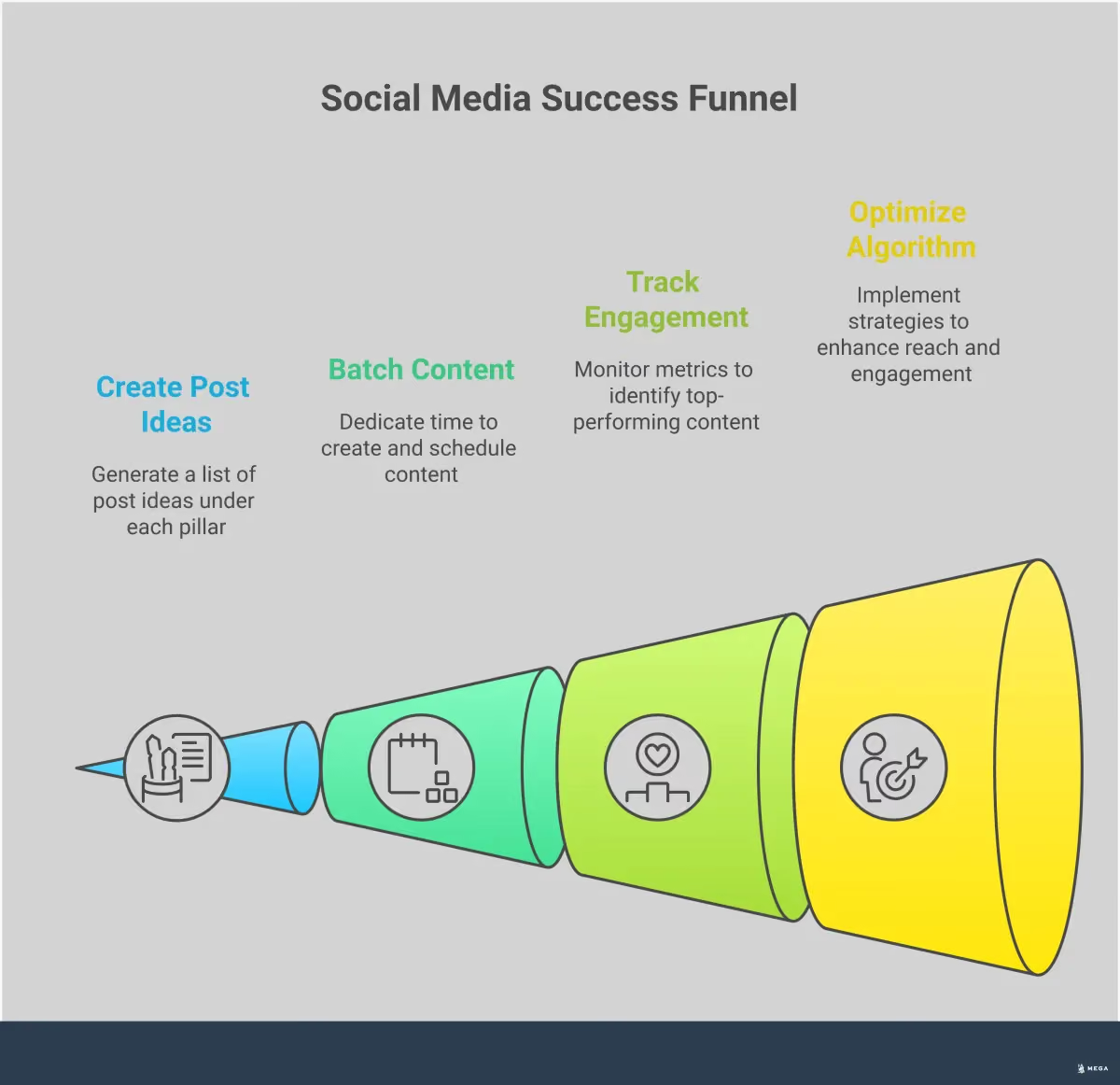
One of the most effective ways to stay consistent is to stop creating content on the fly. Content batching is the practice of dedicating a block of time to create all of your social media posts for a week or even a month at once. Think of it as meal prepping for your marketing. You can write all your captions, design your graphics, and edit your videos in one focused session. This approach saves a significant amount of time and mental energy compared to scrambling for an idea every morning. Once your content is ready, use a scheduling tool to automatically publish your posts, ensuring you never miss a day.
Repurpose Your Best Content for Social Media
You don't always need to create something brand new. Your existing content is a goldmine of potential posts. A single blog post can be transformed into a dozen different social media updates. Pull out key quotes for tweets, turn statistics into an infographic for Instagram, or expand on a key point in a short video for TikTok. This strategy not only saves time but also reinforces your core message across different channels. By learning to repurpose content, you can fill your calendar with valuable posts while ensuring your best ideas get the visibility they deserve. It’s about working smarter, not harder, to keep your audience engaged.
Use Automation Tools to Maintain Consistency
Many people worry that using automation will make their brand feel robotic, but the opposite is often true. When you use tools to handle the mechanical aspects of posting, you free up valuable time for genuine human interaction. Automation can manage your posting schedule and help you analyze what’s working, but it can’t replace the authentic conversations you have in the comments and DMs. Services like MEGA AI’s SEO agent can automate content generation and optimization, allowing you to focus on strategy and engagement. Think of automation as your behind-the-scenes assistant, handling the logistics so you can be more present with your community.
Solving the Top Challenges of Daily Posting
Posting every day sounds great in theory, but the reality can be tough for small business owners. Finding the time and creative energy for daily content is a significant hurdle when you're already wearing multiple hats. The good news is that these challenges are common and entirely surmountable. Instead of seeing daily posting as another chore, you can build a system that makes it a manageable part of your routine. Let's break down the biggest obstacles and how to address them.
How to Manage Posting with Limited Time
The most common barrier to daily posting is a lack of time. When you're running a business, social media can easily fall to the bottom of the to-do list. To make it work, you need to be efficient. Start by setting aside a specific block of time each week for social media. Even a couple of hours can be enough to plan and schedule a full week of content. Using templates for graphics and captions also saves time. For businesses that are truly stretched thin, an AI-powered marketing agent can take over completely, handling content strategy and execution so you can focus on other priorities.
Finding a Sustainable Content Creation Process
Staring at a blank screen and wondering what to post is a familiar feeling. The key to overcoming this creative block is to build a solid content strategy. Creating engaging social media content is about connecting with your audience and offering value that feels authentic to your brand. Start by defining three to five content pillars—core themes that align with your business goals and audience interests. From there, you can brainstorm post ideas for each pillar and keep a running list. This approach ensures your content is always relevant and purposeful.
How to Avoid Sacrificing Quality for Quantity
A frequent concern with daily posting is that quality will suffer. However, quantity and quality don't have to be mutually exclusive. The secret is to work smarter, not harder. Batching your content—creating a week's worth of posts in a single session—is an effective way to maintain high standards. This allows you to get into a creative flow and ensures a consistent look and feel. Using a content calendar to plan and schedule everything in advance also helps you stay organized and avoid last-minute, rushed posts.
Common Daily Posting Mistakes (and How to Avoid Them)
While the goal is to post daily, a few common missteps can prevent your content from having the impact it deserves. It’s not just about showing up every day; it’s about showing up with purpose. Pushing out content without a clear strategy can lead to audience fatigue and a diluted brand message. By understanding and avoiding these frequent mistakes, you can make sure your daily posting efforts build momentum and foster a genuine connection with your followers, rather than just adding to the noise.
Posting for Quantity, Not Quality
The pressure to post daily can tempt you to prioritize quantity over quality. However, a feed full of low-effort content can appear spammy and may cause followers to tune out. Every post should provide value. A well-defined content strategy is essential for maintaining this balance, ensuring each piece of content serves a purpose, whether it's to educate, entertain, or inspire. Remember, the goal is to be a consistent, valuable voice in your audience's feed, not just a frequent one. This approach builds trust and keeps your community engaged long-term.
Ignoring Audience Feedback and Data
Social media is a two-way street. When you post, your audience provides immediate feedback through likes, comments, and shares. Ignoring these signals is a missed opportunity. This engagement is valuable data that tells you exactly what resonates with your followers. By paying attention, you can learn what your audience wants and adjust your strategy accordingly. Actively listening and responding to feedback is one of the most effective ways to increase social media engagement and make your followers feel seen, which builds a stronger community around your brand.
Having an Inconsistent Schedule or Message
Consistency is key to building a recognizable brand on social media. This applies to both your posting schedule and your message. If your posts are sporadic or your tone and visuals change drastically from day to day, it can confuse your audience and weaken your brand identity. Establishing a consistent brand voice and aesthetic helps followers know what to expect. It ensures every post feels cohesive and reinforces who you are as a business, making your brand more memorable and reliable in a crowded feed.
How to Measure the Success of Your Daily Posts
Posting every day is a great habit, but how do you know if it’s actually working? Measuring your performance is the only way to understand what resonates with your audience and what doesn’t. It’s not about vanity metrics; it’s about gathering real data to make your social media efforts more effective and efficient. By regularly checking your analytics, you can stop guessing what your audience wants to see and start creating content that consistently hits the mark.
Think of it as a feedback loop. You post, you measure, you learn, and then you refine your approach. This process turns your daily posting from a simple task into a smart strategy that supports your business goals. Over time, you’ll build a clear picture of the content that drives engagement, grows your audience, and brings customers to your door. Let’s walk through the key areas to focus on.
Track the Engagement Metrics That Matter
Engagement metrics tell you how your audience is interacting with your content. These are your direct signals that people are not just seeing your posts, but are actively interested in them. The most common metrics to watch are likes, comments, shares, and saves. A high number of likes shows initial approval, while comments indicate a deeper level of interest and conversation. Shares and saves are even more valuable, as they show that your audience finds your content useful enough to pass along or revisit later. Tracking these numbers helps you understand which content pillars and formats are truly connecting with your followers.
Monitor Your Growth in Reach and Visibility
While engagement shows interaction, visibility metrics like reach and impressions tell you how many people are seeing your content in the first place. Reach is the total number of unique accounts that saw your post, while impressions are the total number of times your post was displayed. These numbers are important because you can’t get engagement if no one sees your content. If your reach is low, it might mean the algorithm isn’t favoring your posts, or you’re posting at the wrong time. Monitoring your social media reach helps you gauge brand awareness and the overall effectiveness of your daily posting schedule.
Turn Your Analysis into Action
The ultimate goal of tracking metrics is to use that data to make smarter decisions. Set aside time each week or month to look at your analytics and identify patterns. Which posts earned the most saves? What topics sparked the most comments? Did video content outperform static images? Answering these questions allows you to refine your social media strategy based on what your audience actually wants. This data-driven approach ensures your daily posting efforts become more impactful over time, helping you create higher-quality content that consistently performs well and supports your business growth.
Your 30-Day Daily Posting Action Plan
Starting a daily posting habit can feel like a huge commitment, but breaking it down makes it manageable. A well-thought-out strategy is the key to balancing consistency with quality. Use this four-week plan to build a sustainable routine for your business.
Week 1: Lay the Groundwork
The first week is all about preparation. Before you post, you need a plan. This initial investment of time will save you hours down the road and ensure your efforts are focused.
Start by defining one or two clear goals for your social media. Are you trying to drive website traffic, generate leads, or build brand awareness? Next, choose the one or two platforms where your target audience spends the most time. Don’t try to be everywhere at once. Finally, create a simple content calendar for the month. Map out your content pillars and any daily themes you plan to use.
Week 2: Create and Schedule Your Posts
Now it’s time to create your content. The most efficient way to do this is through batching. Set aside a single block of time—maybe three or four hours—to handle all your content creation for the upcoming week or two.
During your content block, write captions, design graphics, and edit short videos. By focusing on one type of task at a time, you can get into a creative flow and produce a week’s worth of posts much faster than creating one each day. Once your content is ready, use a social media scheduling tool to load and schedule everything. This frees you from the daily pressure of figuring out what to post.
Week 3: Focus on Engagement and Analysis
With your content scheduled, your daily task shifts from creation to engagement. Your posts are going live automatically, so you can focus on building a community.
Set aside 15 to 20 minutes each day to check your notifications, respond to comments, and answer direct messages. This interaction is crucial, as regular posting signals activity and relevance to platform algorithms, which can increase your visibility. At the end of the week, look at your analytics. Note which posts received the most likes, comments, and shares. This data will inform your strategy for the following weeks.
Week 4: Refine Your Process with Automation
In the final week, you’ll refine your process and look for ways to make it even more efficient. Use the performance data from Week 3 to guide your next content batching session. Create more of what your audience loves and less of what they don’t.
As you plan for the next month, think about how you can streamline content creation further. This is where automation can become a powerful ally. For example, MEGA’s SEO agent can generate blog posts and content ideas daily, giving you a steady stream of high-quality material to repurpose for your social media channels. This ensures you never run out of things to say and can maintain your daily posting habit with less effort.