
AI writing tools are a huge help, but they can strip the personality from your content. Suddenly, your unique voice sounds robotic and generic. The key to fixing this isn't about tricking a tool. Learning how to bypass AI detection is really about making your content sound human again. It's about adding your unique perspective back into the text. This guide will show you practical ways to do just that. We'll cover everything from crafting a better bypass AI detection prompt to refining the language and style, ensuring your content connects with your audience.
Key Takeaways
- AI detection analyzes text predictability and variation: Consider how perplexity (predictability) and burstiness (sentence variation) influence AI detection to create more natural-sounding content.
- Well-crafted prompts improve AI-generated content: Provide clear instructions, encourage storytelling, and specify the desired style and tone in your prompts to guide the AI's output.
- Use AI responsibly and ethically: Balance AI assistance with human creativity, prioritize transparency with your audience, and focus on creating valuable content.
What is AI Detection?
AI detection software helps determine whether a human or AI wrote a piece of text. These tools often analyze characteristics like "perplexity" (a measure of how predictable the text is) and "burstiness" (how much sentence structure varies). Human writing tends to be less predictable and has more varied sentences than AI-generated text, a point discussed by Twixify. AI detection tools work by looking for patterns in writing style, as explained by SurferSEO. The goal is to create content that provides value to the reader while sounding natural.
As AI writing tools improve, so do AI detection methods. Resources like Scalenut discuss the increasing sophistication of AI detection, making it more difficult to create content that goes undetected. The reliability of these tools is an ongoing discussion, with some questioning their accuracy, as noted in this Reddit thread. AI Contentfy raises concerns about the challenges content creators face with increasingly sophisticated detectors, especially regarding content flagged as inappropriate or harmful. This back-and-forth between AI writing and detection means writers need to stay adaptable.
Common AI Detection Platforms
Several platforms have emerged to identify AI-generated text, each with a slightly different focus. Some are built for academic integrity, helping educators check student submissions for originality. Others are designed for content creators and SEO professionals who want to ensure their articles meet search engine quality standards. Understanding which type of detector you might encounter can help you tailor your content creation process. The core technology is similar, analyzing patterns in word choice and sentence structure, but the application and what they penalize can vary significantly depending on the context.
Detectors for Academic and SEO Purposes
In academic settings, tools like Turnitin are widely used to check for both plagiarism and AI-generated content. The goal is to uphold academic honesty. However, these detectors can sometimes produce false positives, incorrectly flagging human-written text as AI-generated. For small businesses focused on SEO, the concern is less about a specific tool and more about how search engines perceive the content. While Google doesn't penalize AI content outright, it prioritizes helpful, high-quality content created for people. Using an AI content detector can be a final check, but the best strategy is to produce valuable content from the start.
This is why focusing on quality is so important. Instead of trying to trick a specific detector, aim to create content that is genuinely useful and engaging for your audience. This approach aligns with what search engines want to see and reduces the likelihood of your content being flagged. For businesses looking to scale their content efforts, using an advanced platform can make a difference. For example, MEGA AI's SEO tools are built to generate well-researched, human-like articles that prioritize reader value, helping you meet quality standards without the constant worry of detection.
Why Would You Bypass AI Detection?
Bypassing AI detection isn't about trying to trick the system. It's often about ensuring your content, whether fully AI-generated or simply AI-assisted, resonates with readers as authentic and engaging. Think of it this way: you're using AI as a tool, like a grammar checker, to refine your work, not to replace your unique voice. Sometimes, AI tools can produce text that feels a little robotic. Bypassing detection, in this case, means polishing your content to reflect your personal style and connect with your audience. SurferSEO offers some actionable tips to make this happen.
Several factors contribute to the growing importance of bypassing AI detection. AI writing tools are becoming increasingly sophisticated, blurring the lines between human and machine-generated text. This makes it crucial for content creators to focus on producing high-quality, human-like content that stands out. As PaperGen points out, this involves paying attention to both the appearance and structure of your writing. AI detection tools aren't foolproof. They can sometimes flag human-written content as AI-generated, leading to unfair penalties. GPTZero highlights the importance of bypassing these detectors to maintain freedom of expression and ensure your legitimate content isn't unfairly penalized. The goal is to create content that is both valuable to the reader and accurately reflects your intent. The Gulf Times explores this concept further, emphasizing that bypassing detection can be about enhancing content quality. As AI continues to evolve, so too will the methods for creating and evaluating content. Striving for human-like quality remains a central focus. WordLab discusses the ethical considerations of AI content creation, emphasizing the need for continuous evaluation in this evolving field.
How to Bypass AI Detection
AI detection tools are getting smarter, but so are the techniques to create human-quality content with AI assistance. By understanding how these tools work, you can refine your content creation approach and produce engaging, authentic-sounding text. This is where MEGA SEO excels, offering automated solutions to enhance your content and bypass AI detection seamlessly.
Refine Your Language and Writing Style
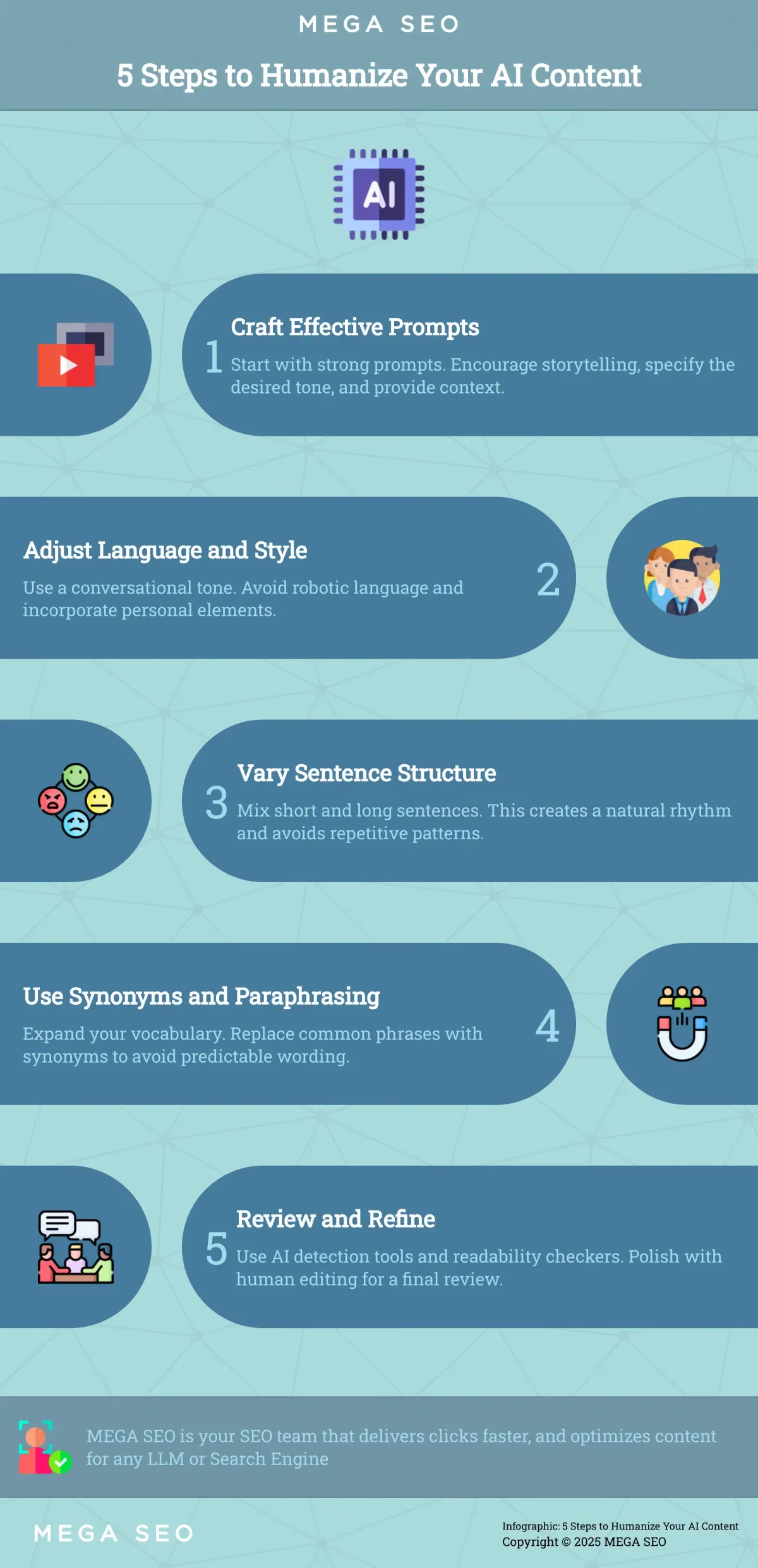
One telltale sign of AI-generated content is its often predictable and uniform style. To counteract this, focus on crafting content with a natural, conversational flow. Think about how you speak every day—you likely use a variety of sentence structures and incorporate colloquialisms. Encourage your AI assistant to do the same. Avoid overly formal or robotic language. As Twixify suggests in their article on this topic, prompting for varied sentence lengths and structures is key to mimicking human conversation. Consider exploring MEGA SEO's resources for guidance on crafting natural-sounding content.
Mix Up Your Sentence Structure
AI writing tools often fall into patterns of repetitive sentence structure. Human writing, however, is more dynamic. Mix short, punchy sentences with longer, more complex ones. This variation, known as burstiness, is a key factor AI detectors analyze, as discussed in Twixify's analysis of perplexity and burstiness. Experiment with different sentence beginnings and incorporate transitional phrases to create a natural rhythm. MEGA SEO's automated content generation features can help you achieve this varied structure.
Embrace Imperfection with Fragments and Run-ons
To make your content feel more authentic, you should embrace the very things you were taught to avoid in school: sentence fragments and run-ons. Using these "imperfect" structures is an effective way to give your writing a conversational tone that connects with readers. When your content sounds more like a real person talking, it becomes more relatable and less mechanical. This is especially important when using AI tools, as their output can sometimes feel too polished. By intentionally breaking a few grammar rules, you can add a human touch that makes your writing stand out and helps you develop a personal style.
This strategy works because it directly counters what AI detection tools look for. These detectors analyze patterns, and human writing is naturally varied—a mix of short, punchy statements and longer sentences. This variation is what some call burstiness, and it’s a strong signal of human authorship. A fragment can add emphasis, like this: "It was a long journey. But worth it." That short phrase hits harder than a longer sentence. Similarly, a run-on can convey a sense of urgency or a stream of consciousness, mimicking how people speak when they're excited. These stylistic choices aren't just about bypassing a detector; they are about crafting a narrative that feels alive and keeps your readers engaged.
Add a Personal Touch
AI struggles to replicate the unique perspectives and experiences that make human writing compelling. Infuse your content with personal anecdotes, opinions, and observations. This not only makes your writing more engaging but also adds authenticity that is difficult for AI to mimic. SurferSEO emphasizes this in their tips for avoiding AI detection.
Paraphrase and Use Synonyms
While AI excels at generating text quickly, it often relies on common phrases and predictable vocabulary. Expand your linguistic range by using synonyms and paraphrasing. This helps avoid the repetitive patterns that AI detectors flag. Instead of relying on the first word that comes to mind, explore alternative word choices that add nuance. SurferSEO highlights the importance of this in their advice on AI detection. Consider using MEGA SEO's free tools to help identify relevant synonyms and refine your paraphrasing. You can also book a demo to see how MEGA SEO can assist you in creating unique, human-quality content.
How to Write Prompts for More Human-Like Text
Getting truly human-like text from AI requires carefully crafted prompts. Think of prompts as your instructions to the AI—the more detailed and nuanced they are, the better the results. Here’s how to write prompts that encourage engaging, natural-sounding content:
Ask for Stories and Reflections
Think about how we connect as humans. We connect through stories and personal experiences. Encourage this by prompting the AI with story-based scenarios or questions that invite reflection. Instead of simply asking for "a blog post about gardening," try something like, "Tell the story of your first gardening experience, including the challenges and rewards." This approach can lead to richer, more relatable content. Remember, AI can be a powerful tool for storytelling, but it needs the right direction.
Define a Specific Style and Tone
Just like a human writer, AI can adapt to different styles and tones. Be explicit in your prompt about the desired voice. Do you want a formal tone for a white paper or a casual tone for a social media post? Maybe you need something more creative for a short story? Specifying the style and tone helps the AI tailor its output to your exact needs. For example, you could add "Write this in a conversational, friendly tone" to your prompt.
Prompt for a Mix of Sentence Lengths
No one wants to read a wall of text with the same sentence structure repeated over and over. Encourage variety by prompting the AI to use a mix of short, punchy sentences and longer, more complex ones. You can even suggest specific sentence structures, like starting with a question or using a metaphor. This variation makes the text more dynamic and engaging, just like human writing. Think of it as adding rhythm and flow to your AI-generated content.
Provide Relevant Context and Background
The more context you provide, the better equipped the AI is to generate relevant and insightful content. Think about the background information a human writer would need. Who is the target audience? What is the purpose of the text? What are some key facts or data points? Including this context in your prompts helps the AI produce text that is not only informative but also resonates with the reader. It's like giving the AI a cheat sheet to create more targeted and meaningful content.
Use Advanced Prompting Techniques
Beyond basic instructions, advanced prompting techniques can significantly improve the quality and human-like feel of your AI-generated text. These methods involve giving the AI more creative and structural guidance, pushing it beyond its default patterns. By being more specific and imaginative with your prompts, you can guide the AI to produce content that is not only well-written but also unique and engaging for your audience. This is where you move from being a simple user to a director of the AI's creative process, ensuring the final output aligns perfectly with your brand's voice and connects genuinely with your readers.
Break the Standard Format
AI-generated text can sometimes feel monotonous because it defaults to predictable sentence structures. To avoid this, explicitly ask the AI to vary its sentence patterns. Encourage a mix of short, direct sentences with longer, more descriptive ones to create a better rhythm for the reader. You can even prompt for specific literary devices, like starting a paragraph with a question or using a metaphor to explain a complex idea. This approach mimics the natural cadence of human speech, making the content more dynamic and interesting to follow.
Incorporate Emotional Cues
Facts and figures provide information, but emotion is what creates a real connection with your audience. Prompt the AI to tap into feelings by asking for stories, personal reflections, or scenarios that evoke a specific mood. Instead of a generic request like "write about customer service," try "tell a story about a time a small business went above and beyond for a customer, focusing on the customer's feeling of relief and gratitude." This type of storytelling helps your content resonate on a deeper level, building trust and making your brand more memorable for your audience.
What Are Perplexity and Burstiness?
In the world of AI-generated content, two key concepts—perplexity and burstiness—heavily influence how AI detection tools analyze and flag text. Understanding these concepts can help you create content that appears more human-like.
Perplexity measures how predictable text is. AI detection tools examine the complexity of the language used. Human writing tends to be less predictable due to nuanced word choices and complex sentence structures. Think of it this way: the more diverse your vocabulary and the more intricate your sentences, the higher the perplexity. One Reddit user found that increasing perplexity can help bypass AI detection. This means that focusing on richer language and varied sentence construction can make your content less likely to be flagged as AI-generated.
Burstiness, on the other hand, looks at variations in sentence length and structure within a piece of writing. Human writing has a natural rhythm, mixing short, punchy sentences with longer, more descriptive ones. This dynamic flow is often absent in AI-generated content, which can sound monotonous. Research suggests that incorporating high burstiness—a blend of short and long sentences—is crucial for creating text that can evade AI detection. By consciously varying your sentence structures, you can make your writing feel more natural and engaging, mimicking the patterns of human writing.
Tools to Help Humanize Your AI Content
Producing top-notch content with AI requires more than just hitting "generate." Think of AI as a starting point—a powerful tool that needs refining with other resources. This section explores tools and techniques to elevate your AI-generated content to human-quality levels.
AI Writing and Editing Assistants
Some AI writing tools are inherently better at producing natural-sounding text. SurferAI is a good example, known for creating content optimized for search engines while maintaining a readable style. Beyond generating text, look for AI assistants with features like a built-in paraphrasing tool to further refine the output. Even if your initial AI-generated content isn't perfect, these tools can smooth out rough edges and improve clarity. Many platforms also offer tools designed to "humanize" AI text, focusing on reducing predictable patterns and adding stylistic nuances that mimic human writing. For instance, SurferSEO offers a free tool for this purpose.
Examples of AI Humanizer Tools
To help you refine your AI-generated text, several tools have emerged that focus specifically on making it sound more human. These "AI humanizers" work by improving the natural flow and varying sentence structures to connect better with readers. For instance, Bypass AI is a tool designed to transform AI text so it can pass originality checks. Another option, Humanize AI, specializes in converting AI content into more relatable language. Tools like Clever Spinner alter sentence structure and vocabulary to avoid the repetitive patterns that AI detectors often flag. While these tools are useful for polishing, platforms like MEGA AI's Maintenance Agent can re-optimize existing content from the ground up, ensuring it's not just humanized but also fully optimized for search performance.
Text Analysis Tools
Before publishing any AI-generated content, check it with an AI detection tool. These tools analyze text based on factors like predictability (perplexity) and sentence variation (burstiness). Human writing tends to be less predictable and has more varied sentence structure than AI-generated text. Using these tools, you can identify areas where your content might appear too robotic and make adjustments.
Readability Checkers
While AI can generate grammatically correct text, it doesn't always produce engaging prose. Readability checkers can help ensure your content flows well and is easy to understand. These tools analyze sentence length, word choice, and overall structure, offering suggestions to improve clarity. In addition to automated tools, read your work aloud. This helps you catch repetitive phrasing and identify areas where the writing feels stiff. Aim for a conversational style, using active voice and varied sentence length. Well-written, original content is less likely to be flagged as AI-generated and more likely to resonate with your audience.
Key Features of AI Bypassing Tools
When you're looking for a tool to help humanize your AI-generated text, it's not just about the final output. The right tool should fit into your workflow, respect your privacy, and support your overall content goals. Considering a few key features can help you choose a platform that makes your content sound more authentic without creating extra work. Look for tools that are intuitive, secure, and aligned with your SEO strategy to ensure you're not just bypassing detectors, but also creating high-quality, effective content for your audience.
Ease of Use and Interface
The last thing you need is another complicated tool to learn. A good AI bypassing tool should have a clean, intuitive interface that makes the process straightforward. The goal is to refine your content creation approach, not to add another layer of complexity. You should be able to paste your text, select your desired settings, and get a humanized version back in moments. By understanding how these tools work, you can produce engaging, authentic-sounding text without a steep learning curve. The best platforms feel like a natural extension of your writing process, helping you polish your work efficiently.
Pricing and Accessibility
AI humanizing tools come in a range of price points, from free browser extensions to premium subscription services. For small businesses, finding a balance between cost and functionality is key. Free tools can be a great starting point for occasional use, but they may have limitations on word count or feature sets. Paid platforms often use more advanced technology to make text sound truly authentic, with a more natural flow and emotional tone. When evaluating options, consider how frequently you'll use the service and what level of quality you need to achieve your content marketing goals.
Privacy and Content Protection
When you use an online tool to edit your content, you're entrusting it with your intellectual property. It's critical to choose a service that prioritizes your privacy. Before using any AI bypassing tool, review its privacy policy to understand how your data is handled. Reputable platforms will state clearly that your content is kept private and is not stored on their servers or used to train their models. This ensures that your original ideas and proprietary information remain secure, giving you peace of mind as you refine your articles and marketing copy.
Language and SEO Considerations
Humanizing your text should never come at the expense of your SEO efforts. A great tool will refine your content's tone and style while preserving your target keywords and overall structure. Some platforms are specifically designed to create content that is optimized for search engines while maintaining a readable, human-like style. When the AI adjusts your text, it should avoid stripping out important terms that help you rank. The ideal tool helps you find the sweet spot between sounding natural and satisfying search engine algorithms, ensuring your content performs well on all fronts.
Beyond Humanizing: AI for SEO Optimization
While making AI-generated text sound human is important, it's only one piece of the puzzle. The ultimate goal of content is to connect with an audience and achieve business objectives, which often means ranking well in search results. True content optimization goes beyond simply avoiding AI detection. It involves using AI to strategically improve every aspect of your content, from keyword targeting to click-through rates. This is where a more comprehensive approach to AI can make a significant impact, turning a good piece of content into a high-performing asset for your business.
Using AI to Improve Existing Content Performance
Your existing blog posts are valuable assets, and AI can help you get more out of them. Instead of just creating new articles, you can use AI to analyze and enhance your current content. For example, platforms like MEGA AI offer a Maintenance Agent that can automatically update your articles to improve their click-through rate (CTR) from search results. It can also identify new information to add, helping you build topical authority and keep your content fresh and relevant. This process ensures your content flows well, is easy to understand, and is continuously optimized to perform its best.
Integrated Writing Platforms
Juggling multiple tools for content creation, humanizing, and SEO can be inefficient, especially for a small business. This is why integrated writing platforms are becoming so popular. These platforms combine AI-powered content generation with features designed to "humanize" the text, all while keeping SEO best practices in mind. They focus on reducing predictable patterns and adding the stylistic nuances that mimic human writing. An end-to-end solution like MEGA AI simplifies the entire process, from initial keyword research and content creation to ongoing optimization, making it accessible for users at all levels of expertise.
Should You Bypass AI Detection? An Ethical Look
Bypassing AI detection isn't about being deceptive. It's about refining the output of AI writing tools to create high-quality, engaging content. However, it can lead to ethical dilemmas, especially if your intent is to mislead or manipulate your audience. Think carefully about why you're trying to bypass AI detection. Are you doing it to improve readability and create a better user experience, or are you trying to pass off AI-generated content as original human writing? This is a critical question to consider as AI tools become more sophisticated.
What Are the Potential Risks?
Using AI-generated content without proper consideration can have several consequences. Passing off AI-generated work as your own can damage your reputation and erode the trust you've built with your readers. Search engines may also penalize websites with content that appears to be generated solely for manipulating search rankings, rather than providing genuine value to users. The ethical landscape of AI is constantly changing, so regular assessment of the implications of your methods is crucial. Staying informed about best practices and evolving guidelines will help you avoid unintended negative consequences.
How to Use AI Content Responsibly
One of the best ways to ensure responsible AI use is by crafting clear policies that govern how you use these powerful tools within your organization. Think of it like establishing brand guidelines, but for AI content creation. Defining clear policy goals helps ensure that AI systems are used responsibly and ethically, aligning with your core values. This might include guidelines on disclosure, editing processes, and the types of content you feel comfortable generating with AI assistance. Clearly defined policies can also help your team understand the boundaries of AI usage and promote consistent practices.
Protecting Your Integrity and Authenticity
As AI becomes more integrated into content creation, maintaining integrity and authenticity is paramount. Focus on the human element: the creators and the principles of human expression. Consider how AI can augment your existing skills and enhance your creative process, rather than replace human input entirely. Education is also key. Teaching ethical concepts around machine learning will help shape the future of AI development in a positive direction and foster a culture of responsible innovation. By prioritizing ethical considerations, we can ensure that AI remains a valuable tool for enhancing human creativity, rather than a source of misinformation or manipulation.
A Guide to Responsible AI Content Creation
AI content generation tools offer incredible opportunities to scale content creation. But responsible use is key, especially as AI evolves. Consider these guidelines for ethical content creation:
Be Transparent About Using AI
Transparency builds trust with your audience. When AI plays a role in your content creation process, be upfront about it. Openly communicating how you’re using AI allows your readers to understand the context of your work. As Forbes notes, “Organizations should begin with the people who create and the foundations underpinning human expression, when making decisions on AI deployment.” A simple disclosure statement on your site can go a long way in maintaining authenticity.
Always Fact-Check and Edit Your Content
While AI can generate text quickly, it’s not always accurate. Always fact-check AI-generated content and edit for clarity and style. Think of AI as a first-draft tool. It’s your responsibility to ensure the final product is accurate and reflects your brand voice. Maintaining authenticity requires regular evaluation and feedback, as highlighted in WordLab's guide on ethical AI content creation. MEGA SEO's Maintenance Agent can help automate these updates and ensure your content is optimized for accuracy and search engine rankings.
Find the Right Balance Between AI and Your Voice
AI should enhance, not replace, human creativity. Use AI tools to streamline tasks like keyword research and outlining, but maintain human oversight of the creative process. This ensures your content remains engaging and original. Crafting policies that govern AI usage ensures responsible and effective deployment of these powerful tools. The Royal Society even suggests that early education on ethical AI practices can help maintain this balance, advocating for teaching these concepts from a young age to ensure responsible AI development. Consider exploring MEGA SEO's free tools to find a balance that works for you.
What's Next for AI Detection and Content?
The landscape of AI content generation and detection is constantly shifting. As AI writing tools become more sophisticated, so do the methods for identifying AI-generated text. This creates a dynamic interplay between content creators and detection technologies, raising important questions about the future of online content.
Evolving Tech and New Challenges
AI detection tools are becoming increasingly adept at spotting AI-written content. These tools often analyze text for qualities like predictability (perplexity) and sentence variation (burstiness). Because human writing tends to be less predictable and has more varied sentence structure, deviations from these patterns can signal AI involvement. One strategy to address this is to craft ChatGPT prompts that resemble natural human conversation, encouraging the AI to produce more nuanced and less formulaic output. This ongoing development necessitates a continuous evaluation of best practices for both content creation and detection. Regular feedback and adaptation are crucial for navigating the ethical considerations that arise with AI and ensuring responsible use while maintaining authenticity in online content. This focus on ethical AI content creation is paramount for building trust and credibility in a digital environment increasingly shaped by AI. To avoid detection, make your ChatGPT prompts sound more like a natural human conversation. AI detection tools analyze text for predictability (perplexity) and sentence variation (burstiness).
How This Will Impact Different Industries
The intersection of AI content generation and detection has significant implications across various industries. The ultimate goal is to create content that resonates with readers while remaining undetectable as AI-generated. This raises questions about the definition of "human-quality" content and how we value creativity in a world where AI plays an increasing role. The drive to bypass AI detection has become important for many reasons, sparking a continuous evolution of techniques and strategies. As AI technologies advance, this dynamic will likely resemble a race to respond to human-made exploits, constantly pushing the boundaries of what's possible with AI. This evolution requires organizations to prioritize ethical considerations in their decision-making around AI deployment. Focusing on the human element of expression and the foundations of creativity is essential for harnessing the power of AI responsibly and ethically. Bypassing AI detection has become increasingly significant for numerous reasons, and the arms race will look much more like a race to respond to human-made exploits.
Finding Your Voice with AI Assistance
AI writing tools can help you create content quickly. But relying too heavily on AI-generated text can make your writing sound robotic and impersonal. A blend of AI assistance and human editing is the most effective approach for creating high-quality content. Focus on making content that truly benefits the reader. The goal isn't simply to bypass AI detection tools; it's to create content that resonates with your audience. Think of AI as a helpful assistant, not a ghostwriter. SurferSEO offers actionable tips to avoid AI detection while focusing on quality content creation.
Start by considering the people who create your content and the foundations underpinning human expression. This human-centric approach should guide your decisions about AI deployment. Use AI tools strategically to enhance your writing process, not replace it entirely. Think of AI as a tool to help you brainstorm, overcome writer's block, or refine your prose. Forbes discusses how businesses can incorporate ethical considerations into their AI decision-making. Maintain control over the final product and ensure your voice and perspective shine through.
The ethical landscape of AI is constantly evolving, requiring continuous evaluation and adaptation of your content strategies. Regular feedback and collaborative frameworks can help you address ethical challenges and promote responsible AI use. Crafting clear policies that govern AI usage in your organization ensures that these powerful tools are used responsibly, ethically, and effectively. Remember, transparency and authenticity are key. If you're using AI tools, be upfront about it. Your audience will appreciate your honesty. WordLab provides further insights into maintaining authenticity in AI-generated content. By balancing AI assistance with your own unique perspective, you can create content that is both efficient and engaging.