
Using AI marketing tools can feel like a shortcut to getting more done. They promise speed and efficiency, which is great for overloaded teams. But letting AI run your marketing without a solid plan is risky. Without strategic context, an AI could launch a tone-deaf campaign or generate ad copy that violates regulations. It executes tasks perfectly but can't see the bigger picture. This guide covers the critical limitations of AI, from managing your brand's reputation to ethical concerns. We'll show you how to implement AI thoughtfully, combining its power with the human oversight needed to protect and grow your business.
Key Takeaways
- Use AI for Execution, Not Strategy: Let AI handle repetitive, data-driven tasks like scaling content production and analyzing campaign performance. This frees you to focus on the high-level creative thinking and strategic direction that defines your brand.
- Maintain Control with Human Oversight: A human touch is essential for ensuring brand voice consistency, emotional connection, and industry compliance. Always review and refine AI-generated content to protect your brand's authenticity and reputation.
- Prioritize Data Quality for Effective Results: An AI tool is only as good as the data it's given. Ensure your inputs are clean, accurate, and well-organized to produce reliable strategies and avoid the "garbage in, garbage out" problem.
What is AI Marketing?
Definition and Core Benefits
AI marketing uses artificial intelligence to make marketing tasks smarter and more efficient. It’s not about replacing marketers but giving them powerful tools to analyze data, automate work, and connect with customers more effectively. For small businesses, this means gaining access to capabilities once reserved for large corporations. Instead of spending hours on manual research, AI can handle the heavy lifting. The main advantages fall into three key areas: achieving a better return on investment, making smarter decisions, and gaining deeper customer insights.
Better Return on Investment (ROI)
Every marketing dollar counts for a small business. AI marketing directly impacts your bottom line by making your efforts more efficient. It automates time-consuming tasks, which reduces operational costs and frees up your team for strategic work. According to Creatio, AI can lower costs and increase sales by creating more effective marketing plans. For example, an AI platform can automatically move ad spend to the best-performing campaigns, ensuring your money is always working as hard as possible. This combination of cost savings and improved performance leads to a better ROI.
Smarter, Data-Driven Decisions
Marketing can feel like a guessing game, but AI replaces that with data. AI systems process and analyze massive datasets far beyond human capability, uncovering patterns you might otherwise miss. This allows you to make choices based on facts, not just intuition. As Creatio notes, AI helps marketers make choices based on facts by looking at huge amounts of data. This means identifying the most profitable keywords for your SEO strategy or predicting which ad creative will resonate most with your audience. This data-driven approach minimizes risk and helps you build more successful campaigns.
Deeper Customer Insights
Understanding your customers is the foundation of great marketing. AI gives you a powerful lens to see who your customers are and what they want. It analyzes customer data to identify behaviors and predict future actions. As experts at IBM point out, AI can quickly analyze customer data to predict what they might do next and find hidden patterns. For a local business, this could mean understanding what services people in your area are searching for. These insights allow you to create personalized messages that connect with customers, building loyalty and driving sales.
How Can AI Help Your Marketing?
Artificial intelligence is no longer a far-off concept; it’s a practical tool that helps businesses connect with customers. For small teams and startups, AI’s biggest advantage is its ability to act as a force multiplier. It handles the repetitive, data-heavy tasks that once required a full marketing department, freeing you up to focus on strategy and building your business. Think of it as a tireless assistant that can execute specific jobs with incredible speed and scale.
At its core, AI in marketing excels at three main things: automation, data analysis, and content generation. It can automate marketing efforts like launching paid ad campaigns or updating website content, ensuring your marketing engine is always running. AI is also brilliant at processing huge amounts of data to find patterns humans might miss, which is perfect for tasks like keyword research or identifying your most profitable audience segments.
AI tools can also help break creative barriers by generating first drafts of blog posts, ad copy variations, and social media updates. This gives you a starting point to refine, rather than forcing you to stare at a blank page. Platforms like MEGA AI use this capability to produce a steady stream of SEO content or test hundreds of ad creatives, helping you find what resonates with your audience faster. But while AI is a powerful executor, it operates based on the data it's given. It can follow instructions and recognize patterns, but it can’t truly understand your brand’s mission or the subtle emotions of your customers. That’s where the limitations begin to show.
Where AI Marketing Tools Really Shine
Before we get into the limitations, it’s important to acknowledge where AI marketing tools truly shine. When used for the right tasks, AI acts as a powerful force multiplier for small businesses, handling the repetitive, data-heavy work that can consume a marketing team’s time. Think of AI as the ultimate assistant for execution, freeing you up to focus on the bigger picture.
AI excels at tasks that require speed, scale, and pattern recognition. For startups and local businesses where everyone wears multiple hats, this is a game-changer. Instead of getting bogged down in the weeds of keyword research or A/B testing ad copy, you can rely on an AI agent to handle the execution. At MEGA AI, we see this every day with our SEO and Paid Ads agents, which take on the tactical work so our clients can focus on running their business. The primary strengths of AI in marketing fall into three main categories.
Scale Your Content Production
One of the most immediate benefits of AI is its ability to produce a large volume of content very quickly. Creating blog posts, social media updates, ad variations, and product descriptions takes time—a resource most small businesses don't have in excess. AI tools can generate drafts and ideas in minutes, helping you maintain a consistent publishing schedule. This allows you to build a solid content marketing strategy without dedicating countless hours to writing. It’s not about replacing creativity, but about automating the initial legwork so you can focus on refining and adding your unique brand perspective.
Analyze Data and Find Key Patterns
Modern marketing runs on data, but sifting through it all can be overwhelming. AI is built to process and analyze massive datasets far beyond human capacity. It can identify subtle patterns in consumer behavior, pinpoint high-performing keywords, and recognize trends in campaign performance. This capability helps you make more informed decisions based on evidence rather than guesswork. For example, an AI can analyze thousands of data points to determine which ad headline resonates most with your target audience, a task that would be incredibly time-consuming to do manually. This is how AI helps you understand what’s working and why.
Automate and Optimize Your Campaigns
AI brings content and data together to run and improve your marketing campaigns automatically. Once a campaign is live, AI can monitor its performance in real time and make adjustments to maximize results. This includes reallocating your budget to the best-performing ads, testing different creative variations, or updating existing blog content to improve its ranking. This continuous optimization cycle ensures your paid advertising campaigns are always running as efficiently as possible. It turns marketing from a series of manual tasks into an automated system that constantly works to improve your ROI.
Improve Search Engine Optimization (SEO)
Keeping up with search engine algorithms is a full-time job, but AI can handle the heavy lifting. AI tools help marketers improve their website's ranking by creating and optimizing content to meet constantly changing standards. Instead of guessing which keywords to target, AI analyzes huge amounts of data to find opportunities you might miss. It identifies what your audience is searching for and helps you build a content strategy around those topics. Platforms like MEGA AI take this a step further by not only generating SEO-focused articles but also automatically updating existing content to maintain and improve its position in search results.
Deliver Hyper-Personalized Experiences
Personalization is key to making customers feel valued, and AI makes it possible to do this at scale. By analyzing customer data—like past purchases and browsing behavior—AI helps you make marketing messages and product suggestions that are unique to each individual. This goes beyond just using a customer's first name in an email. It means you can send custom offers and recommendations that are genuinely relevant to their interests. This level of tailored communication builds stronger customer relationships and can lead to higher conversion rates, all without requiring you to manually track every customer's journey.
Provide 24/7 Customer Support via Chatbots
Your customers have questions at all hours, but your team can't be available 24/7. AI-powered chatbots fill this gap by providing instant, round-the-clock support. These bots can talk to customers naturally, answer frequently asked questions, and guide them to the right resources. This ensures your customers get the help they need right away, improving their overall experience. At the same time, it frees up your human staff to focus on more complex or sensitive issues that require a personal touch, making your entire support operation more efficient.
Types of AI Marketing Tools
AI marketing isn't a single, monolithic thing. It’s a collection of specialized tools, each designed to solve a specific problem. For a small business, understanding these categories helps you identify where you can get the most value. You don't need to adopt everything at once. Instead, you can pinpoint the most time-consuming parts of your marketing workflow and find an AI tool that can take on that specific task. This approach allows you to integrate AI thoughtfully, starting with the areas that will have the biggest impact on your efficiency and growth. From creating content to running ads, there’s likely an AI tool built to help.
SEO and Content Optimization Platforms
These platforms are designed to help your website get found on search engines like Google. They use AI to automate the complex and time-consuming tasks of search engine optimization. This includes identifying the keywords your potential customers are searching for, generating article outlines, and even writing first drafts of blog posts. For small businesses, this means you can maintain a consistent publishing schedule without needing a large content team. End-to-end platforms like MEGA AI take this a step further by not only creating new content but also automatically updating existing articles to improve their ranking and click-through rates over time.
AI Copywriting and Generation Tools
Separate from long-form SEO content, AI copywriting tools focus on creating short, persuasive text for all your marketing channels. Think ad headlines, social media captions, email subject lines, and product descriptions. These tools excel at tasks that require speed and scale, allowing you to generate dozens of variations in minutes to find the most effective message. Instead of spending hours trying to come up with the perfect hook, you can input a few key details about your product and audience, and the AI will provide a range of options to test and refine.
Programmatic Advertising Platforms
Programmatic advertising is essentially the automated buying and selling of digital ad space. AI is the engine that makes it all work. These platforms analyze user data in real time to decide which ads to show to which people, at what price. For a local business, this means your ads are shown to a highly relevant audience, reducing wasted spend. AI brings your content and data together to run and improve your campaigns automatically. For example, MEGA AI can automatically move your budget to the best-performing ads and create hundreds of creative variations to ensure your campaigns are always optimized for the best results.
Sentiment Analysis Tools
Understanding how your customers feel about your brand is critical, but manually reading every review, social media comment, and survey response is impossible. Sentiment analysis tools use AI to do this for you. They can check customer opinions and feelings from various online sources and categorize them as positive, negative, or neutral. This gives you a high-level view of your brand reputation and helps you identify specific issues or points of praise from your customers, allowing you to respond more strategically to feedback and improve your products or services.
AI Marketing Across Industries
AI marketing isn't just for one type of business; its applications are incredibly versatile and can be tailored to the unique challenges of different sectors. Whether you're selling products, offering financial advice, providing patient care, or marketing software, AI can help you connect with your audience in a more relevant and efficient way. The key is understanding how to apply its capabilities to your specific industry goals. From personalizing the shopping experience to identifying qualified sales leads, AI provides a framework for smarter marketing across the board. Here are a few examples of how different industries are putting AI to work.
Retail
In the competitive world of retail, personalization is everything. AI is the technology that powers the tailored experiences customers have come to expect. It analyzes a shopper's browsing history, past purchases, and even items they’ve added to their cart to offer relevant product recommendations. This is why you see "You might also like" sections on ecommerce sites. Beyond recommendations, AI also helps with dynamic pricing, inventory management, and sending personalized promotional emails, all of which contribute to a smoother and more engaging shopping journey that encourages repeat business.
Financial Services
For banks, credit unions, and insurance companies, timing is critical. AI helps financial institutions anticipate their customers' needs before they even arise. By analyzing data, AI can identify life events that often trigger a need for financial products, such as a customer saving for a down payment on a house or researching cars. This allows the institution to proactively market relevant products like mortgages or auto loans. This predictive ability turns marketing from a shot in the dark into a helpful, timely service that predicts customer needs and builds stronger relationships.
Healthcare
In healthcare, AI marketing is focused on patient education and support. It can be used to send automated appointment reminders, deliver personalized health tips, and provide educational content related to a patient's specific condition. For example, a patient recently diagnosed with diabetes could receive a series of automated emails with information on diet, exercise, and managing their health. This approach helps healthcare providers stay connected with their patients between visits, promoting better health outcomes and improving the overall patient experience through consistent, helpful communication.
Technology
Tech companies, especially those in the B2B space, often deal with long sales cycles and a large volume of potential customers. AI is instrumental in sorting through this complexity. It powers lead scoring models that analyze a prospect's behavior—like which pages they visit on a website or which emails they open—to determine how likely they are to make a purchase. This allows sales and marketing teams to focus their energy on the most promising leads. By using AI to find the best potential customers, tech companies can shorten their sales cycles and improve their conversion rates.
The Impact of AI in Marketing by the Numbers
The shift toward AI in marketing isn't just based on hype; it's backed by measurable results that show a real impact on business growth. For small businesses, these numbers highlight the opportunity to compete on a more level playing field. One of the most significant advantages is in personalization. According to recent data, creating personalized customer experiences can increase a business's income by up to 25%. AI is the engine that makes this level of personalization possible at scale, allowing you to deliver the right message to the right person at the right time without manual effort.
Adoption rates also tell a compelling story. It's not just a tool for large enterprises anymore. Recent studies show that around 35% of businesses worldwide are already using AI in some capacity, with more than half planning to integrate it soon. This rapid adoption signals a fundamental shift in how marketing is done. For small and local businesses, this means that waiting to explore AI could mean falling behind the competition. The data shows that AI is becoming a standard part of the modern marketing toolkit, helping businesses make smarter decisions, improve efficiency, and ultimately achieve a better return on their investment.
Where Does AI Fall Short on Creativity?
AI is a fantastic partner for brainstorming and getting a first draft on the page. It can generate dozens of ad headlines, blog post outlines, or social media captions in seconds. But when it comes to true creativity—the kind that makes a brand memorable and builds a real connection with an audience—AI has some clear boundaries. Because AI models learn from existing data, they are masters of recombination, not genuine invention. They analyze patterns and predict what should come next, but they don't have life experiences, unique perspectives, or a sense of humor.
This is why relying solely on AI for creative work can be a trap. The output can feel formulaic and lack the spark that captures attention. For small businesses, where a unique brand story is often the biggest competitive advantage, this is a critical distinction. While an AI agent can handle the heavy lifting of SEO content creation and campaign optimization, the most successful strategies use AI as a tool to execute a uniquely human vision. The core creative direction, the brand's personality, and the emotional hook still need to come from you.
The Tendency for Generic Content
AI models are trained on a massive portion of the internet, which means their output often reflects the average of everything they’ve learned. This can lead to content that is grammatically correct and logically sound but ultimately generic. It uses predictable language and follows common structures because that’s what the data shows is most prevalent. The result is marketing copy that sounds safe, familiar, and unfortunately, just like everyone else’s.
For a small business, blending in is the last thing you want to do. Your marketing needs to stand out and reflect what makes your brand special. While AI can provide a solid foundation, it often lacks the ability to generate truly new ideas and strategies. That’s where your human touch becomes essential for adding personality and a distinct point of view.
It Can Only Work with Existing Data
At its core, AI synthesizes and reconfigures information it has already been trained on. It doesn't have personal memories, form original opinions, or make unexpected connections between two completely different concepts. True originality often springs from these uniquely human abilities. Think about the story behind your business or a clever solution you found for a customer—these are narratives AI could never invent on its own.
Because it works from an existing playbook, machine-made marketing can't replace human creativity. It can write a blog post about industry trends by summarizing other articles, but it can't offer a bold, contrarian take based on your years of hands-on experience. Your unique insights are your most valuable creative asset, giving your content a depth and authenticity that AI cannot replicate.
It Lacks Emotional Depth and Perspective
Effective marketing builds an emotional connection. It relies on empathy, storytelling, and a shared understanding of human experience to build trust and loyalty. While AI can be trained to use emotional language, it doesn't actually understand or feel those emotions. It’s mimicking patterns, not expressing genuine empathy. This is why purely AI-generated content can sometimes feel hollow or miss the mark on sensitive topics.
As a business owner, your ability to connect with customers on a human level is a superpower. You understand their frustrations, share their excitement, and can speak to them with genuine care. This human touch is essential for building a brand that people feel loyal to. AI can help you deliver your message at scale, but the heart of that message has to come from you.
Why Does AI Struggle with Brand Voice?
Your brand voice is more than just a tone setting; it’s the distinct personality of your business. It’s the humor, the empathy, and the unique perspective that makes customers choose you over a competitor. While AI is incredibly skilled at recognizing patterns and producing content at scale, it often struggles to capture this unique essence. Because AI models learn from vast amounts of existing internet data, their output can gravitate toward a generic average, smoothing out the very quirks that make a brand memorable. This is a critical limitation, especially when your goal is to stand out in a crowded market.
For a small or local business, your unique character is one of your greatest assets. You’re not a faceless corporation, and your marketing shouldn't sound like you are. AI can be instructed to write in a "friendly" or "professional" tone, but it can't replicate the lived experience, community knowledge, and genuine passion that underpins your brand's voice. It can follow rules about what to say, but it often misses the subtle, intuitive understanding of how to say it in a way that builds a real connection with your audience. This is why a human touch remains essential for guiding and refining AI-generated content to ensure it truly reflects who you are.
Difficulty Capturing a Unique Brand Personality
AI models are designed to predict the most likely sequence of words based on the massive datasets they were trained on. This process is fantastic for creating coherent sentences, but it often results in generic outputs that lack a distinct point of view. Your brand’s personality is built on originality and specific choices—the decision to be witty instead of formal, or to use simple analogies instead of technical jargon. An AI might produce a perfectly structured blog post for your SEO strategy, but it won't instinctively know to include that clever turn of phrase your customers love. It can imitate a style you describe, but it can’t create a truly unique personality from scratch.
The Missing Human Touch in Customer Relationships
A strong brand voice is crucial for building lasting customer relationships. It’s what makes your audience feel connected to your business on a personal level. While AI can analyze data to personalize messages, it lacks the genuine emotional intelligence and empathy that form the basis of trust. Customers can often tell when they’re interacting with a machine versus a person who truly understands their needs. That human touch—the ability to show compassion in a support ticket or share excitement in a social media reply—is what turns a one-time buyer into a loyal advocate. AI can help manage communications, but it can't replace the authentic connection that a human-led brand voice provides.
It Often Misses Local Market Nuances
For local businesses, speaking the language of the community is non-negotiable. A brand voice that resonates in one city might fall flat in another. AI, with its global training data, often misses the cultural and emotional nuances that are vital for local marketing. It won’t know about the annual town festival, the fierce high school sports rivalry, or the beloved local landmark that everyone uses as a reference point. An effective local brand voice shows that you’re not just doing business in a community—you’re a part of it. This deep, contextual understanding is something that currently requires human insight to get right.
What Happens When AI Lacks Strategic Context?
AI is excellent at executing specific tasks—analyzing data, optimizing ad spend, and drafting content. But marketing success depends on more than just completing a checklist. It requires strategic context, which is the understanding of the bigger picture: your brand’s reputation, your industry’s unique rules, and the real-world events that affect your customers. When AI operates without this awareness, it can perform its functions perfectly yet fail spectacularly. It might launch a campaign that’s tone-deaf, legally non-compliant, or completely wrong for a crisis moment. This is where the gap between a powerful tool and a potential liability becomes clear.
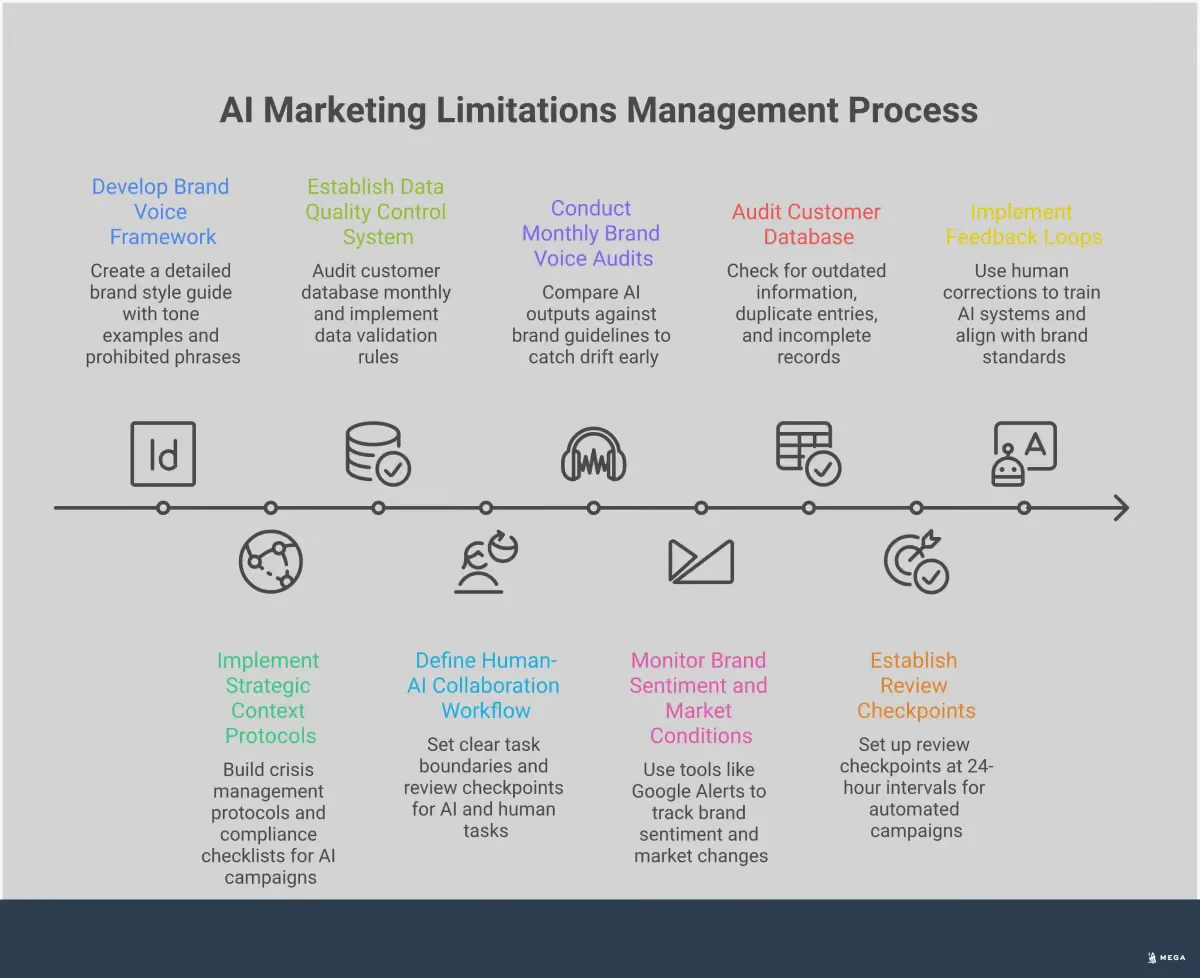
It Can Overlook Compliance and Regulations
An AI model doesn’t automatically know the specific advertising laws for your industry. For businesses in finance, healthcare, or legal services, this is a significant risk. An AI might generate compelling ad copy with promising claims that inadvertently violate strict regulations, putting your business in legal trouble. While AI can analyze data to find effective messaging, it can’t interpret the legal jargon of a compliance document. This is why a human expert needs to review and approve marketing materials in regulated fields. Having a system with human oversight ensures your campaigns are not only effective but also fully compliant.
It Can't Manage a Crisis or Reputational Risk
When a crisis emerges, whether it’s a negative news story or a widespread service issue, your marketing needs to adapt instantly. AI, however, operates on pre-set instructions and historical data. It will likely continue running scheduled promotions as if nothing is wrong, which can make your brand appear insensitive or out of touch. Responding to a crisis requires empathy, strategic pausing of campaigns, and crafting careful public statements. These are tasks that demand human crisis management skills. An algorithm can optimize an existing campaign, but it can't invent a new, sensitive strategy on the fly to protect your brand's reputation.
It Misses the Nuance in Customer Communications
AI can draft emails and social media replies, but it often struggles with the subtle art of human conversation. It can't easily detect sarcasm, frustration hidden behind polite words, or the cultural context of a customer's comment. This can lead to automated responses that feel robotic, miss the point, or even escalate a minor issue by providing a tone-deaf answer. Building strong customer relationships depends on genuine connection and understanding. AI lacks the ability to grasp the emotional nuances that are key to effective communication, making human interaction essential for handling sensitive customer-facing conversations and maintaining your brand's personality.
What Are the Ethical Lines in AI Marketing?
As powerful as AI is, its capabilities bring up important ethical questions for marketers. Using AI responsibly means thinking carefully about how customer data is handled and how your brand communicates with its audience. The goal isn't just to be efficient; it's to be trustworthy. When you automate marketing tasks, you're still accountable for the outcomes, from protecting user privacy to ensuring your messages are fair and transparent.
These concerns aren't reasons to avoid AI altogether. Instead, they highlight the need for a balanced approach where technology supports human strategy, not replaces it. For small businesses, building a reputation on trust is everything. That means using AI as a tool to enhance customer relationships, not as a shortcut that compromises them. By understanding the ethical landscape, you can make informed decisions about which tools to use and how to implement them in a way that aligns with your brand’s values and respects your customers. This is where having a human in the loop becomes critical for navigating complex situations.
Understanding Privacy and Data Security Risks
AI marketing tools are effective because they analyze vast amounts of customer data. However, the collection of this information carries significant responsibility. Data privacy is a major concern, as any breach can expose sensitive user details and severely damage your brand's reputation. Customers are increasingly aware of how their data is used and expect businesses to handle it with care.
As a business owner, it's your job to ensure any AI platform you use complies with regulations like GDPR and CCPA. This means being transparent with your customers about what data you're collecting and why. The convenience of AI should never come at the cost of security or your customers' trust.
Automated Targeting vs. Building Real Trust
AI algorithms are excellent at optimizing campaigns and targeting specific demographics based on data patterns. But efficiency isn't the same as connection. While AI can execute a predefined strategy flawlessly, it can’t invent a new one from scratch or understand the creative spark needed to build a genuine bond with an audience. Over-reliance on automated targeting can feel impersonal and may not foster the genuine trust that turns a one-time buyer into a loyal fan.
True brand loyalty comes from authentic, creative, and empathetic communication. AI can help deliver that message at scale, but the core idea and the strategy behind it still need a human touch to resonate deeply with people.
When Does Automation Hurt Customer Relationships?
Automation is a huge time-saver, but there's a fine line between helpful and impersonal. Using AI to handle every customer touchpoint can strip your brand of its personality and make interactions feel robotic. While it’s great for sending shipping notifications or answering basic FAQs, it can fall short in situations that require empathy, nuance, or creative problem-solving.
Building lasting customer relationships depends on making people feel seen and valued. A personal email from a founder or a thoughtful reply on social media can have a much greater impact than a perfectly optimized but generic AI response. The key is to automate the routine tasks so you have more time for the meaningful, human-led interactions that truly define your brand.
How Does Poor Data Quality Affect AI Marketing?
An AI marketing tool is only as effective as the data it learns from. For small businesses, this means the customer information, website analytics, and market research you provide must be clean and accurate. If your data is messy, incomplete, or skewed, the AI’s output will be too. This can lead to campaigns that miss the mark and waste your budget. While platforms like MEGA AI build their agents on massive, high-quality datasets—like 450 million Google Search data points—to create a strong foundation, the specific data from your business still plays a key role in refining your strategy. Understanding the risks of poor data quality is the first step to avoiding them.
The Impact of Biased or Low-Quality Data
If an AI is trained on data that doesn’t represent your entire audience, its recommendations will be inherently biased. This happens when the initial dataset is skewed toward a specific demographic, location, or behavior. For example, if an AI only analyzes purchase data from your male customers, it might create ad campaigns that completely ignore the interests and needs of your female audience. This kind of bias can cause you to miss out on significant market segments. As one report on AI marketing mistakes notes, biased outputs lead to ineffective strategies and a poor understanding of customer needs.
How Flawed Inputs Create Flawed Strategies
Beyond the initial training data, the ongoing information you feed an AI system directly impacts its performance. Flawed inputs, such as an outdated customer list or incorrectly tagged website analytics, can cause an AI to make poor recommendations. It might suggest optimizing for keywords related to a discontinued product or targeting ads to customers who haven't engaged with your brand in years. These incorrect predictions can misguide your marketing efforts and lead to wasted resources. Ensuring your data is consistently clean and up-to-date is essential for getting reliable, effective results from any AI tool.
The "Garbage In, Garbage Out" Problem
This classic computing principle is especially true for AI in marketing. The concept of "garbage in, garbage out" means that if you provide an AI with inaccurate or poorly structured data, you can only expect flawed insights in return. The AI isn’t at fault; it’s simply processing what it’s given. For small businesses, this highlights the importance of data hygiene. Before implementing an AI tool, take the time to clean up your CRM, organize your analytics, and ensure your inputs are accurate. This simple step ensures your AI has a solid foundation to work from, leading to smarter strategies and better campaign outcomes.
The Human Skills AI Can't Replace
While AI is a powerful tool for handling repetitive tasks and analyzing data, it can't replicate the core qualities that make your business unique. The most effective marketing strategies combine the efficiency of automation with human insight. At MEGA AI, we build our services around this principle, using AI to execute tasks while relying on human expertise for strategy and oversight. This "human-in-the-loop" approach ensures you get the speed of AI without sacrificing the nuance that builds a loyal customer base.
Certain skills are fundamentally human, giving you a competitive edge that technology alone can't match. These abilities are crucial for building a brand that connects with people, not just algorithms. Understanding where AI stops and human expertise begins is key to using these tools effectively. It allows you to delegate the right tasks to automation while focusing your energy on the areas where you create the most value: creative thinking, genuine connection, and strategic leadership.
Creative Problem-Solving and True Innovation
AI excels at optimizing what already exists. It can analyze thousands of data points to suggest a better headline or refine ad targeting. However, it struggles to generate truly original ideas from scratch. As one analysis from Advertising Week notes, AI algorithms lack the originality to come up with new campaign strategies. Your ability to connect seemingly unrelated ideas, spot a new trend in your community, or invent a completely novel marketing angle is a uniquely human skill. An AI might suggest ten variations of your last successful promotion, but you’re the one who can dream up a new partnership or event that no one has ever tried before.
Empathy and Emotional Intelligence
Marketing is about connecting with people, and genuine connection requires empathy. AI can simulate understanding through sentiment analysis, but it can't feel what your customers feel. This emotional intelligence is vital for building lasting relationships, handling a customer complaint with grace, or writing copy that truly resonates. Machine-made marketing often lacks the warmth and authenticity that builds trust. Your ability to listen, understand a customer's frustration, and respond with genuine care is something no algorithm can replicate. This human touch is what turns a one-time buyer into a loyal advocate for your brand.
Strategic Thinking That Goes Beyond Data
Data provides a roadmap of where you've been, but it doesn't always show the best path forward. AI is limited to the patterns within the data it's given. True strategic thinking involves looking beyond the numbers to see the bigger picture. It requires intuition, foresight, and an understanding of market dynamics that aren't always quantifiable. Researchers point out there's still a need for human insights to navigate the limitations of AI in business. As a business owner, you can make strategic decisions based on your industry experience, ethical considerations, and long-term vision—qualities that go far beyond pattern recognition.
How to Implement AI in Your Marketing Strategy
Bringing AI into your marketing isn't about flipping a switch and letting it run wild. A thoughtful approach ensures you get the benefits of automation and data analysis without sacrificing your brand's voice or strategic direction. It’s about integrating AI as a powerful assistant that executes specific tasks, freeing you to focus on the bigger picture. For small businesses, this means finding the right balance between technology and the human touch that makes your brand unique. This strategic implementation is what separates successful AI adoption from a costly experiment that produces generic, off-brand results.
The key is to be deliberate. By following a structured process, you can identify where AI will have the most impact, choose tools that align with your goals, and empower your team to use them effectively. This step-by-step approach helps you avoid common pitfalls, like generating generic content or launching campaigns that miss the mark. It turns AI from a complex concept into a practical tool that helps you work smarter, not just faster. This guide will walk you through the essential steps to integrate AI thoughtfully and effectively.
1. Set Clear Goals
Before you explore any AI tools, you need to define what you want to accomplish. Without a clear objective, it’s easy to get distracted by flashy features that don’t actually move your business forward. Start by asking what specific marketing challenge you want to solve. Do you need to produce more content to improve your SEO, or do you want to get better returns from your ad spend? Your goals should be specific and measurable. For example, you might aim to increase blog output from two to eight posts per month or reduce the time your team spends on keyword research by 50%. According to marketing experts at ON24, you should decide exactly what you want AI to help you achieve. This clarity will guide every other decision in the implementation process.
2. Evaluate Your Current Tools and Processes
Next, take a close look at your existing marketing workflow. Map out the steps you take to create a blog post, launch a paid ad campaign, or analyze performance data. This audit will help you identify the biggest bottlenecks and the most time-consuming, repetitive tasks. Are you spending hours trying to come up with ad copy variations? Is analyzing campaign data a manual process that takes days? These are the areas where AI can provide the most immediate value. By understanding where your current processes have gaps, you can find an AI tool that fills them instead of just adding another layer of complexity to your marketing stack.
3. Choose the Right AI Tools
With your goals and process gaps in mind, you can start looking for the right AI solution. The market is full of options, from standalone copywriting tools to comprehensive platforms. The best choice is one that fits your specific needs, is easy for your team to use, and integrates with the systems you already have. For small businesses, an end-to-end platform like MEGA AI can simplify this process by combining SEO and Paid Ads automation in one place. It connects directly with popular CMS and ad platforms, allowing you to manage everything without juggling multiple tools. Look for solutions that are built to solve your specific problems, whether that’s scaling content or optimizing ad spend.
4. Train Your Team
An AI tool is only effective if your team knows how to use it properly. Training should go beyond just learning the software’s features. It’s crucial that everyone understands both the capabilities and the limitations of the AI. Your team should know which tasks are ideal for automation and which ones require human oversight, like final content reviews to ensure brand voice consistency or strategic campaign decisions. This ensures that AI is used as a supportive tool, not a replacement for critical thinking. When your team is confident in how to leverage AI, it becomes a natural part of the workflow rather than a source of confusion.
5. Start with a Small Pilot Project
Instead of overhauling your entire marketing strategy at once, begin with a small, manageable pilot project. This allows you to test the AI tool in a low-risk environment and see how it works in practice. For example, you could use AI to generate first drafts for a single blog series or create ad variations for one specific campaign. This approach lets your team get comfortable with the new technology and gives you a chance to refine your process. A successful pilot project builds confidence and provides valuable insights that you can apply as you roll out AI to other areas of your marketing.
6. Measure and Improve
Finally, implementation is not a one-time event. To get the most out of AI, you need to continuously monitor its performance and make adjustments. Refer back to the specific, measurable goals you set in the first step. Are you hitting your target for content output? Has your ad campaign ROI improved? Use the data to see what’s working and where you can refine your approach. This ongoing cycle of measuring and improving ensures that your AI marketing strategy evolves with your business and continues to deliver meaningful results over time.
How to Blend AI with a Human Touch
The most effective marketing strategies don’t treat AI as a replacement for human marketers but as a powerful partner. The goal is to build a system where technology handles the heavy lifting—data analysis, repetitive tasks, and content scaling—while humans guide the overarching strategy, creativity, and brand voice. This hybrid approach lets you move faster and operate more efficiently without losing the essential human element that connects with your audience.
This is about creating a partnership. AI can generate a dozen blog post outlines based on keyword research in minutes, but a human needs to choose the one that best tells your brand’s story. An AI agent can optimize ad spend across platforms in real-time, but a person should define the campaign's core message and goals. By combining AI's analytical power with human intuition, you get the best of both worlds. This is how you build a marketing engine that is both intelligent and authentic, capable of delivering measurable results while strengthening your brand.
Decide When to Automate and When to Review
Deciding what to automate and what to review yourself is crucial. The best approach is to automate tasks that are data-driven, repetitive, or require massive scale. Think keyword research, analyzing campaign performance data, or generating hundreds of ad variations for testing. These are areas where AI excels, processing information far faster than any human could. Letting an AI agent handle these tasks frees you up to focus on high-level thinking.
However, any task that requires deep brand understanding, strategic nuance, or a sensitive touch should have a manual review. This includes finalizing your core brand messaging, responding to a customer complaint, or writing a post about your company’s values. While AI can provide a first draft, human oversight ensures the final output is innovative, empathetic, and perfectly aligned with your brand.
How to Stay Authentic While Being Efficient
One of the biggest challenges with AI is ensuring your marketing doesn't sound robotic. Authenticity is your currency, especially as a small business. Customers connect with genuine, relatable messaging, and that’s hard for an algorithm to fake. The key is to use AI for efficiency without sacrificing your brand’s unique personality. Let AI generate initial drafts for social media posts, emails, or blog articles, but always have a person perform the final edit.
This final human touch is where you infuse the content with your brand’s voice, add personal anecdotes, and check for emotional resonance. This balance allows you to produce content at scale while ensuring every piece feels true to who you are. By integrating human insights, you can make sure your messaging remains genuine and builds real connections with your audience.
Create Your Own Quality Control Process
To successfully integrate AI, you need clear quality control systems. This isn’t about micromanaging the technology; it’s about setting it up for success. Start by creating a detailed brand style guide that outlines your tone of voice, key messaging points, and words to avoid. Many advanced AI tools can use this guide to generate more on-brand content from the start.
Next, establish a clear workflow for review and approval. For critical content like ad campaigns or website copy, ensure there’s always a final human sign-off before it goes live. For less critical tasks, you might periodically spot-check the AI’s output to ensure it’s meeting your standards. Having robust quality control processes in place allows you to trust your AI tools while protecting your brand’s reputation and ensuring your marketing efforts remain effective.
How to Make AI Work for Your Small Business
Understanding the limits of AI doesn’t mean you should avoid it. For a small business, AI can be a powerful partner that handles time-consuming work, freeing you up to focus on strategy and customer relationships. The key is to use it thoughtfully. Instead of looking for a single tool to run your entire marketing department on autopilot, think of AI as a specialist you can hire for specific jobs.
By being selective about what you automate and maintaining control over your brand’s core identity, you can get the efficiency of AI without sacrificing the human connection that makes your business unique. This approach allows you to scale your efforts in a way that feels authentic to your customers. It’s about finding the right balance where technology supports your vision, rather than defining it. The following steps will help you integrate AI into your marketing workflow in a smart, sustainable way.
Choose the Right Marketing Tasks to Automate
Not every marketing task is a good candidate for automation. The best place to start is with repetitive, data-heavy jobs that consume a lot of time but require little creative or strategic input. Think of tasks like initial keyword research, analyzing campaign performance data, or generating first drafts for product descriptions. Automating these efforts allows even the smallest teams to achieve significant outreach.
For AI to be effective, it needs high-quality data. Before you automate, ensure your inputs are clean and relevant. This "garbage in, garbage out" principle is critical. By focusing on automating the right tasks with good data, you can build a solid foundation for your SEO and paid ad campaigns.
How to Maintain Your Brand's Unique Voice
Your brand voice is your personality—it’s how you connect with customers and stand out from the competition. While AI is great at producing content at scale, it often lacks the nuance and originality to capture a unique brand personality on its own. Machine-generated text can feel generic and disconnected if left unedited.
The most effective approach is to combine AI with human insight. Use AI tools to generate ideas, outlines, or first drafts, but always have a human review and refine the final output. This ensures the content aligns with your brand’s tone, speaks to your audience’s specific needs, and carries the authentic touch that only a person can provide. This keeps your marketing from losing its originality and connection.
Future Trends in AI Marketing
While it's important to understand the current limitations of AI, the technology is evolving at an incredible pace. The way we think about marketing is set to change dramatically as AI becomes more sophisticated and autonomous. Looking ahead, a few key trends are emerging that will reshape how businesses connect with customers. These shifts move beyond simple automation and data analysis, pointing toward a future where AI acts as a strategic partner in entirely new ways. For small businesses, staying aware of these trends is key to remaining competitive.
Agentic Marketing
Imagine a future where your customers don't search for products themselves, but instead send an AI assistant to do it for them. That's the core idea behind agentic marketing. These AI agents will be empowered to research, evaluate, and even purchase products on a user's behalf. This marks a major shift from a 'customer-first' to a 'machine-customer-first' strategy. For your business, this means your marketing will need to appeal not just to human emotions but also to the logical, data-driven criteria of an AI agent. Your website, product information, and reviews will need to be structured in a way that these agents can easily process and trust.
Generative Engine Optimization (GEO)
For years, the goal of SEO has been to rank on the first page of Google. Now, with the rise of AI-powered search and chatbots, that goal is evolving. Generative Engine Optimization (GEO) is the new frontier, focusing on making your content the trusted source for AI models. When a user asks a question, you want the AI to use your information to formulate its answer. This requires a shift toward creating highly structured, authoritative, and easily digestible content. As Harvard Business Review notes, this new landscape favors brands whose information is trusted and simple for AI to synthesize, making high-quality content more critical than ever.
Causal AI
Most current AI marketing tools are great at finding correlations—for example, they can tell you that customers who buy product A also tend to buy product B. Causal AI takes this a step further by aiming to understand *why*. This emerging technology focuses on identifying cause-and-effect relationships, which can lead to much smarter marketing decisions. Instead of just knowing that a campaign performed well, Causal AI can help determine if your ad spend directly caused the increase in sales or if another factor, like a competitor's misstep, was the true driver. For small businesses, this means moving from guesswork to a clear understanding of what truly influences customer behavior.