
As a small business owner, you wear a lot of hats. You’re the CEO, the head of marketing, and the lead salesperson, all at once. It’s easy to feel stretched thin, with critical tasks like SEO and advertising often getting pushed aside. This is where AI for Business acts as a force multiplier for your team. Think of it as an expert assistant that handles the complex, time-consuming work so you can focus on strategy and customer relationships. This guide provides a clear roadmap for transforming your operations with AI.
Key Takeaways
- Embrace AI as a competitive requirement: Businesses that don't adopt AI risk falling behind competitors who are moving faster and making smarter decisions. Integrating AI empowers your team with tools for automation and data analysis to secure your market position.
- Start with your biggest operational bottlenecks: The most effective way to adopt AI is to identify the most time-consuming tasks in your workflow, like content creation or ad management, and find a tool that automates them. This approach ensures a clear and immediate return.
- Build a strategy before you buy the software: A successful AI integration starts with a clear plan. Define your goals and key performance indicators first, then choose a tool that aligns with them to ensure you can measure its impact on your business.
How Can AI Actually Grow Your Business?
AI isn't just a buzzword for large corporations. It's a practical set of tools that can directly impact your bottom line by making your marketing smarter, your operations more efficient, and your customer insights clearer. For small and local businesses, this means gaining a competitive edge that was once out of reach. Instead of thinking of AI as a complex, futuristic concept, it's more helpful to see it as a way to automate and optimize the work you're already doing. It handles repetitive tasks, analyzes data at a massive scale, and frees you up to focus on strategy and customer relationships.
Is AI's Impact Bigger Than the Internet?
It’s a bold claim, but many experts believe AI's potential impact is several times larger than that of the internet. Think of where we are now as the "dial-up phase" of AI. We're just starting to see what's possible, and the opportunities are massive. Just as the internet fundamentally changed how businesses operate, from communication to sales, AI is set to redefine strategy, creation, and execution. For a small business, this means access to capabilities like automated SEO campaigns and intelligent ad management that can level the playing field. This creates so much potential for growth that was previously unimaginable without a large team.
Why Adopting AI Is No Longer Optional
Staying competitive means embracing new technology. The reality is that if you don't adapt, your competitors will. Businesses that integrate AI will simply move faster, make smarter decisions, and serve their customers better. This isn't about replacing people; it's about empowering them. As one expert put it, "someone that uses AI will take your job," and the same is true for businesses. Integrating AI into your workflow is a core part of modern digital transformation initiatives. Companies that make this transition now are the ones that will outshine others, securing their place in the market for years to come. It's about evolving your skill sets and business processes to work with these powerful new tools.
Understanding AI Market Growth
The AI market is expanding at a remarkable pace, with projections showing it could grow from hundreds of billions to over two trillion dollars in the coming years. This growth isn't just happening in a vacuum; it's driven by the real-world need for companies to innovate and stay competitive. Using Artificial Intelligence in business is no longer a futuristic concept but a present-day requirement for growth. This rapid expansion signals a fundamental shift in how businesses operate, making AI a core component of modern strategy. For small businesses, this means more accessible and powerful tools are becoming available, helping them make smarter choices and reduce operational costs.
What Happens to Businesses That Don't Adapt to AI?
Choosing not to integrate AI into your operations is more than just passing on a new technology. It’s a decision that can create a significant and growing disadvantage. As competitors adopt AI to become faster, smarter, and more efficient, the gap between them and non-adopters widens. This isn't about a distant future. It's a shift happening right now that directly impacts market position, customer loyalty, and long-term survival.
How AI Creates a Widening Competitive Gap
The businesses that are pulling ahead are the ones using AI to their advantage. They strategically implement AI tools to automate routine marketing tasks, analyze customer data for better insights, and deliver personalized experiences at scale. This doesn't just make them more efficient. It frees up their teams to focus on strategy, creativity, and building customer relationships—high-value work that truly grows a business. Companies that stick to purely manual processes will find it increasingly difficult to compete on speed, cost, and customer satisfaction. The result is a competitive gap that becomes harder to close over time as AI-powered businesses continue to learn and optimize.
Avoid Losing Market Share and Becoming Obsolete
Failing to adapt to AI directly threatens your position in the market. While technical hurdles are a real concern for many companies, the difficulties in integrating AI are critical to overcome for staying relevant. The core risk isn't that AI will replace your business, but that a competitor using AI will. A competitor can use AI to generate more qualified leads, optimize their ad spend with greater precision, and produce high-quality content faster than you can. Over time, this operational advantage allows them to capture more market share, leaving your business to compete for a smaller piece of the pie. Without evolving, you risk becoming less efficient, less visible, and ultimately, obsolete.
Understanding Key AI Technologies
The term "AI" can feel a bit abstract, but it’s really an umbrella for several distinct technologies that solve different business problems. You don’t need to be an expert in all of them, but understanding the basics will help you see where they can fit into your operations. For most small businesses, the real impact comes from three key areas: Machine Learning, Natural Language Processing, and Robotic Process Automation. Each one offers a different way to automate tasks, gather insights, and work more efficiently.
Machine Learning (ML)
Machine Learning is a type of AI that gives systems the ability to learn from data and identify patterns without being explicitly programmed. Think of it as the engine that powers predictive insights. For example, ML can analyze your past sales data to forecast future demand or review your ad campaign performance to automatically shift your budget to the best-performing ads. This is how platforms like MEGA AI can optimize ad spend in real-time. Instead of guessing, you’re making data-driven decisions to improve efficiency and get a better return on your marketing investment.
Natural Language Processing (NLP)
Natural Language Processing gives computers the ability to understand, interpret, and generate human language. This technology is behind chatbots that provide customer support and tools that analyze customer reviews for sentiment. For a small business, one of the most powerful applications of NLP is content creation. It can help you draft blog posts, write social media updates, and generate product descriptions that are not only coherent but also optimized for search engines. This is a core part of how AI in business helps streamline communication and marketing efforts, saving you hours of writing time.
Robotic Process Automation (RPA)
Robotic Process Automation is designed to handle repetitive, rule-based tasks. It uses software "robots" to mimic human actions, like entering data into a spreadsheet, processing invoices, or generating routine reports. While it’s less about learning and more about doing, RPA is incredibly valuable for freeing up your time. By automating these predictable administrative workflows, you and your team can focus on more strategic work that requires creativity and critical thinking. It’s a straightforward way to use AI to reduce operational costs and minimize human error in day-to-day tasks.
How Can AI Improve Your Business Operations?
Integrating AI into your business isn't about replacing your team with robots. It's about giving your team superpowers. Think of AI as a way to streamline your operations, sharpen your strategy, and deepen your customer relationships. For small businesses, where every minute and dollar counts, this is a game-changer. Instead of getting bogged down by repetitive tasks or making decisions based on gut feelings, you can use AI to automate the tedious work and get clear, data-backed insights.
This allows you to free up valuable time and mental energy to focus on what truly matters: building your brand, innovating your products, and connecting with your customers. The right strategic implementation of AI can handle complex marketing campaigns, analyze performance data in real-time, and help you understand your customers on a deeper level. It works behind the scenes to make your entire operation more efficient and effective, giving you the capabilities of a large enterprise without the massive overhead. By handling key functions like SEO and paid ads, AI agents can become a core part of your growth engine.
Automate Processes to Improve Efficiency
One of the most immediate benefits of AI is its ability to automate routine tasks. Think about all the time you spend on manual marketing activities, from scheduling social media posts to updating keyword lists. AI can take over these responsibilities, executing them faster and more consistently than any human could. This frees you and your team to concentrate on higher-value work that requires creativity and strategic thinking. For example, an AI marketing tool can analyze campaign data around the clock, automatically adjusting bids and targeting to ensure you get the best possible return on your investment, leaving you to focus on the bigger picture.
Make Smarter, Data-Driven Decisions
Guesswork can be costly. AI helps you move beyond intuition by analyzing vast amounts of data to uncover actionable insights you might otherwise miss. It can identify trends in customer behavior, predict which marketing channels will perform best, and show you exactly where your efforts are paying off. This data-driven approach allows you to make more informed decisions about where to allocate your budget and resources. Instead of wondering if your marketing is working, you can see the results clearly and make adjustments based on real-time performance metrics, ensuring every decision is strategic and impactful.
Personalize Your Customer Experience
Customers today expect personalized interactions. AI makes it possible to deliver tailored experiences at scale, something that was once only feasible for large corporations. By analyzing customer data, AI can help you understand individual preferences and behaviors, allowing you to create highly targeted marketing messages, product recommendations, and content. This level of personalization makes customers feel seen and understood, which builds loyalty and drives sales. For local businesses, AI can even identify opportunities to connect with customers by highlighting community-specific offers or services, strengthening your local presence.
Enhance Human Resources
For a small team, every member’s skill set is critical. AI can help you invest in your people more effectively by identifying where they can grow and suggesting personalized training programs. Instead of a one-size-fits-all approach, AI tools can analyze an employee's current role and performance to pinpoint specific skill gaps. This allows you to develop targeted learning paths that are relevant to both the individual's career goals and the company's needs. By making training more personal and efficient, you can build a more capable and adaptable team without needing a dedicated HR department.
Strengthen Cybersecurity
Cybersecurity is a major concern for any business, but it can feel overwhelming for a small operation. AI provides a powerful layer of defense by constantly monitoring your systems for threats. It can detect unusual activity, identify potential weak spots in your network, and stop attacks before they cause damage. Unlike manual security checks, AI-driven systems work around the clock to protect your business from threats like fraud and malware. This real-time protection acts as a vigilant security guard for your digital assets, giving you peace of mind and safeguarding your company’s data and reputation.
What AI Applications Give You a Strategic Advantage?
Understanding AI's potential is one thing; knowing which applications will actually make a difference for your business is another. The right AI tools don't just add a layer of technology; they become a core part of your strategy, giving you a distinct competitive edge. Instead of thinking of AI as a single, complex system, it's more helpful to see it as a set of specialized tools designed to solve specific business problems. From marketing to customer service, these applications can handle tasks that once required significant time, resources, or specialized expertise.
The true advantage comes from using AI to move beyond simple automation. While AI can certainly handle repetitive tasks, its real power lies in its ability to analyze, predict, and optimize. It can identify patterns in your customer data that you might miss, create highly targeted marketing campaigns, and even manage your entire SEO strategy from start to finish. By integrating these capabilities, you free up your team to focus on high-level strategy and creative work, while the AI handles the execution. This is how small businesses can begin to operate with the efficiency and insight of a much larger company. With platforms like MEGA AI, these advanced tools are no longer out of reach.
Automate Your Marketing and Lead Generation
AI can act as an intelligent assistant for your marketing efforts, guiding customers, answering questions, and capturing leads around the clock. Tools like AI-powered chatbots can engage website visitors instantly, ensuring you never miss an opportunity to connect with a potential customer. Beyond customer service, AI agents can plan, launch, and manage entire advertising campaigns across multiple platforms. They can test different ad creatives, adjust budgets in real time, and target the most promising audiences, all without manual intervention. This allows you to automate your campaigns and generate qualified leads while you focus on running your business.
Streamline Content Creation and SEO
Creating a steady stream of high-quality content is essential for attracting and engaging an audience, but it's also incredibly time-consuming. AI content generators can produce draft articles, social media posts, and email campaigns in minutes, not hours. This allows you to focus on refining the message and strategy rather than starting from a blank page. Furthermore, AI can manage the technical side of search engine optimization. An AI SEO agent can perform keyword research, conduct technical audits, fix site issues, and even update existing articles to improve their ranking, ensuring your content gets seen by the right people.
Predict Customer Behavior with Analytics
AI marketing tools are exceptionally good at analyzing massive datasets to find meaningful patterns. By looking at your CRM records, website analytics, and advertising data, AI can start to predict customer behavior with surprising accuracy. It can identify which customers are most likely to make a purchase, who might be at risk of churning, and what products or services they are most interested in. This predictive insight allows you to create highly personalized marketing campaigns that speak directly to customer needs, ultimately leading to better engagement and a higher return on your marketing investment.
Leverage Industry-Specific AI Solutions
While general AI tools for marketing and operations are powerful, specialized solutions are also emerging to tackle unique industry challenges. From healthcare to finance, AI is being tailored to streamline specific workflows, automate complex tasks, and provide insights that are unique to that field. Understanding these applications can offer a clearer picture of how AI adapts to different business needs. Even if your industry isn't listed here, these examples show how AI can be applied to solve specific problems, offering a model for how it could transform your own operations.
AI in Healthcare
In the healthcare sector, AI is making a significant impact by handling administrative and diagnostic tasks. For medical practices, AI can automate billing, manage scheduling, and organize patient health data, which reduces the administrative load on staff. This allows healthcare professionals to focus more on patient care. Beyond administration, AI also plays a role in improving diagnostic accuracy and helping to facilitate disease detection. By analyzing medical images and patient data, AI algorithms can identify patterns that might be missed by the human eye, leading to earlier and more accurate diagnoses.
AI in Banking and Finance
The financial industry uses AI to improve both security and customer service. AI algorithms are constantly at work monitoring transactions to detect fraudulent activity in real time, protecting both the institution and its customers. In customer-facing roles, AI-powered chatbots and virtual assistants handle routine inquiries, freeing up human agents to manage more complex issues. Similar to other industries, AI technologies like natural language processing help financial providers have more effective communication with clients, offering personalized advice and support based on their financial data and goals.
AI in Logistics
For businesses that manage a supply chain, AI is a powerful tool for optimizing every step of the process. AI systems can analyze shipping routes to find the most efficient paths, track inventory in real time to prevent stockouts, and predict future demand based on historical data and market trends. These tasks are often complex and data-intensive, but AI can take over these responsibilities, executing them with a speed and consistency that would be impossible to achieve manually. This leads to reduced operational costs, faster delivery times, and a more resilient supply chain.
Common Challenges of Using AI for Business
Adopting AI can feel like a major undertaking, and it’s true that there are hurdles to consider. For small businesses, the primary challenges often fall into three categories: budget, technical complexity, and data management. Many entrepreneurs worry that AI is too expensive, too difficult to integrate with their current systems, or that they don’t have the clean, organized data needed to make it work. While these are valid concerns, they are not insurmountable. Understanding these potential obstacles is the first step to creating a strategy that sidesteps them, allowing you to find a solution that fits your business perfectly.
Finding Affordable AI Solutions
The idea that AI is only for large corporations with massive budgets is quickly becoming outdated. Many effective AI tools are designed specifically for small businesses, with pricing models to match. The key is to look beyond the initial price tag and evaluate the total value. A low-cost tool that requires hours of your time to manage isn't a bargain. Instead, consider the return on investment. An AI platform that automates your marketing could cost less than hiring a part-time employee or an expensive agency, delivering far greater results and freeing you up to focus on other parts of your business.
Overcoming the Technical Learning Curve
Integrating a new tool into your existing workflow can be a significant challenge. You need your website, analytics, and marketing platforms to work together seamlessly. A survey by Deloitte found that many companies struggle with technical incompatibilities when trying to adopt AI. If systems aren't designed to connect properly, you can run into performance issues or data transfer errors. To avoid this, look for AI solutions that offer pre-built integrations with the platforms you already use, such as WordPress, Shopify, or Google Ads. This simplifies the setup process and ensures your new AI capabilities enhance your operations rather than disrupt them.
Handling Data Quality and Privacy
AI systems run on data, and their output is only as good as the information they receive. For many small businesses, customer and operational data might be spread across different systems or contain inaccuracies. Using your organization’s data to power AI can be difficult when you face barriers like poor data accessibility, accuracy, and consistency. Before you implement an AI tool, it’s helpful to assess where your most important data lives and its current state. A good AI partner will not only provide the technology but also help you understand how to best leverage the data you already have while ensuring customer privacy and data security are protected.
Navigating Legal and Security Risks
When you bring AI into your business, you also take on the responsibility of protecting the data it uses. Mishandling customer information within an AI system can lead to serious legal and financial consequences, especially with data protection laws becoming stricter. It’s essential to understand that you are accountable for how these tools operate within your business. This means ensuring that any AI platform you use complies with privacy standards and that your team understands the rules. Creating a simple, clear policy for how employees can use AI is a practical first step in managing these potential legal risks and protecting your customers' information.
Addressing AI Bias and Transparency
AI systems learn from the data they are given, and if that data contains historical biases, the AI can learn and amplify them. For a small business, this could mean an AI-powered ad campaign that unintentionally excludes certain demographics or a content tool that produces culturally insensitive material. Understanding the ethical implications of AI is not just for large corporations. It's about ensuring your marketing is fair, inclusive, and reaches everyone you intend it to. Being transparent about how your AI tools make decisions helps build a foundation of trust and shows your commitment to responsible business practices, which is critical for maintaining a positive brand reputation.
Maintaining Customer Trust Through Disclosure
For any business, but especially for local and small businesses, trust is everything. As you begin to use AI, being open with your customers about it is key to keeping that trust intact. This doesn't require a complex legal document. It can be as simple as updating your privacy policy to mention how AI helps you personalize their experience or what data is used to improve your services. Clear communication reassures customers that you are handling their information responsibly. This transparency is not just about legal compliance; it's a way to maintain customer trust and show that you value their relationship with your business above all else.
How to Choose the Right AI Tools
Selecting the right AI tools for your business can feel like a monumental task, but it doesn't have to be. The key is to focus on what you need to accomplish. Instead of chasing the newest, flashiest technology, look for practical solutions that solve a specific problem, like generating leads or creating content more efficiently. Think about the biggest drains on your time and resources, and start there. The most effective AI tools are the ones that integrate smoothly into your workflow and deliver a clear return, whether that’s in saved hours, increased traffic, or higher sales.
How to Evaluate AI Marketing Platforms
When you're looking at marketing platforms, focus on tools that can act as true assistants for your business. Many tools can help with isolated tasks, but a comprehensive platform can manage entire campaigns from start to finish. Look for solutions that can autonomously handle tasks like planning an SEO strategy, launching ad campaigns, and optimizing your budget. This approach frees you up to focus on your core business instead of getting bogged down in the day-to-day marketing details. The goal is to find a platform that doesn't just offer suggestions but can actually execute the work for you.
Choosing the Right Content and SEO Tools
Content creation is often one of the first areas where businesses apply AI, and for good reason. Tools that generate blog posts, social media updates, and emails can dramatically increase your output. However, creation is only half the battle. The best tools also help you optimize that content to ensure it reaches the right audience. Look for features that go beyond writing, such as automated keyword research, technical SEO fixes, and the ability to update existing articles to improve their performance over time. A tool that both creates and optimizes gives you a significant advantage.
Prioritize Integrations and Scalability
For an AI tool to be truly effective, it needs to work with the systems you already use. Before committing to a platform, verify that it can connect to your website’s content management system (like WordPress or Shopify) and your analytics tools. This integration is critical because it allows the AI to work with clean, consolidated data from across your business, leading to smarter decisions and better results. Also, consider whether the tool can scale with you. A solution that works for you today should also support your growth tomorrow, without requiring a complicated and costly migration.
Popular AI Tools for Small Businesses
The AI landscape is vast, with tools designed for nearly every aspect of running a business. For small business owners, the most valuable tools are those that solve immediate problems and deliver a clear return on investment. Instead of trying to adopt everything at once, it's more effective to focus on a few key areas where AI can make the biggest impact. These generally fall into categories like content creation, operational analysis, and sales management. By choosing tools that address your most significant bottlenecks, you can start seeing the benefits of AI quickly and build a foundation for future growth.
General and Writing Tools
Content creation is a constant demand for any business, but it's also one of the most time-consuming. AI writing assistants can help you produce drafts for blog posts, social media updates, and email newsletters in a fraction of the time it would take to write them from scratch. AI can take over these responsibilities, executing them faster and more consistently than any human could. This frees you and your team to concentrate on higher-value work that requires creativity and strategic thinking. While standalone writing tools are helpful, end-to-end platforms like MEGA AI integrate content generation with a full SEO strategy, ensuring your content is not only well-written but also optimized to rank.
Research and Operations Tools
Making strategic decisions without solid data is like driving with a blindfold. AI helps you move beyond intuition by analyzing vast amounts of data to uncover actionable insights you might otherwise miss. It can identify trends in customer behavior, predict which marketing channels will perform best, and show you exactly where your efforts are paying off. For example, an AI-powered analytics tool can sift through your website traffic and sales data to pinpoint your most profitable customer segments. This allows you to refine your data-driven strategy and focus your resources where they will have the greatest impact, ensuring your business is running as efficiently as possible.
Sales and CRM Tools
Managing customer relationships and tracking leads is critical for growth, but it can quickly become overwhelming. AI-powered Customer Relationship Management (CRM) systems can automate many of the manual tasks associated with sales, from logging interactions to sending follow-up emails. The businesses that are pulling ahead are the ones using AI to their advantage. They strategically implement AI tools to automate routine marketing tasks, analyze customer data for better insights, and deliver personalized experiences at scale. An AI-driven CRM can score leads based on their likelihood to convert, allowing your sales team to prioritize their efforts and focus on the most promising opportunities, ultimately closing more deals with less manual work.
Practical Tips for Using AI Effectively
Once you've chosen your tools, the next step is to integrate them into your daily workflow. AI is most effective when it's treated as a strategic partner, not just a button to push. By adopting a few key practices, you can ensure that AI works for your brand, aligns with your goals, and delivers a clear return on your investment. These tips will help you move from simply using AI to using it effectively to drive real business growth.
Master a Few Core Tools
The AI landscape is crowded, and it’s easy to get distracted by the sheer number of available tools. Instead of trying to use a dozen different applications, focus on mastering one or two core platforms that solve your biggest challenges. For most small businesses, this means finding a solution that can handle critical functions like SEO and paid advertising. Using an end-to-end platform simplifies your workflow and ensures all your marketing efforts are connected. Remember, the goal is to use AI as a competitive requirement, and that happens when you deeply integrate a powerful tool into your operations, not when you dabble in many.
Train Your AI for Brand Consistency
Your brand's voice is its personality, and it's crucial that your AI-generated content reflects it. Before you start creating content, take the time to "train" your AI. You can do this by providing it with examples of your best-performing articles, ad copy, and social media posts. Share your brand style guide, including your preferred tone, key messaging points, and words to avoid. This process teaches the AI to create work that is not only high-quality but also sounds authentically like you, helping you maintain a consistent brand identity across all your marketing channels.
Always Review AI-Generated Content
AI is an incredibly powerful assistant, but it is not a replacement for human expertise and judgment. It can generate a first draft in seconds, but it's essential to have a human review everything it produces. AI models can sometimes make mistakes or "hallucinate," which means they present incorrect information as fact. Always double-check the output for accuracy, tone, and strategic alignment with your campaign goals. Think of AI as the tool that does 80% of the work, with your final review providing the critical 20% that ensures quality and protects your brand's reputation.
How to Build Your AI Implementation Strategy
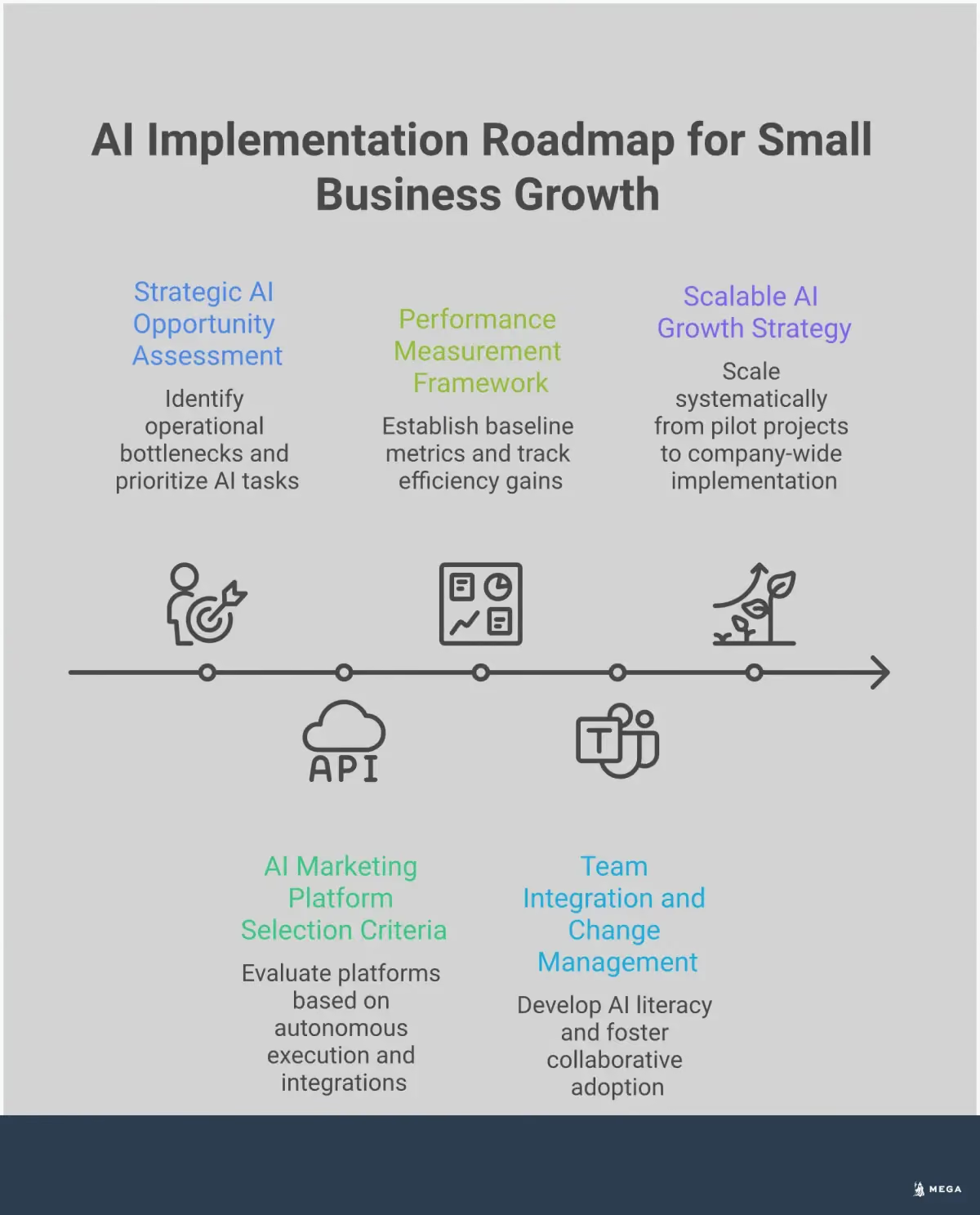
Adopting AI without a plan is a recipe for wasted resources. A clear strategy helps you integrate AI to solve real problems and deliver measurable results. Instead of chasing every new tool, focus on a deliberate approach. This involves identifying the right opportunities, creating a manageable adoption plan, and defining what success looks like for your business.
Find AI Opportunities in Your Current Workflow
Start by looking at your daily workflows. Where are the bottlenecks, and what repetitive tasks consume the most time? Businesses that succeed with AI use it to automate routine tasks, freeing up people for more strategic work. For many small businesses, marketing is a prime area for AI. Instead of spending hours on keyword research or campaign analysis, an AI agent can handle these processes. A platform can manage your entire SEO strategy, from content creation to technical fixes, so you can focus on other parts of your business.
Create a Step-by-Step Adoption Plan
You don’t need to overhaul your business overnight. Start small with a pilot project by choosing one process and finding a tool to improve it. This focused method is a core part of successful digital transformation and makes the process feel manageable. Your goal is to test the technology and demonstrate a clear win before expanding. For instance, you could begin by automating your advertising on a single platform. Using an AI agent to manage your paid ads, you can test creatives and optimize your budget without needing deep technical expertise.
Set Clear Goals and Performance Metrics
Before you implement any AI tool, define what you want to achieve. Setting clear goals is essential for measuring success and ensuring a return on your investment. Are you trying to increase website traffic, reduce customer acquisition costs, or save 10 hours of administrative work each week? Your goals will determine which AI success metrics you should track. By establishing these benchmarks upfront, you can objectively evaluate if the solution is working. When you're ready to explore your goals, you can book a demo to see how an AI agent can be tailored to your business objectives.
How to Measure the ROI of AI
Adopting any new technology is an investment, and AI is no different. To justify the cost and effort, you need a clear way to measure its return on investment (ROI). The good news is that the impact of AI is highly measurable, but it requires looking beyond just the initial sales numbers. A comprehensive view of AI's ROI includes direct revenue, but also significant gains in operational efficiency, cost reductions, and long-term customer value.
Think of it this way: if an AI tool saves your team 10 hours a week on content creation, that’s a direct cost saving and a productivity gain. If it improves your ad targeting and lowers your cost per lead, that’s a measurable marketing win. The key is to establish your baseline before you begin. You need to know your current performance metrics inside and out. This allows you to create a clear before-and-after picture, making it easy to see exactly how AI is moving the needle for your business. By tracking the right metrics from the start, you can confidently assess the value of your AI tools and make informed decisions about where to invest next.
Define Your Key Performance Indicators (KPIs)
Before you can measure success, you have to define what success looks like. Start by identifying the key performance indicators (KPIs) that matter most to your business goals. If your goal is lead generation, your KPIs might be cost per lead, conversion rate, and the number of qualified leads per month. If you’re focused on brand awareness, you might track organic traffic, keyword rankings, and social media engagement. It’s helpful to create a performance dashboard that tracks both your traditional business metrics and your new AI-specific ones. This gives you a single, clear view of performance and helps you connect AI activities directly to business outcomes.
Track Efficiency Gains and Cost Savings
Some of the most significant returns from AI come from efficiency. When you automate repetitive tasks, you free up your team to focus on high-level strategy. These gains are a core part of your ROI calculation. Start tracking the time spent on tasks before and after implementing an AI solution. For example, an AI-powered SEO agent can automate keyword research, content writing, and technical fixes, saving dozens of hours each month. Similarly, an AI ads manager can optimize budgets automatically, reducing wasted spend. These operational efficiencies translate directly into cost savings and improved productivity, making them critical metrics for success.
Measure Customer Acquisition and Lifetime Value
AI can fundamentally change how you attract and retain customers. On the acquisition side, AI tools can refine your ad targeting to lower your customer acquisition cost (CAC). On the retention side, they can personalize customer communications to increase loyalty and repeat purchases. This is where measuring customer lifetime value (CLV) becomes essential. By tracking how AI-driven strategies impact the long-term value of each customer, you can see how the technology contributes to sustainable growth. A higher CLV means you’re not just acquiring customers more efficiently; you’re acquiring the right customers who will stay with your business longer.
What Team and Culture Shifts Does AI Require?
Adopting AI is more than just plugging in new software. It’s a cultural shift that changes how your team approaches problems and makes decisions. To truly get the most out of AI, you need to prepare your people and your processes. This involves fostering new skills, managing the human side of change, and committing to a more data-informed way of working. When your team understands and trusts the technology, they can use it to achieve incredible results. This foundation is what turns an AI tool into a true strategic advantage for your business.
How to Develop AI Literacy on Your Team
You don't need a team of data scientists to use AI, but you do need a team with basic AI literacy. This means everyone, from marketing to customer service, should have a fundamental understanding of what AI is, what it can do for their role, and how to use it responsibly. Leaders can champion this by investing in training programs and encouraging experimentation. Start small by creating spaces for employees to share what they’re learning. The goal isn’t to make everyone an expert but to build confidence and curiosity, empowering your team to spot new opportunities where AI can help them work smarter.
Manage Change and Address Employee Concerns
The idea of AI can be unsettling for employees who may worry about their job security. It's critical to address these concerns head-on with clear and honest communication. Frame AI as a supportive tool—an assistant that handles repetitive tasks so your team can focus on more strategic, creative, and fulfilling work. Organizations that successfully integrate AI create ecosystems of trust by being transparent about how and why new tools are being introduced. Involve your team in the implementation process and listen to their feedback. This collaborative approach helps reduce fear and builds buy-in, making the transition smoother for everyone.
Build a Culture of Data-Driven Decisions
AI tools run on data. To use them effectively, your business needs a culture that values data as a core asset. This means moving away from relying solely on gut feelings and instead using insights from your business data to guide your strategy. Effective AI marketing requires clean information from your CRM, ad platforms, and website analytics. This shift toward informed decision-making allows AI to deliver its full potential, from personalizing customer experiences to optimizing your marketing spend. When your whole team is focused on the story the data is telling, your AI strategy will have a much greater impact.
The Rise of New AI-Related Roles
The integration of AI doesn't necessarily mean hiring a team of specialists. Instead, it reshapes existing roles and creates new responsibilities within your current team. Your marketing coordinator might become the person who directs the AI, setting campaign goals and reviewing the content it produces. This shift is less about job replacement and more about job evolution. As AI handles the repetitive, data-heavy tasks, your team is freed up to focus on strategy, creativity, and customer relationships. This is about empowering your people with better tools, allowing them to manage more complex campaigns and make smarter decisions without getting lost in the manual work.
How to Future-Proof Your Business with AI
Adopting AI isn't a one-time project with a clear finish line. It's an ongoing commitment to evolving how your business operates. To truly gain a lasting strategic advantage, you need to build a foundation that supports continuous learning, growth, and adaptation. This means looking beyond immediate wins and creating a framework that allows AI to become a core part of your company's DNA. By staying informed, scaling thoughtfully, and planning strategically, you can ensure your business not only keeps up but thrives for years to come.
Stay Current with AI Trends
The world of AI moves quickly, and staying informed is critical. New tools and techniques are constantly emerging that can change how you engage with customers and run your marketing campaigns. Set aside time to read industry news, follow AI thought leaders, and test new applications relevant to your business. As AI handles more routine technical tasks, the demand for human-centric abilities like critical thinking, creativity, and collaboration grows. The most successful businesses will be those that invest in both technological tools and the interpersonal skills of their teams.
Scale AI Across Your Company
Initial AI experiments are useful, but the real value comes from strategic, company-wide implementation. Identify processes across your business—from marketing and sales to customer service and operations—where AI can automate routine work. This allows you to free up your team to focus on high-impact activities that require a human touch. However, scaling requires careful planning. Integrating AI with your existing software can present challenges, leading to data bottlenecks or system issues if not managed correctly. Start with a solid plan to ensure your tools work together seamlessly as you grow.
Create a Future-Proof AI Strategy
A sustainable AI strategy is built on a strong data foundation. Effective AI marketing tools rely on clean, organized data from your CRM, ad platforms, and website analytics. Before you implement new AI systems, take the time to consolidate and clean your data sources. Beyond the technology, a successful strategy depends on your company culture. You need to build an environment of trust and transparency where employees feel like partners in the AI adoption process, not replacements. When your team understands the goals and benefits, they are more likely to embrace the technology and contribute to its success.