
For years, sophisticated marketing and operational strategies felt reserved for large corporations. That's no longer the case. An AI-first approach levels the playing field, giving small and local businesses access to powerful automation and data insights. This isn't just about keeping up; it's about getting ahead. By building your operations around intelligent systems, you can move faster and make smarter decisions. This guide shows you how to build an AI business and transform your company into a streamlined, growth-oriented engine, letting you scale more efficiently than your competitors.
Key Takeaways
- Adopt an AI-First Strategy, Not Just Tools: This means redesigning your core operations around intelligent automation instead of simply adding AI software to inefficient, existing workflows.
- Automate Entire Workflows to Gain an Edge: Use AI to manage complex, multi-step processes like SEO content creation or paid ad campaigns, allowing a small team to operate with greater efficiency and scale.
- Start with a Gradual and Strategic Plan: Begin your transformation by identifying one or two high-impact areas for automation, which allows your team to adapt and helps build momentum from early, measurable successes.
The Growing AI Market: A Look at the Numbers
Adopting an AI-first mindset aligns your business with a major technological shift. The data shows a clear move toward integrating artificial intelligence into core operations, creating a massive opportunity for small businesses to access capabilities once out of reach. Understanding this growth helps clarify why now is the time to build intelligent automation into your business model. The numbers describe a present reality where AI is becoming the standard for efficient, data-driven operations that help companies stay competitive.
Key Statistics on AI Adoption and Impact
The rate at which businesses are integrating AI is accelerating, moving from experimental use to practical application. According to research from IBM, AI use in businesses has doubled since 2017, and 63% of companies plan to increase their AI investments soon. This widespread adoption means AI is no longer a niche technology for large corporations. It's becoming a foundational tool for any company that wants to operate efficiently, making the tools to automate and grow more accessible than ever for small businesses.
Financial Growth in the AI Sector
The financial investment in AI reflects its practical value. The market for hyperautomation, which includes AI-driven business automation, is projected to reach $249 billion by 2032. Similarly, the global cybersecurity market, which relies on AI to detect threats, is expected to grow to over $500 billion by 2030. These figures represent the real-world problems AI is solving, from streamlining workflows to protecting business data. This economic momentum ensures AI tools will become more powerful and accessible for all businesses.
AI's Role in Marketing and Cybersecurity
For many small businesses, AI's most immediate impact is in marketing and security. AI-powered systems analyze data to help you make smarter marketing choices, identifying opportunities a human team might miss. This is what platforms like MEGA AI do by automating entire SEO and paid ads workflows, giving you a competitive edge without a massive team. Beyond marketing, AI is critical for security. It helps protect your networks by identifying unusual activity, preventing data breaches and safeguarding the trust you've built with your customers.
What Does It Mean to Be an AI-First Business?
Thinking "AI-first" isn't just about using a few AI tools. It's a fundamental shift in how a business operates, makes decisions, and creates value. An AI-first company doesn't just add artificial intelligence to its existing processes; it builds its entire strategy around AI's capabilities. This means using data and automation as the core engine for growth, from product development to customer service. For small and local businesses, adopting this mindset is about working smarter, not just harder, and using technology to compete on a larger scale.
Key AI Technologies Driving Business Growth
To build an AI-first business, it helps to understand the core technologies that make it all work. You don't need to be a data scientist, but knowing the basics can help you see the opportunities for your own company. These technologies are the engines running behind the scenes of the tools that can automate your marketing, streamline your operations, and give you a competitive edge. Think of them as the key ingredients that, when combined, create powerful solutions for growth.
Machine Learning (ML)
At its core, Machine Learning is how computers learn from data to make predictions or sort information without being explicitly programmed for every single task. For a small business, this is incredibly powerful. It’s the technology that allows systems to analyze past sales data to forecast future demand or study customer behavior to recommend products they’ll actually want to buy. At MEGA AI, our SEO tools use machine learning to analyze search trends and predict which keywords will bring the most valuable traffic to your site, taking the guesswork out of your content strategy.
Natural Language Processing (NLP)
Natural Language Processing gives computers the ability to understand, interpret, and generate human language, both text and speech. If you’ve ever used a customer service chatbot or a voice assistant, you’ve interacted with NLP. This technology is what allows AI to write blog posts, create ad copy, or even summarize long reports. For local businesses, this means you can generate high-quality, optimized content at scale, helping you connect with your audience and rank higher in search results without spending hours writing.
Computer Vision
Just as NLP helps computers understand language, Computer Vision allows them to "see" and process information from images and videos. This technology can do everything from identifying products in a photo to analyzing foot traffic in a retail store. While it might sound like something for large corporations, its applications are becoming more accessible. For example, social media platforms use it to tag people in photos, and e-commerce sites can use it to power visual search, allowing customers to find products by uploading a picture. It’s another way AI helps computers interpret the world around them.
What an AI-First Company Looks Like
An AI-first company weaves artificial intelligence directly into its business model. Instead of treating AI as a separate department or a one-off project, it’s part of the company’s DNA. These businesses prioritize data collection and use it to automate tasks, which improves efficiency and informs every decision. The goal is to create systems that learn and adapt over time. For small businesses, this approach can provide a significant competitive edge, with AI-powered automation capable of increasing productivity by a wide margin. It’s about building a business that is agile, data-driven, and ready to scale.
Making the Shift to AI-Driven Operations
Moving from a traditional model to an AI-driven one is a process of digital transformation. It involves modernizing operations to make them more efficient and responsive. This shift allows companies to use data and AI to enhance decision-making, turning insights into immediate action. For a local business, this could mean using AI to predict which products will be popular next month or automating marketing campaigns to reach the right customers at the right time. It’s an opportunity to replace outdated, manual processes with intelligent systems that support sustainable growth and improve the customer experience.
How AI Transforms Your Day-to-Day Operations
AI-first companies don't just add AI tools to their existing setup; they rebuild their core operations around intelligent automation. This fundamental shift allows them to move faster and operate more efficiently than competitors. For small businesses, this approach is particularly powerful because it provides a way to compete with larger companies without needing the same level of resources. By rethinking how work gets done, you can transform your operations into a streamlined, growth-oriented engine.
Use AI to Automate Complex Workflows
An AI-first approach streamlines entire workflows, not just simple tasks. For small businesses, AI offers the ability to automate tasks, improve efficiency, and make data-driven decisions. Imagine an AI agent that performs keyword research, writes and optimizes a blog post, adds internal links, and schedules it for publication. This transforms a complex process into an automated function, freeing your team to focus on strategy. MEGA's SEO Agent, for example, handles the entire SEO content lifecycle from research to publication.
Let Intelligent Systems Handle Manual Tasks
The real power of AI lies in replacing manual work with intelligent systems that learn and adapt. While many small businesses lack the infrastructure for effective data collection, AI tools can bridge that gap by improving business functions with machine learning. Instead of a person manually A/B testing ad copy, an intelligent agent can create hundreds of variations and allocate budget to the winners automatically. This minimizes human error and compounds improvements over time. These intelligent systems don't just follow instructions; they analyze outcomes to make better decisions.
AI Applications Across Business Functions
While marketing and customer service are common entry points for AI, its true potential is realized when applied across your entire operation. Intelligent systems can streamline workflows in functions you might not expect, from managing inventory to ensuring product quality. By integrating AI into these core areas, small businesses can reduce manual effort, minimize errors, and make more informed decisions. This holistic approach is what builds a truly resilient and efficient AI-first company.
IT Operations and Cybersecurity
For many small businesses, managing IT and cybersecurity can be a major challenge. AI helps by acting as a vigilant monitor for your systems. It can analyze network activity in real time to detect unusual patterns that might indicate a security threat, allowing you to address problems before they escalate. AI tools can also automate routine maintenance tasks and help your team find and fix technical issues more quickly. This proactive approach strengthens your defenses and ensures your operations run smoothly without requiring a large, dedicated IT staff.
Supply Chain Management
Effectively managing inventory is critical for any business that sells physical products. AI takes the guesswork out of this process by providing accurate demand forecasting. By analyzing historical sales data, seasonality, and market trends, AI can predict future shipping and material costs and help you maintain optimal stock levels. This means you can avoid tying up cash in excess inventory while also preventing stockouts of popular items. For local businesses, this leads to less waste, better cash flow, and happier customers who can always find what they need.
Legal and Contract Analysis
Reviewing contracts and legal documents is a time-consuming but necessary task. AI can significantly speed up this process by automatically analyzing documents for key information. These tools can quickly identify important clauses, highlight potential risks, and check for compliance with regulations. Instead of spending hours manually reading through dense legal text, you can use AI to get a summary of the most critical points. This allows you to manage contracts more efficiently and with greater confidence, even without a dedicated legal team.
Manufacturing and Quality Control
For businesses involved in manufacturing, maintaining consistent product quality is essential for brand reputation. AI-powered computer vision systems can automate quality control with incredible precision. By using cameras to inspect products on an assembly line, these systems can spot minor defects or inconsistencies that the human eye might miss. This not only ensures a higher standard of quality but also reduces waste and saves money associated with manual inspections. It’s a powerful way to guarantee that every product you ship meets your standards.
Build a Scalable Business Model with Automation
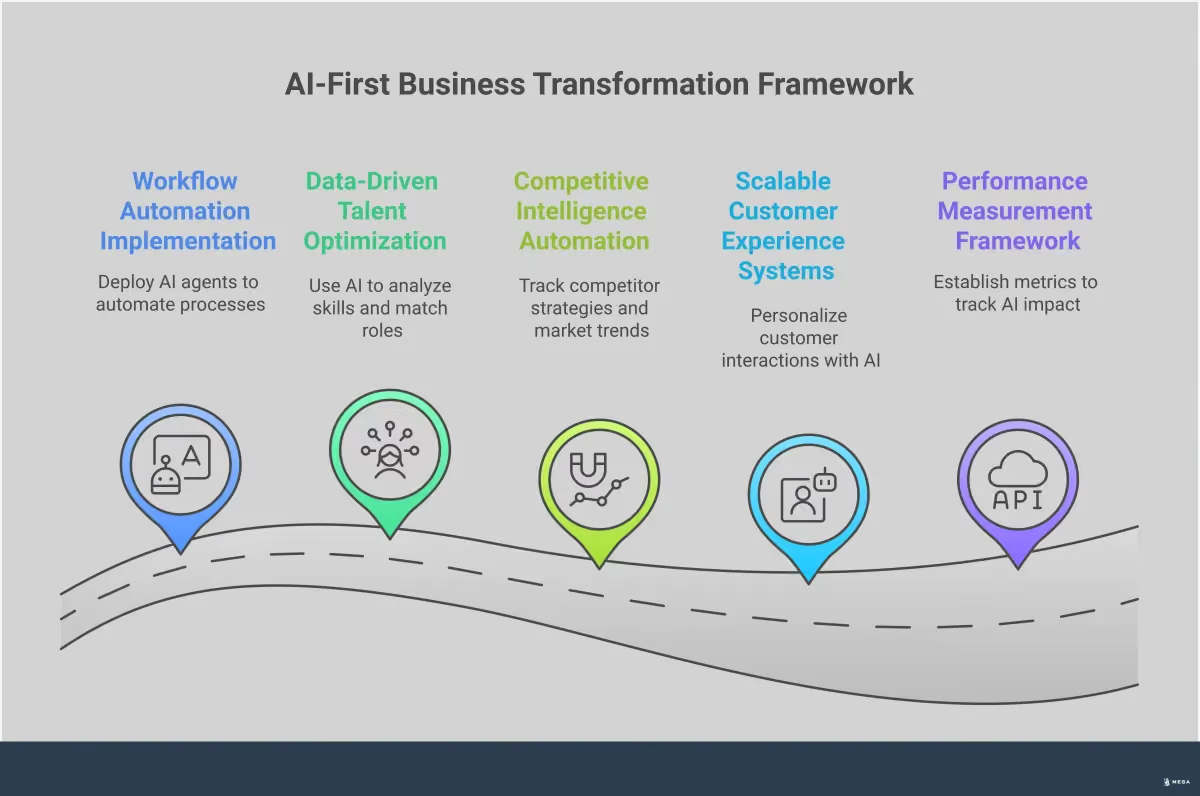
Automation is the key to building a scalable business model. When your core processes are automated, you can handle growth without a proportional increase in operational costs. AI-powered automation can increase productivity by up to 40%, giving small businesses a significant competitive edge. For instance, a single AI agent can manage paid ad campaigns across Google, Meta, and LinkedIn simultaneously, a task that would typically require a dedicated marketing team. This allows you to scale your marketing efforts effectively and adapt quickly to market changes.
Popular AI Business Models
AI businesses are built on the idea of using intelligent systems to automate tasks, analyze data, and generate content. This opens up a wide range of opportunities, especially in fields like marketing, software-as-a-service (SaaS), and specialized consulting. For small business owners, these models offer a path to creating high-value services without the need for a massive team. Whether you're providing expert guidance or building a product, the core principle is the same: leveraging AI to solve a specific business problem more efficiently than traditional methods.
AI Agency and Consulting
One of the most direct ways to start an AI business is by helping other companies adopt AI. As a consultant or an agency, you can guide businesses on how to integrate AI into their operations, teach their teams how to use new tools, and develop a long-term AI strategy. This model focuses on service rather than product, allowing you to leverage your expertise to solve immediate problems for clients. You might help a local retailer automate their inventory management or assist a B2B company in setting up an AI-powered customer service chatbot. It’s a high-demand field for those who can translate complex technology into practical business solutions.
AI-Powered Content Creation
Generative AI has made it possible to create high-quality content at an unprecedented scale. A business built on this model might offer services for writing blog posts, generating social media updates, or even producing video scripts. The goal is to help clients maintain a consistent and engaging online presence without the time-consuming manual effort. By using AI to handle the heavy lifting of content creation, you can offer a valuable service that saves businesses time and resources, allowing them to focus on other aspects of their growth.
Automating SEO and Ad Content with MEGA AI
Taking content creation a step further, end-to-end automation platforms can manage the entire marketing content lifecycle. For example, an AI agent can perform keyword research, write an optimized blog post, add internal links, and schedule it for publication. This turns a multi-step, complex process into a single, automated workflow. At MEGA AI, our platform is designed to do just that, handling everything from SEO content to creating hundreds of variations for paid ad campaigns. This level of automation allows small teams to execute sophisticated marketing strategies that were once only possible for large corporations.
AI Lead Generation Services
Finding new customers is a constant challenge for any business. An AI lead generation service addresses this pain point by using intelligent systems to identify potential clients and automate outreach. These tools can analyze vast amounts of data to find companies that fit an ideal customer profile, and then initiate contact through personalized emails or social media messages. For B2B companies, this can be a game-changer, filling their sales pipeline with qualified leads and freeing up the sales team to focus on closing deals rather than prospecting.
AI-Powered Virtual Assistants
Many busy professionals and small business owners are overwhelmed with administrative tasks. An AI-powered virtual assistant service offers a solution by using AI tools to manage emails, schedule appointments, conduct research, and handle other day-to-day responsibilities. This business model is built on providing efficiency and organization to clients, allowing them to reclaim their time and focus on high-priority work. It combines the convenience of a human assistant with the power and scalability of AI automation.
Niche AI Business Ideas
Beyond the more common models, AI can be applied to highly specific and creative business ideas. The key is to find an underserved market or a unique problem that AI is well-suited to solve. These niche businesses often face less competition and can build a loyal customer base by offering a specialized solution. Thinking outside the box can lead to innovative and profitable ventures that stand out in a crowded market.
Accessibility Tools
AI can play a crucial role in making technology more accessible. For instance, an AI assistant could be developed to help visually impaired individuals use computers by describing what’s on the screen and allowing them to interact through voice commands. Businesses focused on accessibility use AI to bridge gaps and create more inclusive digital experiences, addressing a critical need while also building a socially impactful enterprise.
Synthetic Data Creation
Training AI models requires massive amounts of data, which can be difficult or expensive to acquire. A business specializing in synthetic data creation uses generative AI to produce artificial, yet realistic, datasets. This "fake" data can then be used to train other AI systems without compromising privacy or dealing with the limitations of real-world data collection. It’s a highly technical but valuable service for the growing AI development industry.
Automated Sports Commentary
For a more creative application, consider a business that uses AI to generate real-time sports commentary. An AI system could "watch" a game and provide a play-by-play analysis, which could be used for live streams of niche sports or to create highlight reels automatically. This type of business showcases how AI can be applied to entertainment and media, creating new forms of content and experiences for audiences.
How to Start an AI Business From Scratch
Launching an AI business might seem intimidating, but it doesn't have to be. You don't need a Ph.D. in machine learning or a massive budget to get started. The key is to focus on solving a real-world problem and to validate your idea before you invest heavily in building a complex product. By following a structured approach, you can methodically turn your concept into a viable business, one step at a time. This framework is designed to be practical and accessible, even for those without a deep technical background.
Choose Your Path: Consultant or Builder
Before you start, decide on the type of business you want to create. You can be a consultant, helping other businesses understand and implement existing AI tools. This path focuses on your expertise and ability to create strategies for clients. Alternatively, you can be a builder, creating your own AI-powered product or service. This path is more focused on development and creating a scalable solution. Both are valid approaches, but knowing which one you're pursuing will help clarify your next steps.
A Simple Framework for Launching Your AI Venture
Starting an AI business is a process of identifying a problem, testing your solution, and then building it out. This simple framework breaks down the journey into manageable steps, helping you stay focused and reduce risk along the way. The goal is to prove that your idea has value and that customers are willing to pay for it before you commit significant time and resources to development. This lean approach increases your chances of success by ensuring you're building something the market actually needs.
Step 1: Find a Specific Problem to Solve
The foundation of any successful business is a clear problem that needs solving. Instead of starting with a technology and looking for a use case, start by identifying a specific pain point. Talk to small business owners and find out what tasks are taking up too much of their time or what challenges are holding back their growth. A good problem is one that is urgent, common, and something that businesses are already trying to solve, even if they're using inefficient methods.
Step 2: Test Your Idea Manually
Once you have a problem in mind, don't immediately start building a complex AI solution. First, try to solve the problem manually for a few clients. This is often called a "concierge" approach. For example, if your idea is an AI that generates social media content, start by creating the content yourself for a client. This allows you to prove the concept and refine your process while getting valuable feedback, all without writing a single line of code.
Step 3: Secure Paying Clients Early
The ultimate validation for a business idea is a paying customer. Before you invest in building out your product, get a few clients to pay for your manual or semi-automated service. This confirms that you're solving a problem valuable enough that people are willing to spend money on it. Securing early clients also provides you with cash flow and case studies that you can use to attract more customers later on.
Step 4: Build Your Solution with No-Code Tools
After you've validated your idea with paying clients, you can start to build a more scalable solution. Fortunately, you don't need to be an expert developer to do this. There are many no-code platforms available that allow you to create applications and automate workflows using simple drag-and-drop interfaces. These tools make it possible to build a sophisticated AI-powered service without the time and expense of custom development, allowing you to get your product to market much faster.
Proven Strategies for Finding Your First Clients
Getting those first few clients is often the hardest part of starting a new business. It requires a proactive approach and a willingness to put yourself out there. The good news is that there are proven strategies that can help you land your initial customers and start building momentum. These methods are all about building trust and demonstrating the value you can provide, which is essential when you're just starting out and don't yet have a well-known brand.
Leverage Warm Outreach
When you're looking for your first clients, start with the people you already know. Research shows that the vast majority of initial clients come from "warm outreach," which means contacting your existing network of friends, family, and former colleagues. These people already know and trust you, which makes them more likely to give your new service a try or refer you to someone who might be a good fit. A simple, personal message explaining what you're doing can be surprisingly effective.
Offer a Free Project to Build Your Portfolio
It can be hard to convince someone to pay for your service when you don't have any previous work to show them. A great way to overcome this is to offer to do a project for free for one or two initial clients. This allows you to build a portfolio and gather testimonials that you can use to attract paying customers. Many successful entrepreneurs started this way, using a free project as a low-risk way to prove their skills and build the social proof needed to grow their business.
Why Legacy Industries Struggle with AI Adoption
For established businesses, especially small and local ones, becoming "AI-first" isn't as simple as installing new software. It often means confronting long-standing challenges that are deeply embedded in how the company operates. These hurdles aren't signs of failure; they are common growing pains that come with integrating powerful new technology into an existing framework.
Many legacy industries are held back by a combination of outdated systems, team resistance, knowledge gaps, and budget constraints. Understanding these obstacles is the first step toward overcoming them. The goal isn't to rebuild your business from scratch but to find smart, accessible ways to integrate AI that solve these core problems without creating new ones. This is where specialized platforms can bridge the gap, offering the power of AI without requiring a complete operational overhaul.
Tackling Technical Debt and Outdated Systems
Many established businesses run on systems that were built years, or even decades, ago. This collection of older technology, often called "technical debt," wasn't designed for the data-heavy demands of modern AI. When your systems are burdened by outdated infrastructure, it’s difficult to implement AI solutions effectively. These tools need clean, organized, and accessible data to learn and perform, but legacy systems often keep information siloed and difficult to manage. This creates a significant roadblock, as the foundational data collection processes needed for successful AI initiatives are often missing. For a small business, this might mean trying to connect a clunky old CRM to a new analytics tool—a task that can feel nearly impossible without a major IT overhaul.
Getting Your Team On Board with AI
Technology is only one part of the equation; people are the other. In many legacy industries, teams are accustomed to traditional workflows and may be skeptical of new, automated approaches. This cultural resistance to change can be a major hurdle. Employees might worry that AI is meant to replace them or feel overwhelmed by the prospect of learning a complex new system. To successfully integrate AI, leaders need to focus on change management. This involves clearly communicating how these tools will support the team and make their jobs easier, not obsolete. The focus should be on augmenting human skills, automating tedious tasks, and freeing up employees to focus on more strategic, creative work that drives the business forward.
Training Your Team for an AI Future
Most small businesses don't have a data scientist or AI engineer on the payroll. This creates one of the most significant barriers to adoption: a lack of in-house expertise. Many organizations struggle with skill gaps in their workforce, especially in specialized areas like AI and data analytics. Without the right knowledge, it's difficult to choose the right tools, implement them correctly, and interpret the results. To get the most out of AI, companies need to invest in training and development to equip their teams with the necessary skills. For businesses without the resources for extensive training programs, partnering with an AI-driven service that provides the expertise as part of the package can be a practical solution.
Is AI Too Expensive for Small Businesses?
For many small and local businesses, the price tag on enterprise-level AI technology is a non-starter. In fact, cost remains a significant barrier for the majority of small businesses looking to adopt new technologies. A survey from the U.S. Chamber of Commerce found that nearly 60% of small businesses cite cost as a major obstacle. The expense isn't just the software subscription; it also includes the costs of implementation, employee training, and ongoing maintenance. This financial burden can make AI feel out of reach, leaving smaller companies at a disadvantage. The key is finding solutions designed specifically for the budgets and needs of small businesses, which offer powerful automation without the enterprise-level price.
How to Rethink Talent Management with AI
An AI-first mindset reshapes more than just your operations; it transforms how you find, grow, and manage your team. Instead of relying on gut feelings or outdated processes, you can use data and intelligent systems to build a workforce that’s more skilled, engaged, and aligned with your business goals. This approach touches every part of the employee lifecycle, from the first interview to long-term career development. For small businesses, this provides a powerful advantage in attracting and retaining top talent. It allows you to compete by being smarter and more strategic about how you build your team.
Use Data-Driven Assessments to Find Top Performers
Moving beyond a simple resume review is key to finding the right people. Data-driven assessments help you look at performance indicators and metrics to identify candidates who will truly excel. When you create a positive and efficient hiring process, you build a strong employer brand that attracts higher-quality applicants. For a small business, this is crucial. A better hiring process leads to better hires, which directly contributes to your team's stability and your company's bottom line. It’s about making informed decisions that set up both the new hire and your business for success from day one.
Match Skills to Roles with AI Evaluation
AI evaluation helps you match a candidate's skills to your job requirements with greater precision. These tools can help you streamline recruitment processes by objectively analyzing qualifications, experience, and even soft skills demonstrated in assessments. This reduces the potential for unconscious bias and ensures you’re focusing on the applicants who are the best fit for the role. For small businesses competing for talent, this efficiency is a game-changer. It allows you to move faster and make more confident hiring decisions, ensuring that every new team member has the right skills to contribute immediately.
Build Teams Optimized for AI Collaboration
The goal isn't to replace your team with AI, but to empower them with it. Building a team that’s optimized for AI collaboration means hiring and training people to work alongside intelligent systems. When employees learn to collaborate with AI tools, they can offload repetitive, time-consuming tasks and focus on strategic thinking, problem-solving, and creativity. This creates a more dynamic and innovative work environment. For a small business, this synergy is powerful. It allows a lean team to achieve more, improve overall efficiency, and stay focused on high-impact work that drives growth.
Create Personalized Development Paths
An AI-first approach also extends to how you grow your talent. By analyzing individual performance data, you can create personalized development paths for each employee. This means tailoring training, setting specific goals, and providing resources that align with their unique strengths and areas for improvement. This level of personalization shows your team that you’re invested in their professional growth, which is a major factor in employee satisfaction and retention. Instead of a one-size-fits-all training program, you can offer targeted support that helps each person build the skills they need to succeed.
What Can AI Do for Your Marketing Strategy?
Adopting an AI-first mindset gives businesses a distinct competitive advantage. It’s about more than just using a few AI tools; it’s about building your entire marketing strategy around intelligent automation. Instead of reacting to market changes, you can anticipate them. This approach transforms marketing from a series of manual, time-consuming tasks into a dynamic, data-driven engine for growth. For small and local businesses, this shift is particularly powerful. It levels the playing field, offering access to sophisticated strategies that were once only available to large corporations with huge teams and budgets.
By integrating AI into your core operations, you can automate complex processes, from identifying the most profitable keywords to optimizing ad spend across multiple platforms in real time. This means your marketing efforts are always learning and improving, leading to better results and a higher return on investment. An AI-first strategy allows you to make smarter decisions faster, freeing you and your team to focus on what you do best: running your business. With platforms like MEGA AI, these advanced capabilities are no longer out of reach. You can deploy AI agents that handle the heavy lifting, giving you a full-stack marketing team without the enterprise-level cost.
Move Beyond Traditional Advertising Channels
AI makes it possible for small businesses to expand their reach far beyond familiar platforms like Google and Meta. Managing campaigns across multiple channels like LinkedIn, Reddit, and TikTok can be incredibly complex, but AI agents simplify the process. They can autonomously manage and optimize your ads everywhere your customers spend their time. This approach also unlocks new efficiencies. As Jay DiMonte notes, AI is reshaping service models by enabling new opportunities. For example, an AI agent can automatically shift your budget to the best-performing channels, ensuring your ad spend is always working as hard as possible to generate leads and sales.
Find New Organic Growth Opportunities
Search engine optimization is essential for long-term growth, but it’s often a slow and manual process. AI changes that by automating the most demanding parts of SEO. According to Neil Patel, AI tools can automate time-consuming tasks like competitor analysis, content optimization, and technical audits. This allows you to uncover new keywords, identify content gaps, and fix technical issues on your website without needing a dedicated expert on staff. An AI SEO agent can continuously monitor your site’s performance and make adjustments to improve your rankings, helping you attract more organic traffic and build a sustainable source of new customers.
Scale Personalized Customer Experiences
Connecting with customers on a personal level builds loyalty, but creating tailored content for different audience segments is a major challenge for small teams. AI makes it possible to scale personalization effectively. It can generate multiple versions of ad copy, landing page text, and social media posts that speak directly to the unique needs and interests of different customer groups. As experts at Pure SEO point out, AI tools can generate content for a wide range of marketing campaigns. This allows you to deliver a consistent and relevant brand experience to every potential customer, making them feel understood and valued without adding hours of work to your plate.
Use Predictive Analytics to Understand Customer Behavior
The most effective marketing is based on a deep understanding of your customers. AI gives you that understanding by analyzing data to predict future behavior. By processing information from your website, ad campaigns, and sales history, AI can identify patterns that reveal what your customers are likely to do next. As noted by Otis AI, AI and machine learning enhance paid ads by enabling predictive analytics and more effective audience segmentation. This insight allows you to create highly targeted campaigns that reach the right people with the right message at the perfect moment, dramatically improving your conversion rates and reducing wasted ad spend.
How to Use AI to Foster Innovation
AI-first companies don’t just use AI as another tool; they build their entire operational and cultural framework around it. This approach allows them to innovate constantly, not just through big breakthroughs, but through a steady stream of improvements. They create systems that learn, adapt, and evolve. For a small business, this might sound intimidating, but the core principles are accessible to everyone. It’s about fostering a culture that values data, encourages experimentation, and uses technology to make smarter decisions.
This mindset is what separates companies that simply use software from those that are truly AI-first. Instead of just automating a single task, they look at how intelligent systems can transform entire workflows. For example, instead of just scheduling social media posts, an AI-first approach involves analyzing performance data to determine the best content, timing, and audience for every post automatically. By adopting this way of thinking, you can build a more resilient, efficient, and competitive business. MEGA AI’s SEO and Paid Ads agents are designed to bring this level of innovation to your marketing, handling the complex work so you can focus on growth.
Create Testing Environments Across Departments
Innovation thrives on experimentation. AI-first companies create controlled testing environments where teams can try new ideas without risking major failures. For a small business, this doesn’t require a dedicated lab. It can be as simple as allocating a small portion of your ad budget to test a new campaign creative or launching a new service offering to a small segment of your customer base first. The goal is to gather real-world data in a low-risk setting. By leveraging data and AI to enhance decision-making, you can quickly learn what works, what doesn’t, and iterate on your ideas before a full-scale launch.
Encourage Cross-Functional Experimentation
Great ideas often come from connecting different perspectives. AI-first companies intentionally break down silos between departments to encourage collaboration. When your marketing team shares insights with your customer service team, you can uncover new opportunities. For example, customer questions might reveal a gap in your website’s content or inspire a new ad campaign. Fostering this kind of cross-functional experimentation is crucial. Using a central platform where all teams can see performance data helps everyone understand the bigger picture and contribute ideas that drive the business forward. This collaborative approach ensures that innovation isn't confined to one person or team.
Build Feedback Loops for Continuous Improvement
An AI-first company is a learning organization. This is achieved by building feedback loops into every process. A feedback loop is a simple cycle: you take an action, measure the result, learn from it, and then refine your next action. For your marketing, this means tracking campaign performance, analyzing which messages resonate, and using that data to improve future campaigns. AI systems excel at this, creating automated feedback loops that facilitate continuous improvement. They constantly monitor results and adjust strategies in real-time, ensuring your operations become more efficient and effective over time without constant manual intervention.
Share Successful Strategies Between Teams
When one part of the business finds a winning strategy, that knowledge shouldn't stay isolated. AI-first companies create systems for sharing successful tactics across the entire organization. This practice of knowledge sharing accelerates growth and prevents teams from reinventing the wheel. For a small business, this could be a weekly meeting to discuss what marketing campaigns drove the most leads or which new blog post attracted the most traffic. Using dashboards and automated reports makes it easy to identify what’s working. By making successes visible, you empower everyone on your team to learn from them and apply those winning strategies to their own work.
What Challenges Should Small Businesses Expect with AI?
Adopting AI can feel like a major leap, especially for small and local businesses with limited resources. While the potential for growth is huge, it’s important to be aware of the common hurdles you might face. The main challenges aren't just about technology; they involve integrating new systems, managing data and costs, finding the right skills, and maintaining control over your operations. Thinking through these issues ahead of time will help you choose the right tools and create a smoother transition, ensuring that your investment in AI pays off without causing unnecessary headaches for you and your team.
How to Integrate AI with Your Existing Systems
One of the first roadblocks many businesses encounter is making AI tools work with their current software. If you’re running your business on a collection of different platforms for your website, sales, and marketing, adding another disconnected tool can create more problems than it solves. The key is to find AI solutions that offer seamless integration with the systems you already rely on, like your website’s content management system (CMS). This avoids creating data silos and ensures that your AI can access the information it needs to perform effectively, making the entire process feel like a natural extension of your existing workflow rather than a complicated add-on.
Solving Common Data Management Issues
AI runs on data, but managing it can be a significant challenge. Many small businesses either don't have large, clean datasets or lack the infrastructure to manage them properly. On top of that, the cost of adopting new technology is a real concern for nearly 60% of small businesses. The most effective AI platforms for small businesses are the ones that handle the data complexity for you and offer transparent pricing. Instead of requiring you to become a data expert, they use their own proprietary models to deliver results, which helps level the playing field and makes powerful technology accessible without a massive upfront investment.
The Importance of Data Governance
Data governance might sound like a term for big corporations, but it's really just about having a clear plan for your business data. Think of it as quality control. It ensures the information you collect is accurate, consistent, and secure, which is essential when you start using AI. Artificial intelligence systems learn from the data you provide, so if that data is messy or unreliable, the results will be too. For many businesses, information is often stuck in outdated systems, making it difficult to manage and use effectively. Establishing good data governance practices helps you build a solid foundation, ensuring that when you do integrate AI, it has clean, organized information to work with, leading to smarter insights and better business decisions.
Building Technical Expertise on Your Team
You don’t need to hire a team of data scientists to benefit from AI. However, there is a skills gap that can make some AI tools feel intimidating. Without in-house technical expertise, it can be difficult to configure, manage, and get the most value out of complex software. This is why many businesses are turning to AI platforms that function more like a service than a simple tool. Look for solutions that provide the expertise for you, like an AI agent that can develop a strategy and execute tasks on its own. This approach allows your team to focus on their core responsibilities while the AI handles the specialized work.
Finding the Right Balance Between Automation and People
Handing over key business functions to an automated system can be nerve-wracking. While AI is great at executing tasks at scale, you still need to ensure quality and alignment with your brand's voice and strategy. The best AI systems are designed with this in mind, offering a balance between automation and human oversight. Features that allow you to review and approve actions before they are implemented give you final say and peace of mind. This human-in-the-loop approach ensures you get the efficiency of automation without sacrificing the control and quality that your customers expect.
Implementing a "Human in the Loop" System
Adopting AI doesn't mean giving up control. A "human in the loop" system provides a practical middle ground, letting you use automation without handing over the final say. In this model, AI does the heavy lifting—like generating ad variations or drafting blog posts—but a person reviews and approves the work before it goes live. This approach allows you to maintain quality and ensure every piece of content aligns with your brand voice. It creates a partnership where AI handles the time-consuming tasks, freeing your team to focus on strategy and creative direction. The best systems are built to balance automation and human oversight, giving you the efficiency of AI with the confidence of human approval.
How to Measure the Success of Your AI Transformation
Adopting AI is more than just implementing new software; it's about achieving real business outcomes. To know if your transformation is working, you need to define what success looks like and track your progress. Measuring the impact of AI helps you justify the investment, refine your strategy, and show your team how their work is contributing to growth.
Instead of relying on gut feelings, focus on concrete metrics that connect AI implementation to business performance. By tracking the right key performance indicators (KPIs), you can see exactly how automation is affecting your efficiency, competitive standing, team productivity, and customer relationships. This data-driven approach ensures you’re not just using AI for the sake of it, but are genuinely building a smarter, more resilient business. The following metrics provide a clear framework for evaluating your progress.
Tracking Improvements in Operational Efficiency
One of the most immediate benefits of AI is its ability to automate repetitive, time-consuming tasks. By tracking the time and resources saved, you can directly measure improvements in your operational efficiency. Start by benchmarking how long it takes your team to complete specific workflows before implementing AI. This could include tasks like keyword research, writing blog posts, or managing ad campaigns.
After your AI systems are in place, track that same data. Are processes completed faster? Have you reduced operational costs associated with manual labor or outsourced services? AI offers small businesses a powerful way to automate tasks and make data-driven decisions. Quantifying these time and cost savings provides a clear, tangible measure of your AI's return on investment and its impact on your daily operations.
Monitoring Your Competitive Position
AI can give small businesses a significant competitive advantage by leveling the playing field. With AI-powered automation potentially increasing productivity by up to 40%, you can accomplish more without needing a massive team. To measure this impact, you need to monitor your position within your market. Are you gaining market share? Is your brand appearing more frequently in search results for key terms?
A regular competitive analysis can help you track these changes. Compare your performance metrics—like website traffic, search engine rankings, and social media engagement—against your top competitors. If you see steady improvement in these areas after adopting AI, it’s a strong indicator that your transformation is helping you stand out and capture a larger share of your target audience.
Measuring Gains in Employee Productivity
When AI handles routine tasks, your team is free to focus on strategic, creative, and high-value work that requires a human touch. This shift should lead to a noticeable increase in employee productivity. Studies show that AI automation can improve productivity by as much as 40%, not by making people work harder, but by enabling them to work smarter.
To measure this, track output and efficiency metrics before and after you introduce AI tools. Look at project completion rates, the number of strategic initiatives launched, or the volume of creative assets produced. You can also gather qualitative feedback from your team about their workload and job satisfaction. When employees feel less bogged down by repetitive tasks, they are more engaged and better equipped to drive innovation.
Evaluating Customer Satisfaction and Feedback
Your AI transformation shouldn't just benefit your internal operations; it should also enhance the customer experience. AI allows for more personalized, responsive, and efficient service, which can significantly improve how customers perceive your brand. Regularly measuring customer feedback and satisfaction scores is essential for assessing the effectiveness of your AI-driven customer interactions.
Keep a close eye on metrics like your Net Promoter Score (NPS), customer reviews, and support ticket resolution times. Are customers finding information more easily on your website? Are their issues being resolved faster? A positive trend in these customer satisfaction metrics is a clear sign that your AI initiatives are creating a better experience, which in turn fosters loyalty and drives long-term growth.
How to Start Your AI-First Transformation
Assess Your Current Capabilities and Identify Gaps
Before adopting new technology, you need a clear picture of where you stand. Review your current workflows, tools, and data practices. Many small businesses find they lack the infrastructure for effective data collection, which can slow down AI initiatives. Look for repetitive, time-consuming tasks that could be automated, like generating content or managing ad campaigns. This initial audit helps you pinpoint the most impactful areas to apply AI first, ensuring you get early wins and build momentum.
Build Internal AI Expertise and Training Programs
An AI-first transformation is about people as much as technology. Your team doesn't need to become AI developers, but they do need to understand how to work with intelligent systems. Invest in training that builds AI literacy and practical skills. When employees understand how AI can handle tedious tasks, they can focus on more strategic work. This shift improves productivity and fosters a culture of innovation where your team is prepared to leverage new technologies.
Create a Sustainable Change Management Process
Introducing AI changes how work gets done, and managing that transition is critical. A clear change management process ensures your team understands and embraces the new direction. Communicate openly about why you’re adopting AI, focusing on the benefits for both the company and individual roles. Set realistic expectations and create channels for feedback to address concerns. When your team feels involved and supported, they are more likely to see AI as a helpful partner, making the transformation smoother.
Implement a Gradual Automation Strategy
Trying to automate everything at once can overwhelm your team. Instead, adopt a gradual automation strategy. Start with one or two high-impact areas you identified during your assessment. For example, you could begin by automating your content strategy with an SEO agent or optimizing your campaigns with a Paid Ads agent. This phased approach allows your team to adapt to new workflows without feeling overwhelmed. Seeing positive results from these initial steps builds confidence and support for expanding AI integration across the business.