
Building your creator business on a single social media platform is like building a house on rented land. At any moment, an algorithm change or a new policy can disrupt your entire operation. This platform dependency is a huge risk. The solution is to adopt a multi-platform strategy, creating multiple touchpoints for your community. While managing several channels sounds daunting, this is where using AI for creators comes in. New autonomous systems can handle the heavy lifting of content optimization and distribution, making it easier than ever to build a truly independent brand.
Key Takeaways
- Diversify Your Business Model: Move beyond platform-dependent ad revenue by building multiple income streams. Focus on subscriptions, digital products, and strategic partnerships to create a more stable and resilient creator business.
- Use AI Agents to Automate Execution: Leverage autonomous AI systems that manage entire marketing campaigns, not just single tasks. This allows you to handle complex SEO and paid ad strategies efficiently, freeing you to concentrate on your creative vision.
- Build a Brand Across Platforms You Own: Reduce your risk from algorithm changes by establishing a presence on multiple channels. The primary goal should be to drive your audience to assets you control, like a website or email list, to build a direct relationship and secure your business long-term.
What's Driving the Shift in the Creator Economy?
The creator economy is maturing. What started as a way to share hobbies online has become a legitimate career path, but the ground rules are changing. Creators are no longer just content producers; they are entrepreneurs running complex digital businesses. This evolution is driven by a few key forces that are reshaping what it takes to succeed.
One of the biggest drivers is the move toward diversified revenue streams. Relying solely on ad-share from a single platform is no longer a sustainable strategy. Successful creators are building resilient businesses by selling digital products, offering subscriptions, securing brand partnerships, and launching their own product lines. This shift requires a more strategic approach to marketing and audience management, moving beyond simple content creation to full-funnel business operations.
At the same time, emerging technologies are fundamentally changing the creative process. Artificial intelligence, in particular, is becoming a critical resource. AI can help creators enhance content by generating ideas, automating tedious editing tasks, and personalizing experiences for different audience segments. This allows creators to produce higher-quality work more efficiently and focus their energy on the creative vision rather than the manual labor behind it.
The platforms themselves are also in constant flux. The rise of short-form video and ever-changing algorithms mean creators must continuously adapt their strategies to stay visible. This constant pressure to perform across multiple channels makes it difficult to scale. To cut through the noise, creators need to focus on maximizing their impact by deeply understanding their audience and delivering value consistently. The creators who thrive will be those who can effectively manage their presence across platforms without burning out.
The Impact of AI on Content Creation by the Numbers
The numbers speak for themselves: AI is no longer a futuristic concept but a standard tool in the marketing world. In fact, 90% of marketers already use AI to help them make faster decisions, showing just how integrated these tools have become in daily workflows. For small business owners, this means AI can handle time-consuming tasks, freeing you up to focus on strategy and growth. AI tools can make the process of generating, editing, and optimizing content much faster, leading to more consistent output. It's a common misconception that AI is just for writing; modern tools can assist with the entire content lifecycle, from planning and visual creation to analyzing audience insights. The goal isn't to replace human creativity but to support it, allowing you to bring your unique vision to life more effectively.
Why Creators Are Moving Beyond Traditional Platforms
For years, creators built their businesses on the foundation of a few major platforms. But that ground is becoming unstable. The old rules for discovery, engagement, and monetization are being rewritten by new technology and shifting user behavior. Creators who rely solely on these traditional channels are finding it harder to maintain momentum and build a sustainable business.
This shift is driven by a few key pressures. The way audiences discover content is changing, algorithms are more unpredictable than ever, and creators are actively seeking ways to own their audience and revenue streams. Understanding these changes is the first step to building a creator business that can thrive in the new landscape.
Why the Search Monopoly Is Faltering
The long-standing dominance of traditional search engines is facing a real challenge. AI-powered tools like ChatGPT are fundamentally changing how people find information, offering conversational answers instead of a list of links. This shift in user behavior means creators can no longer rely on the same old SEO playbook. As new AI-powered solutions gain traction, the competition for audience attention is moving beyond a single platform. Creators need a strategy that accounts for discovery on these new surfaces, not just on Google. This requires a more sophisticated approach to content that answers questions directly and is optimized for conversational AI.
How Algorithm Changes Impact Your Reach
One of the biggest pain points for creators is the constant cycle of algorithm changes on social and search platforms. A strategy that works one month can become ineffective the next, making it difficult to build predictable growth. These frequent updates force creators to spend valuable time re-learning the rules instead of focusing on creating. According to Deloitte, a lack of impactful tools and insights leads to frustration as creators struggle to adapt. This constant uncertainty makes it clear that platform dependency is a significant business risk. To counter this, creators need to gain insights into their audiences that are independent of any single platform’s analytics.
How to Earn Revenue Off-Platform
Smart creators are responding to these challenges by diversifying their businesses away from platform-centric revenue models like ad-sharing. They are building direct relationships with their audiences through email lists, private communities, and subscription services. This move toward a platform-independent income gives them more control and stability. Technologies like AI are becoming critical resources in this transition, helping creators enhance their content and manage distribution across multiple channels efficiently. By embracing tools that help them diversify their businesses, creators can build more resilient operations that are not tied to the whims of a single algorithm.
How AI Transforms Your Content Creation Process
The way creators produce content is undergoing a fundamental change. We're moving past the era of AI as a simple assistant—a tool you direct for every small task—and into an age where AI acts as a strategic partner. This shift is driven by AI agents, which are autonomous systems designed to understand a goal and execute the complex, multi-step workflows needed to achieve it. Instead of just generating a paragraph or designing an image, these agents can manage entire campaigns from start to finish.
For creators, this means offloading the repetitive, data-heavy work that consumes so much time. Think about all the hours spent on keyword research, A/B testing ad copy, or optimizing old blog posts. AI agents can now handle these processes autonomously, freeing you to concentrate on the core of your craft: developing unique ideas, connecting with your audience, and building your brand. This isn't about replacing creativity; it's about giving it the support system it needs to scale effectively. Platforms like MEGA AI are at the forefront, offering AI agents that plan, launch, and optimize marketing campaigns, acting as a true extension of your team.
Think of AI as a Partner, Not Just a Tool
The difference between an AI tool and an AI partner is the difference between giving instructions and delegating outcomes. A tool requires your constant input; you tell it what to do, and it does it. An autonomous partner, however, understands your objective and figures out the best way to get there on its own. As Antler notes in its report on the creator economy, creators can now leverage AI technologies to handle data-driven aspects of production while they focus on higher-level creative tasks. This means you can move from prompting an AI for a blog post outline to telling your SEO agent to increase organic traffic to your website, trusting it to handle the research, writing, and optimization required.
Understanding the Service-as-a-Software Model
This evolution has given rise to a new model: "Service-as-a-Software." It combines the results you'd expect from a full-service agency with the accessibility and efficiency of a software platform. Instead of wrestling with a chat interface to get the right output, you get an agent that executes a strategy for you. This approach, as Deloitte highlights, gives creators access to sophisticated tools that were once reserved for large companies with deep pockets. It democratizes high-level marketing, allowing a solo creator or a small team to implement a data-driven content strategy that competes with established players.
How to Scale Your Content Programmatically
AI agents make it possible to produce programmatic content at scale, creating large volumes of high-quality, targeted content without overwhelming your resources. This isn't about churning out generic articles. It's about using data to inform the creation of hundreds of ad variations, personalized landing pages, or blog posts tailored to specific audience segments. The IAB points out that this type of AI-enabled content attracts significant advertising investment because it's built to perform. By automating content creation and optimization, you can maintain a consistent output, expand your reach, and engage your audience more effectively across multiple platforms.
Solving Common Creator Challenges with AI
Every creator knows the pressure to be constantly "on"—producing fresh content, engaging with an audience, and managing the business side of their brand. This relentless cycle can lead to burnout and creative slumps. AI offers a practical way to manage this workload, not by replacing the creative spark, but by handling the repetitive and time-consuming tasks that drain energy. It can help you produce content more consistently, analyze performance, and distribute your work across multiple platforms without stretching yourself too thin. Think of it as a support system that lets you focus on what you do best: creating.
Overcoming Writer's Block
Staring at a blank page is one of the most common hurdles for any creator. AI can act as a powerful brainstorming partner to get your ideas flowing. Tools can make writing content easier and faster by generating outlines, suggesting topic ideas, or even drafting initial paragraphs based on a simple prompt. This process doesn't write the article for you; instead, it provides a starting point that you can then shape with your unique voice and expertise. By breaking down the initial barrier, AI helps you move from idea to execution more smoothly, turning writer's block into a minor speed bump rather than a complete stop.
Essential AI Tools for Every Creator
The AI landscape is filled with specialized tools designed to address nearly every aspect of the content creation process. Building a toolkit with the right AI applications can streamline your workflow and improve the quality of your output. From writing and SEO to video production and graphic design, these tools can automate tedious tasks and provide data-driven insights. This allows you to operate more like a full-fledged media company, even if you're a team of one. The key is to identify the tools that solve your biggest challenges and integrate them into a cohesive system.
For Writing and SEO
AI has become an indispensable resource for writing and search engine optimization. It can help you generate content ideas, automate editing, and personalize your message for different audience segments. But its real power lies in its ability to handle complex SEO strategies. While some tools help with basic writing, end-to-end platforms can manage your entire SEO workflow. For instance, MEGA AI agents can perform automated keyword research, generate optimized articles, and even update your existing content to improve its click-through rate and search ranking, ensuring your work continues to perform long after it's published.
For Video Creation and Editing
Video is essential for audience engagement, but production can be time-intensive. AI-powered video tools simplify this process by transforming written content into dynamic visuals. For example, you can take a blog post or a script and use a tool like Pictory to automatically generate a short, shareable video complete with stock footage, captions, and a voiceover. This makes it incredibly efficient to repurpose your content for platforms like TikTok, YouTube Shorts, and Instagram Reels, expanding your reach without requiring hours of manual editing.
For Images and Design
Creating professional-quality visuals is crucial for building a strong brand, but not every creator is a designer. AI design tools like Canva have made it simple to produce stunning graphics without any formal training. These platforms offer features that can generate blog banners, social media images, and infographics in minutes. You can use AI to suggest design layouts, create custom color palettes, or even write compelling copy for your visuals. This accessibility allows you to maintain a polished and consistent brand aesthetic across all your channels.
For Audio and Music
High-quality audio can significantly improve the production value of your content. AI music generators are a fantastic resource for finding the perfect background track for a video or podcast without worrying about copyright issues. These tools can create royalty-free music based on the mood, genre, or tempo you need. This gives you access to a nearly infinite library of custom audio, ensuring your content has a professional sound that enhances the viewer or listener's experience.
For Social Media and E-commerce
For creators looking to monetize, AI can bridge the gap between content and commerce. As creators diversify their businesses away from ad revenue, tools that streamline social media management and e-commerce become essential. AI can schedule posts, write engaging captions, and analyze the best times to publish. For paid campaigns, platforms like MEGA AI can create hundreds of ad variations and automatically manage your budget across platforms, helping you run sophisticated paid ads strategies that drive sales and grow your business.
Practical AI Workflows for Creators
Using individual AI tools is helpful, but the real transformation happens when you combine them into integrated workflows. By creating a "stack" of AI applications that work together, you can build automated systems that handle entire segments of your content creation and distribution process. This approach moves beyond single-task automation to create a powerful, efficient content engine. It allows you to scale your output, maintain quality, and free up your time to focus on high-level strategy and connecting with your community.
Combining Tools for a Powerful Stack
A powerful AI workflow involves chaining multiple tools together to achieve a specific outcome. For example, you could use an AI writer to generate a blog post, then feed that text into a video creation tool to produce a summary video for social media. Next, you could use an AI design tool to create a thumbnail and an audio tool for background music. This multi-step process, where the output of one tool becomes the input for the next, allows you to create a comprehensive content package from a single idea. This is how you can handle processes autonomously and maximize the value of every piece of content you create.
Using Platform-Specific AI Features
Instead of piecing together multiple single-purpose tools, you can use a unified platform that offers a suite of AI capabilities. These end-to-end systems are designed to manage entire campaigns, acting as a true extension of your team. For example, an integrated platform like MEGA AI doesn't just write an article; its agents can handle the keyword research, content creation, optimization, and ongoing maintenance required to ensure it ranks well. This "Service-as-a-Software" model gives you the power of a marketing agency within a single, easy-to-use interface, simplifying your workflow and delivering better results.
Creating "Faceless" Content
The rise of AI has made "faceless" content channels more viable than ever. These channels produce high-quality videos and other content without the creator ever appearing on camera. AI tools can make AI-powered videos by combining stock footage, generating realistic voiceovers from text, and adding animated captions. This approach is perfect for creators who want to scale their output, cover topics outside their personal brand, or simply maintain their privacy. It opens up new possibilities for content creation that are not dependent on a personal presence.
Generating AI-Powered Audio Content
Audio is a powerful medium for connecting with an audience, and AI is making it easier to produce. You can repurpose your existing written content into audio formats to reach people who prefer listening. For example, tools like NotebookLM can create AI audio overviews or even entire "AI podcasts" from your research notes or articles. This workflow allows you to add a new dimension to your content strategy, offering your community another way to engage with your work while you're on the go.
What's the Next Big Thing for Creators?
The next phase of the creator economy will be defined by intelligent automation and deeper audience connections. As AI becomes more integrated into creative workflows, it will open up new avenues for monetization, personalization, and multi-platform content creation. These innovations are not just about making things faster; they are about making it possible for individual creators to build more sustainable and scalable businesses. The focus is shifting from simply using tools to partnering with autonomous systems that handle the heavy lifting of growth.
New Monetization and Direct Fan Support
Relying on ad revenue alone is becoming a less viable strategy. The future lies in building direct relationships with your audience through models like subscriptions, memberships, and exclusive content. AI can help identify your most engaged followers and suggest personalized offers or membership tiers that resonate with them. Instead of guessing what your community wants, you can use AI to analyze feedback and behavior to create value they are happy to pay for. This approach helps you build more predictable, platform-independent revenue streams and strengthens your connection with your core supporters.
Use AI for Deeper Audience Insights
Understanding your audience is key to creating content that connects. AI-driven analytics go beyond simple dashboards to provide clear, actionable insights. These systems can analyze engagement patterns, comments, and audience demographics to tell you what topics your audience craves and which formats perform best. This allows you to tailor your content strategy with confidence, knowing it’s based on data, not just intuition. By consistently delivering what your audience wants, you can build a more loyal and engaged community that feels seen and understood, which is the foundation of long-term growth.
Automate Your Creative Process on Every Platform
Being present on multiple platforms is essential, but it can also be exhausting. AI is changing the game by enabling multi-platform creative automation. An AI agent can take a single piece of core content, like a long-form video, and autonomously repurpose it into a blog post, social media clips, and ad creatives tailored for each platform. This "Service-as-a-Software" approach means the system doesn't just suggest ideas; it executes the work. This allows creators to scale their presence and run campaigns autonomously without burning out, freeing them to focus on their next big idea.
Create High-Engagement Content with Advanced Algorithms
Platform algorithms are constantly changing, but their goal remains the same: to keep users engaged. AI can help you create content that algorithms favor by analyzing top-performing posts in your niche. It can identify patterns in successful hooks, pacing, and calls to action that keep viewers watching. This isn't about creating formulaic content; it's about understanding the mechanics of what captures and holds attention. By leveraging these insights, you can craft content that not only resonates with your audience but also gets the organic reach it deserves, helping you grow more efficiently.
What Monetization Models Work Best for Creators?
As the creator economy matures, the ways creators earn a living are becoming more sophisticated. The old model of relying solely on ad revenue from a single platform is giving way to a more resilient, diversified approach. Creators are building businesses with multiple income streams, and AI is becoming a key partner in managing this complexity. The focus is shifting from chasing viral moments to building sustainable revenue through direct community engagement, subscriptions, and strategic brand partnerships. This change allows creators to own their audience relationships and build long-term financial stability.
Why You Need More Than Just Ad Revenue
For years, ad revenue was the primary goal. Today, it’s just one piece of the puzzle. While brand collaborations are still vital, their function is evolving. According to a report from the IAB, advertising with creators now does more than sell products; it helps build brand-consumer relationships and opens new channels for engagement. Instead of one-off sponsored posts, creators and brands are building long-term partnerships that provide consistent value to the audience. AI-powered tools can help manage and optimize these campaigns, ensuring that both the creator and the brand achieve their goals, from audience growth to increased sales.
Turn Your Community into a Revenue Stream
Direct-to-fan monetization is becoming a cornerstone of the new creator economy. Platforms like Patreon, Substack, and channel-specific memberships allow creators to generate predictable, recurring revenue straight from their most dedicated supporters. This model fosters a deeper connection with the audience. As a report from Antler notes, technologies like AI are emerging as a critical resource for subscription models and community-driven income. AI can help personalize content for subscribers, analyze what topics drive the most engagement, and automate communications, allowing creators to focus on serving their community without getting bogged down in administrative tasks.
How to Build Multiple Revenue Streams
The most successful creators are building diverse revenue portfolios. A 2023 report found that over 76% of creators saw their income increase by diversifying across platforms like TikTok and YouTube. This strategy might include ad revenue, affiliate marketing, digital products, subscriptions, and merchandise. Managing these different streams requires a clear strategy and efficient execution. AI agents can simplify this process by automating content creation and optimization for each platform. By handling tasks like SEO for a blog, generating ad creative for social media, and analyzing performance data, AI helps creators scale their efforts and maximize income from every channel.
How Will Competition Among Tech Giants Impact Creators?
The battles between major tech companies for market dominance directly impact your work as a creator. This competition shapes the tools you use, the platforms you build on, and the ways you earn a living. As these giants compete for talent, users, and regulatory approval, new opportunities are opening up for creators who know where to look.
Why Big Tech is Investing in AI for Creators
Major tech companies are in a fierce race to hire the best minds in artificial intelligence. This intense AI talent war is driving massive investment into developing more powerful and intuitive creative tools. For you, this means a steady stream of new AI-powered features designed to make content creation faster and more effective. As platforms compete to offer the best technology, you gain access to sophisticated editing, analytics, and personalization tools that were once only available to large corporations. This innovation helps you produce higher-quality content and connect with your audience in more meaningful ways.
How Platform Competition Can Help You Earn More
Platforms like TikTok, Instagram, and YouTube are constantly competing for your content. To win you over, they introduce new features and, more importantly, new ways to get paid. This rivalry has led to the expansion of creator funds, improved ad-revenue sharing, and the development of direct monetization tools like subscriptions and digital gifts. As platforms fight for market share, they are forced to offer better terms and more diverse monetization strategies. This competition gives you more power and flexibility, allowing you to build a business model that isn't solely dependent on one platform's ad revenue.
How Antitrust Pressure Creates New Opportunities
For years, a few companies have held a near-monopoly on search and digital advertising. However, growing antitrust pressure and the rise of AI search are starting to change the landscape. Scrutiny of big tech’s market dominance can lead to a more competitive environment, creating space for new search engines and social platforms to emerge. When a single company no longer controls the primary way audiences discover content, it opens up new avenues for your work to be found. This shift reduces your reliance on a single algorithm and encourages a healthier, more diverse digital ecosystem where creators have more platforms to choose from.
Access Enterprise-Level Marketing as a Creator
For years, enterprise-level marketing felt like an exclusive club. Big companies had the budgets for sophisticated software, dedicated teams, and expensive agencies, while creators and small businesses were left to figure things out on their own. AI is rewriting those rules. It’s making powerful marketing capabilities accessible to everyone, effectively democratizing the tools for growth. This shift means you no longer need a massive team or a six-figure budget to execute a professional marketing strategy. Instead, you can leverage intelligent systems to handle complex tasks like SEO, paid advertising, and data analysis. This allows you to compete on a more level playing field, where the quality of your content and ideas can truly shine. It’s less about who has the most resources and more about who can best use these new autonomous tools to connect with their audience.
How Small Creators Can Compete with Big Brands
The creator economy is seeing a major shift, with AI enabling smaller creators to access tools and resources that were previously out of reach. Think about tasks like advanced keyword research, content optimization, and technical SEO. These once required specialized knowledge or expensive agency retainers. Now, AI agents can perform this work for you, analyzing top-performing content and identifying opportunities to help you rank higher. This levels the playing field, allowing your work to be discovered by new audiences based on its quality, not just your marketing budget. It gives you the power to build a strong online presence without needing to become a marketing expert yourself.
Manage Campaigns Autonomously Across Platforms
As a creator, your brand likely exists across multiple channels—a blog, a YouTube channel, social media profiles, and maybe a newsletter. Managing a consistent and effective marketing strategy across all of them is a significant challenge. AI agents offer a solution by managing campaigns autonomously. You can have an SEO agent optimizing your website content while a Paid Ads agent promotes your latest video. According to Deloitte, successful platforms are building capabilities that enable creator solutions at scale. Autonomous AI acts as your dedicated marketing team, executing tasks and ensuring your message reaches the right people on the right platform, all without your constant input.
Get Data-Driven Optimization Without the Learning Curve
Data is essential for growth, but interpreting it can feel like a full-time job. Most creators don’t have the time to dig through analytics dashboards to find actionable insights. AI removes this complexity by providing data-driven optimization without the steep learning curve. These systems can analyze audience behavior, campaign performance, and market trends to make intelligent adjustments on your behalf. As experts at Antler note, AI is becoming a critical resource for creators to optimize their strategies effectively. An AI agent can automatically update an article to improve its click-through rate or reallocate your ad budget to the best-performing creative, helping you get better results without ever having to open a spreadsheet.
Why a Multi-Platform Strategy is Essential
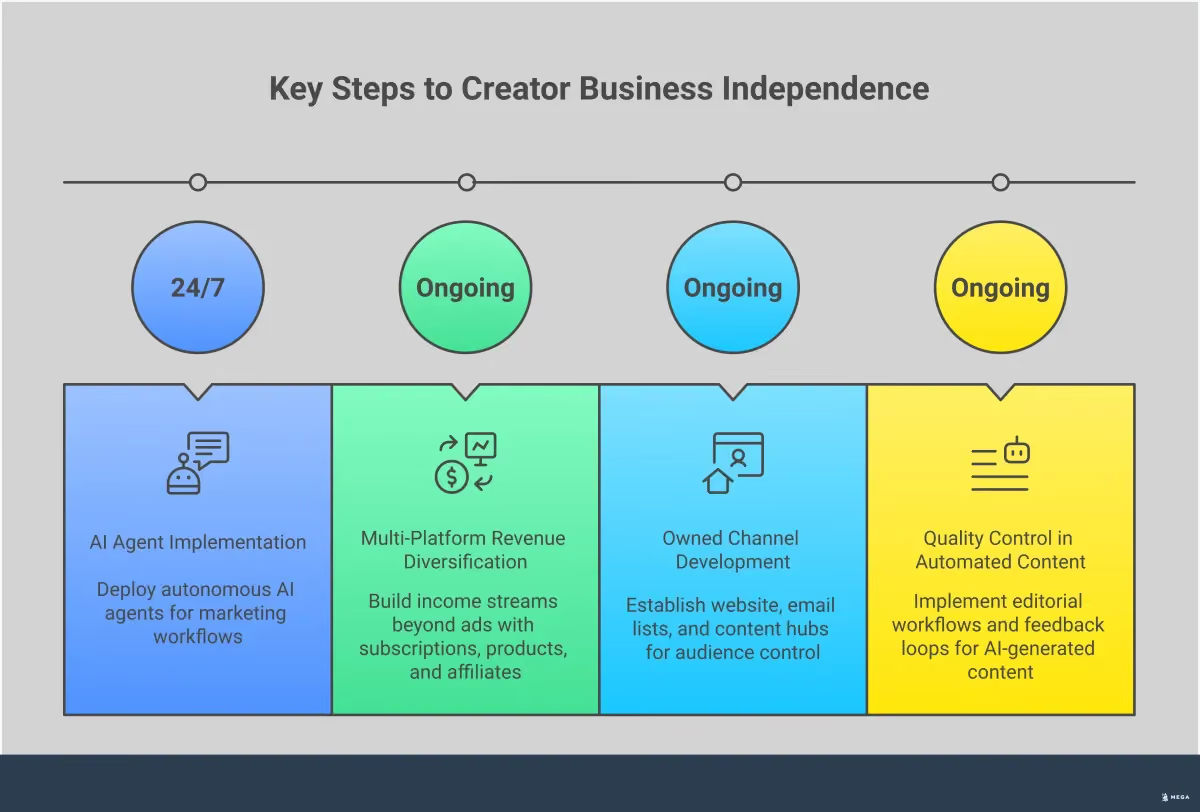
Being a creator is no longer about mastering a single platform. To build a sustainable business, you need to think like a media company, and that means establishing a presence wherever your audience spends their time. A multi-platform strategy is your defense against market volatility and your key to unlocking new growth. While managing multiple channels sounds like a lot of work, it’s becoming more manageable with systems that can automate and optimize your content distribution.
The goal isn’t just to be everywhere, but to be effective everywhere. This requires a thoughtful approach that centers on three core ideas. First, you need to reduce your reliance on any single algorithm or platform to secure your income. Second, you must tailor your content to fit the unique context of each channel to maximize engagement. Finally, you need a way to track performance across all your platforms to make smart decisions about where to invest your energy. Getting this right creates a resilient creator business that can adapt and thrive.
How to Reduce Your Reliance on a Single Platform
Relying on a single platform is a risky business model. As many creators have learned, sudden algorithm changes or policy updates can slash your reach and income overnight. Spreading your presence across multiple channels—like YouTube, TikTok, and a newsletter—diversifies your risk. If one platform’s performance dips, your other channels can maintain your connection with your audience and keep your business stable.
The ultimate goal is to drive your audience to channels you own, like a personal website or an email list. These are assets that no platform can take away from you. By using SEO to build your website’s authority, you create a central hub for your brand that acts as a reliable source of traffic and revenue, giving you true independence from third-party platforms.
Tailor and Optimize Content for Every Platform
Content that performs well on one platform won't necessarily succeed on another. A 20-minute YouTube deep dive needs to be remixed into a 60-second TikTok, a thoughtful LinkedIn post, and a series of Instagram Stories. Each piece of content must be optimized for the platform’s format and audience expectations. This requires a deep understanding of what resonates on each channel.
This is where AI becomes a powerful partner. Instead of manually editing dozens of content variations, AI-driven tools can automatically remix your core content into formats tailored for every platform. This includes creating video clips, writing social media copy, and generating ad creatives. This level of automation allows you to maintain a consistent, high-quality presence everywhere without spending all your time on content production.
See All Your Analytics in One Place
Managing a multi-platform strategy creates a new challenge: scattered data. Trying to make sense of separate analytics from YouTube, Instagram, your email provider, and your website can be overwhelming. Without a clear, consolidated view, it’s difficult to know what’s actually working and where your efforts are having the most impact. A unified approach is essential for making informed decisions.
Modern marketing platforms solve this by integrating with your different channels to pull all your performance data into a single dashboard. This gives you a holistic view of your entire ecosystem, helping you understand how audiences move between your platforms and what content drives the most valuable actions. With unified analytics, you can stop guessing and start making data-backed choices that grow your business more effectively.
How to Maintain Quality When Using AI for Creators
As AI agents begin to handle more of the heavy lifting in content creation and marketing, a valid question arises: how do you maintain quality? The fear is that automation might lead to generic content that lacks the unique voice and perspective that built your audience in the first place. However, the right systems don't replace your vision; they give you the leverage to execute it more effectively. This shift is less about artificial intelligence and more about augmented intelligence, where technology amplifies your creative capabilities.
Putting AI to work isn’t about sacrificing quality for quantity. It’s about establishing a workflow where autonomous agents handle the repetitive, data-driven tasks, while you retain final creative approval. This approach allows you to scale your output without diluting your brand. With the right checks and balances, you can ensure every piece of content, whether it’s a blog post or an ad campaign, is a true reflection of your standards. The goal is to use automation as a powerful assistant, not as a replacement for your creative direction. This way, you can focus on the big ideas while your AI partner manages the execution.
Maintain Authenticity at Scale
Authenticity is the currency of the creator economy. The vibrant and engaging nature of your content is what attracts an audience and justifies ad investment. Scaling your production with AI shouldn't mean losing that connection. Instead, AI can help you deepen it by researching trends on platforms like Reddit and YouTube to ground your content in what your audience is actually talking about. The key is to use automation to better understand your community, not just to produce more material. Creators can rely on data and analytics to gain insights into their audiences, which helps tailor content for maximum impact.
How to Keep Editorial Control with AI Tools
Using autonomous systems doesn't mean giving up control. You are still the editor-in-chief of your brand. The most effective AI platforms are designed to work with you, providing options for manual review and approval. For instance, you can have an AI agent write a blog post and send it to your CMS as a draft. This gives you the final say before anything goes live. This model helps foster a community-driven media network where quality and relevance are paramount. While automation streamlines the process, your oversight ensures that the personal touch remains. You set the strategy and the standards; the AI handles the execution.
Balance Efficiency with Creative Vision
The true power of AI for creators lies in its ability to free up time. By automating the technical and time-consuming aspects of marketing, you can dedicate more energy to what you do best: creating. Think of AI as a partner that handles the operational side of your business—like SEO optimization, ad management, and performance tracking—so you can focus on your creative vision. Creators are already using AI to enhance their content, not just produce it. It’s about finding the right balance where efficiency supports creativity, allowing you to explore new formats and ideas without getting bogged down in the mechanics of distribution.
Focus on Connection, Let AI Handle Production
Your audience connects with your unique perspective, not your ability to optimize meta descriptions. The most valuable work you do involves building relationships, understanding your community's needs, and creating content that resonates on a human level. Yet, the production side of content—the endless cycle of editing, keyword research, and distribution—can easily consume the majority of your time. This is where AI shifts from a simple tool to a production partner. It can automate tedious editing tasks and personalize experiences, allowing you to focus your energy on your creative vision rather than the manual labor behind it.
Instead of spending your week buried in analytics or tweaking ad campaigns, you can delegate those entire workflows. AI agents can handle these processes autonomously, freeing you to concentrate on the core of your craft: developing unique ideas and connecting with your audience. This means you have more time to engage in comment sections, host live Q&A sessions, or develop new products based on direct feedback. The goal is to use automation as a powerful assistant, not as a replacement for your creative direction. Let an AI system manage the technical execution so you can invest your time where it truly matters—building your brand and community.
Future-Proofing Your Creator Business
The creator economy is constantly evolving, and staying ahead requires a proactive approach. Instead of reacting to algorithm changes or platform shifts, you can build a more resilient business by focusing on foundational strategies. By prioritizing your community, staying aware of the larger industry landscape, and diversifying how you earn, you can set yourself up for long-term success no matter what comes next.
Build Community-First Strategies
Chasing viral trends is exhausting. A more sustainable path is to build a dedicated community around your content. As Deloitte notes, "Platform communities provide a clear audience for creators to bring their content, and a gathering place for consumers with shared interests." When you focus on serving a specific niche, you stop being dependent on a platform's algorithm to find your audience. Instead, your audience seeks you out directly. This approach turns your brand into a destination, fostering loyalty that withstands platform volatility. Consistently creating valuable content that addresses your community's needs is the key to making this work.
Stay Prepared for New Rules and Regulations
The digital platforms many creators rely on face increasing scrutiny. The ongoing Google antitrust battle is a prime example of how regulatory pressures can reshape the competitive landscape. Relying on a single platform for your traffic and revenue is a significant risk. To mitigate this, focus on owning your audience through channels like email or SMS lists. Diversifying where you publish content and build your presence ensures that a single legal challenge or policy change won't derail your entire business. Staying informed about these shifts allows you to adapt your strategy before you are forced to.
Future-Proof Your Revenue Streams
Relying solely on ad revenue is no longer a secure strategy. Top creators are diversifying their businesses, and as one report on the 2023 creator economy highlights, technologies like AI are becoming a critical resource for this expansion. Think beyond ads to subscriptions, digital products, affiliate marketing, or consulting services. AI-powered tools can handle the heavy lifting of content creation and optimization for these different channels, freeing you to focus on developing new products and engaging your audience. Embracing automation allows you to scale your output and support multiple income streams without burning out.
Expert Advice for Navigating the AI Landscape
The world of AI is moving incredibly fast, and it can feel overwhelming to keep up with the constant stream of new tools and updates. The key isn't to become an expert on every single new app, but to develop a strategy for how you integrate AI into your workflow. Think of this less as learning a new piece of software and more as hiring a new kind of team member. The most significant shift is moving from using AI as a simple assistant for small tasks to partnering with it as a strategic ally that can manage complex projects. This approach allows you to focus on your core business goals while leveraging AI to handle the execution.
Adapt to a Rapidly Changing Toolset
It's easy to get distracted by the latest AI tool that promises to revolutionize your workflow. The reality is, the toolset is in constant flux. Instead of chasing every new application, focus on your desired outcomes. Rather than asking, "Which AI writer should I use?" ask, "How can I automate my SEO content strategy?" This shift in perspective moves you from being a tool operator to a strategist. The most effective approach is to partner with autonomous systems that can manage entire workflows. These AI agents act as strategic partners, understanding your high-level goals—like improving search rankings or optimizing ad spend—and then executing the necessary multi-step processes to achieve them. This way, you're not constantly learning new interfaces; you're delegating the work and focusing on the results.