
SEO used to be a manual, time-consuming process that felt out of reach for many small businesses. But the game has changed. AI is now at the core of how search engines work, and it’s also transforming how businesses can compete online. So, what is SEO marketing in this new era? It’s still about connecting with customers through search, but the tools are smarter, faster, and more accessible than ever before. This guide will cover the timeless fundamentals of SEO while also showing you how modern, AI-driven strategies can automate the heavy lifting, save you time, and deliver measurable results for your business.
Key Takeaways
- Focus on SEO for sustainable growth: Unlike paid ads that stop when you stop paying, SEO builds a lasting digital asset for your business by earning trust and attracting consistent, high-quality traffic over time.
- Adopt a holistic approach: A successful strategy balances three key areas. You need to optimize your on-page content, build off-page authority through backlinks, and ensure your site's technical foundation is solid for search engines.
- Prioritize user intent and adapt to change: Modern SEO is driven by understanding why a user is searching. Create genuinely helpful content that answers your audience's questions and use performance data to refine your strategy as search engines evolve.
What is SEO Marketing?
SEO, or search engine optimization, is the practice of improving your website so it shows up more often in organic (unpaid) search engine results. Think of it as making your website more attractive to search engines like Google. When someone searches for a product you sell or a problem you solve, you want your business to appear on the first page. This process involves a mix of technical adjustments, strategic content creation, and building your site's authority online.
For a small business, this means more people can find you without you having to pay for every single click. A solid SEO strategy helps you connect with potential customers who are actively looking for what you offer. It’s not about tricking search engines; it’s about providing a great experience for users and showing Google that your site is a valuable and trustworthy resource. The core activities include keyword research, creating helpful articles, ensuring your site is technically sound, and acquiring backlinks from other reputable sites.
Define the Goal of SEO
The main goal of SEO is to get your business found by the right people at the right time. It’s about attracting relevant visitors to your website—people who are genuinely interested in your products or services. When you optimize your site for specific keywords your audience is using, you draw in traffic that is more likely to convert into customers. This isn't just about getting more visitors; it's about getting higher-quality visitors. By understanding what your audience is searching for, you can create content that directly answers their questions and positions your business as the solution they need.
SEO vs. Paid Ads: What's the Difference?
SEO focuses on earning traffic through unpaid, organic search results. It’s a long-term strategy that builds trust and authority over time. When you rank organically, your visibility doesn't disappear the moment you stop investing money. The results can be long-lasting, and many users tend to trust organic results more than ads.
Paid ads, on the other hand, involve paying to place your website at the top of search results. This approach delivers immediate visibility and is great for targeted campaigns. However, the traffic stops as soon as you stop paying. Many businesses find success using a combination of both SEO for sustainable growth and paid ads for quick, strategic pushes.
Why Does SEO Marketing Matter for Your Business?
Think of the last time you needed a local plumber, a new coffee shop, or a specific product. You probably pulled out your phone and typed a few words into a search engine. Your customers are doing the same thing. SEO marketing matters because it puts your business right in front of them at the exact moment they’re looking for what you offer. It’s not about interrupting people with ads; it’s about being the solution they are actively seeking.
For small and local businesses, a solid SEO strategy is one of the most powerful ways to compete with larger companies. It helps you connect with your community, build a loyal customer base, and grow your brand without a massive advertising budget. By focusing on what your audience needs and how they search, you can create a sustainable source of traffic and leads that works for you around the clock. It’s an investment in your business’s long-term digital health and visibility. Unlike paid campaigns that require constant funding to stay active, the authority and rankings you build through SEO become a durable asset. This asset continues to deliver value long after the initial work is complete, making it a cornerstone of sustainable business growth.
Drive Long-Term Traffic and Visibility
The main goal of SEO is to improve your website's visibility in organic search results to attract more relevant visitors. When your site ranks higher on a search engine results page (SERP), you capture valuable, non-paid traffic from users who are already interested in your products or services. Unlike paid ads, which disappear the moment you stop paying, a well-optimized page can hold its ranking for months or even years. This creates a durable and consistent stream of visitors, building brand awareness and generating leads long after the initial work is done. It’s a strategy focused on building a lasting presence where your customers are already looking.
Achieve Cost-Effective Growth
While SEO requires an investment of time and resources, it is a more cost-effective way to acquire customers over time compared to paid advertising. The traffic you gain from organic search is essentially free, and studies have shown that SEO can deliver an impressive return on investment. For small businesses and startups with tight budgets, this makes SEO a particularly smart strategy. It allows you to build a powerful marketing asset—your website's authority—that drives scalable growth without the constant expense of pay-per-click campaigns. Every piece of content you create and every link you earn contributes to this long-term value.
Build Trust and Credibility
Ranking high in search results does more than just bring in traffic; it builds trust. Users tend to view organic results as more credible and authentic than sponsored ads. A high ranking acts as a third-party endorsement from search engines like Google, signaling that your site is a reputable source of information. Modern SEO marketing focuses on creating a great user experience with high-quality content, a fast-loading site, and easy navigation. This effort not only helps your rankings but also shows visitors that you care about providing real value, which is key to turning them into loyal customers.
How Does SEO Marketing Work?
SEO might seem complex, but at its core, it’s a logical process. It’s all about making your website easy for both search engines and people to find and understand. Think of it as setting up clear signposts that guide potential customers directly to your digital doorstep. To do this effectively, you need to understand how search engines operate behind the scenes. They have a specific system for discovering, organizing, and presenting information from across the internet, and your website is just one piece of that massive puzzle.
This system works in three main stages: crawling to find content, indexing to organize it, and ranking to decide which content is most helpful for any given search. Understanding this foundation is the first step to building a successful SEO strategy. It helps you see why certain actions, like using specific keywords or making your site mobile-friendly, actually matter. It’s not about gaming a system; it’s about aligning your website with the way search engines are designed to work. Below, we’ll walk through how search engines function, what their algorithms look for, and why understanding your audience’s intent is the most important piece of the puzzle.
How Search Engines Crawl, Index, and Rank Content
Search engines work in a three-step cycle. First, they use automated programs called crawlers to discover content across the web by following links from one page to another. Think of them as digital librarians constantly exploring for new books. Next, they analyze and store this content in a massive digital library known as an index. Finally, when you type a query into the search bar, the engine sifts through its index to find the most relevant pages. It then ranks them based on hundreds of factors to present the best possible results for your search.
What Are Search Algorithms?
The "rules" search engines use to rank pages are called search algorithms. These are complex systems that weigh hundreds of signals to determine a page's relevance and authority. Key factors include the words on your page, the number of quality websites linking to you, your content's freshness, and your site's mobile-friendliness. Search engines constantly update their algorithms to improve search quality. Staying on top of these changes is crucial for maintaining your rankings, which is why many businesses use tools or services to help manage their SEO strategy.
Why User Intent Is Key to Ranking
Modern SEO is less about technical tricks and more about understanding people. At the heart of this is user intent—the "why" behind a search query. Is someone looking for information, trying to find a specific website, or ready to buy something? Search engines are very good at figuring this out. To rank well, your content must directly satisfy the user's goal. Focusing on user intent ensures you create valuable content that genuinely helps your audience. This, in turn, signals to search engines that your page is a high-quality result worth showing to more people.
What Are the Core Parts of SEO Marketing?
SEO marketing isn’t a single activity but a combination of practices that work together to improve your site's visibility in search results. Think of it as having three main pillars: on-page SEO, off-page SEO, and technical SEO. Each one plays a distinct role, but they are all interconnected. On-page SEO deals with the content on your site, off-page SEO builds your site’s authority across the web, and technical SEO ensures your site’s foundation is solid enough for search engines to crawl and understand.
For a small business owner, managing all three can feel like a lot. You need a strategy that covers everything from keyword research and content creation to acquiring backlinks and fixing site errors. This is where an integrated approach becomes so valuable. An AI-powered SEO agent can autonomously handle these different components, ensuring that your on-page content, off-page authority, and technical foundation are all optimized to work in sync. By addressing all three core parts, you create a comprehensive strategy that drives sustainable, long-term growth.
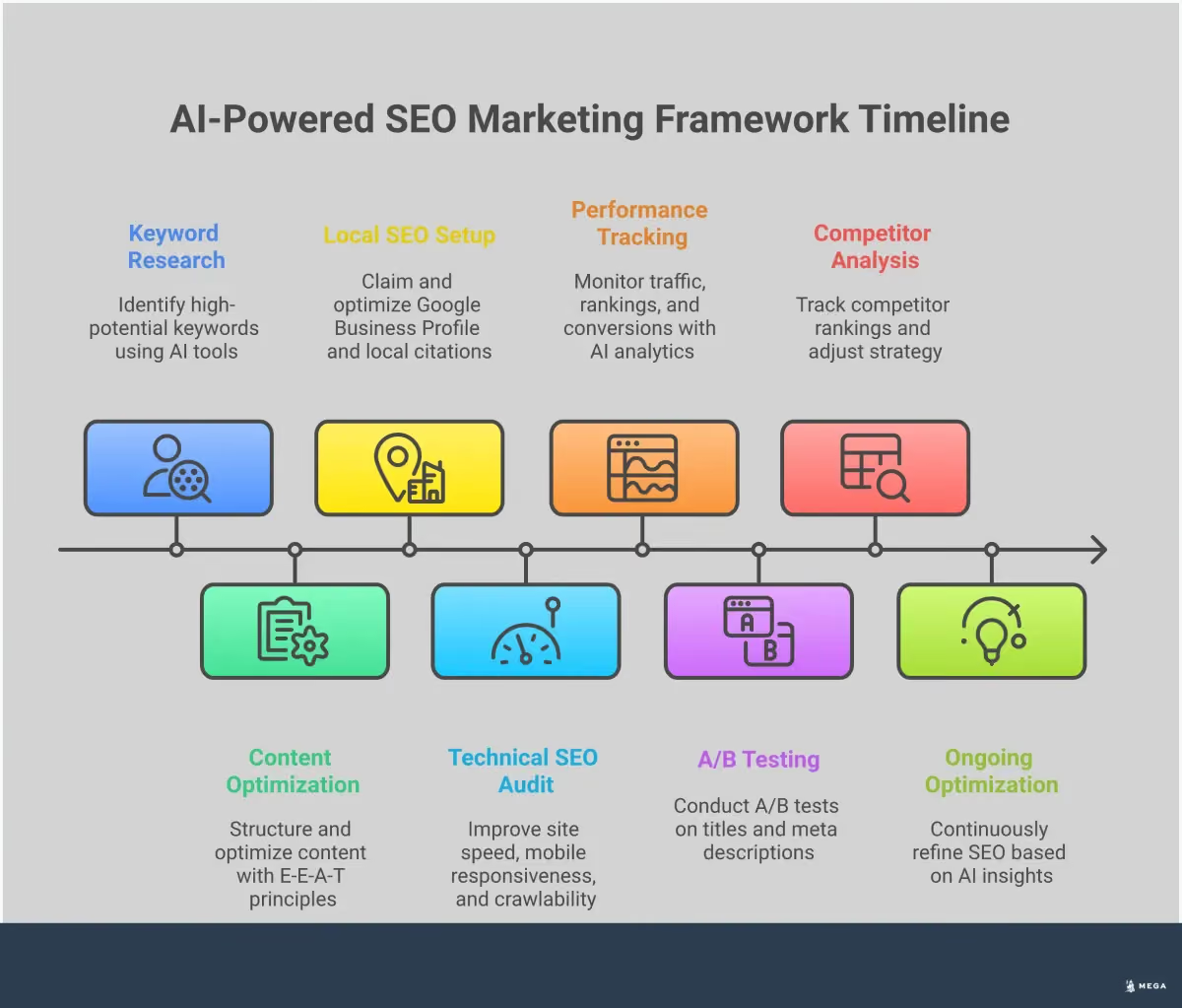
Master On-Page SEO
On-page SEO involves optimizing the individual pages on your website to rank higher and earn more relevant traffic. This is all about the content you can see and control directly on your site. Key elements include the quality of your writing, the keywords you target, your page titles, and your headings. The goal is to clearly communicate your page's topic to both search engines and your audience. A good starting point is to align your content with Google’s guidelines on creating helpful, reliable content, which emphasize experience, expertise, authoritativeness, and trustworthiness. This helps ensure your content is valuable and credible to readers.
Build Authority with Off-Page SEO
Off-page SEO refers to actions taken outside of your own website to impact your rankings within search engine results pages. While on-page SEO is about what your site says, off-page SEO is about what the rest of the web says about your site. The most important part of this is building backlinks, which are links from other websites to yours. Think of each high-quality backlink as a vote of confidence from another site, telling search engines that your content is credible and authoritative. The key is to focus on earning links from reputable, relevant websites rather than just accumulating a large number of low-quality links.
Cover Your Technical SEO Basics
Technical SEO focuses on the backend of your website to ensure search engines can crawl and index it without any issues. If search engines can’t properly access your content, it doesn’t matter how great your articles or products are. This pillar covers things like site speed, mobile-friendliness, site architecture, and security. A strong technical foundation makes it easy for search engine bots to find and understand your pages, which is a critical first step to ranking. You can use tools like Google's PageSpeed Insights to check your site’s performance and identify areas for improvement.
Which SEO Marketing Strategies Should You Use?
The right SEO strategy depends on your specific business goals, but a few core approaches deliver results for nearly everyone. Whether you’re a local shop trying to bring more people through the door or an online store shipping products nationwide, your focus should be on creating a helpful and trustworthy online presence. Think of your strategy as a roadmap. It guides all your SEO activities, from the content you create to the technical fixes you make on your website.
A solid plan helps you prioritize what matters most instead of getting lost in a long list of potential tasks. For small businesses, this focus is critical. You can’t do everything at once, so it’s important to choose strategies that will have the biggest impact on your bottom line. The following approaches are foundational—they address the most common needs of small and local businesses and provide a clear path to building your visibility in search results.
Adopt a Content-First Approach
Your content is the foundation of your entire SEO effort. To succeed, you need to create high-quality articles, guides, and pages that genuinely help your audience. According to Google's own SEO starter guide, good content is easy to read, well-organized, and free of mistakes. It should also be unique and up-to-date.
This means focusing on what your customers need and answering their questions clearly. Instead of just listing your products or services, create content that solves their problems. Regularly check your older posts and pages to make sure the information is still accurate and relevant. A content-first approach shows search engines that you are a credible authority in your field, which helps your site rank higher.
Win Over Local Customers
For businesses with a physical location, local SEO is non-negotiable. Many of your potential customers are searching for products and services "near me," and you need to show up in those results. Neglecting local SEO means you’re invisible to a huge group of motivated buyers in your area. The first step is to claim and fully optimize your Google Business Profile.
Make sure your business name, address, phone number, and hours are accurate. Add engaging photos of your storefront, products, and team. Just as important, encourage your happy customers to leave reviews. Positive reviews build trust and signal to Google that you’re a reputable local business, which can significantly improve your visibility on Google Maps and in local search results.
Tailor Your Strategy for E-commerce
If you run an e-commerce store, your SEO strategy needs to focus on driving traffic that converts into sales. While blogs are great for attracting new visitors, your product and category pages are where purchases happen. Each page on your site needs to be optimized to appear in search results for the right keywords.
For every product, write a clear title tag (around 50–60 characters) and a compelling page description (up to 160 characters). These elements are what users see in search results, so they need to be persuasive. Make sure to include your target keywords naturally in both. This simple practice helps search engines understand what your page is about and encourages potential customers to click through to your store.
How Do You Measure SEO Success?
Once you start putting effort into SEO, you need a clear way to see if it’s paying off. Measuring success isn't just about watching your website traffic go up; it's about understanding how that traffic translates into real business growth. For small businesses and startups, every marketing dollar counts, so proving the return on your investment is critical. Without clear measurement, you're essentially flying blind, pouring time and resources into activities without knowing if they're actually attracting the right customers or helping you hit your revenue goals.
By focusing on the right metrics, using the proper tools, and setting realistic expectations, you can get a clear picture of your SEO performance. This data-driven approach helps you refine your strategy over time, ensuring your efforts are always directed toward what works best for your business. For example, you might find that one type of content drives a lot of traffic but few sales, while another has lower traffic but a high conversion rate. This insight is invaluable. It allows you to double down on what's effective and stop wasting resources on what isn't. It also helps you communicate the value of your work to stakeholders or team members, making it easier to justify continued investment in your organic growth.
Track the Right Key Performance Indicators (KPIs)
To know if your SEO is working, you need to track key performance indicators, or KPIs. These are specific metrics that show how your performance aligns with your business goals. Instead of getting lost in a sea of data, focus on a few core KPIs. Start with organic traffic, which tells you how many people find your site through search engines. Also, monitor your keyword rankings to see if you’re becoming more visible for important search terms. Most importantly, track organic conversions—the number of visitors from search who complete a desired action, like filling out a contact form or buying a product. This metric connects your SEO efforts directly to business results.
Use Tools to Monitor Your Performance
You can’t track what you don’t measure, and for that, you need the right tools. Google Analytics and Google Search Console are essential, free platforms that provide a wealth of data on your site’s performance. They help you monitor traffic, see which keywords people use to find you, and identify technical issues. Regularly auditing your site and tracking this data helps you adapt to algorithm changes and user behavior. For a more streamlined view, a platform like MEGA AI’s SEO agent consolidates all your important KPIs in one dashboard. This saves you from switching between multiple tools and gives you a clear, immediate understanding of what’s happening with your SEO.
Set Realistic Timelines and Expectations
SEO is a long-term strategy, not a quick fix. While some minor changes might show results in a few weeks, significant growth in organic traffic and rankings takes time. According to Google’s own guidelines, it can take several months to see the full impact of your efforts. This is because search engines need time to crawl, index, and evaluate your new and updated content. Think of SEO as building a foundation. The work you do today will continue to pay off for months and even years to come. The key is consistency, which is why an autonomous tool that works on your SEO daily can be so effective.
What Are the Best Practices for SEO Marketing?
With the fundamentals in place, let's focus on the practices that separate successful SEO from the rest. These core habits will help you build a sustainable strategy that consistently attracts the right audience and drives results for your business. Following these guidelines ensures your efforts are effective and contribute to long-term growth.
Find and Optimize for the Right Keywords
Effective SEO starts with understanding the language of your customers. Keyword research is the process of identifying the words and phrases people use when searching for your products or services. The goal is to find terms that your target audience searches for often but that don't have overwhelming competition. This helps you create content that directly addresses user intent and answers their questions. By aligning your website's content with these specific terms, you improve your chances of appearing in front of potential customers at the exact moment they need you. This foundational step ensures all your future content efforts are pointed in the right direction.
Create High-Quality, Search-Friendly Content
Once you know your keywords, the next step is to create content that search engines and users will love. High-quality content is unique, well-organized, and provides genuine value to the reader. According to Google's own guidelines, your pages should contain trustworthy information that directly answers what users are looking for. This means writing clear, easy-to-read articles, product descriptions, and service pages. Regularly updating your content also signals to search engines that your information is current and relevant. For small businesses, consistently producing fresh content can be a challenge, but it’s one of the most important factors for long-term SEO success.
Build a Strong Backlink Profile
Think of backlinks as votes of confidence from other websites. When a reputable site links to yours, it signals to search engines that your content is credible and valuable. Building a strong backlink profile is a key part of establishing your site's authority. The focus should always be on quality over quantity. A single link from a well-respected industry blog is far more powerful than dozens of links from low-quality directories. You can acquire backlinks by creating shareable content like original research or helpful guides, reaching out to other businesses for guest posting opportunities, and getting listed in relevant local directories.
What Common SEO Challenges Should You Expect?
SEO is a powerful strategy for long-term growth, but it’s not without its hurdles. Like any marketing discipline, it comes with a unique set of challenges that can feel daunting, especially for small businesses. Understanding these common obstacles ahead of time helps you prepare a strategy to overcome them. The key is to be aware of what’s coming so you can build a resilient plan that adapts to changes and consistently delivers results without draining your resources.
Handle Limited Resources and Technical Issues
As a small business owner, you’re likely juggling a tight budget and an even tighter schedule. Investing time and money into a comprehensive SEO strategy can feel like a huge commitment when you have other priorities. This is one of the most common digital marketing challenges for local businesses. On top of resource constraints, technical SEO issues can stop your progress before it starts. Problems like slow page speed, a site that isn’t mobile-friendly, or improper indexing can hurt your rankings, and diagnosing them requires specific expertise. These technical foundations are critical for search engines to find and understand your content.
Keep Up with Algorithm Changes
Search engines are constantly refining how they rank websites to provide better results for users. Google, for example, rolls out frequent algorithm updates, some small and some significant enough to shake up search rankings across industries. Staying on top of these changes is crucial for maintaining your visibility. What worked last year might not be as effective today. This constant evolution means your SEO strategy can’t be a "set it and forget it" task. You have to be willing to adapt your approach to align with the latest best practices, which requires ongoing learning and a flexible mindset to ensure your success isn't temporary.
Measure and Prove Your ROI
Unlike paid ads where you can often see a direct link between spend and conversions, measuring the return on investment (ROI) for SEO can be more complex. It’s a long-term play, and its effects build over time. It can be challenging to show a direct line from a specific blog post to a final sale. However, it’s essential to track the right metrics to demonstrate its value. By focusing on key performance indicators (KPIs) like organic traffic growth, keyword ranking improvements, and conversion rates from organic visitors, you can build a clear picture of how your SEO goals are contributing to your overall business objectives.
How Is AI Changing SEO Marketing?
Artificial intelligence is no longer a futuristic concept; it's actively reshaping how search engines understand and rank content. For small businesses, this shift presents a massive opportunity. AI has become the engine behind search, powering everything from Google’s core algorithms to the AI-generated summaries that now appear at the top of search results. This means the old rules of SEO are evolving. Instead of just matching keywords, search engines now prioritize understanding the context and intent behind every search query.
This change levels the playing field. You no longer need a massive team to analyze data and create content. AI-powered tools can help you identify what your audience is looking for and create high-quality, relevant content that meets their needs. By embracing AI, you can automate complex tasks, gain deeper insights into your customers, and build an SEO strategy that’s prepared for the future of search. It’s about working smarter, not just harder, to connect with the people who need your products or services.
Understand AI's Impact on Search Results
AI is at the heart of how modern search engines operate. Algorithms now use AI to interpret the meaning behind search queries and deliver more relevant results. This has led to the rise of features like Google’s AI Overviews, which provide direct answers to questions. To show up in these new formats, your content needs to be clear, authoritative, and directly address user needs. This is where Google’s E-E-A-T guidelines (Experience, Expertise, Authoritativeness, and Trustworthiness) come into play. While AI can help generate content, it’s crucial to ensure it’s fact-checked and infused with your unique human expertise to build trust with both users and search engines.
Optimize for Voice Search and Featured Snippets
The growing popularity of voice assistants like Siri and Alexa is another AI-driven trend changing SEO. When someone asks a question, these devices often read the top result, usually from a featured snippet. To capture this valuable traffic, you need to optimize your content to provide direct, concise answers to common questions. Think about the questions your customers ask and create content that answers them clearly. For local businesses, this is especially important, as many voice searches are for "near me" queries. A solid local SEO strategy ensures your business is the one that gets recommended.
Prepare for the Future of Search
The future of SEO is less about specific keywords and more about overall topics and user intent. AI enables search engines to understand context and relationships between concepts, meaning they can satisfy a search query even if the exact keywords aren't present. Your goal should be to create comprehensive content that covers a topic thoroughly and proves your expertise. As AI continues to evolve, search will become more conversational and personalized. Building a library of genuinely helpful, well-researched content is the best way to prepare your business for what’s next and build a sustainable foundation for long-term growth.
How Can You Start SEO Marketing Today?
Getting started with SEO doesn't have to be overwhelming. For small business owners, the first decision is choosing an approach that fits your budget, timeline, and technical comfort level. Once you’ve picked a path, you can begin with a few foundational steps to build your online presence and attract more customers through search. The key is to start simple, stay consistent, and focus on activities that will make the biggest impact for your business.
Choose Your Path: DIY, Agency, or AI
You have three main options for handling your SEO. The do-it-yourself (DIY) route is best if you have more time than money and enjoy learning new skills. It gives you complete control but requires a significant commitment to learning and execution. Alternatively, you can hire a traditional marketing agency. This saves you time but can be expensive, often with retainers starting at $5,000 per month and slow execution.
A third path is using an AI-powered platform. This approach offers a middle ground, combining the expertise of an agency with the affordability of a tool. An AI SEO agent can autonomously handle tasks like keyword research, content creation, and technical fixes, saving you time while delivering results without the high agency price tag.
Take Your First Steps
Regardless of the path you choose, every SEO strategy starts with the same fundamentals. First, get a basic understanding of how search engines find and organize information. This context will help you make smarter decisions. Next, begin your keyword research to discover the specific terms and phrases your potential customers are using to find businesses like yours.
With a starting list of keywords, you can begin optimizing your website. Focus on on-page SEO basics, like including your primary keyword in your page titles, headings, and body content. Finally, set up a way to track your progress. Monitor simple metrics like organic traffic and keyword rankings to see what’s working and where you can improve.