
A successful video marketing strategy is about more than just hitting "record." It requires a thoughtful approach, treating video not as a single tactic but as a versatile toolkit. Different business goals require different types of video. An explainer video on your homepage serves a different purpose than a customer testimonial on social media or a detailed how-to tutorial on your blog. By understanding which format to use at each stage of the customer journey, you can create a cohesive experience that guides your audience from initial awareness to a final purchase decision. This article explores the core video formats that get results and shows you how to build a strategic plan that supports your specific business objectives.
Key Takeaways
- Start with a clear purpose: Define your goals and audience before creating any content. This ensures every video, from an explainer to a testimonial, supports a specific business objective and speaks directly to your target customer.
- Focus on value over production quality: You don't need expensive equipment to create effective videos. Answering common customer questions and telling authentic stories builds more trust than a polished video with a weak message.
- Distribute and measure your content to prove its worth: A great video has little impact if no one sees it. Integrate your videos across all marketing channels—like email, social media, and your website—and track key metrics to understand what works and demonstrate ROI.
Why Your Marketing Strategy Needs Video
If video isn't a core part of your marketing plan, you're missing a major opportunity to connect with your audience and grow your business. Video has moved from a nice-to-have to a fundamental component of a successful strategy. The data is clear: videos generate 1,200% more shares than content with just text and images. With video making up the vast majority of all internet traffic, it’s the primary way people consume content online.
Beyond just grabbing attention, video delivers tangible business results. For marketers focused on the bottom line, video content has the highest ROI of any content type and is incredibly effective at generating leads. It works because it simplifies complex information. In fact, a large majority of marketers agree that video enhances user understanding of a product or service, making it easier to communicate your value proposition clearly.
Incorporating video also has direct benefits for your search rankings. When you embed a video on your website, you encourage visitors to stay longer. This increased "dwell time" signals to search engines that your page offers valuable content, which can improve your SEO. By strategically using video, you can engage your audience more deeply, increase your online visibility, and drive more sales for your business. It’s a powerful tool for achieving nearly any marketing goal.
How Video Affects Engagement and Reach
Video has a unique ability to capture and hold attention. In a digital landscape crowded with text and images, moving visuals stand out and give people a reason to stop scrolling. The data is compelling: video content generates 1,200% more shares than text and image content combined. With video now accounting for the vast majority of all internet traffic, it’s clear this is the medium audiences prefer to consume. For small businesses and startups, this presents a massive opportunity to connect with potential customers on a deeper level.
Beyond just grabbing attention, video helps your audience truly understand what you offer. Research shows that 88% of marketers believe video enhances user understanding of a product or service. When customers can see a product in action, watch a tutorial, or hear a concept explained, it builds clarity and trust far more effectively than static content. This deeper connection keeps them engaged and more likely to remember your brand when it's time to make a purchase. This increased engagement also sends positive signals to search engines. When you embed videos on your website, you can improve your SEO by encouraging visitors to spend more time on your site. This longer dwell time signals to Google that your page provides value, which can help your content rank higher and extend your organic reach. Ultimately, a strong video strategy translates directly to business growth, offering an exceptional return on investment compared to many traditional marketing methods.
Video Formats That Get Results
Choosing the right video format is a strategic decision, not just a creative one. The type of video you create should directly support a specific marketing goal, whether that's generating leads, explaining a complex service, or building customer loyalty. Think of your video strategy as a toolkit; different tools are needed for different jobs. A short, engaging explainer might be perfect for a social media ad, while a detailed product demo is better suited for a landing page where a potential customer is actively considering a purchase.
The most effective video marketing strategies use a mix of formats to connect with audiences at every stage of their journey. By aligning your video content with the customer funnel, you can guide viewers from initial awareness to final conversion. This approach ensures your message is relevant and impactful at each touchpoint. Let's look at five video formats that consistently deliver results and how you can use them to support your business goals.
Explainer Videos
Explainer videos are your digital elevator pitch. These short, focused videos break down a product, service, or idea into a simple, digestible format, usually in 60 to 90 seconds. They are perfect for capturing attention at the top of the marketing funnel, answering the fundamental question: "What is this and why should I care?" Given that video content showcasing products has the highest ROI of any content type, a well-crafted explainer is a valuable asset for your homepage, landing pages, and ad campaigns. They work by cutting through the noise and delivering your core value proposition quickly and clearly, setting the stage for a deeper conversation with your audience.
Product Demonstrations
While an explainer video tells your audience what you do, a product demonstration shows them how you do it. These videos walk potential customers through your product's features in a real-world context, helping them visualize its benefits. This is a critical step in the consideration phase, as 88% of marketers find that video improves a user's understanding of products. A great demo builds confidence by showing, not just telling. For a platform like MEGA AI, a screen recording that walks a user through setting up an automated SEO content plan removes uncertainty and makes it easier for a potential customer to book a demo.
Customer Testimonials
Customer testimonials are one of the most powerful forms of social proof. Instead of you telling everyone how great your product is, a testimonial lets a satisfied customer do it for you. Hearing a genuine success story from a real person builds a level of trust and credibility that branded content rarely achieves on its own. This format has lasting power because audiences are here for it; video marketing and the audience consuming it are here for the long haul. The most effective testimonials focus on the customer's journey—the problem they faced and the specific results they achieved with your solution. High production value isn't the priority; authenticity is what makes this format work.
Live Videos
Live videos on platforms like Instagram, LinkedIn, and Facebook create a direct, real-time connection with your audience. The unscripted and interactive nature of live streaming fosters a sense of community and urgency that pre-recorded content can't replicate. It’s an opportunity to engage with viewers through comments and Q&As, making your brand feel more human and accessible. Platforms like TikTok and Instagram Reels thrive on this kind of short-form video content. You can use live video for Q&A sessions with experts, behind-the-scenes tours, or product launches. The key is to offer immediate value and encourage participation, turning passive viewers into active community members.
How-To Tutorials
How-to tutorials are educational videos that teach your audience how to solve a problem or complete a task, positioning your brand as a helpful expert. This format is less about a direct sales pitch and more about providing genuine value. By strategically using videos to promote your service and engage your audience, you can drive them to action. These videos are also excellent for SEO, as they can rank for common "how-to" search queries on Google and YouTube. For example, a tutorial on "How to Optimize Your Ad Spend" not only helps your audience but also naturally introduces MEGA AI's Paid Ads automation tools as a practical solution.
How to Create Compelling Video Content
Creating video that captures attention and drives action involves more than just pointing a camera and hitting record. A thoughtful approach is what separates content that gets scrolled past from content that gets results. By focusing on a few key areas, you can build a repeatable process for producing videos that consistently resonate with your audience. It all comes down to having a solid plan, tailoring your content for its intended platform, telling a good story, and using the right tools for the job.
Breaking the process down into these manageable stages makes video creation far less intimidating and much more effective. When you start with a clear purpose and a script, you ensure your message is focused. When you optimize for each platform, you meet your audience where they are, in a format they prefer. Weaving in storytelling makes your brand more relatable and memorable. Finally, leveraging the right production tools helps you create polished content efficiently. This structured approach not only improves the final product but also saves you valuable time and resources along the way.
Plan and Script Your Videos
Before you even think about filming, the most important step is to plan. One of the biggest mistakes you can make is producing a video without a clear purpose. When a video lacks direction, the message gets lost, and viewers quickly lose interest. Start by asking yourself: What is the single most important thing I want my audience to take away from this video? Is the goal to educate, entertain, or persuade them to take a specific action?
Once you have a clear objective, write a script or at least a detailed outline. This doesn't have to be a formal, word-for-word document. A simple bulleted list of key talking points and visual ideas can be enough to keep you on track and ensure your video flows logically from beginning to end.
Optimize for Each Platform
A video that performs well on your website’s landing page might not work on Instagram Reels or LinkedIn. Each platform has its own audience expectations and technical specifications. Optimizing your content for each channel is critical for engagement. This includes formatting for the correct aspect ratio—vertical for mobile-first platforms like TikTok and horizontal for YouTube—and keeping video length appropriate for the platform.
Since many people watch videos with the sound off, adding captions is essential. Tools that can automatically generate captions and translate them can save a ton of time. By strategically creating video for your marketing plan, you can better engage your audience and increase your online visibility. MEGA AI's Paid Ads tools, for example, help you remix content and create hundreds of variations for different platforms automatically.
Use Storytelling Techniques
Facts and figures can inform, but stories are what connect with people on an emotional level. Creating high-quality video content relies heavily on compelling scripts and brand storytelling. This doesn't mean every video needs a complex plot. Storytelling can be as simple as structuring your video with a clear beginning, middle, and end.
You can frame your video around a customer's journey, showing how your product solved their problem. You could offer a behind-the-scenes look at your company to build trust and transparency. Or you can use a classic problem-solution narrative to demonstrate your value proposition clearly. Whatever approach you choose, focusing on a relatable story will make your message more memorable and impactful.
Find Video Production Tools and Resources
You don't need a professional film studio to create high-quality videos. The camera on your smartphone is incredibly powerful, and with good lighting and clear audio, you can produce excellent results. Pre-production, which includes planning and gathering your resources, is the backbone of any successful video project. Once you have your footage, you'll need editing software to assemble it. There are many user-friendly options available, from free apps to more advanced desktop programs.
AI-powered tools can also streamline your workflow significantly. For instance, MEGA AI's Paid Ads platform can automatically remix your existing content into hundreds of variations, complete with translated voiceovers and captions. This allows you to test different creative approaches and scale your video production without a massive investment in time or resources.
Use Video Across Your Marketing Channels
Understand the SEO Benefits of Video
Incorporating video into your content strategy can directly influence your search engine rankings. When you embed a video on a webpage, visitors are likely to stay longer to watch it. This increased "dwell time" signals to search engines like Google that your page provides valuable content, which can improve its ranking. To make the most of this, you need to optimize your video content with relevant keywords in the title, description, and tags.
This optimization helps your video appear in both standard search results and video-specific searches on platforms like YouTube. By making your videos discoverable, you create another pathway for users to find your website. A comprehensive SEO strategy that includes video helps you capture more organic traffic and engage visitors more effectively once they arrive.
Add Video to Your Email Marketing
Email is a direct line to your audience, and video can make your messages stand out in a crowded inbox. Including a video thumbnail with a play button can significantly increase click-through rates because it’s more visually engaging than plain text. Videos are also incredibly effective for communication; research shows that video content greatly enhances user understanding of a product or service.
You can use video in your email campaigns to announce new features, share behind-the-scenes content, or present customer testimonials. Instead of just describing your product’s value, you can show it in action. This approach helps build trust and can guide subscribers further down the sales funnel, turning passive readers into active customers.
Build a Video Strategy for Social Media
Social media platforms are built for visual content, and their algorithms often prioritize video. To connect with your audience effectively, you need a video strategy tailored to each platform. A short, fast-paced vertical video might perform well on Instagram Reels or TikTok, while a longer, more informative video could be better suited for LinkedIn or YouTube. The key is to create content that feels native to the platform you’re using.
By strategically incorporating video into your social media plan, you can engage your audience, increase your online visibility, and drive growth. Whether you’re running organic posts or paid ad campaigns, video helps you tell your brand’s story in a dynamic way that captures attention and encourages interaction.
How to Measure Video Marketing Success
Creating great video content is only half the battle. To understand what’s working and what isn’t, you need to measure its performance. Tracking your results helps you refine your strategy, prove the value of your efforts, and make smarter decisions about where to invest your time and budget. By focusing on the right metrics, you can connect your video marketing directly to your business goals.
Track Key Metrics and Analytics
Start by looking at the data your hosting platforms provide, whether it's YouTube, social media, or your own website. Key metrics to watch include view count, watch time, and audience retention, which shows you exactly when viewers drop off. Also, pay attention to engagement rates like likes, comments, and shares. For videos on your website, incorporating them into your content strategy can improve your SEO. When visitors spend more time on your site watching videos, search engines interpret that as a positive signal, which can help your rankings. Optimizing your video’s title, description, and tags with relevant keywords is another essential step for visibility.
Calculate the ROI of Your Video Content
Video marketing often delivers an exceptional return on investment (ROI) compared to more traditional methods. To calculate it, you need to compare the revenue generated from a video against its production and promotion costs. This could mean tracking conversions from a call-to-action in your video, like a link to a product page or a demo request. According to one study, video helps users better understand a product or service. This improved understanding often translates directly into leads and sales. By tracking these conversions, you can clearly demonstrate how your video efforts contribute to the bottom line and justify further investment in your strategy.
How to Address Common Video Marketing Challenges
Creating video content can feel like a major undertaking, especially for small businesses and startups. It’s easy to get stuck on the potential hurdles: tight budgets, a lack of professional equipment, the pressure to come up with fresh ideas, and the challenge of getting your videos seen by the right people. These are all valid concerns, but they don’t have to stop you from using one of the most effective marketing tools available today.
The key is to reframe these challenges as manageable tasks. You don’t need a film studio budget or a team of professional videographers to create content that connects with your audience. In fact, sometimes the most authentic and relatable videos are the ones that are a little less polished. With a strategic approach and the right tools, you can work within your means to produce, publish, and promote videos that deliver real results for your business. Let’s walk through some of the most common challenges and the practical steps you can take to address them.
Work Within Budget and Resource Constraints
You don’t need a massive budget to create high-quality video content. Your smartphone is a powerful camera that’s likely already in your pocket. Combine it with an inexpensive lavalier microphone for clear audio and some natural light from a window, and you have a solid starting setup. When it comes to editing, there are many free or affordable editing software options available that are user-friendly for beginners. Focus on creating valuable, authentic content rather than chasing cinematic perfection. Your audience cares more about the message and the connection you build with them than they do about Hollywood-level production values. Start small, be resourceful, and scale your efforts as your business grows.
Generate Content Ideas
Staring at a blank page trying to come up with video ideas can be tough. Instead of waiting for inspiration to strike, turn to your customers. What are the most common questions they ask your sales or support teams? Each question is a potential how-to or explainer video. You can also use your website analytics and keyword research to see what topics your audience is searching for. This data-driven approach ensures you’re creating content that people actually want to see. MEGA AI's SEO tools can help you identify these topics automatically, taking the guesswork out of your content strategy and helping you create videos that resonate.
Develop Technical Skills and Find Equipment
The technical side of video production can feel intimidating, but you don’t need to be an expert to get started. Focus on mastering the basics first. A simple beginner's guide to video equipment can show you that all you really need is a camera (your phone works), a microphone for clear sound, and good lighting. You can learn fundamental editing skills through countless online tutorials. The most important thing is to just start. Your first few videos might not be perfect, but you’ll learn and improve with each one you create. Practice is the best way to build confidence and develop your technical abilities over time.
Distribute and Promote Your Videos
Creating a great video is only the first step; you also need a plan to make sure people see it. Don’t just upload your video to one platform and hope for the best. Share it across all your relevant marketing channels, including your social media profiles, email newsletters, and website. Embedding videos on your blog posts or product pages can also improve engagement and SEO. For broader reach, you can use paid advertising to target specific demographics. Tools like MEGA AI can help you manage your campaigns and automatically distribute your ad budget to the platforms that are performing best, ensuring your content reaches the right audience.
What's Next in Video Marketing?
Video marketing is always changing, and what worked last year might not be as effective tomorrow. To keep your strategy fresh and your audience engaged, it’s important to look ahead. Two of the biggest trends shaping the future of video are the move toward more interactive, personalized experiences and the growing use of artificial intelligence. These developments are changing how we create, distribute, and measure video content, opening up new ways to connect with customers.
Interactive and Personalized Content
Viewers today expect content that speaks directly to them. Interactive and personalized videos meet this demand by turning passive viewing into an active experience. This can include anything from clickable calls-to-action within the video to content that dynamically changes based on viewer data. The goal is to make the viewer feel like a participant, not just an observer. This approach pays off; video content that showcases products has the highest ROI and is incredibly effective for generating leads. When you personalize that content, you make it even more powerful. It’s no surprise that 88% of marketers find that video helps customers better understand a product or service. Interactive elements can deepen that understanding by letting users explore the features that matter most to them.
AI and Machine Learning Applications
Artificial intelligence is making video marketing more accessible and efficient than ever. AI tools can help with everything from generating video scripts and creating realistic avatars to automatically editing footage and optimizing ad campaigns. For startups and small businesses, video marketing is a powerful tool for growth, and AI helps level the playing field. While expert advice suggests that manually recorded videos often perform best for authenticity, AI-powered creation is a fantastic alternative for teams without large production budgets. AI can also handle the heavy lifting on the distribution side, like creating hundreds of ad variations or automatically translating video content for global audiences. This allows you to focus on strategy while the technology handles the execution.
Start Your Video Marketing Strategy
Getting started with video marketing is more approachable than it seems. With a vast majority of businesses using video as a core part of their strategy, the key isn't just to create video, but to create it with a clear purpose. A thoughtful plan will guide your efforts, ensuring every video you produce works toward a specific business objective. This approach helps you make the most of your resources and see a better return on your investment. The first step is to lay a solid foundation by defining what you want to accomplish and who you want to reach. From there, you can build a sustainable process for creating and sharing content that connects with your audience and supports your growth.
Define Your Goals and Audience
Before you press record, take a moment to outline your objectives. What do you want your videos to achieve? Your goals could be anything from increasing brand awareness and generating leads to educating customers about your product. These goals will directly inform the type of content you create. For example, a goal to build brand awareness might lead to short, engaging social media clips, while a goal to generate leads might be better served by a detailed webinar.
Once you know your goals, you need to understand who you’re talking to. Creating detailed customer personas helps you produce content that resonates. What are their pain points? What questions do they have? Answering these questions ensures your videos provide real value, making your audience more likely to watch, engage, and convert.
Choose Your Core Video Types
You don’t need to produce every type of video at once. Based on your goals and audience, select one or two core formats to start with. If your primary goal is to clarify what your product does, an explainer video for your homepage is a great starting point. If you want to build trust and credibility, focus on gathering customer testimonials. Starting with a narrow focus allows you to refine your process and learn what works for your audience without feeling overwhelmed. You can always expand your repertoire as you gain more confidence and resources.
Plan Your Content and Production
A successful video starts with a solid plan. Create a simple content calendar to map out your video topics and publishing schedule. For each video, write a script or at least a detailed outline. This keeps your message focused and ensures you cover all key points efficiently. When it comes to production, you don’t need a massive budget. Modern smartphones shoot high-quality video, and a good external microphone is an affordable investment that significantly improves audio quality. There are many video marketing tools available to help with editing and adding graphics, making professional-looking content accessible to everyone.
Integrate Video into Your Broader Strategy
Your videos will have the greatest impact when they are part of a cohesive marketing strategy. Don’t just upload them to YouTube and hope for the best. Embed videos on relevant pages of your website to increase visitor dwell time, a factor that can positively influence your SEO performance. Share your videos in email newsletters to increase click-through rates and use them as the centerpiece for your social media campaigns. By repurposing your video content across different channels, including Paid Ads, you maximize its reach and ensure it connects with your audience wherever they are.
Related Articles
- Semrush Video Marketing: Legal Tips for 2024
- Grow Your Startup with Effective Content Marketing Tips
- YouTube Lead Generation: The Ultimate Guide
- Repurpose Video Into Blog Posts With These Smart Tools
- SEO Multimedia Optimization: A Guide to Boosting Content
Frequently Asked Questions
I'm on a tight budget. What's the absolute minimum I need to get started with video? You can create effective videos with tools you likely already have. A modern smartphone provides excellent video quality, and positioning yourself near a window offers great natural lighting for free. The most important investment is clear audio, which you can achieve with an inexpensive lavalier microphone that clips onto your shirt. Focus on delivering a clear, valuable message, as authenticity often connects with an audience more than high production value.
With so many video formats, which one should I create first? The best video to create first is the one that solves your most immediate business problem. If potential customers are confused about what you do, start with a short explainer video for your homepage. If your goal is to convert leads who are already considering your product, a detailed product demonstration will be more effective. Choose the format that directly supports your primary goal, and you can expand to other types later.
How long should my marketing videos be? The ideal length of a video depends entirely on the platform and its purpose. For social media platforms like Instagram or TikTok, aim for under 60 seconds to capture attention quickly. An explainer video on your website works well when kept between 60 and 90 seconds. Longer formats, like how-to tutorials or webinars, are better for platforms like YouTube where users are actively seeking in-depth information. The key is to hold the viewer's attention for as long as it takes to deliver your message effectively.
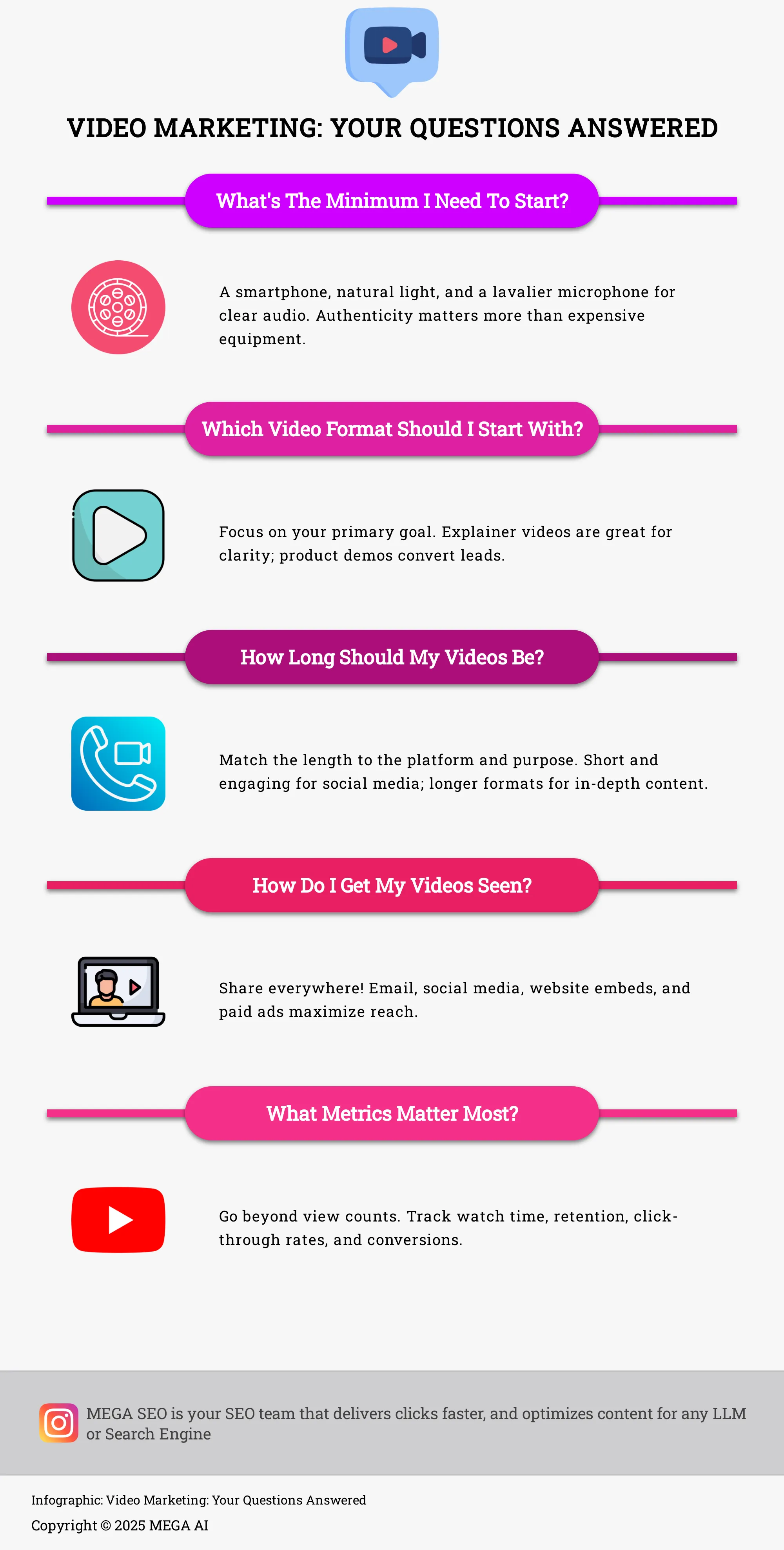
How can I make sure people actually see my videos? Creating a great video is only the first step; a distribution plan is essential. Share your video across all your marketing channels, including your email newsletter and social media profiles. Embedding the video on a relevant blog post or landing page is also critical, as it can keep visitors on your site longer and send positive signals to search engines. Think of your video as a core piece of content that can be repurposed and promoted everywhere your audience spends their time.
What are the most important metrics to track for video success? While view count is a starting point, it doesn't tell the whole story. To understand if your video is truly effective, focus on engagement metrics like watch time and audience retention, which show how long people are staying engaged. Also, track the click-through rate on any calls-to-action you include in your video. Ultimately, the most important metric is conversions, which measures how many viewers took the desired action, such as signing up for a demo or making a purchase.