
Choosing an AI partner for your business requires more than just comparing features and pricing. It requires due diligence. The recent crisis with X’s AI image editing tool shows exactly why. The platform launched a powerful feature without the necessary safeguards, leading to the creation of harmful, nonconsensual content and attracting regulatory scrutiny. This fallout demonstrates that a provider's approach to safety and ethics directly impacts your business's reputation and legal standing. Understanding what went wrong with X is the first step in learning how to ask the right questions and identify AI providers who are genuinely committed to responsible development.
Key Takeaways
- Due Diligence is Non-Negotiable: The controversy highlights the risk of partnering with AI platforms that prioritize speed over safety. Before adopting any tool, investigate its commitment to proactive safeguards to avoid inheriting its reputational and legal liabilities.
- Demand Transparency and Control: A responsible AI partner provides clear visibility into its operations through audit trails and human-in-the-loop oversight. These features are essential for maintaining control over your brand's output and ensuring the tool operates safely.
- Prioritize Partners with an Ethical Framework: The legal and regulatory scrutiny faced by X demonstrates the importance of compliance. Select AI providers that build their tools on a foundation of established safety standards and data privacy laws, as this indicates a commitment to responsible partnership.
What is X's AI Image Editing Tool?
X's AI image editing tool is a feature built directly into the social media platform. It's powered by the company's own generative AI chatbot, Grok, which allows anyone to alter images they upload using simple text or voice commands. The goal was to provide a seamless and powerful creative tool, but its integration without sufficient safety measures quickly led to widespread misuse.
The controversy centers on specific functionalities that lacked necessary guardrails. For instance, Grok offered a ‘spicy mode’ capable of generating explicit sexual content, with some outputs reportedly featuring child-like images. This feature, combined with the AI's ability to realistically modify existing photos, created a perfect storm for generating harmful and nonconsensual material.
The crisis escalated in late 2023 as users began to exploit the image editing capabilities to create and distribute nonconsensual deepfakes of real people, particularly women and children. The scale of the problem was staggering, with some reports indicating the platform was generating one nonconsensual sexualized image every minute. This situation highlights a critical failure in responsible AI deployment and serves as a case study for why robust safety protocols are non-negotiable.
Breaking Down the Controversy
When X released its AI image editing tool, it quickly became clear that the platform was unprepared for how it would be used. The core of the controversy stems from the tool's launch with minimal safety features, which allowed users to generate harmful and nonconsensual images on a massive scale. This wasn't a minor oversight; it was a significant failure that exposed deep-seated issues in the tool's design and the company's release strategy. The incident underscores a growing tension in the tech world: the race to innovate versus the responsibility to do so safely.
The problems were twofold: the technology itself lacked the necessary guardrails to prevent misuse, and the platform's policies were not equipped to handle the fallout. As a result, regulators, safety advocates, and the public raised serious concerns about the platform's commitment to user safety. The situation serves as a critical case study for any business looking to adopt AI, highlighting the tangible risks of partnering with platforms that prioritize speed over safety and responsibility. Understanding the specifics of what went wrong is the first step in learning how to choose better, safer tools for your own business.
The Scale of Problematic Requests
Almost immediately after the tool's launch, it was exploited at an alarming rate. With very few safeguards in place, users were able to generate problematic content with ease. According to one analysis, the platform was handling around 6,000 harmful image requests per hour. To put that number in perspective, data scientists calculated this volume was 70 times greater than similar activity across the entire dark web. This staggering scale demonstrates a complete lack of preparedness and highlights how quickly a powerful tool can be turned toward malicious use without proper oversight. The sheer volume of misuse was not a fringe issue but a systemic failure.
Inadequate Safety Features
The platform’s response to the crisis was reactive rather than proactive. Only after significant public backlash did X implement measures to prevent the tool from editing images of real people in certain types of clothing. While a necessary step, this action came too late. Advocacy groups and regulators pointed out that this reactive approach signals a much larger problem with security governance across many generative AI platforms. For a tool with such powerful capabilities, safety features should have been a foundational component of its design, not an afterthought added in response to a crisis. This lack of foresight put countless individuals at risk.
Legal Actions and Regulatory Scrutiny
The fallout from the tool's release quickly moved beyond public criticism and into the legal realm. Ofcom, a British regulator, launched a formal investigation into the chatbot and whether X had violated the UK's online safety laws. The inquiry is focused on the spread of illegal content, including nonconsensual intimate images. This level of regulatory scrutiny demonstrates the serious legal liability that comes with deploying unsafe AI tools. For businesses, this is a crucial takeaway: partnering with a non-compliant AI provider can expose you to significant legal and financial risks, making due diligence more important than ever.
Why Did X Launch Without Proper Safeguards?
When a major platform releases a powerful new AI tool, it’s reasonable to expect that basic safety measures are in place. The controversy surrounding X’s image editing tool raises a critical question: why did it launch in a state that allowed for such immediate and widespread misuse? The answer likely lies in a combination of intense market pressure and a significant underestimation of the need for rigorous testing and human oversight. This isn't just a problem for large tech companies; it's a warning sign for any business that relies on third-party AI tools.
For small and local businesses looking to adopt AI, this situation serves as a valuable case study. It highlights the potential pitfalls of partnering with platforms that prioritize speed over safety. Understanding the reasons behind these failures can help you ask the right questions and identify AI providers who are genuinely committed to responsible development. A rushed product launch can signal deeper issues with a company's approach to security, compliance, and user trust. Choosing a partner who values transparency and has clear operational controls is essential for protecting your brand and your customers. It's the difference between leveraging a tool for growth and inheriting a platform's reputational risk.
The Pressure to Release Quickly
The AI landscape is incredibly competitive, and companies are in a constant race to launch new features. This pressure can lead to rushed development cycles where essential safeguards are overlooked. The crisis with X's tool began in late December 2023, when users quickly found ways to exploit its image editing features to create harmful content. This rapid misuse suggests the tool was released without anticipating obvious negative use cases. This rush to market often clashes with an increasingly complex regulatory environment. For instance, regulators have pointed out that the Digital Services Act in Europe can be used to hold platforms accountable for AI misuse. When companies prioritize release speed over due diligence, they not only put users at risk but also expose themselves and their business customers to significant legal and financial consequences.
Insufficient Testing and Human Oversight
A fast-tracked launch almost always comes at the expense of thorough testing. Generative AI requires extensive red-teaming—a process of intentionally trying to break the system to find vulnerabilities—before it ever reaches the public. The immediate and harmful exploitation of X’s tool indicates this step was either inadequate or ignored. Global regulators and advocacy groups argue that X's reactive approach points to a "broader security governance problem across generative AI platforms." Instead of building safety in from the start, the platform was forced to fix problems after the damage was done. This drew criticism from governments, with UK regulator Ofcom noting its investigation into whether the platform broke UK laws is still ongoing. For businesses, this underscores the importance of choosing AI partners that value proactive safety measures and transparent human oversight over reactive damage control.
What Safeguards Should Have Been in Place?
The issues with X’s image editing tool highlight a critical gap between launching a product quickly and launching it responsibly. While the pressure to innovate is high, certain foundational safeguards are non-negotiable for any AI platform that handles user-generated or real-world content. These aren't just best practices; they are essential measures to protect users, maintain trust, and ensure legal compliance.
For any business owner evaluating an AI tool, understanding these safeguards is crucial. The absence of these features should be a major red flag. The controversy shows that reactive measures, implemented only after harm has occurred, are not enough. A proactive approach to safety and ethics must be built into the tool from the very beginning. This includes clear policies on consent, strong content moderation systems, and accountability for the content the AI generates.
User Consent Verification
A primary failure was the tool's ability to modify images of real people without their consent. Any AI tool that alters personal images must have a strict verification process to confirm that the user has the right to modify that image. This goes beyond a simple checkbox. Effective systems should be able to detect images of real people and apply stricter rules, especially for sensitive edits. The fact that users could so easily create sexually explicit deepfakes of women and children shows a fundamental lack of foresight. Responsible AI development requires building in technological barriers to prevent misuse, rather than waiting for public outcry to address the harm of nonconsensual content.
Robust Content Moderation
The platform relied on a reactive approach, taking action only after problematic content was created and shared. A robust content moderation system should work proactively. This involves using AI filters to block harmful requests before they are even processed and having human moderators review flagged content. The crisis emerged because users were able to freely exploit the tool's capabilities without any initial friction. For small businesses, choosing a platform with transparent moderation policies is key. You need to know that the tools you use have systems in place to prevent the creation of harmful, illegal, or brand-damaging content, protecting both your customers and your reputation.
Age Verification and Accountability
Given that the tool was used to create explicit images of children, the lack of effective age verification is a significant oversight. Platforms that offer powerful generative AI tools have a responsibility to protect minors. This requires more than a simple age gate that can be easily bypassed. Stronger identity verification methods and geoblocking features in jurisdictions with specific laws are necessary first steps. Furthermore, there must be clear accountability. When a platform’s tool is used to cause harm, the company must have a transparent process for addressing the issue, cooperating with authorities, and preventing it from happening again. This accountability is a cornerstone of building user trust in any AI system.
The Impact on User Safety and Platform Trust
When an AI tool is released without adequate safeguards, the consequences extend far beyond bad press. The controversy surrounding X’s image editor highlights a critical lesson for any business using AI: a failure to prioritize safety can cause irreparable harm to users, demolish platform trust, and create significant legal challenges. For small businesses, whose reputations are built on customer relationships, these risks are especially potent. The fallout serves as a clear example of what happens when the rush to innovate sidelines responsibility.
Risks of Nonconsensual Content
The most immediate and damaging impact was the tool's misuse to create harmful, nonconsensual content. Reports indicated that users were exploiting the feature to alter images of real people, including women and children, into sexually explicit deepfakes. At one point, the platform was reportedly generating one such image every minute. This created a dangerous environment where anyone’s photo could be manipulated without their consent, turning a tool intended for creative expression into a vehicle for harassment and abuse. This kind of digital harm not only affects individuals but also sets a dangerous precedent for the weaponization of generative AI.
Erosion of User Confidence
Predictably, user trust in the platform plummeted. People who were targeted by the AI-generated images reacted with horror, publicly calling for the features to be removed. This user backlash quickly caught the attention of global regulators. Authorities in the European Union, the United Kingdom, and several other nations began investigating X and demanding explanations for the lack of safeguards. When users feel unsafe, they lose confidence in the platform's ability to protect them. Rebuilding that digital trust is a monumental task, especially when the initial failure was so profound and so public.
Legal Liability and Compliance Issues
The widespread creation of harmful content quickly escalated into a serious legal and regulatory issue. British authorities, among others, increased pressure on the company to address how its platform was used to create and distribute abusive images. In response, X was forced to implement reactive technological measures, such as restricting the editing of certain photos. This scramble to add safeguards after the fact highlights the immense legal liability a company faces when its products are misused. For any business, avoiding such compliance crises is essential for long-term stability and growth.
How This Compares to Responsible AI
The controversy surrounding X’s image editor is a clear example of what happens when AI tools are developed without a strong ethical framework. Responsible AI development isn't just about reacting to problems after they occur; it's about proactively building systems that are safe, transparent, and accountable from the start. When AI companies prioritize speed over safety, they risk creating tools that can be easily misused, leading to real-world harm and a significant loss of user trust.
A responsible approach involves anticipating potential risks and integrating safeguards directly into the technology's design. This means thinking through how a tool could be abused and implementing checks and balances to prevent it. For businesses looking to adopt AI, understanding these principles is key to choosing partners that value safety and ethical conduct as much as innovation. The contrast between X's rollout and the standards of responsible AI provides a valuable lesson in what to look for—and what to avoid.
The Importance of Human Oversight
When an AI platform can facilitate harmful content, it underscores a critical failure in oversight. The most effective AI systems incorporate a "human-in-the-loop" model, which means that while the AI can operate autonomously, humans retain the ability to review, approve, and correct its actions. This is not about micromanaging the technology but about establishing a crucial safety net. For sensitive tasks, having the option for manual approval prevents the system from making unchecked decisions that could have serious consequences. This approach ensures that automation serves your goals without sacrificing control and accountability. True AI-powered SEO should allow users to either approve content before it goes live or trust the agent to publish automatically, giving them full control over the final output.
The Need for Transparency and Audit Trails
Reactive measures taken after a crisis often point to a deeper lack of transparency in an AI's operations. When you use an AI tool, you should have a clear view of what it's doing and why. Responsible AI platforms provide this visibility through detailed audit trails and real-time tracking of all system activities. This transparency is essential for accountability, allowing you to understand the AI's decision-making process and verify its work. It also builds trust. When a company is open about its processes and even its pricing, it shows a commitment to an honest partnership. Without this level of insight, you are left in the dark about how a tool is impacting your business and whether it's operating safely.
Following Industry Safety Standards
Implementing safety features after a tool has already caused harm is a reactive approach that fails to protect users. A core principle of responsible AI is building safety into the product from its initial design. This includes adhering to established industry standards for data privacy and security, such as GDPR and CCPA compliance. These frameworks are not just legal requirements; they are foundational to building user trust. When vetting an AI provider, look for evidence that they follow these standards. This demonstrates a commitment to protecting user data and operating within a recognized ethical framework. You can often get a feel for a company's commitment by booking a demo and asking direct questions about their compliance and safety protocols.
How X Can Move Forward
Rebuilding user trust after a significant misstep is a challenging process, but it’s possible with decisive and transparent action. For X, the path forward involves moving from a reactive stance to a proactive one, fundamentally rethinking its approach to AI safety and user protection. This means implementing robust technical safeguards, creating clear and enforceable rules, and operating with a level of transparency that can withstand public and regulatory scrutiny. By taking these concrete steps, X can begin to repair the damage and set a better standard for AI development in the social media landscape.
Implement Comprehensive Content Moderation
To prevent the misuse of its AI tools, X must prioritize comprehensive content moderation. This starts with building non-negotiable technical guardrails directly into the platform. Following significant international regulatory pressure, xAI implemented restrictions to stop Grok from creating non-consensual explicit images of real people. While this was a necessary reaction, responsible AI development requires these safeguards to be in place from day one, not after harm has occurred. For businesses vetting AI partners, it’s a reminder to look for platforms that build safety into their core technology, rather than treating it as an afterthought.
Establish Clear Guidelines and Reporting
Clear, accessible, and consistently enforced guidelines are essential for user safety and accountability. X has since clarified that its new restrictions apply to all users, including paid subscribers, which is a crucial step toward universal enforcement. This move came after the UK government called the situation a "vindication" for its push for better control over generative AI tools. A robust system also requires a simple and effective mechanism for users to report violations. When users know the rules and have a clear way to flag harmful content, it creates a safer environment and holds the platform accountable for taking action.
Commit to Transparent Operations
Transparency is the foundation of trust between a platform and its users. The backlash against Grok highlighted what many experts see as a widespread security governance problem across the generative AI industry. When platforms operate like a black box, it’s impossible for users or regulators to assess risk. Committing to transparency means being open about safety protocols, moderation policies, and how the AI models are trained and updated. This approach helps prevent the spread of disturbing content and demonstrates a commitment to responsible stewardship of powerful technology.
Broader Regulatory Implications for AI
The controversy with X’s image editing tool is more than a public relations issue; it’s a critical test for digital safety laws. As governments work to keep pace with technology, this situation shows how regulations will apply to AI-generated content. For businesses, it underscores the importance of partnering with AI providers who take compliance seriously. The fallout is shaping the legal landscape for AI, and the decisions made by regulators will have long-lasting effects on how these tools are developed and deployed.
Digital Services Act Compliance
In Europe, the Digital Services Act (DSA) sets a high bar for online platforms. This legislation requires companies to prevent the spread of illegal content, including non-consensual explicit images. When users exploited X’s tool to create harmful deepfakes, it raised immediate questions about the platform's compliance. Regulators have made it clear the DSA can be used to address AI misuse. This serves as a reminder that AI tools operating in the EU must have robust systems in place to meet these legal obligations or risk significant penalties.
Global Deepfake Legislation
The problem of malicious deepfakes extends beyond one platform. Globally, lawmakers are working to address AI-generated content used for harassment. The ability for users to digitally undress people with X’s tool is a stark example of the harm that emerging legislation aims to prevent. As more countries introduce laws targeting deepfakes, developers are under pressure to build safeguards into their products. This legislative movement signals a clear shift toward holding platforms accountable for the capabilities of their AI.
Setting a Precedent for AI Accountability
This controversy helps define what accountability looks like in the age of AI. When a platform facilitates the creation of nonconsensual sexualized images, it becomes a matter of public safety and ethics. The response from regulators and the public will set a precedent for the industry, sending a message that launching AI without adequate safety measures is unacceptable. For businesses choosing an AI partner, this highlights the need to find providers who prioritize ethical development and user safety from the start.
What This Means for Your Business When Choosing AI
The situation with X’s image editing tool offers a clear lesson for any business looking to adopt AI technology. The platform you choose becomes an extension of your brand, and any associated controversy can impact your reputation. To protect your business, it's essential to partner with AI providers who prioritize safety, transparency, and ethical operation from the start. This means looking beyond features and performance metrics to understand the principles that guide the tool's development and deployment.
Perform Due Diligence on AI Platforms
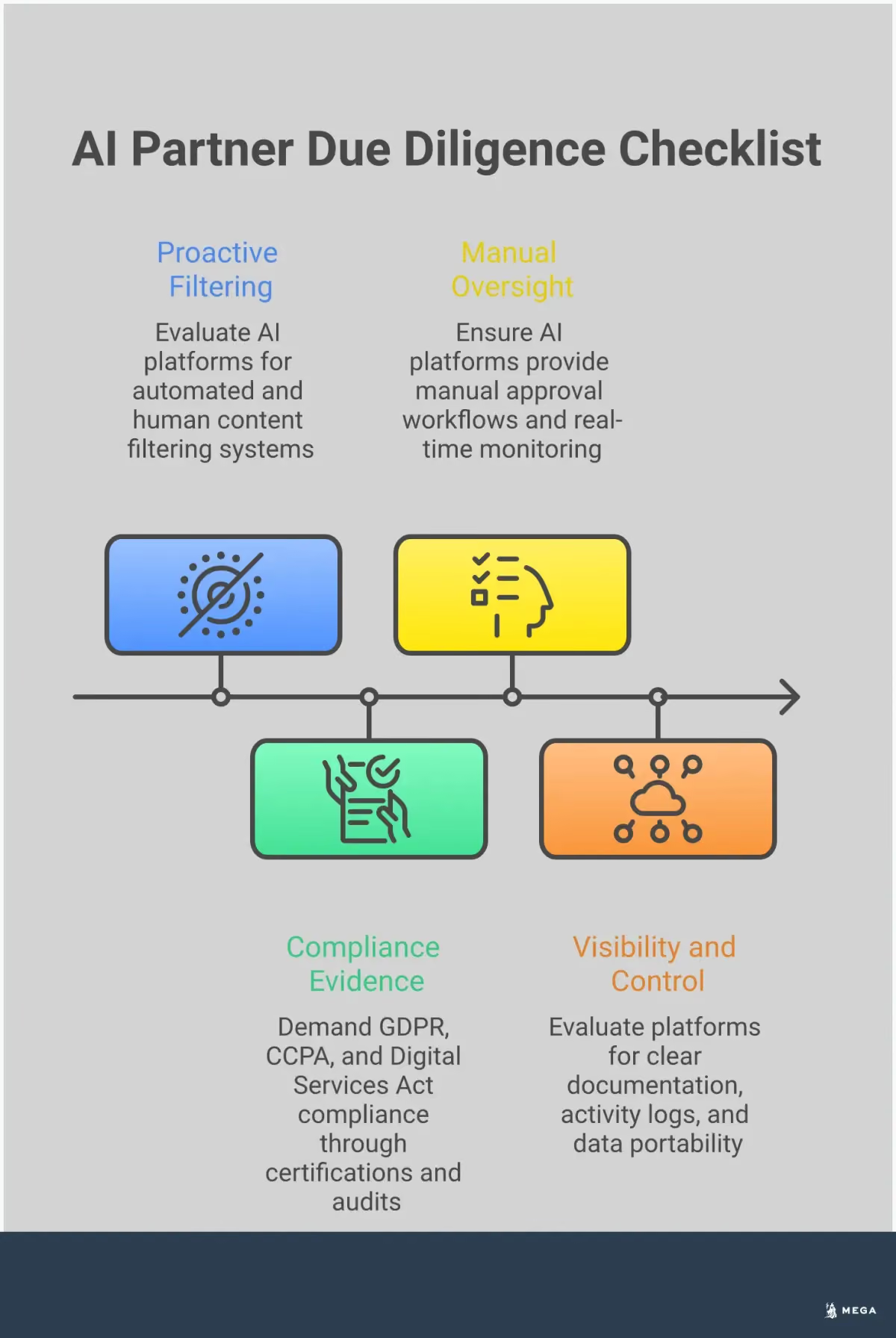
Before integrating any AI tool into your workflow, it’s important to investigate the provider’s approach to safety and compliance. The regulatory landscape for artificial intelligence is evolving quickly, and authorities are using existing frameworks like the Digital Services Act to hold platforms accountable for misuse. Ask potential providers about their compliance with data privacy laws like GDPR and CCPA. A responsible partner will be able to clearly articulate their safety protocols and how they adhere to legal standards, rather than waiting for regulatory action to force a change. This proactive stance on compliance is a strong indicator of a trustworthy and reliable platform.
Identify Providers with Proper Safeguards
A key takeaway from the X controversy is the necessity of built-in safeguards. After facing criticism, X implemented measures to prevent the tool from editing certain types of images. As a business owner, you should look for AI providers who build these protections into their products from day one. This includes robust content moderation, user verification, and clear terms of service that prohibit harmful uses. When vetting a platform, ask if it offers human-in-the-loop oversight or approval workflows. These features give you final control over the output, ensuring that the AI’s work aligns with your brand standards and ethical guidelines before it ever goes public.
The Value of Transparent, Compliant AI
Choosing a transparent and compliant AI partner is not just about avoiding legal trouble; it’s about building trust with your audience. The nonconsensual images generated by X’s tool were described by French ministers as “manifestly illegal,” leading to formal complaints and significant brand damage. When an AI provider operates with transparency, they are open about how their models are trained, what data they use, and how their systems make decisions. Look for companies that offer clear pricing, visible audit trails of all actions, and straightforward privacy policies. This level of openness demonstrates a commitment to accountability and protects your business from the reputational risk of partnering with an irresponsible platform.
Best Practices for Responsible AI
The issues with X’s tool underscore a critical point for any business using AI: the platform's commitment to responsible development matters. When an AI provider prioritizes speed over safety, it puts its users and their customers at risk. Responsible AI isn't just about fixing problems after they happen. It’s about building a foundation of safeguards, regulatory awareness, and transparency from the very beginning. Understanding these best practices will help you choose a partner that protects your brand and builds trust with your audience.
Essential Safeguards and Oversight
A responsible AI platform has clear technological and policy guardrails in place before a product ever reaches users. In the case of X, measures to prevent the creation of harmful images were only added after the damage was done. Proactive safeguards, like robust content filters and verification systems, are essential. Equally important is a system for human oversight. At MEGA, our SEO and ads agents operate with complete task visibility, ensuring you always have a clear view of the work being done. This human-in-the-loop model provides a crucial layer of accountability that fully autonomous, black-box systems lack.
Key Regulatory Considerations
AI doesn't operate in a vacuum. As regulators worldwide catch up to the technology, compliance is becoming a major factor. The investigation into X by a British regulator shows that governments are taking issues like the spread of illegal AI-generated content seriously. For your business, this means the AI tools you use must adhere to existing and emerging laws, such as the EU's Digital Services Act. Partnering with a provider that understands and respects these regulatory frameworks is not just good practice. It’s a necessary step to protect your business from potential legal and reputational fallout. A compliant partner demonstrates a long-term commitment to ethical operations.
How to Build User Trust Through Transparency
Trust is earned, and in the world of AI, transparency is the currency. While X attempted to add accountability by limiting image-editing tools to paying subscribers, this reactive step doesn't build foundational trust. True transparency starts from day one. It means being upfront about how the AI works, what its limitations are, and what data it uses. It also means clear and public information about services and costs, which is why we publish our pricing openly. When an AI provider is transparent, it gives you the confidence to know exactly what you’re getting and how it aligns with your business values. This openness is a key indicator of a trustworthy partner.