
Your brand is out there, getting mentioned in articles, blogs, and forums. That's great for visibility. But if those mentions don't include a link back to your site, you're missing a golden opportunity to improve your SEO. These unlinked brand mentions are essentially low-hanging fruit for link building. The challenge often lies in finding them efficiently and then successfully requesting a link. That's where understanding how to use Moz for link reclamation becomes so valuable. This article will show you how to leverage Moz's toolkit to uncover these opportunities and turn simple mentions into powerful backlinks for your business.
Key Takeaways
- Protect Your SEO with Link Reclamation: Actively finding and fixing broken links, plus securing links from unlinked brand mentions, is crucial for maintaining and building your website's authority.
- Systematize Your Link Discovery: Employ tools like Moz to efficiently conduct backlink audits and uncover unlinked brand mentions, helping you focus outreach on the most valuable opportunities.
- Master Outreach and Refine Your Strategy: Craft clear, benefit-driven messages for website owners and consistently track your reclamation success to adapt your approach and integrate it effectively into your overall SEO efforts.
What is Link Reclamation and Why is It Crucial for SEO?
Link reclamation is essentially the practice of finding and repairing links that point to your website but are either broken or not performing optimally. Think of it as a maintenance check for your site's incoming pathways. It involves identifying and fixing broken links, whether they are on your own site (internal links) or on other websites pointing to yours (external links). It also includes updating links that aren't as effective as they could be, ensuring every connection contributes positively to your site's health.
So, why is this process so vital for your SEO efforts? Every quality link directed at your website acts as an endorsement in the eyes of search engines. These links pass along what's often called "link equity" or "link juice"—the SEO value that helps your pages achieve higher rankings. When these links break, this valuable equity is lost, potentially diminishing your site's authority. By reclaiming these links, you're effectively sealing these leaks, preserving the ranking power you've earned. It's considered a high-ROI activity because you're often recovering existing value rather than building it entirely from scratch.
Beyond just mending what's broken, link reclamation also encompasses finding mentions of your brand across the web that don't currently link back to your site. This presents a fantastic opportunity to acquire new, relevant backlinks with comparatively less effort. A systematic approach to finding and addressing these missed linking opportunities can significantly improve your website's overall SEO performance. In fact, studies indicate that websites actively maintaining their links can see a notable increase in their search rankings. For businesses aiming to maximize their online presence, particularly startups and small businesses where every SEO advantage is precious, link reclamation is a fundamental tactic. It’s a proactive method to preserve and grow your site's authority consistently.
Get to Know Moz's Toolkit for Link Reclamation
Moz offers a robust suite of tools designed to help you with your link reclamation efforts. When you understand how each tool works, you can build a more effective strategy to recover lost link equity and discover new linking opportunities. These tools can make a real difference in strengthening your website's authority. Let's explore some of the key components within Moz's toolkit that you can use.
Link Explorer: Pinpoint Lost Links
Think of Moz's Link Explorer as your go-to detective for all things backlinks. This tool provides extensive data, allowing you to analyze your own backlink profile as well as your competitors'. For link reclamation, its ability to help you monitor your backlink profile's changes over time is particularly valuable. You can specifically look for links that your site has lost. Identifying these lost links is often the first step in a reclamation campaign, as it gives you a clear list of opportunities to pursue and try to restore valuable link equity that was once pointing to your pages.
Fresh Web Explorer: Find Unlinked Brand Mentions
Another powerful tool in the Moz arsenal is Fresh Web Explorer. Its specialty is helping you discover mentions of your brand across the web that don't currently link back to your site. Imagine someone writes a positive review or an informative article mentioning your business, but they forget to include a hyperlink. Fresh Web Explorer helps you find these instances. Once identified, you have a perfect, often warm, opportunity to reach out to the site owner and politely request that they add a link, turning a simple mention into a beneficial backlink for your SEO.
Moz Pro: The Complete Reclamation Suite
For a truly comprehensive approach, Moz Pro bundles together a wide array of SEO tools, creating a complete suite for your reclamation needs. It integrates the functionalities of tools like Link Explorer and Fresh Web Explorer and builds upon them with additional features. This includes advanced link building analysis, resources for keyword research to better understand the context of your links, and even tools to help you manage your outreach campaigns. By having these capabilities in one platform, Moz Pro can help streamline your entire link reclamation workflow, making it easier to identify opportunities, execute your strategy, and track your progress.
Identify Lost or Broken Links with Moz
Finding those valuable links that have disappeared or broken is a key part of keeping your website's SEO health in top shape. When another site links to you, it’s like a vote of confidence, and you don’t want to lose those votes due to a simple broken path. These broken connections can negatively affect your site's authority and user experience. Moz offers a couple of really handy tools that can help you pinpoint these lost opportunities so you can work on getting them back. Think of it as a bit of digital housekeeping that can have a real impact on how search engines see your site and how users perceive its reliability.
Regularly checking for these lost or broken links means you can proactively reach out and suggest an update. This not only helps the site linking to you by fixing a broken user experience on their end, but it also ensures your site continues to receive the SEO credit it deserves. We'll look at how Moz's Link Explorer can help you find backlinks that are no longer working and how Fresh Web Explorer can uncover mentions of your brand that aren't currently linking to you at all. These tools can simplify the process of maintaining your backlink profile and ensure your hard-earned link equity isn't slowly eroding due to technical glitches or content changes on other websites.
Find Lost Backlinks with Link Explorer
One of the first places to check for link reclamation opportunities is for backlinks that once pointed to your site but are now broken. This often happens when you've changed a URL, or the linking site made a typo. This process, known as link reclamation, involves reaching out to website owners to get these broken links updated. It’s a win-win: their site offers a better user experience by fixing a dead end, and your site retains valuable link equity, which is the SEO value passed through that link.
Moz’s Link Explorer is a great tool for this task. You can use it to analyze your backlink profile and identify links leading to 404 error pages on your site. Once you've found these broken backlinks, you can export the data, pinpoint the specific pages that are no longer working, and then contact the website owners. A polite request to update the link to the correct URL is often all it takes to restore that connection and the SEO benefits that come with it.
Use Fresh Web Explorer for Unlinked Mentions
Another smart way to reclaim link opportunities is by finding places where your brand or content is mentioned online, but without an actual link back to your site. These unlinked brand mentions are essentially missed opportunities for valuable backlinks. Think of it: someone is already talking about you; they just need a little nudge to make that mention an active link. This is where a tool like Moz's Fresh Web Explorer comes into play.
You can use Fresh Web Explorer to set up alerts and actively track mentions of your brand name, key products, or even specific content pieces across the web. When you find a relevant mention that doesn’t include a link, you can reach out to the website owner or author. A friendly email explaining who you are and politely requesting they add a link to the mention can often result in a new, high-quality backlink for your site.
Reclaim Links with Moz: A Step-by-Step Guide
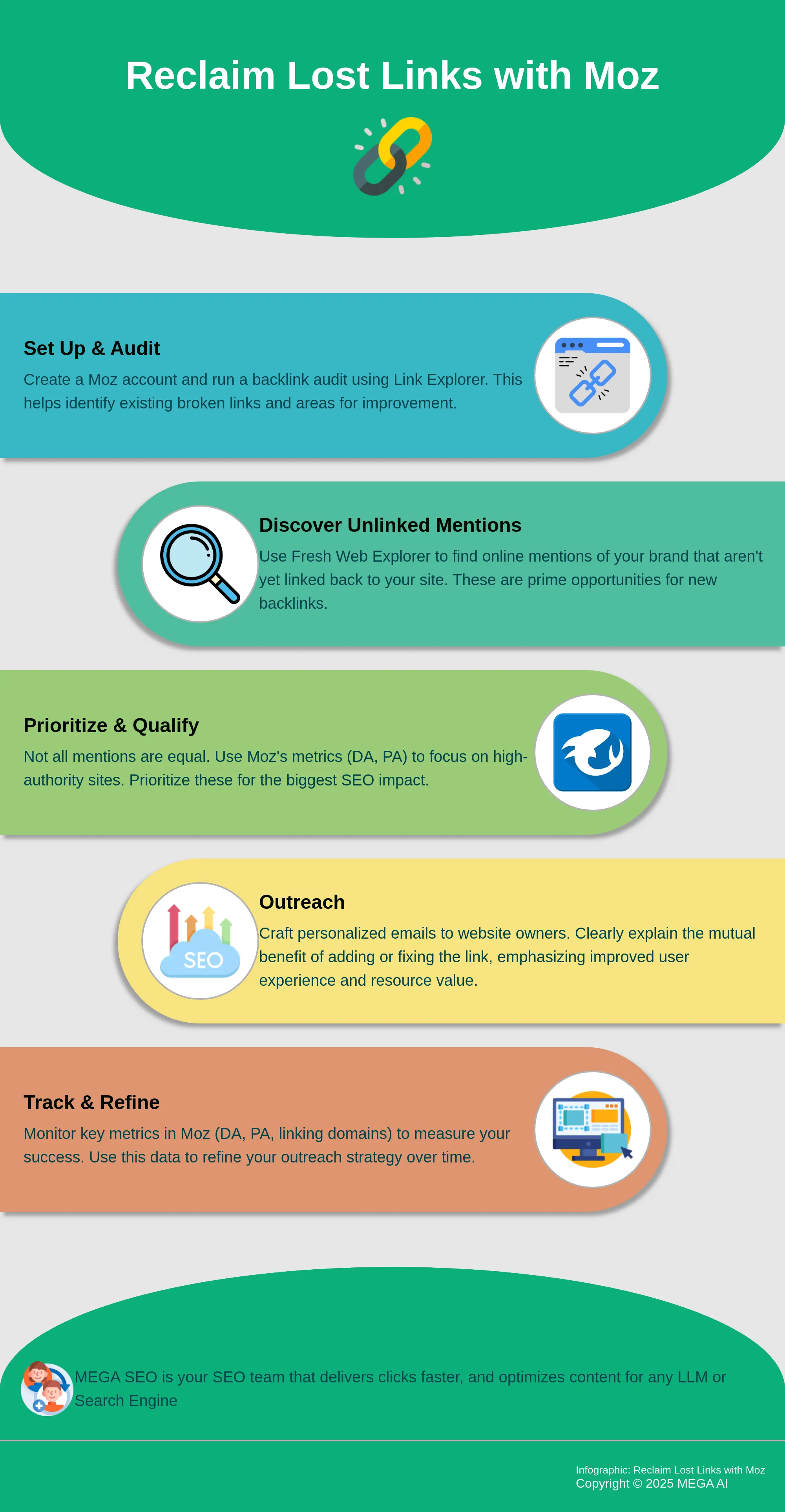
Link reclamation can feel like a detective game, but with the right tools and a clear plan, it becomes a powerful way to strengthen your website's authority and improve your search engine rankings. Moz provides a robust suite of features that can simplify this process considerably, turning what could be a complex task into a manageable one. Think of this guide as your roadmap to systematically finding and reclaiming valuable link equity that might otherwise be lost. By following these steps, you can turn missed opportunities into tangible SEO gains. We'll walk through how to leverage Moz effectively, from initial setup to identifying your best chances for link recovery. This structured approach helps ensure you're not just finding lost links, but also focusing your efforts where they'll make the biggest impact. Using a tool like Moz helps streamline what can be a time-consuming task, allowing you to be more efficient and strategic in your link building efforts. For businesses looking to enhance their online presence, understanding these techniques is key. While MEGA AI offers solutions for automating SEO processes, mastering manual techniques with tools like Moz provides a foundational understanding that complements any automation strategy. The core principle of maximizing link equity is crucial for any comprehensive SEO approach. Let's get started on how you can use Moz to bring those valuable links back home.
Set Up Your Moz Account for Link Reclamation
First things first, to make the most of Moz for link reclamation, you'll need an active account. Moz offers a range of tools designed to tackle various aspects of SEO, making it a truly valuable resource for businesses of any size. Setting up your account is your entry point to features like Link Explorer and Fresh Web Explorer, which are indispensable for this process. Once your account is ready, you can begin to configure projects for your website. This allows Moz to start gathering data specific to your domain, which will be crucial for identifying lost links and unlinked brand mentions. Take some time to familiarize yourself with the dashboard and the different sections available, as this will make the subsequent steps much smoother.
Conduct a Thorough Backlink Audit
With your Moz account active, the next step is to perform a comprehensive backlink audit. This is where Moz's Link Explorer really shines. This tool allows you to dive deep into your website's backlink profile, showing you who is linking to you, the authority of those linking domains, and the specific pages they are linking to. Link Explorer provides a wealth of data points that are essential for analyzing your backlinks and even those of your competitors, helping you spot potential reclamation opportunities. Beyond just identifying links, utilizing SEO tools like Moz to analyze competitors, manage outreach campaigns, and track your website’s performance can help pinpoint lucrative link-building opportunities that you might otherwise miss. Regularly auditing your backlinks helps you stay ahead of issues like broken links or links pointing to outdated content.
Prioritize Link Reclamation Opportunities
Once you've identified potential lost links or unlinked mentions, it's time to prioritize. Not all reclamation opportunities are created equal, and your time is valuable. Link reclamation is often a high-ROI activity, and the process involves finding mentions, filtering the URLs, and then qualifying those mentions. Focus your energy on high-value opportunities first. This means looking for mentions or broken links from reputable, authoritative websites. A link from a well-respected industry site will carry more weight than several links from low-quality directories. Moz's metrics, like Domain Authority (DA) and Page Authority (PA), can help you assess the quality of a potential link source. As you prioritize these high-value opportunities, you'll ensure your outreach efforts are directed towards the links that will provide the most significant SEO benefit.
Link Reclamation Outreach: Best Practices
Once you've used tools like Moz to identify those valuable link reclamation opportunities, the next crucial step is outreach. This is where your communication skills come into play. Simply finding a lost link or an unlinked mention isn't enough; you need to connect with the website owner or editor and persuade them to update or add the link. Think of it as building a bridge – the opportunity is one side, your website is the other, and your outreach email is the structure that connects them.
Effective outreach is an art. It requires a blend of professionalism, politeness, and a clear value proposition. Remember, you're asking someone to take time out of their busy day to make a change to their website. Your approach needs to respect their time and clearly show them why it's worth their effort. Personalization goes a long way here. A generic template sent en masse is far less likely to succeed than a thoughtfully crafted message that shows you understand their website and audience. Before you even hit "send," double-check who you're contacting. Addressing the right person, like the content editor or webmaster, increases your chances of a positive response. Your goal is to make the process as easy as possible for them, providing all necessary information upfront so they can quickly understand the request and take action. For startups and small businesses looking to enhance their online presence, mastering this outreach can be a game-changer, and platforms like MEGA AI can help streamline other parts of your SEO workflow.
Write Persuasive Emails to Website Owners
Crafting the perfect outreach email is key to turning a link reclamation opportunity into an actual link. Start with a clear and concise subject line that gets straight to the point, perhaps mentioning their specific article or your brand. When you write your email, maintain a polite and professional tone throughout. Introduce yourself and your website briefly, then clearly explain why you're reaching out – whether it's a broken link to your site or an unlinked mention of your brand.
Provide the exact URL on their site where the issue exists and suggest the correct link they should use. The easier you make it for them, the higher your success rate. It's also helpful to briefly explain the benefit to their readers, such as providing a working resource or more context. Keep your email short, respectful of their time, and always thank them for their consideration. A well-structured, courteous email significantly improves your chances of getting that link updated.
Show the Mutual Benefits of Restoring Links
When you ask a website owner to add or fix a link, it's important to frame it as a win-win situation. They are more likely to act if they see clear advantages for their own site and audience. One of the primary mutual benefits is an improved user experience. Broken links can frustrate visitors, while a relevant, working link provides valuable additional information or resources, making their content more helpful and complete. You can highlight this mutual benefit when you contact them.
Furthermore, linking to credible sources enhances the authority and trustworthiness of their own content. If they've already mentioned your brand, adding a link is a natural extension that provides proper attribution and makes their reference more useful. By restoring a link, they ensure their content remains accurate and up-to-date, which can also contribute positively to their site's overall quality in the eyes of search engines and users alike.
Advanced Link Reclamation Techniques with Moz
Once you've got the hang of finding and reclaiming those lost links, you can start looking at some more advanced strategies to really get the most out of your efforts. This often means using Moz's tools in smarter ways and even combining them with other software to build a super-efficient workflow. When you think strategically about automating tasks and integrating your tools, you'll save a good deal of time and likely find even more opportunities to strengthen your backlink profile, which is great for your overall SEO.
Automate Your Link Reclamation Process
Link reclamation is a powerful strategy, but let's be honest, it can take up a lot of your time if you're doing everything by hand. The good news is, you don't have to. You can automate several parts of this process. Think about tools that can find brand mentions for you, like Moz's Fresh Web Explorer or even setting up Google Alerts. Then, instead of sifting through URLs one by one to check their authority or see if they already link to you, other tools can help you filter these in batches.
For outreach, you can find email addresses more efficiently and use mail merge tools to send personalized requests without manually typing each one. By using tools to speed up each step, from discovery to filtering and finally contacting website owners, you make reclamation much more manageable and scalable. This frees you up to focus on crafting those persuasive outreach messages.
Integrate Moz with Other SEO Tools
Moz offers a fantastic set of tools for link reclamation, but you can make your efforts even more effective by integrating it with other software in your SEO arsenal. For example, while Moz's Fresh Web Explorer is great for spotting unlinked brand mentions, you could then export that data to an outreach management platform or your Customer Relationship Management (CRM) system. This helps you keep track of communications and manage your follow-ups in a more organized way.
Similarly, after using Moz Pro for competitor backlink analysis, you might use other specialized tools to dig deeper into the content strategies of those linking sites. This can help you identify even more relevant link-building opportunities. When you employ various tools to streamline the process, especially if you're dealing with a high volume of mentions, you create a more cohesive and powerful SEO operation where insights from one tool can inform actions taken with another.
Measure Your Link Reclamation Success
Once you've dedicated time and effort to reclaiming those valuable lost links, understanding the effectiveness of your strategies is a key next step. Measuring your success does more than just show the impact of your work; it provides the insights needed to refine your approach for even better outcomes in the future. Think of it like checking your route on a long drive – you want to confirm you're on the right path and make any necessary adjustments to reach your destination efficiently. This process helps you learn what resonates with website owners and what types of links yield the best returns, so you can replicate successes and avoid less productive tactics.
Tools such as Moz are particularly helpful here because they offer concrete data to guide your assessment. Instead of relying on assumptions, you can see precisely which reclaimed links are contributing to your traffic, enhancing your site's authority, and supporting your overall SEO objectives. This data-driven method removes the guesswork from link reclamation, allowing you to make well-informed decisions. Furthermore, the ability to present clear, measurable results is essential, particularly if you are managing SEO for clients or reporting progress to internal stakeholders. It’s a very practical way to demonstrate the value of your link reclamation activities and justify the resources invested.
Track Key Metrics in Moz
Understanding how well your reclaimed links are performing can sometimes feel like assembling a complex puzzle, but it’s a critical component of any successful SEO campaign. Moz provides a robust set of tools designed to simplify this process. You can monitor important metrics such as Domain Authority, Page Authority, and the number of new linking domains. Observing how these figures change over time offers a clear indication of your progress and the direct impact of your reclamation efforts.
Beyond evaluating your own website's performance, you can also use these SEO tools to analyze how your link profile compares to that of your competitors. This comparative insight can uncover new link-building opportunities and help you understand the strategies that are proving effective for others in your industry. Consistently tracking these key metrics allows you to stay informed and continuously enhance your website's backlink profile.
Use Data to Refine Your Strategy
Link reclamation is an established and effective SEO tactic, yet its execution is becoming increasingly nuanced. Fortunately, tool providers like Moz offer features that can help you streamline your reclamation process and make your efforts more targeted. By regularly analyzing the data Moz provides—such as which outreach emails get the best response rates or which types of reclaimed links drive the most referral traffic—you can identify what works best. This allows you to refine your strategy and concentrate your resources on the activities that yield the highest return.
Proactively addressing link decay can significantly contribute to your website's SEO performance. For instance, maintaining a healthy link profile by regularly reclaiming lost links can lead to noticeable improvements in search rankings. This underscores the importance of not just reclaiming links once, but also of continuously monitoring your backlink health using the data you gather. This ongoing cycle of action, measurement, and refinement is what transforms a good link reclamation strategy into a consistently effective one.
Handle Common Link Reclamation Challenges
Link reclamation is a rewarding part of your SEO efforts, but it's not always a straightforward process. You might encounter a few common hurdles along the way. The good news is that with the right approach, these challenges are entirely manageable. Let's look at how to handle unresponsive website owners and pesky technical issues that can get in the way of restoring your valuable links.
Address Unresponsive Website Owners
It can be a bit disheartening when you've found a great link reclamation opportunity, crafted a thoughtful email, and then hear nothing back. Don't worry, it happens. The key here is persistence mixed with politeness. When you contact websites, always maintain a friendly and diplomatic tone. Clearly explain why restoring the link is beneficial for them too; perhaps it fixes a broken link on their site or provides their readers with a valuable resource. This approach helps build a positive connection and makes them more likely to help.
Sometimes, your initial email might just get buried in a busy inbox. That's where a gentle follow-up can make all the difference. Sending a follow-up email or two is a standard and often effective practice in outreach. According to Respona's insights on outreach, these reminders can significantly improve your response rates. Just be sure to space them out and keep them concise and courteous.
Fix Technical Issues in Link Restoration
Sometimes the challenge isn't getting a "yes," but rather a technical hiccup preventing a link from being restored properly. These issues can often be traced back to broken links, either on your own site or on the external site. For broken internal links – those pointing from one page on your site to another – you can use tools like Screaming Frog to identify them. The best fix, as WooRank suggests, is usually to repair the actual page that's broken, rather than just setting up a redirect. This ensures a better experience for your visitors.
When it comes to broken external backlinks (links from other sites to yours), tools like Moz's Link Explorer, Majestic, or Ahrefs are very helpful. These can help you find those 404 errors. Once you've identified them, you can export the list and reach out to the website owners, providing them with the correct URL. This proactive step helps you reclaim the link and also assists the other site owner in fixing an error on their page.
Fit Link Reclamation into Your Overall SEO Strategy
Link reclamation is a powerful tactic, but it shines brightest when it’s part of a comprehensive SEO plan. Think of it as one important piece of a larger puzzle. To truly make an impact, you’ll want to weave your link reclamation efforts into your ongoing SEO activities, ensuring a consistent and balanced approach to improving your site's authority and visibility. This means not just finding and fixing links, but also understanding how this process supports your broader goals.
Create a Sustainable Link Building Approach
A sustainable link building approach means you’re consistently working to acquire and maintain valuable backlinks over time, not just in short bursts. Link reclamation is a key part of this sustainability. By regularly checking for lost links or unlinked brand mentions, you’re ensuring that your past efforts continue to pay off and that new opportunities aren't missed. Using tools like Moz can certainly help streamline this process, making it easier to manage these ongoing tasks. This consistent attention helps maintain a healthy backlink profile, which is fundamental for long-term SEO success. Platforms that offer SEO automation can also play a role by freeing up your time to focus on strategic link building and reclamation.
Balance Link Reclamation with Other SEO Activities
While link reclamation offers a fantastic return on investment, it’s important to remember it’s not the only SEO activity you should focus on. A truly effective strategy balances link reclamation with other crucial tasks like creating high-quality content, conducting thorough keyword research, and ensuring your technical SEO is sound. According to a Moz study, websites that actively engaged in link maintenance saw notable improvements in their search rankings. This shows that while reclamation is important, it works best when supporting, and supported by, other SEO efforts. When all these elements work in harmony, you create a much stronger overall SEO performance. Remember, even though link reclamation is a high-ROI activity, its complexity means that tool providers can be incredibly helpful in optimizing your efforts.
Improve Your Link Reclamation Workflow with Moz
Link reclamation can feel like a bit of a treasure hunt, but with the right tools, you can make the process much smoother and more effective. Moz offers a suite of features that can significantly enhance how you find and reclaim lost or unlinked mentions, ultimately strengthening your site's SEO. By integrating Moz into your strategy, you can turn what might seem like a tedious task into a streamlined and productive part of your link-building efforts.
One of the first steps in a solid link reclamation workflow is knowing where your brand is being talked about. You can use tools like Moz's Fresh Web Explorer to track brand mentions across the web. This is incredibly helpful for identifying instances where your brand or content is mentioned but not linked back to your site. Once you find these unlinked mentions, you have a clear opportunity to reach out and request a link.
Understanding what your competitors are doing can also provide valuable insights. Utilizing SEO tools like Moz to analyze competitors allows you to see where they are getting links, which might uncover opportunities for you to reclaim links, perhaps from sites that have linked to them for similar content. This competitive analysis can highlight websites already familiar with your niche, making your outreach more targeted.
Link reclamation isn’t a new tactic, but this high-ROI activity is becoming more complex. Luckily, Moz provides tools that can help optimize your efforts and make the process more manageable. Instead of manually sifting through endless search results, Moz can help you efficiently find broken links, both on your own site and on external sites that once pointed to you. When you find broken links, you can politely contact the website owners to suggest they update the link to a relevant, working page on your site.
Beyond just finding mentions, it's important to qualify them. Not every mention is worth pursuing for a link. The process involves finding mentions and then filtering those URLs. You'll want to check metrics like domain authority and see if the site already links to you. Tools within the Moz ecosystem can assist in filtering and qualifying these mentions, ensuring you focus your outreach efforts on the opportunities that will provide the most SEO value. This targeted approach saves time and increases the likelihood of successful link reclamation.
Related Articles
- Link Building 101: Definition, Types & Best Practices
- Link Building Strategies: The Complete Guide
- Backlinko Link Building: The Definitive Guide (2024)
- Mastering SEO Content: Best Practices for Effective Linking
- Steal Competitor Backlinks: Actionable Strategies
Frequently Asked Questions
I'm still a bit new to this – what's the core idea of link reclamation in simple terms? Think of link reclamation as essential maintenance for your website's reputation online. It's about finding instances where other sites link to you but the link is broken, or where they mention your brand without linking at all. Your goal is to repair those broken pathways and turn those mentions into active links, ensuring you get all the SEO credit you've earned.
Moz has a few tools. Which ones are most useful for actually finding those broken or lost links? Moz's Link Explorer is your primary tool for digging into your backlink profile to find links that have been lost or are leading to error pages on your site. For discovering mentions of your brand across the web that don't yet link to you, Fresh Web Explorer is incredibly helpful. Together, they give you a solid foundation for identifying reclamation opportunities.
Okay, I've found some sites that should be linking to me but aren't. What's the best way to reach out without sounding pushy? When you contact website owners, aim to be helpful and clear. Personalize your email, explain exactly where the broken link or unlinked mention is on their site, and provide the correct URL they can use. It’s also good to gently point out how adding or fixing the link benefits their audience by providing a useful, working resource. A friendly and concise message usually works best.
Is link reclamation something I do once and forget, or is it more of an ongoing task? Link reclamation is definitely an ongoing effort rather than a one-off task. The web is always changing – pages get moved, sites get updated, and new mentions of your brand appear. Regularly checking for lost links and unlinked mentions helps you consistently maintain and improve your site's authority over time.
Beyond just fixing links that are broken, how else can Moz help me get more value from existing mentions? Moz, particularly with Fresh Web Explorer, helps you find those valuable unlinked brand mentions. These are situations where someone is already talking about your business or content. By identifying these, you have a warm opportunity to reach out and request they turn that mention into an active link, which can be a relatively easy way to gain new, relevant backlinks.