
Many marketers are intrigued by content syndication but worry about potential SEO drawbacks, like penalties for duplicate content. It's a valid concern. However, when done correctly, syndication can significantly enhance your online presence and authority. The key lies in using best practices and leveraging powerful SEO tools to guide your strategy. Moz offers a suite of features that can help you navigate these challenges successfully. This article breaks down how to use Moz for content syndication, from choosing the right content and partners to implementing correct attribution, ensuring your syndicated work strengthens, rather than dilutes, your search engine performance.
Key Takeaways
- Broaden Your Content's Reach: Share your existing articles on other relevant sites to introduce your brand to new readers and grow your online presence.
- Use Moz for Strategic Syndication: Tap into Moz's features to find strong syndication partners, protect your SEO with canonical tags, and identify keywords that help your content get found.
- Optimize and Track for Better Results: Select your strongest pieces for syndication, tailor them for each new platform, and monitor their performance to continuously improve your approach.
Content Syndication: What It Is and How Moz Can Help
Content syndication is a smart way to get your existing content in front of more eyes. Essentially, you're giving other websites permission to republish content you've already created. This can be a powerful tactic in your content marketing toolkit, and tools like Moz can help you make the most of it. Let's explore what syndication involves and how Moz can support your efforts.
Understand Content Syndication and Its Benefits
At its core, content syndication means licensing other sites to publish what you've created. Think of it as extending the life and reach of your best work. One of the biggest advantages is increased visibility; by appearing on other platforms, you can introduce your brand to entirely new audiences who might not have found your website otherwise. This strategy can also be quite cost-effective, especially if you focus on repurposing content you've already invested in or utilize free syndication channels.
Beyond just views, syndication plays a role in lead generation and audience education. When your insightful articles or helpful guides appear on relevant industry sites, you're positioning yourself as a thought leader. This helps to educate prospects and can draw interested readers back to your own site, potentially turning them into new leads. It’s a strategic way to reach your target audience where they already spend their time online.
See How Moz Optimizes Your Syndication
When you syndicate content, you want to ensure your original piece gets the SEO credit. Moz champions the use of the rel=canonical tag for this. This simple piece of HTML tells search engines like Google that your website hosts the primary version of the article. As a result, all the valuable SEO benefits, like link equity, point back to your original content, not the syndicated copies. This is crucial for maintaining your site's authority.
Moz also provides insights that can help you identify strong syndication partners. For instance, you can use Moz tools to check a potential publisher's Domain Authority (DA). Aiming for sites with a DA of 50 or higher can lend more credibility and SEO value to your syndicated content. Furthermore, focusing on "earned syndication," where high-quality content encourages publishers to willingly share your work, can lead to significant organic growth, as seen in Stacker.com's success story which involved building strong publisher relationships.
Get Started: Syndicating Content with Moz
Content syndication is a smart strategy to extend the reach of your existing content, build your site's authority, and give your SEO a helpful nudge. Moz, a long-trusted name in the SEO toolkit space, provides features that can make your syndication process smoother and more effective. Let's walk through how you can begin using Moz to get your content distributed more widely.
Set Up Your Moz Account for Syndication
Moz has been a significant player in the SEO field since 2004, initially gaining recognition for its insightful articles and consulting services. Today, their main focus is on their comprehensive SEO software, with Moz Pro being a go-to solution for many marketers aiming to improve their online visibility. To start leveraging Moz for your content syndication, you'll first need an account. Head over to their website and select a plan that aligns with your business requirements, whether you're a startup just getting off the ground or an established small business. The sign-up process is quite straightforward, guiding you through the steps to get your dashboard ready. Once your account is active, you can begin to explore the tools that will support your syndication strategy.
Discover Moz Features for Content Distribution
With your account ready, you'll find several Moz features that are particularly useful for content distribution. A key part of effective syndication is identifying reputable platforms to partner with. You can use Moz's tools to check the Domain Authority (DA) of potential syndication sites; focusing on platforms with a DA of 50 or higher often yields stronger SEO benefits. Moz can also provide insights into what makes content high-quality and shareable. For example, Stacker saw impressive organic traffic growth through earned syndication, a success built on top-notch content and solid publisher relationships. At its core, content syndication involves re-publishing your articles and blog posts on other websites to connect with a broader audience and acquire valuable backlinks, which directly contributes to your overall SEO objectives.
Syndicate Smarter: Best Practices with Moz
Successfully syndicating your content involves more than just hitting "publish" on another website. To truly make an impact and see those SEO benefits, especially when you're leveraging insights from Moz, a strategic approach is essential. Following best practices ensures your carefully crafted content reaches fresh eyes, helps establish your brand as an authority, and contributes positively to your search engine rankings, all while sidestepping common issues like duplicate content penalties.
Think of it this way: your content is valuable, and syndication is about extending its lifespan and reach. But just like any marketing effort, it requires a plan. This isn't about blasting your articles everywhere; it's about smart placement, proper acknowledgment, and tailoring your message. When you pair these thoughtful tactics with the powerful analytics and tools Moz offers, you transform syndication from a simple republishing task into a strategic growth driver. For instance, Moz can help you identify authoritative domains for syndication partners or track the backlinks generated from your syndicated pieces. We'll walk through how to choose the right pieces, ensure you get the credit you deserve, and optimize for every platform you partner with. This way, your syndicated work actively supports your business goals and strengthens your online presence.
Choose the Right Content for Syndication
Not every piece of content you create will be a perfect fit for syndication. The goal is to select articles or guides that have broad appeal or offer significant value, making them likely to attract new audiences to your brand. Your top-performing blog posts, comprehensive guides, or unique research reports are often excellent starting points because they've already demonstrated their ability to engage readers.
Consider the longevity of the content too. Evergreen pieces that stay relevant over time can provide ongoing value through syndication partners. Also, think about content that can be easily adapted for different platforms without losing its core message. Using Moz's tools, you can identify which of your existing articles already have good engagement or keyword rankings, signaling they could perform well when syndicated.
Implement Correct Attribution and Canonical Tags
One of the primary concerns with content syndication is the potential for duplicate content, which can confuse search engines and dilute your SEO efforts. To avoid this, it's crucial that any website republishing your work uses a canonical tag that points back to the original article on your site. This simple HTML tag tells search engines like Google which version is the definitive one.
Equally important is clear attribution. Ensure your syndication partners explicitly state that the content originated from your brand, ideally including a direct link back to your website. This not only gives you proper credit but also helps drive referral traffic. Before finalizing any syndication agreement, have a straightforward discussion about these technical requirements to protect your content and its SEO value. It's also wise to understand basic copyright considerations to ensure your work is properly safeguarded.
Optimize Your Content for Each Platform
Simply copying and pasting your article onto another site isn't the most effective way to syndicate. Different platforms often cater to distinct audiences and have their own formatting nuances. Taking a little extra time to tailor your content for each syndication partner can make a big difference in its reception. This might mean tweaking the title for better click-through on that specific platform, adjusting the tone, or adding a unique introduction that resonates with the new readership.
Moz can be very helpful here. You can use its tools to check the Domain Authority (DA) of potential syndication sites; aiming for platforms with a DA of 50 or higher can provide stronger SEO benefits. Beyond just DA, consider the platform's specific niche. It's often more beneficial to syndicate on sites that are highly relevant to your industry, as this connects you with a more targeted and engaged audience, rather than just going for mass distribution on less specific platforms.
Use Moz SEO Tools for Powerful Syndication
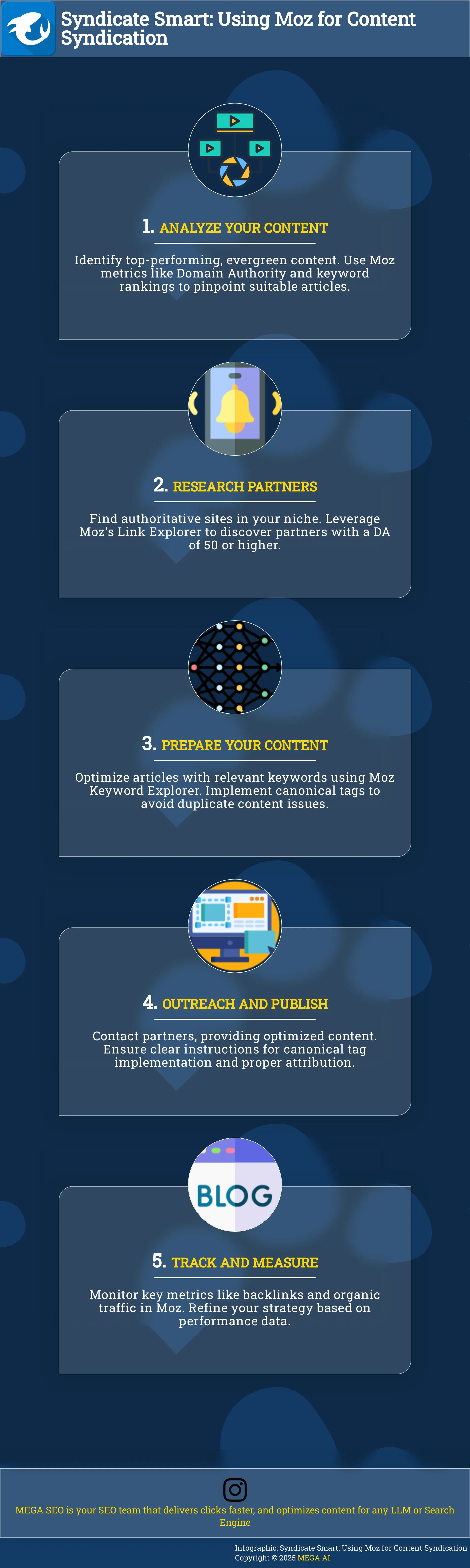
When you want to get more eyes on your content through syndication, Moz provides some really useful SEO tools. These tools help you move beyond simply republishing content to strategically placing it where it will make the biggest impact. Using Moz effectively means your syndication efforts can better support your overall marketing goals. Let's walk through how specific Moz features help you make these smart choices, turning syndication into a more powerful part of your content plan.
Use Keyword Research to Strengthen Syndicated Content
To ensure your syndicated content connects with the right audience, it must be discoverable. Solid keyword research is key here. Using relevant keywords helps people find your articles, even on other websites. Moz Keyword Explorer is a great resource for this, letting you explore keywords by search term, website, or specific page.
Before syndicating, use Moz to identify keywords your target audience uses. Also, check the keywords your potential syndication partners rank for to ensure a good match. This preparation optimizes your content for every platform, widening its visibility.
Analyze Backlinks to Build Content Authority
A major benefit of content syndication is earning valuable backlinks. When respected sites publish your work and link to your original piece, search engines see this positively, helping build your website's authority. For example, Stacker successfully acquired over 20,000 'dofollowed' referring domains largely through syndication.
You can use Moz's Link Explorer to track the backlinks from your syndicated articles. This shows which partners provide the most impactful links. Analyzing the backlink profiles of potential partners also sharpens your outreach, helping you focus on sites that best support your authority.
Find Syndication Opportunities with Moz Link Explorer
Choosing the right platforms for your syndicated content is vital for good results. You need partners with a similar audience and strong SEO credentials. Moz Link Explorer is very helpful here. Before partnering, use Moz to check a site's Domain Authority (DA); aiming for DA 50+ is a solid guideline for noticeable SEO improvements.
Think of syndication partners as doorways to a wider audience. Using Moz to assess potential partners helps you build a network that extends your content's reach and authority. This methodical approach helps you pick partners aligned with your marketing objectives. For businesses scaling these efforts, integrating these insights into a comprehensive SEO strategy can yield strong results.
Track and Measure Your Syndication Success
Once your content is out there on various platforms, your work isn't quite done. It's really important to keep an eye on how it's performing. Think of it like this: you've sent your best work out into the world, and now you need to see how it's being received. Tracking and measuring success helps you understand what’s resonating with audiences, which syndication partners are providing the most value, and how your efforts are contributing to your overall marketing goals, like improving your SEO.
Without this crucial step, you're essentially working in the dark. You won't know if your strategy is effective or if you need to make adjustments. By consistently monitoring performance, you can make informed decisions, refine your approach over time, and ultimately get better results from your content syndication efforts. This means more visibility, increased traffic, and a stronger brand presence. Let's look at how you can effectively track your syndicated content and turn those numbers into meaningful actions.
Key Metrics to Watch in Moz
To really dig into how your syndicated content is doing, tools like Moz Pro can be incredibly helpful. As noted, "Moz Pro is a powerful SEO tool: It helps identify SEO problems, shows what's working well, and is excellent for keyword research." When it comes to syndication, you can use Moz to monitor if your original content is still getting the SEO credit it deserves and how the syndicated pieces are impacting your overall domain authority and backlink profile.
Look specifically at metrics like organic traffic to your original posts, the ranking of your keywords, and the authority of sites linking back to you through syndicated pieces. Moz can help you see if canonical tags are working correctly and if you're inadvertently creating duplicate content issues. Keeping an eye on these metrics will give you a clear picture of whether your syndication efforts are supporting or hindering your SEO performance.
Turn Data into Actionable Insights
Gathering data is one thing; knowing what to do with it is another. The goal is to transform those numbers and charts into actionable insights that can make your syndication strategy stronger. A case study on Stacker.com, for example, highlighted their success with "earned syndication," which they achieved through "high-quality content, publisher relationships, and contextualization." This tells us that success isn't just about getting your content placed anywhere; it's about the quality of the content and the relationships you build.
When you look at your data, ask yourself why certain pieces are performing better than others. Is it the topic, the platform, or the way it was presented? Understanding this context helps you make smarter decisions. For instance, if content syndicated on industry-specific blogs drives more qualified leads than content on general news sites, you’ll know where to focus your efforts and build stronger publisher relationships.
Refine Your Strategy Based on Performance
Content syndication isn't a "set it and forget it" tactic. It requires ongoing attention and refinement. To effectively adjust your approach, you should regularly "Monitor the performance of your syndicated content and make adjustments as needed." Tools like Google Analytics and Google Search Console are invaluable here, allowing you to track referral traffic from syndication partners and see how users engage with your content once they arrive on your site.
If you notice a particular syndication partner isn't sending much traffic, or if the traffic they do send has a high bounce rate, it might be time to reconsider that partnership or the type of content you provide them. Conversely, if a platform is delivering great results, explore ways to deepen that relationship. This iterative process of tracking, analyzing, and adjusting ensures your syndication strategy remains effective and continues to deliver a solid return on investment.
Handle Common Content Syndication Challenges
Content syndication is a fantastic way to get more eyes on your hard work, but it’s not without a few potential bumps in the road. Knowing what to watch out for can help you make the most of your syndication efforts without any unwelcome surprises. Let’s look at how to manage some common challenges.
Avoid Over-Syndication and Duplicate Content
One of the main goals of content syndication is to expand your reach and visibility by getting your brand in front of new audiences. However, it's important to be strategic. If you syndicate your content too widely or without care, you risk creating duplicate content issues. Search engines like Google aim to show users original, valuable content, and having the same article appear in many places can sometimes confuse them about which version is the original. This could potentially impact your search rankings.
While syndication expands your reach, it's crucial to remember that search engines can penalize sites for duplicate content if not handled correctly. The key is to be selective. Focus on quality placements rather than quantity. Choose syndication partners whose audience aligns with yours and who follow best practices for republishing content. This careful approach helps you gain exposure while protecting your original content's SEO value.
Maintain SEO Best Practices Everywhere You Syndicate
When you share your content with other platforms, you want to make sure it helps, not hurts, your SEO. Duplicate content is a primary concern, but it's thankfully quite manageable. The most effective way to signal to search engines which piece of content is the original is by using canonical tags. You should always talk with your syndication partners and provide clear instructions for them to implement canonical links (rel="canonical") that point back to the original article on your website. This tells search engines like Google, "Hey, this is a copy, and here’s where the original lives."
Beyond canonical tags, it's also smart to ensure your content is attributed correctly. This usually means a clear link back to your site and a mention of your brand as the original author. When choosing syndication partners, consider their site's authority. Before partnering, use a tool like Moz to check a platform's Domain Authority (DA); aiming for sites with a DA of 50 or higher often yields better SEO benefits. Maintaining these SEO best practices ensures your syndication efforts contribute positively to your overall SEO strategy.
Sidestep Common Pitfalls for Startups and SMBs
For startups and small to medium-sized businesses (SMBs), content syndication can be a powerful tool to grow brand awareness and generate leads, especially when resources are tight. However, there are specific challenges to keep in mind. One common issue is maintaining brand consistency. When your content appears on various sites, you want to ensure it still reflects your brand’s voice, style, and values. To manage this, it's wise to establish clear agreements with your syndication partners regarding how your content is presented. This helps ensure brand consistency across all platforms.
Another hurdle can be finding the right partners and managing those relationships. Especially for B2B businesses, content syndication presents unique considerations, but overcoming them can significantly amplify your content's impact. Instead of trying to be everywhere, focus on building relationships with a few reputable sites that reach your target audience. For startups and SMBs looking to streamline their content efforts, platforms like MEGA AI can also help by automating aspects of content optimization and maintenance, freeing you up to focus on strategic partnerships.
Get More from Syndication: Advanced Strategies for ROI
Content syndication is more than just republishing your articles; it's a strategic way to amplify your message and get your hard work in front of more eyes. When done thoughtfully, it can significantly contribute to your overall marketing goals. Let's look at how to make your syndication efforts truly pay off.
Fit Syndication into Your Broader Content Strategy
Think of content syndication as a powerful amplifier for your existing content efforts. It’s not just about filling space; it’s about strategically extending the life and reach of your best work. By republishing your content on other relevant platforms, you can expose your brand to entirely new audiences who might not have found you otherwise. This approach can be particularly cost-effective, especially if you focus on repurposing high-performing articles or using free syndication channels.
To make it work, clearly define how syndication supports your main objectives. Are you aiming for increased brand awareness, more referral traffic, or building authority in your niche? Knowing your "why" will help you choose the right partners and content, ensuring syndication becomes an integral part of your growth engine rather than a scattered tactic.
Find Ideal Syndication Partners Using Moz Data
Choosing the right platforms to syndicate your content is crucial for success. You want partners whose audience aligns with yours and whose websites have strong domain authority. This is where Moz comes in handy. You can use Moz tools to check a potential partner's Domain Authority (DA). As a general guideline, aim for sites with a DA of 50 or higher. A higher DA often indicates a reputable, authoritative site, and getting your content on such platforms can lend credibility to your own brand and improve your content's visibility.
When researching potential partners, don't just look at DA. Consider their audience engagement, the type of content they typically publish, and whether your content would genuinely provide value to their readers. A good fit means your syndicated piece is more likely to be read and appreciated.
Optimize Content for Search Engines and Syndication Sites
Once you've identified your syndication partners, it's important to prepare your content for its new home. While the core message remains the same, a few tweaks can make a big difference. Always implement SEO best practices: structure your content with clear headings, naturally incorporate relevant keywords, and include images with descriptive alt text. One of the most critical steps is to ensure the use of canonical tags (rel="canonical") pointing back to the original article on your site. This tells search engines like Google which version is the original, helping you avoid duplicate content issues and ensuring your site gets the primary SEO credit.
Consider if minor adjustments are needed for the syndication site's specific audience or formatting. Sometimes, a slightly different title or introduction can make your content resonate more effectively on a partner platform. Tools like MEGA AI can also help you re-optimize existing content for various platforms, ensuring it performs well wherever it's published.
Related Articles
- Content Optimization - MEGA SEO | Blog
- How Google's AI Impacts Publishers (and What You Can Do)
- Master SEO for Online Publishing With These Key Tactics
- Content Maintenance Guide: Keep Your SEO Rankings High
- 8 Smart Ways to Earn Backlinks With Content
Frequently Asked Questions
Why should I bother with content syndication if I'm already publishing on my own site? Think of content syndication as a way to give your best articles a bigger stage. Your website has its audience, but syndication lets you reach entirely new groups of people who might not know about you yet. It’s about getting more mileage from the great content you’ve already created.
I’ve heard syndication can hurt my SEO because of duplicate content. Is that true? That's a common concern, but it's manageable. The key is to ensure that any site republishing your work uses a rel=canonical tag pointing back to your original article. This tells search engines which version is the main one, so your site gets the credit and you avoid any duplicate content issues.
How exactly does Moz help me find good places to syndicate my content? Moz offers tools that let you check the Domain Authority (DA) of potential partner websites. A higher DA generally means the site is more authoritative. This data helps you choose platforms that can offer more credibility and SEO value when they share your content.
Can I just syndicate any blog post I write? While you could, it's more effective to be selective. Your top-performing articles, in-depth guides, or unique research often make the best candidates because they've already proven their value. Content that stays relevant over time, often called evergreen content, is also a great choice for syndication.
Once my content is syndicated, is my job done? Not quite. It's a good idea to monitor how your syndicated content is performing. Keeping an eye on referral traffic and whether your original posts are still getting SEO credit helps you understand which partnerships are most beneficial and if your strategy is working as planned.