
Your potential local customers are actively searching online for businesses just like yours every single day. The critical question, however, is whether they are successfully finding your business during these searches. Effectively connecting with this nearby audience requires a well-thought-out and targeted approach to local SEO. Ahrefs is an invaluable tool that can help you understand these specific local search behaviors and strategically position your business for much greater visibility. If you're looking to truly unlock your business's local potential and learn how to use Ahrefs for local SEO to attract more relevant customers, you have found the right resource. We will guide you through using Ahrefs to discover precisely what your community is looking for and how to meet their needs online.
Key Takeaways
- Uncover Local Search Habits: Ahrefs helps you identify the specific keywords your community uses, enabling you to create highly relevant content for your website and Google Business Profile.
- Strengthen Your Local Authority Online: Use Ahrefs data to optimize your website, build accurate local citations, and acquire quality backlinks, establishing your business as a trusted local choice.
- Maintain a Competitive Edge Locally: Regularly monitor your local SEO performance and competitor activities with Ahrefs, allowing you to adapt your strategy and consistently attract nearby customers.
What is Local SEO and How Can Ahrefs Help?
Understanding how potential customers in your immediate vicinity search for businesses like yours is key to thriving locally. This is where local Search Engine Optimization (SEO) comes into play, and a powerful tool like Ahrefs can provide the insights you need to succeed.
Defining Local SEO and Its Importance
Local SEO is essentially the process of making your business more visible in online search results for people in your specific geographic area. Think of it as optimizing your digital storefront to attract nearby customers. This is incredibly important because so many people use search engines, especially Google, to find businesses close to them – whether they're looking for a new restaurant, a local plumber, or a specific shop. Many of these local searches lead to real-world actions, like a store visit or a purchase, often very quickly. So, having a strong local SEO presence means your business can be found right when potential customers are actively looking for what you offer.
How Ahrefs Supports Your Local SEO
Ahrefs provides a robust set of tools that can really help you get a handle on your local SEO. For instance, its Keywords Explorer is excellent for discovering the exact search terms your local customers are using, including those niche phrases that might have less competition but high intent. This helps you speak your customers' language. Ahrefs also assists with building your local authority through link building, allowing you to find opportunities for links from other respected local sites and even analyze where your competitors are getting their backlinks. Plus, the platform's Site Audit feature can identify technical website issues that could be hindering your local search performance, ensuring your online foundation is solid.
How to Begin Using Ahrefs for Local SEO
Getting started with Ahrefs for your local SEO efforts doesn't have to feel overwhelming. Like any powerful tool, there's a learning curve, but breaking it down into initial steps makes the process much more manageable. The first phase is all about getting access and understanding the landscape of features Ahrefs offers. Think of it as getting your workshop set up before you start building. You'll want to ensure you have your tools laid out and know what each one does.
This initial setup and exploration are foundational. By taking the time to properly create your account and familiarize yourself with the main tools, you're setting yourself up for more effective local SEO campaigns down the line. It’s about building a solid understanding from the ground up, so you can confidently use Ahrefs to find local keywords, audit your site, and discover opportunities to connect with your local audience. These first steps are your gateway to leveraging Ahrefs' comprehensive data for tangible local search improvements. Many businesses find that a systematic approach to learning the platform yields the best results, allowing them to integrate its capabilities smoothly into their existing digital marketing strategies.
Set Up Your Ahrefs Account
Your first practical step is to create an Ahrefs account. They offer various plans, so you can choose one that aligns with your business needs and budget. Once you've signed up and logged in, take some time to look around the main dashboard. It’s your central hub for accessing all the different tools and reports. Don't feel pressured to understand everything at once. Just get a feel for the layout, where the main navigation menus are, and how information is generally presented. This initial orientation will make it easier to find specific tools as you learn more about their functions for local SEO.
Explore Key Ahrefs Features for Local SEO
With your account active, the next step is to get acquainted with some of Ahrefs' core features that are particularly useful for local SEO. You don't need to master them immediately, but knowing they exist and what they generally do is key. For instance, the Keywords Explorer is invaluable for local keyword research, helping you find the specific terms your local customers are typing into search engines. This insight is fundamental for tailoring your website content and Google Business Profile.
Another essential tool is the Site Audit feature. This helps you check your website for technical SEO issues that could be harming your local rankings, such as broken links or slow page speed. Ensuring your website is technically sound is a critical aspect of local SEO. While there are many tools within Ahrefs, starting with these will give you a strong foundation for improving your local online presence.
How to Conduct Local Keyword Research with Ahrefs
Understanding what your local customers are searching for is fundamental to connecting with them online. This is where local keyword research comes into play. It’s the process of identifying the specific terms and phrases people type into search engines when they’re looking for businesses like yours within their geographic area. When done effectively, it helps ensure your business shows up when potential customers nearby are actively seeking your products or services. This isn't just about getting more website traffic; it's about attracting the right kind of traffic – people in your community who are more likely to become paying customers.
Ahrefs is a powerful platform that can significantly simplify and enhance your local keyword research efforts. It offers a suite of tools designed to help you uncover how your local audience searches, the volume of those searches, and how competitive those keywords are. Think of it as your guide to the local search landscape. Instead of guessing what terms might work, Ahrefs provides data-driven insights. You can explore keywords relevant to your offerings, see which ones include local intent signals (like "near me" or city names), and understand the effort required to rank for them. This information is invaluable for crafting a local SEO strategy that genuinely resonates with your target audience and positions your business for visibility in local search results. The following steps will walk you through using Ahrefs to find these crucial local keywords.
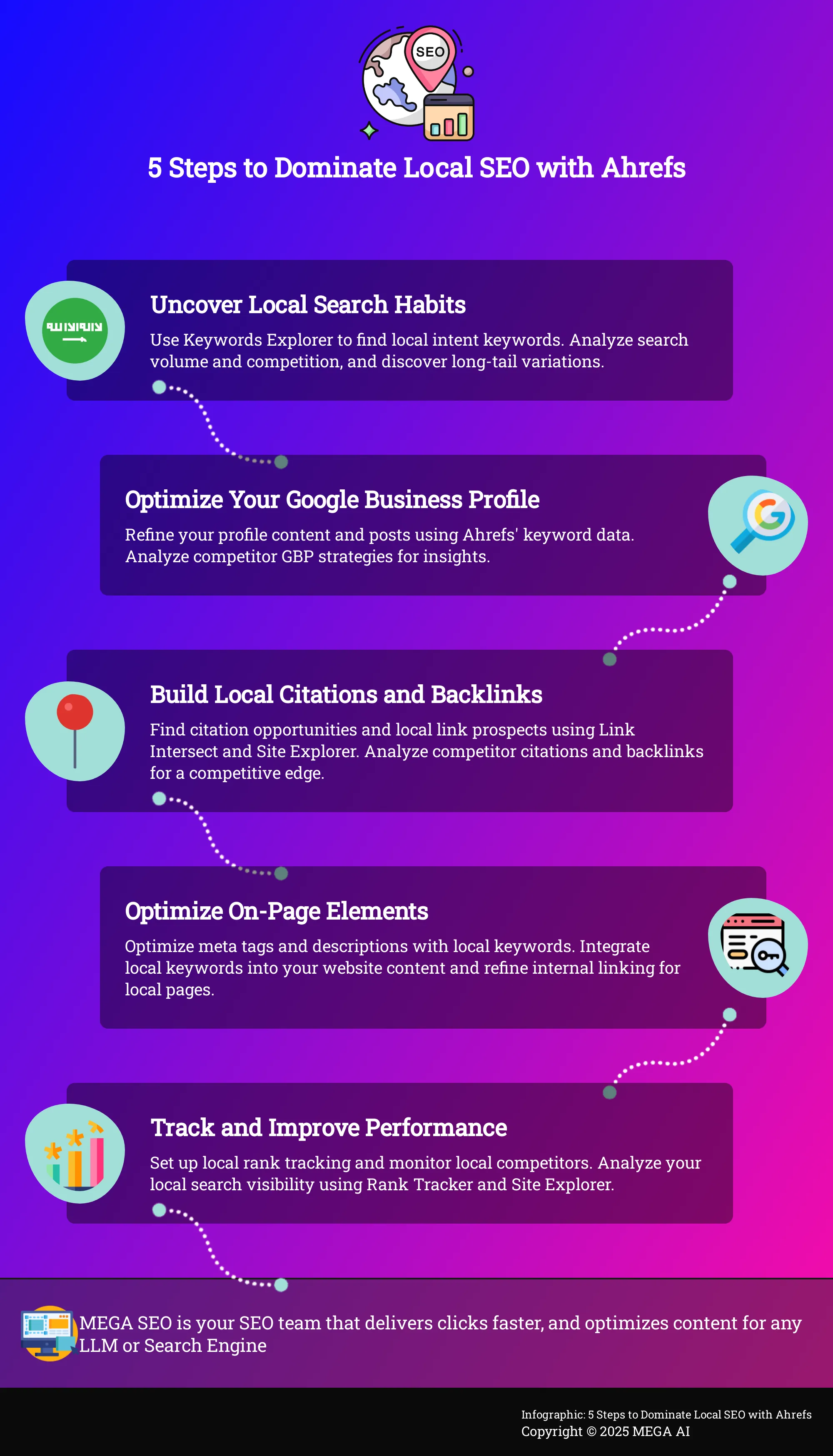
Use Keyword Explorer to Find Local Intent Keywords
The first step in effective local keyword research is identifying keywords that clearly signal "local intent." These are the search terms people use when they're looking for a product or service in their immediate vicinity. Think phrases like "best pizza near me" or "electrician in [Your City Name]." Ahrefs’ Keyword Explorer tool is exceptionally helpful for this task.
To begin, brainstorm the primary services or products your business offers. For example, if you run a local bookstore, your starting terms might be "bookstore," "independent bookstore," or "children's books." Enter these foundational terms into Keyword Explorer. The tool will then generate a list of related keywords and search suggestions, allowing you to discover related keywords that actual searchers are using. Pay close attention to suggestions that include geographic modifiers or phrases like "near me," as these are strong indicators of local search intent.
Analyze Local Search Volume and Competition
Once you've gathered a list of potential local keywords, the next crucial step is to analyze their search volume and the level of competition. A keyword might seem perfect, but if very few people are searching for it, or if it's incredibly difficult to rank for, it might not be the best target. Ahrefs provides the data you need to make these informed decisions.
Within Ahrefs, you can see estimated monthly search volumes for your chosen keywords. While Ahrefs primarily shows national search volume, you can often infer local interest, especially when combined with local modifiers. More importantly, Ahrefs offers a Keyword Difficulty (KD) score. This metric helps you assess keyword difficulty by estimating how hard it will be to rank on the first page of Google for that term. Your aim is to find a sweet spot: keywords with reasonable search interest from a local perspective and a KD score that suggests you have a realistic chance of ranking.
Find Long-Tail Local Keywords
Don't underestimate the value of long-tail local keywords. These are longer, more specific search phrases, often consisting of three or more words, such as "emergency pet clinic open late in [Your Neighborhood]" instead of just "vet." While these terms typically have lower individual search volumes compared to broader keywords, they often carry much higher purchase intent and face less competition. Someone searching with a long-tail keyword usually has a very specific need and is closer to making a decision.
Ahrefs can help you uncover these valuable long-tail variations. Within Keyword Explorer, you can use filters to find longer phrases or look at the "Questions" report to see what specific queries people are asking related to your services in a local context. These highly specific queries can be goldmines for attracting qualified local customers who are ready to engage with your business.
How to Optimize Your Google Business Profile Using Ahrefs Data
Your Google Business Profile (GBP) is often the first impression local customers have of your business. Think of it as your digital storefront on Google Search and Maps, and keeping it optimized is key for attracting nearby customers. While Ahrefs is a comprehensive SEO toolkit, its powerful data can be specifically used to make your GBP more effective. By understanding what local searchers are looking for and how your competitors are positioning themselves, you can make informed decisions to improve your profile’s visibility.
Using Ahrefs data helps you move beyond guesswork. You can identify the exact terms people use to find businesses like yours in your area, understand the questions they’re asking, and see where your competitors might have an edge. This information is invaluable for crafting a GBP that not only looks complete but also actively works to draw in local traffic. From choosing the right categories and services to writing compelling updates and responding to Q&As, Ahrefs insights can guide your strategy. For businesses looking to streamline this process, platforms like MEGA AI can help automate SEO tasks, including aspects of content optimization informed by such data. A data-driven approach to your GBP ensures you’re effectively connecting with your local audience.
Find Key Local Keywords for Your Profile
To make your Google Business Profile truly effective, you need to speak your customers' language. This begins with local keyword research. Ahrefs' Keywords Explorer is an excellent tool for this, helping you discover the specific words and phrases people in your area use when searching for your products or services. Think about terms like "best coffee shop near me" or "emergency plumber [your city]". Identifying these relevant keywords helps you understand user intent and tailor your profile content, ensuring your business appears when local customers are actively looking.
Once you have a list of potential local keywords, analyze their search volume and competition within Ahrefs. This helps prioritize which terms to focus on for your GBP description, services, products, and Q&A section. Don't overlook long-tail local keywords—those longer, specific phrases. While they might have lower search volume, they often indicate higher purchase intent. Integrating these carefully selected keywords naturally into your profile will significantly improve its chances of appearing in relevant local searches.
Improve Profile Content and Posts
With your list of key local keywords from Ahrefs, you can now enhance your Google Business Profile content. Start by ensuring your basic information—name, address, phone number, and hours—is accurate and complete. Crucially, make sure your business type and category accurately reflect what you do, incorporating those Ahrefs-identified keywords naturally. Adding high-quality photos and a link to your website are also essential steps for a comprehensive profile.
Beyond the basics, use your keywords to enrich your business description, detail your services, and craft informative GBP Posts. For instance, if "organic pet food [your city]" is a key term, feature it in a post about new organic arrivals. Regularly updating your profile with posts, offers, and answers to frequently asked questions, all informed by your keyword research, keeps your listing fresh. This proactive approach helps Google understand what your business offers, and you can find tips on how to make great Business Profile posts directly from Google.
Analyze Competitor GBP Strategies
Understanding what your local competitors are doing can provide valuable insights for your Google Business Profile strategy. While Ahrefs doesn't directly show their GBP post content, its tools help analyze their overall local online presence, which often reflects their GBP efforts. For example, using Ahrefs' Site Explorer, you can see which local keywords your competitors rank for, giving you clues about terms they likely emphasize in their GBP.
You can also use tools like Ahrefs' Link Intersect, as suggested in their local SEO solutions guide, to see where competitors get local citations. This can highlight directories or local platforms where they are active, potentially mirroring their GBP category choices or service descriptions. Piecing together these clues gives you a better sense of their local SEO focus and helps identify opportunities to differentiate your GBP, possibly uncovering service areas or keywords they might be overlooking.
How to Develop a Local Citation and Link Building Strategy with Ahrefs
Building a strong local presence isn't just about what's on your website; it's also about how your business is represented across the web. This is where local citations and link building come into play. Think of them as votes of confidence from other online sources that tell search engines your business is legitimate and relevant to local searchers. These off-page signals are critical because they help Google and other search engines understand how well-known and trusted your business is within its specific geographic area. Ahrefs provides a robust toolkit to help you identify and pursue these valuable opportunities, making a potentially overwhelming task much more manageable.
A well-rounded local SEO strategy relies heavily on accurate citations and quality local backlinks. Citations ensure your business information – name, address, and phone number (NAP) – is consistent everywhere, which builds trust with search engines. Meanwhile, backlinks from reputable local sources can significantly improve your site's authority and its ability to rank for important local keywords. While tools like MEGA AI can automate many SEO tasks and streamline your overall digital marketing, understanding how to manually uncover these specific local opportunities with Ahrefs gives you an extra layer of control and insight. Let's explore how you can use Ahrefs to build a solid foundation for your local off-page SEO.
Find Citation Opportunities
Local citations are mentions of your business's name, address, and phone number (NAP) on other websites. These are crucial because they help search engines, like Google, verify your business information and understand your local relevance. Consistent NAP information across various online directories, community pages, and industry-specific sites can positively influence your local search ranking. Think of it as ensuring your business card details are correctly and widely distributed online.
Ahrefs can help you pinpoint where your business should be listed. A great starting point is to use the Link Intersect tool. By entering a few of your top local competitors, this tool can show you websites that link to them but not to you. Many of these might be citation opportunities on local directories or business association websites where you should also have a presence. This helps you find relevant places to list your business and ensure you're not missing out on key visibility points.
Discover Local Link Prospects
Beyond standard directory listings, acquiring backlinks from other relevant local websites is a powerful way to strengthen your local SEO. These links act as endorsements, signaling to search engines that your business is a trusted part of the local community. It's important to focus on getting links from high-ranking local sites, uncovering links your competitors have, and even reclaiming any lost links that once pointed to your site. Quality over quantity is key here.
You can use Ahrefs' Site Explorer to analyze the backlink profiles of local competitors or complementary businesses. Look for links from local bloggers, community event pages, neighborhood associations, or local news outlets. These are often excellent prospects for your own link-building efforts. Reaching out to these sites with a relevant reason for them to link to you, such as a valuable local resource on your site or a potential collaboration, can yield great results.
Analyze Competitor Citations and Backlinks
A thorough analysis of your competitors' online presence can reveal a roadmap for your own citation and link-building efforts. Understanding where your competitors are listed and who is linking to them helps you identify gaps in your own strategy and uncover new opportunities. This isn't about simply copying them, but rather about understanding the local digital landscape and finding ways to position your business effectively within it.
Using Ahrefs, you can systematically review the citation sources and backlink profiles of businesses that rank well for your target local keywords. Pay attention to local directories, industry-specific portals, and community websites where they have a presence. Ahrefs' tools allow you to find directories your competitors are listed in but you aren't. This systematic approach ensures you're not missing out on valuable placements that could improve your local visibility and help you compete more effectively.
How to Apply On-Page Optimization for Local SEO Using Ahrefs
Once you have a solid understanding of your local keywords and how your competitors are performing, the next step is to apply that insight directly to your own website. This is where on-page optimization comes into play. It involves making specific changes to your website's content and its underlying HTML source code to improve how relevant and visible it appears in local search results. Ahrefs provides a suite of tools and data that can really help guide you through this. By focusing on key on-page elements, you can make your site more attractive to both search engines and the local customers you want to reach. This process is about making deliberate, informed adjustments to enhance your local online footprint.
Optimize Meta Tags and Descriptions
Think of your website's meta title and description as the first handshake with a potential local customer searching online. These are the short snippets of text that appear in search results, and they play a big part in whether someone clicks through to your site. To make them work harder for your local SEO, you'll want to craft compelling meta tags that include your main local keywords. It’s also a smart move to include your business name and the specific city or area you serve.
Make sure your meta descriptions accurately reflect what's on the page and give users a good reason to visit. While Ahrefs won't write these for you, its Site Explorer tool is incredibly useful for looking at the meta tags of local businesses that already rank well. This can offer valuable clues about what resonates in your industry and location, helping you refine your own tags.
Integrate Local Keywords into Your Content
Using your local keywords effectively within your website content is a cornerstone of local SEO. This goes beyond just dropping in city names; it’s about naturally incorporating the phrases your local audience uses when they search for your products or services. A good starting point is to use Ahrefs' Keywords Explorer to pinpoint relevant local keywords that show significant search interest and clear local intent.
After you've identified these terms, weave them into your page titles, headings (like H1s and H2s), the main body text, and even image alt text when it makes sense. The goal is for the language to flow naturally and provide genuine information. For example, if you run a bakery in Portland, your pages about custom cakes should naturally mention "custom cakes Portland" or "Portland bakery for birthday cakes" in a way that directly relates to what you offer.
Refine Internal Linking for Local Pages
Internal linking, which is simply linking from one page on your website to another relevant page on your own site, is a straightforward yet effective technique for local SEO. For businesses targeting a local audience, you’ll want to ensure that your key local service pages or specific location pages receive internal links from other relevant content on your site. This strategy helps spread link equity (or "ranking power") throughout your site and makes it easier for search engines to discover and understand your site’s structure.
You can use Ahrefs' Site Audit tool to get a clear picture of your current internal linking setup and spot new opportunities. For instance, a blog post on "Choosing the Right Flowers for a Summer Wedding" could naturally link to your "Portland Wedding Florist Services" page. This not only supports your SEO efforts but also helps users find the exact information they need, improving their experience.
How to Track and Improve Local SEO Performance with Ahrefs
After you've put in the effort to research local keywords and optimize your website and Google Business Profile, the journey doesn't end there. The next crucial phase is continuously tracking your local SEO performance and identifying opportunities for improvement. It’s much like caring for a garden; planting the seeds is just the beginning. Consistent attention—watering, checking for pests, and ensuring enough sunlight—is what helps it flourish. Similarly, Ahrefs offers a robust set of tools designed to help you monitor your local search presence effectively. By regularly examining your rankings, traffic, and competitor activities, you can understand which of your strategies are yielding results and which areas need adjustment. This ongoing cycle of tracking, analyzing, and refining is fundamental for sustained local SEO success. The insights gained allow you to make data-driven decisions, such as tweaking your on-page content, building more relevant local citations, or adjusting your Google Business Profile information to better attract local customers. And if managing these detailed tasks feels overwhelming, consider how SEO solutions can automate and streamline this entire process, freeing you up to focus on other aspects of your business.
Set Up Local Rank Tracking
Knowing where your website appears in local search results for your most important keywords is a fundamental aspect of measuring your SEO efforts. Ahrefs' Rank Tracker is an excellent tool for this specific task. You can use it to monitor your local rankings with precision, focusing on the particular geographic areas your business serves. For instance, if you run a bakery in Austin, you can track your position for terms like "best cupcakes Austin" or "custom cakes near downtown Austin." This tool allows you to track your website's position for specific keywords in different locations, helping you understand how well your local SEO efforts are performing. Consistent monitoring will show you which keywords are driving visibility and which ones might require more focused optimization.
Monitor Local Competitors
Understanding your own performance is vital, but keeping an eye on your local competitors provides equally valuable context. For local SEO, seeing what other businesses in your area are doing successfully can offer significant insights. Ahrefs can help you identify which keywords your competitors are ranking for and how they are performing in local search results. This isn't about simply copying their tactics, but rather about understanding their strategies. Are they targeting keywords you haven't considered? Do they have a strong set of backlinks from other local businesses or organizations? Analyzing this information can help you spot opportunities to refine your own approach and potentially avoid common local SEO mistakes by learning from their activities.
Analyze Your Local Search Visibility
Beyond tracking individual keyword positions, it's important to get a broader understanding of how visible your business is overall in local search. Ahrefs' Site Explorer is the tool for this comprehensive analysis. You can use it to evaluate your website's organic traffic and its complete keyword ranking profile from a local standpoint. This tool helps you understand how much of your traffic originates from local searches and which of your website's pages are performing best within your target geographic areas. By regularly assessing your local search visibility, you can identify performance trends, measure the true impact of your optimization work, and pinpoint areas that need further attention to ensure local customers can find you easily when they search online.
Explore Advanced Local SEO Strategies with Ahrefs
Once you've got a handle on the foundational aspects of local keyword research and on-page tweaks with Ahrefs, you're ready to try some more sophisticated approaches. These advanced strategies can help you find fresh opportunities, build your local authority, and aim for those prominent spots in local search results. Ahrefs offers several tools that can support you as you implement these more complex tactics for your local business, helping you stand out in your community.
Conduct a Local Content Gap Analysis
Understanding what your local competitors are ranking for that you aren't is a smart way to discover new content ideas. Ahrefs' Site Explorer tool is perfect for this task. Simply enter a competitor's website to see which keywords are driving their traffic. You'll want to pay close attention to keywords demonstrating local intent, such as "best coffee shop in [your town]" or "[specific service] near me." By identifying these content gaps, you can develop targeted content that directly answers what local searchers are looking for. This approach helps attract valuable local traffic and ensures your content strategy thoroughly covers relevant local topics.
Use Ahrefs for Local Digital PR
Building relationships with local publications, bloggers, and community influencers can significantly improve your local online presence. Ahrefs can be a great ally in your local digital PR efforts. Use the Content Explorer feature to find popular articles related to your industry within your specific geographic area. This tool allows you to see who is linking to such content, often revealing key local media outlets or influential community blogs. This information helps you discover potential outreach opportunities for guest posting, collaborations, or getting your business featured. Securing these local mentions can build valuable local backlinks and increase your brand's visibility.
Find Local Featured Snippet Opportunities
Featured snippets, sometimes called "position zero," are highly coveted spots in search results because they offer excellent visibility. Ahrefs' Keywords Explorer can help you find opportunities to capture these for local queries. Look for question-based keywords that are relevant to your local business—for instance, "how to find a reliable electrician in [your city]" or "what are the top attractions in [your neighborhood]". Ahrefs can show you which of these keywords already trigger featured snippets. You can then create content that directly and clearly answers these questions. Consider formatting your answers using lists, short paragraphs, or tables to make it easier for search engines to select your content for a snippet.
How to Integrate Ahrefs into Your Local SEO Workflow
So, you're getting comfortable with how Ahrefs can support different aspects of your local SEO. Now, let's discuss how to weave it smoothly into your regular tasks. Making Ahrefs a consistent part of your workflow means you're always on top of your local performance, making decisions based on data rather than assumptions. It’s about establishing a system that helps you monitor, analyze, and adapt efficiently. Think of it as building your central hub for local search insights. By integrating these powerful tools, you can streamline your efforts, ensuring that every action you take is purposeful. And if you're looking to take automation a step further, platforms like MEGA AI can complement Ahrefs by managing tasks such as automated content updates and technical SEO improvements.
Create a Local SEO Dashboard
First, let's get organized. When you're working on local SEO, you’re often managing your visibility in two main areas of Google search results: the map pack (those prominent listings with a map, which are very important for local businesses) and the standard organic results (the familiar 'blue links'). To maintain a clear view of your performance in both, you’ll want to create a dedicated dashboard within Ahrefs. This dashboard will become your primary resource, focusing specifically on your local keywords, the quality and quantity of your local backlinks, and what your nearby competitors are doing. It’s about having all your critical local SEO information in one accessible place, making it simpler to spot trends and opportunities quickly.
Automate Local SEO Reports
Manually pulling data and putting together reports can consume a lot of your valuable time. It makes sense to let Ahrefs handle some of this work for you. You can use tools like Ahrefs Rank Tracker to monitor your local rankings and, importantly, automate your reporting. Consider receiving regular updates on your performance without needing to manually gather the information each time. This automation frees you from the detailed work of data collection, allowing you to dedicate more time to strategy—analyzing the insights and planning your subsequent actions. This shift in focus from manual tasks to strategic planning is key for efficient growth.
Continuously Refine Your Strategy
Local SEO is not a task you complete once and then forget. The digital environment is always changing, competitors are making new moves, and search engine algorithms are updated. This is why it's so important to regularly review your results, identify what is effective and what is not, and then adjust your strategy accordingly. Ahrefs is very helpful for this because its tools allow you to keep a close watch on your competitors. By understanding their tactics and performance, you can discover new opportunities for your own business and work to stay ahead in the local search environment. This ongoing process of analysis and adaptation is what truly supports long-term local SEO success.
Related Articles
- Harnessing Local Keywords for Enhanced SEO Performance: A Comprehensive Guide - MEGA SEO | Blog
- Mastering SEO for Local Businesses: Proven Techniques to Boost Community Visibility - MEGA SEO | Blog
- Ahrefs Keyword Research: The Ultimate 2024 Guide
- Google Business Profile Optimization: The Ultimate Guide
- Link Building Strategies: The Complete Guide
Frequently Asked Questions
I'm new to Ahrefs. What's the best way to start using it for my local business? Your first step is to get your Ahrefs account set up. Once you're in, take some time to simply look around the main dashboard. Focus on getting familiar with where core tools like Keywords Explorer and Site Audit are located. You don't need to master everything immediately; just understanding the layout will make it easier to use these features for your local SEO tasks.
How can Ahrefs help me figure out what search terms my nearby customers are actually using? Ahrefs' Keywords Explorer tool is really useful for this. You can input your primary services or products, and it will generate a list of related search terms, including those that people in your specific area are likely using—think phrases with your city name or "near me." This helps you understand the actual language your local audience uses when they search.
My Google Business Profile could use some improvement. Can Ahrefs data help me make it more effective for local searches? Yes, the insights you gather from Ahrefs, particularly the local keywords you identify, can be very helpful for your Google Business Profile. You can use these keywords to inform the language in your business description, the way you list your services, and even the topics for your GBP Posts, ensuring your profile resonates with local searchers.
What exactly are "local citations," and how can Ahrefs help me find opportunities for them? Local citations are essentially mentions of your business's name, address, and phone number on other websites, such as online directories or community pages. Ahrefs offers tools like Link Intersect, which can show you where your local competitors are listed. This can give you a solid list of relevant websites where your business should also have a presence.
After I've used Ahrefs to make changes, how can I tell if my local SEO efforts are actually making a difference? Ahrefs provides tools like Rank Tracker, which allows you to monitor your website's position in search results for the specific local keywords you're targeting. You can also use Site Explorer to get a broader view of your website's organic traffic from local searches and see how your overall visibility is trending over time.