
Want to know the secret behind your competitors' search engine rankings? A big piece of the puzzle lies in their backlink profile. Analyzing who links to them reveals their most successful content, their most valuable relationships, and the exact strategies they're using to climb the search results. This kind of competitive intelligence used to be complex and expensive to get. With Ubersuggest, however, you have a powerful tool at your fingertips. This article is your complete guide on how to use Ubersuggest for backlink analysis, specifically for competitor espionage. We'll show you how to uncover their link-building secrets and find actionable opportunities to outperform them.
Key Takeaways
- Learn from your competitors' success: Use Ubersuggest to analyze the backlink profiles of your top rivals. This shows you which websites are already linking to content in your niche and reveals the strategies that are proven to work.
- Prioritize high-impact links: Focus your efforts on acquiring links from websites with high Domain Authority. A single authoritative link is more impactful than dozens of low-quality ones, so use Ubersuggest's metrics to filter for the best opportunities.
- Create content that earns links: Identify the most-linked-to pages in your industry using the "Top Pages" report. Then, create a resource that is more thorough, current, or valuable to give other sites a clear reason to link to you.
What is Ubersuggest and Why Use It for Backlink Analysis?
Ubersuggest is a popular SEO tool from digital marketer Neil Patel. While it began as a tool for finding keywords, it has since grown into a more comprehensive suite offering a range of SEO features. One of its most useful functions is backlink analysis. This process involves looking at the collection of links pointing from other websites to your own. Understanding your backlink profile is crucial because search engines like Google view backlinks as votes of confidence, which can significantly impact your rankings.
Using Ubersuggest for this task is a smart move, especially if you're just starting with SEO or working with a limited budget. The tool is known for being user-friendly, presenting complex data in a way that’s easy to understand. It provides key metrics for each backlink, including the linking site's Domain Authority, the specific anchor text used, and whether the link is "follow" or "nofollow." This information helps you gauge the quality and impact of your links. Furthermore, Ubersuggest is a great tool for competitor backlink analysis. By examining the links pointing to your competitors, you can uncover their strategies, find new link-building opportunities, and figure out how to gain a competitive edge in the search results. As a freemium tool, it offers a cost-effective way to gather valuable insights without committing to more expensive platforms, making it an excellent starting point for any business.
How to Get Started with Ubersuggest
Jumping into a new SEO tool can feel like a big step, but Ubersuggest makes the process feel manageable. Before you can start digging into backlink data, you need to get your account set up and learn the lay of the land. The platform is designed to be intuitive, so you can get from sign-up to analysis quickly. Let’s walk through the first few steps to get you up and running.
Create an Account and Add Your Website
To begin, you’ll need to create a free account on the Ubersuggest website. The process is straightforward and gives you access to a suite of features for SEO analysis and keyword research. Once your account is active, the next step is to add your website. This allows the tool to start tracking your site’s performance, analyzing its keyword rankings, and building a picture of its backlink profile. Adding your domain is what turns Ubersuggest from a general research tool into a personalized dashboard for your specific SEO goals, helping you see where you stand in the competitive landscape.
Find Your Way Around the Dashboard
After logging in, you’ll land on the main dashboard, which gives you a high-level overview of your site’s SEO health. It’s designed to be user-friendly, presenting key data points like organic traffic estimates, keyword rankings, and backlink counts in a clear format. One of the most useful tools here is the Traffic Analyzer feature, which lets you look up any domain—yours or a competitor’s. This is where you can gather crucial intelligence, such as what organic keywords your rivals rank for, their estimated monthly traffic, and the strength of their backlink profiles. This information is essential for building an effective SEO strategy.
Explore Ubersuggest's Backlink Analysis Features
Once you're set up, it's time to get into the core reports that make Ubersuggest a go-to for backlink analysis. These features provide a clear, detailed view of your website's backlink profile while also letting you peek into your competitors' playbooks. Understanding these reports is the first step toward building a stronger link-building strategy. Each one offers a different piece of the puzzle, from high-level domain metrics to the specific anchor text used in each link. By combining insights from these different views, you can make informed decisions about where to focus your SEO efforts. Let's walk through the key reports you'll use most often.
The Backlink Overview Report
Think of the Backlink Overview report as your home base for backlink analysis. It gives you a comprehensive snapshot of any domain's backlink profile. Here, you'll find essential metrics for each link, including its source URL, the anchor text used, and the domain's overall authority score. The report also shows you when Ubersuggest first discovered the link, which can help you track new acquisitions over time. One of the most useful functions is the ability to filter links. For example, you can choose to see only "follow" links, which are the ones that pass SEO value, giving you a more accurate picture of your profile's strength.
The Domain Overview Report
The Domain Overview report provides a high-level look at a website's overall SEO health. While it includes more than just backlink data, it’s a crucial starting point because it gives you context. This report shows you a domain's authority score, an estimate of its organic monthly traffic, and the number of keywords it ranks for. When analyzing a competitor, this report helps you quickly gauge their overall strength. A high domain score and significant organic traffic suggest a strong backlink profile. This information helps you understand the competitive landscape and set realistic goals for your own link-building campaigns.
Top Pages by Links
This report is one of the most actionable for content strategy. It shows you which of your competitor's pages have earned the most backlinks. Essentially, it’s a list of their most successful and authoritative content. By analyzing these top pages, you can identify proven topics and content formats that resonate with your shared audience. See a competitor's blog post with hundreds of links? That's a strong signal that the topic is highly link-worthy. You can use these insights to create your own, more comprehensive content on similar subjects, giving you a strategic advantage in attracting valuable links.
Analyze Link Types (Follow vs. Nofollow)
Not all backlinks are created equal, and Ubersuggest helps you understand the difference. The platform allows you to filter links to see how many are "follow" versus "nofollow." A "follow" link is a standard hyperlink that tells search engines to pass authority, or "link juice," from the linking site to yours. A nofollow link has a tag that tells search engines not to pass authority. While nofollow links can still drive traffic, follow links are more valuable for improving your search rankings. Analyzing this breakdown helps you assess the true quality and impact of your backlink profile.
Review Your Anchor Text
Anchor text is the visible, clickable text in a hyperlink. This report shows you the most common anchor text used in links pointing to a specific domain. Reviewing your own anchor text distribution is important for ensuring it looks natural to search engines. A profile dominated by exact-match keywords can look spammy. When analyzing a competitor, this report reveals how other websites perceive their content and what keywords they are being associated with. This insight can uncover new keyword opportunities and help you build a more natural and effective anchor text strategy for your own site.
How to Conduct a Comprehensive Backlink Analysis
A comprehensive backlink analysis gives you a complete picture of your website's authority and reputation online. It’s not just about counting links; it’s about understanding their quality, origin, and impact on your SEO performance. By systematically reviewing your own link profile and those of your competitors, you can uncover valuable insights to guide your strategy. This process helps you replicate your competitors' successes, find new link-building opportunities, and protect your site from potential penalties from search engines.
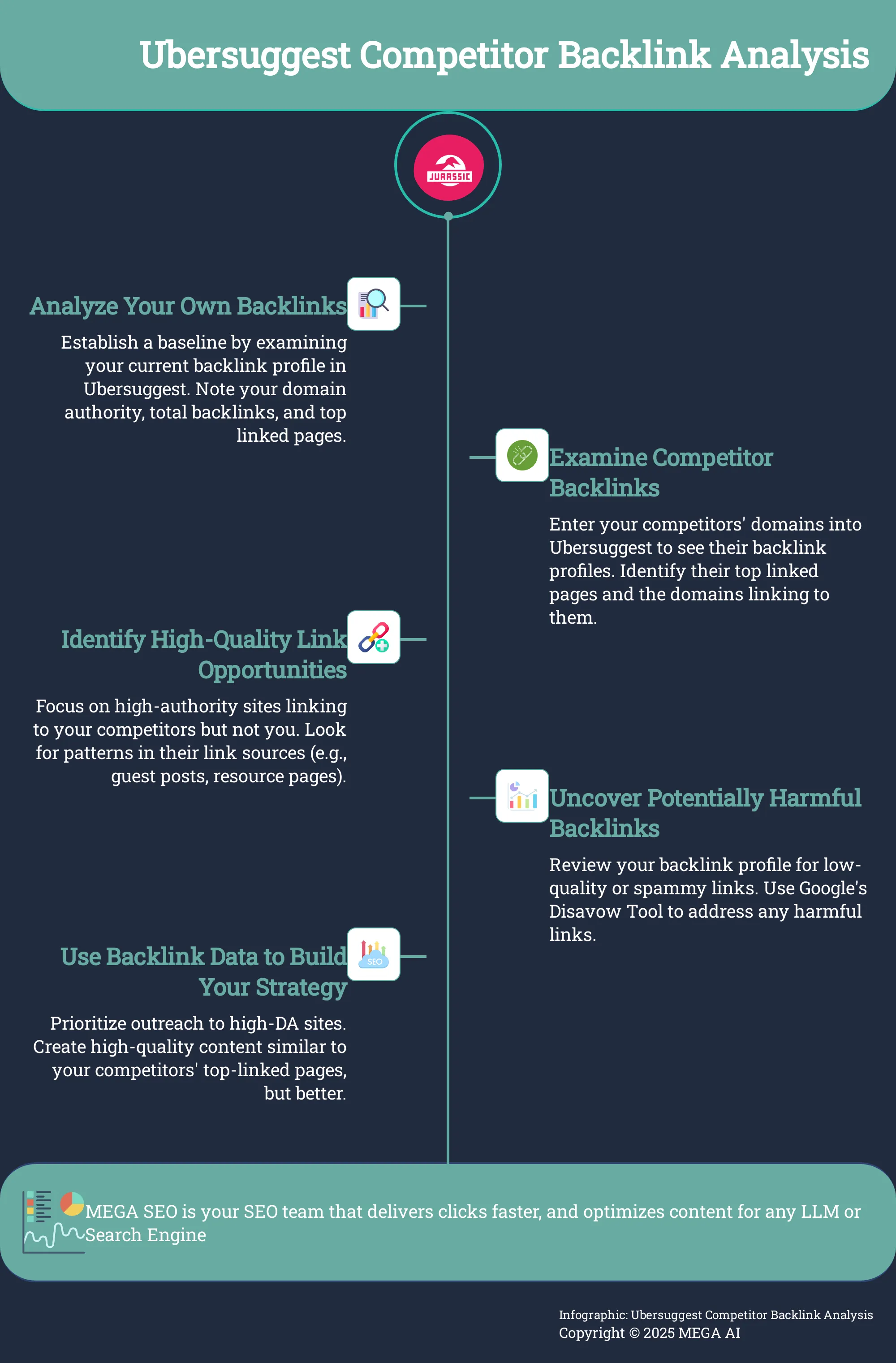
Think of it as a health check for your website's off-page SEO. You'll dig into where your links come from, what anchor text is used, and which of your pages are earning the most authority. This information is critical for building a robust link profile that search engines trust. A thorough analysis also reveals gaps in your strategy that competitors might be exploiting. The process typically involves four key stages: analyzing your own profile to set a baseline, examining competitor profiles to find opportunities, identifying high-quality link targets, and cleaning up any potentially harmful links. Using a tool like Ubersuggest simplifies each of these stages, turning what could be a mountain of data into actionable steps for improving your search engine rankings and overall online presence.
Analyze Your Own Backlinks
The first step in any backlink audit is to look inward. Analyzing your own backlink profile involves examining the quantity and quality of links pointing to your website to establish a performance baseline. In Ubersuggest, you can see your total number of backlinks, the number of unique referring domains, and your domain authority score. Pay close attention to which pages on your site attract the most links—this tells you what content resonates with your audience. Understanding your current standing helps you set realistic goals and measure the impact of your future SEO efforts. It’s about knowing where you are now so you can map out a clear path to where you want to be.
Examine Competitor Backlinks
Once you have a handle on your own profile, it’s time to see what your competitors are up to. Competitor backlink analysis is like getting a peek at their marketing playbook. It involves studying the links pointing to their websites to understand their SEO strategies and find opportunities to outperform them. Enter a competitor’s domain into Ubersuggest to see who links to them, what anchor text they use, and which of their pages are the most popular link targets. This process helps you identify high-authority sites in your niche that are already linking to similar content. You can use this intelligence to build a list of outreach targets that are likely to link to you, too.
Identify High-Quality Link Opportunities
In link building, quality always trumps quantity. A high-quality backlink comes from a trustworthy, authoritative, and relevant website. One link from a respected industry publication is worth more than hundreds of links from low-quality directories. As you analyze your competitors, focus on identifying these valuable opportunities. Look for websites that link to several of your competitors but not to you—this is a strong signal that they are open to linking to content in your niche. Creating superior, more comprehensive content on the same topics can make your outreach efforts much more successful. This is where a powerful content generation tool can give you a significant edge.
Uncover Potentially Harmful Backlinks
Just as good links can help you, bad links can hurt you. Potentially harmful or "toxic" backlinks often come from spammy, low-quality, or irrelevant websites. These links can damage your site's authority and may even lead to penalties from search engines. Regular backlink analysis is crucial for identifying these risks before they become a problem. In Ubersuggest, you can review your referring domains and look for any with very low domain authority or suspicious names. Having a few high-quality backlinks is far better than having thousands of low-quality ones. If you find harmful links, you can use Google's Disavow Tool to ask the search engine to ignore them when assessing your site.
How to Use Backlink Data in Your SEO Strategy
Once you have the data Ubersuggest provides, the next step is turning those numbers into a real plan. Your backlink data is a roadmap showing where you are, where your competitors are, and the best routes to get ahead. Using this information strategically is what separates a passive SEO approach from one that actively builds authority and drives traffic. It’s about making informed decisions to strengthen your online presence.
Understand Domain and Page Authority
Think of backlinks as votes of confidence from other websites. They signal to search engines that your content is valuable and trustworthy. The more high-quality "votes" you get, the better your chances of ranking higher. Ubersuggest uses metrics like Domain Authority (DA) and Page Authority (PA) to measure the strength of these votes. Domain Authority reflects the overall ranking power of an entire website, while Page Authority measures a single page's strength. When analyzing backlinks, your goal is to acquire links from sites with high DA, as these carry more weight and can improve your own site's search engine ranking.
Identify Trends and Patterns
Your competitor's backlink profile is a treasure trove of information. Instead of just looking at the raw number of links, look for patterns. What types of websites are linking to them? Are they mostly blogs, news outlets, or industry directories? What kind of anchor text is most common? Answering these questions helps you understand what a successful link profile looks like in your niche. It’s essential to focus on quality over quantity, prioritizing links from high-authority and relevant websites. This analysis reveals the strategies that are already working, giving you a proven model to adapt. Tools like MEGA AI can automate this process, using AI to analyze competitor strategies and identify high-value opportunities for your SEO.
Prioritize Your Link Building Efforts
With a list of potential backlink opportunities, you need to decide where to focus your energy. Prioritize high-impact targets, such as authoritative sites that link to your competitors but not to you. Ubersuggest makes it easy to find these gaps. Once you have your list, the key is to create high-quality, link-worthy content that these sites will want to share. This could include data-driven articles, comprehensive how-to guides, or expert interviews. By creating valuable resources, you give other sites a compelling reason to link to you, making your outreach efforts much more effective. This proactive approach to link building is fundamental to a successful long-term SEO strategy.
Use Ubersuggest Insights for Effective Link Building
Once you've analyzed your backlink profile and your competitors', the next step is to put that data to work. Ubersuggest provides a clear roadmap for building a link-building campaign that gets results. It’s not just about getting more links; it’s about getting the right links from authoritative sources. By focusing on a smart outreach strategy and creating content that people genuinely want to share, you can build a strong, resilient backlink profile that supports your long-term SEO goals.
Develop an Outreach Strategy
Your competitors' backlink profiles are a goldmine of information. A thorough competitor backlink analysis shows you exactly which websites are already linking to content in your niche. In Ubersuggest, filter your competitor’s backlinks to see the high-authority domains sending them traffic. Look for patterns. Are they getting links from guest posts, industry blogs, or resource pages? This tells you what kind of outreach is working in your space. Use this information to build a prioritized list of websites to contact. Instead of guessing, you’re using data to target sites that are already proven to link to businesses like yours.
Create Link-Worthy Content
Outreach is only effective if you have something valuable to offer. Use Ubersuggest’s “Top Pages by Links” report to see what kind of content attracts the most attention in your industry. Are your competitors’ most-linked pages long-form guides, original research studies, or free tools? This insight helps you move beyond guesswork and create content that has a proven track record of earning links. Focus on creating high-quality, link-worthy content that is more comprehensive, up-to-date, or visually appealing than what’s already out there. When you create the best resource on a topic, other websites will naturally want to reference it.
Advanced Techniques and Best Practices
Once you're comfortable with the basics of Ubersuggest, you can start using more advanced methods to get an edge. These practices are about moving from a reactive to a proactive SEO strategy. Instead of just analyzing what has already happened, you’ll be setting up systems to monitor your backlink profile in real time, perform regular health checks, and combine data from multiple sources for a more complete picture. This approach helps you build a more resilient and effective link-building strategy that can adapt to changes and consistently drive results.
Set Up Alerts for New Backlinks
Staying on top of your backlink profile doesn't have to mean manually checking it every day. Ubersuggest allows you to set up alerts that notify you whenever your site—or a competitor's site—earns a new backlink. This is a simple but powerful way to monitor your website's link profile and react quickly. When you get an alert for a great new link, you can share it on social media to amplify its impact. If you see a competitor land a high-quality link, you can analyze their strategy and see if you can replicate it. It’s a low-effort way to keep a constant pulse on your niche and find new opportunities as they appear.
Conduct Regular Backlink Audits
Think of a backlink audit as a regular health check for your website. Over time, your site will accumulate links from various sources, and not all of them will be good for your SEO. A periodic backlink analysis helps you identify and deal with potentially toxic links that could lead to search engine penalties. During an audit, you’ll review your links for quality, relevance, and anchor text distribution. This process helps you maintain a clean and healthy link profile, ensuring that your hard work in link building isn't undermined by a few bad links. Scheduling these audits quarterly or bi-annually keeps your SEO foundation strong and secure.
Integrate Ubersuggest with Other SEO Tools
While Ubersuggest is a fantastic tool, relying on a single data source can sometimes give you an incomplete picture. Every backlink tool has its own web crawlers and index, so they might report slightly different data. To get the most comprehensive view, it’s smart to use Ubersuggest in combination with other tools, especially Google Search Console, which provides direct data from Google. By cross-referencing data, you can verify your findings and uncover links that one tool might have missed. Using multiple backlink analysis tools allows you to build a more complete and accurate understanding of your backlink profile and that of your competitors.
Solve Common Challenges in Ubersuggest
Like any tool, Ubersuggest has its quirks. Understanding its common challenges can help you use it more effectively and know when to supplement its data with other resources. Two frequent topics that come up are data accuracy and how to get real value from the free plan. Let's look at how to approach both so you can keep your SEO strategy moving forward.
Handle Data Discrepancies
When you're digging into backlink data, consistency is key. Some users report that Ubersuggest's estimations can occasionally differ from other sources. It’s helpful to view these numbers as strong indicators rather than absolute facts. For a more complete and reliable view of your backlink profile, consider cross-referencing the data with another platform. This practice ensures your strategic decisions are based on a well-rounded understanding of your site's authority. Using an end-to-end SEO platform can help centralize your data and provide a single source of truth for your analysis and outreach efforts.
Get the Most from the Free Version
You don't need a paid subscription to get value from Ubersuggest. The free version offers several powerful features that can make a real difference in your SEO workflow. Focus your attention on the backlink audit, site audit, and keyword research tools. These functions are great for tracking your link-building progress, identifying technical SEO issues on your site, and uncovering new keyword opportunities. By concentrating on these core areas, you can effectively support your strategy without a budget. When you're ready to scale, you can book a demo to see how AI-driven automation can streamline your entire SEO workflow from research to content creation.
How Can I Improve My Backlink Profile with Ubersuggest?
Improving your backlink profile isn't just about getting more links; it's about getting the right links. A strong backlink profile is a major factor in how search engines perceive your site's authority and relevance, directly impacting your ability to rank for competitive keywords. Ubersuggest provides the data you need to move beyond guesswork and build a strategic link-building plan that delivers results. By systematically analyzing your own profile and spying on your competitors, you can uncover a clear roadmap for earning high-quality links that make a real impact on your rankings.
The key is to turn the tool's reports into a repeatable process for finding opportunities, reaching out, and tracking your progress. Instead of randomly asking for links, you can use Ubersuggest to pinpoint websites that are already linking to similar content, identify gaps in your competitors' strategies, and discover the exact pages that are most likely to attract authoritative links. This data-driven approach saves time and significantly increases your success rate. A strong backlink profile is essential for visibility, and this is how you build one.
Analyze Your Competitors' Success
The fastest way to find what works is to see what’s already working for others. Use Ubersuggest’s Backlinks report to plug in the domains of your top three to five competitors. This gives you a direct look at their link-building strategies. Pay attention to the sites that link to them most often and the pages on their site that attract the most links. This competitor backlink analysis helps you understand the type of content that earns links in your niche. Look for patterns. Are they getting links from industry blogs, news sites, or resource pages? This information is your starting point for building a list of potential link targets for your own outreach campaigns.
Identify and Replicate High-Quality Links
Once you have a list of your competitors' backlinks, it's time to filter for quality. In Ubersuggest, sort the links by Domain Authority (DA) to see which ones carry the most weight. A link from a high-authority, relevant site is far more valuable than dozens of links from low-quality directories. Your goal isn't to copy every single link but to identify the best ones and figure out how you can earn a similar placement. Ask yourself why that site linked to your competitor. Was it a guest post, a mention in a listicle, or a citation for a statistic? Understanding the context helps you craft a better pitch when you reach out to that same site.
Find and Fix Broken Links
Broken link building is a classic and effective SEO tactic. It involves finding a broken link (a 404 error) on another website and suggesting your own relevant content as a replacement. While Ubersuggest doesn't have a dedicated broken link checker, you can use its competitor analysis feature for this. When you crawl a competitor's backlink profile, you can check the status of their linking pages. If you find a high-authority page that links to a competitor's page that is now a 404, you have a golden opportunity. Create a similar or better piece of content on your own site, then contact the site owner to let them know about their broken link and offer yours as a helpful replacement.
Monitor Your Profile for New Opportunities
Building a strong backlink profile is an ongoing process, not a one-time task. You should regularly check your backlinks to monitor your progress and protect your site's health. Set a schedule—weekly or monthly—to run your domain through Ubersuggest’s Backlink Overview. Look for new links you’ve earned and check their quality. At the same time, keep an eye on your competitors. Ubersuggest will show you when they acquire new links, giving you real-time insight into their current strategies. If you see a competitor land a great link, you can immediately analyze the opportunity and see if it's one you can pursue as well. This proactive monitoring keeps your strategy fresh and adaptive.
What Are the Limitations of Ubersuggest for Backlink Analysis?
While Ubersuggest is a fantastic starting point for backlink analysis, especially with its user-friendly interface and affordable price, it's important to understand its boundaries. Knowing where the tool excels and where it falls short will help you make more informed decisions for your SEO strategy. For businesses that rely heavily on a robust backlink profile, being aware of these limitations is key to knowing when you might need to supplement Ubersuggest with more specialized tools or platforms. Understanding these constraints isn't about dismissing the tool, but rather using it effectively for what it does best: providing accessible, high-level insights.
Data Accuracy and Freshness
One of the most common points of discussion among SEO professionals is the reliability of data from various tools. Some users have questioned the accuracy of Ubersuggest's data, noting that its estimations for metrics like domain authority or backlink counts can sometimes differ from other platforms. The tool's index of backlinks might also not be as large or as frequently updated as those of its more expensive competitors. This means you might not see a brand-new backlink reflected for a while, or you might miss some links altogether. For a quick health check, this is perfectly fine, but for in-depth competitive analysis, you may want to cross-reference the data with another source.
Limited Depth of Analysis
Ubersuggest is designed to be accessible, which is one of its greatest strengths. However, this focus on simplicity means it doesn't offer the same depth of analysis as some high-end SEO platforms. While you can see your backlinks, you have fewer options for filtering, sorting, and dissecting that data. For example, you might not be able to easily isolate links from specific countries or TLDs, or analyze link velocity over time with the same granularity. As some experts note, it's a solid mid-range tool, but it may not provide the comprehensive insights needed for a complex link-building campaign. Free tools often provide a good starting point but can offer limited information compared to dedicated, paid solutions.
Related Articles
- How to Use Ubersuggest for On-Page Optimization in 2024
- How to Use Ubersuggest for Powerful Keyword Research
- Mega Backlink Strategies for Local SEO Domination
- Comprehensive Backlink Audit: A Step-by-Step Guide
- How to Use SEMrush for Backlink Analysis: Step-by-Step
Frequently Asked Questions
Is Ubersuggest enough for backlink analysis, or do I need a more expensive tool? Ubersuggest is an excellent tool for getting started with backlink analysis, especially if you're working with a limited budget or are new to SEO. It provides the core data you need, like domain authority and anchor text, in an easy-to-understand format. While more advanced platforms may offer a larger backlink index or more granular filtering options, Ubersuggest gives you more than enough information to analyze competitors and build an effective link-building strategy.
How often should I check my backlinks? A good practice is to conduct a full backlink audit every quarter. This allows you to review your overall profile, identify any potentially harmful links, and assess your progress. For more immediate insights, consider setting up alerts in Ubersuggest. This will notify you when you or a competitor gets a new link, allowing you to react quickly to new opportunities or monitor their strategies in real time.
What's the most important metric to look at in Ubersuggest's backlink reports? While several metrics are useful, a great starting point is the Domain Authority (DA) of the linking websites. This score gives you a quick sense of a site's overall strength and trustworthiness in the eyes of search engines. When building your strategy, prioritize earning links from sites with a higher DA, as these "votes of confidence" carry more weight and have a greater impact on your own site's authority.
Can I really build links just by looking at my competitors' profiles? Looking at your competitors' backlink profiles doesn't automatically build links, but it does give you a clear roadmap. It shows you exactly which websites are already interested in your niche and linking to content similar to yours. This intelligence allows you to stop guessing and start targeting proven link sources. Your job is to use that information to create even better content and then reach out to those sites with a compelling reason to link to you instead.
What should I do if I find a "bad" or "toxic" link pointing to my site? First, don't panic. It's normal to acquire some low-quality links over time. When you conduct a backlink audit in Ubersuggest, look for links from sites that are completely irrelevant to your industry or appear spammy. If you find links that you believe could be harmful, you can use Google's Disavow Tool. This tells Google to ignore those specific links when evaluating your site, which helps protect your SEO efforts.