For digital marketers and small business owners, the goal isn't just to get noticed online; it's to build a presence that consistently attracts and engages the right audience. While some SEO tactics promise rapid results, they often lack the staying power needed for true growth. This is where the importance of Sustainable SEO strategies becomes clear. These are not quick fixes but foundational practices designed to create long-term value, enhance brand reputation, and foster genuine user trust. By focusing on quality content, ethical practices, and a deep understanding of user needs, you can develop an online presence that is both resilient and consistently effective.
Key Takeaways
- Prioritize Long-Term Value: Implement ethical SEO practices and develop high-quality, user-focused content to achieve lasting search presence, rather than relying on short-lived tactics.
- Center Your Content on User Intent: Create genuinely useful and accessible materials that address what your audience is truly seeking, building credibility and a loyal following.
- Adapt and Optimize Continuously: Consistently monitor your SEO performance, adjust to evolving search landscapes, and leverage tools like MEGA AI to efficiently manage and enhance your content for sustained results.
What is Sustainable SEO?
Thinking about SEO probably brings keywords, rankings, and traffic to mind. But have you considered how your SEO efforts can be sustainable? It’s an approach that benefits not just your business in the long run, but also the wider world. Let's explore what sustainable SEO really means.
Define Sustainable SEO
Sustainable SEO is all about playing the long game. It means using ethical, forward-thinking strategies to build and maintain your search engine rankings over time, rather than chasing quick wins with tactics that might become obsolete after the next algorithm update. Think of it as building a strong foundation for your house versus a temporary shelter. This approach balances your marketing objectives with a sense of environmental and social responsibility. It’s about optimizing your online presence in a way that’s considerate of both people and the planet, ensuring your efforts today continue to deliver value well into the future.
Understand SEO and Environmental Responsibility
It might not be immediately obvious, but our digital activities, including SEO, have an environmental footprint. Traditional SEO practices can sometimes lead to digital waste, like old, unused data, and contribute to the significant energy consumption of data centers that power the internet. As AI becomes more integrated into search, the environmental impact of search is something we need to consider. Creating high-quality, genuinely helpful content isn't just good for your audience and rankings; it’s a more sustainable practice than churning out low-value pages. Adopting greener SEO is an ongoing commitment, requiring regular checks and adjustments to ensure your practices remain effective and responsible.
Why Does Sustainable SEO Matter?
When you hear 'SEO,' your mind probably jumps to keywords and search engine rankings. While those are definitely part of the equation, there's a more profound approach to consider: sustainable SEO. This isn't about chasing fleeting trends or quick fixes that might give you a temporary bump. Instead, sustainable SEO is a thoughtful, long-term strategy designed to build enduring success for your online presence. It means you're investing in practices that yield consistent, reliable results over months and years, not just days or weeks. This approach moves beyond simply trying to game the system and focuses on creating genuine value that search engines are designed to recognize and reward over the long haul.
More than just technical tweaks, sustainable SEO aligns your digital marketing efforts with broader values that truly connect with today's informed consumers. It encourages you to think holistically about your online footprint, from the quality and relevance of the content you create to the way you interact with your audience. This comprehensive view ensures that your SEO work is not only effective in driving traffic but also responsible and reflective of your brand's integrity. By adopting this mindset, you're laying a groundwork for growth that is both robust and respectable, helping you build a digital presence that stands the test of time and algorithm updates. It’s about building a relationship with both search engines and users based on trust and quality, which is far more resilient than any short-lived tactic.
Achieve Long-Term Cost-Effectiveness
A significant advantage of embracing sustainable SEO is its enduring cost-effectiveness. Think of it this way: short-term tactics might give you a quick burst of attention, but they often require ongoing, significant investment to maintain, and their impact can diminish just as quickly. Sustainable SEO, on the other hand, focuses on building a robust foundation with long-term strategies and ethical practices that maintain high search engine rankings over time.
This means you become less dependent on the constant financial input that paid advertising often demands. While paid campaigns are useful tools in a marketing arsenal, sustainable SEO aims to earn organic traffic consistently. By investing in high-quality content and sound ethical practices, you develop digital assets that continue to attract visitors and generate leads long after your initial work is done. This approach makes your marketing budget work smarter, delivering more consistent returns and fostering steady, reliable growth.
Consider the Ethics
Beyond the practical benefits, sustainable SEO introduces a vital ethical component to your marketing efforts. It’s not just about achieving high rankings; it’s about the methods you use to get there. This approach encourages a thoughtful balance between your marketing goals and a broader sense of social and even environmental responsibility. Today's consumers are savvy; they can often spot inauthentic claims or "greenwashing" from a mile away.
A genuine sustainable SEO strategy is rooted in authenticity and transparency. It involves being upfront about your business practices and concentrating on delivering real, tangible value to your audience. This commitment to honesty helps build deep trust with your customers. When your ethical stance is clear and consistent, it can become an integral part of your brand identity, attracting and retaining customers who appreciate and share those values. It’s about doing SEO in a way that’s good for your business, your audience, and even the wider world.
See the Impact on Your Brand Reputation
Your brand's reputation is one of your most precious assets, and sustainable SEO practices are key to cultivating a positive one. A core element of this approach is the creation of high-quality, genuinely helpful content that directly addresses the needs and questions of your users. When you make it a priority to solve problems for your audience and provide them with substantial value, you're doing more than just optimizing for search engines; you're building credibility and establishing your authority in your field.
This consistent focus on delivering an excellent user experience helps to foster trust and loyalty. A strong brand reputation then acts as a powerful ally to your SEO efforts. Satisfied users are more inclined to engage with your content, share it with their networks, and revisit your site. These positive user signals are exactly what search engines look for when determining which websites are trustworthy and deserving of higher rankings.
What Are the Key Parts of a Sustainable SEO Strategy?
Building an SEO strategy that lasts means focusing on foundational elements that provide ongoing value. Instead of chasing fleeting algorithm changes, a sustainable approach centers on creating genuine connections with your audience and building a technically sound online presence. These core components work together to ensure your efforts today continue to pay off well into the future.
Create High-Quality, Evergreen Content
Sustainable SEO prioritizes quality over quantity. This means focusing on creating valuable, helpful content that truly assists users and addresses their core needs. Think of evergreen content as the sturdy foundation of your strategy—articles, guides, and resources that remain relevant and useful long after they're published. This approach not only serves your audience better but also reduces the need for constant, resource-intensive content creation cycles.
A well-rounded SEO strategy goes beyond simply targeting keywords; it focuses on creating real value for your target audience. By crafting pieces that have lasting appeal, you build a library of assets that continuously attract and engage visitors. This contributes to long-term organic growth and establishes your brand as a reliable source of information in your niche.
Focus on User Experience and Accessibility
A positive user experience (UX) is vital for both keeping your audience happy and for your search engine rankings. When users find your site easy to navigate, quick to load, and enjoyable to interact with, they're more likely to stay longer, explore more content, and ultimately convert. This includes optimizing for mobile devices, ensuring intuitive site structure, and providing clear pathways to information.
Equally important is web accessibility, which means designing your site so people with disabilities can use it effectively. Prioritizing UX and accessibility not only broadens your potential audience but also signals to search engines that your site is user-centric and high-quality. Regularly monitoring your site's performance and user behavior can help you identify areas for improvement.
Build Links Ethically
Earning backlinks from reputable sources is a cornerstone of sustainable SEO, as it signals to search engines that your content is credible and authoritative. Instead of resorting to risky shortcuts like buying links, focus on building genuine relationships within your industry. This might involve guest blogging on respected sites, creating shareable resources that others naturally want to link to, or engaging in digital PR to highlight your expertise.
Ethical link building is a long-term investment that strengthens your site’s authority and trustworthiness. It’s about demonstrating value to other site owners so they willingly endorse your content. This approach leads to more stable and resilient search rankings over time, as these earned links are seen as genuine endorsements by search engines.
Optimize for E-E-A-T
Google emphasizes the importance of E-E-A-T—Experience, Expertise, Authoritativeness, and Trustworthiness—when evaluating content quality. To align with this, your content should clearly demonstrate your firsthand experience and deep knowledge in your niche. Showcase your expertise through well-researched, accurate information, and build authority by earning recognition from other credible sources and industry peers.
Trustworthiness comes from transparency, site security, and consistently providing reliable content. Focusing on E-E-A-T helps you create content that Google wants to show its users, as outlined in their guidelines for creating helpful, reliable, people-first content. This means going beyond keywords to truly satisfy user intent with comprehensive and dependable information.
How to Implement Sustainable SEO Practices
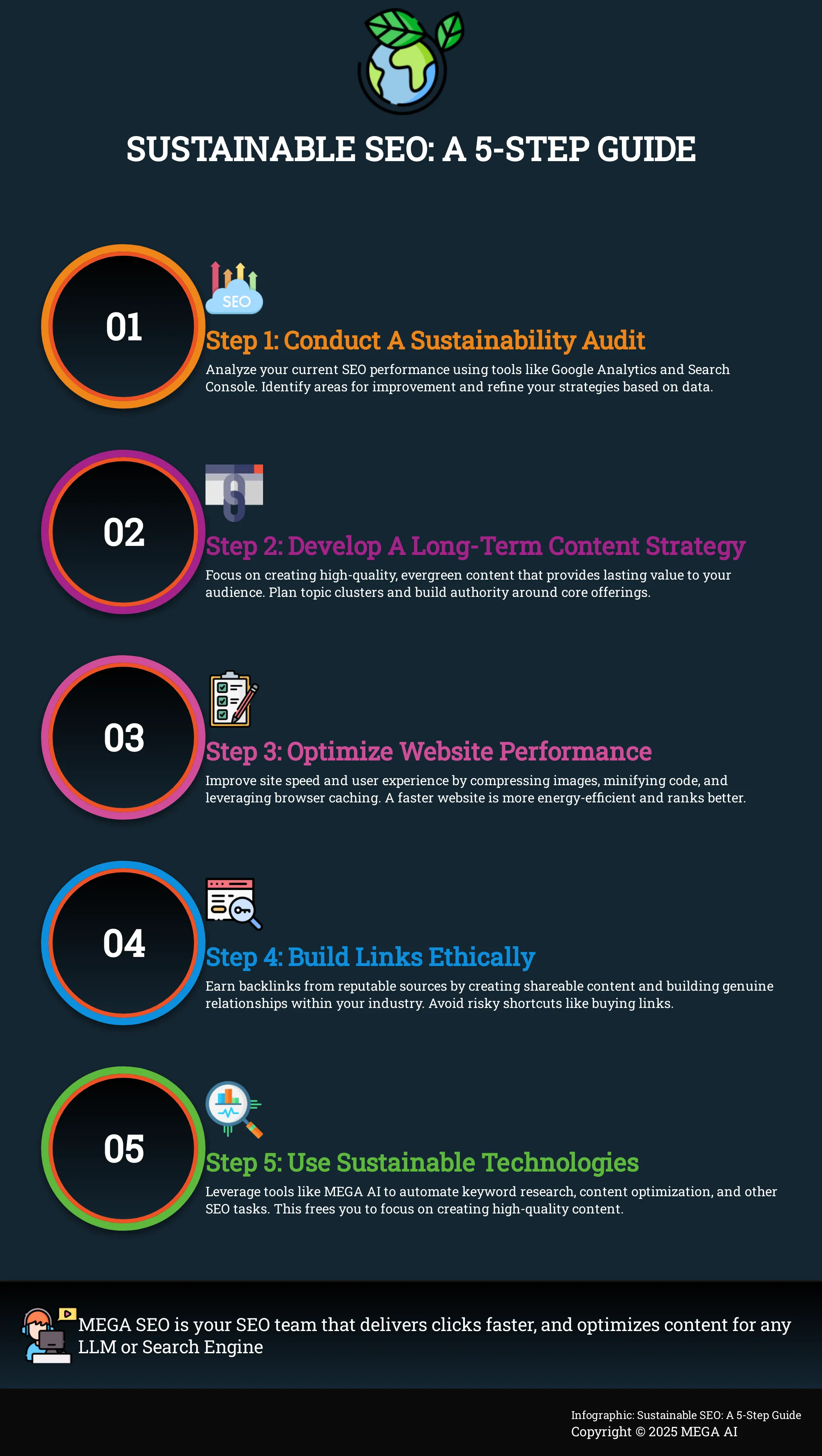
Putting sustainable SEO into action means making conscious choices that support long-term growth and value. It’s about building a strong foundation rather than chasing quick, fleeting wins. Here’s how you can start implementing these practices for your business.
Conduct a Sustainability Audit
Think of a sustainability audit as a health check for your SEO. It’s about reviewing current efforts to ensure they're built for the long haul. Regularly monitor your SEO performance with tools like Google Analytics and Search Console. Track key metrics like website traffic, keyword rankings, and conversion rates.
Analyzing this data helps identify improvements and refine strategies. Is your content still relevant? Is your backlink profile strong? Make this audit a regular practice to keep your SEO sustainable and consistently valuable.
Develop a Long-Term Content Strategy
Sustainable SEO relies on a solid, long-term content strategy. Focus on creating genuine, lasting value for your audience, not just targeting keywords. Your content should answer questions and solve problems. This method helps you adapt to evolving search engine algorithms, which favor high-quality, user-centric material.
Plan for evergreen content—pieces that stay relevant. Building topic clusters around core offerings establishes authority and helps users and search engines understand your site. This planning ensures your content delivers long-term results.
Optimize Website Performance and Energy Efficiency
Website performance is key to sustainable SEO and connects to energy efficiency. Search engines prefer sites with good user experience, and site speed is crucial. Factors like Core Web Vitals, measuring site speed and usability, directly affect rankings. Optimizing these improves SEO and resource efficiency.
Enhance performance by compressing images, minifying code, and using browser caching. A faster website uses less energy. This efficiency benefits users, rankings, and supports a sustainable digital presence.
Use Sustainable Technologies and Tools
The right technologies are vital for a sustainable SEO strategy. This ongoing effort needs regular monitoring and adaptation. You'll want to track your site's performance consistently, looking at metrics like load times and organic traffic to understand user interaction.
Consider tools supporting long-term growth. Platforms like MEGA AI can automate SEO aspects like keyword research and content optimization, ensuring consistent efforts. This maintains your content's value over time, a core sustainability principle.
How to Measure Your Sustainable SEO Success
Measuring your efforts is key to knowing if your sustainable SEO strategy is truly working and delivering lasting results. It’s not just about seeing numbers go up; it’s about understanding what those numbers mean for the long-term health and visibility of your website. By tracking the right metrics, you can refine your approach, demonstrate value, and ensure your SEO efforts contribute to enduring growth. This means looking beyond surface-level metrics and focusing on indicators that show genuine progress and user engagement over time.
Identify Key Performance Indicators (KPIs)
To effectively measure your sustainable SEO success, you first need to pinpoint the right Key Performance Indicators (KPIs). These are the specific metrics that show how well your strategy is performing and where you can make improvements. Think about tracking organic traffic to see how many visitors are finding you through search engines. Monitor your keyword rankings for terms that matter to your audience, especially those showing clear user intent. Don't forget conversion rates – are visitors taking the actions you want them to, like signing up for a newsletter or making a purchase? Engagement metrics like time on page and click-through rates from search results also offer valuable insights into how users interact with your content, indicating its relevance and quality.
Balance Short-Term Gains with Long-Term Sustainability
A solid SEO strategy involves more than just putting tactics into action; it’s about consistently measuring their impact to ensure they contribute to long-term growth. While quick wins can be tempting, sustainable SEO prioritizes steady, enduring results. This means focusing on metrics that reflect genuine audience engagement and satisfaction, rather than just temporary spikes in traffic from fleeting trends. For example, a gradual increase in organic traffic from well-researched, high-quality content is a stronger indicator of sustainable success than a sudden surge from a viral piece that doesn’t convert or retain visitors. Regularly reviewing your strategy helps you stay on course for lasting success and adapt to any changes in the digital landscape.
Find Tools to Track Progress
Once you know what to measure, you need the right tools to track your progress effectively. Fortunately, there are many excellent options available. Start with Google Analytics to get a comprehensive view of your website traffic, user behavior, and conversion rates. Google Search Console is another essential tool, offering insights into your site’s performance in Google search results, including keyword rankings, click-through rates, and any technical issues that might be holding you back. For more in-depth analysis, platforms like Ahrefs or our own MEGA AI SEO tools can provide competitive intelligence and advanced tracking. Regularly using these tools will help you monitor your KPIs and make data-driven decisions to refine your sustainable SEO efforts.
How to Overcome Common Sustainable SEO Challenges
Embracing sustainable SEO is a smart move for long-term growth, but like any worthwhile endeavor, it comes with its own set of hurdles. Understanding these common challenges is the first step toward effectively managing them. You might encounter misunderstandings about what sustainable SEO truly entails, find it tricky to keep pace with search engine updates, or wonder how to align these practices with your immediate business objectives. The good news is that with a clear approach, these obstacles are entirely manageable, allowing you to build a resilient and effective online presence. By proactively addressing potential pitfalls, you can ensure your sustainable SEO efforts yield consistent and meaningful results for your business.
Address Common Misconceptions
One of the first challenges is cutting through the noise of what sustainable SEO actually means. It’s easy to get sidetracked by quick-fix promises, but true sustainability in SEO is about playing the long game. As experts note, "Sustainable SEO focuses on long-term strategies and ethical practices to maintain high search engine rankings. It avoids short-term tactics that quickly lose effectiveness." This means shifting the focus from temporary gains to enduring value.
To overcome this, concentrate on education within your team and for your clients. Clearly explain that sustainable SEO isn't about chasing fleeting trends. Instead, it's about building a solid foundation with high-quality content, a positive user experience, and ethical link-building that stands the test of time. This approach ensures your efforts contribute to lasting success and build genuine trust with your audience.
Adapt to Algorithm Updates
Search engine algorithms are constantly evolving, and what works today might need adjustment tomorrow. This dynamic nature can feel like a challenge when you're aiming for sustainability. However, a core principle of a strong SEO strategy isn't just implementing tactics—it's also about consistently measuring their impact. To achieve real, sustainable SEO success, you need to monitor the right SEO metrics that reflect how well your efforts are performing in search results and where there's room for improvement.
Instead of viewing algorithm updates as setbacks, see them as opportunities to refine your approach. Stay informed about major updates, but don't panic or make drastic changes based on speculation. A sustainable strategy is inherently resilient because it focuses on user value and technical soundness, which generally align with what search engines aim to reward. Regularly review your performance and be prepared to make thoughtful adjustments.
Balance Sustainability with Business Goals
It's a common concern: how do you balance the long-term vision of sustainable SEO with the more immediate pressures of meeting business goals? Some might perceive sustainable practices as separate from or even conflicting with marketing objectives. However, "Sustainable SEO balances marketing goals with environmental and social responsibility. It's about doing SEO in a way that's good for the planet and people," and this holistic view often leads to stronger business outcomes.
"Long-term SEO is about more than rankings—it’s about building authority, meeting user intent, and creating a strategy that adapts to the ever-changing search engine world." When you prioritize creating valuable, user-focused content and a seamless experience, you're not just practicing good SEO; you're also building brand loyalty and trust. These are invaluable business assets that directly contribute to achieving your objectives in a lasting way.
What's Next for Sustainable SEO?
The world of SEO is always moving, and sustainable SEO is no different. Staying ahead means keeping an eye on what’s developing and understanding how these changes can impact your long-term strategy. It’s about being proactive rather than reactive, ensuring your efforts today continue to yield results tomorrow. As we look to the future, a few key areas stand out: the increasing consumer demand for sustainable practices, the constant evolution of search engine algorithms, and the growing role of artificial intelligence. Anticipating these shifts will help you maintain a strong, ethical, and effective online presence. Let's explore what these future trends mean for your sustainable SEO approach and how you can prepare your business for what’s on the horizon.
Spot Emerging Trends in Sustainable Digital Marketing
One of the most significant shifts we're seeing is the growing consumer desire for businesses to be more environmentally and socially responsible. People are actively looking to support brands that align with their values. For instance, a 2020 Deloitte survey revealed that 58% of respondents wanted companies to adopt more sustainable practices. This isn't just a fleeting trend; it's a fundamental change in consumer behavior.
What this means for your SEO strategy is that authentically showcasing your commitment to sustainability can become a powerful differentiator. Content that highlights your green initiatives, ethical sourcing, or community involvement can resonate deeply with your audience, fostering loyalty and trust. This goes beyond just keywords; it's about weaving your sustainable story into the fabric of your digital presence.
Prepare for Evolving Search Engine Algorithms
Search engine algorithms are in a constant state of flux. What worked yesterday might not work tomorrow, and that’s a core principle to remember in SEO. A truly sustainable approach to SEO isn't about chasing short-term algorithm loopholes. Instead, it’s about building a solid foundation that can weather these changes. As the Sustainable Business Toolkit notes, "A well-rounded SEO strategy goes beyond simply targeting keywords or building links; it focuses on creating real value for your target audience while adapting to the ever-changing landscape of search engine algorithms."
This means prioritizing high-quality, user-focused content and a technically sound website. When you consistently provide value and a good user experience, you're more likely to remain in good standing with search engines, regardless of minor algorithm tweaks. Staying informed about major updates and understanding their implications is key, but your core strategy should always revolve around genuine value.
Understand the Role of AI and Machine Learning
Artificial intelligence and machine learning are already reshaping SEO, and their influence will only grow. While AI offers incredible opportunities for content creation, optimization, and analysis, it also brings new considerations, particularly around energy consumption. As Mightybytes points out, "The environmental impact of search is significant and growing with AI. Creating high-quality, helpful content is crucial for both sustainable SEO and user experience." This highlights a dual role for AI: it can be a tool for creating more relevant and efficient content, but its use must be mindful.
Leveraging AI to enhance content quality and relevance, rather than just churning out mass quantities of low-value pages, aligns with sustainable principles. AI can help identify content gaps, optimize for user intent more precisely, and even assist in making content more accessible. The key is to use these powerful tools strategically to support your long-term goals of providing genuine value and maintaining an efficient, effective online presence.
How MEGA AI Helps Your Sustainable SEO Strategy
Building a sustainable SEO strategy is all about playing the long game. It’s not just about chasing quick wins; it’s about creating genuine, lasting value for your audience and, in turn, for your business. This forward-thinking approach requires dedication, but the right tools can make the journey smoother and more effective. That's where a platform like MEGA AI comes into play. It’s designed to help you move away from getting stuck in repetitive, manual SEO tasks. Instead, you can use AI to streamline these processes, freeing you up to concentrate on the core of sustainable SEO: crafting high-quality, valuable experiences for your users.
MEGA AI provides an integrated, end-to-end solution that tackles many of the complexities inherent in SEO. Think about the entire lifecycle of your content – from discovering the most impactful keywords to generating compelling articles and ensuring they stay relevant over time. The platform automates these critical processes, which are fundamental for achieving sustainable growth. For startups and small businesses, this means you can implement sophisticated SEO strategies that might otherwise seem out of reach without a large, specialized team. Digital marketing agencies can also benefit by scaling their services more efficiently, delivering consistent, long-term results for a growing client base. Ultimately, the aim is to help you construct a robust online presence that not only weathers changes in the digital landscape but also stays true to your brand’s core message and the value you offer.
Use AI for Content Optimization and Long-Term Value
Creating content that truly stands the test of time is a fundamental piece of any sustainable SEO puzzle. It’s about quality over sheer quantity. As the experts at Mightybytes aptly state, "Sustainable marketing and SEO efforts must focus on the highest quality, most trustworthy and authoritative content that an organization can produce based on its experience and expertise." This is precisely the philosophy behind MEGA AI’s content generation tools. The platform assists you in producing articles and website copy that do more than just hit target keywords; they aim to genuinely reflect your brand's unique knowledge and authority in your field. When you consistently focus on this level of quality, you’re not just publishing content – you’re building valuable assets that will continue to attract, engage, and inform your audience for months and even years to come, creating a strong and lasting foundation for your search presence.
Automate Keyword Research for Sustainable Growth
Identifying the right keywords is crucial for making sure your content connects with the people who are actively looking for what you offer. However, manual keyword research can be incredibly time-consuming and often feels like searching for a needle in a haystack. MEGA AI’s approach to automated keyword research is designed to help businesses "dominate their niche with minimal effort, focusing on quality and relevance over quantity." This isn't about simply chasing keywords with the highest search volume. Instead, the focus is on uncovering terms that signal strong user intent and closely align with your specific products or services. This targeted strategy ensures your carefully crafted content actually reaches the right audience, fostering more meaningful engagement and, ultimately, better conversion rates. By consistently targeting these relevant, high-intent keywords, you cultivate a sustainable stream of traffic from users who are genuinely interested in your offerings.
Maintain and Update Content Efficiently
In the ever-evolving landscape of SEO, content is rarely a "set it and forget it" asset. For your articles and pages to continue delivering value and attracting organic traffic, they need to remain current, accurate, and well-optimized. This is where MEGA AI's Maintenance Agent product becomes particularly helpful. It directly addresses the challenge of content upkeep by offering "Dynamic content updates [that] automate the process of updating existing content to improve click-through rates (CTR) and search rankings." This intelligent feature can proactively identify opportunities within your existing content library, such as pinpointing where new, relevant information could be added to an older article or how a piece might be re-optimized to align with recent search engine algorithm updates. This ensures your content stays fresh and continues to perform well, saving you considerable effort. This ongoing maintenance is a critical component of achieving long-term SEO success.
Follow These Best Practices for Sustainable SEO
Sustainable SEO isn't just a fleeting trend; it's a thoughtful approach to building an online presence that lasts. When you focus on long-term strategies instead of chasing quick, temporary wins, you create a more robust and effective foundation for your search engine optimization. Adopting these best practices will help you develop an SEO strategy that not only endures but also genuinely connects with your audience. It’s about making smart choices that benefit your business, your users, and the broader digital environment. This means looking beyond immediate gains to build something truly valuable and resilient for the future.
Prioritize Quality Over Quantity
In the realm of sustainable SEO, the adage "less is more" often holds true. Instead of producing a large volume of content hoping something will catch on, your energy is better spent creating high-quality pieces that genuinely serve your audience. Think about developing content that educates, solves a specific problem, or offers unique, valuable insights. This approach not only resonates more deeply with users but also signals to search engines that your site is a credible and worthwhile resource. As Mightybytes points out, sustainable SEO involves balancing marketing objectives with wider responsibilities. High-quality content is fundamental here, as it's more likely to earn organic backlinks and maintain its relevance over time, lessening the need for frequent, resource-heavy overhauls.
Focus on User Intent and Value
Understanding what your audience is genuinely searching for is absolutely key. Sustainable SEO requires you to look beyond simple keywords and truly grasp the user intent driving those searches. Are they trying to learn something new, make a purchase, or find a particular website? When you craft content that directly addresses this underlying intent, you provide significant value and build trust with your audience. According to Terakeet, prioritizing the user experience by creating unique, comprehensive content that genuinely answers search queries is critical. This focus on delivering value ensures your content stays relevant and useful, leading to better engagement, lower bounce rates, and, ultimately, more sustainable search rankings because you are fulfilling a real need.
Be Transparent and Authentic
Authenticity is a non-negotiable element in sustainable SEO. People are increasingly savvy and can often spot when a brand isn't being entirely genuine, particularly when it comes to claims about sustainability—a practice sometimes referred to as greenwashing. Whether you're discussing your company's eco-friendly practices or simply sharing information, transparency builds credibility and fosters lasting relationships. Ensure your content is honest, your assertions are verifiable, and your brand's core values are clearly communicated. As Longview Strategies notes, a successful sustainable SEO strategy must be genuine and transparent, clearly demonstrating the specific actions your company is taking. This openness cultivates trust, a vital component for long-term audience loyalty and a strong, positive online reputation.
Commit to Continuous Learning and Adaptation
The digital world is in a constant state of flux, and search engine algorithms are no exception. A vital part of sustainable SEO is an ongoing commitment to learning and adapting. Strategies that are effective today might need adjustments tomorrow. Regularly monitoring your SEO metrics and staying informed about industry shifts will enable you to make proactive changes to your approach. This doesn't mean you need to reinvent your strategy with every minor algorithm update, but rather maintain flexibility and be prepared to refine your methods. As Smart SEO Tools aptly puts it, implementing sustainable SEO is an ongoing process. By embracing this adaptive mindset, you ensure your efforts remain effective and your website continues to perform well over the long term, successfully meeting new challenges and seizing opportunities as they emerge.
Related Articles
- Top 9 SEO Challenges & Solutions for 2024
- Unethical SEO Practices: Risks & Ethical Alternatives
- The Truth About SEO: What Really Works and What Doesn't
- How Improving Mobile User Experience Can Boost Your SEO Efforts
- Boost Traffic With These Proven Organic SEO Strategies
Frequently Asked Questions
What's the biggest difference between regular SEO and sustainable SEO? Think of regular SEO as sometimes focusing on quick wins that might not last. Sustainable SEO, on the other hand, is about building a strong, lasting online presence using ethical methods that provide real value to your audience over the long haul. It’s about creating a foundation that can weather changes rather than just chasing trends.
Does sustainable SEO mean I have to completely overhaul my current SEO efforts? Not necessarily. It’s more about shifting your mindset and refining your approach. You can start by auditing your current practices to see where you can incorporate more long-term, value-driven strategies, like focusing on higher quality content or improving user experience, rather than throwing everything out and starting from scratch.
How can I tell if my sustainable SEO efforts are actually working? You'll want to look beyond just immediate traffic spikes. Focus on key performance indicators like steady growth in organic traffic over time, improved keyword rankings for terms that show genuine user interest, and better engagement metrics such as longer time on page. These show that you're building lasting value.
Is sustainable SEO more expensive or time-consuming than other SEO approaches? Initially, focusing on high-quality content and ethical practices might seem like a bigger investment of time. However, because these strategies are built to last, they can be more cost-effective in the long run as you become less reliant on constant, short-term fixes or paid campaigns to maintain visibility.
How does using AI tools like MEGA AI fit into a sustainable SEO strategy? AI tools can be a fantastic partner in your sustainable SEO efforts. For instance, MEGA AI can help automate time-consuming tasks like in-depth keyword research or keeping your existing content fresh and optimized. This frees you up to focus on the strategic aspects of creating truly valuable and authoritative content that serves your audience well.