
Your commitment to sustainability shines through every post on your blog, offering guidance and inspiration to readers seeking a more eco-friendly lifestyle. What if that dedication could also translate into a reliable income? It absolutely can. This article delves into the world of Sustainable blog monetization, providing a clear roadmap for turning your passion project into a financially viable venture. We'll cover various methods, from partnering with ethical brands to creating your own valuable digital products, all designed to resonate with your audience and uphold your principles. Learn how to build a blog that not only makes a difference but also supports you as a creator.
Key Takeaways
- Prioritize Ethical Monetization: Select income-generating methods, such as collaborating with sustainable brands or offering valuable digital resources, that directly reflect your blog's eco-conscious principles and strengthen reader confidence.
- Develop Content Your Readers Value: Create practical guides, insightful reviews, and educational pieces that directly answer your audience's sustainability questions, fostering a strong and engaged community.
- Strategically Diversify and Monitor Income: Explore various monetization avenues, like affiliate programs and your own digital products, and consistently track key metrics to refine your approach and see what resonates most with your audience.
What is Sustainable Blog Monetization?
So, what exactly do we mean by "sustainable blog monetization"? It’s about earning an income from your blog in a way that truly aligns with principles of sustainability and environmental responsibility. This isn't just about the numbers in your bank account; it’s a thoughtful approach that prioritizes promoting eco-friendly practices and products that resonate with a conscious audience. You're aiming for profitability while also championing practices that are kind to our planet.
The core idea is to create and share content – whether it's blog posts, articles, or even videos – that informs and empowers your readers to make more sustainable choices in their daily lives. Think of it as sustainability content marketing with a heart. When it comes to making money, this could involve strategies like partnering with ethical brands for affiliate marketing, creating sponsored content that genuinely fits your message, or developing digital products that help people live more greenly.
More than just transactions, this approach fosters a sense of community. When your blog reflects eco-friendly values, you attract and build a community that shares those values, creating a real sense of belonging. It’s a long-term vision, focused on building something meaningful and lasting, rather than quick wins. This means thinking about how your monetization efforts contribute to a larger picture of sustainability, making these important concepts tangible and accessible for everyone.
Monetize Your Eco-Conscious Blog: 6 Sustainable Ideas
Turning your passion for sustainability into a source of income is entirely possible, and it doesn’t mean you have to compromise your values. The key is to choose monetization methods that align with your blog's eco-conscious message and resonate with your audience. Think of it as extending your sustainable practices to how your blog operates financially. Building a strong foundation with compelling content and good search engine optimization will attract the right readers, making these monetization strategies even more effective. When your audience trusts you and finds value in what you share, they'll be more receptive to the ways you choose to monetize.
Let's explore six sustainable ideas that can help you generate revenue while staying true to your green mission. Each of these approaches offers a unique way to connect with your readers and partner with brands that share your commitment to a healthier planet. From collaborating with like-minded companies to creating your own valuable resources, you can find methods that feel authentic and contribute positively to the sustainability movement. The goal is to build a financially sound blog that continues to inspire and educate.
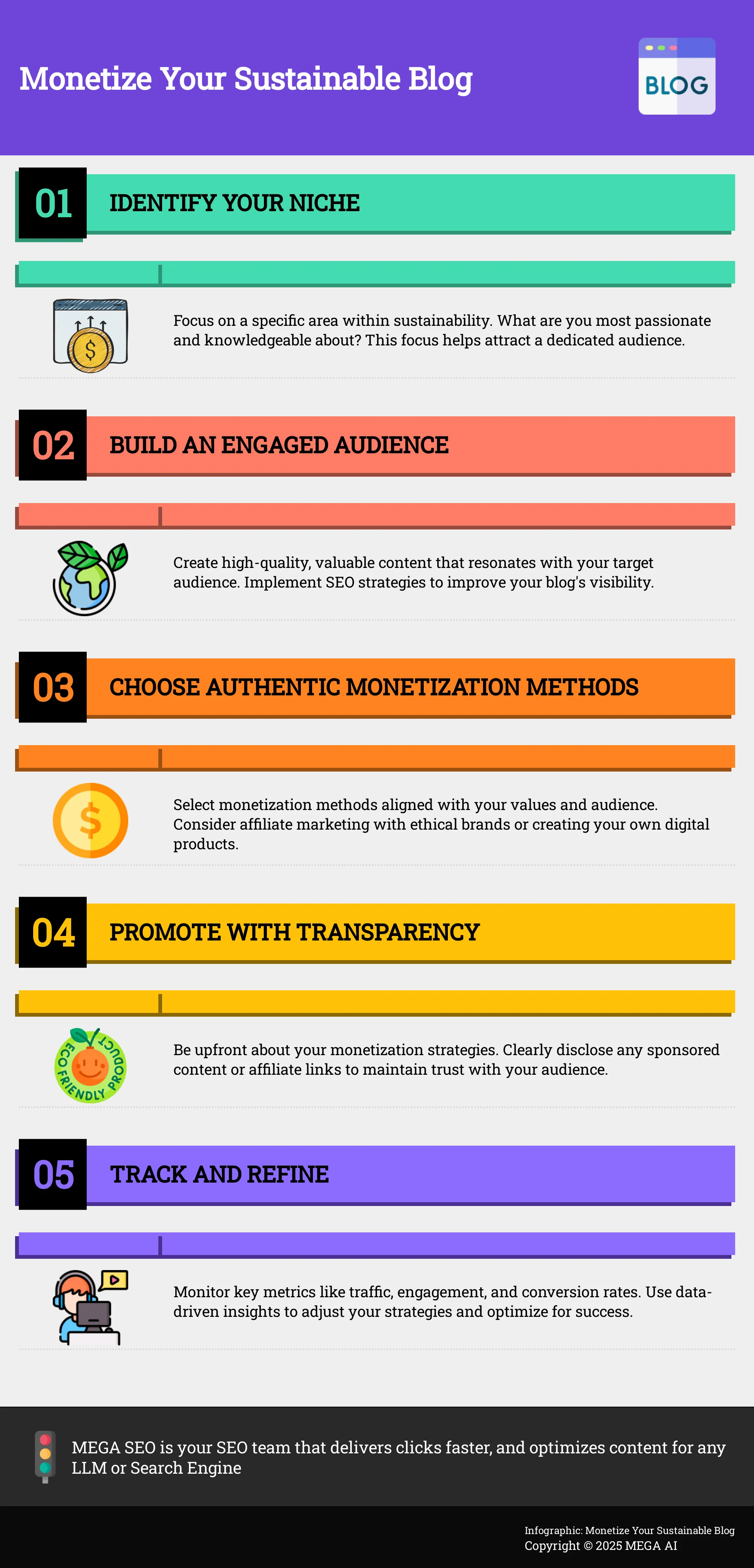
Partner with Sustainable Brands (Affiliate Marketing)
Affiliate marketing allows you to partner with eco-friendly brands and earn a commission when your readers make a purchase through unique links you provide. This method not only generates income but also aligns perfectly with your blog's mission of promoting sustainability, as you're essentially recommending products you believe in.
To make this work, authenticity is key. Focus on brands and products that you genuinely use, have thoroughly researched, or can confidently stand behind. When your recommendations are honest, your audience is more likely to trust them and find value. This approach helps your readers discover excellent sustainable options while you earn for the referral, creating a beneficial cycle for everyone involved.
Secure Sponsorships from Ethical Companies
Securing sponsorships involves collaborating with ethical companies to create content that features their products or services. This could take the form of a dedicated blog post, an insightful review, or engaging social media content. The most effective sponsorships feel like a natural extension of your existing content, focusing on how a product can genuinely solve a problem for your readers rather than just pushing a sale. This approach helps build trust and maintains alignment with your eco-conscious values.
When considering sponsorships, it's important to choose brands whose ethics and products resonate with your own principles. Always be transparent with your audience by clearly disclosing sponsored content. This honesty fosters trust and allows you to highlight innovative sustainable companies, further solidifying your blog's reputation as a valuable resource in the eco-friendly community.
Develop and Sell Digital Products
Creating and selling your own digital products is a fantastic way to monetize your expertise while offering significant value to your audience. Consider the topics your readers are most interested in—perhaps it's detailed guides on zero-waste living, e-books on sustainable gardening, or online workshops focused on eco-friendly practices. These digital offerings, such as e-books or online courses, can become a lucrative way to generate income.
The advantage of digital products is their scalability; you create them once and can sell them repeatedly with minimal ongoing effort. This not only provides a steady income stream but also allows you to share your knowledge in a more structured and in-depth format. It’s an effective method to serve your audience more deeply while supporting your blog's growth.
Provide Consulting Services
If you've developed significant expertise in a particular niche within sustainability, offering consulting services can be a rewarding way to generate income. Businesses, organizations, or even individuals might be seeking guidance on implementing more sustainable practices, and your specialized knowledge could be incredibly valuable to them. You could offer services like helping a local business reduce its environmental impact or advising other content creators on building their sustainability platform.
To begin, clearly define the consulting services you can provide and identify your ideal client. You can promote these services directly on your blog, showcasing your skills and any past successes. This approach not only creates a direct revenue stream but also allows you to make a tangible difference by helping others adopt more sustainable methods.
Launch a Membership with Exclusive Content
Creating a membership platform offers a way to generate recurring revenue while building a strong, engaged community around your blog. With a membership model, subscribers pay a regular fee for access to exclusive content or special perks. This could include in-depth articles, behind-the-scenes looks, Q&A sessions with you, a private online forum, or early access to new material. This strategy can provide a steady income stream and foster a dedicated following.
This approach is particularly effective if you have an active audience that values your perspective and is eager for more direct interaction. Various platforms can help you set up and manage your membership program. It’s an excellent way to offer premium value to your most loyal readers and cultivate a supportive community passionate about sustainability.
Use Display Ads from Green Networks
Display advertising is a common method for blogs to earn revenue, and it can be adapted for an eco-conscious site. You can place ads on your blog through various ad networks, earning income based on views or clicks. While finding ad networks that exclusively feature "green" or highly ethical advertisers can sometimes be a challenge, options like Adsterra are noted for having a large network, which can help you monetize while you continue to focus on your eco-friendly content.
The key is to ensure that the ads displayed are not overly intrusive and do not detract from your readers' experience. Carefully consider the placement and number of ads. While it might not be the sole monetization strategy for your sustainability blog, display advertising can offer a supplementary income stream, particularly as your website traffic increases.
Craft Content Your Sustainable Audience Will Value
For your sustainability blog to truly flourish, connecting with your readers on a meaningful level is key. People who follow sustainability topics are often looking for more than just surface-level information; they're searching for reliable guidance, genuine inspiration, and a sense of community as they try to make more eco-conscious choices. Crafting content that they find genuinely valuable means taking the time to understand their questions, their challenges, and their aspirations. It’s about creating a space where they feel understood and supported.
This deep understanding allows you to move beyond generic advice and provide content that truly resonates, building trust and fostering a loyal readership. When your audience trusts your voice, they're more likely to engage with your content, share it, and support your monetization efforts. Think about the specific problems your readers are trying to solve – perhaps they want to reduce waste at home, find ethical brands, or understand complex environmental issues. Addressing these specific needs is crucial. While intuition plays a role, tools can also help you pinpoint what your audience is actively searching for, ensuring your content strategy is both insightful and data-informed. By consistently delivering value, you lay a strong foundation for a blog that not only attracts visitors but also nurtures a dedicated community.
Publish Educational Content
Many people visit sustainability blogs with a desire to learn and understand complex issues. As Our Endangered World aptly puts it, "Sustainability content marketing involves creating and sharing content that informs and empowers individuals to make sustainable choices in their everyday lives." Your role can be to act as a clear, reliable guide. Consider breaking down intricate subjects like the lifecycle of products, the principles of a circular economy, or the real impact of everyday choices into easy-to-understand articles, videos, or even visually appealing infographics. The aim is to offer accurate, accessible information that clarifies the 'why' behind sustainable practices and the 'how' of implementing them. This educational approach not only positions your blog as a trusted authority but also genuinely empowers your readers to make informed decisions.
Offer DIY Guides and How-Tos
Actionable content is a cornerstone of a helpful sustainability blog. Readers appreciate practical guidance, and DIY guides or how-to articles allow them to directly apply sustainable principles. Think about creating tutorials for homemade eco-friendly cleaners, guides to starting a small urban garden, or instructions for upcycling common household items. As Splinternet Marketing points out, "Developing content for a niche audience in sustainability requires a nuanced understanding of both the subject matter and the audience's unique needs and preferences." By offering clear, step-by-step instructions, you provide your audience with the tools to make immediate, positive changes. This hands-on approach is not only empowering for your readers but also fosters a strong, practical connection to your blog.
Write Honest Product Reviews
Navigating the world of sustainable products can be overwhelming, and your audience will value your honest assessments. Offering in-depth product reviews is an excellent way to provide this guidance. Go beyond simply listing product features; share your genuine experiences from thoroughly testing items. A balanced perspective, discussing both the advantages and any potential drawbacks, is key. In an era where greenwashing is a concern, your transparency will be highly appreciated. As Ideas On Purpose notes, organizations are adapting their communication for various groups; your authentic reviews serve readers who need reliable information before they invest in a product. This commitment to honesty builds significant credibility and establishes your blog as a go-to resource for informed sustainable choices.
Share Your Insights and Opinions
Your unique perspective is a valuable asset. Sharing your personal insights, opinions, and experiences on your sustainability journey can foster a strong connection with your audience. Whether you're detailing lessons from your experiments with low-waste living or offering a thoughtful take on current environmental discussions, your authentic voice matters. Top Content's guide on blogging for environmental sustainability mentions that "Understanding your blog's environmental impact is crucial for making informed decisions," and this self-awareness can also inform the opinions and insights you share. By thoughtfully presenting your viewpoints, you can spark engaging conversations, differentiate your blog, and cultivate a loyal community that appreciates your genuine contributions to the sustainability dialogue.
Maintain Authenticity While Monetizing Your Blog
Making money from your blog is a wonderful goal, and it's entirely possible to do so without compromising your voice. For those of us writing about sustainability, keeping things genuine with our audience is especially important. Your readers look to you for honest insights and reliable advice on living a more eco-conscious life. So, as you begin to think about monetization, remember that your authenticity is your most valuable quality. It’s what forges that strong connection with your community and keeps them engaged.
The great news is that earning an income and staying true to yourself can absolutely go together. It really comes down to being thoughtful and deliberate in how you approach it. When you select monetization methods that genuinely resonate with your blog's message and your audience's values, it feels like a natural extension of your work, rather than something tacked on or overly commercial. Let’s explore a few ways you can maintain that authentic connection while growing your blog’s financial support.
Be Transparent in Partnerships
When you choose to collaborate with brands or feature products, being open with your audience is key. Your readers value your recommendations, and that trust can be easily damaged if they feel you’re promoting something solely for a paycheck. Transparency in partnerships is fundamental to preserving that bond. It's important to clearly disclose sponsored content or any affiliate links you use. A simple note at the start of a post or a clear identifier like #ad or #sponsored can make a significant difference.
This openness doesn’t diminish the value of your content; it can actually enhance it. When you're straightforward about your collaborations, your audience will likely appreciate your honesty. It demonstrates respect and allows them to make their own informed decisions. Selecting partners that genuinely align with your sustainable principles also reinforces your authenticity, showing that your commitment to your values extends to your business practices.
Align Monetization with Your Core Values
Your blog is built upon your core values, particularly if you focus on sustainability. Every monetization strategy you consider should be viewed through this lens. Ask yourself: Does this opportunity align with my mission? Does this product or service genuinely support a more sustainable lifestyle? If the answer isn't a clear yes, it’s probably not the right fit, regardless of the potential income. True success in monetizing your blog depends on building trust through ethical partnerships.
It's vital to develop a business model that reflects your core values, ensuring your monetization efforts don’t overshadow your primary message. This might involve declining some opportunities, but in the long term, it safeguards your brand and the trust you've worked hard to build. For example, if your blog champions reducing plastic waste, partnering with a company known for excessive plastic packaging would be inconsistent. Instead, seek out brands and products you genuinely use and believe in, ones that mirror the sustainable principles you advocate. This values-driven approach will resonate much more deeply with your readers.
Build Trust Through Consistent Messaging
Trust isn't established instantly; it’s nurtured over time through consistent, valuable, and honest communication. Your readers follow you because they connect with your message and believe in your dedication to sustainability. Every piece of content you produce, whether it's a blog post, a social media update, or an email newsletter, should reinforce this dedication. Consistency in your messaging is key to cultivating a loyal readership that values your unique perspective.
When your audience trusts you, they are more likely to be receptive to your recommendations, including those that are monetized. If you consistently deliver high-quality, authentic content that aids them on their sustainability journey, they will understand that any products or services you promote have been carefully considered and align with the values you both share. This consistent, trustworthy voice is essential. Tools like MEGA AI can assist you in maintaining a steady flow of optimized content, ensuring your message effectively reaches your audience while you concentrate on its authenticity.
Overcome Monetization Hurdles for Your Sustainability Blog
Monetizing your sustainability blog presents some unique considerations, but with a thoughtful approach, they're definitely manageable. From cultivating a dedicated readership to ensuring your collaborations are genuine, here’s how you can work through common hurdles and build a successful, monetized platform that stays true to your values.
Grow Your Audience
A thriving, engaged audience is the foundation for monetizing your blog. As the Sustainable Business Toolkit aptly puts it, "Building your audience is key. Use email marketing to stay in touch with your readers and promote your products/services. Use social media to share your content and engage with your audience." Beyond these direct engagement methods, consistently creating valuable, discoverable content is crucial. This involves understanding what your audience is searching for and optimizing your posts so they can easily find your insights. Effective search engine optimization can significantly expand your reach, drawing in readers genuinely interested in sustainable living and your unique perspective on it, ultimately making your monetization efforts more fruitful.
Find the Right Partners
Choosing who to collaborate with is especially important when your blog focuses on sustainability. Your readers value authenticity, so any partnerships must clearly reflect your blog's core message and values. Konnant advises to, "Choose brands that align with your values and offer high-quality products. Focus on creating authentic and valuable content that resonates with your audience." Before you partner with any brand, take the time to research their practices thoroughly. Ensure their commitment to sustainability is legitimate and not just a surface-level claim. This diligence will help maintain your credibility and ensure your audience continues to trust your recommendations, which is vital for long-term success.
Address Greenwashing Concerns
A significant consideration for sustainability bloggers is navigating the perception of promoting consumerism, even when it's focused on conscious choices. As Conscious Life and Style highlights, referencing a New York Times article, there's a "Moral Quandary of Slow Fashion Influencers" concerning the balance between advocating sustainability and promoting products. To address this effectively, maintain transparency about your monetization methods and any brand partnerships. You can also educate your audience on how to identify greenwashing and make truly informed decisions. By openly discussing these complexities and staying committed to genuine sustainable practices, you build a stronger, more trusting relationship with your readers, reinforcing your blog's integrity.
Manage Time and Resources Wisely
Blogging with the goal of monetization requires a significant investment of your time and energy. As Magnet4Blogging aptly notes, "Making $1000 a month blogging is achievable but requires dedication and a well-defined strategy." Success often hinges on your passion and ability to build a loyal audience, but smart time management is equally crucial. Develop a content plan, try batching similar tasks like writing or image creation, and consider tools that can streamline your workflow. For instance, platforms that assist with SEO and content optimization can free up valuable time, allowing you to focus more on creating impactful content and engaging with your community. This makes your monetization journey more efficient and sustainable in the long run.
Track Your Monetization Success: Key Metrics to Watch
Once you’ve set up your monetization strategies, it’s so important to keep an eye on how things are performing. Think of it like tending to a garden; you need to know which plants are thriving and which ones might need a little extra care. Tracking key metrics helps you understand what’s working, what’s not, and where you can make adjustments to ensure your blog not only generates income but does so in a way that feels good and sustainable for the long haul. This isn’t just about numbers for numbers' sake; it’s about gaining insights that empower you to make smarter decisions, refine your approach, and ultimately build a stronger connection with your audience while achieving your financial goals.
Understanding these metrics can also highlight the effectiveness of your content strategy. For instance, if you're using tools to enhance your blog's reach, like MEGA AI's SEO features that automate keyword research and content optimization, tracking specific metrics will show you the direct impact of those efforts. We’ll look at a few essential areas: how many people are visiting and interacting with your content, how effectively you’re turning readers into customers or subscribers, how your revenue is trending, and what your audience thinks. Keeping a pulse on these indicators will guide your monetization journey, helping you adapt and grow.
Monitor Traffic and Engagement
To get a clear picture of how many people your blog is reaching and how interested they are, you’ll want to "track overall blog visits and audience engagement metrics." As HubSpot notes, "These metrics provide insights into how effectively you are attracting and retaining your audience across different platforms and channels." Look at numbers like total pageviews and unique visitors to understand your audience size. Then, explore engagement: How long are people staying on your pages? Are they leaving quickly, or are they exploring further? Comments and social shares are also great indicators of how much your content resonates. Tools like Google Analytics are invaluable for keeping tabs on these figures and understanding what content draws readers in and keeps them interested.
Analyze Conversion Rates
Beyond just attracting visitors, you want to see how many are taking the specific actions you hope for. This is where conversion rates come in. As FasterCapital explains, you should "Monitor the number of visitors who complete a desired action, such as filling out a form or making a purchase. Conversion rates are crucial for understanding how well your monetization strategies are performing." A "desired action" could be anything from signing up for your newsletter, clicking an affiliate link, purchasing one of your digital guides, or even booking a consultation. Calculating this is straightforward: divide the number of actions taken by your total visitors, then multiply by 100 to get a percentage. Regularly checking these rates helps you see which calls-to-action are most effective.
Review Revenue Growth
Of course, a key part of monetization is the actual income generated. "Tracking revenue generated directly from your blog is essential to measure its financial success," according to Blogger Hangout. It’s wise to "Analyze which blog posts and strategies contribute most to revenue and optimize content that leads to conversions." Whether your income comes from affiliate partnerships, sponsored posts, your own products, or services, keep a detailed record. This allows you to see which monetization methods are your top performers and which content pieces are driving the most sales or sign-ups. Regularly reviewing these financial insights helps you focus your efforts on what truly works and make informed decisions about future strategies.
Value Audience Feedback and Loyalty
Finally, never underestimate the power of your audience's voice and their loyalty. As Topcontent points out, "Understanding your blog's audience is crucial for making informed decisions that support sustainability. Regularly gather feedback to assess audience satisfaction and loyalty, which can guide your content and monetization strategies." Pay attention to comments, survey responses, and social media interactions. Metrics like repeat visitor rates and newsletter growth can also signal loyalty. When you actively listen to your readers and understand their needs and preferences, you can tailor both your content and your monetization efforts to better serve them, fostering a stronger, more sustainable relationship.
Key Tools and Resources for Blog Monetization
Monetizing your sustainability blog effectively means having the right tools in your kit. These resources can help you understand your audience, streamline your efforts, and ultimately, grow your revenue in a way that aligns with your values.
Leverage Analytics Platforms
To truly understand how your blog is performing and where your revenue is coming from, you need to get comfortable with analytics. Tracking the right metrics is essential. Think of analytics platforms as your blog’s financial dashboard. They help you measure its success by showing you which posts bring in the most income and which monetization strategies are hitting the mark.
Focus on key performance indicators like conversion rates – that’s the number of visitors who take a desired action, like signing up for your newsletter or making a purchase through an affiliate link. Regularly analyzing this data will help you refine your approach and make informed decisions about your content and monetization efforts.
Use Email Marketing Software
One of the most valuable assets for monetizing your blog is an email list. Building this list from day one gives you a direct line to your most engaged readers. When you publish a new article or have a special offer, you can send an email directly to your audience.
Email marketing software makes this process manageable and effective. It’s a vital way to stay in touch with your readers, nurture relationships, and promote your sustainable products, services, or affiliate partnerships. Look for tools that allow you to segment your audience so you can send targeted messages that resonate more deeply.
Employ Affiliate Management Tools
If you're partnering with sustainable brands, affiliate marketing is a fantastic way to earn income. This involves recommending products or services you genuinely believe in and earning a commission when your readers make a purchase through your unique affiliate links. For sustainability bloggers, this often means partnering with eco-friendly brands that align with your blog's mission.
To keep things organized and track your earnings efficiently, affiliate management tools are incredibly helpful. These platforms can help you manage your various affiliate links, monitor clicks and conversions, and understand which partnerships are most successful. This allows you to focus on promoting brands that truly benefit your audience and your bottom line.
Utilize Content Creation and SEO Tools
At the heart of any successful blog is high-quality, engaging content that genuinely helps your audience. Creating content that answers their questions and provides real value is paramount. To ensure your valuable content gets seen, you'll need to utilize SEO strategies to improve your blog's ranking in search engine results.
This is where content creation and SEO tools come into play. Platforms like MEGA AI's SEO services can assist with automated keyword research, helping you find what your audience is searching for. They can also aid in content generation and ensure your articles are optimized. Consistently creating evergreen content that remains relevant over time, combined with smart SEO, will draw more readers to your blog and increase your monetization opportunities.
What’s Next: Future Trends in Sustainable Blog Monetization
As we look ahead, the ways we monetize blogs, especially those focused on sustainability, are set to evolve. It's about finding methods that not only generate income but also align with the core values of sustainability and ethical practices. Keeping an eye on these shifts can help you stay prepared and find new opportunities for your blog.
One interesting concept gaining traction is the tokenization of content. While it might sound complex, the basic idea is to create unique digital assets from your blog posts, offering new ways for readers to support your work and for you to build a community. This approach could change how we value and distribute online content. Alongside new technologies, there's a growing expectation for businesses, including content creators, to genuinely integrate sustainability into their operations. It's becoming clear that simply talking about sustainability isn't enough; it needs to be part of your commercial strategy and how you connect with your audience.
The infrastructure supporting our blogs is also becoming a key consideration. For instance, choosing green hosting solutions is a practical step to reduce your blog’s environmental footprint, which can resonate with your audience and partners. Furthermore, the Creators' Economy continues to expand, emphasizing the need for platforms and tools that genuinely empower creators to build sustainable careers. This includes transparent payment models and supportive environments. Technology, particularly AI and data analysis, will also play a significant role. Just as AI can optimize various business processes, it can also help identify efficiencies and opportunities in sustainability efforts, contributing to a more circular economy and making sustainable practices more viable to monetize.
Your Next Steps: Monetize Your Sustainability Blog
Alright, you've laid the groundwork with your passion for sustainability and your growing blog. Now, let's talk about turning that passion into a source of income. It's entirely possible to monetize your sustainability blog while staying true to your values. The key is to approach it thoughtfully and strategically.
One of the most effective starting points is to partner with eco-friendly brands through affiliate marketing. This means you promote products you genuinely believe in and earn a commission when your readers make a purchase through your unique link. It’s a fantastic way to align your income with your core message. But don't stop there; consider a mix of approaches for a more robust income stream. Think about sponsored posts with ethical companies, or perhaps even creating and selling your own digital products like e-books or guides.
Remember, building a loyal following is the bedrock of any successful monetization strategy. This comes from consistently creating high-quality, engaging content that truly serves your audience. Focus on answering their questions, providing valuable insights, and fostering a sense of community. As you grow, it's helpful to track key performance indicators like conversion rates to understand which of your monetization efforts are resonating most. Success in blogging, especially in a niche as important as sustainability, is a marathon, not a sprint. It requires consistent effort and a willingness to adapt.
Related Articles
- How to Monetize Your Blog: Affiliate Marketing, Sponsored Posts, and Ad Placements in the Context of Optimizing for Conversion vs. Monetization Goals - MEGA SEO | Blog
- Boost Your Blog's Revenue: SEO for Conversions & Monetization
- Affiliate Marketing 2025: The Ultimate Guide
- Proven Affiliate Marketing Strategies to Maximize Profits
- Top AI Content Creation Tools for Writers & Marketers
Frequently Asked Questions
I'm just starting out. What's a good first step to monetize my sustainability blog without feeling overwhelmed? A great way to begin is by exploring affiliate marketing with one or two sustainable brands whose products you genuinely use and love. This allows you to recommend items authentically to your readers and earn a small commission without a huge upfront investment of time or resources. Focus on building trust with your audience first by providing valuable content.
How can I be sure the brands I partner with are truly eco-friendly and not just 'greenwashing'? This requires a bit of research on your part. Look beyond their marketing claims. Investigate their manufacturing processes, material sourcing, labor practices, and any third-party certifications they hold. If a brand is transparent and readily shares this information, it's a good sign. Trust your intuition and only partner with companies whose commitment to sustainability feels genuine and aligns with your own standards.
Is it possible to use display ads on my sustainability blog without compromising my values? Yes, it can be done thoughtfully. While it's true that some ad networks might display ads that don't perfectly align with a sustainability focus, you can often have some control over ad categories. Consider networks that offer more customization or have a reputation for working with a broader range of advertisers. The key is to ensure ads aren't too intrusive and don't overshadow your core message. They can be a supplementary income stream, especially as your traffic grows.
My blog's audience is still growing. Can I realistically earn an income, or should I wait until it's much larger? You don't necessarily need a massive audience to start earning. A smaller, highly engaged community that trusts your recommendations can be very valuable. Strategies like offering specialized consulting services or creating niche digital products can be effective even with a modest following. Focus on serving your current readers well; their engagement can be more impactful than sheer numbers.
What's the most important thing to remember when trying to make money from my sustainability blog while keeping my readers' trust? Above all, maintain your authenticity. Your readers follow you for your genuine commitment to sustainability. Always be transparent about sponsored content or affiliate links. Ensure any monetization method you choose aligns with your core values and the message of your blog. If a partnership or product doesn't feel right, it's okay to pass on it. Your credibility is your most valuable asset.