A strong personal brand can transform your tech review work from a hobby into a source of significant professional opportunities. It’s your calling card, signaling your expertise and unique perspective to potential collaborators, clients, and even employers in the tech industry. If you're reviewing tools in fast-moving areas like AI-driven SEO or paid advertising platforms, a clear brand helps you connect with the right audience. We're going to explore how to strategically develop and leverage your personal brand, turning your insights into a powerful asset that opens doors and builds your reputation as a knowledgeable tech reviewer.
Key Takeaways
- Define Your Authentic Brand: Build a strong personal brand by clearly showcasing your genuine self, maintaining a consistent presence, and focusing your expertise on a specific tech niche.
- Build Trust with Quality Engagement: Develop credibility by prioritizing meaningful interactions and sharing deep insights within your tech specialization, which is more impactful than simply chasing large follower numbers.
- Stay Relevant by Adapting: Regularly review your brand's effectiveness and adjust your approach in response to new tech developments and audience feedback to ensure your influence endures.
What Is a Personal Brand?
Think of your personal brand as your professional calling card – it’s how the world sees you and what you’re known for. It’s the unique combination of your skills, experiences, and personality, all wrapped up in the values you consistently demonstrate. Essentially, your personal brand is the reputation you build and carefully shape in the minds of others, whether they're potential clients, partners, or employers. It’s what comes to mind when people hear your name and the story they associate with your professional journey.
Creating a strong personal brand isn't about faking it 'til you make it. It’s about genuinely understanding what you stand for – your core values, your unique talents, and what you're passionate about – and then finding clear ways to communicate that. This process of defining and promoting your unique mark is crucial for anyone looking to make an impact. When you consistently showcase your expertise and what’s important to you, you start to build trust and credibility with your audience. This helps you stand out, especially in crowded fields, making it easier for the right people to connect with what you offer. It’s less about shouting from the rooftops and more about building a solid, authentic foundation that reflects who you truly are and resonates deeply with your target audience. This deliberate approach allows you to differentiate yourself and becomes a key factor in your career development and business success.
What Makes a Personal Brand Strong?
Building a strong personal brand isn't just about getting your name out there; it's about shaping how people perceive you and your expertise. Think of it as your professional reputation, carefully cultivated. When your personal brand is robust, it communicates who you are, what you stand for, and the unique value you bring. This is especially true in fields like tech reviews, where trust and credibility are the currency. A powerful brand doesn't happen by accident. It’s built on a foundation of key elements that work together to create a memorable and influential presence. For startups, digital marketers, and small businesses looking to enhance their online presence, developing a strong personal brand can be a significant differentiator, helping you connect with your target audience and build lasting relationships.
The three pillars supporting any strong personal brand are authenticity, consistency, and focus. Authenticity ensures that your brand is a true reflection of your values and knowledge, making it relatable and trustworthy. Consistency in your messaging and presentation helps build recognition and reinforces what your audience can expect from you. Finally, a clear focus on a specific niche allows you to establish yourself as an expert and attract a dedicated following. These elements are not just abstract concepts; they are actionable principles you can apply to build a brand that resonates and endures. Understanding these components is the first step towards crafting a personal brand that truly works for you and your business goals.
Authenticity: Be True to Your Values
Authenticity is the bedrock of a compelling personal brand. It means ensuring your outward persona genuinely reflects your core values, beliefs, and expertise. When you're authentic, your audience can connect with the real you, which fosters a deeper sense of trust. As Brand Velocity notes, "Authenticity and transparency in personal branding is a journey to create a personal brand that resonates with your audience. In a fiercely competitive environment, authenticity and transparency are the keys that can set you apart." This isn't about manufacturing a perfect image; it's about being honest and transparent. For tech reviewers, this translates to providing unbiased opinions and insights, even when it might be easier to echo popular sentiment. Your audience will appreciate your candor and be more likely to value your recommendations.
Consistency: Build Trust and Recognition
Consistency is how you make your authentic brand recognizable and reliable. It involves presenting a unified image and message across all platforms and interactions. This means your visual elements, like your logo or headshot, your tone of voice, and your core messages should align, whether on your blog, social media, or in video reviews. According to The Fab Squad, "Consistency in tone of voice helps your audience feel familiar and comfortable with your brand. For your personal brand, whether it's your headshot, logo, or background images, use them consistently across platforms." When your audience encounters your content, they should have a clear and consistent experience. This predictability builds familiarity and trust, making your brand more memorable and dependable over time. Consistent delivery of valuable content reinforces your expertise and keeps your audience engaged, which can be supported by efficient content creation processes.
Focus: Specialize in Your Niche
While it might seem appealing to be a jack-of-all-trades, a strong personal brand often benefits from a clear focus. Specializing in a particular niche allows you to concentrate your efforts and establish deep expertise in a specific area. As Entrepreneur points out, "The most successful influencers focus their attention within a specific industry, vertical or niche. Within that area, they showcase expertise through content marketing, public speaking." For someone reviewing digital marketing tools, this could mean specializing in SEO software, paid ads platforms, or tools specifically for startups. This targeted approach helps you attract a more dedicated audience that is actively seeking your specialized knowledge. It also makes it easier to create highly relevant content that truly serves your audience’s needs, positioning you as the go-to expert in that domain.
Develop Authenticity in Your Tech Review Brand
Authenticity is really the heart of a strong personal brand, especially when you're guiding people through the world of tech products. Your audience is looking for more than just a list of features; they want genuine insights they can rely on. When people feel they can trust your opinion because it’s truly your opinion, they’re much more likely to pay attention, engage with your content, and ultimately value what you recommend. Building this kind of authenticity isn't about crafting a persona or pretending to be someone you're not. Instead, it’s about consistently showing up as your true self. This means grounding your reviews in your actual experiences and providing honest assessments, whether you're looking at SEO software or the latest project management tool.
This straightforward approach helps you build a real connection with your audience and makes your brand stand out, even when there are many other voices in the tech space. In a field where new tools and updates appear constantly, having a trusted, authentic voice becomes a significant differentiator. It’s what turns a casual reader into a loyal follower. People are savvy; they can often sense when a review isn't entirely genuine or when a recommendation feels forced. By committing to authenticity, you're investing in the long-term credibility and success of your personal brand. Let's look at a few practical ways you can cultivate this essential quality in your tech review brand, making your reviews not just informative, but also deeply trustworthy.
Showcase Your Unique Perspective
Your individual viewpoint is your greatest asset as a tech reviewer. Instead of simply echoing what everyone else is saying, focus on developing a distinct brand voice that clearly reflects your personality and unique experiences. Think about what makes your approach to technology different. Are you particularly focused on how user-friendly a tool is for beginners, its integration capabilities for growing small businesses, or perhaps the long-term strategic value it offers. It's important to define your brand personality and let that consistently shine through in every review you create. This unique lens allows you to offer insights that others might overlook, making your content more valuable and memorable to your specific audience. When you consistently share your particular take, people will seek you out for that specialized perspective.
Embrace Transparency in Reviews
In the world of tech reviews, transparency is fundamental for building unwavering trust with your audience. People need to feel confident that they're getting an honest assessment, free from any hidden agendas or biases. Being open about your review process, including how you test products and the criteria you use to form your opinions, is key. If a review is sponsored, or if you use affiliate links to recommend a product, it's crucial to disclose this information clearly. This level of honesty doesn't detract from your credibility; in fact, it significantly reinforces it. Your audience will appreciate knowing the full context, as it demonstrates respect for their intelligence and their right to be informed. When you are consistently transparent, you create a personal brand that resonates deeply, fostering a loyal community that values your integrity.
Share Personal Experiences with Tech
Weaving your personal experiences into your tech reviews makes your content significantly more relatable and impactful. Instead of just listing features, describe how a particular tool actually solved a problem for you or how it fit into your daily workflow. For instance, did a specific SEO tool, perhaps from a platform like MEGA AI, genuinely simplify your keyword research process or help manage content updates more efficiently. Sharing these real-world stories helps your audience visualize how the technology might work for them. These personal anecdotes provide context and depth that a simple feature list can't offer. It’s about showing the practical application, not just telling about capabilities. When you share your journey with a piece of tech, including successes and challenges, you build a stronger connection and offer more practical value.
Maintain Consistency in Your Tech Review Brand
Consistency is a cornerstone of a memorable and trustworthy personal brand, especially in the world of tech reviews. When your audience knows what to expect from you—from your visual style to your review cadence—they're more likely to engage with your content regularly and view you as a reliable source. Think of it as building a familiar, comfortable space for your followers. This predictability doesn't mean being boring; it means being dependable and recognizable.
Maintaining consistency helps solidify your identity in the minds of your audience. It reinforces who you are and what you stand for every time someone interacts with your brand. Whether they find you on your blog, a social media platform, or a video channel, the experience should feel cohesive. This unified approach makes your brand more recognizable and helps you stand out in a crowded field. As you build this consistent presence, you're also building trust, which is invaluable for anyone offering advice and reviews. For instance, ensuring your SEO strategy aligns with your content across all platforms can significantly aid discoverability and reinforce your brand message.
Create a Cohesive Visual Identity
Your visual identity is often the first impression you make. It’s the collection of all visual elements that represent your tech review brand. This includes your logo, color palette, typography, and the style of imagery or videos you use. The key here is to choose elements that reflect your brand's personality and then apply them uniformly across all your platforms. For example, if you use a specific filter or editing style for your YouTube thumbnails, try to echo that aesthetic in your Instagram posts or website banners.
Consider your headshot, any logos you use, or even the background images for your profiles. Using these visuals consistently helps your audience feel familiar with your brand. This doesn’t mean every single image has to be identical, but there should be a clear, recognizable style that ties everything together. This visual harmony makes your brand look professional and thoughtfully curated, which can significantly impact how your audience perceives your credibility.
Develop a Consistent Voice and Tone
Beyond visuals, the way you communicate—your brand voice and tone—plays a huge role in how your audience connects with you. Your voice is your brand’s personality, while your tone is how that personality is expressed in different situations. Are you witty and informal, or more analytical and direct? Whatever you choose, it's important to maintain that voice consistently in your reviews, social media updates, and any interactions with your audience.
To develop a distinct brand voice, clearly define your brand's personality and values. This will guide your language, sentence structure, and even your humor. If your audience expects straightforward, no-nonsense reviews, suddenly adopting a very casual, slang-filled tone could be jarring. Consistency in voice helps build a relationship with your audience; they learn what to expect from your communication style, making your content feel more authentic and reliable.
Establish a Regular Content Strategy
A regular content strategy is about creating a predictable rhythm for your audience. Knowing when to expect new reviews or tech insights from you keeps them engaged and coming back for more. This doesn't mean you need to publish content daily, but establishing a consistent schedule—whether it's a weekly review, a bi-weekly newsletter, or monthly deep-dives—is crucial. This regularity shows commitment and reliability.
Part of a strong content strategy involves planning your content themes and types. Perhaps you focus on unboxing videos on Mondays, software reviews on Wednesdays, and industry news roundups on Fridays. This kind of structure not only helps your audience know what to expect but also helps you manage your workload. Maintaining a strong brand identity requires ongoing effort, and consistency in your output is a major part of that effort.
Use Multiple Platforms Effectively
Most tech reviewers operate across several platforms—a blog, YouTube, Twitter, Instagram, and perhaps others. While your core message and brand identity should remain consistent, the way you present content might need slight adjustments to suit each platform's unique format and audience expectations. For example, a detailed written review on your blog might become a series of short, engaging video clips on TikTok or Instagram Reels.
The goal is for each platform to convey a consistent personal brand, even if the content format differs. This means your visual identity and brand voice should still be recognizable. Furthermore, optimizing your content for search engines on each platform helps people find you more easily. Tools that assist with content creation can be particularly useful here, allowing you to adapt your core content for different channels while maintaining that crucial consistency.
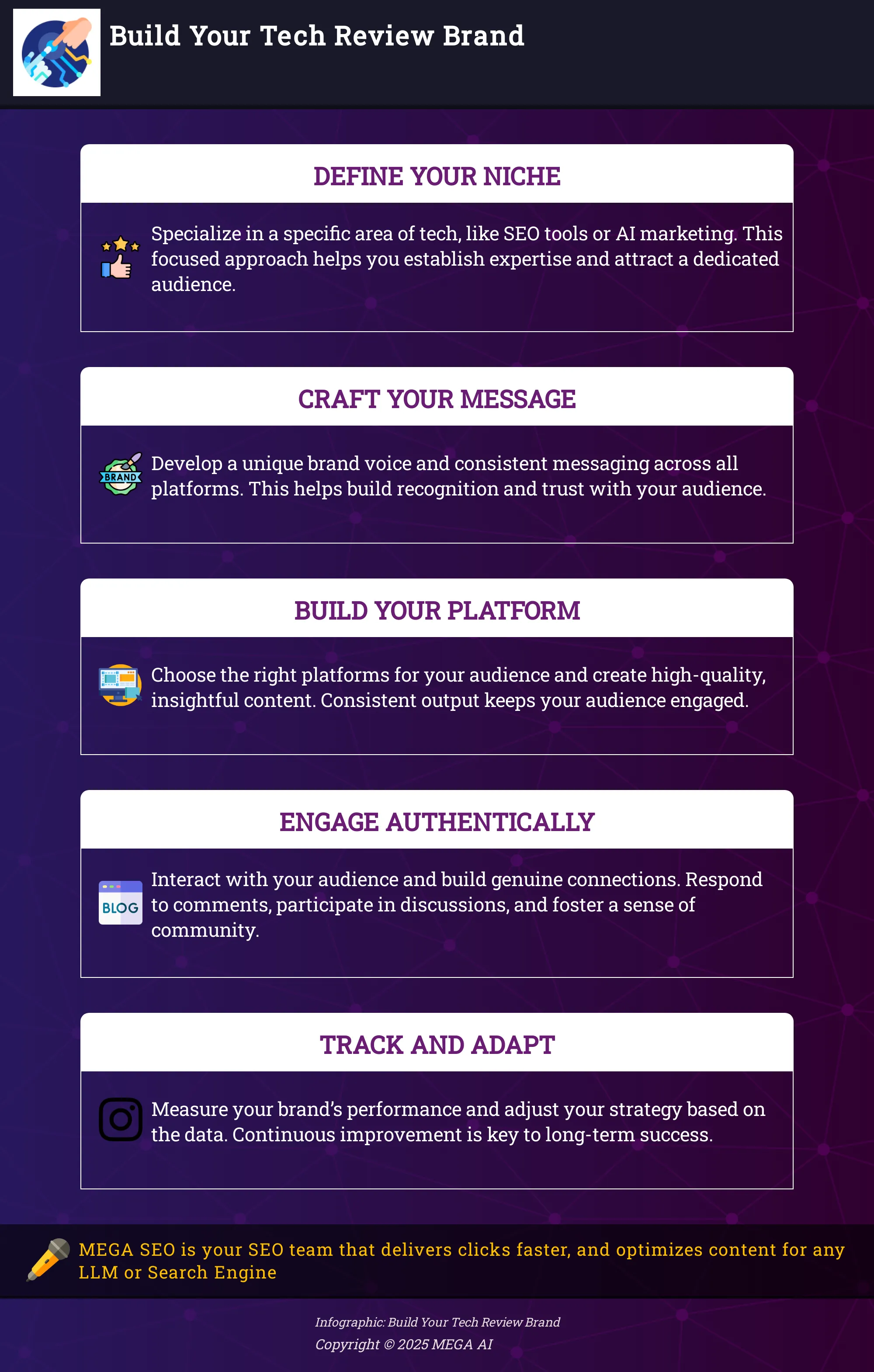
Find and Leverage Your Tech Review Niche
Finding your niche as a tech reviewer, especially in the dynamic field of digital marketing tools, is a crucial step. It’s what helps you stand out and allows your insights to connect deeply with a specific audience. Instead of attempting to cover every new gadget or software, focusing on a particular area lets you cultivate genuine expertise and attract a more dedicated group of followers. Think of it as becoming the trusted specialist for a certain set of tools or common industry challenges. This focused approach not only streamlines your content creation process but also significantly aids in building a stronger, more recognizable personal brand. When you concentrate your efforts within a well-defined space, you naturally position yourself as a knowledgeable voice, making it simpler for the right audience—and potential opportunities—to find you.
This clarity is fundamental to making a meaningful impact and differentiating yourself in a crowded online world. It allows you to build authority and trust more effectively than if your focus were scattered across too many topics. Consider the digital marketing landscape itself; it's vast, encompassing everything from AI-driven SEO tools to intricate paid advertising platforms. By carving out your specific corner, you're not limiting yourself; you're strategically positioning yourself for deeper engagement and recognition. Your audience will appreciate the depth you bring, and your reviews will carry more weight because they come from a place of specialized knowledge. This specialization also makes it easier to stay current with developments in your chosen area, ensuring your content remains relevant and valuable over time.
Identify Your Expertise in Digital Marketing Tools
So, where do you begin this process of identifying your niche? Start by looking at your own skills and interests. What digital marketing tools do you genuinely enjoy using or learning about? Which ones do you understand thoroughly, perhaps even becoming the go-to person for questions among your peers? Your niche could be specific software categories like SEO platforms, AI-driven advertising tools such as those for managing paid ads, email marketing automation, or project management systems designed for marketing teams. Perhaps you have a talent for explaining complex analytics tools in straightforward terms, or maybe you're passionate about tools that help small businesses grow. Don't just chase what's popular; consider what truly aligns with your authentic interest and experience. This genuineness will be evident in your reviews and help you connect with an audience that values your specific focus.
Engage with Industry Communities
Once you have a clearer idea of your potential niche, it's time to connect with others who share that interest. Actively participating in industry communities is an excellent way to refine your understanding, stay informed about the latest trends, and build valuable professional relationships. Consider joining relevant LinkedIn groups, Subreddits, or specialized online forums where professionals discuss the tools and strategies you're focusing on. By sharing your insights, asking thoughtful questions, and listening to the challenges and successes of others, you can significantly enhance your visibility. This active engagement also serves as a rich source of content ideas, helping you understand what questions people are asking and what problems they're trying to solve, allowing you to tailor your reviews to be incredibly relevant and helpful.
Create Targeted, In-Depth Content
With your niche defined and your ear to the ground in industry communities, you can begin creating content that truly resonates. Instead of producing broad overviews, aim for targeted, in-depth reviews, tutorials, and guides. For instance, if your niche is AI-powered SEO tools, you could compare the specific features of different platforms, create step-by-step tutorials on advanced optimization techniques, or share case studies demonstrating how these tools delivered tangible results for businesses. Think carefully about the specific keywords your ideal audience might use when searching for information online. Incorporating these relevant terms naturally into your content will help the right people discover your expertise. The objective is to become the trusted resource individuals turn to for detailed, practical insights within your chosen specialty.
Build Credibility Without a Massive Following
It's a common thought that you need a huge follower count to build a credible personal brand, particularly if you're reviewing tech. While a large audience certainly doesn't hurt, genuine credibility stems from the quality of your insights, the strength of your connections, and the expertise you consistently demonstrate. You can establish a respected brand by focusing on authentic engagement and showcasing your specialized knowledge, even if your follower numbers are still developing. Consider it like constructing a solid foundation for a house; the impressive exterior can come later, but the respect earned from a core group of engaged individuals is what truly provides stability and value. This approach allows you to build authority within your specific niche, making your voice more influential than those who simply aim for large, unengaged audiences. The core idea is to be strategic and genuine in how you present yourself and your specialized knowledge.
Focus on Quality Connections and Engagement
Rather than getting caught up in the numbers game, direct your energy toward cultivating meaningful relationships with the audience you currently have. As marketing authority Neil Patel notes, when you're known for a specific area, "the followers you do have are worth a lot of money." A smaller, highly engaged audience that trusts your tech reviews and values your perspective is far more powerful than a vast, indifferent one. Make it a regular practice to respond thoughtfully to comments and messages. Pose questions to encourage conversation and demonstrate that you value your audience's input. Actively participating in relevant discussions on other platforms or forums within your tech niche can also help you forge genuine connections and solidify your presence as a knowledgeable and approachable reviewer. This type of interaction fosters loyalty and clearly shows there's a real, thoughtful individual behind the brand.
Network and Collaborate Strategically
Building strong relationships isn't limited to your direct audience; it also involves connecting with peers and other influential figures in your field. Many successful personal brands concentrate their efforts within a particular industry, showcasing their expertise through various channels. Seek out opportunities to connect with other tech reviewers, developers, or industry professionals whose work you admire and that aligns with your own brand. Strategic collaborations, such as appearing as a guest on podcasts, creating joint product reviews, or contributing to expert roundup articles, can introduce your brand to new, highly relevant audiences. These activities not only broaden your reach but also enhance your credibility through association with other respected voices in the tech community. Always choose your collaborations carefully, ensuring they align with your niche and core values.
Leverage Expertise in Digital Marketing Tools
Demonstrating your proficiency with digital marketing tools can significantly strengthen your credibility as a tech reviewer. This goes beyond simply using social media; it involves a deeper understanding of how to effectively manage and expand your online presence. A fundamental step is to develop a distinct brand voice and consistently deliver high-quality content. Furthermore, actively tracking your online presence and analyzing the data allows you to refine your strategy and better serve your audience. For example, using tools that assist with SEO can ensure your insightful reviews reach the people who are actively searching for them. By showcasing your ability to effectively use such tools, you not only improve your own brand's performance but also signal to your audience and potential partners that you are a knowledgeable and capable professional in the digital landscape.
Measure and Improve Your Personal Brand
Building a strong personal brand as a tech reviewer is an ongoing process, not a one-time setup. Once you've established your niche, voice, and visual identity, the next crucial step is to regularly assess how your brand is performing. Think of it like checking the health of a plant; you need to know if it's getting the right amount of sun and water to thrive. Measuring your brand's impact helps you understand what resonates with your audience, what efforts are yielding results, and where you might need to adjust your approach. Without this feedback loop, you're essentially operating in the dark, hoping your strategies are effective.
Tracking your online presence provides the data you need to make informed decisions. This isn't about vanity metrics; it's about understanding the return on your investment of time and effort. For tech reviewers, particularly those focusing on digital marketing tools, a well-monitored brand can directly translate into better partnerships, more engagement, and a stronger reputation in the industry. By consistently measuring and refining, you ensure your personal brand remains relevant and continues to grow. This proactive approach allows you to identify opportunities for improvement and capitalize on what's working well, ensuring your brand effectively supports your professional goals. For instance, understanding how your content performs can guide your SEO strategy to attract a wider, more relevant audience.
Key Metrics to Track for Tech Reviewers
To effectively measure your personal brand, you first need to define what success looks like for you as a tech reviewer. Are you aiming for wider reach, deeper engagement, or more collaboration opportunities? Key metrics often include social media follower growth and engagement rates—think likes, comments, and shares. Don't just look at the number of followers; pay attention to how actively they interact with your content. Website traffic, if you have a personal blog or site for your reviews, is another vital metric. You'll want to track page views, bounce rate, and where your traffic is coming from. These numbers offer insights into what content is most popular and how users discover your brand.
Tools to Analyze Your Brand and Track Performance
Several tools can help you analyze your brand and track these key metrics. Most social media platforms offer built-in analytics dashboards (like Facebook Insights, X Analytics, or LinkedIn Analytics) that provide data on follower demographics, post reach, and engagement. For website performance, Google Analytics is an indispensable tool, offering detailed insights into traffic sources, user behavior, and content performance. You can also use brand monitoring tools to track mentions of your name or brand across the web and social media. Regularly assessing your online presence with these tools will give you a clear picture of your brand's current standing and impact.
Adapt Your Strategy Based on Insights
Collecting data is only half the battle; the real value comes from using those insights to adapt and refine your personal branding strategy. If you notice that video reviews get significantly more engagement than written ones, consider producing more video content. If a particular social media platform is driving minimal traffic or engagement despite your efforts, you might decide to focus your energy elsewhere. Don't be afraid to experiment and make changes based on what the data tells you. This iterative process of measuring, analyzing, and adapting your strategy is key to sustained growth and ensuring your personal brand remains effective in the long run.
Leverage Your Brand for Professional Opportunities
Building a strong personal brand does more than just establish your online presence; it actively creates pathways to exciting professional opportunities. Think of your brand as your professional reputation, amplified. When you cultivate it thoughtfully, you're not just waiting for chances to come your way; you're actively attracting them. This is particularly true in the dynamic tech industry, where expertise and a clear voice can set you apart. Whether you're aiming for collaborations, seeking new roles, or establishing yourself as a thought leader, a well-defined personal brand acts as your advocate, opening doors you might not have even known existed. It’s about strategically positioning yourself so that when opportunities arise, you’re the person people think of. This approach can be especially powerful when you're working with or reviewing innovative tools, as your insights become more valuable.
Attract High-Value Partnerships in the Tech Industry
When your personal brand clearly communicates your expertise in a specific area, like digital marketing tools or a particular software category, you become a magnet for high-value partnerships. Companies are constantly searching for credible voices to collaborate with, and a focused brand makes you easier to find and more appealing. As marketing expert Neil Patel points out, "Being known for a specific vertical...creates demand. You may not get the follower count as a celebrity but the followers you do have are worth a lot of money." This means that by developing a niche marketing strategy, you attract an audience that is highly relevant to potential partners, making collaborations more impactful.
To attract these partnerships, concentrate on showcasing your specialized knowledge consistently. Entrepreneur magazine notes that "The most successful influencers focus their attention within a specific industry, vertical or niche. Within that area, they showcase expertise through content marketing, public speaking." This consistent demonstration of expertise builds trust and signals to potential partners that you are a serious, knowledgeable player in your field. By creating valuable content that resonates with your target audience, you’re not just building your brand; you’re building a portfolio that demonstrates your worth to potential collaborators.
Enhance Visibility as a Tech Review Expert
A strong personal brand is essential if you want to become a recognized tech review expert. It’s how you cut through the noise and establish yourself as a trusted source. To begin, it's helpful to define what success means for your brand. Are you aiming to be the go-to person for SaaS reviews, or perhaps for insights on AI-powered marketing tools? Clarity on your goals will help you tailor your content and outreach. Consistently producing high-quality, insightful reviews within your chosen niche will naturally enhance your visibility.
Regularly tracking your online presence provides data that helps you understand what’s working and where you can refine your strategy. This includes monitoring mentions, engagement on your reviews, and how easily people can find you. Ensuring your content is optimized for search engines is also key; as one resource on personal branding strategies advises, "Optimize your content for search engines so that people can easily find you." This means using relevant keywords related to your tech niche in your profiles, review titles, and content, making it easier for both users and potential partners to discover your expertise.
Overcome Challenges in Tech Review Branding
Building a strong personal brand as a tech reviewer, particularly when you're focusing on dynamic areas like SEO and Paid Ads tools, presents some unique hurdles. The digital marketing landscape is in a state of perpetual motion, with new software, features, and strategies emerging almost daily. Your audience, often busy professionals and businesses, relies on you to cut through the noise and provide clear, current, and trustworthy insights. It's not just about knowing what's new; it's about understanding its practical implications and communicating that effectively.
Two of the most significant challenges you'll likely face are keeping up with this rapid pace of change and striking the perfect balance between your personal, experience-based opinions and objective, factual analysis in your reviews. Successfully managing these aspects is key to not just attracting an audience, but also building lasting trust and authority. Let's explore some practical ways to approach these common obstacles and strengthen your tech review brand.
Stay Updated with Rapid Tech Changes
The tech world doesn't wait for anyone, and as a reviewer, staying current is non-negotiable. To effectively manage your personal brand in the tech industry, it is crucial to stay updated with rapid technological changes. This means dedicating time to continuously learn about new tools, emerging trends, and innovations that could impact your field and your audience.
Make it a habit to follow industry news, subscribe to relevant newsletters, and participate in forums or communities where new developments are discussed. Consider setting aside specific time each week for research and learning. This commitment not only keeps your content fresh and relevant but also positions you as a knowledgeable and reliable source, which is fundamental for building trust with your audience.
Balance Objectivity and Personal Opinion in Reviews
Your audience values your unique perspective, but they also need to trust that your reviews are fair and well-grounded. Balancing objectivity and personal opinion in your reviews is vital for maintaining credibility. While your personal insights and experiences make your content relatable, always aim to support your opinions with verifiable facts, data, or clear criteria for your evaluation.
When you share an opinion, explain why you hold it. For instance, if you find a particular feature of a digital marketing tool clunky, describe the specific usability issues you encountered. This approach allows your personality to shine through while demonstrating a commitment to thoroughness. This blend enhances the quality of your reviews and helps establish you as a trustworthy authority.
Future-Proof Your Tech Review Brand
The tech landscape is always shifting, and what's relevant today might be old news tomorrow. To keep your tech review brand thriving long-term, you need a proactive approach. It’s about more than just keeping up; it’s about anticipating what’s next and preparing your brand to meet those future demands. This means embracing change and committing to growth. Building a brand that lasts requires a forward-thinking mindset, ensuring you remain a valuable resource for your audience as they seek to understand and implement new technologies. For instance, as platforms offering sophisticated AI-driven SEO and paid ads automation become more prevalent, your ability to explain and evaluate these tools will be key. Staying informed helps you guide your audience, whether they're startups looking for an edge or established businesses aiming to refine their digital strategies. This foresight not only solidifies your expertise but also builds trust with an audience that relies on you to make sense of a complex and rapidly evolving digital world. Think about how quickly tools for content creation and optimization are advancing; your audience will look to you to help them understand which solutions offer genuine value and how to integrate them effectively. This dedication to staying ahead ensures your brand remains a beacon for those trying to make smart tech choices.
Adapt to Emerging Technologies and Trends
Staying ahead in tech reviews means you’re not just reacting to changes; you’re anticipating them. When you consistently keep an eye on emerging technologies and industry movements, you can create content that’s not only current but also forward-looking. This helps your audience see you as a go-to source for what’s new and important. Understanding these shifts allows you to tailor your reviews and insights to meet the evolving needs of your audience, whether they are startups looking for an edge or small businesses aiming to optimize their digital marketing efforts. This positions you as a thought leader, someone who doesn't just review tech but understands its trajectory and impact, helping your readers understand how new tools can genuinely benefit their operations.
Commit to Continuous Learning and Skill Development
The tech world doesn’t stand still, and neither should your knowledge. A commitment to continuous learning is fundamental for any tech reviewer. Whether it's through online courses, industry events, or simply dedicating time to explore new tools, expanding your skillset makes your reviews richer and more trustworthy. Investing in your own skill development means you can tackle increasingly complex topics with clarity and confidence. This ongoing development ensures you can confidently explain intricate technologies and help your audience, from solo entrepreneurs to marketing agencies, make well-informed decisions about the tools, like those for automating paid ad campaigns, that can drive their success and streamline their workflows.
Related Articles
- The Ultimate Guide to Building a Strong Personal Brand
- Build a Powerful Personal Brand Step-by-Step
- Personal Branding: The Key to Business Success in 2024
- Review Script Template for SEO-Optimized Product Pages
- Sample Product Review Template to Streamline Your Writing
Frequently Asked Questions
I'm just starting out as a tech reviewer. What's the most important first step for building my personal brand? Your initial focus should be on understanding what unique perspective you bring and the specific value you want to offer your audience. Clearly defining your core message and identifying who you aim to help provides a solid foundation for all your subsequent branding efforts.
How can I make my tech reviews feel genuine when there are so many reviewers out there? Genuine reviews stem from sharing your authentic experiences and distinct viewpoint. Instead of merely listing product features, explain how a particular tool affected your workflow or helped you address a specific challenge. Transparency about your review process and any relevant affiliations also significantly contributes to building trust.
I'm worried about niching down too much. Will it limit my opportunities as a tech reviewer? Specializing in a particular area of technology, such as SEO software or tools tailored for small businesses, can actually enhance your appeal. This focus allows you to cultivate deep expertise, a quality that both audiences and potential partners highly value, positioning you as a go-to resource for that subject.
I don't have a huge following yet. How can I still build credibility and attract partnerships? Credibility is built on more than just follower counts. Concentrate on producing high-quality, insightful content and engaging meaningfully with your current audience. Strategic networking and collaborations with other professionals in your niche can also introduce your work to new people and strengthen your professional reputation.
The tech world changes so fast. How can I keep my reviews relevant and my brand strong over time? Incorporate continuous learning into your regular routine to stay informed about new technologies and emerging trends within your niche. Your ability to adapt and evolve your content as the technological landscape shifts will ensure your brand remains a valuable and current resource for your audience.