
For small business owners, competing against companies with large marketing departments can feel like an uphill battle. But AI is changing the rules. The same complex, time-consuming SEO tasks that once required an entire agency team can now be managed by intelligent automation. This shift levels the playing field, allowing you to access the same firepower as your largest competitors. With AI agents handling the tactical work of content creation, technical fixes, and keyword research, you are free to step into the role of the strategist. You can focus on your business goals and customer knowledge, directing your growth with more precision than ever before.
Key Takeaways
- Shift Your Role from Technician to Strategist: With AI handling routine tasks, your greatest value comes from high-level planning. Concentrate on developing a cohesive strategy, analyzing performance data, and making informed decisions that guide the AI's execution.
- Adapt Your Content for Answer Engines: People now expect direct answers from AI, not just a list of links. Structure your content to clearly and concisely answer customer questions, which improves your visibility in AI Overviews and other answer-driven platforms.
- Use Automation as Your Competitive Edge: AI-powered platforms level the playing field, allowing small businesses to execute with the scale of a larger company. Automate the tactical work to free up your time for the strategic planning that truly drives growth.
What is a Strategic SEO Generalist?
The role of an SEO professional is changing. For years, the industry favored specialists—experts who focused deeply on one area like technical SEO, link building, or content. But as AI automates many of these specialized tasks, a new kind of expert is emerging: the strategic SEO generalist.
This isn't just a jack-of-all-trades. A strategic generalist understands all the components of SEO, from technical foundations to content creation, and knows how they fit together to support broader business goals. They use AI not as a replacement for their skills, but as a powerful assistant to execute tasks faster and on a larger scale. This allows them to spend more time on what truly matters: developing a cohesive strategy, analyzing performance data, and making high-impact decisions. For businesses, engaging freelance AI generalists can provide both immediate project support and a path to building long-term capabilities. The generalist’s value isn't in manually optimizing a title tag; it's in knowing why that title tag needs to change as part of a larger plan to attract a specific customer segment.
How Specialists Became Strategists
The shift from specialist to strategist happened quickly, largely because AI has leveled the playing field. In the past, you often needed a large agency with teams of specialists to compete in search. Now, AI tools have empowered individual specialists to achieve similar or even better results at a fraction of the cost. With AI handling keyword research, content briefs, and technical audits, a single person can manage the workload that once required an entire department. This change has also placed a greater emphasis on creating high-quality content that demonstrates true expertise and authority, as that's what performs best in both traditional search and new AI-driven answer engines.
Core Skills of a Modern SEO Generalist
While the fundamentals of SEO remain important, the skills needed to succeed have expanded. A modern generalist must understand how to get content surfaced in AI Overviews and chatbots, a practice often called Answer Engine Optimization (AEO). This requires a different approach than traditional SEO, focusing on direct answers and clear expertise. As AI search becomes more common, SEO teams that expand their skills now can ensure their brands remain visible. This means mastering core principles like keyword research and technical SEO is just the starting point. The real work lies in integrating these fundamentals with AI tools and a multi-platform strategy that meets customers wherever they are searching for answers.
How AI is Creating a New Class of SEO Professional
The rise of AI in marketing isn't about replacing human expertise; it's about refining it. For search engine optimization, this shift is creating a new kind of expert. The days of spending countless hours on manual keyword research, tedious content updates, and repetitive technical fixes are fading. AI now handles much of this heavy lifting, freeing up professionals to focus on what truly drives growth: strategy.
This evolution means the most valuable SEO professionals are no longer just specialists in a single area like link building or technical audits. Instead, they are strategic thinkers who can oversee AI-driven execution while focusing on the bigger picture. They understand how to integrate SEO with other marketing channels, interpret complex data to find new opportunities, and build a comprehensive plan that aligns with business goals. For small businesses, this is great news. It means access to high-level strategic guidance is no longer reserved for companies with massive agency retainers. With AI agents like MEGA’s SEO Agent handling the tactical work, business owners and small marketing teams can step into the role of the strategist, directing their growth with more precision and insight than ever before.
From Manual Tasks to Strategic Oversight
In the past, a significant portion of an SEO professional's day was consumed by manual, repetitive tasks. AI has fundamentally changed this dynamic. As one industry analysis notes, AI has made big agencies less relevant and empowered individual specialists to outperform them for a fraction of the cost. This is because AI excels at executing tasks that are rule-based and data-intensive, such as identifying keyword gaps, optimizing meta descriptions, or running technical site audits. The role of the human expert is shifting from task execution to strategic oversight. Instead of doing the work, they are now directing the AI, setting the parameters, and interpreting the results to make informed decisions. This allows a single strategist to manage a scope of work that once required an entire team.
How AI Tools Transform Content
AI's impact on content goes far beyond simply writing articles faster. It's changing the very nature of what it means to create optimized content. The focus is shifting from traditional SEO to Answer Engine Optimization (AEO), which is about getting your content featured directly in AI-powered search results like Google's AI Overviews. The goal is to structure your content to directly answer conversational questions. This requires a new approach where your content strategy becomes a form of "conversational query optimization." The modern SEO professional guides AI tools to produce clear, authoritative, and easily digestible information that satisfies the intent behind a user's question, making it the perfect source for an AI-generated summary.
Why Strategy is More Valuable Than Ever
With AI automating tactical execution, human strategy has become the ultimate competitive advantage. Anyone can use an AI tool to generate a list of keywords or write a blog post. The real value now lies in the ability to develop a unique, forward-thinking plan that AI can then execute. Successful SEO strategies now use AI-driven insights to anticipate search trends and user needs before they become mainstream. This allows businesses to create content that addresses emerging topics ahead of the competition. This predictive, proactive approach is where human creativity and critical thinking shine. An SEO strategist's ability to see the bigger picture, understand market nuances, and craft a long-term vision is more valuable than ever.
Why Traditional SEO Services are Becoming a Commodity
The SEO landscape is undergoing a fundamental shift. For years, the value of an SEO service was tied to the manual execution of specific tasks—keyword research, link building, and technical fixes. But as artificial intelligence becomes more sophisticated, these once-specialized tasks are becoming easier to automate. This change is turning traditional, task-based SEO services into a commodity, where providers are forced to compete on price rather than unique value.
The core of the issue is that AI has democratized access to powerful SEO capabilities. What once required a team of specialists and expensive software can now be accomplished by a single professional or even a small business owner with the right AI tools. This doesn't mean SEO is any less important; it means the value has moved. It’s no longer about who can perform the tasks, but who can build the most effective strategy around them. The focus is shifting from manual labor to strategic oversight, creative problem-solving, and integrating SEO into a broader marketing plan.
The Race to the Bottom on Price
As AI tools make SEO tasks faster and easier, the market has become flooded with providers offering similar services. When everyone has access to the same technology for keyword research, content generation, and technical audits, it becomes difficult to stand out. This environment naturally leads to price wars. The competitiveness of agencies in search marketing has been challenged, as individual specialists empowered by AI can often deliver comparable results for a fraction of the cost. For small businesses, this might seem like a win, but it often means sacrificing strategy for cheap, cookie-cutter execution.
What Clients Can Now Do Themselves
Another major factor is the growing self-sufficiency of business owners. Intuitive AI-powered platforms have made many foundational SEO tasks accessible to non-experts. Small businesses can now use AI to analyze customer behavior, identify content gaps, and even generate initial drafts for blog posts without hiring an agency. This empowerment means clients are less willing to pay premium prices for basic services they can manage in-house. They are looking for partners who can provide high-level strategy and guidance, not just someone to press the buttons on a tool they could subscribe to themselves. The demand is shifting from task execution to strategic consultation.
Automating Routine SEO Tasks
The very nature of SEO work is changing. Many of the repetitive, time-consuming tasks that once formed the backbone of SEO retainers are now being automated. The role of AI in marketing has expanded to include creating AI-readable structured data, running technical site crawls, and identifying optimization opportunities. Platforms built to handle this operational lift can automate everything from content updates to technical fixes. While this automation is incredibly efficient, it also means the manual labor associated with these tasks is no longer a premium, billable service. The value has shifted to interpreting the data these automated systems provide and using it to make smarter strategic decisions.
How Search Behavior is Changing
The familiar rhythm of typing a query into Google and clicking through a list of blue links is changing. AI is fundamentally altering not just how search engines work, but how people look for information in the first place. Users are moving beyond traditional search engines, and their expectations for speed, relevance, and conversational answers are growing. For your business, this means the old playbook of just targeting Google keywords is no longer enough. Understanding these shifts is the first step toward building a strategy that meets customers where they are now.
The Great Traffic Shift Away from Google
It’s a startling fact, but a huge portion of search traffic has already moved away from traditional search engines. People are now using platforms like TikTok, YouTube, and Reddit as their go-to for finding product reviews, how-to guides, and local recommendations. Instead of searching for "best coffee shop near me" on Google, they might watch a video on TikTok or ask for recommendations in a local subreddit. This migration means your potential customers are scattered across multiple platforms, each with its own search algorithm and content format. Relying solely on Google means you’re missing a massive piece of the puzzle.
Developing Multi-Platform Search Strategies
Because your audience is no longer in one place, your SEO strategy can’t be either. The rise of AI-generated search overviews and answer engines also means users get answers without ever clicking through to a website. This can cause a significant drop in referral traffic. A modern strategy requires you to be present and optimized on every platform your customers use. This involves creating video content for YouTube, engaging in communities on Reddit, and ensuring your business information is accurate and compelling in AI-powered tools like ChatGPT. It’s about building a broad, resilient online presence rather than a narrow one.
How AI Search Changes User Expectations
AI has trained us to expect instant, personalized, and conversational results. Users want direct answers, not a list of articles to read. This shift in expectation means your content needs to be more direct and authoritative than ever. Think less about keyword density and more about clearly and comprehensively answering a customer’s question. As AI continues to shape evolving customer engagement strategies, your content must be structured to provide immediate value. The goal is to become the trusted source that both users and AI models turn to for reliable information.
What Skills Do Strategic SEO Generalists Need?
As AI reshapes the marketing landscape, the skills that define an effective SEO professional are also changing. The focus is shifting away from repetitive, manual tasks and toward high-level strategic thinking. A modern SEO generalist doesn't just execute a checklist of optimizations. Instead, they act as a conductor, orchestrating various tools, platforms, and data sources to build a cohesive growth strategy. They understand that success isn't just about ranking for a keyword; it's about being the definitive answer wherever potential customers are searching, whether that's on Google, in a social media feed, or through an AI chatbot.
This evolution requires a blend of classic marketing principles and new technical competencies. You still need to understand your audience and create valuable content, but now you must also know how to guide AI to produce that content at scale, interpret complex data to find hidden opportunities, and ensure your brand is visible across a growing number of digital channels. The most successful professionals are those who can see the big picture and use technology to bring it to life, turning automated tools into strategic assets for business growth.
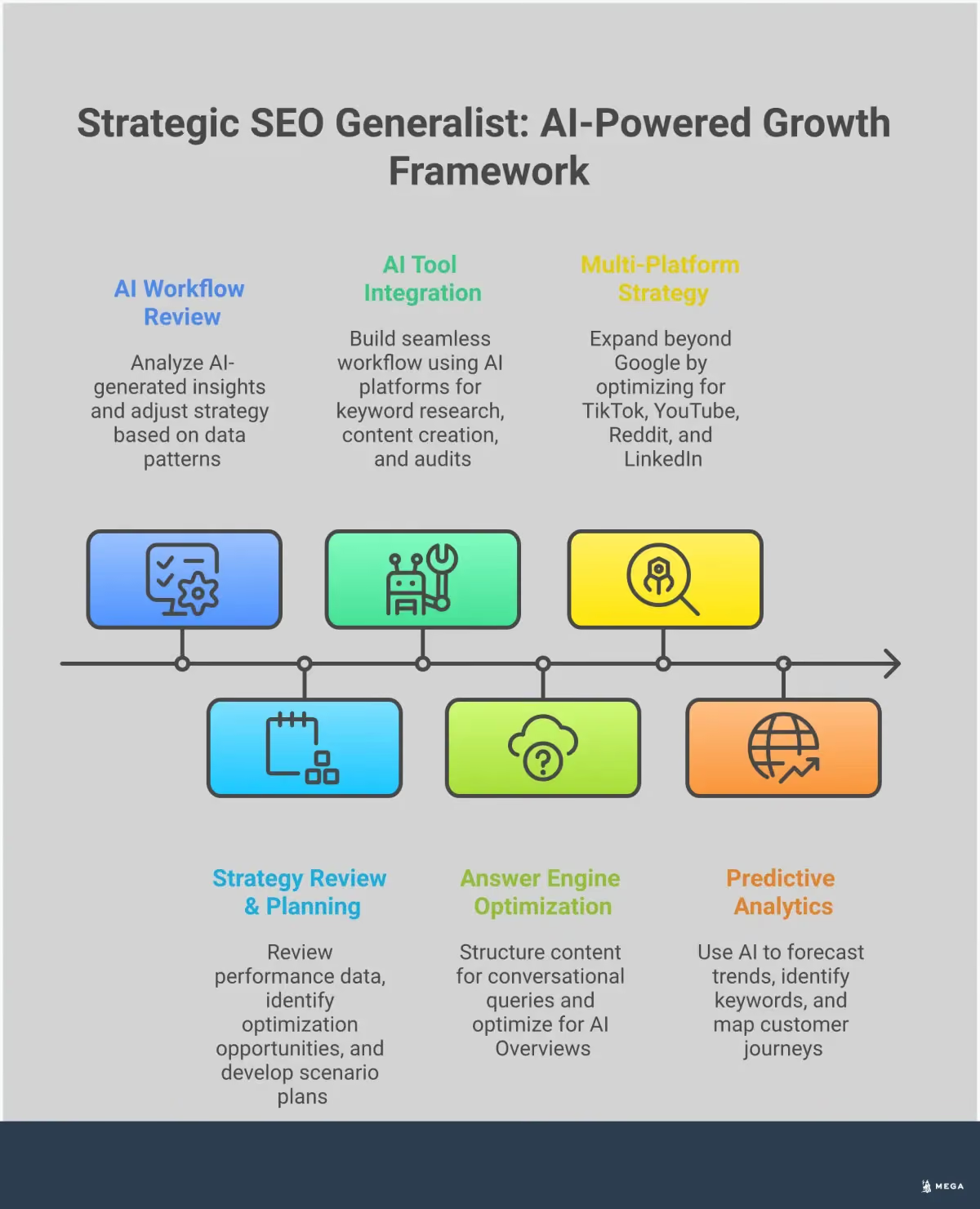
Master AI and Tool Integration
The first and most critical skill is moving beyond simply using AI tools to truly mastering their integration. It’s not about having a subscription to every new AI writer or keyword tool. It’s about building a seamless workflow where technology handles the heavy lifting, freeing you up for strategic planning. SEO teams that learn how to effectively expand their skills can make sure their brands show up in AI-powered search results. This means knowing how to use AI for everything from initial research and content creation to technical audits and performance analysis. For small businesses, an end-to-end platform that automates these SEO tasks can serve as the foundation for this integrated approach, handling execution while you focus on the strategy.
Understand Answer Engine Optimization (AEO)
The rise of AI Overviews and chatbots has created a new field: Answer Engine Optimization (AEO). While traditional SEO aims to rank a webpage in a list of blue links, AEO focuses on getting your content featured directly as the answer within an AI-generated response. This requires a different approach to content creation. You need to structure your articles, FAQs, and guides to provide clear, concise, and authoritative answers to conversational questions. According to one expert, this is where technical SEO becomes AI crawler optimization, ensuring that AI models can easily find, understand, and cite your information as a trusted source.
Sharpen Data Analysis Skills
With AI automating many routine tasks, the ability to analyze data and extract meaningful insights has become more valuable than ever. A strategic generalist needs to be comfortable looking at performance metrics from Google Analytics, Search Console, and various AI tools to understand what’s working and why. This is more than just tracking keyword rankings. It involves identifying patterns in user behavior, measuring how often your brand is cited by AI, and performing competitive analysis to find gaps in the market. The goal is to use data not just to report on past performance but to make informed decisions that guide your future content strategy.
Create a Unique Content Strategy
In an era where anyone can generate thousands of words with a single click, generic content has become a commodity. The real challenge—and opportunity—is to create a content strategy that stands out. A strategic generalist guides AI to produce content that reflects the brand’s unique voice, expertise, and first-hand experience. This means developing detailed prompts, layering in unique data or customer stories, and editing AI-generated drafts to add a human touch. Your goal is to optimize for conversational queries while ensuring your content is genuinely helpful and builds trust with your audience, something that purely automated content struggles to achieve.
Integrate Marketing Across Platforms
SEO no longer operates in a vacuum. A strategic generalist understands that search is just one piece of a larger marketing ecosystem. Insights from paid ad campaigns can reveal high-converting keywords for your SEO strategy, while top-performing blog posts can be repurposed into social media content or email newsletters. As AI becomes more integrated across nearly every facet of marketing, the ability to connect the dots between different channels is essential. This holistic view allows you to create a more effective and efficient marketing engine, ensuring all your efforts are working together to achieve your business goals.
How Agencies and Freelancers Can Adapt
The rise of AI doesn’t mean the end of marketing agencies and freelance careers. It signals a shift in where value is created. Clients no longer need to pay top dollar for manual, time-consuming tasks that AI can perform in seconds. Instead, they need a strategic partner who can direct the AI, interpret its outputs, and build a cohesive marketing plan that drives real business results. For professionals willing to evolve, this is a massive opportunity.
Adapting means moving from a task-doer to a strategic architect. It’s about leveraging AI to handle the groundwork so you can focus on the big picture: understanding the client’s business, analyzing the market, and making high-level decisions. The most successful professionals will be those who learn to pilot AI tools effectively, using them to deliver more sophisticated strategies than ever before. This evolution allows you to provide greater value, streamline your operations, and ultimately, become an indispensable part of your client’s growth engine.
Move Beyond Task-Based Services
Many traditional SEO services, like manual keyword research and basic content outlines, are becoming commoditized. With AI, these tasks are faster and cheaper, creating a race to the bottom on price for task-based work. The real value now lies in becoming the strategic architect who oversees the entire project. Instead of just providing the raw materials, your job is to design the blueprint and manage the construction. You’re the one who ensures the AI-generated content aligns with the brand voice, the technical fixes support business goals, and the overall strategy is cohesive. By letting AI handle the routine work, you can focus on the high-level integration and planning that clients truly need.
Create AI-Enhanced Strategies
AI empowers individual specialists and small agencies to compete with larger firms by providing access to powerful data analysis and insights. A successful modern strategy uses AI to do more than just write blog posts. It involves using AI-driven insights to anticipate search trends, identify untapped content opportunities, and understand user needs on a deeper level. You can develop strategies that are proactive rather than reactive. This means using AI to analyze competitor weaknesses and predict market shifts, allowing you to position your clients ahead of the curve. The focus shifts from fulfilling a checklist of SEO tasks to building a dynamic, intelligent growth plan.
Balance Client Management with Strategic Focus
One of the biggest challenges for any service provider is balancing deep strategic work with the demands of client communication. Every hour spent on status updates and routine reporting is an hour not spent on strategy. AI can help automate much of this administrative load. Platforms like MEGA AI can run campaigns on autopilot, generating performance reports and handling routine optimizations automatically. This frees up your bandwidth to focus on what your clients value most: your strategic guidance. By automating the execution and reporting, you can protect your time for analysis and planning, ensuring you deliver high-impact results instead of just high-touch service.
Develop Predictive Analytics Skills
The next frontier for SEO professionals is moving from analyzing past performance to predicting future outcomes. AI analytics tools can process huge datasets to forecast demand, identify emerging trends, and model the potential impact of different strategies. Your role is to become proficient at interpreting these AI-generated forecasts and translating them into actionable business decisions. Building an AI-ready team or skillset means learning to ask the right questions of the data. This skill allows you to provide clients with forward-looking advice that can give them a significant competitive advantage, solidifying your role as a strategic advisor.
What AI Challenges Do Small Businesses Face?
While AI presents incredible opportunities for growth, adopting it isn't always straightforward for small and local businesses. Unlike large corporations with dedicated tech departments and hefty budgets, most entrepreneurs are juggling multiple roles. Finding the time and resources to vet, implement, and manage new AI tools can feel like a full-time job in itself.
The primary hurdles aren't a lack of ambition but a shortage of three key resources: budget, specialized expertise, and time. Many business owners see the potential of AI to streamline their marketing but get stuck on the practical steps needed to make it work. These challenges often lead to hesitation, causing them to miss out on the competitive advantages AI can offer. Understanding these common obstacles is the first step toward finding a realistic path forward.
Overcoming Cost and Resource Limits
One of the biggest barriers to AI adoption is the cost. Many powerful AI platforms come with enterprise-level price tags that are out of reach for a small business. Beyond the subscription fees, there's a significant time investment. Learning to use a new, complex tool takes hours away from core business activities like serving customers and managing operations.
The irony is that AI is often promoted as a time-saver. While it can certainly analyze your small business data and improve efficiency, you first have to invest the time to learn its intricacies. For a busy entrepreneur, that initial learning curve can be too steep, making it difficult to justify the upfront cost and effort.
Closing the Technical Expertise Gap
Successfully using AI for marketing requires more than just access to a tool; it demands a specific skill set. You need to understand how to prompt the AI correctly, interpret its outputs, and align its actions with your broader business strategy. As AI reshapes search, even seasoned marketing professionals find they need to expand their skills to stay effective.
For a small business owner, developing this deep technical expertise is a huge ask. You’re an expert in your field, whether it’s running a dental practice or a local bakery, not in fine-tuning algorithms. This expertise gap can make it challenging to get real value from AI tools, often leading to frustration and wasted investment.
Addressing Data Privacy and Integration
Handing over your business and customer data to a new platform is a major consideration. Concerns about data privacy, security, and compliance with regulations like GDPR are valid. It’s crucial that entrepreneurs carefully research the tools available to ensure they handle data responsibly.
Beyond security, there's the practical challenge of integration. A new AI tool needs to connect seamlessly with your existing systems, such as your website’s CMS and your analytics platforms. If the tools don't communicate well, you can end up with data silos and a clunky workflow that creates more problems than it solves. This technical complexity can stop an AI initiative before it even starts.
Why Strategic SEO Professionals Will Command Higher Prices
As AI automates the routine tasks that once consumed most of an SEO’s time, the value is shifting from execution to strategy. Anyone can use a tool to generate a list of keywords or write a blog post. But very few can weave those tactics into a cohesive plan that drives real business growth. This is where the strategic SEO professional shines. They are no longer just technicians; they are growth partners who understand the market, the customer, and the competitive landscape. Because this high-level thinking can’t be automated, the experts who can provide it are becoming more valuable. Their ability to direct AI tools, interpret data, and make informed decisions is a skill set that commands a premium.
Why Strategy Commands a Premium
A well-defined strategy is the difference between creating content and creating content that converts. While AI can execute commands, it needs a human strategist to set the direction. This involves more than just picking keywords; it requires a deep understanding of a business’s unique goals and audience. Successful SEO strategies now use predictive analytics and AI-driven insights to anticipate search trends before they become competitive. A strategist connects SEO efforts to bottom-line business metrics, ensuring every action contributes to growth. This shift from task-doer to strategic generalist means their work delivers more significant impact, justifying a higher price point for their expertise.
Adopt Value-Based Pricing
With tactical work becoming a commodity, hourly billing for SEO services makes less sense. Instead, professionals should adopt value-based pricing models that reflect the results they deliver. This means shifting the conversation with clients from the cost of tasks to the return on investment. Instead of selling a package of "five blog posts per month," a strategist sells "a content system designed to increase qualified leads by 15% this quarter." This approach aligns the professional’s compensation with the client’s success. Developing service packages with premium pricing requires confidence in your ability to deliver, but it positions you as a partner rather than a contractor.
Use AI to Compete with Larger Firms
AI has leveled the playing field, empowering individual specialists and small businesses to achieve results that once required a large agency. Platforms that offer AI-powered SEO can handle the heavy lifting of content creation, technical audits, and campaign execution at scale. This allows a solo strategist or a small in-house team to focus their limited time on high-impact activities. They can analyze the market, refine the brand voice, and build relationships—things that require human insight. By balancing automation with their unique expertise, smaller players can outperform larger competitors by being more agile and strategic for a fraction of the cost.
What are the Risks of Not Adapting?
The rapid integration of AI into marketing isn't just a trend; it's a fundamental shift in how businesses compete online. Choosing to ignore this change means risking more than just falling behind on new technology. It means potentially losing ground to competitors who are using AI to work faster, generate deeper insights, and connect with customers more effectively. The risks extend beyond outdated tactics to include a widening skills gap, missed opportunities, and a failure to meet modern customer expectations.
The Consequences of a Widening Skill Gap
As AI automates routine tasks, the value of purely technical, manual work is decreasing. Professionals who don't adapt will find their skills competing with tasks that are quickly becoming commoditized. The real danger lies in the growing gap between those who can direct AI strategically and those who can't. If your team spends all its time on manual execution, there's little bandwidth left for the strategic work that drives real growth. This creates a significant business risk, as your ability to innovate and respond to market changes diminishes, leaving you vulnerable to more agile, AI-savvy competitors.
Avoid Common AI Adoption Pitfalls
Simply buying an AI tool isn't a strategy. A common pitfall for small businesses is using AI only for simple content creation while overlooking its more powerful capabilities. The greatest value of AI lies in its ability to quickly analyze data and uncover customer trends that would otherwise remain hidden. Instead of getting stuck on basic automation, focus on using AI to inform your marketing campaigns and business strategy. Platforms offering end-to-end SEO services are designed to handle both the execution and the strategic analysis, helping you avoid these pitfalls and use AI to its full potential.
Manage Shifting Client Expectations
Whether you're an agency or a business owner, the people you serve now have different expectations. They know AI can deliver results faster and more efficiently. At the same time, the rise of AI-powered search is changing how users find information, often reducing direct clicks to websites. If you can't explain how your strategy accounts for these shifts, you risk losing credibility. It's now essential to demonstrate how you work with AI tools to not only improve efficiency but also to adapt to new search behaviors and deliver measurable value.
Build Your Strategic SEO Skillset for the AI Era
Adapting to the AI era doesn’t mean you need to become a machine learning engineer. It means shifting your focus from manual, repetitive tasks to high-level strategy and analysis. The core principles of SEO still matter, but how you apply them is changing. For small business owners, this is a huge opportunity. Instead of getting bogged down in the weeds of technical fixes or endless keyword lists, you can use an AI SEO agent to handle the execution, freeing you up to think about the bigger picture for your brand.
This new landscape calls for a strategic generalist—someone who understands the fundamentals of search but also knows how to leverage AI to achieve business goals. It’s about asking the right questions, interpreting data to find growth opportunities, and creating a cohesive marketing strategy that works across different platforms. This strategic oversight is where humans excel and where your unique business knowledge provides a competitive edge. By focusing on these higher-level skills, you can direct your resources more effectively and make smarter decisions that drive real results for your business, leaving the tactical implementation to automated systems.
Prioritize These Essential Skills
To stay competitive, it's important to build on your existing knowledge. Start by ensuring you have a solid grasp of core SEO principles like keyword research, content optimization, and technical SEO. These fundamentals are the foundation upon which AI strategies are built. From there, you can expand your skills to meet the demands of AI-driven search. The most significant shift is the move toward Answer Engine Optimization (AEO). While traditional SEO aims to rank a link, AEO focuses on getting your content featured directly in AI answers, like Google’s AI Overviews. This requires a new approach to content that prioritizes clear, concise answers to conversational questions.
Adopt a Strategy for Continuous Learning
The world of AI and search is constantly evolving, so building a habit of continuous learning is essential. You don’t need to chase every new trend, but you should have a process for staying informed and adapting your strategy. A great first step is to benchmark your current performance. See how your business shows up in AI-powered search results compared to a few of your top competitors. This gives you a baseline to measure your progress against. Next, identify a few key areas for improvement and find the right monitoring tools to track your efforts. The goal is to create a feedback loop: learn, apply, measure, and refine. This iterative process will help you build a durable, effective SEO strategy.