
You've poured your heart into building a website filled with awesome content. But what if search engines can't find your best work? That's where sitemap priorities come in. Your XML sitemap is like a roadmap for search engines, and sitemap priority settings tell them which pages are most important. This post covers everything you need to know about using sitemap priorities effectively, from the basics to strategies for maximizing your sitemap priority SEO.
Key Takeaways
- Sitemaps guide search engines: Think of sitemaps as roadmaps for search engines, helping them understand your website’s structure and content for better crawling and indexing. Maintain both XML
- Prioritize strategically: Use sitemap priority to suggest which pages are most important to search engines. Focus on a balanced approach, assigning higher values to key pages and avoiding overuse of high priority.
- Maintain and monitor: Regularly update your sitemaps, check for errors, and adjust priorities as your content changes. Use tools like sitemap generators and SEO analysis tools to keep your sitemap optimized and effective.
Understanding Sitemaps: An SEO Essential
Sitemaps are essential for any website aiming to rank well in search results. Think of a sitemap as a roadmap for search engines, guiding them to all the important pages on your website. This helps search engines like Google understand your site’s structure and content, leading to more effective crawling and indexing. While sitemaps don’t guarantee a top spot in rankings, they’re a fundamental part of a solid SEO strategy, making it easier for search engines to discover and understand your content, which can significantly impact your visibility online.
Common Sitemap Types
There are two main types of sitemaps: XML sitemaps and HTML sitemaps. XML sitemaps are specifically designed for search engines. They provide a structured list of URLs on your website, along with additional information like when the page was last updated and how often it changes. This helps search engine bots efficiently crawl your site. HTML sitemaps, on the other hand, are created for website visitors. They provide a user-friendly way to find content on your site, improving navigation and overall user experience. While they serve different audiences, maintaining both types of sitemaps is valuable for optimizing your website.
XML Sitemaps
XML sitemaps are the backbone of search engine optimization. These files act as a guide for search engine crawlers, providing a clear blueprint of your website's structure. They list all the important URLs, giving search engines a comprehensive understanding of your content. An XML sitemap also includes valuable metadata, such as when a page was last updated and how often it changes (its change frequency). This helps search engines prioritize their crawl efforts, ensuring they focus on fresh and relevant content. Think of it as a direct line of communication with search engines, telling them exactly what you want them to see. For a deeper dive into sitemaps, check out our ultimate guide to sitemaps.
HTML Sitemaps
While XML sitemaps cater to search engines, HTML sitemaps are designed with your users in mind. They improve the user experience by providing a clear and organized overview of your website's content. A well-structured HTML sitemap makes it easy for visitors to find what they're looking for, reducing bounce rates and increasing engagement. It's like a detailed table of contents, allowing users to quickly find content most relevant to them. This not only enhances usability but also indirectly benefits your SEO by signaling a well-organized and user-friendly website. If you're looking for ways to automate the creation and maintenance of your sitemaps, consider exploring tools like MEGA SEO.
Video Sitemaps
If your website features video content, a video sitemap is a must. These specialized sitemaps provide search engines with rich information about your videos, including titles, descriptions, thumbnails, and even the video duration. This helps search engines understand the context of your videos, increasing their chances of appearing in video search results. By providing detailed information in a video sitemap, you're giving search engines everything they need to properly index and rank your video content, expanding your reach and driving more views. MEGA SEO can help streamline this process by automating video sitemap generation.
Image Sitemaps
Similar to video sitemaps, image sitemaps help search engines understand and index the images on your website. They provide details about your images, such as their location, captions, and alt text. This helps search engines interpret the content of your images, improving their visibility in image search results. Optimizing your images with a dedicated sitemap can drive significant traffic from image searches, especially for businesses that rely heavily on visual content. Consider using MEGA SEO's free tools to analyze your image optimization.
News Sitemaps
For news publishers and bloggers, news sitemaps are crucial for ensuring their articles get indexed quickly. These sitemaps are specifically designed for news content and help Google News discover and display your articles promptly. This is essential for staying competitive in the fast-paced world of online news, ensuring your stories reach your audience as quickly as possible. Learn more about how MEGA SEO supports news publishers with automated SEO solutions.
Why Use a Sitemap?
Using sitemaps offers several advantages for your website’s SEO performance. Sitemaps ensure that all your pages, especially new or recently updated ones, get indexed by search engines. This is crucial for getting your content discovered by potential customers. Sitemaps also help search engines understand the hierarchy and relationship between different pages on your site, which can improve your overall search rankings. Beyond SEO, sitemaps can enhance the user experience by making it easier for visitors to find the information they need. Regularly updating your sitemaps and monitoring for errors is key to maintaining an effective SEO strategy and providing a positive user experience.
When are Sitemaps Necessary?
Sitemaps are essential for any website aiming to rank well in search results. Think of a sitemap as a roadmap for search engines, guiding them to all the important pages on your website. This helps search engines like Google understand your site’s structure and content, leading to more effective crawling and indexing. Large or complex sites, or those with rich media like images and videos, especially benefit from sitemaps. New websites, or those with few backlinks, also see significant advantages, as sitemaps help search engines discover and index content faster. If you want search engines to easily find and understand your content, a sitemap is a must-have.
When are Sitemaps Less Critical?
While sitemaps are generally recommended, there are cases where they’re less critical. If your website is small (under 500 pages) and all important pages are easily found through clear links from the homepage, a sitemap may not be as crucial. Search engine crawlers can likely discover your content organically. If your website doesn't have much video, image, or news content, the additional information a sitemap provides might not significantly impact your SEO. However, even in these cases, a sitemap can be a helpful tool, ensuring all your content is discoverable. If you're unsure, it's best to create one.
Key Information Conveyed by Sitemaps
A sitemap gives search engines valuable information for crawling your site more intelligently. It tells them which pages are important, when they were last updated, and provides details about videos and images. For videos, a sitemap can include the title, description, running time, and thumbnail URL. For images, it can include the caption, title, and license information. This data helps search engines understand your content’s context, potentially improving visibility in image and video search results. By providing this information in a structured format, you’re giving search engines what they need to effectively index and rank your content. Consider MEGA SEO’s suite of tools, including free tools and options for customized posts, to help manage and optimize your sitemaps and overall content strategy.
What is Sitemap Priority?
A sitemap is like a roadmap of your website that helps search engines understand its structure and content. Within this roadmap, sitemap priority signals the relative importance of different pages to search engine crawlers. Think of it as a way to suggest which pages deserve the most attention.
Defining Sitemap Priority
Sitemap priority indicates the relative importance of pages on your website. It’s a value assigned to each page in your sitemap, ranging from 0.0 to 1.0. A priority of 1.0 signifies the highest importance, while 0.0 represents the lowest. This helps search engines understand which pages you consider most crucial. This attribute, along with change frequency, provides valuable context as search engines crawl your site. You can learn more about sitemap best practices, including change frequency, on the Slickplan blog.
Setting Sitemap Priority: A How-To Guide
Priority is expressed as a decimal between 0.0 and 1.0. For example, your homepage might have a priority of 1.0, indicating its highest importance. Key product or category pages could be assigned 0.8, while blog posts or other less critical pages might receive a 0.5. Pages with a priority of 0.0 tell search engines they can be ignored. Remember, this is a relative scale; you’re defining the importance of pages within your site.
Adding Priority and Change Frequency Tags
XML sitemaps are crucial for helping search engines understand your website's structure. They act like a detailed table of contents, providing information about each page, including its importance and how often it's updated. Two key tags within your sitemap entries help you convey this information: ` ` and ` `. The ` ` tag lets you assign a value between 0.0 and 1.0, indicating a page's relative importance within your site. A value of 1.0 represents the highest priority, while 0.0 is the lowest. The ` ` tag specifies how often you expect the content of a page to change. Options include `always`, `hourly`, `daily`, `weekly`, `monthly`, `yearly`, and `never`.
While Google has stated they ignore the `` tag, other search engines like Bing and Yandex might still use this information. Even if Google doesn't directly use it for ranking, setting priorities can help organize large websites and guide crawlers to the most important pages first, making their crawling process more efficient. As for ` `, it's a good practice to set it realistically. Don't mark a page as `daily` if it only changes monthly. Be consistent and accurate with these tags to provide the clearest possible picture of your website's content to all search engines. For a deeper dive into these concepts, explore sitemap priority and change frequency best practices.
Example XML Sitemap Entry with Priority and Changefreq
Here’s how these tags look within a standard XML sitemap entry:
  https://www.example.com/
  2024-07-20
  weekly
  1.0

  https://www.example.com/blog/
  2024-07-18
  monthly
  0.8
In this example, the homepage (`https://www.example.com/\`) is assigned the highest priority (1.0) and a weekly change frequency. The blog page (`https://www.example.com/blog/\`) has a slightly lower priority (0.8) and is expected to change monthly. Remember, these values are relative within your site. A priority of 0.8 doesn't mean the blog page is unimportant; it simply signifies it's less important than the homepage within the context of your website. Using these tags strategically can help guide search engines and ensure they prioritize crawling your most valuable content. MEGA SEO's automated sitemap generation feature handles these details for you, ensuring your sitemap is always optimized. You can explore our free SEO tools to further enhance your website's performance.
Understanding Priority Values
While setting sitemap priority doesn’t directly influence search rankings, it can still be a useful tool, especially for larger websites. Think of it as a way to guide search engine crawlers, suggesting which pages to prioritize during their crawls. This can be particularly helpful for ensuring important pages are discovered and indexed efficiently. Learn more about sitemap priority and its role in your overall SEO strategy. However, it’s important to remember that Google doesn’t explicitly use this information for ranking. The real value lies in using these tags strategically to help search engines understand your website’s structure.
Default Priority
If you don't specify a priority for a page in your sitemap, a default priority is often applied. This default value can vary depending on the sitemap generator you use, but it's typically around 0.5. This means that, without specific instructions, search engines will consider these pages to be of average importance on your site. While this might work for some pages, it's generally better to actively manage your sitemap priorities. This ensures your most valuable content gets the attention it deserves. Think of it this way: if everything is a priority, nothing truly is. By explicitly setting priorities, you give clearer guidance to search engines.
High Priority
Reserve high priority (0.8 to 1.0) for your most important pages. These are the pages that are crucial for your business goals, such as your homepage, key product pages, or core content pillars. For example, an e-commerce site might assign a priority of 1.0 to its homepage and 0.9 to top-selling product categories. A blog focused on SEO might give its main “SEO Tips” page a 0.9 priority. Be strategic and consistent. Don't assign high priority to every page, as this dilutes the signal and makes it less effective. Focus on the pages that truly drive value and contribute most to your overall site objectives. Slickplan recommends a clear hierarchy for assigning priority values, with your homepage typically at 1.0 and other important pages between 0.8 and 0.9.
Low Priority
Assign low priority (0.0 to 0.3) to pages that are less critical for search engine visibility. These might include older blog posts, archived content, or pages with outdated information. A priority of 0.0 essentially tells search engines they can ignore these pages, which frees up crawl budget for more important content. However, use low priority carefully. If a page still has value for users or contributes to your site's overall architecture, consider a slightly higher priority (e.g., 0.3) to ensure it remains accessible. Slickplan notes that a 0.0 priority signals to search engines that they can disregard those pages.
Change Frequency Options
Along with priority, sitemaps often include a changefreq tag. This tag suggests how often you're likely to update a page's content. Options typically include always, hourly, daily, weekly, monthly, yearly, and never. While this tag doesn't guarantee search engines will crawl your pages at that specific frequency, it provides helpful context. For example, a news website might tag its homepage with hourly, while a blog might use weekly for new posts and monthly for older articles updated less often. Slickplan explains that changefreq values give search engines a hint about how often your content is updated.
How Sitemap Priority Affects Search Engines
While a sitemap doesn’t guarantee indexing, it acts as a roadmap, guiding search engines to your content. Think of it as a suggestion box—you’re showing search engines what you deem important, which can influence how they crawl and index your site. This is especially helpful for larger websites or those with complex structures. By prioritizing key pages, you’re essentially saying, “Hey, search engine, start here!”
Crawling and Indexing: The Sitemap's Role
XML sitemaps play a crucial role in getting your content discovered and indexed. They help search engines understand your site structure and find new or updated pages. The tag within your sitemap suggests which pages are most important, influencing crawl frequency. A higher priority suggests to search engines that a page should be crawled more often, leading to faster indexing of new content and more frequent updates to existing content. This can ultimately improve your site’s visibility. Regularly monitoring your sitemaps for errors and ensuring important pages are prioritized are key to maintaining an effective SEO strategy. Some studies suggest that using XML sitemaps, including priority tags, can significantly improve indexing.
Crawl Budget and URL Sequencing
For larger websites, crawl budget is a critical factor. A crawl budget refers to the number of pages a search engine bot crawls on your site within a given timeframe. By strategically sequencing URLs in your sitemap, placing higher-priority pages at the beginning, you can influence how search engines allocate their crawl budget. This ensures your most important content is crawled and indexed more frequently, even if Google claims to ignore certain XML sitemap elements. As SEO expert Bruce Clay observes, “Even though Google says it ignores certain XML sitemap elements, using them strategically can still improve crawling and indexing, especially when dealing with limited crawl budgets, redirects, and errors.” This approach is particularly useful for large e-commerce sites or news websites with frequently updated content.
Impact of Priority and Change Frequency on Google
Google has stated that it doesn't directly use the and tags for ranking. However, using them strategically can still offer indirect benefits. Firespring suggests, “While setting sitemap priority doesn’t directly influence search rankings, it can still be a useful tool, especially for larger websites. Think of it as a way to guide search engine crawlers, suggesting which pages to prioritize during their crawls.” These tags provide context about your content, helping Google understand your site’s structure and the relative importance of different pages. This can lead to a more efficient crawl and potentially improve your site’s overall visibility in search results. MEGA SEO automatically handles sitemaps, ensuring your site is always optimized for Google.
Impact of Priority and Change Frequency on Other Search Engines
While Google's position on priority and change frequency tags is clear, other search engines, such as Bing and Yandex, may still use this information. According to geoPlugin, “While Google ignores `` and `` tags, other search engines *might* use them. Setting priorities helps organize large websites and guides search engine crawlers to the most important pages first, making their crawling more efficient.” Including these tags in your sitemap can be beneficial for broader search engine visibility. By providing clear signals about page importance and update frequency, you can optimize your website for a wider range of search engines, potentially expanding your reach and driving more organic traffic from various sources. Consider using MEGA SEO's free tools to analyze your sitemap and ensure it caters to different search engines.
Sitemap Priority Limitations
It’s important to understand that sitemap priority is a suggestion, not a directive. Search engines consider many factors when determining which pages to crawl and index, and sitemap priority is just one piece of the puzzle. While it can be a helpful tool, especially for larger sites, it doesn’t override other ranking factors. Things like content quality, backlinks, and overall site authority have a much bigger impact on your search performance. Even though Google may not explicitly use the tag in its algorithm, using these tags can still improve crawling and indexing, leading to better overall SEO results. Focus on creating high-quality content and building a strong website architecture, and use sitemap priority as a supplementary tool to guide search engines.
Sitemaps Don't Guarantee Indexing
Submitting a sitemap to search engines like Google is good practice, but it doesn't guarantee every URL will be indexed. Think of it as a suggestion, not a command. Search engines use complex algorithms to decide which pages are relevant and valuable to users. Factors like content quality, site authority, and backlinks play a significant role. A sitemap helps search engines discover your content; it doesn't force them to index it. Focus on creating high-quality content that search engines will want to include in their index.
Limited Influence on Ranking
It's a common misconception that sitemap priority directly influences search ranking. While priority tags can guide search engine crawlers, it's a small piece of the SEO puzzle, especially on larger sites. Search engines consider many factors when ranking pages, and sitemap priority is relatively minor. Focus on impactful SEO elements: high-quality content, relevant keywords, a strong backlink profile, and excellent site performance. Use sitemap priority as a supplementary tool to suggest important pages, but don't rely on it as a primary ranking factor. A well-structured sitemap can improve crawlability and indexability, indirectly contributing to better SEO. For a comprehensive SEO strategy, consider MEGA SEO to automate and streamline your efforts.
Best Practices for Sitemap Priorities
Assigning sitemap priority helps search engines understand which pages on your website are most important. Think of it as guiding search engine crawlers through your site’s most valuable content. While it doesn’t guarantee a higher ranking, it helps search engines focus on the pages you deem most critical.
Prioritizing Key Pages for SEO
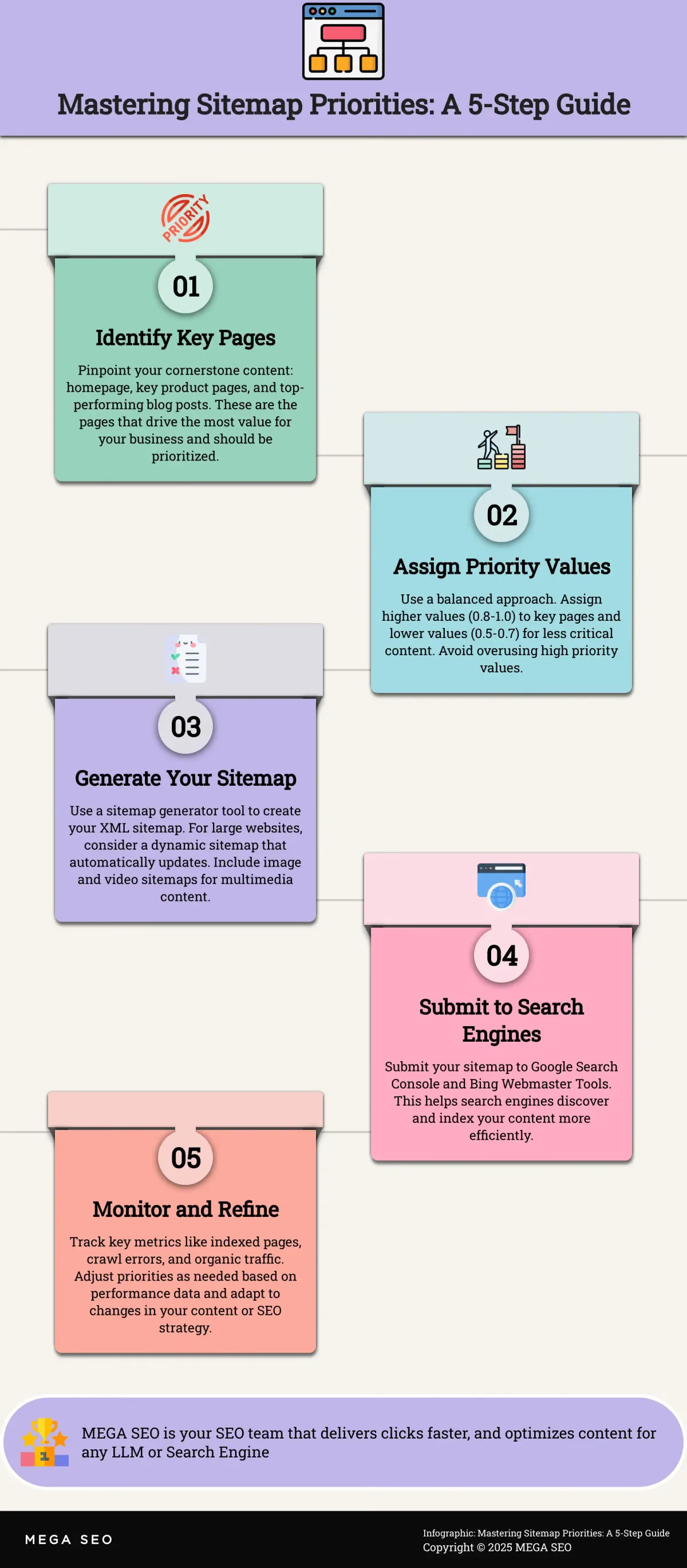
Start by identifying your cornerstone content. These are the pages that drive the most value for your business, such as your homepage, key product landing pages, and top-performing blog posts. Assign these pages higher priority values, typically between 0.8 and 1.0. This signals to search engines that these pages are essential and should be crawled more frequently. For example, if you’re running an e-commerce store, prioritize product pages that generate the most revenue or feature your flagship items. Learn more about how MEGA SEO can automate this process through our customized posts feature.
Balancing Sitemap Priority Across Your Website
Consistency is key when assigning priority. Maintain a balanced approach within different sections of your website. For instance, all your blog posts could receive a priority of 0.7, while all product category pages might get a 0.8. This creates a clear hierarchy within your sitemap, making it easier for search engines to understand the relative importance of your content. MEGA SEO’s automated sitemap generation can help you maintain this balance.
Common Sitemap Priority Mistakes to Avoid
One common pitfall is overusing high priority values. Assigning 1.0 to every page dilutes the signal and confuses search engines. Focus on a balanced distribution of priority values, reflecting the actual importance of each page. Don’t try to “trick” search engines; they’re sophisticated enough to recognize manipulative tactics. Instead, use sitemap priority as a tool to guide them. Explore our free SEO tools to analyze your site and identify areas for improvement. For more in-depth information, visit our resources page.
Inaccurate Priority and Changefreq Values
Providing accurate information in your sitemap is crucial for its effectiveness. Don’t try to game the system by assigning artificially high priority values or change frequencies. Search engines like Google are sophisticated enough to recognize inaccurate data, and this can lead to them ignoring your sitemap altogether. A recent study emphasized that inaccurate tags are worse than not including them at all. The last-modified timestamp provides more valuable information than an inaccurate change frequency, so focus on keeping that updated. Strive for accuracy in your sitemap, reflecting the true importance and update frequency of your pages. This helps search engines understand and prioritize your content effectively. Consider using tools like MEGA SEO to automate sitemap generation and maintenance, ensuring your sitemap data is always current and reliable.
Implementing Sitemap Priorities: A Practical Guide
After carefully assigning priorities, the next step is to implement them effectively. This involves using the right tools, submitting your sitemap to search engines, and consistently monitoring and updating it.
Sitemap Tools: Creation and Management
Creating and managing your XML sitemaps can be streamlined with various sitemap generators. These tools ensure your sitemaps are up-to-date and adhere to search engine guidelines. For a deeper dive into your sitemap’s structure, consider using tools like Screaming Frog’s SEO Spider to examine XML tags and address potential sitemap risks. This proactive approach helps maintain a healthy and efficient sitemap. A well-structured sitemap ensures search engines can easily access and understand your content. Learn more about sitemap optimization best practices to further enhance your sitemap’s effectiveness.
MEGA SEO's Automated Sitemap Generation
Creating and maintaining XML sitemaps can be time-consuming, especially for large websites with frequently changing content. MEGA SEO simplifies this with its automated sitemap generation. Our platform automatically generates and updates your XML sitemap, ensuring it accurately reflects your website's structure and content. This eliminates manual updates and reduces errors, freeing up your time for other SEO work. Sitemaps are crucial for SEO, acting as a roadmap for search engines, and MEGA SEO ensures yours is always current. You can find more information about sitemaps in our resources section.
Beyond simply creating a sitemap, MEGA SEO automates sitemap priority assignments. Our algorithms analyze your content and assign priority values based on factors like page authority, relevance, and traffic. This ensures your most important pages receive higher priority, guiding search engine crawlers to your most valuable content. This automated, data-driven approach saves you time and helps optimize this important aspect of your SEO. Learn more about sitemap priority and search engines, and how MEGA SEO can help.
Submitting Your Sitemap to Search Engines
Submitting your sitemap to search engines is a crucial step after creation. This informs search engines about your site’s structure, enabling more efficient crawling and indexing of your content. While the impact of priority and changefreq tags is debated, their inclusion can still influence how search engines crawl your site, potentially guiding them to index pages in your suggested order. Understanding how search engines use sitemaps can provide valuable insights into this process.
Maintaining and Updating Your Sitemap
Maintaining effective sitemaps requires ongoing effort. Regularly updating your sitemap, monitoring for errors, and confirming priorities for important pages are essential practices. XML sitemaps significantly impact SEO rankings by enabling search engines to quickly discover and index new content. Staying proactive and keeping your sitemap current ensures search engines have an accurate representation of your website. For a comprehensive guide to sitemaps, explore this resource on understanding sitemaps for enhanced SEO performance.
Using lastmod for Effective Updates
The lastmod tag in your sitemap specifies the date a page was last modified. This timestamp is crucial for informing search engines about fresh content. An accurate lastmod tag ensures search engines prioritize crawling recently updated pages, which can lead to faster indexing of changes and potentially improve your search rankings. Think of it as a way to signal, "Hey, this page has new information, come check it out!"
Verifying Sitemap Submission via Server Logs
After submitting your sitemap, verify that search engines are actually accessing it. Checking your server logs is the most reliable way to do this. Server logs provide a detailed record of all requests made to your server, including requests from search engine bots. By examining these logs, you can confirm that search engines have crawled your sitemap, ensuring your content is being discovered and indexed.
Sitemap Priorities and Technical SEO
Sitemap Priority and Other Technical SEO Elements
Think of your website as a complex city, and search engines are tourists trying to explore every nook and cranny. A sitemap acts like a detailed city map, guiding these “tourists” to all your important pages. This is crucial for a smooth user experience, as visitors (and search engines) can easily find what they’re looking for. Just like a well-organized city, a website with a clear structure, facilitated by a sitemap, tends to perform better. Sitemaps improve website performance by ensuring search engines index all your web pages, leading to better search engine rankings.
Now, within this city map, certain landmarks are more prominent than others. Sitemap priority tags act like highlighting those key landmarks, suggesting to search engines which pages on your site are most important. While the influence of these priority tags on Google is somewhat limited, they still contribute to how search engines understand your site’s structure. Think of it as nudging the search engine spiders in the right direction. This careful tagging, combined with other technical SEO elements like optimized page speed, creates a powerful synergy, offering a seamless experience for both users and search engines. Learn more about sitemap priority and how it can improve your website’s visibility.
Integrating Sitemap Priorities into Your SEO Strategy
Submitting your sitemap is like officially handing over your city map to the tourism board (search engines). This simple act tells search engines about your site’s structure, helping them crawl and index it more efficiently. It’s a proactive step in ensuring your website gets the visibility it deserves. You’re essentially inviting search engines to explore your site thoroughly. Consider this a fundamental step in any comprehensive SEO strategy.
While priority tags might not be the magic bullet for instant ranking improvements, they play a supporting role in optimizing your site’s crawlability. Think of them as gentle suggestions to search engines, highlighting the pages you consider most valuable. Although Google’s response to these tags is limited, using them, along with best practices like regular sitemap updates and monitoring for errors, creates a robust foundation for technical SEO. MEGA SEO’s Maintenance Agent can help automate these tasks, ensuring your sitemap is always up-to-date and optimized. This frees up your time to focus on other aspects of your SEO strategy.
Advanced Sitemap Strategies for SEO
Once you’ve mastered the basics of sitemaps, you can use more advanced strategies to further optimize your site’s visibility. These techniques are especially helpful for larger websites or those with specific content like videos and images.
Dynamic Sitemaps for Large Websites
Managing a sitemap for a large website, especially an e-commerce site with constantly changing inventory, can be tricky. A dynamic sitemap is a good solution. Instead of manually updating your sitemap every time you add or remove a product, a dynamic sitemap updates itself. This ensures search engines always have the most current information about your site structure. This real-time updating is key for large e-commerce sites. For example, one site saw a 30% increase in indexed pages after implementing a dynamic sitemap strategy and submitting it to Google Search Console. Dynamic sitemaps save you time and help ensure your site’s pages are discovered and indexed quickly.
Sitemaps for Multilingual and International Sites
If your website serves a global audience or offers content in multiple languages, use separate sitemaps for each language. This practice helps search engines understand the structure of your site’s content in different languages. Creating targeted sitemaps ensures users find the right version of your site based on their language preferences. This improves user experience and helps search engines deliver relevant results.
Video and Image Sitemaps
While regular sitemaps list web pages, video and image sitemaps give search engines specific information about your multimedia content. Including these specialized sitemaps can significantly improve your SEO, especially if your site uses a lot of visual content. These sitemaps give search engines more context, such as video titles, descriptions, and thumbnails, which can help your videos and images rank higher in search results. By providing search engines with detailed information about your multimedia content, you increase its visibility in relevant searches.
Troubleshooting Sitemap Issues
Even with careful planning, sitemap issues can crop up. Knowing how to troubleshoot them is key to a healthy website and strong SEO performance. This section covers common errors, solutions, and how to resolve conflicting priority signals.
Common Sitemap Errors and Their Solutions
Regular updates, monitoring for errors, and prioritizing important pages are key for effective sitemaps. A well-maintained sitemap ensures search engines can index all your pages, leading to better rankings and user experience. Regularly submitting your sitemap and monitoring its performance are crucial for effective SEO. Address any errors promptly. Some common issues include:
- Incorrect URLs: Double-check that all URLs in your sitemap are accurate and working. Broken links in your sitemap can hurt your site’s crawlability.
- URL Limit Exceeded: Sitemaps have a 50,000 URL limit. For larger websites, create multiple sitemaps and submit a sitemap index file.
- Unindexed Pages: If pages in your sitemap aren’t indexed, investigate potential issues like robots.txt blocking or noindex tags. Tools like Screaming Frog can help examine XML tags and uncover hidden risks.
- Last Modified Date Issues: An incorrect last modified date can confuse search engines. Ensure this date accurately reflects the page’s last update.
Resolving Conflicting Priority Signals
While priority tags in your XML sitemap aren’t required, they guide search engines toward your most important content. Without them, search engine algorithms decide page importance, which might not match your SEO strategy. Understanding how priority and change frequency interact can prevent conflicts. Sitemap priority indicates page importance, while change frequency suggests update frequency.
Here’s how to avoid conflicts:
- Align Priority and Change Frequency: A high-priority page with a low change frequency can seem contradictory. Ensure these tags align logically. Your homepage (high priority) might be updated less frequently than a blog post (lower priority, higher change frequency).
- Focus on Key Pages: Avoid assigning high priority to too many pages. This dilutes the signal, making it harder for search engines to identify truly important content.
- Regularly Review and Update: As your website changes, so should your sitemap priorities. Regularly review and adjust them to reflect your current content strategy. MEGA SEO’s Maintenance Agent can automate this, keeping your sitemap aligned with your goals.
The Future of Sitemaps and SEO
As search engine algorithms evolve and user behavior changes, the role of sitemaps in SEO continues to adapt. Staying ahead of the curve requires understanding emerging trends and preparing for potential shifts in sitemap standards. This forward-thinking approach will ensure your website remains easily discoverable and maintains a strong online presence.
Emerging Trends in Crawling
Search engines are constantly refining their crawling processes to become more efficient and effective. One key trend is the increasing emphasis on user experience signals. While XML sitemaps help search engines discover your content, factors like page speed and mobile-friendliness play a significant role in how search engines prioritize and rank your pages. Regularly updating your sitemaps and monitoring for errors ensures search engines have the most current information about your site structure, but remember that sitemaps are just one piece of the puzzle. Focusing on creating high-quality content and providing a positive user experience remains paramount. Tools like MEGA SEO can automate many of these tasks, freeing up your time to focus on other aspects of your SEO strategy.
Potential Changes to Sitemap Standards
While the core function of sitemaps—helping search engines understand your website structure—is likely to remain constant, we may see changes in how certain attributes are used. For instance, while Google currently doesn’t prioritize the tag, this could change in the future. Similarly, the tag, while helpful, doesn’t dictate how often Google crawls your pages. Factors like content updates and backlink acquisition have a much larger impact on your search performance. Keeping up with industry news and best practices is crucial for adapting to any potential changes in sitemap standards. Consider using MEGA SEO to manage these attributes and stay ahead of any potential algorithm updates.
Preparing for Future SEO Challenges
The SEO landscape is constantly evolving, and preparing for future challenges is essential for long-term success. One way to stay ahead is by using tools like Screaming Frog’s SEO Spider to examine your XML sitemaps and uncover potential issues. This proactive approach helps you identify and address hidden risks before they impact your rankings. Additionally, consider exploring MEGA SEO’s suite of tools designed to automate and simplify various aspects of SEO, from keyword research and content generation to technical SEO improvements. By embracing automation and staying informed about industry trends, you can effectively prepare for future SEO challenges and maintain a competitive edge.
Measuring the Impact of Sitemap Priorities
After implementing sitemap priorities, track their impact on your site’s SEO performance. This involves monitoring key metrics, utilizing helpful tools, and adapting your approach based on the data you collect. This iterative process ensures your sitemaps continually contribute to improved search visibility.
Key Metrics for Tracking Sitemap Performance
Regular updates, monitoring errors, and prioritizing important pages are key practices for maintaining effective sitemaps. Keep a close eye on metrics that reflect how search engines interact with your site. Track the number of pages indexed by search engines. A well-structured sitemap helps ensure search engines discover and index all your important pages, directly impacting your site’s visibility. Also, monitor crawl errors. Addressing these errors promptly ensures search engines can access and index your content efficiently. Finally, analyze your website traffic from search engines. An increase in organic traffic often indicates that your sitemap priorities are guiding search engines to your most valuable content, leading to a better user experience.
Tools for Monitoring Sitemap Performance
Several tools can help you monitor and analyze your sitemap’s performance. Use SEO Spider tools like Screaming Frog to examine your XML sitemaps and uncover potential issues with tags or structure. Google Search Console provides data on indexed pages, crawl errors, and other valuable insights into how Google interacts with your sitemap. Use these tools to identify areas for improvement and ensure your sitemap is functioning as expected. Submitting your sitemap to search engines and monitoring its performance are crucial for effective SEO.
Adjusting Sitemap Priorities Based on Data
Analyzing your sitemap’s performance data allows you to fine-tune your priorities and further optimize your SEO strategy. While search engines like Google may not explicitly rely on priority tags, using them can still influence how they crawl and index your pages. Consider the frequency attribute in your XML sitemaps, which instructs search engines on how often to check for updates. By adjusting priority and frequency values based on page importance and update frequency, you can guide search engines to crawl your site more effectively. Remember, this is an ongoing process. Regularly review your data and adjust your sitemap priorities as needed to maintain optimal SEO performance. Adding priority tags to sitemap files can encourage search engines to crawl and index pages more effectively.