
Building your website’s authority is a lot like building a house. You can spend all your time and money on picking out the perfect paint colors, furniture, and light fixtures—these are your SEO tactics. They make the house look good right now. But if the foundation is cracked and the wiring is faulty, none of it matters. A foundational SEO strategy is that solid base: the technical health, site structure, and content plan that supports everything else. This article explains how to build that foundation first, so all the tactical decorations you add later actually contribute to a valuable, long-lasting asset for your business.
Key Takeaways
- Connect every action to a larger goal: Your SEO strategy is the long-term plan for building authority. Tactics are the individual actions you take, but they should always serve the strategy, not just check a box on a generic list.
- Invest in your website's core health first: A fast, technically sound website with a solid content plan is the bedrock of all SEO success. This foundational strength is what earns trust from search engines and creates long-term, compounding results.
- Create a hybrid plan for consistent progress: Combine foundational work, like technical audits and link building, with timely tactics, like optimizing a high-potential page. This integrated approach allows you to build for the future while capturing present opportunities.
What is a Tactical SEO Playbook?
Think of a tactical SEO playbook as your to-do list for getting specific, short-term results. It’s a collection of individual actions designed to address an immediate need or capture a quick opportunity. These are the concrete steps you take, like updating a blog post's title tag, fixing a broken link, or adding a new keyword to a product description. While a strategy is the long-term vision for your online growth, tactics are the individual plays you run to move the ball down the field.
For many small businesses, a tactical approach feels more manageable. You can see the results of your efforts relatively quickly, which is encouraging when you're wearing multiple hats. For example, an AI agent might perform a tactical task like adding conversion CTAs to your top blog posts or fixing canonical tag issues. These actions are important and can produce a noticeable impact. The key difference between SEO tactics vs. strategy is that tactics are the how and the what, while strategy is the overarching why. A playbook full of tactics without a guiding strategy is like a ship with a busy crew but no captain or destination.
Focus on quick wins and immediate fixes
Tactical SEO is all about capitalizing on low-hanging fruit. These are the immediate fixes and optimizations that can lead to fast, measurable improvements in your search performance. This could involve rewriting a meta description to improve your click-through rate from search results, optimizing images to make a page load faster, or updating an old article with fresh data to make it more relevant. These actions often target a single page or a small group of pages. The goal is to see a direct impact on a specific visibility or engagement metric, giving you positive feedback that your efforts are working.
Know when a tactical approach makes sense
A tactical approach is most effective when it's used to support a specific, time-sensitive goal. Are you launching a new service in your local area? A tactical plan might involve creating a new landing page and running a targeted campaign to get it ranking for local keywords. Is a major holiday coming up? Tactics could include creating seasonal content and promoting it to capture timely search interest. Tactics are also useful for reacting to changes in the market, like a new competitor entering your space. They allow you to be agile and responsive, making targeted adjustments to protect or improve your search rankings in the short term.
Understand the limits of checklist SEO
Many businesses fall into the trap of "checklist SEO," where they follow a generic list of best practices without considering the bigger picture. While checklists can be a helpful starting point, they often fail because they lack strategic context. A checklist might tell you to use a keyword in your page title, but it won't tell you which keyword aligns with your audience's intent or your business goals. Relying solely on a playbook of tactics can lead to a scattered effort that doesn't build lasting authority. True SEO success comes from a strategy that informs which tactics to use and when, ensuring every action contributes to your long-term growth.
What is a Foundational SEO Strategy?
A foundational SEO strategy moves beyond a simple to-do list. It’s a long-term plan for building your website into a valuable, authoritative asset that consistently attracts the right audience. While tactics focus on immediate actions, a strategic approach treats SEO as a core part of your business growth. It involves understanding your market, building a solid technical base, and creating a content engine that serves your customers for years to come.
This approach requires patience. Unlike a quick tactical fix, a foundational strategy builds momentum over time. For instance, most businesses see meaningful organic traffic growth within three to nine months of consistent effort. The goal isn't just to rank for a few keywords; it's to establish your domain as a trusted resource in your field. This means investing in the underlying health of your site and creating a sustainable plan for content that will pay dividends long after it's published.
Plan for long-term growth
Planning for long-term growth means you stop chasing algorithm updates and start building a resilient online presence. A foundational strategy focuses on creating durable value. This involves deep keyword research to understand user intent, mapping out content hubs that cover entire topics, and building a brand that search engines and users trust. It’s about creating a system where each piece of content and every technical improvement supports the others, creating a compounding effect on your traffic and authority over time. This forward-thinking plan ensures your efforts today will continue to generate results months and even years from now.
Build a solid technical and site foundation
Your website's technical health is the bedrock of your SEO strategy. Without a solid foundation, even the best content can fail to rank. This involves ensuring your site is fast, mobile-friendly, and easy for search engines to crawl and index. Many small business owners don't have the time or technical expertise to fix crawl errors, optimize site speed, or resolve complex indexing issues. A proper technical SEO audit identifies and corrects these problems, ensuring there are no structural barriers preventing your site from performing well in search results. This behind-the-scenes work is critical for long-term success.
Create a sustainable content strategy
A sustainable content strategy is about more than just publishing blog posts. It’s a plan to consistently create high-quality content that addresses your audience's needs at every stage of their journey. An effective SEO program measures how this content performs through a mix of visibility, engagement, and conversion metrics. This helps you understand not just how many people see your content, but how well it drives business goals. Creating content at scale can be a major challenge for small teams, which is where tools like programmatic SEO can help automate the creation of data-driven pages, allowing you to build a comprehensive content library efficiently.
Why Most Small Businesses Mix This Up
It’s easy to see why tactics and strategy get confused. When you're running a business, you’re looking for actions that deliver results, and tactical checklists seem to offer a clear path. However, this focus on immediate tasks often comes at the expense of building a sustainable foundation for growth. Several common challenges push small business owners toward a tactics-only mindset, preventing them from developing the long-term strategy they truly need.
The one-size-fits-all checklist trap
If you’ve ever searched for SEO advice, you’ve likely found dozens of checklists promising to get you on the first page of Google. While these lists can be useful for catching basic errors, they often create a false sense of security. The truth is, SEO isn't a simple formula where checking off boxes guarantees success. Every business has unique goals, customers, and competitive landscapes. A generic checklist can’t account for these critical nuances. Relying on one is like using a generic business plan for a niche startup—it covers the basics but misses the specific opportunities that lead to real growth.
The challenge of limited time and resources
As a small business owner, you’re already wearing multiple hats. Finding the time to become an SEO expert on top of everything else is a huge ask. This is one of the biggest local SEO challenges businesses face. When time is short, it’s natural to gravitate toward quick, manageable tasks like updating a page title or adding a keyword to a blog post. These tactical fixes feel productive, but they don't address deeper issues like site architecture, backlink profiles, or content authority. The pressure to just get things done often means foundational strategic work gets pushed to the back burner indefinitely.
How local competition changes the game
For local businesses, the competition isn't just online; it's right down the street. In a competitive market, your rivals are likely following the same basic SEO checklists you are. To stand out, you need to move beyond passive tactics and actively build your local authority. This means creating content that speaks directly to your community, sponsoring local events, and earning mentions from other reputable local businesses. A strategic approach requires you to think like a community leader, not just a website owner. This is how you build local authority that your competitors can’t easily replicate with a simple checklist.
How to Choose the Right Approach for Your Business
Deciding between a quick tactical plan and a deep foundational strategy depends entirely on where your business is today and where you want it to be tomorrow. There’s no single right answer, but by looking at your current performance, authority, and business goals, you can build an approach that delivers results. It starts with an honest assessment of your digital footprint.
Assess your current standing and competition
Before you can map out a path forward, you need to know your starting point. A thorough audit of your website’s performance gives you a baseline to measure against. Look at your current organic traffic, which keywords you rank for, and how well your site converts visitors into customers. Understanding these core SEO metrics helps you see what’s working and what isn’t.
Next, turn your attention to your competitors. Analyze the top-ranking sites for your target keywords. What kind of content are they creating? How is their site structured? For many small businesses, this analysis reveals technical gaps or content opportunities they may not have the in-house expertise to address. This initial review will clarify whether you need to focus on immediate, tactical fixes or begin building a more solid foundation to compete long-term.
Find the gaps in your domain authority
Domain authority is essentially your website’s reputation with search engines. A higher authority means you’re more likely to rank for competitive terms. If your site is new or has a limited online presence, building this authority is a critical, long-term project. A tactical approach alone won’t be enough to move the needle if your foundational authority is weak.
To find the gaps, start by analyzing your backlink profile. Links from other reputable websites act as votes of confidence. For local businesses, establishing brand authority often comes from earning links from other local companies, news outlets, and community organizations. Compare your backlink profile to your top competitors. If they have a stronger, more diverse set of links, a foundational strategy focused on content creation and outreach is your best path forward.
Set realistic timelines for growth
One of the biggest mistakes in SEO is expecting overnight results. While a tactical fix might give you a temporary lift, sustainable growth takes time. Foundational SEO is a long-term investment. At MEGA AI, we find that most of our users see meaningful organic traffic growth within three to nine months. This timeline accounts for the time it takes for search engines to crawl, index, and reward significant site improvements.
Setting a realistic timeline helps you stay focused on your long-term strategy without getting discouraged. It’s important to monitor your progress regularly, but understand that foundational work like improving site architecture or building a content library won’t pay off in a week. Align your SEO plan with your business goals. If you need immediate traffic, supplement your foundational SEO with paid ads. If you’re building for the future, give your strategy the time it needs to mature.
The Hidden Costs of a Tactics-Only SEO Plan
Focusing only on short-term SEO tactics can feel productive. You check items off a list, see a small traffic bump, and feel like you’re making progress. But this approach often comes with hidden costs that can hold your business back in the long run. Relying solely on a tactical playbook without a foundational strategy is like patching holes in a leaky boat instead of building a new one. The patches might work for a little while, but you’ll spend all your time fixing small problems instead of sailing toward your destination.
A tactics-only plan leaves you vulnerable to algorithm changes, creates inconsistent results, and fails to build the lasting domain authority that drives sustainable growth. While quick wins have their place, they are most effective when they support a larger, well-defined strategy.
Why quick fixes can backfire
Quick fixes often address the symptom, not the cause. For example, you might spend hours optimizing a blog post for a new keyword, only to see no improvement because your website loads too slowly for users and search engines. Without a foundational strategy that includes technical health, your tactical efforts can be wasted. Effective SEO requires a balance of strategy and tactical implementation. Isolated tactics without a plan for regular monitoring are just shots in the dark. You might see a temporary lift, but without understanding the larger context, you won’t know why it worked or how to replicate it.
The problem with short-term gains
A sudden spike in traffic from a one-off tactic feels great, but it rarely translates to long-term success. The core difference between SEO tactics vs. strategy is their impact over time. Tactics generate immediate but often fleeting results, while a strategy builds a durable asset for your business: your website’s authority and reputation. A foundational strategy focuses on creating high-quality content, earning valuable backlinks, and providing a great user experience. These efforts compound over time, building trust with both users and search engines. This trust is what helps you rank for competitive keywords and attract a steady stream of qualified traffic.
How algorithm updates affect tactics
Tactics are often designed to capitalize on the current state of search engine algorithms. But when Google releases a core update, those tactics can become obsolete or even harmful overnight. A website built on a foundation of tactical shortcuts is fragile and constantly at risk. A strong foundational strategy, on the other hand, is resilient. It aligns with Google’s core mission: to provide users with the best possible answers and experience. By focusing on technical excellence and helpful content, you future-proof your site. This is how businesses adapt to Google's algorithm updates, ensuring their online presence remains strong and competitive.
Build Your SEO Foundation with These Elements
A strong SEO foundation is built on several core pillars that work together to create sustainable, long-term growth. Instead of chasing short-term wins, focusing on these elements ensures your website has the strength and authority to withstand algorithm changes and consistently attract the right audience. These are the non-negotiable components that support every other marketing effort you undertake.
Conduct technical audits and optimize site speed
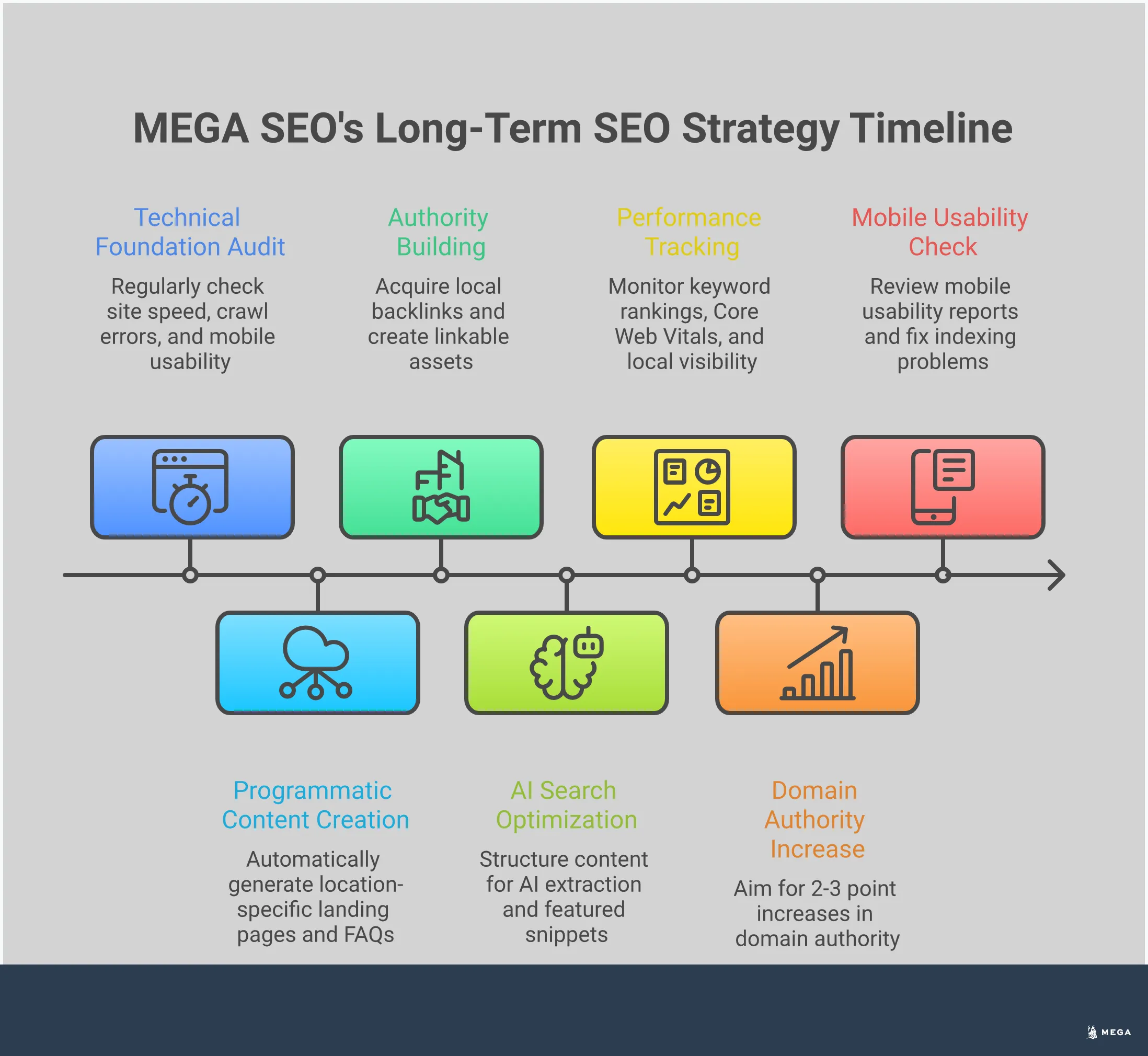
Think of your website as the foundation of a house. If it has cracks, is hard to get into, or is slow to walk through, no amount of fancy decoration will fix the core problem. The same goes for your website's technical health. A technical SEO audit identifies issues like broken links, indexing problems, and slow page loads that can prevent search engines from properly crawling and ranking your content. For many small business owners, troubleshooting these issues is a major hurdle. Optimizing your site speed is particularly important, as it directly impacts user experience and search engine rankings. A fast, clean, and technically sound website is the starting point for any successful SEO strategy.
Use programmatic SEO to automate content
Creating high-quality content consistently is a challenge, especially when you want to target many specific locations or customer needs. Programmatic SEO helps solve this by using data to automate content creation at scale. For example, a local service business can automatically generate unique, optimized pages for every neighborhood it serves. This method allows you to build authority across a wide range of relevant search terms without writing every single page by hand. By weaving proven methods like programmatic SEO into your routine, your business can sustain a competitive edge and meet customers exactly where they are searching. MEGA AI uses this to create and deploy content that captures highly specific search intent.
Develop your authority with link building
Link building is the process of getting other reputable websites to link back to yours. Each of these links acts as a vote of confidence, telling search engines that your site is a credible and authoritative source of information. For local businesses in competitive markets, a strong backlink profile is often a key differentiator that underpins high rankings. Building authority takes time and consistent effort, involving outreach, content promotion, and creating link-worthy assets. It’s a fundamental part of a long-term strategy that signals to Google and potential customers that you are a trusted leader in your field.
Optimize for LLMs and AI-powered search
The way people find information is changing. Search is no longer just a list of ten blue links. With the rise of Large Language Models (LLMs), answers are often delivered directly in AI-powered summaries and chatbot conversations. Optimizing for this new landscape means structuring your content to be easily understood and cited by AI tools like ChatGPT and Google's AI Overviews. Success in modern SEO requires balancing traditional fundamentals with emerging trends like AI search optimization. This involves using clear language, answering questions directly, and structuring data effectively to ensure your business shows up not just in search results, but as the source for AI-generated answers.
How to Effectively Analyze Your Competition
Understanding what your competitors are doing is a critical part of building a foundational SEO strategy. This isn’t about copying their every move. Instead, it’s about identifying where they’re strong, where they’re weak, and where you have an opportunity to stand out. A thorough analysis gives you a clear picture of the search landscape in your market, allowing you to make smarter decisions about where to invest your time and resources. By looking at their technical foundation, content, and authority, you can find the gaps that your business is uniquely positioned to fill. This process moves you from guessing what might work to building a plan based on real-world data.
A complete competitive analysis looks beyond just keywords. It examines how well a competitor’s website functions, the topics they cover in their content, and how other sites perceive their authority. Are their pages loading quickly? Is their content helpful and comprehensive? Who is linking to them and why? Answering these questions helps you benchmark your own efforts and set realistic goals. It also reveals strategic openings you might have otherwise missed, helping you create a plan that is both proactive and informed by the realities of your specific market.
Use tools to check domain authority and backlinks
A competitor’s domain authority gives you a sense of how credible search engines find their website. This score is heavily influenced by the quantity and quality of backlinks—links from other websites pointing to theirs. For local businesses, a strong backlink profile is often what separates the top-ranking sites from the rest. You can use various SEO tools to see who is linking to your competitors and how strong their domain authority is. This information helps you set realistic goals and identify potential websites you could also get links from. Analyzing backlinks reveals what kind of content earns trust in your industry and helps you build your own site's authority over time.
Understand local search intent
For small and local businesses, winning at SEO means focusing on your specific geographic area. Many businesses make the mistake of targeting broad, national keywords instead of dominating local search. To avoid this, you need to understand local search intent. This means figuring out what customers in your area are actually looking for when they type in a query. Are they searching for a product to buy now, directions to a physical store, or information about a local service? Optimizing your Google Business Profile, creating location-specific pages, and gathering local customer reviews are all ways to align your website with what local searchers need.
Find content gaps and new opportunities
Once you know what your competitors are ranking for and what local customers are searching for, you can start looking for content gaps. A content gap is a topic that your target audience is interested in but that your competitors haven't covered well—or at all. This is your chance to create the definitive resource on that subject. For example, if local competitors have general service pages but no detailed guides or case studies, you’ve found an opportunity. A content gap analysis helps you identify these openings so you can create targeted content that meets a specific need, attracting valuable traffic that your competition is missing.
What Metrics Should You Track?
Choosing the right metrics helps you understand what’s working. Your SEO efforts, whether tactical or strategic, should be tied to measurable outcomes. Instead of getting lost in data, focus on a few key indicators that align with your goals. This lets you see the direct impact of your short-term plays while also tracking the steady progress of your long-term foundation. A good measurement plan looks at a mix of visibility, engagement, and conversion metrics to paint a full picture of your performance.
Key metrics for short-term tactics
For tactical plays, you want to see results quickly. These metrics tell you if a specific change, like updating a blog post title, had an immediate effect. Start by looking at organic traffic to the specific page you updated. Did it go up? Also, monitor your click-through rate (CTR) in Google Search Console to see if more people are clicking your link from the search results. Other helpful indicators include engagement metrics like time on page and bounce rate. These numbers provide actionable insights that confirm whether your quick fixes are moving the needle.
Key metrics for a long-term strategy
A foundational strategy is about sustainable growth, so your metrics should reflect that. Instead of looking at single pages, you’ll track site-wide performance over months. The most important metric is overall organic traffic growth. Are you getting more visitors from search this quarter than last? You should also monitor your keyword rankings for a broad set of target terms to see your visibility improve. Other critical long-term indicators include your domain authority and the number of quality backlinks you’ve acquired. Ultimately, the goal is to track conversions from organic traffic to ensure your SEO efforts contribute to business growth.
How to track performance over time
Consistent tracking separates a successful SEO plan from a hopeful one. SEO monitoring involves regularly analyzing your website’s performance to catch issues and find opportunities. At a minimum, you should have Google Analytics and Google Search Console set up. Schedule time each month to review your key long-term metrics, like overall traffic and conversions. For tactical efforts, you can check in more frequently—perhaps weekly—to see the immediate impact of your changes. This regular check-in helps you see how short-term tactics contribute to your larger strategic goals and make smarter decisions.
How to Balance Short-Term Needs and Long-Term Goals
Thinking about SEO as a choice between quick fixes and a long-term game is a common trap. The most successful businesses don’t choose one or the other; they find a rhythm that blends immediate actions with a forward-thinking plan. This hybrid approach lets you capture immediate opportunities without sacrificing sustainable growth. It’s about building your house (the strategy) while also making sure the welcome mat is out and the lights are on (the tactics).
Create a hybrid approach that works for you
A balanced SEO plan addresses immediate needs while steadily building toward your long-term goals. Think of it this way: your foundational strategy is the slow-and-steady work of building domain authority and creating a technically sound website. Your tactical playbook involves seizing opportunities as they appear, like optimizing a page that’s suddenly ranking on page two or creating content around a trending local event. A truly comprehensive SEO plan integrates both. You can work on a long-term link-building campaign while simultaneously running a short-term test to improve the click-through rate on your top-performing blog posts.
Decide between automation and manual review
Automation is your best friend for scaling routine tasks that build your foundation. Things like running technical audits, fixing broken links, or generating programmatic SEO pages for different service areas can be handled efficiently by AI. This frees you up to focus on what requires a human touch. For instance, you might let an AI agent like MEGA AI’s Lindsay operate on autopilot to handle technical fixes and content updates, which is what 85% of our customers do to get faster results. At the same time, you can set key articles or new landing pages to require manual review, ensuring the final product perfectly matches your brand voice before it goes live.
Know when to prioritize tactics vs. strategy
Your business stage often dictates where you should focus your energy. If you’re launching a brand-new website, your priority is 100% strategy. You need to establish a solid technical foundation, conduct deep keyword research, and build out your core service pages and blog categories. On the other hand, if you’re an established local business heading into your busy season, your focus should shift to tactics. This could mean updating your Google Business Profile with holiday hours, creating seasonal offers, and running a campaign to get more reviews. The key is to understand that this priority will shift back and forth over time.
Your Next Steps for SEO Success
Moving from understanding to action is the final step. Once you know the difference between a long-term strategy and short-term tactics, you can build a plan that delivers real results. Here’s how to structure your approach.
Choose the right tools and resources
An effective SEO program requires the right tools to measure visibility, engagement, and conversions. For small and local businesses, this often starts with simple but powerful steps like optimizing your Google Business Profile and managing on-page SEO. You’ll need resources for keyword research, technical audits, and rank tracking to see what’s working. While you can piece together various tools, an integrated platform saves significant time. A comprehensive system that handles everything from content generation to technical fixes allows you to focus on your business instead of juggling multiple subscriptions and dashboards. This approach ensures all your efforts are aligned and working toward the same goal.
Set up your measurement and tracking systems
You can’t improve what you don’t measure. Setting up a reliable tracking system is non-negotiable for seeing the impact of your SEO work. Continuous SEO monitoring involves tracking key metrics to analyze your website’s performance in organic search. Focus on a handful of important indicators like organic traffic, keyword rankings for your main terms, click-through rates, and conversion rates from search visitors. These numbers provide the actionable insights you need to refine your strategy over time. Whether you’re testing a short-term tactic or building a long-term foundation, consistent tracking tells you if your investment is paying off and where to adjust your focus for better results.
Decide between building in-house or outsourcing
Finally, you need to decide who will do the work. Building an in-house SEO team gives you control, but many small business owners lack the technical know-how to fix website issues or run a full-scale content program. Hiring a traditional agency can solve the expertise problem, but it often comes with high costs and slow execution. A third option is emerging: AI-powered platforms that act as a strategic operator. For example, Gomega’s AI agents can plan and execute a full SEO strategy, from technical audits to content creation, for a fraction of an agency’s cost. This hybrid approach gives you the expertise and execution power you need without the high overhead.
Related Articles
- Unlocking Success: How Small Business SEO Tools Can Transform Your Digital Strategy
- Small Business SEO Services: A Complete Guide
- Small Business SEO Tools: Master Essentials for Success
- Affordable SEO for Small Business: A Complete Guide
Frequently Asked Questions
Should I focus on quick tactical fixes or a long-term strategy first? The best starting point depends on your website's current state. If your site is new or has significant technical issues, you must begin with a foundational strategy to build a solid base. For a more established site, you can often pursue a hybrid approach, using quick tactics to capture immediate opportunities while you work on your long-term plan in the background.
How long does it really take to see results from a foundational SEO strategy? Sustainable growth from a foundational strategy isn't immediate. Most businesses begin to see meaningful organic traffic growth within three to nine months. This timeline allows search engines enough time to recognize, crawl, and index the improvements you've made and to build trust in your website's authority over time.
Can I just stick to a tactical SEO playbook and ignore the strategy part? Relying only on short-term tactics is risky. While you might see temporary traffic spikes, you won't build the lasting domain authority needed for sustainable growth. A tactics-only approach leaves your site vulnerable to search engine algorithm updates and often leads to inconsistent results because it fails to address core issues with your site's technical health and content structure.
What's the first step to building a foundational SEO strategy? A technical audit is the best first step. Before you can build a strong content plan or earn backlinks, you need to ensure your website is technically sound, fast, and easy for search engines to crawl. This audit will identify any underlying issues that could prevent your other SEO efforts from succeeding.
How does an AI tool fit into balancing tactics and strategy? An AI-powered platform can manage both sides of the equation. It can automate the consistent, time-consuming tasks that build your long-term foundation, such as running technical audits and creating content at scale. At the same time, it can execute precise, short-term tactics like updating a page to improve its click-through rate, allowing you to maintain a balanced and effective SEO program.