
A sudden drop in your SEO rankings can feel like a mystery. One day your site is performing well, and the next, it’s fallen off the map. Was it a Google algorithm update that changed the rules? Did a competitor make a brilliant move that pushed you down? Or was it an inside job—a simple technical mistake on your own site that went unnoticed? To solve this case, you need to become a detective. This guide provides the tools and techniques you need to investigate the scene, gather clues from your analytics, and identify the culprit. We’ll walk you through the most common suspects and lay out the SEO recovery strategies needed to close the case and restore your site’s rightful place.
Key Takeaways
- Pinpoint the Problem Before You Panic: A ranking drop is a symptom, not the cause. Use analytics and a site audit to methodically diagnose the root issue—be it a technical glitch, a Google update, or a competitor's new strategy—before you start making changes.
- Execute a Multi-Faceted Recovery: A successful recovery plan addresses several areas at once. Focus your efforts on fixing technical errors, elevating your content's quality and relevance, improving the user experience, and cleaning up your backlink profile.
- Shift from Recovery to Resilience: The best way to handle a ranking drop is to prevent the next one. Establish a long-term strategy that includes regular technical audits and a consistent content calendar to build a site that can withstand future algorithm shifts.
Why Did My SEO Rankings Drop?
Seeing your website’s rankings fall can be disheartening, especially after you’ve put so much effort into your SEO strategy. It’s a common problem, but the good news is that it’s almost always fixable. The first step is to understand what caused the drop. Several factors, from simple mistakes to major algorithm changes, can affect your position in search results. By methodically investigating the potential causes, you can identify the root of the problem and build a solid plan for recovery. Let's walk through the most frequent reasons for a drop in SEO rankings.
Common Causes for a Ranking Drop
Often, a ranking drop is a direct result of changes you’ve made to your own website. A recent site redesign, server migration, or even adding new videos and images can inadvertently hurt your SEO if not handled correctly. For example, if you move pages without setting up proper 301 redirects, search engines can't find your new content, and you lose the authority those old pages had. Similarly, slow page loading speed is a major factor that can frustrate users and cause search engines to rank your site lower. You should also check for accidental errors. A simple mistake, like misconfiguring your robots.txt file, can tell Google not to crawl important pages, effectively making them invisible in search results.
Another critical factor is your backlink profile. Backlinks are like votes of confidence from other websites, and losing them can cause your rankings to suffer. It's wise to regularly monitor your backlinks to see if any valuable links have disappeared. Sometimes, the issue isn't on your site at all. Your competitors may have improved their own SEO, creating better content or earning new backlinks that push them ahead of you. Finally, Google can issue a manual penalty if it finds your site violates its webmaster guidelines. You can check for any manual actions against your site in your Google Search Console account.
How Algorithm Updates Affect Your Rank
Google is constantly refining its search algorithm to provide users with the best possible results. While most of these changes are minor, Google occasionally rolls out major "core updates" that can cause significant shifts in search rankings across the web. These updates are designed to better assess content quality, rewarding sites that offer genuine value and authority while penalizing those with thin or spammy content. If you notice a drop that coincides with a known Google algorithm update, it’s a strong sign that your site’s content or structure no longer aligns with what Google considers high-quality. The key is not to panic. Instead, focus on improving your content's relevance and overall user experience.
Technical Issues That Hurt Performance
Underlying technical problems are often the silent culprits behind a performance drop. Issues like broken links create a frustrating experience for users and signal to search engines that your site may be poorly maintained. A website with a non-responsive design is another common mistake. With so many people browsing on their phones, a site that isn't mobile-friendly will almost certainly see its rankings decline. Security is also paramount. If your site isn't secure (using HTTPS), browsers may warn users before they visit, and search engines will favor your secure competitors. Regularly auditing your site for these kinds of technical SEO issues is essential for maintaining and improving your rankings over time.
How to Diagnose a Ranking Drop
Seeing your rankings fall can be alarming, but the key is to approach the situation methodically instead of making reactive changes. A drop is a symptom, and your first job is to diagnose the underlying cause. Is it a widespread issue affecting your entire site, or is it isolated to a few pages? Did it happen overnight or gradually over time? Answering these questions will point you toward the right solution. By systematically working through your analytics, auditing your site's health, and looking at the competitive landscape, you can pinpoint the exact reason for the decline and build an effective recovery plan.
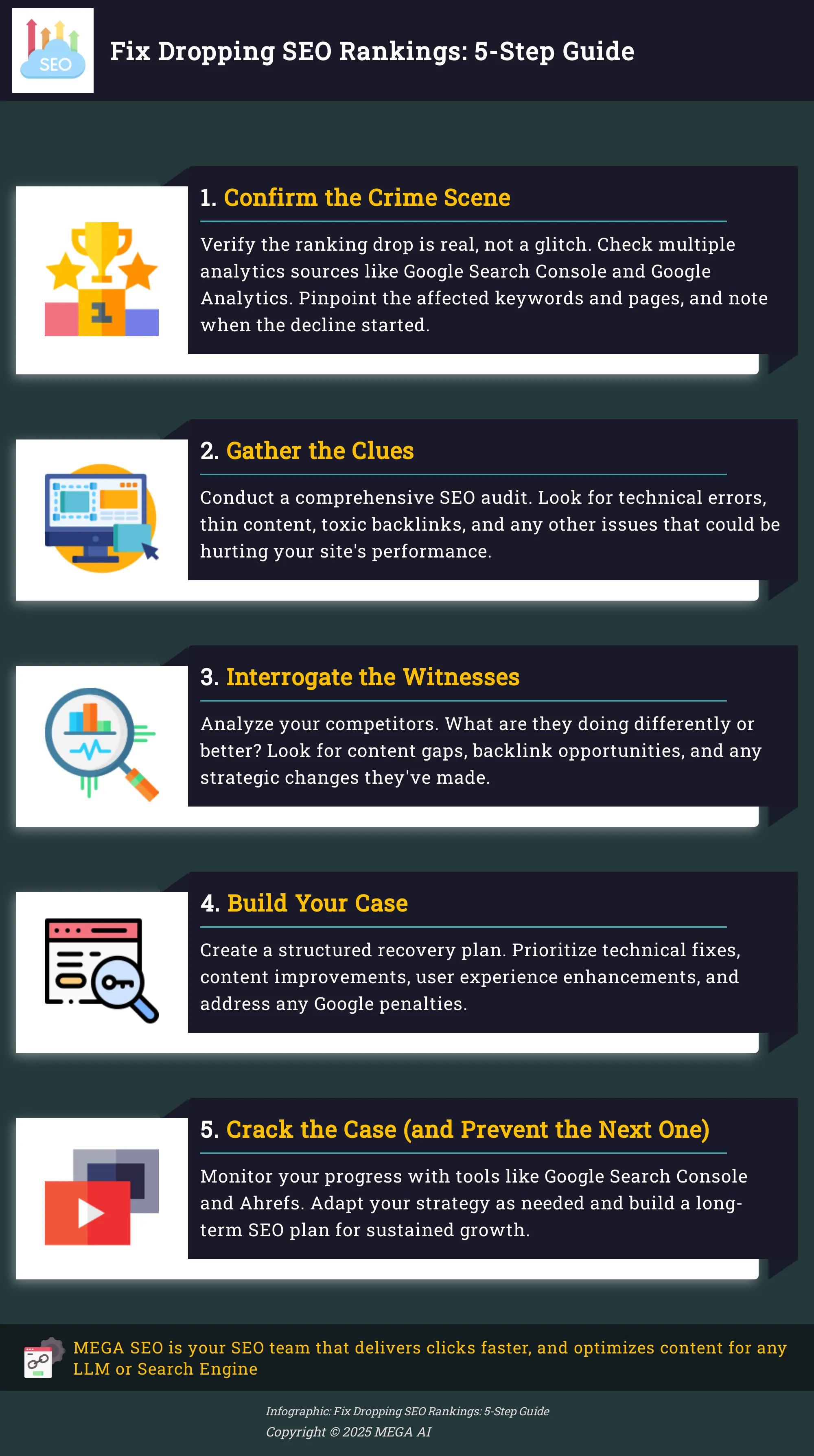
Use Analytics to Find the Problem
Before you do anything else, you need to verify the ranking drop is real. Sometimes, tracking tools can have glitches or show temporary fluctuations. The first step is to confirm the data in multiple sources. Cross-reference what you’re seeing with the performance reports in Google Search Console and your Google Analytics account. This step is crucial to ensure the issue is genuine and not a reporting error. Look at the specific pages and keywords that have lost position. Pinpointing the start date of the decline is also critical, as it can help you correlate the drop with a potential cause, like a recent site change or a known Google algorithm update.
Conduct a Full SEO Audit
Once you've confirmed the drop, it’s time for a deep dive into your site’s health. A comprehensive SEO audit can uncover technical issues that may be holding your site back. This process involves checking for problems that violate search engine guidelines, such as hidden text, cloaking, or spammy content that may have been added without your knowledge. It’s also important to review your site for technical errors, slow page speed, or broken internal links. A thorough site audit acts as a complete check-up, giving you a clear picture of any on-page or technical problems that need to be addressed before you can expect your rankings to recover.
Analyze Your Competitors
Your website doesn’t operate in a silo. Sometimes, a ranking drop isn’t about something you did wrong but about what your competitors did right. If your site audit doesn't reveal any major issues, your next step is to perform a competitor analysis. Look at the sites that are now outranking you for your target keywords. Have they recently published new content, overhauled their website, or earned a significant number of new backlinks? Analyzing keyword gaps—terms your competitors rank for but you don’t—can also reveal new content opportunities. Understanding their strategy provides valuable context and can inform your own path to recovery.
Create Your SEO Recovery Plan
Once you’ve diagnosed the likely cause of your ranking drop, it’s time to build a structured recovery plan. A scattershot approach won’t work; you need a methodical strategy that addresses the core issues affecting your site’s performance. A comprehensive plan acts as your roadmap, guiding your efforts and ensuring you cover all critical areas. Your recovery will center on four key pillars: fixing underlying technical problems, elevating your content, improving the user experience, and addressing any direct penalties from Google.
Tackling these areas systematically will not only help you recover lost rankings but also build a more resilient SEO foundation for the future. This proactive approach makes your site less vulnerable to future algorithm updates and competitive pressure. For startups and small businesses, an efficient plan is crucial for managing resources effectively. Using an end-to-end platform can streamline your SEO, automating many of the tedious tasks involved in technical audits, content optimization, and performance monitoring, allowing you to focus on strategy.
Fix Technical SEO Issues
Your website's technical health is the foundation of its SEO performance. If search engine crawlers can't properly access, understand, or index your site, your content won't rank, no matter how good it is. Start by conducting a thorough site audit to find and fix any critical errors. Look for issues like hidden text, cloaking, or spammy content that may have been added without your knowledge, especially if you’ve had security issues. Also, check if any recent updates to plugins or themes have caused conflicts or performance problems. Once you’ve resolved any issues that led to a manual action, you can submit a reconsideration request to Google to have the penalty lifted.
Improve Content Quality and Relevance
Content is at the heart of SEO. If your rankings have dropped, it’s a strong signal that your content may no longer meet user expectations or Google’s quality standards. Your goal is to create valuable, helpful content that directly addresses what your audience is searching for. Conduct a content audit to identify low-quality, thin, or duplicate pages that could be hurting your site. For your remaining pages, focus on making them better. You can improve readability by adding clear headings, lists, images, and videos. Ensure all information is accurate, up-to-date, and original. MEGA AI’s Maintenance Agent can automatically identify content gaps and add new, relevant sections to your existing articles, ensuring they remain comprehensive and competitive.
Enhance User Experience
Google wants to send users to websites that provide a great experience. Poor user engagement signals can tell search engines that your site isn't satisfying visitors, which can lead to a drop in rankings. Focus on improving key metrics like click-through rate (CTR), time on page, and bounce rate. Use data from Google Search Console to see which pages have a low CTR and could be improved with better meta titles and descriptions. Tools like heatmaps can show you how users interact with your pages, revealing areas of confusion or friction. By improving site navigation, page speed, and mobile usability, you create a smoother experience that encourages visitors to stick around longer.
Recover from SEO Penalties
A sudden, sharp drop in rankings could be the result of a Google penalty. First, check Google Search Console for any manual actions. If you find one, Google will tell you the reason, which gives you a clear path to fixing it. If there’s no manual penalty, you may have been hit by an algorithmic update. Analyze your traffic data against the dates of recent Google updates to see if there’s a correlation. A common cause for penalties is a portfolio of low-quality backlinks. You should conduct a backlink analysis to identify toxic or spammy links pointing to your site. While it should be used with caution, the Google Disavow Tool can help you ask Google to ignore these harmful links.
Rebuild Your Backlink Profile
A sudden drop in rankings can often be traced back to your site’s backlink profile. Low-quality or spammy links can signal to search engines that your site isn't trustworthy, leading to penalties or algorithmic devaluations. Rebuilding your backlink profile is a critical step in any SEO recovery effort. It involves a two-part process: first, cleaning up the existing harmful links, and second, proactively building a new foundation of high-quality, relevant links that support your authority and credibility. This process shows search engines that you’re committed to quality and helps restore your site’s standing.
Think of your backlink profile as your website's professional network. Links from reputable, authoritative sites act as strong references, while links from spammy or irrelevant sites can damage your reputation. When Google's algorithms detect a pattern of unnatural links pointing to your site, they may conclude that you're trying to manipulate search results. This can result in a manual penalty or an algorithmic filter that suppresses your rankings. By methodically auditing and cleaning your backlink profile, you address the root cause of the problem. Then, by focusing on earning high-quality links, you build a more resilient and trustworthy online presence that can withstand future algorithm updates.
Audit Your Backlinks
The first step is to get a clear picture of every site that links to yours. A thorough backlink audit will help you identify which links are helping you and which are hurting you. You can use tools like Ahrefs or the Links report in Google Search Console to pull a complete list of your backlinks. As you review the list, look for red flags like links from low-quality directories, spammy comment sections, or websites in completely unrelated niches. The goal is to create a comprehensive inventory of your link profile so you can systematically address any problematic links that could be holding your rankings down.
Disavow Harmful Links
Once you’ve identified toxic or spammy links, you need to tell Google to ignore them. This is done using the disavow tool. Before you do this, it's good practice to reach out to the website owners and request that they remove the link. If that doesn't work, you can create a disavow file—a simple text file listing the domains or specific URLs you want Google to disregard. You then upload this file to Google Search Console. It’s important to disavow links with caution, as disavowing the wrong links could harm your SEO. Focus only on the links that are clearly artificial or harmful.
Build High-Quality Backlinks
After cleaning up your profile, the focus shifts to acquiring new, authoritative links. This isn't about quick fixes; it's about earning trust. The most sustainable way to do this is by creating exceptional content that people naturally want to share and link to. Think about creating original research, in-depth guides, or valuable tools that serve your audience. You can then perform targeted outreach to relevant publications or blogs in your industry. Building a strong backlink profile is a long-term investment in your site’s health. Using an SEO automation platform can help you consistently generate the kind of high-quality content that attracts these valuable links.
Optimize Your On-Page SEO
Once your technical foundation is solid, the next step in your recovery is to focus on your on-page elements. On-page SEO involves optimizing the individual pages of your website to rank higher and earn more relevant traffic. It’s about signaling to search engines what your content is about and confirming that it’s valuable to users. Think of it as ensuring your storefront is not only well-built but also has clear signage and a welcoming layout that guides customers inside. These optimizations directly influence how your pages are understood and valued by search algorithms.
Neglecting these details can hold back even the most well-researched content strategy. You might have the best product or service, but if your page titles are confusing or your content is hard to read, both users and search engines will struggle to see its value. This is a common reason for ranking drops that can be fixed with a methodical approach. By refining your on-page elements—from the meta tags that appear in search results to the structure and depth of your content—you can make significant progress in regaining your lost rankings. This process also helps build a more resilient online presence that is less susceptible to future algorithm shifts.
Optimize Meta Tags and Headers
Your meta tags and headers are some of the first elements search engines and users see. Title tags and meta descriptions appear on the search engine results page (SERP), while headers (H1s, H2s, etc.) structure the content on the page itself. As Siege Media notes, "common SEO mistakes (like lengthy title tags or unoptimized URL slugs) may be what ultimately prevent your content from reaching new heights on the SERP." To fix this, ensure your title tag is concise, includes your primary keyword, and accurately reflects the page's content. Your meta description should be a compelling summary that encourages users to click. Using a logical header hierarchy on the page makes your content easier for both users and search crawlers to read and understand.
Fix Your Internal Linking
Internal links are the pathways that connect the pages of your website. A strong internal linking strategy helps search engines discover your content, understand the relationship between different pages, and spread authority throughout your site. It also guides users to other relevant information, improving their experience and keeping them on your site longer. A poor user experience can hinder your organic efforts by making it harder for search engines to crawl and index your site. Start by finding and fixing any broken internal links. Then, look for opportunities to link between relevant pages using descriptive anchor text that gives context to the linked page. MEGA AI’s SEO tools can automate this process, building a logical link structure to support your recovery.
Add Depth and Relevance to Content
Your content is the core of your SEO efforts. If your rankings have dropped, it might be because your content is no longer seen as the most comprehensive or relevant resource for a given query. As one expert puts it, "High-quality content is crucial. This means creating informative articles, blog posts, videos, etc., that are relevant and valuable to your target audience." Review your key pages and compare them to the current top-ranking competitors. Are there gaps in your information? Could you provide more depth, add recent data, or answer related questions? Updating existing articles with new, relevant sections can significantly improve their performance. This is where MEGA AI’s Maintenance Agent shines, as it can analyze your content and identify new information to add, ensuring your articles are thorough and authoritative.
Make Key Technical SEO Fixes
Technical SEO forms the foundation of your website's performance. If that foundation has cracks, your rankings will suffer, no matter how great your content is. Often, a sudden drop in traffic can be traced back to a technical issue that went unnoticed. These problems can prevent search engines from properly crawling, indexing, and understanding your site, making it nearly impossible to rank well. Addressing them is a critical step in any recovery plan because it ensures your content has a fair chance to be seen.
We'll focus on three high-impact areas that can make a significant difference in your recovery efforts: site speed, mobile-friendliness, and structured data. These elements directly influence both user experience and how search engines perceive your site's quality. While diving into your site's code might sound intimidating, many of these fixes are straightforward. For more complex issues, platforms like MEGA AI offer automated SEO tools that can identify and resolve technical problems, ensuring your site is always optimized for performance. By tackling these core technical aspects, you're not just patching a problem; you're building a more resilient and reliable website for the future.
Improve Site Speed and Performance
A slow website is a major roadblock for both users and search engines. People have little patience for pages that take too long to load, and Google knows this. Slow loading times lead to higher bounce rates, which can signal to search engines that your site provides a poor user experience, hurting your rankings. You can use Google's PageSpeed Insights to get a free performance report and see what's slowing you down. Common culprits include large image files, clunky code, and slow server response times. Simple fixes like compressing images, enabling browser caching, and minimizing CSS and JavaScript files can make a noticeable difference in your site's speed and help you get back in Google's good graces.
Check for Mobile-Friendliness
With most searches now happening on mobile devices, Google uses mobile-first indexing. This means it primarily looks at the mobile version of your website to determine its rank. If your site isn't easy to use on a phone, your rankings will likely suffer across all devices. A responsive design, which automatically adjusts your site's layout to fit any screen size, is the standard solution. You can quickly check your site's performance with Google's Mobile-Friendly Test. A site that isn't mobile-friendly creates a frustrating experience for users, leading them to leave quickly. Ensuring your site is fully responsive is a fundamental step in any modern SEO strategy and crucial for recovery.
Implement Structured Data
Structured data, also known as schema markup, is a type of code that helps search engines understand the context of your content more deeply. Think of it as a translator for Google. By implementing it correctly, you can help your pages appear as "rich results" in search, which are the enhanced listings that include elements like star ratings, prices, or event dates. These rich snippets make your listing more eye-catching and can significantly improve your click-through rate. If your rankings have dropped, check for errors in your existing schema or identify opportunities to add it. You can use Google's Rich Results Test to validate your code and ensure it's implemented correctly.
How to Monitor Your Recovery Progress
After you've put in the work to fix technical issues and improve your content, the next step is to watch for signs of recovery. This isn't a passive waiting game. Actively monitoring your progress helps you understand what’s working and where you might need to adjust your strategy. Tracking the right metrics with the right tools will give you a clear picture of your site’s health and guide your next steps. It’s about making informed decisions to get your site back on track and keep it there for the long haul. This process ensures your efforts are paying off and helps you build a more resilient SEO foundation for the future.
Key SEO Metrics to Watch
Once your recovery plan is in motion, you need to know if it's actually working. Watching a few key metrics will give you the feedback you need. Start with your keyword rankings. Use an SEO tool to see how the positions for your target keywords are changing. Small fluctuations are normal, but you're looking for a steady upward trend for the keywords that were most affected by the drop. Next, dive into your traffic analysis. Google Search Console is perfect for this, as it shows you exactly which pages have lost organic traffic. This data helps you prioritize which content to update or improve first. Finally, pay close attention to user engagement metrics like click-through rate (CTR) and time on page. These signals tell Google if users find your content valuable.
Tools to Monitor Your Progress
Having the right tools makes monitoring your recovery much easier. You don’t need a huge, expensive toolkit, just a few essentials to get a clear view of your performance. Your first stop should always be Google Search Console. It’s a free tool directly from Google that will alert you to any manual penalties and provide invaluable data on your site's performance in search results. For a deeper dive, dedicated SEO platforms like Ahrefs or Semrush are incredibly useful. They help you track keyword rankings over time and see what your competitors are up to. You can even find keyword gaps where they rank for terms you don't. Lastly, use an analytics tool like Google Analytics to track overall website performance and see how your SEO efforts are impacting user behavior on your site.
Set a Realistic Recovery Timeline
One of the hardest parts of SEO recovery is being patient. It’s important to set realistic expectations from the start, because results rarely happen overnight. Depending on the severity of the issue and the competitiveness of your industry, a full recovery can take several months. One case study even noted it took up to eight months to see a significant rebound. The key is to focus on making steady, consistent improvements rather than looking for a quick fix. Recovery is not a one-time event; it requires continuous monitoring. Regularly check your key metrics, see what’s moving the needle, and be prepared to adjust your strategy. This ongoing process of analysis and refinement is what builds a resilient, long-term SEO foundation.
Develop a Long-Term SEO Strategy
Recovering from a ranking drop is a relief, but the work doesn’t stop there. To prevent future drops and build lasting authority, you need to shift from a reactive mindset to a proactive one. A long-term SEO strategy is your roadmap for sustained growth, helping you build a resilient online presence that can weather algorithm updates and competitive pressure. It’s about creating a system of continuous improvement rather than waiting for a problem to arise. This means looking beyond immediate fixes and establishing routines that support your site’s health for months and years to come.
This strategic approach involves three core pillars: consistent content creation, regular technical check-ups, and a commitment to staying informed. By integrating these practices into your regular workflow, you move beyond one-time fixes and start building a foundation for predictable, long-term success. This ensures your site not only recovers but becomes stronger and more competitive over time. A solid strategy turns the stressful experience of a ranking drop into a valuable lesson that strengthens your overall marketing efforts. It’s the difference between patching a leak and reinforcing the entire structure to prevent future breaches.
Create a Content Calendar
A content calendar is the backbone of a successful long-term SEO strategy. Its purpose is to ensure you consistently publish valuable, helpful content that directly addresses what your audience is searching for. Start by planning your topics around relevant keywords and user questions. A good practice is to conduct a content audit to identify any low-quality or duplicate pages that could be hurting your performance. From there, you can map out a schedule for creating new articles, updating existing ones, and repurposing top performers. This systematic approach keeps your website fresh and relevant, signaling to search engines that your site is an active and authoritative source of information in your niche.
Schedule Regular SEO Audits
Think of an SEO audit as a routine health check for your website. Scheduling them regularly—quarterly or bi-annually—helps you catch potential issues before they escalate into major problems that cause your rankings to fall. A comprehensive audit should check for technical problems like broken links, slow page speed, and non-responsive design on mobile devices. It’s also important to ensure all your important pages are set up for indexing so search engines can find and rank them. While it may seem tedious, this proactive maintenance is one of the most effective ways to protect your SEO performance and maintain a technically sound website that provides a smooth user experience.
Stay Current with SEO Best Practices
The world of SEO is constantly evolving, and what works today might not work tomorrow. Staying current with best practices is non-negotiable for long-term success. This means prioritizing high-quality, user-focused content and maintaining transparency by following Google's guidelines. Implementing SEO the wrong way, such as using outdated or black-hat techniques, can do more harm than good and may even lead to penalties. Keeping up with algorithm changes and industry trends can feel like a full-time job, which is why many businesses turn to automated SEO platforms that adapt their strategies in real time, ensuring your site remains compliant and competitive without constant manual oversight.
Use AI to Accelerate Your SEO Recovery
Recovering from a ranking drop requires a methodical approach, but it doesn't have to be a slow, manual grind. While the strategies we've covered are essential, executing them can be time-consuming. This is where artificial intelligence can be a game-changer, automating the most tedious parts of SEO recovery so you can see results faster.
How MEGA AI Simplifies SEO Recovery
Recovering your rankings involves juggling dozens of tasks, from technical fixes to content rewrites. MEGA AI provides a comprehensive SEO solution that automates these complex processes. The platform handles the technical details and repetitive work involved in optimization, freeing you from the weeds. This allows you and your team to focus on strategic decisions, like exploring new content pillars or analyzing market trends, rather than getting bogged down in the manual execution of your recovery plan. It’s like having an expert SEO assistant working for you around the clock.
Automate Keyword and Content Optimization
Often, a ranking drop is a sign that your content strategy has gone stale. MEGA AI tackles this head-on by automatically discovering low-competition, high-impact keywords to help you find new traffic sources and address critical content gaps. Beyond research, the platform automates content updates to improve your click-through rate (CTR), a key factor in regaining search visibility. It ensures your articles remain relevant and are continuously optimized for performance on Google or any other platform you target. You can book a demo to see how this automated optimization works.
Monitor and Adapt with AI
SEO recovery isn't a one-time fix; it's an ongoing process of monitoring and adaptation. MEGA AI helps you maintain your site's health long-term by managing and refreshing internal links, which is essential for a strong site structure. The platform’s Maintenance Agent also enhances existing articles by identifying and adding new, relevant content to improve their depth and authority. It continuously optimizes titles and meta descriptions to keep your CTR high, ensuring your content remains competitive and visible. This automated vigilance helps you not only recover your rankings but also protect them from future drops.
Related Articles
- SEO Ranking Recovery: Your Ultimate 2024 Guide
- Google Algorithm Updates: A 2024 SEO Guide
- Tech SEO Checklist: Ultimate Guide for 2024
- How to Use SEMrush for Backlink Analysis: Step-by-Step
- Master On-Page SEO: Boost Rankings with Key Techniques
Frequently Asked Questions
What's the very first thing I should check if my rankings suddenly fall? Before you start making changes, your first step is to confirm the drop is real and widespread. Check your performance reports in Google Search Console, not just a third-party tracking tool, to verify the data. Pinpoint the exact date the decline began, as this will help you connect it to a potential cause, like a recent site change you made or a known Google algorithm update.
How can I tell the difference between a Google penalty and a drop from an algorithm update? A manual penalty is a direct action against your site for violating Google's guidelines, and you will find a specific notification about it in your Google Search Console account. An algorithmic drop, on the other hand, happens when Google rolls out a core update that changes how it evaluates all websites. There is no notification for this; you have to diagnose it by seeing if your traffic drop coincides with the date of a known update.
My rankings dropped, but I didn't change my website. What could be the cause? Your website doesn't exist in a vacuum. If you haven't made any changes, the drop is likely due to external factors. Your competitors may have significantly improved their own content or earned new backlinks, pushing them ahead of you. It's also very common for a drop to be caused by a broad Google algorithm update that has re-evaluated what it considers to be high-quality content for your target keywords.
Is it better to fix my old content or create new content to recover my rankings? A balanced approach is usually best. Start by auditing and improving your existing pages that have lost rankings, as this can often be the quickest way to see a recovery. Focus on adding depth, improving readability, and ensuring the information is current. At the same time, use a content calendar to consistently publish new, high-quality articles to build long-term authority and target new keywords.
How long does it usually take to recover from a ranking drop? There's no single answer, as the timeline depends entirely on the cause. A simple technical fix might show results in a few weeks. Recovering from a core algorithm update, however, requires deeper strategic changes to your content and user experience, which can take several months. The key is to focus on making steady, consistent improvements rather than expecting an overnight solution.