
In the competitive real estate world, getting your listings noticed online is essential. A smart SEO Real Estate strategy is a powerful way to connect with buyers and sellers who are actively searching for properties in your area. This guide provides a practical roadmap for turning your website into a reliable lead-generation tool. We'll cover effective strategies, from optimizing your content and building authoritative backlinks to mastering local SEO. Whether you’re a seasoned agent or just starting, these steps can significantly impact your business growth by making your online presence work harder for you.
Key Takeaways
- Dominate local search: Optimize your Google My Business profile, create location-specific content, and build local citations and backlinks to attract clients in your area.
- Content is king (and queen!): Craft compelling property descriptions, informative neighborhood guides, and engaging visuals, including optimized images and videos.
- A user-friendly website is a must: Ensure your website is well-structured, mobile-responsive, and features easy navigation and fast loading speeds. Use internal linking strategically to connect relevant content and improve SEO.
What is Real Estate SEO?
Buying or selling a home is a significant life event, and most people start their search online. That’s where SEO comes in. SEO for real estate agents is all about making sure your website appears high in search results when potential clients look for properties or real estate services in your area. It’s about being visible when it matters most.
How Does SEO Help Sell Properties?
SEO, or search engine optimization, is the practice of increasing the quantity and quality of traffic to your website through organic search engine results. For real estate agents, this means optimizing your website and online presence to rank higher on search engines like Google when people search for terms like “homes for sale in [your city]” or “real estate agents near me.” This involves optimizing various elements of your website, from the content you create to the technical structure behind the scenes, to align with what search engines (and users) are looking for. A solid real estate SEO strategy emphasizes local optimization, niche content creation, and building strong relationships within the industry, as discussed on sites like Beyond Walls.
Why Your Real Estate Business Needs SEO
In the competitive real estate market, a strong online presence is no longer a luxury—it’s a necessity. SEO is essential for real estate professionals because it drives visibility, attracts relevant traffic, and generates leads. When your website ranks well for relevant keywords, you’re more likely to attract potential clients actively searching for properties or real estate services in your area. This increased visibility translates to more leads, more sales, and ultimately, more business growth. Effective SEO can be a key differentiator, setting you apart from competitors in a crowded market. However, many real estate agents struggle with SEO, and missteps can negatively impact business performance, as highlighted in this ActiveRain blog post. Think of SEO as a long-term investment. It takes time and effort, but the payoff in terms of brand awareness, trust, and conversions is significant, a point further explored by Outranking.
Reach Today's Tech-Savvy Home Buyers
The modern home search almost always begins online. Today’s largest group of home buyers, millennials, grew up with technology and expect to find the information they need with a quick search. According to the National Association of Realtors, millennials represent the biggest share of the home-buying market. To connect with this demographic, you need to be visible where they spend their time—on search engines. A strong SEO strategy ensures that when these potential clients search for properties in your area, your website is one of the first they see. It’s about meeting your future clients exactly where their journey starts.
Get a Better Return on Your Marketing Spend
Every real estate agent knows that marketing dollars need to work hard. While traditional advertising has its place, SEO offers a more targeted and cost-effective approach. Instead of broadcasting your message to a wide audience, SEO helps you attract clients who are already actively looking for real estate services. A well-executed SEO plan brings qualified traffic to your website—people who are searching for terms like “realtor in [your city]” or “three-bedroom homes for sale near me.” This high-intent traffic is more likely to convert into leads and, eventually, sales, giving you a much better return on your marketing investment.
Protect Your Online Brand Reputation
Appearing on the first page of Google does more than just generate traffic; it builds credibility. People inherently trust search engine results, and a high ranking positions your business as a reputable leader in the local market. When you consistently publish helpful, high-quality content—such as neighborhood guides, market updates, or home-buying tips—you establish yourself as a trusted expert. This content not only attracts search traffic but also builds brand awareness and fosters trust with potential clients. A strong online reputation makes it easier for buyers and sellers to choose you when they’re ready to make a move.
Creating Your Real Estate SEO Game Plan
A solid SEO strategy is essential for real estate agents looking to attract more leads. This involves a combination of on-page optimization, off-page authority building, and technical improvements.
The 5 Pillars of Real Estate SEO
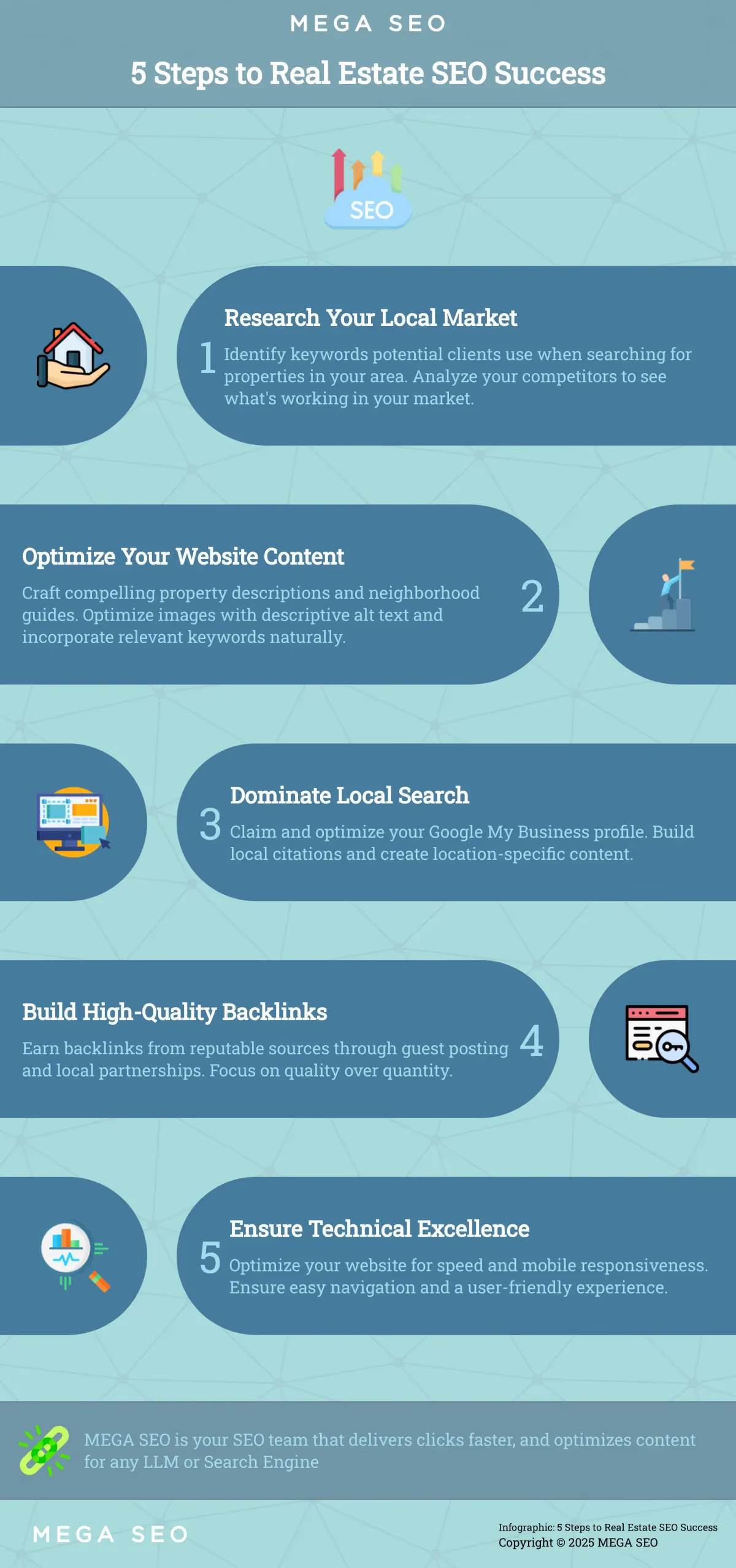
To build a successful real estate SEO strategy, it helps to break it down into manageable parts. Think of your SEO efforts as being supported by five core pillars. Each one is crucial for building a strong foundation that attracts consistent, high-quality traffic to your website. By focusing on these key areas—on-page content, off-page authority, local presence, and technical health—you can create a comprehensive plan that covers all your bases and puts you ahead of the competition. Let's look at what each pillar involves.
1. On-Page and Content SEO
On-page and content SEO is everything you publish on your website to attract and engage potential clients. This includes your property listings, blog posts, and neighborhood guides. The goal is to create valuable, relevant content that answers the questions your target audience is asking. As noted by Beyond Walls, this means optimizing your site to rank for terms like “homes for sale in [your city]” by aligning your content with what search engines and users are looking for. Creating high-quality content consistently can be a challenge, but AI-powered tools can simplify the process. For instance, MEGA AI can help generate localized content and even update existing articles to improve their ranking and click-through rate, ensuring your content works harder for you.
2. Off-Page SEO
Off-page SEO refers to actions taken outside of your own website to impact your rankings within search engine results pages. It’s about building your website's authority and credibility. According to ActiveRain, this includes activities like building backlinks from reputable sites and engaging in social media marketing. When other credible websites link to yours, it sends a powerful signal to Google that you are a trustworthy source of information in the real estate industry. This could mean being featured in a local online newspaper, guest writing for a home improvement blog, or having your market analysis shared by a local business association. These external endorsements are vital for long-term SEO success.
3. Local SEO
For real estate agents, local SEO is arguably the most critical pillar. Your clients are searching for properties and agents within a specific geographic area, so your online presence needs to be hyper-focused on that location. As we've covered in our guide to mastering local SEO, you should optimize your Google Business Profile, create location-specific content, and build local citations. A complete and active Google Business Profile with positive reviews, high-quality photos, and accurate information can significantly improve your visibility in local search results and on Google Maps. Creating content tailored to specific neighborhoods, like market reports or guides to local amenities, further establishes your expertise and helps you connect with clients in your community.
4. Technical SEO
Technical SEO focuses on the backend of your website to ensure it’s easy for search engines to crawl and index. While it sounds complex, its purpose is simple: to provide a good user experience. As Realtor.com explains, this includes how fast your site loads, if it works well on phones, and its overall structure. A slow-loading or hard-to-use mobile site can frustrate potential clients and cause them to leave, which tells Google your site isn't a good result. For agents who aren't tech-savvy, this can be the most intimidating part of SEO. Platforms like MEGA AI can help by automatically handling technical improvements, ensuring your site is fast, secure, and mobile-friendly without you needing to touch a line of code.
Mastering On-Page SEO for Your Real Estate Site
On-page SEO focuses on optimizing elements within your website. Start with keyword research using tools like Semrush, Ahrefs, or even free options like Google Keyword Planner. Identify the terms potential clients use when searching for properties in your area. Think “condos for sale near Central Park” instead of just “real estate.” Once you have your keywords, integrate them naturally within your website’s content. This includes page titles, headings, meta descriptions, and the body of your property descriptions and blog posts. Don’t forget to optimize images with descriptive alt text. A well-structured website with relevant keywords and various content types, like videos and blog posts, helps search engines understand what your site is about. Consider using MEGA SEO’s automated keyword research tools to streamline this process.
Using Off-Page SEO to Build Your Brand
Off-page SEO builds your website’s authority in the eyes of search engines. A primary focus here is acquiring backlinks, which are links from other websites to yours. Think of backlinks as votes of confidence. The more high-quality, relevant sites linking to you, the more trustworthy your site appears to search engines. Strategies for building backlinks include guest posting on relevant real estate blogs, partnering with local businesses, and getting listed in reputable online directories. Focus on earning links from authoritative sources within the real estate industry.
Getting the Technical SEO Details Right
Technical SEO ensures your website is easily accessible and understandable to search engines. This includes optimizing your site speed, ensuring mobile-friendliness, and improving image optimization. A fast-loading, mobile-responsive website provides a positive user experience, which is a key ranking factor. Additionally, make sure your website is properly structured for easy navigation and that your sitemap is submitted to search engines. Use tools like Google Search Console and PageSpeed Insights to identify areas for technical improvement. Addressing these technical aspects allows search engine crawlers to efficiently index your site, making it easier for your listings to appear in search results. For an automated approach to technical SEO, explore MEGA SEO’s technical SEO features.
Using Schema Markup to Stand Out
Think of schema markup as a special code you add to your website that acts like a cheat sheet for search engines. It helps them understand the specific details of your content, which is especially powerful for real estate listings. By implementing schema, you can tell Google that a specific page is a property listing, its price, location, square footage, and number of bedrooms. This information can then appear directly in search results as a "rich snippet," making your listing more eye-catching and informative than a standard blue link. This added detail helps you communicate key information to potential buyers before they even click, giving you a competitive edge in a crowded search results page.
Building Expertise, Authoritativeness, and Trustworthiness (E-A-T)
Google wants to show users the most reliable and credible results, which is where E-A-T comes in. To build your site’s E-A-T, you need to demonstrate your expertise, authority, and trustworthiness. Showcase your expertise by creating in-depth neighborhood guides or blog posts that answer common homebuyer questions. Build authority by getting featured in local publications or earning backlinks from reputable industry sites. Establish trust with a detailed "About Us" page, clear contact information, client testimonials, and any awards or accreditations you’ve received. Consistently publishing and updating high-quality content is key to this process. Tools like MEGA AI's Maintenance Agent can help by automatically updating articles to keep them fresh and relevant, reinforcing your site's credibility over time.
Ensuring Your Website is Accessible (ADA Compliance)
A great website is one that everyone can use, including people with disabilities. Making your website ADA compliant is not just about avoiding potential legal issues; it’s about providing a better experience for all visitors. Simple steps can make a big difference. Ensure all images have descriptive alt text, which helps screen readers describe visuals to users. Use high-contrast colors for text and backgrounds to improve readability, and make sure your entire site can be navigated using only a keyboard. An accessible website expands your potential client base and sends positive signals to search engines, as user experience is a critical component of modern SEO.
Winning Your Neighborhood with Local SEO
Dominating local search results is key for real estate agents. Buyers and sellers often search for agents within their specific area, making local SEO a critical component of your overall real estate marketing strategy.
Why Local Search is Critical for Agents
Your business is fundamentally local. When potential clients start their journey, they don’t just search for “real estate agents”; they search for “real estate agents in [your neighborhood]” or “homes for sale in [your city].” This is why dominating local search results is non-negotiable. With a vast majority of people using Google to find local businesses, your visibility in these specific searches directly impacts your ability to attract relevant traffic and generate high-quality leads. Appearing at the top of local results positions you as the go-to expert for that area, connecting you with clients who are actively looking to make a move right where you operate.
Turn Your Google Business Profile into a Lead Magnet
Your Google My Business profile acts as your virtual storefront on Google, so optimizing it is crucial for local SEO. Ensure your profile is a powerful tool for attracting local clients. Consider using MEGA SEO’s Google My Business optimization tools to streamline this process.
Writing Content That Attracts Local Buyers
Creating content relevant to your service area helps attract local buyers and sellers. Develop informative content focused on specific neighborhoods, zip codes, cities, schools, and local attractions. Consider creating neighborhood guides highlighting local amenities, restaurants, and parks. Publish blog posts about recent sales data and market trends in specific zip codes. Offer insights into the best school districts in your area. By providing valuable, location-specific content, you establish yourself as a local expert and attract clients searching for information about those areas. MEGA SEO can help you generate customized, location-focused content quickly and efficiently.
Get Listed: Building Local Citations and Links
Building strong local citations and backlinks is essential for boosting your real estate website’s authority. Citations are online mentions of your business name, address, and phone number (NAP) on other websites, particularly local directories. Ensure your NAP information is consistent across all online platforms. Backlinks are links from other websites to your website. High-quality backlinks from reputable sources, like local news websites or community organizations, signal to search engines that your website is trustworthy. Actively pursue backlinks through guest posting on relevant real estate blogs and getting listed in reputable online directories. A robust backlink profile strengthens your website’s authority and improves its search ranking. Explore MEGA SEO’s resources for more advanced link-building strategies.
Finding Keywords and Crafting Content That Converts
Attracting qualified leads through organic search starts with understanding what your target audience searches for. This section covers how to identify valuable real estate keywords and use them to create compelling content.
What Keywords Do Home Buyers Actually Use?
Effective keyword research is the foundation of any successful real estate SEO strategy. Begin by identifying the core terms potential clients use when searching for properties or real estate services in your area. Think “service + location” keywords, such as “realtor Denver” or “real estate agent Miami.” Curaytor suggests focusing on commercial keywords first, followed by informational ones. Analyzing your competitors—seeing which keywords they rank for—can provide valuable insights into what’s working in your market. Tools like Semrush or Ahrefs can help you uncover keyword difficulty and search volume, allowing you to prioritize terms that offer the best balance of traffic potential and ranking feasibility. HubSpot emphasizes the importance of targeting specific, local searches like “homes for sale in Austin” rather than broad terms like “homes for sale.”
Creating Content for Buyers vs. Sellers
Your content strategy should address the distinct needs of both buyers and sellers. For buyers, create content that helps them envision life in a new area. Develop detailed neighborhood guides that highlight local schools, parks, restaurants, and community events. This type of location-specific content establishes you as a local expert. For sellers, focus on their financial and logistical concerns. Write blog posts analyzing recent sales data and market trends in specific zip codes, or offer guides on preparing a home for sale. By tailoring your content, you attract qualified leads from both sides of the transaction. If creating this much content feels overwhelming, MEGA AI’s content generation tools can help you produce targeted articles for every neighborhood you serve, saving you valuable time.
Writing Property Descriptions That Rank
Once you’ve identified your target keywords, create content that attracts both search engines and potential clients. Go beyond basic property descriptions. Craft compelling narratives that highlight key features and benefits while naturally incorporating relevant keywords. Think about what questions your clients typically ask and create content that provides valuable answers. Direction recommends developing informative area guides focused on specific neighborhoods, zip codes, schools, and local attractions. Consider creating resources like neighborhood guides, zip code price reports, or school district overviews. High-quality content is crucial for attracting and engaging potential clients, so focus on providing genuine value.
Using Photos and Videos to Improve SEO
Visuals are essential for showcasing properties and capturing attention online. High-quality images, virtual tours, and videos enhance user experience and offer SEO benefits. Optimize images with descriptive alt text that includes relevant keywords. This helps search engines understand the context of your visuals, improving your chances of ranking in image search results. Semrush highlights the importance of using visuals and optimizing them with keywords and meta descriptions. Fresh content is also key for search engine rankings. Regularly updated blog posts, new property listings, and engaging visual content signal to search engines that your website is active and relevant. HubSpot notes that companies with blogs often see an increase in website visitors.
Designing a Website That Ranks and Converts
A well-structured website is crucial for both user experience and SEO. It helps search engines understand your content and allows visitors to easily find what they need. For real estate agents, this translates to higher search rankings and more qualified leads. A smooth, easy-to-use website keeps potential clients engaged and encourages them to explore your listings and services.
Organizing Your Website for Visitors and Google
Think of your website architecture as a roadmap. A clear, logical structure guides both search engine crawlers and potential clients to relevant information. Organize your website with a clear hierarchy. Start with your homepage and branch out into main categories like “Properties for Sale,” “Neighborhood Guides,” and “About Us.” Each category should then lead to more specific subpages. For example, under “Properties for Sale,” you might have subpages for different property types (houses, condos, land) or price ranges. This organized approach, as highlighted in Emulent’s SEO Playbook for Real Estate Companies, makes it easier for search engines to index your site and for users to find what they’re looking for. This structured approach improves user engagement, encouraging visitors to explore more of your website.
Connecting Your Pages with Internal Links
Internal links connect different parts of your website. They guide users from one page to another, encouraging them to explore related content. Internal linking also plays a significant role in SEO. It helps search engines understand the relationship between different pages, distributing link equity and boosting the overall authority of your content. Focus on relevance when creating internal links. Link pages that offer additional context or related information. For instance, within a property listing, link to a neighborhood guide for that area. This strategy, recommended by Outranking in their SEO guide for realtors, can significantly improve your site’s SEO performance. Combining diverse content like blog posts and videos with strategic internal linking creates a richer user experience and a stronger SEO foundation.
Does Your Website Pass the Speed and Mobile Test?
Site speed is a critical factor in user experience and SEO. A slow website can lead to high bounce rates, frustrated users, and lower search rankings. Optimize your website for speed. Compress images, leverage browser caching, and minimize HTTP requests. Mobile responsiveness is equally important. Your website must adapt seamlessly to different screen sizes. A mobile-friendly website improves user experience and boosts your SEO, as search engines prioritize mobile-first indexing. Beyond Walls emphasizes these factors in their Real Estate SEO Guide, offering a checklist for technical SEO improvements. Addressing these technical aspects ensures your website performs well and ranks higher in search results.
Improving User Experience with Internal Site Search
A real estate website can have hundreds of listings, making it difficult for users to find exactly what they need. An internal site search function is essential for helping potential buyers filter through properties without becoming overwhelmed. When a visitor can easily search for specific criteria like "three-bedroom home in downtown Austin," they are more likely to stay on your site and explore your listings. A good search feature improves the user experience by making property discovery simple and efficient. This keeps visitors engaged longer, which can lower your bounce rate and send positive signals to search engines about your website's quality. The data from these searches also provides valuable insight into what your audience wants, helping you refine your content and keyword strategy.
Testing and Improving Your Website's Performance
Regularly testing your website’s performance is not just a good practice; it’s essential for maintaining your search rankings and keeping visitors happy. Use free tools like Google PageSpeed Insights to analyze how quickly your pages load on both desktop and mobile devices. This tool provides a performance score and offers specific recommendations for improvement. Common issues include large, uncompressed images, slow server response times, and code that blocks the page from rendering quickly. Addressing these problems by compressing images, enabling browser caching, and minimizing unnecessary code can significantly improve your site speed. Since search engines like Google use mobile-first indexing, ensuring your site is fully responsive and fast on mobile devices is a top priority for your real estate SEO strategy.
How to Get Other Websites to Link to You
Backlinks act as votes of confidence from other websites, signaling to search engines that your real estate site is a trusted source of information. Building high-quality backlinks is crucial for boosting your search engine rankings and driving more organic traffic.
How to Earn Links That Matter
Earning authoritative backlinks from reputable sources in the real estate industry is like getting endorsements from trusted experts. These backlinks significantly impact your site’s credibility and search visibility. Think local news websites, real estate publications, or industry blogs. For example, a link from a prominent real estate blog can do wonders for your site’s authority. Aim for backlinks from sites with high domain authority and relevance to your real estate business. Consider reaching out to local publications and offering your expertise on real estate trends in your area.
Building Links Through Guest Posts and Partnerships
Guest posting on relevant real estate blogs and forming industry partnerships are excellent strategies for earning valuable backlinks and expanding your reach. Reach out to related businesses, like mortgage brokers or interior designers, and explore opportunities for cross-promotion. You can offer to write guest posts for their blogs in exchange for a backlink to your website. High-quality content relevant to their audience increases your chances of acceptance and provides value to their readers. Local directory listings are another effective way to build backlinks and improve your visibility in local search results.
What Not to Do When Building Links
While building backlinks is essential, it’s equally important to avoid common pitfalls. Many real estate agents make the mistake of prioritizing quantity over quality when it comes to backlinks. Low-quality backlinks from spammy or irrelevant websites can actually hurt your search rankings. Focus on earning backlinks from authoritative and relevant sources. Avoid participating in link schemes or buying backlinks, as these practices can lead to penalties from search engines. A natural and organic backlink profile is key to long-term SEO success. Regularly audit your backlink profile to identify and disavow any potentially harmful links.
How Social Media and SEO Work Together
While not a direct ranking factor, social media plays a crucial role in supporting your overall SEO strategy. Think of it as a megaphone for your content, amplifying your reach and indirectly influencing those all-important search rankings. A strong social media presence can drive more traffic to your website, increase brand visibility, and foster relationships that lead to valuable backlinks.
Does Social Media Affect Your SEO?
Social signals, such as likes, shares, and comments, indicate audience engagement with your content. While search engines don’t explicitly use these as ranking factors, they do pay attention to the buzz around your brand. Active social media channels suggest a thriving business, which can indirectly influence your search visibility. Sharing your website content on platforms like Facebook, Instagram, and LinkedIn can drive referral traffic and increase brand awareness, complementing your SEO efforts. Engaging with your audience on these platforms can also lead to more shares and backlinks, which are crucial for improving your search engine rankings.
Sharing Your Content for Maximum Reach
Creating high-value content that resonates with both search engines and your social media audience is key. This means using relevant keywords, eye-catching visuals, and compelling calls to action. Think about what your target audience wants to see. Are they looking for stunning property photos, informative market updates, or tips on buying and selling? Tailor your content accordingly. When you share this optimized content on social media, it can attract more visitors to your site and indirectly improve your SEO.
Using Social Media to Become a Local Expert
Social media isn’t just about broadcasting your listings; it’s about building genuine relationships. By engaging with local businesses, industry influencers, and potential clients, you can cultivate a network that supports your SEO efforts. Interact with other real estate professionals, participate in relevant online communities, and respond to comments and questions on your posts. Building these connections can lead to valuable backlinks from authoritative sources, boosting your website’s credibility in the eyes of search engines. This online networking also increases your visibility within the real estate community, establishing you as a trusted resource and further strengthening your online presence.
How to Know if Your Real Estate SEO is Working
After putting in the work to optimize your real estate website and content, how do you know if it’s paying off? Measuring your SEO success is crucial for understanding what’s working, what’s not, and how to improve your strategy. This involves tracking key performance indicators (KPIs), using the right SEO tools, and interpreting the data to refine your approach.
What SEO Numbers Should You Watch?
Tracking the right KPIs provides valuable insights into your website’s performance. Focus on metrics that directly impact your real estate business goals, such as:
- Organic traffic: This measures the number of visitors coming to your website from search engines. An increase in organic traffic suggests your SEO efforts are attracting more potential clients. Use tools like Google Analytics to monitor your organic traffic and identify which pages are performing best. This data is essential for understanding user behavior and making informed decisions about your content strategy.
- Keyword rankings: Tracking your keyword rankings shows you where your website appears in search results for relevant real estate terms. Higher rankings mean more visibility and potential leads. Semrush offers a position tracking tool that can help you monitor your keyword performance and identify opportunities to improve. Consistently monitoring your rankings allows you to adapt to changes in search trends and stay ahead of the competition.
- Conversion rates: This metric measures how many website visitors take a desired action, such as submitting a contact form or scheduling a showing. Strong conversion rates indicate that your SEO is not only driving traffic but also generating qualified leads.
- Lead generation: For real estate agents, lead generation is paramount. Track how many leads are generated through your website, whether through contact forms, email sign-ups, or other lead capture methods. This direct measure of success ties your SEO efforts directly to your business growth.
Helpful SEO Tools for Real Estate Agents
A successful real estate SEO strategy relies on the right tools. Several free and paid options can help you analyze your website, track keywords, and monitor your overall SEO performance.
- Free tools: Google offers a suite of free tools that are essential for any SEO strategy. Google Keyword Planner helps with keyword research, while Google Analytics and Google Search Console provide valuable data on website traffic and performance. Don’t forget to claim and optimize your Google My Business profile, which is crucial for local SEO. These free resources provide a solid foundation for understanding and improving your SEO.
- Paid tools: For more advanced features and in-depth analysis, consider investing in paid SEO tools like Semrush or Ahrefs. These platforms offer comprehensive keyword research, competitor analysis, and backlink tracking capabilities. While these tools come with a cost, they can provide valuable insights that can significantly impact your SEO success.
Using Data to Make Smarter SEO Decisions
SEO is an ongoing process. Regularly analyze your website’s performance data to identify what’s working and what needs improvement. Use tools like Google Analytics and Google Search Console to track your progress and make data-driven decisions.
- Content optimization: Analyze which content is performing well and identify opportunities to update existing content or create new content around high-performing keywords. This ensures your content remains relevant and engaging for your target audience. Content optimization is a continuous process that requires ongoing analysis and refinement.
- Keyword strategy refinement: Regularly review your keyword rankings and adjust your strategy based on changes in search trends and competitor activity. Staying up-to-date on keyword trends is essential for maintaining visibility in search results.
- Technical SEO improvements: Monitor your website’s technical health and address any issues that could be impacting your SEO performance. This includes ensuring your website is mobile-friendly, loads quickly, and is free of technical errors.
- Link building: Track your backlink profile and identify opportunities to earn high-quality backlinks from authoritative sources. Building a strong backlink profile can significantly improve your website’s authority and search ranking.
By consistently measuring, analyzing, and adapting your SEO strategy, you can stay ahead of the curve and achieve long-term success in the competitive real estate market. Remember, MEGA SEO can automate many of these tasks, freeing up your time to focus on what you do best: connecting with clients and closing deals. Book a demo today to see how MEGA SEO can transform your real estate business.
How to Perform a Basic SEO Audit
To get a clear picture of your SEO performance, start by conducting a basic audit. This involves looking at key metrics to understand how your website is currently doing and where your opportunities lie. You'll want to check how many visitors you're getting, where they are coming from, which pages they visit most, and what keywords they use to find you. This information is invaluable because it helps you see what’s working and where you can improve. If you're not comfortable digging into this data yourself, your web developer can help you gather and interpret these analytics to guide your strategy.
Next, review the technical health of your website, as a technically sound site is easier for search engines to crawl and rank. Make sure your site is secure (using HTTPS), loads quickly, and is mobile-friendly. These elements are crucial for both search engine rankings and providing a good user experience for potential clients browsing on their phones, which can directly impact how long they stay on your site. Tools like Google Search Console and Google Analytics are essential for monitoring these technical aspects and tracking your overall progress over time.
Working with Your Web Developer on SEO
Your web developer is a key partner in your SEO efforts, so think of them as part of your marketing team. A well-structured website is the foundation of good SEO, as it helps search engines understand your content and allows visitors to navigate your site with ease. Talk to your developer about creating a logical website hierarchy. This means organizing your content with clear main categories, like "For Sale" and "Neighborhoods," and relevant subcategories that guide users to the information they need. This structure makes your site more user-friendly and easier for search engines to index.
Beyond the site structure, your developer can handle critical technical SEO tasks that directly influence your rankings. This includes optimizing your site’s loading speed, ensuring it works perfectly on mobile devices, and implementing a smart internal linking strategy. Internal links are important because they connect your content and give search engines a better understanding of the relationships between your pages. Your developer can also implement schema markup, which is a type of code that helps your listings stand out in search results with more detailed information, like price and availability.
Future-Proofing Your Real Estate SEO
Common SEO Mistakes Real Estate Agents Make
More than 60% of website traffic comes from mobile devices. This makes having a mobile-friendly website essential. Think about it: potential clients are likely searching for properties on their phones while they’re on the go. If your site isn’t easy to use on a smaller screen, you’re missing out on a huge chunk of potential leads. Beyond mobile optimization, focus on creating high-quality content. Informative and engaging articles and property descriptions will not only attract potential clients but also keep them coming back for more. Valuable content builds trust and positions you as a local expert.
Preparing for Voice Search and Video
Voice search is changing how people search online. Instead of typing keywords, people are asking questions conversationally. Optimizing for voice search means focusing on natural language and long-tail keywords that reflect how people speak. Think about the questions your clients typically ask and incorporate those into your content. Another powerful tool is video. Video content is highly engaging and often preferred by search engines. Showcase property tours, neighborhood guides, or even client testimonials to boost your search rankings and connect with your audience on a deeper level.
How to Keep Up with Google's Changes
SEO is a constantly evolving field. Search engine algorithms change frequently, so staying up-to-date is crucial. What worked last year might not work today. Commit to ongoing learning and adapt to new best practices to maintain your visibility. SEO is a long-term strategy that requires consistent effort. Regularly review your SEO strategy and make adjustments as needed to stay ahead of the curve. Consider using tools like MEGA SEO to automate updates and free up your time to connect with clients.