
An SEO penalty can feel like a punch to the gut, especially after you’ve worked hard on your site's visibility. But it’s not a death sentence. Understanding what you're up against—whether it's a manual action or an algorithmic hit—is the first step to recovery. This guide provides a clear, actionable framework for SEO penalty removal. We'll walk through identifying common causes, like unnatural backlinks or thin content, and show you exactly how to fix them. You'll get a step-by-step process for cleaning up your site and getting back on track.
Key Takeaways
- SEO penalties, whether manual or algorithmic, can severely impact your website’s visibility. Regular monitoring and prompt action are crucial. Use Google Search Console and analytics platforms to detect traffic drops, ranking changes, and manual actions.
- A comprehensive SEO audit is essential for identifying and fixing the root causes of penalties. Leverage SEO tools to analyze your website’s technical aspects, content quality, and backlink profile.
- Proactive SEO practices are key to preventing penalties. Adhere to Google’s Webmaster Guidelines, prioritize high-quality content, and maintain a healthy backlink profile. Automated SEO tools can streamline these efforts.
What is an SEO penalty?
An SEO penalty is Google’s way of reprimanding websites that try to game the system. It’s a punishment for using shady tactics to rank higher in search results—essentially trying to trick Google into thinking your site is more relevant than it is. These tactics are often called “black hat SEO,” shortcuts that violate Google’s Webmaster Guidelines. A penalty can range from a slight drop in rankings to disappearing from search results altogether.
How Common Are SEO Penalties?
You might be surprised to learn just how frequently SEO penalties occur. They are far from a rare event. Google alone issues over 400,000 manual penalties each month, and this figure doesn’t even account for the countless websites affected by automated algorithmic updates. These algorithm changes can adjust your rankings without any direct human intervention from Google. Many of these penalties stem from common missteps, particularly the use of unnatural links pointing to a website. For small businesses, this highlights the risk of engaging in low-quality link-building schemes that promise fast results but ultimately violate search engine guidelines and put your site’s health in jeopardy.
It's Not Just Google: Other Search Engines Have Penalties Too
While Google is often the main focus of SEO conversations, it’s important to remember that other search engines also enforce their own rules. Bing, for example, has its own set of penalties for websites that attempt to manipulate its ranking system using tactics like spam, poor-quality links, or thin content. If you receive a formal, manual penalty from Google, you will get a direct notification in your Google Search Console account. Other issues can also trigger a penalty-like response; for instance, if your website gets hacked, Google might temporarily block it from search results to protect users, which has the same negative effect on your traffic.
Breaking Down the Types of SEO Penalties
There are two main types of SEO penalties: manual and algorithmic. A manual penalty happens when a Google employee reviews your site and flags it for breaking the rules. You’ll receive a notification in Google Search Console if this happens. An algorithmic penalty is triggered by Google’s automated systems, which detect issues like thin content or spammy links. You might not get a direct notification for an algorithmic penalty, which can make them harder to detect.
User-Generated Spam
User-generated spam is exactly what it sounds like: spammy content posted by users on your site, often in forums, blog comments, or user profiles. This could be irrelevant links, promotional text, or other low-quality content that adds no value. If your website becomes a haven for this kind of spam, Google might see it as a poorly maintained or low-quality site, which can lead to a penalty. To prevent this, you need to moderate user submissions. You can implement stricter rules for what users can post, use comment moderation plugins, and regularly review user-generated content to remove anything that violates your guidelines. Keeping your site clean shows Google you’re committed to providing a good user experience.
Intrusive Interstitial Penalty
Have you ever clicked on a search result on your phone, only to have a giant pop-up ad block the entire screen? That’s an intrusive interstitial, and Google is not a fan. This penalty targets websites that make content less accessible to users on mobile devices by displaying large ads or pop-ups that cover the main content. This is especially true for interstitials that appear immediately after a user navigates to a page from a search result. Not all pop-ups are bad—things like age verification gates or small, easily dismissible banners are generally fine. The key is to ensure your ads don’t obstruct the user’s ability to access the content they came to see.
Sneaky Mobile Redirects
A sneaky mobile redirect happens when your website sends mobile users to a different URL or shows them different content than what desktop users see. For example, a desktop user might land on the intended page, while a mobile user gets redirected to a completely unrelated, often spammy, page. This is a deceptive practice that violates Google’s guidelines because it creates a frustrating and inconsistent experience. It’s perfectly fine to have a mobile-optimized version of your site, but the core content should remain consistent across all devices. Regularly test your site on different devices to ensure all users are getting the same great experience you intended for them.
Spammy Free Host Penalty
Sometimes, a penalty has less to do with your site and more to do with your digital neighborhood. The spammy free host penalty can affect websites that are on free hosting services known for housing a large number of spammy sites. If your hosting provider has a bad reputation, Google might penalize all the sites on that server, including yours, through guilt by association. While free hosting can be tempting for a new or small business, it often comes with risks like this. Investing in a reputable, paid hosting provider is a much safer bet for your site’s long-term health and SEO performance.
What Causes an SEO Penalty?
There are several ways to incur a penalty. Some common causes include buying links, keyword stuffing, hiding text or links from users (cloaking), and providing a poor user experience. Duplicate content can also trigger a penalty, as can a site that’s difficult to use or has a high bounce rate. Anything that feels manipulative or deceptive can get your site penalized. Google’s goal is to provide a great user experience, so tactics that undermine that goal are likely to be penalized.
Cloaked Images
Cloaking is a classic black hat SEO tactic where you show one version of your page to search engines and a different one to human visitors. For instance, a site might show Google a page full of relevant text about "local plumbing services" to rank high, but when a user clicks the link, they land on a spammy, unrelated page. This is a direct violation of Google's guidelines because it's a bait-and-switch that creates a terrible user experience. Search engines take this deception very seriously. If you’re caught, the consequences can be severe, ranging from a massive drop in rankings to your entire site being removed from Google’s index.
Expired or Outdated Information
While not a formal penalty that triggers a notification, letting your content become stale is a reliable way to see your rankings decline. Google’s main goal is to provide users with the most current and accurate information available. If your blog posts contain outdated statistics, broken links, or information that's no longer relevant, users will leave quickly. This high bounce rate signals to Google that your page isn't helpful. Regularly auditing and refreshing your content is essential for maintaining a good user experience and your search rankings. For small businesses, this can be a time-consuming task, which is where tools that automatically identify and update existing content can be a game-changer for SEO performance.
Aggressive Spam Tactics (Payday Loan Algorithm)
Google's Payday Loan Algorithm was created to clean up search results in industries known for spam, like payday loans and adult content. However, the tactics it targets can get any website penalized. This includes aggressive strategies like excessive keyword stuffing, using deceptive redirects, or creating pages with very little original content. These manipulative tactics are clear attempts to game the system rather than provide value to the user. To avoid getting flagged by this or similar algorithms, the solution is straightforward: focus on creating high-quality, helpful content and steer clear of any shortcuts that feel deceptive.
How to Know If You Have an SEO Penalty
Suspect your site’s been hit with a Google penalty? Penalties can tank your search rankings and drastically reduce your website traffic. Identifying the problem is the first step toward recovery. Here’s how to pinpoint an SEO penalty:
Check Google Search Console for Clues
Google Search Console is your go-to resource for manual action notifications. These messages from Google directly explain the penalty and provide instructions on fixing the issue. Think of it as a direct line to Google, offering specific insights into any issues affecting your site’s visibility. You can access these messages in your Search Console account.
Look for Dips in Traffic and Rankings
Sudden drops in organic search traffic are a telltale sign of a potential penalty. Use Google Analytics to track traffic patterns and identify any significant dips. If you see a sharp decline, it’s time to investigate further. Combine this data with rank tracking tools to see if traffic changes correlate with ranking drops for important keywords.
Correlate Traffic Drops with Known Algorithm Updates
When a manual action isn't the culprit, an algorithmic penalty is the likely cause. Since these penalties are automated, you won't get a notification, which means you'll need to do some detective work. Start by checking if your traffic drop aligns with a known Google algorithm update. Resources that track Google's algorithm updates can help you match the dates. If you find a correlation, the next step is to understand what that update targeted. For instance, if an update focused on thin content, you have a clear direction to start improving your site.
Look for Other Telltale Signs
Beyond Search Console and traffic analysis, other red flags can indicate a penalty. A significant drop in your website’s search rankings across multiple pages is a major warning sign. Even more serious is the complete removal of your website’s pages from Google’s search results (de-indexing), as described on Grow Hack Scale. If your site suddenly disappears from search results, a penalty is a likely culprit. Another indicator is a sudden influx of bad backlinks from spammy or irrelevant websites. While not always a direct penalty, these toxic backlinks can harm your site’s reputation and eventually lead to ranking drops.
A Practical Guide to SEO Penalty Removal
Recovering from an SEO penalty takes time and a systematic approach. Here’s how to tackle the process:
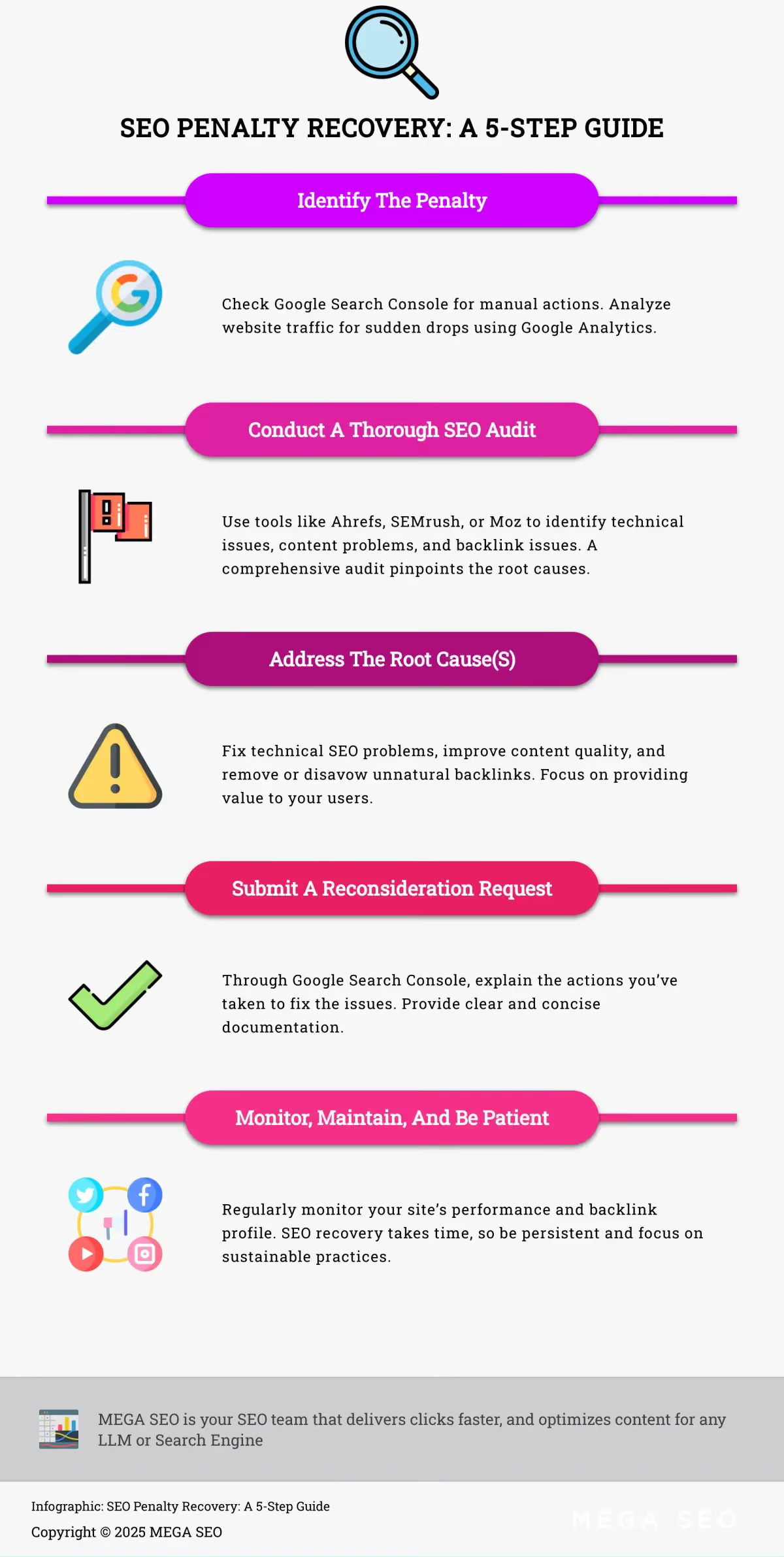
Start with a Thorough Site Audit
First, conduct a comprehensive SEO audit to identify the root causes of the penalty. Start by checking Google Analytics and Google Search Console for any red flags like sudden drops in traffic, crawl errors, or manual actions. Review recent website changes that might have triggered the penalty, such as a site redesign or changes to your backlink profile. A full SEO audit can uncover hidden issues impacting your site’s performance.
Pinpoint and Address Specific Issues
Once you’ve identified the problems, take action to fix them. This might involve removing bad links, fixing duplicate content, or resolving any technical SEO problems. For example, if you find thin or low-quality content, rewrite it to provide more value to your readers. Make sure your website structure is clear and easy for both users and search engines to understand.
Clean Up Unnatural Backlinks
Unnatural backlinks can significantly harm your SEO. Use backlink analysis tools like Ahrefs, SEMrush, or Moz to identify bad links. Reach out to webmasters to request removal. If you can’t get a link removed, use Google’s Disavow Tool as a last resort. Regularly monitor your backlink profile to catch any potentially harmful links early on.
Understanding the Modern Penguin Algorithm
Google's Penguin algorithm is the system responsible for finding websites that use manipulative link-building tactics. Because it's an algorithmic penalty, it works automatically, so you won't get a direct notification in Google Search Console if your site is affected. The modern version of Penguin is part of Google's core algorithm and operates in real-time. Instead of issuing a harsh site-wide penalty, it now tends to devalue bad links, essentially just ignoring them. While that might sound less scary, a backlink profile filled with low-quality links can still seriously harm your site's authority. This is why a complete audit of your backlink profile is so important for finding and fixing any links that are holding you back.
Review and Improve Content Quality
Content quality is crucial for SEO success. Audit your existing content and focus on providing valuable and relevant information to your target audience. Optimize for keywords naturally, use multimedia to enhance engagement, and update your content regularly to keep it fresh. Consider adding new content that covers related topics to provide a more comprehensive resource for your users.
Implement Key Technical SEO Fixes
Technical SEO issues can also lead to penalties. Ensure your website follows Google’s Webmaster Guidelines. This includes having a mobile-friendly design, a fast loading speed, and a secure website (HTTPS). Address any crawl errors or broken links that you find during your audit. A well-optimized site technically improves user experience and search engine visibility.
Submit a Reconsideration Request (If Necessary)
After addressing all the issues, submit a reconsideration request through Google Search Console. This lets Google know you’ve taken steps to fix the problems and requests that they review your website. Be clear and concise in your request, explaining the actions you’ve taken and providing any supporting documentation. This is an important step to getting your site back on track.
What to Include in Your Request
When you submit your reconsideration request, clarity and honesty are your best friends. This is your opportunity to show Google you’ve done the work to comply with their guidelines. Start by briefly explaining the issue you identified, then detail the specific actions you took to resolve it. For example, if you cleaned up a messy backlink profile, mention that you audited your links and provide a link to a Google Sheet documenting the links you removed or disavowed. Keep your explanation concise and professional. The goal is to demonstrate that you understand the problem and have made a genuine effort to fix it, making it easier for the reviewer to approve your request.
What to Do If Your Request is Rejected
A rejected reconsideration request can be disheartening, but it’s not the final word. Think of it as constructive feedback. Google’s response will typically point you toward the issues that still need attention. Carefully read their message and go back to your audit. It’s possible you missed some toxic backlinks or overlooked a few pages with thin content. This is where an automated SEO tool can be incredibly helpful, as it can dig deeper to uncover problems you might have missed manually. Once you’ve addressed the remaining issues, you can submit another request. Persistence and thoroughness are key to getting the penalty lifted.
Maintain Traffic from Other Sources During Recovery
While you work on getting your site back in Google’s good graces, your business doesn’t have to come to a standstill. An SEO penalty can be a stark reminder of why it’s risky to rely on a single traffic source. This is the perfect time to lean into other marketing channels to keep visitors coming to your site. By diversifying your traffic streams, you create a more resilient online presence that isn't entirely dependent on Google's algorithm. Think of it as building a safety net; while one part is being repaired, the others can still support your business and keep your sales pipeline active.
Focus on Social Media and Email Marketing
Your social media profiles and email list are valuable assets, especially when your organic search traffic takes a hit. These are channels where you have a direct line of communication with your audience. Ramp up your activity on platforms where your customers are most active. You can engage with online communities, share valuable content, and run targeted promotions to drive traffic. Similarly, your email list is a powerful tool for nurturing leads and encouraging repeat business. Send out a newsletter with a special offer or helpful tips to remind your subscribers you’re still there and ready to serve them.
Optimize for Other Search Engines like Bing
Google may be the biggest player, but it’s not the only search engine in town. Search engines like Bing still command a significant share of the market and can be a reliable source of traffic. The good news is that many of the same SEO best practices apply. If you’ve been creating high-quality content and building a user-friendly site for Google, you’re already well on your way to ranking on Bing. Take some time to submit your sitemap to Bing Webmaster Tools and familiarize yourself with its guidelines. Optimizing for other search engines diversifies your risk and can open up new streams of valuable traffic.
Manual vs. Algorithmic Penalties: What's the Difference?
Understanding the difference between manual and algorithmic penalties is crucial for effective SEO penalty removal. They differ in their origin, impact, and recovery process. Let’s break down each type:
Manual Actions vs. Algorithmic Devaluations
A manual action is exactly what it sounds like: a human reviewer at Google has flagged your site for violating their webmaster guidelines. The good news is that you’ll get a notification in Google Search Console that details the problem, making it easier to diagnose. Common causes include user-generated spam, unnatural links, or thin content. To recover, you need to fix the specific issue and then submit a reconsideration request. In contrast, an algorithmic devaluation is automated. Google’s algorithm flags your site without any human intervention, so you won’t receive a notification. Instead, you’ll likely notice a sharp drop in traffic and rankings, often after a known Google algorithm update. Recovery here involves a broader effort: you'll need to improve your site's overall quality and wait for the next algorithm update to re-evaluate your site and restore your rankings.
What to Expect from a Manual Penalty
Manual penalties result from a human reviewer at Google determining your site violates Google’s Webmaster Guidelines. These penalties range from lower rankings for specific keywords to complete removal of your site from Google’s search results. Manual actions are typically communicated through Google Search Console and often result from black hat SEO tactics or spammy practices.
How Manual Actions Are Triggered
Unlike automated penalties, a manual action is triggered when a human reviewer from Google’s webspam team inspects your website and finds a clear violation of their guidelines. This review can be prompted by a competitor’s spam report, or it might be part of a routine check. The reviewer looks for deliberate attempts to manipulate search rankings, such as using spammy content, cloaking (showing different content to users and search engines), or implementing sneaky redirects. Other common causes include having a poor backlink profile filled with unnatural links or publishing thin content with little to no value. If a violation is confirmed, the reviewer applies a penalty, and you will receive a notification directly in your Google Search Console account detailing the issue.
How to Identify an Algorithmic Penalty
Algorithmic penalties are automatically applied by Google’s algorithms, like Panda or Penguin, during core updates. These penalties occur when your site doesn’t meet Google’s quality standards, often due to issues like thin content, keyword stuffing, or unnatural backlink profiles. You won’t receive a notification in Google Search Console. Instead, you’ll likely notice a sudden drop in your site’s organic traffic and rankings.
How the Recovery Process Differs
Recovery processes differ between manual and algorithmic penalties. For manual penalties, you need to identify and fix the issues flagged by Google. After addressing these violations, you’ll submit a reconsideration request through Google Search Console. Recovering from algorithmic penalties usually involves improving your site’s overall quality. Focus on areas like content, backlinks, and technical SEO, based on the algorithm update that impacted your site. This often requires more extensive work and ongoing monitoring.
Essential Tools and Resources for Penalty Recovery
Recovering from an SEO penalty can feel overwhelming, but thankfully, several tools and resources can simplify the process. Here’s a breakdown of what you’ll need:
SEO Audit Tools
A comprehensive SEO audit is crucial for identifying the root causes of your penalty. Tools like Ahrefs, SEMrush, and Moz offer robust site auditing capabilities, analyzing your backlink profile, identifying technical SEO issues, and assessing your content quality. Use their backlink analysis features to pinpoint and analyze bad links that might be contributing to your penalty. These tools help you evaluate the health of your backlink profile and take action to disavow harmful links. MEGA SEO also offers automated SEO auditing to streamline this process. Book a demo to see how it works.
Helpful Penalty Recovery Guides and Checklists
A structured approach is essential for effective penalty recovery. Several guides and checklists offer step-by-step instructions. Start by checking Google Analytics for significant traffic drops, and then review Google Search Console for manual penalty notifications. Assess any recent website changes that may have triggered the penalty. Conduct a thorough SEO audit to uncover underlying issues. Once you’ve addressed the issues, submit a reconsideration request to Google through Search Console. Check out our resources for helpful guides and checklists to assist you.
Consult Google’s Official Guidelines
Google provides valuable resources to help website owners understand and resolve SEO penalties. Regularly check Google Search Console for manual action notifications. These notifications detail specific issues affecting your site and offer guidance on fixing them. To find manual actions, go to the “Security & Manual Actions” section in the left-hand navigation of Google Search Console and click on “Manual Actions.” You’ll find messages about specific problems, such as hacked content, unnatural links, or thin content. Google’s Search Central documentation also offers valuable insights into best practices and common SEO issues.
How to Avoid SEO Penalties
Preventing SEO penalties is easier than recovering from them. A proactive approach saves you time, money, and stress. Here’s how to keep your site in Google’s good graces:
Always Follow Google’s Guidelines
Google’s Webmaster Guidelines are your SEO bible. They outline best practices for building a site Google will love. Following these guidelines is crucial for maintaining a good search ranking. If you do get penalized, act quickly to fix the issues and recover your website’s visibility.
Focus on Sustainable SEO Strategies
Think long term. Sustainable SEO focuses on organic growth and ethical practices. Regularly monitor Google Analytics and Search Console data. Conduct thorough SEO audits. Prioritize high-quality, original content and user experience. A proactive approach to SEO is essential for preventing penalties.
Handle Paid and Sponsored Links Correctly
Paid links are a tricky area in SEO. While they can drive traffic, Google considers buying links that pass ranking credit a violation of its Webmaster Guidelines and a common cause for penalties. To stay safe, any link you pay for—whether it's an advertisement, a sponsored post, or an affiliate link—needs to be marked correctly. You can do this by adding a `rel="sponsored"` or `rel="nofollow"` attribute to the link's HTML. These tags signal to Google that the link is promotional and shouldn't influence your site's ranking. This transparency is key. It shows you're not trying to manipulate search results, which helps you avoid a penalty and maintain a healthy, natural backlink profile.
Regularly Monitor Your Site’s Health
Regular site audits and ongoing monitoring are key for long-term SEO health. Think of it like regular car maintenance—it prevents bigger problems down the road. Build a sustainable SEO strategy focused on organic growth and ethical practices. MEGA SEO’s automated tools can help you stay on top of technical SEO issues, monitor your backlink profile, and ensure your content is always optimized. Book a demo to see how MEGA SEO can simplify your SEO maintenance.
Common Mistakes to Avoid During Penalty Removal
Recovering from an SEO penalty takes time and effort. Knowing what not to do is just as important as knowing what to do. Here are a few common mistakes to avoid during the penalty removal process:
Don't Rush Your Recovery
If you suspect a penalty, act quickly. The sooner you address the issues, the faster you can begin to recover your rankings and organic traffic. However, don’t rush the process without thoroughly understanding the underlying issues. A penalty might be the result of several problems, some of which might not be obvious. Take the time to carefully analyze your website and implement the right changes. This measured approach, much like MEGA SEO’s automated solutions, will lead to a more sustainable recovery. Learn more about our automated SEO solutions.
Forgetting to Address the Root Cause
Google wants websites to follow its Webmaster Guidelines. This includes publishing high-quality content, avoiding spammy techniques, and building natural links. Don’t just treat the symptoms of a penalty. Identifying and addressing the root cause is essential for long-term success and prevents future penalties. If you received a manual penalty, Google will tell you exactly what you did wrong. For algorithmic penalties, you’ll need to do some detective work to figure out the cause. Our free SEO tools can help you identify the root cause of your penalty.
Being Too Aggressive with the Disavow Tool
Google’s Disavow Tool allows you to tell Google to ignore specific backlinks to your site. Use this tool as a last resort for links you can’t remove. Overusing the disavow tool can negatively impact your site’s authority. A better approach is to focus on building a healthy link profile. Prioritize quality over quantity, diversify your links, and regularly monitor your backlink profile. Tools like Ahrefs and SEMrush can help you analyze your backlinks and identify potentially harmful ones. MEGA SEO helps you manage your backlinks and ensure a healthy link profile. Request a customized demo to see how.
Why SEO Recovery Takes Time and Patience
Recovering from an SEO penalty takes time. There’s no magic bullet, and anyone promising a quick fix is likely misleading you. Sustainable SEO is a long-term strategy. Results rarely appear overnight, but they tend to last. SEO is about building a strong online presence through quality content, a technically sound website, and a healthy backlink profile. It’s a marathon, not a sprint.
Set Realistic Recovery Expectations
Don’t expect to regain lost rankings immediately. SEO takes time, especially after a penalty. New sites may not rank highly initially, and penalized sites need time to regain trust with search engines. Focus on creating high-quality content and following SEO best practices. Consistent effort will eventually yield positive results. Be wary of anyone promising SEO shortcuts or guarantees of quick wins. These often involve risky SEO practices that can lead to further penalties.
Recovery Timelines for Manual Penalties
Recovering from a manual penalty is a more direct process because you're communicating with a person at Google. After you've fixed the issues outlined in your Google Search Console notification, you'll need to submit a reconsideration request. The timeline then depends entirely on Google's review queue. It can take anywhere from a few days to several weeks for a human reviewer to assess your changes and decide whether to lift the penalty. If your request is approved, you'll typically see your rankings start to recover shortly after. However, if your request is denied, you'll need to make further improvements and resubmit, which resets the clock. The key is to be thorough in your fixes and clear in your communication to avoid back-and-forth.
Recovery Timelines for Algorithmic Penalties
Algorithmic penalty recovery is a different beast altogether. Since there's no human reviewer or reconsideration request, you're waiting for Google's algorithm to re-evaluate your site. After you've made significant improvements—like overhauling thin content or cleaning up your backlink profile—you have to wait for Google to crawl your pages again. Recovery often coincides with a major Google core update, which can happen every few months. This means the timeline is much less predictable and often longer than for a manual penalty. You might see gradual improvements as Google re-assesses your site, but a full recovery usually requires waiting for the next significant algorithm refresh to fully recognize your efforts and restore your rankings.
Track Your Progress and Adjust as Needed
SEO is constantly evolving. Search engine algorithms change, and user behavior shifts. What worked yesterday might not work today. Regularly track your SEO progress using tools like Google Search Console and analytics platforms. This data helps you understand what’s working and what’s not. Analyze your traffic, rankings, and backlink profile. Based on the data, adjust your strategies. SEO is an iterative process. Be prepared to experiment and adapt.
How Automated SEO Tools Can Help Your Recovery
Recovering from an SEO penalty can feel overwhelming, but automated SEO tools can simplify the process. They help you identify the root causes of penalties and implement necessary fixes efficiently. Let’s explore how these tools assist in various stages of penalty removal.
Speed Up the Audit Process
A thorough SEO audit is the first step in penalty recovery. Automated SEO tools like Ahrefs, SEMrush, and Moz can significantly streamline this process. These tools crawl your website and identify technical issues, such as broken links, slow page speed, and crawlability problems. They also analyze your content, flagging issues like thin content, keyword stuffing, and duplicate content. By providing comprehensive reports, these tools pinpoint areas for improvement, making the audit process more efficient. This saves you valuable time and resources, allowing you to focus on implementing the necessary fixes. MEGA SEO offers similar SEO audit capabilities, automating the process of identifying technical and content issues that may be contributing to penalties. Learn more about MEGA SEO’s audit features.
Analyze and Optimize Content at Scale
Content quality is a critical factor in SEO. If your website has been penalized, improving your content is essential. Automated tools can analyze your existing content for quality and relevance, helping you identify areas for improvement. These tools can suggest relevant keywords, identify opportunities for multimedia enhancements, and flag content that needs updating. This allows for efficient content optimization, ensuring your website meets current SEO standards. MEGA SEO’s Maintenance Agent can automatically update your content, optimizing it for improved CTR and rankings. Explore MEGA SEO’s content optimization features. The tool also identifies opportunities to add new content to existing articles, further enhancing their value and relevance.
Analyze and Manage Backlinks More Efficiently
Unnatural or low-quality backlinks can lead to penalties. Automated backlink analysis tools, such as Ahrefs and SEMrush, help you identify and manage these harmful backlinks. These tools provide insights into your backlink profile, highlighting potentially problematic links. They also enable you to contact webmasters for link removals and, if necessary, use Google’s Disavow Tool to manage links that cannot be removed. This systematic approach to backlink management is crucial for penalty recovery. MEGA SEO integrates backlink analysis and management into its platform, providing a streamlined solution for identifying and addressing harmful backlinks. Try MEGA SEO’s backlink tools.