
Think of your website as your digital storefront. An SEO marketing strategy is the plan that ensures customers can find it. Without one, it’s like having a shop on a backstreet with no sign. You could have the best products in the world, but no one will know you exist. A proper strategy puts your business on the main street of the internet: the first page of Google. It involves understanding your customers, analyzing your competition, and creating valuable content that establishes your authority. This guide will show you how to build that plan from the ground up, creating a sustainable engine for growth.
Key Takeaways
- Address all three parts of SEO: A complete strategy integrates on-page content optimization, off-page authority building through backlinks, and a solid technical foundation. Focusing on just one area won't deliver the growth you're looking for.
- Create content that answers questions: Effective SEO is about understanding the why behind a search, not just the keywords. Focus on creating content that directly solves your audience's problems to build trust and rank higher.
- Measure, refine, and repeat: SEO is not a one-time task. Consistently track your key performance indicators, like organic traffic and conversions, and use that data to make informed adjustments to your strategy over time.
What Is an SEO Marketing Strategy?
An SEO marketing strategy is your long-term plan for getting your website to show up higher in search engine results. SEO, which stands for search engine optimization, is the practice of improving your site so people can find your content, products, and services organically—without you having to pay for ads. Think of it as a roadmap that guides all your efforts to attract more visitors from search engines like Google.
A solid strategy isn't about quick tricks or a one-time fix. It’s an ongoing process that involves three main areas working together.
- On-page SEO: This covers everything on your website, from the quality of your blog posts and product descriptions to the keywords you use and how your pages are structured.
- Off-page SEO: These are actions taken outside of your website to build its authority and reputation. The most common example is earning backlinks, which are links from other credible websites to yours.
- Technical SEO: This involves the behind-the-scenes elements of your site. It ensures search engines can easily find, crawl, and index your pages. This includes things like site speed, mobile-friendliness, and site architecture.
When these three pillars are aligned, your strategy helps you connect with the right audience, build trust, and achieve your business goals. An effective SEO plan considers all these components to create a sustainable source of traffic and growth.
Why Your Small Business Needs an SEO Strategy
Most online experiences begin with a search engine. When people need a local plumber, a new pair of shoes, or advice on a topic, they turn to Google. If your business doesn't appear in those search results, you're invisible to potential customers who are actively looking for what you offer. An SEO strategy puts your business directly in their path.
For small businesses, this is especially important. SEO is a powerful way to generate organic traffic, which reduces your reliance on paid advertising. While ads can deliver quick results, they require a constant budget. A well-executed SEO strategy helps you attract visitors for free, making it a cost-effective and sustainable marketing channel for long-term growth.
How SEO Drives Business Growth
A good SEO strategy does more than just bring people to your website; it drives tangible business growth. By targeting the right keywords, you attract visitors who are genuinely interested in your products or services, which leads to higher conversion rates. This consistent flow of qualified traffic translates directly into more leads, sales, and revenue.
Unlike paid ads, which disappear the moment you stop paying, the benefits of SEO are built to last. Every piece of optimized content you create and every backlink you earn builds your website's authority, making it a valuable asset that continues to generate results for months and even years. This creates a stable foundation for growth, helping your business build lasting authority and a predictable stream of customers.
What Are the Core Components of an SEO Strategy?
A solid SEO strategy is built on four main pillars. Think of them as the essential ingredients you need to get your website noticed by search engines and, more importantly, by your future customers. First is keyword research, which is all about understanding the language your audience uses to find solutions. Next is on-page SEO, which covers everything you do directly on your website to make your content clear and valuable. Then there’s technical SEO, the behind-the-scenes work that ensures your site is fast, secure, and easy for search engines to crawl. Finally, off-page SEO involves building your site's reputation and authority across the web.
Each component plays a distinct role, but they are deeply interconnected. Great content (on-page) won't rank if your site has major technical issues. A technically perfect site won't get traffic without the right keywords. And even with great keywords and content, you need off-page authority to compete for top spots. For a small business owner, juggling these can feel like a lot, which is why many turn to automated SEO services to manage the process. This approach allows you to focus on running your business while an expert agent handles the complexities of keyword research, content creation, and technical fixes.
Keyword Research and User Intent
Keyword research is the process of finding the words and phrases people type into search engines when they’re looking for products or services like yours. But it’s not just about finding popular terms. The real goal is to understand user intent—what someone is actually trying to accomplish with their search. Are they looking for information, comparing options, or ready to make a purchase? Answering this question helps you create content that directly addresses their needs. Using keyword research tools can help you identify terms with high search volume and low competition, giving you a strategic advantage.
On-Page SEO Basics
On-page SEO refers to optimizing the elements directly on your website. This includes the quality of your content, the structure of your pages, and how you use keywords. Every page on your site should offer unique, helpful information that’s easy to read. You can improve your on-page SEO by using keywords naturally in your text, organizing content with clear headings and lists, and including relevant images or videos. Writing descriptive title tags and meta descriptions for each page also helps both users and search engines understand what your content is about. These are foundational steps for making your site more visible.
Key Technical SEO Elements
Technical SEO focuses on the foundation of your website, ensuring it’s built in a way that search engines can easily find, crawl, and index. While it sounds complex, the core principles are straightforward. Key elements include site speed, mobile-friendliness, and security. A website that loads quickly and works well on mobile devices provides a better user experience, which search engines reward. A secure site (one that uses HTTPS) protects user data and builds trust. Making sure your site has a logical structure and no broken links is also a critical part of a strong technical SEO foundation.
Off-Page SEO and Building Authority
Off-page SEO involves actions taken outside of your own website to build its authority and reputation. The most significant factor here is backlinks—links from other websites to yours. Think of a backlink as a vote of confidence. When a reputable site links to you, it signals to search engines that your content is trustworthy and valuable. The key is to focus on earning high-quality links from relevant websites in your industry, rather than accumulating a large number of low-quality links. Other off-page factors include brand mentions and social media signals, which all contribute to how search engines perceive your site's credibility.
How to Do Keyword Research
Keyword research is the foundation of any solid SEO strategy. It’s about figuring out the exact words and phrases your potential customers are typing into search engines. When you understand this language, you can create content that directly answers their questions and meets their needs, which helps search engines see you as a relevant authority. Think of it less as a technical task and more as a way to understand what your audience is truly looking for. This process helps you find opportunities to connect with users and guide them to your business.
Find the Right Keywords for Your Business
Start by brainstorming a list of core topics related to your business. What services do you offer? What problems do you solve for your customers? Write down all the terms you can think of. For example, a local bakery might list "custom birthday cakes," "sourdough bread," and "coffee shop near me." Once you have this initial list, you can use tools to find related keywords people are actually searching for. The goal is to build a comprehensive list of terms that reflect what users need. An automated SEO platform can handle this research for you, identifying high-leverage opportunities without the manual work.
Understand Search Intent
Knowing what people search for is only half the battle; you also need to understand why. This is called search intent. Every search query has a purpose behind it, which usually falls into one of four categories: informational (looking for an answer), navigational (trying to find a specific website), commercial (researching before a purchase), or transactional (ready to buy). For instance, someone searching "how to fix a leaky faucet" has different needs than someone searching "plumber in Brooklyn." Aligning your content with the right search intent is critical for ranking well and satisfying users.
Analyze Competitor Keywords
You don’t have to start from scratch. Your competitors can provide a wealth of information about what’s already working in your market. Identify a few key competitors—both local and national—who are ranking well for terms you want to target. Look at their websites to see what keywords they use in their page titles, headings, and service descriptions. This analysis can reveal valuable keywords you may have missed and give you a better sense of the competitive landscape. Understanding what keywords your competitors use helps you refine your own strategy and find gaps you can fill.
On-Page and Off-Page SEO Best Practices
Once you have your keywords, it’s time to put them to work. SEO best practices fall into two main categories: on-page and off-page. On-page SEO includes everything you can directly control on your website, like your content, meta tags, and internal links. It’s about making your site as clear and useful as possible for both users and search engines. Think of it as setting up your store so customers can easily find what they need.
Off-page SEO, on the other hand, involves actions taken outside of your website to build its authority and reputation. This primarily includes earning backlinks from other credible sites and managing your presence in local directories. Off-page SEO is like building a strong reputation in your community. When other respected businesses recommend you, new customers are more likely to trust you. A solid SEO marketing strategy requires a consistent effort in both areas to build long-term, sustainable traffic.
Optimize Your Content and Meta Tags
Your content is the foundation of your on-page SEO. Every page should be created to match what users are looking for, also known as search intent. To build trust, focus on creating content that demonstrates experience, expertise, authoritativeness, and trustworthiness (E-E-A-T). This means writing well-researched articles and showing author credentials where appropriate.
Beyond the content itself, you need to optimize your title tags and meta descriptions. The title tag is the clickable headline that appears in search results. Keep it under 60 characters and include your primary keyword. Your meta description is the short summary below the title. While it doesn't directly impact rankings, a compelling meta description (around 160 characters) can significantly improve your click-through rate.
Develop an Internal Linking Strategy
An internal linking strategy is one of the most overlooked parts of on-page SEO. It involves linking from one page on your website to another relevant page on the same site. Strategic internal linking does two important things: it helps users discover more of your content, keeping them on your site longer, and it helps search engines understand the structure of your website and which pages are most important. When you publish a new blog post, look for opportunities to link back to older, related articles. This passes authority between your pages and strengthens their ranking potential.
Build Links That Drive Results
Backlinks—links from other websites to yours—are a powerful signal to search engines that your site is a credible source of information. The key is to focus on quality over quantity. A single link from a highly respected, relevant website is worth more than dozens of links from low-quality sites. You can earn backlinks by creating valuable content that people naturally want to share, like in-depth guides or original research. Guest blogging on reputable sites in your industry is another effective way to build your brand’s authority and acquire valuable links.
Master Local SEO
For small and local businesses, mastering local SEO is non-negotiable. Start by claiming and fully optimizing your Google Business Profile. Fill out every section with accurate, up-to-date information, including your services, hours, and photos. Encourage your satisfied customers to leave reviews, as positive reviews can improve your local ranking. It’s also critical to ensure your business name, address, and phone number (NAP) are consistent across all online directories and citations. This consistency builds trust with search engines and helps you show up in local map packs.
What Technical SEO Elements Should You Prioritize?
Technical SEO is the foundation of your website. It ensures search engines can find, crawl, and understand your content without any issues. Think of it as making sure the doors to your store are unlocked and the aisles are clear so customers (and search engine bots) can easily come inside and look around. If your site has technical problems, all the effort you put into creating great content could go to waste because no one will be able to find it.
For small businesses, technical SEO can feel like the most intimidating part of the process. The good news is you don’t need to be a developer to make a significant impact. Focusing on a few high-priority areas will address the most common issues that hold websites back. Getting these elements right helps your site perform better, provides a better experience for your visitors, and sets you up for long-term success. For more complex issues, an AI-powered SEO agent can perform technical audits and implement fixes automatically, letting you focus on your business.
Improve Site Speed and Mobile-Friendliness
How quickly your website loads is a critical factor for both users and search engines. If a page takes too long to appear, visitors will likely leave and go to a competitor's site. This high bounce rate signals to Google that your page isn't a good user experience. You can improve your site speed by compressing images before you upload them, using a good web host, and minimizing unnecessary code or plugins.
Just as important is ensuring your site works perfectly on mobile devices. Most people use their phones to search for local businesses and products, so your website must be easy to read and navigate on a small screen. A mobile-friendly design means buttons are easy to tap, text is readable without zooming, and the overall layout adapts to different screen sizes.
Ensure Your Site Can Be Crawled and Indexed
Before a search engine can rank your website, it first has to find it (crawling) and add it to its massive database (indexing). You can help this process along by making sure your site is set up correctly. Start by submitting an XML sitemap through Google Search Console. A sitemap is simply a list of all the pages on your site that you want search engines to know about.
You should also check your robots.txt file, which gives search engines instructions on which pages to crawl and which to ignore. While you want most of your pages indexed, you might want to block pages that don't offer value, like internal search results. Properly managing your site's crawlability ensures that your most important pages are visible and discoverable in search results.
Implement Structured Data
Structured data, also known as schema markup, is a type of code you add to your website to help search engines better understand your content. It translates your human-readable content into a language that search engines can easily process. For example, you can use it to specify that a string of numbers is a phone number, a block of text is a recipe, or that a page is about a local business with specific opening hours.
Implementing structured data can help your site stand out in search results with "rich snippets." These are enhanced listings that might show star ratings for a product, an FAQ section directly on the results page, or an event time and date. These eye-catching results can significantly improve your click-through rate, driving more qualified traffic to your site. You can use tools like Google's Rich Results Test to check your implementation.
How to Measure SEO Success
Launching an SEO strategy without a way to measure it is like driving without a destination. You’re moving, but you don’t know if you’re getting any closer to your goal. Measuring success shows you what’s working, what isn’t, and where to focus your limited time and resources. For a small business, this isn’t just about vanity metrics like traffic; it’s about connecting your SEO efforts directly to business growth, like more leads and sales.
Effective measurement comes down to three key areas. First, you need to track the right key performance indicators (KPIs) that align with your business objectives. Second, you need the right tools to gather and analyze your data without spending hours pulling reports. Finally, you must set realistic goals and timelines. SEO is a marathon, not a sprint, and understanding the typical pace of progress will keep you from getting discouraged. By focusing on these three components, you can create a clear picture of your return on investment and make smarter decisions to grow your online presence.
Track the Right KPIs
To understand if your SEO is working, you need to look beyond just website traffic. The right key performance indicators tell a story about your performance. Start by tracking organic traffic to see how many people are finding you through search engines. Then, monitor your keyword rankings for the specific terms you’re targeting. Are you moving up in the search results? Also, pay attention to your click-through rate (CTR), which shows how many people who see your site in the results actually click on it. Most importantly, track conversions from organic traffic. This could be a contact form submission, a phone call, or a product purchase. High traffic is great, but traffic that converts is what grows your business.
Use Essential SEO Tools and Analytics
You don’t need a massive budget to start tracking your SEO performance. Several essential and free tools can give you the data you need. Google Search Console is non-negotiable; it shows you which keywords you’re ranking for and your site’s CTR. Google Analytics is another must-have for tracking organic traffic and user behavior on your site. As you grow, you might consider more comprehensive platforms. For busy founders, an AI-powered SEO platform can be a game-changer, as it consolidates all your data and automates reporting, so you can see all your KPIs in one place without opening ten different tabs.
Set Realistic Goals and Timelines
SEO does not deliver overnight results. It’s important to understand that it takes time to earn trust from search engines and build authority, especially for competitive keywords. Instead of expecting to hit the front page in a week, set realistic goals for your first 90 days, six months, and year. A good 90-day goal might be to resolve all major technical SEO issues and publish a set number of optimized blog posts. By six months, you might aim to see a steady increase in organic traffic. A one-year goal could be to rank on the first page for a handful of your most important keywords. This approach helps you build a winning strategy and celebrate small wins along the way.
How to Create a Content Strategy That Converts
A great content strategy is the engine of your SEO efforts. It ensures every article or guide you produce has a clear purpose: attracting your ideal audience and guiding them toward action. This isn't about simply publishing blog posts; it's about building a library of valuable resources that answer your customers' questions. A successful strategy aligns what your audience is searching for with the solutions your business provides, turning readers into customers. These steps will help you build a framework for planning, optimizing, and maintaining content that performs.
Plan and Create Your Content
Before you write a single word, you need a plan. This starts with understanding your audience’s pain points and the questions they’re asking online. Use your keyword research to identify topics with both search demand and direct relevance to your business. The goal is to create content that provides genuine value while being optimized for search. Think about the best format for each topic, like a how-to guide or video. Creating content that ranks means balancing data-driven insights with a real understanding of what your reader needs.
Optimize for Search Engines and Readers
Once you have your topic, it's time to optimize. This is about making your content easy for both search engines and people to understand. Use your target keywords naturally in your title, headings, and introduction. Break up long blocks of text with subheadings, bullet points, and lists to improve readability. Adding relevant images and videos can also make your content more engaging and help it rank. Remember to prioritize the mobile experience, as a significant portion of your audience will likely find you on their phones. Every page should be helpful and unique.
Maintain and Update Your Content
Your work isn't done once you hit "publish." Content becomes outdated, and what ranked well last year might not perform today. A key part of a winning SEO strategy is to regularly refresh your content to keep it accurate and relevant. This could mean updating statistics, adding new information, or re-optimizing for new keywords. This continuous maintenance is crucial for long-term success. AI-powered tools can automate this process by identifying opportunities to improve click-through rates and add new sections to articles, a core function of MEGA AI's SEO agent.
Common SEO Mistakes to Avoid
Building a solid SEO strategy is a huge step forward, but it's just as important to sidestep common pitfalls that can undo your hard work. Many small businesses make similar errors when they're starting out, from chasing the wrong keywords to ignoring the technical health of their website. By understanding these mistakes, you can create a more resilient and effective strategy that delivers consistent results over time. Let's look at a few of the most frequent issues and how you can steer clear of them.
Ignoring User Intent and Technical Problems
One of the biggest mistakes is creating content that doesn't match what your audience is actually looking for. You can rank for a keyword, but if the page doesn't answer the user's question or solve their problem, they'll leave immediately. This signals to search engines that your content isn't a good match. It's critical to understand user intent before you write a single word. Similarly, technical issues like slow page speed, broken links, or a site that isn't mobile-friendly can prevent your content from ranking, no matter how great it is. A solid technical foundation ensures search engines can find and understand your pages.
Overlooking Content Quality and Tracking
In the rush to publish, it’s easy to focus on quantity over quality. Creating thin, unoriginal content just to target a keyword rarely works. Search engines are designed to reward content that provides genuine value and a good user experience. Instead, focus on creating the best possible resource for your topic. Another common oversight is failing to track your performance. Without monitoring your rankings, traffic, and conversions, you're flying blind. Using analytics helps you understand what’s working, what isn’t, and where to focus your efforts for the best return on investment.
Mismanaging Resources and Underestimating Competitors
For small businesses, resources are always limited. A frequent mistake is spreading your efforts too thin across too many initiatives. Instead of focusing only on creating new content, it's often more effective to update and optimize your existing pages that are already performing well. It's a common misstep to prioritize a constant stream of new articles over strategic improvements to your top revenue-driving pages. Finally, don't forget to keep an eye on your competition. A competitive analysis can reveal what strategies are working for others in your space, helping you identify new opportunities and refine your own approach.
What Tools and Resources Do You Need for SEO Success?
Executing a successful SEO strategy requires the right set of tools. While the fundamentals of SEO remain consistent, the tools you use can make the difference between guessing and making data-driven decisions. For small businesses, this doesn't have to mean a huge investment. You can start with free resources to analyze your website and find opportunities, then move to more powerful automation tools to scale your efforts and save time. The key is to find a toolkit that fits your budget, technical comfort level, and business goals.
Free SEO Tools for Small Businesses
For businesses just getting started or working with a tight budget, several free tools provide essential data for your SEO strategy. The most important place to start is with Google's own suite. Google Search Console is non-negotiable; it shows you how your site performs in search, what keywords you rank for, and any technical issues Google finds. Google Analytics helps you understand user behavior on your site, and Google Keyword Planner is a solid starting point for keyword research. These tools help you analyze your website, manage your performance, and review keywords to ensure your site is well-optimized for organic search without any financial investment.
AI-Powered SEO Automation
While free tools are great for analysis, executing the work can be time-consuming. This is where AI-powered automation comes in. For small business owners wearing multiple hats, an AI agent can handle the heavy lifting of content creation, technical fixes, and ongoing optimization. For example, MEGA AI’s SEO agent acts as a strategic operator, autonomously handling keyword research, writing and updating blog posts, and fixing technical issues. This approach compresses the capabilities of a full marketing team into a single platform, allowing you to focus on running your business while your SEO strategy runs on autopilot. It’s an efficient way to get consistent results without needing deep technical expertise.
Helpful Learning Resources
SEO is not a static field; search engines are always updating their algorithms. Staying informed is crucial for long-term success. Subscribing to reputable industry blogs can keep you up-to-date on the latest trends and best practices. Resources like the Ahrefs Blog or Moz's Learning Center offer in-depth guides, case studies, and tutorials on everything from link building to technical SEO. Creating content that ranks requires a balance between search optimization and genuine user value. Following these resources helps you understand that balance and provides data-driven insights into content performance and competitive opportunities, ensuring your strategy remains effective over time.
Build Your SEO Action Plan
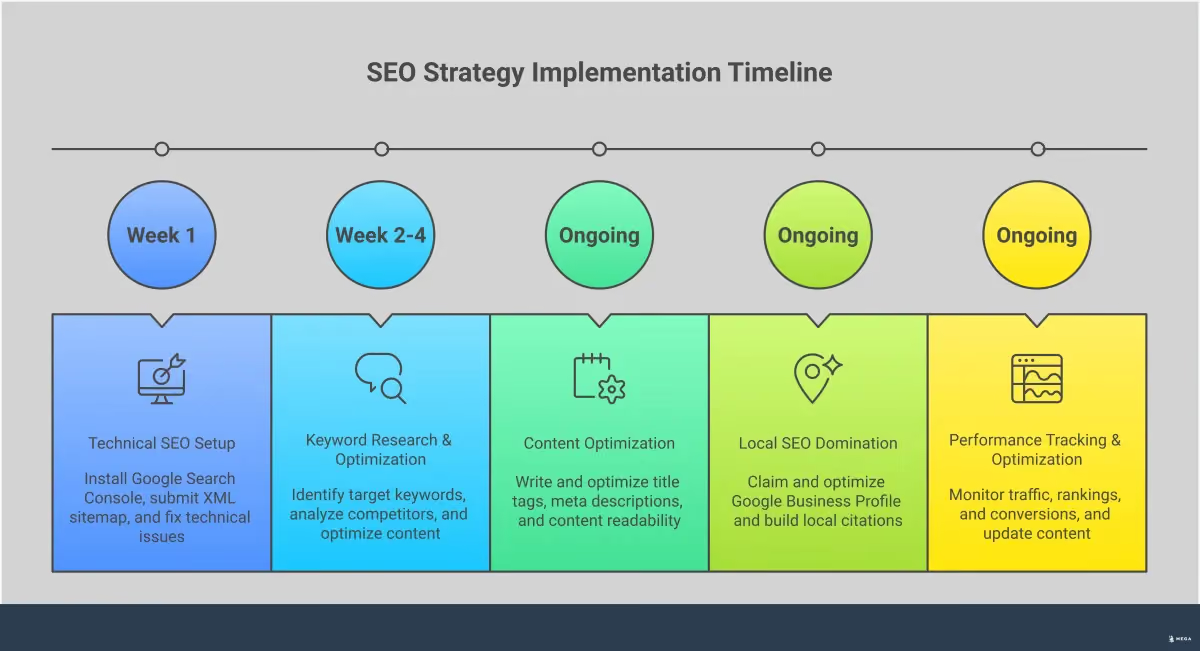
Now that you understand the core components of SEO, it’s time to turn that knowledge into a concrete plan. An effective strategy isn’t just a list of ideas; it’s a structured roadmap that guides your efforts and helps you measure what’s working. Breaking it down into manageable steps and a clear timeline makes the process much less overwhelming. Here’s how to build an action plan that gets results.
A Step-by-Step Implementation Guide
Your implementation guide is your day-to-day playbook. Start with keyword research to find the phrases your customers are actually using. From there, create a content plan that outlines which pages you’ll create or improve to meet user needs. Search engines reward helpful content that thoroughly answers a user's query. Next, address any technical SEO issues that could be holding your site back. Finally, think about your backlink strategy. Planning how to earn mentions and links from other credible sites helps search engines see your brand as trustworthy and important. These four pillars form the foundation of your daily SEO work.
Create Your 90-Day SEO Roadmap
A 90-day roadmap helps you prioritize and stay focused. Begin with a competitor analysis to see what’s working for them and identify gaps you can fill. Next, decide how you’ll track your results. Knowing your key metrics is the only way to understand your progress and make smart adjustments. Remember that SEO is a long-term game that requires continuous improvement, as search engine algorithms are always evolving. A successful strategy combines technical fixes, quality content, and consistent analysis. An AI-powered SEO agent can manage this entire workflow, from research to execution and ongoing optimization, delivering results much faster.