
SEO isn't a one-time trick; it's a discipline built on consistent practice. Think of it like a science that requires a systematic approach. This post will show you the essential SEO habits that drive organic traffic and improve search rankings. We'll cover everything from effective keyword research and creating high-value SEO content to optimizing on-page elements. You'll also learn how to build a strong backlink profile and avoid common pitfalls. With insights from expert Nathan Gotch, you'll build a sustainable strategy. We’ll also show you how MEGA SEO can simplify your efforts.
Key Takeaways
- Strong SEO habits drive sustainable growth: Regularly creating high-quality content, optimizing on-page elements, and building a robust backlink profile are essential for long-term success. Analyzing user behavior and adapting your strategy based on data-driven insights are key to staying ahead.
- Strategic keyword research maximizes ROI: Focus on keywords that align with user intent and business goals. Balancing search volume with conversion potential, and prioritizing bottom-of-funnel keywords ensures your SEO efforts translate into tangible results.
- High-quality, relevant content attracts and converts: Addressing user needs, incorporating unique perspectives, and optimizing content for information gain are crucial for engaging your audience and improving search rankings. Prioritize quality over quantity for lasting organic traffic growth.
What is SEO Content?
SEO content is any material you create with two goals in mind: attracting search engine traffic and satisfying the person who lands on your page. Think of it as the bridge between a question someone types into Google and your website providing the answer. It’s not just about finding a popular keyword and repeating it on a page. Instead, it’s about creating valuable, relevant, and well-optimized material that search engines recognize as the best possible result for a specific query. This content is designed to rank highly in search results, bringing in organic, or non-paid, traffic from people actively looking for the products, services, or information you offer.
Defining SEO Content
At its core, SEO content is any online material—from blog posts to product pages—that is intentionally built to perform well in search. The main objective is to match a user's search intent, which means understanding what they are truly looking for and giving it to them. For example, if someone searches for "how to fix a leaky faucet," they want a step-by-step guide, maybe with images or a video. Creating a piece of SEO content for this query means building that exact guide and optimizing it so Google can easily understand and rank it. This process involves strategic keyword research, clear writing, and a structure that is easy for both people and search engine crawlers to read.
Common Types of SEO Content
When people think of SEO content, blog posts are often the first thing that comes to mind. While blogs are a powerful tool, the world of SEO content is much broader. Different formats serve different purposes and attract different segments of your audience. For a small or local business, using a mix of content types is an effective way to cover all stages of the customer journey. Some of the most common types include product pages, in-depth articles, how-to guides, videos, and local landing pages. Each piece should be part of a larger plan, helping you build authority and attract qualified leads. Managing the creation and optimization of these assets is a key part of any successful SEO strategy.
What Are SEO Habits and How Do They Affect Your Rankings?
SEO habits are the consistent practices you use to improve your site’s visibility on search engines like Google. Think of them as the routines you follow to ensure your website appears when potential customers search for products or services like yours. These habits play a crucial role in how well your website ranks in search engine results pages (SERPs).
Developing strong SEO habits is like building a solid foundation. Just as a weak foundation can lead to cracks and instability, poor SEO habits can sabotage your results, costing you traffic, time, and money. Even experienced marketers can fall victim to common SEO mistakes that hinder their progress. Nathan Gotch’s video on SEO habits offers valuable insights into these pitfalls. MEGA SEO helps you build a strong SEO foundation with automated tools and features. Learn more by booking a demo.
One of the most impactful SEO habits is consistently creating high-quality, relevant content. While generating a large volume of content might seem appealing, focusing on quality over quantity is essential for long-term success. This means understanding what your target audience is searching for and providing information that addresses their needs. Gotch emphasizes the importance of relevant content and Information Gain—giving users the answers they want. You can explore MEGA SEO’s content generation features to see how we prioritize quality content creation.
Another critical SEO habit is on-page optimization. This includes incorporating relevant keywords in your title tags, meta descriptions, and URLs. These elements are fundamental to signaling to search engines what your content is about. Neglecting these on-page SEO essentials can severely impact your visibility. MEGA SEO automates many of these on-page optimizations, ensuring your content is always aligned with best practices. Access our free SEO tools to start optimizing your website today.
How to Choose Topics That Drive SEO Success
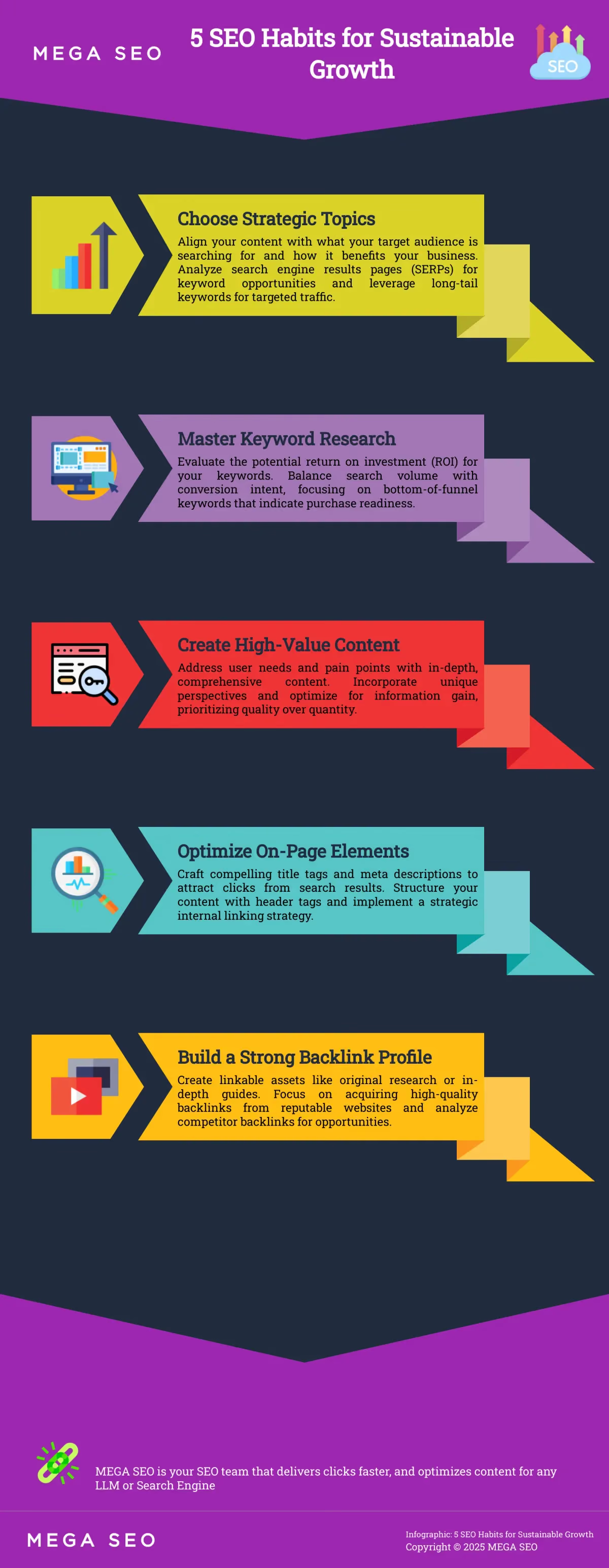
Picking the right topics is crucial for SEO success. As SEO expert Nathan Gotch emphasizes, choosing the wrong topics wastes time, money, and resources. (21 SEO Habits Killing Your Rankings) A strategic approach involves aligning your content with user intent and business goals, analyzing search engine results pages (SERPs), and leveraging long-tail keywords.
Align Your Content with User Intent and Business Goals
Think about what your target audience searches for and how your content can provide solutions or meet their needs. This user-centric approach ensures your content resonates with searchers and drives organic traffic. Consider what questions your audience asks, what problems they face, and what information they seek. By addressing these needs, you establish your site as a valuable resource, building trust and authority. At the same time, ensure your chosen topics align with your overall business objectives. Whether your goal is lead generation, brand awareness, or product sales, your content should contribute to these aims. MEGA SEO’s customized posts can help you develop a content strategy that aligns with both user needs and your business goals.
Understand the Four Types of Search Intent
Search intent is the “why” behind a search query. Understanding what a user is trying to accomplish helps you create content that meets their needs, which is a major factor in search engine rankings. There are four main types of search intent: navigational, informational, commercial, and transactional. By creating content that targets each type, you can guide users through their entire journey, from initial awareness to final purchase. This comprehensive approach ensures you capture traffic at every stage of the funnel, building a relationship with potential customers along the way. Let’s look at each type in more detail.
Navigational Intent
Navigational intent means the user already knows where they want to go and is using a search engine to get there faster. Think of searches like "Starbucks menu" or "Netflix." The user isn't looking for information about Starbucks; they're just trying to get to the website. While you typically won't target another brand's navigational keywords, it's essential to rank for your own. When someone searches for your business name, you want to be the first result. This reinforces brand recognition and ensures potential customers can find you easily. It's a simple but fundamental part of establishing your online presence and making sure your audience can connect with you directly.
Informational Intent
Informational intent is the most common type of search query. Users are looking for answers, knowledge, or how-to guides. They might ask questions like "how to start a small business" or "what is content marketing." Creating content that addresses these informational queries is a powerful way to build authority and trust with your audience. By providing valuable, comprehensive answers, you position your brand as an expert in your field. This top-of-funnel content attracts new visitors who may not be ready to buy yet but will remember your brand when they are. MEGA SEO's content generation tools can help you identify these questions and create articles that provide the answers searchers are looking for.
Commercial Intent
Commercial intent sits between informational and transactional searches. The user is planning to make a purchase soon but is still in the research phase. They are comparing products, reading reviews, and looking for the best option. Keywords often include terms like "best," "review," "comparison," or "top." For example, a search for "best email marketing tools" shows commercial intent. Creating content that targets these keywords, such as detailed product comparisons or in-depth reviews, can capture highly qualified leads. You're helping users make an informed decision, which can guide them directly to your product or service when they are ready to commit.
Transactional Intent
Transactional intent means the user is ready to make a purchase. Their search queries are highly specific and often include words like "buy," "coupon," "discount," or a specific product name. For example, someone searching for "buy Nike Air Max 90" is ready to complete a transaction. These are bottom-of-the-funnel keywords with high conversion potential, making them extremely valuable. Optimizing your product pages and creating targeted landing pages for these terms is essential for driving sales. MEGA SEO can help you pinpoint these high-intent keywords and ensure your pages are perfectly optimized to convert searchers into customers.
Analyze Google SERPs to Find Winning Keywords
Analyzing Google SERPs is essential for effective keyword selection. Examining the top-ranking pages for your target keywords provides insights into what Google considers relevant and valuable content. Pay attention to the types of content that rank well, whether blog posts, product pages, or videos. This analysis helps you understand user preferences and tailor your content accordingly. Also, consider the estimated clickthrough rate (CTR) for different keywords. As Nathan Gotch advises, understanding CTR is crucial for keyword strategy. (21 SEO Habits Killing Your Rankings) A high search volume keyword with low CTR might not be as effective as a lower volume keyword with a higher CTR. MEGA SEO’s free tools can assist you in analyzing SERPs and identifying high-potential keywords.
Finding Topic Ideas Your Audience Cares About
To find topics your audience genuinely cares about, you need to look beyond basic keyword tools. A great starting point is your own customer base. What questions do they frequently ask your sales or support teams? These inquiries are direct lines into their most pressing needs and pain points. You can also explore online communities like Reddit, Quora, or industry-specific forums where your target audience gathers to discuss challenges. Analyzing your competitors' top-performing content is another effective strategy; it shows you which topics already have a proven track record with your shared audience. By focusing on solving real problems, you create content that not only ranks but also builds lasting trust. MEGA AI's automated keyword research can help you discover these valuable, long-tail keywords that directly address specific user questions.
Use Long-Tail Keywords to Attract the Right Audience
While short-tail keywords have high search volume, they often come with intense competition. Long-tail keywords, on the other hand, are more specific and target niche audiences. They typically have lower search volume but offer higher conversion potential. As Nathan Gotch suggests, focusing on long-tail keywords with slightly less competition can be a more effective strategy. (21 SEO Habits Killing Your Rankings) These keywords allow you to attract highly targeted traffic, increasing the likelihood of conversions. For example, instead of targeting “SEO,” you might target “SEO for e-commerce startups.” This specificity attracts users actively searching for solutions for their e-commerce business, making them more likely to engage with your content and convert into customers. Book a demo with MEGA SEO to learn how our platform can help you identify and leverage long-tail keywords for targeted traffic generation.
How to Do Keyword Research for Effective SEO Content
Keyword research is the foundation of any successful SEO strategy. It’s not just about finding popular search terms; it’s about identifying the keywords that will drive qualified traffic to your site—traffic that converts into customers. This section breaks down how to evaluate keyword ROI potential, balance search volume with conversion intent, and focus on bottom-of-funnel keywords to maximize your SEO impact.
How to Evaluate a Keyword's Potential ROI
To truly succeed with SEO, you need to look beyond vanity metrics like traffic volume and focus on the return on investment (ROI) of your keywords. As SEO expert Nathan Gotch explains, the goal isn’t simply to flood your website with visitors; it’s to attract visitors with a high probability of converting into paying customers. Think about the financial return you expect from your keywords. Should you be aiming for a $3, $4, or even $5 return for every dollar spent? Gotch suggests aiming for a 10:1 ROI ratio, at minimum. This means targeting keywords that not only bring visitors but also generate revenue, making your SEO efforts financially worthwhile. Consider exploring MEGA SEO’s keyword research tools to help you identify high-ROI keywords.
How to Balance High Search Volume with Conversion Intent
While high search volume keywords can be tempting, they don’t always translate into conversions. It’s essential to balance search volume with conversion intent. Gotch points out the danger of focusing solely on keywords in the “unaware” phase of the buying cycle. Users searching these terms are still early in their research and unlikely to make a purchase. For these keywords, your best bet is to offer lead magnets or create content that guides them further down the sales funnel. Effective keyword research involves understanding user intent at different stages of the buying process and selecting keywords that align with those intentions. Check out MEGA SEO’s resources for more information on creating effective lead magnets.
Target Bottom-of-Funnel Keywords for Better Conversions
To truly maximize your SEO strategy, prioritize bottom-of-funnel keywords. These are the keywords used by searchers who are ready to buy. Gotch recommends flipping the traditional keyword research approach and concentrating your efforts on these commercial keywords. Why? Because they’re the keywords that directly impact your bottom line. By focusing on keywords that indicate a strong purchase intent, you’ll drive highly qualified traffic to your site, leading to increased conversion rates and revenue. MEGA SEO’s customized posts can help you create content optimized for these valuable bottom-of-funnel keywords. Book a demo to see how MEGA SEO can help you master keyword research and achieve your SEO goals.
How to Create SEO Content People Actually Want to Read
Attracting the right kind of visitors is key to a successful website. It’s not about a massive influx of traffic, but rather drawing in visitors who are genuinely interested in what you offer and likely to convert. This principle applies whether you’re crafting landing pages or blog posts.
Address Your User's Needs and Pain Points Directly
Before you write a single word, understand your target audience. What are their challenges? What solutions are they seeking? When your content directly addresses these needs and pain points, it resonates more deeply with your audience. This targeted approach not only improves your search engine rankings but also increases the likelihood of conversions. Think about what questions your ideal customer is typing into Google, and aim to provide comprehensive answers. For example, check out MEGA SEO’s free tools to help you understand your target audience.
Stand Out with Unique Perspectives and Expertise
While covering essential topics is important, adding your unique spin is what sets you apart. Share original insights, expert opinions, and data-backed analysis to differentiate your content from competitors. The more effort you invest in providing fresh perspectives, the more valuable your content becomes to readers and search engines alike. Consider conducting original research, interviewing industry experts, or sharing case studies to add depth and credibility to your work. MEGA SEO‘s Content Generation feature can help you brainstorm unique angles and create compelling content that stands out. Request a demo to see it in action.
Provide New Value with Information Gain
Search engines prioritize content that offers something new. Focus on providing information that genuinely adds value to the reader’s experience. This could involve sharing new research, presenting a unique perspective on a familiar topic, or offering practical tips and actionable advice. Ask yourself: “Does my content provide information that users can’t easily find elsewhere?” If the answer is yes, you’re on the right track. Explore MEGA SEO’s resources for more tips on creating valuable content.
Improve Readability for a Better User Experience
Great content is useless if no one can get through it. Readability is about making your writing clear and easy to understand. When your content is a wall of dense text, visitors are more likely to leave, signaling to Google that your page isn't a good match for their query. To prevent this, break up your content with headings, short paragraphs, and bulleted lists. Use simple language and avoid jargon your audience might not know. The goal is to create content that is easy and enjoyable to read, which encourages visitors to stay on your page longer. Keeping your content readable isn't a one-time task. Tools like MEGA SEO's Maintenance Agent can help by automatically updating articles to improve clickthrough rates and user engagement, ensuring your content remains user-friendly over time.
Why Quality Always Wins Over Quantity in SEO Content
While a consistent content calendar is important, quality trumps quantity. Focus on creating in-depth, comprehensive pieces that thoroughly explore a topic, rather than churning out a high volume of superficial content. High-quality content not only attracts and engages users but also establishes your authority in your niche. This approach leads to sustainable organic traffic growth and builds a loyal audience. Use MEGA SEO’s Maintenance Agent to ensure your existing content remains high-quality, up-to-date, and optimized for optimal performance. You can request customized posts to get started.
The Role of Content Length in Rankings
You might wonder if there's a magic word count for SEO, and the data does point in a certain direction. Research shows that longer content tends to perform better in search results. One study by Backlinko found that the average top-ranking page on Google has about 1,447 words. However, this doesn't mean you should add filler just to hit a number. Length is often a byproduct of being comprehensive. The real goal is to create a resource that thoroughly covers a topic and answers every question a user might have. When you focus on providing complete, helpful, and reliable information, the word count naturally increases. Instead of just writing more, focus on adding more value. MEGA SEO's Maintenance Agent can help by identifying new sections to add to your existing articles, making them more thorough and improving their chances to rank.
Getting Your On-Page SEO Right
After crafting high-quality content, optimize your on-page elements. This involves fine-tuning your web pages to improve their visibility and appeal to both search engines and users.
Write Title Tags and Meta Descriptions That Get Clicks
Title tags and meta descriptions are crucial for attracting clicks from search engine results pages (SERPs). Your title tag is the headline that appears in search results and at the top of browser tabs. It should accurately reflect the page’s content and include relevant keywords. Meta descriptions provide a brief summary of your page’s content. While they don’t directly impact rankings, they significantly influence click-through rates. A compelling meta description entices users to visit your page, driving organic traffic. As SEO expert Nathan Gotch emphasizes, including your target keyword in the title tag and meta description is crucial. Your keyword should appear in these elements, as well as the URL and H1 tag, ideally within the first sentence or a variation of it. This helps search engines understand your page’s context. Learn more about crafting effective title tags and meta descriptions in our SEO resources.
How to Use Header Tags to Structure Your Content
Header tags (H1-H6) structure your content, making it easier for users and search engines to understand. They break your content into logical sections, improving readability and user experience. Using header tags strategically also allows you to incorporate relevant keywords and related terms, further enhancing your page’s SEO. Gotch advises comprehensive topic coverage, similar to top-ranking pages. If you’re aiming to rank for a specific keyword, ensure your content addresses all relevant aspects of that topic. For instance, when writing about SEO, discuss related concepts like user experience and keyword research. This demonstrates your expertise and provides valuable information to your audience. MEGA SEO’s content generation tools can help structure your content with effective header tags.
Strategic Keyword Placement
Once you’ve done your keyword research, where you place those keywords matters. Your primary keyword should appear early and prominently. A good rule of thumb is to include it within the first 100 words of your content, ideally in the first sentence. This signals to both readers and search engines what your page is about right away. From there, weave your main keyword and related terms naturally throughout the body of your text, including in your subheadings. The key is to make it feel organic, not forced. Avoid stuffing keywords where they don’t belong, as this can harm your user experience and your rankings. The goal is to create a cohesive piece that flows well while still being optimized for search.
Optimize for Featured Snippets
Featured snippets are the answer boxes that appear at the very top of Google’s search results, often called "position zero." Securing these spots can significantly increase your visibility and traffic. A simple and effective way to target featured snippets is to structure your content to directly answer common questions. Use your subheadings to pose questions that your audience is likely to ask. Immediately following the subheading, provide a clear and concise answer in a short paragraph or a bulleted list. This format makes it easy for Google to pull your content and feature it as the definitive answer. MEGA SEO’s Maintenance Agent can help identify opportunities to add new, snippet-worthy content to your existing articles.
Optimizing Images and Videos
Visual content is a powerful tool for engagement, but it also needs to be optimized for SEO. For images, always use high-quality, relevant visuals and place them near the corresponding text. Most importantly, write descriptive alt text for every image. This short description helps search engines understand the image's content and makes your site more accessible to users with visual impairments. For videos, create high-quality content and host it on a page with related text. Just like with your written content, give your videos clear, keyword-rich titles and descriptions to help them appear in both standard and video search results. These practices ensure your multimedia elements contribute positively to your overall SEO performance.
Build a Smart Internal Linking Strategy
Internal linking is the practice of linking to other pages within your website. It’s essential for improving site navigation, distributing link equity, and helping search engines understand the relationship between different pages. A well-planned internal linking strategy enhances user experience and can boost your overall SEO performance. Gotch recommends focusing on overall coverage when it comes to internal linking. Ideally, every page on your site should be accessible within three clicks from the homepage. Diversify your anchor text. While links were once the primary tool for driving relevance, Google’s natural language processing (NLP) capabilities now allow it to understand page content more effectively. Therefore, focus on creating a logical and user-friendly internal linking structure. Consider using MEGA SEO’s platform to automate and optimize your internal linking.
Organizing Your Website for SEO Success
Think of your website as a library. If the books are scattered everywhere with no clear system, visitors will get frustrated and leave. Search engines feel the same way. A well-organized website is not just about looking neat; it’s a fundamental SEO habit that helps search engines understand your content and guide users to the right information. This structure is the backbone of your site’s performance, influencing everything from user experience to how easily your pages get indexed and ranked. A logical layout makes your site more intuitive for visitors and crawlers, ensuring your valuable content gets the visibility it deserves.
How Search Engines Find and Index Your Content
To understand why site structure matters, you first need to know how search engines work. Google uses automated programs, often called "crawlers" or "spiders," to constantly explore the web. These crawlers follow links from one page to another, discovering new content to add to Google's massive index—a digital library of the internet. If your pages are hard to find because of poor linking or a confusing structure, these crawlers might miss them entirely. A page that isn't in Google's index can't rank in search results, making it invisible to potential customers. Your job is to create a clear path for these crawlers to follow.
Key Principles of Site Structure
A logical site structure helps both users and search engines make sense of your content. The best way to visualize this is as a pyramid. Your homepage sits at the top, serving as the main entry point. From there, it should link down to your main category pages (the next level of the pyramid). These category pages then link to more specific sub-pages or individual blog posts at the base. This hierarchical structure makes your site intuitive for users and helps search engines understand the relationship between your pages. It also ensures that authority, or "link equity," flows logically from your most important pages down to more specific content, giving your entire site a solid foundation.
Cornerstone Content
Within your site structure, you should identify your most important articles—what many SEOs call "cornerstone content." These are the comprehensive, in-depth pages that you want to rank highest for your most competitive keywords. Think of them as the pillars of your website, covering the core topics of your business in great detail. You should regularly update this content to keep it fresh and link to it often from other relevant blog posts on your site. This strong internal linking strategy signals to Google that these pages are highly valuable and authoritative, making them a central part of your SEO efforts and helping them to rank more prominently.
Avoiding Content Cannibalization and Orphaned Pages
A good site structure also helps you avoid two common SEO problems: content cannibalization and orphaned pages. Content cannibalization occurs when multiple pages on your site compete for the same keywords, confusing search engines and diluting your authority. Orphaned pages are those that have no internal links pointing to them, making them difficult for both users and crawlers to find. Google often sees these pages as less important. A clear content plan and a robust internal linking strategy, which tools like MEGA SEO can help automate, ensure every page has a purpose and is properly connected within your site.
Managing Duplicate Content
Duplicate content refers to having the same or very similar content available on multiple URLs. While it doesn't typically result in a penalty, it can confuse search engines. When Google finds identical content at different addresses, it has to choose one version to show in search results, and it might not be the one you prefer. This can happen for technical reasons, like having your site accessible at both `http://` and `https://` versions. The best practice is to choose one primary URL for each piece of content and use technical signals, like canonical tags, to tell Google which one is the official version to index.
How to Build a Strong Backlink Profile
Backlinks—links from other websites to yours—act as votes of confidence in the eyes of search engines. A robust backlink profile signals authority and relevance, boosting your search rankings. This section covers how to attract high-quality backlinks and build a profile that elevates your site’s visibility.
Create Content That Naturally Attracts Links
One of the most effective ways to earn backlinks is by creating content people want to link to. Think original research, in-depth guides, data visualizations, and tools. As SEO expert Nathan Gotch advises, focus on developing these “linkable assets.” Brainstorm ideas using tools like ChatGPT to generate unique content that fills a gap in your industry. For example, if you sell project management software, consider creating a free project management template or a data study on project management trends. These resources offer value to your audience and become natural magnets for backlinks. MEGA SEO’s content generation features can help you create these high-value assets efficiently.
Why Link Quality Matters More Than Quantity
While a high number of backlinks might seem impressive, it’s the quality of those links that truly matters. As Nathan Gotch emphasizes, prioritize one high-quality backlink from a reputable site over hundreds of low-quality links. A single link from a respected industry blog can carry more weight than numerous links from spammy or irrelevant websites. High-quality backlinks improve your site’s authority and tell search engines that your content is valuable and trustworthy. This targeted approach is more sustainable and yields better long-term results.
How to Analyze Your Competitor's Backlinks for Opportunities
Understanding your competitors’ backlink strategies is a smart move. By analyzing their backlink profiles, you can identify potential link-building opportunities and learn what tactics to avoid. If you notice competitors engaging in questionable link-building practices, such as buying links, take note. As Gotch points out, if you can spot these red flags, Google likely can too. Focus on ethical, sustainable link-building strategies that align with search engine guidelines. Use MEGA SEO’s free tools to analyze competitor backlinks and identify valuable link-building opportunities. You can also book a demo to learn more about how MEGA SEO can help you build a strong backlink profile.
Use User Behavior Data to Improve Your SEO
Smart SEO strategies aren’t just about keywords and backlinks—they’re about understanding your audience. Knowing how users interact with your website is key to improving your search rankings and driving more organic traffic. This means going beyond basic metrics and diving into user behavior data. By understanding what users like, what they don’t, and what they’re looking for, you can make informed decisions that directly impact your SEO performance. Think of it as getting inside your audience’s head to give them exactly what they want.
Set Up Analytics to Track User Behavior
The first step in leveraging user behavior is setting up the right tracking. Tools like Google Analytics and heatmapping software provide a wealth of information about how users interact with your site. Google Analytics helps you track metrics like bounce rate, time on page, and conversion rates, giving you a general overview of user engagement. Heatmapping tools take it a step further, visually showing you where users click, scroll, and move their mouse, providing insights into what captures their attention. SEO expert, Nathan Gotch, emphasizes the importance of user tracking, stating that the insights gained from these tools are essential for forming hypotheses and conducting effective tests. He recommends choosing user tracking software and using it to gather evidence for data-driven SEO improvements. You can explore MEGA SEO’s Free Tools to get started with tracking and analyzing user behavior.
Use Data to Make Smarter SEO Decisions
Once you have data, the real work begins. Analyzing user behavior data allows you to identify areas for improvement on your website. For example, a high bounce rate on a particular page might indicate that the content isn’t relevant to the user’s search query, or that the page is loading too slowly. Heatmaps can reveal if users are struggling to find important calls to action. By understanding these patterns, you can make data-driven optimizations that enhance the user experience and improve your SEO. This might involve revising your content, improving site speed, or redesigning your page layout for better usability. Gotch stresses the power of data, urging website owners to invest in user tracking software to gain powerful insights. He believes that data-driven optimization is crucial for improving website performance and achieving higher search rankings. Consider booking a demo to see how MEGA SEO can help you automate these data-driven optimizations and improve your SEO performance.
How to Sustain and Grow Your Organic Traffic
Driving initial traffic is a milestone, but sustaining and growing that organic traffic over time is the real challenge. This requires a shift from short-term gains to long-term strategies. Let’s explore some key habits for sustainable organic growth.
Using a Content Calendar Effectively
A content calendar is your roadmap for consistent publishing. It helps you plan your content in advance, so you're not scrambling to come up with ideas at the last minute. A good rule of thumb is to plan one to two months ahead, which gives you enough flexibility to adapt while maintaining a steady flow of content. The goal isn't just to publish frequently; it's to publish pieces that resonate with your audience. Use your calendar to schedule in-depth articles that thoroughly cover a topic. Remember that high-quality content is what truly matters for SEO. A single, comprehensive post that addresses user needs is far more valuable than several superficial ones. Treat your calendar as a living document that's informed by data. Regularly review your analytics to see which topics perform best, and use those insights to plan future content that your audience will love.
Develop a Sustainable, Long-Term SEO Strategy
Building a brand, not just driving clicks, requires a long-term SEO strategy. The goal isn’t simply attracting high traffic volume, but ensuring that traffic has a high probability of converting. Aim for a 10 to 1 return on investment (ROI) as a standard—this reflects a sustainable approach that prioritizes quality over quantity. A long-term strategy considers your audience’s evolving needs and adapts to algorithm updates, ensuring consistent performance. MEGA SEO’s automated tools can help you develop and maintain this long-term vision with consistent data-driven insights and adjustments.
Keep Your Content Fresh with Regular Updates
Regularly updating and refreshing existing content is one of the most effective strategies for sustaining and growing organic traffic. Focusing on pages already generating organic search traffic can yield significant results. High-effort content consistently outperforms low-effort content, so invest time in enhancing what you already have. This might involve adding new data, updating outdated information, or expanding on existing points for more comprehensive coverage. MEGA SEO’s Maintenance Agent automates this process, identifying areas for improvement and even generating new content sections to keep your articles fresh and relevant. This improves your search rankings and provides a better user experience, leading to increased engagement and conversions.
Understanding Google's Freshness Factor
Google's algorithm includes a "freshness factor," which means it often prioritizes newer content in search results, especially for topics where timeliness is important. This doesn't mean you have to constantly publish new articles. Instead, it highlights the value of keeping your existing content up-to-date. Think of it from a user's perspective: no one wants to land on a page with outdated statistics or irrelevant information. By regularly refreshing your high-performing pages with new insights, data, and examples, you signal to Google that your content is still relevant and valuable. This practice not only helps maintain your rankings but also improves the user experience, which can lead to higher engagement.
Watch the SERPs to Find New Opportunities
Monitoring search engine results pages (SERPs) is vital for identifying new keyword opportunities. Understanding the SERP landscape lets you estimate click-through rates (CTR) and gauge the potential effectiveness of targeting specific keywords. This ongoing analysis is key to adapting your SEO strategy and capitalizing on emerging trends. By analyzing SERPs, you can identify gaps in content coverage, understand competitor strategies, and refine your keyword targeting for optimal performance. MEGA SEO’s automated tools can assist in this process by tracking SERP changes and alerting you to new opportunities, allowing you to stay ahead of the curve.
Common SEO Mistakes to Avoid
Even with a solid SEO strategy, it’s easy to fall prey to outdated practices or neglect key elements. Here’s how to sidestep common SEO mistakes:
Move Past Outdated Practices Like Keyword Stuffing
Focusing too much on keyword density can result in unnatural writing and a poor user experience. Prioritize creating high-quality, relevant content that addresses the needs and questions of your audience. The goal isn’t simply to attract website traffic, but to drive conversions and ROI for your SEO efforts. SEO isn’t about cramming in keywords; it’s about providing useful information. Consider exploring MEGA SEO’s content generation features to create high-quality, relevant content.
The Irrelevance of Meta Keywords Tags
Years ago, the meta keywords tag was a place to list the keywords you wanted a page to rank for. However, this practice became a hotspot for abuse, with webmasters stuffing irrelevant keywords to manipulate rankings. As a result, Google has confirmed that it no longer uses the meta keywords tag as a ranking signal. Spending time filling out this tag is an outdated habit that offers no SEO benefit. Instead, focus your energy on on-page elements that actually matter, such as crafting compelling title tags, writing persuasive meta descriptions, and creating high-quality content that serves your audience.
Why Keywords in Your Domain Name Have Less Impact
Having a keyword in your domain name isn't necessarily a bad thing, but its impact on your rankings is minimal. While it can offer a small hint of relevance, Google's algorithms have become much more sophisticated. They now prioritize brandability, user experience, and content quality over exact-match domains. According to Google's own guidance, a good domain name should be memorable and relevant to your business, not just a string of keywords. Choosing a unique, brandable name like `yourbrand.com` is a much better long-term strategy than a clunky, keyword-stuffed domain like `best-widgets-for-sale-online.com`.
Why Mobile-Friendliness and Site Speed Are Non-Negotiable
Mobile optimization is crucial. A site that isn’t mobile-friendly can lead to high bounce rates and lower rankings. Google prioritizes sites that offer a seamless experience on any device. Site speed is another significant ranking factor. Slow-loading pages frustrate users and negatively affect your SEO performance. Ensure your website is designed for both speed and mobile usability to enhance user experience and improve rankings. Use Google’s PageSpeed Insights tool to identify areas for improvement. You can also explore MEGA SEO’s technical SEO features to automate site speed improvements.
How to Measure SEO Success the Right Way
SEO isn’t just about rankings—it’s about driving business growth. To achieve this, you need to measure your SEO success with the right metrics and connect your efforts to tangible business outcomes. This means shifting your focus from vanity metrics like keyword rankings to those that have a real impact on your bottom line.
Focus on the SEO Metrics That Actually Matter
The ultimate goal of SEO is to generate a return on investment (ROI). For every dollar invested, aim for a significant return, ideally a 10:1 ratio or higher. This requires focusing on metrics that reflect the quality and profitability of your organic traffic. Instead of simply driving a high volume of website traffic, prioritize attracting visitors with a high probability of converting. Track metrics like:
- Conversion Rate: This measures the percentage of website visitors who complete a desired action, such as making a purchase or filling out a form. A high conversion rate indicates that your SEO efforts are attracting the right audience. Set up conversion tracking to monitor your progress.
- Customer Lifetime Value (CLTV): Understanding the long-term value of customers acquired through organic search helps you assess the true ROI of your SEO strategy. Learn more about calculating CLTV.
- Return on Ad Spend (ROAS): While not directly related to organic search, ROAS is a crucial metric for paid campaigns. By tracking ROAS, you can compare the effectiveness of your paid and organic strategies and allocate your budget accordingly.
Tracking Keyword Rankings
While keyword rankings aren't the only metric for success, they are a vital indicator of your visibility in search results. Tracking where your pages rank for target keywords helps you understand how search engines perceive your content. Examining the top-ranking pages for your keywords provides insights into what Google considers relevant and valuable, helping you tailor your content accordingly. A steady improvement in rankings suggests your strategy is working, while a drop can signal a need to update your content or address a technical issue. This data allows you to make informed adjustments, ensuring your efforts are aligned with what both users and search engines are looking for. MEGA SEO can help you monitor these rankings automatically, saving you time and providing clear performance data.
Monitoring Impressions
Impressions tell you how often your website appears in search results for a given query. This metric is a leading indicator of your site's visibility and reach. An increase in impressions means your content is showing up for more searches, even if users aren't clicking through yet. Monitoring impressions is vital for identifying new keyword opportunities and understanding your overall SERP landscape. When you see high impressions but a low click-through rate (CTR), it’s often a sign that your title tag or meta description needs improvement. By analyzing this data in a tool like Google Search Console, you can refine your on-page elements to attract more clicks and drive qualified traffic.
Measuring New Backlinks
Backlinks are a powerful signal of your website's authority. Measuring the new backlinks you acquire helps you gauge the effectiveness of your content and outreach efforts. It’s not just about the number of links; quality is what matters most. A single link from a highly respected site in your industry can be more valuable than dozens of low-quality links. Analyzing your backlink profile also allows you to identify which pieces of content are attracting links naturally. This insight helps you understand what resonates with your audience and what types of "linkable assets" you should create in the future. You can also analyze competitor backlinks to find new opportunities for your own link-building strategy.
How to Tie Your SEO Efforts to Business Growth
To maximize your SEO ROI, concentrate on bottom-of-the-funnel keywords. These are the keywords that potential customers use when they’re close to making a purchase. By targeting these keywords, you’ll attract high-intent traffic that’s more likely to convert into paying customers. Here’s how to connect your SEO efforts to business growth:
- Prioritize Backlink Support: Focus on creating fewer, high-quality pages and supporting them with strong backlinks, rather than creating numerous pages with limited link authority. Quality backlinks from reputable websites signal to search engines that your content is valuable and trustworthy.
- Optimize Existing Content: Instead of constantly creating new content, focus on improving existing URLs. By enhancing your top-performing content, you can further increase its visibility and drive more organic traffic. MEGA SEO’s Maintenance Agent can help you identify opportunities to improve your existing content and optimize it for better performance.
- Capture More Click-Through Rate (CTR): Even if your content ranks well, a low CTR means you’re missing out on potential traffic. Analyze the search engine results pages (SERPs) to identify opportunities to capture more clicks. This might involve optimizing your title tags and meta descriptions or creating additional content to target related keywords.
By focusing on these strategies, you can ensure that your SEO efforts directly contribute to your business objectives and drive sustainable growth. Book a demo to see how MEGA SEO can help you automate and optimize your SEO strategy for maximum impact.