
You are an expert at fixing a burst pipe at 2 a.m., not at search engine algorithms. But when a homeowner has that emergency, their first move is to grab their phone and search for help. If your business doesn't appear on that first page of results, you lose the job. This is where understanding SEO for plumbers becomes essential. It’s not about becoming a digital marketing guru; it’s about making your business visible to local customers at the exact moment they need you. This guide breaks down the process into manageable steps, showing you how to attract more calls and grow your business.
Key Takeaways
- Focus on local visibility: Optimize your Google Business Profile and build local citations to connect with customers searching for plumbers in their area.
- Provide helpful resources: Create informative content addressing common plumbing problems and questions to attract potential customers and build trust.
- Ensure a technically sound website: A fast, mobile-friendly, and easily crawlable website improves user experience and boosts search engine rankings.
What is SEO for Plumbers?
SEO for plumbers is a specialized approach to search engine optimization (SEO) that helps your plumbing business rank higher in search engine results pages (SERPs). When potential customers search online for plumbing services—anything from “emergency plumber near me” to “leaky faucet repair”—SEO ensures your business is visible. This increased visibility translates to more phone calls, online bookings, and ultimately, more revenue. It’s a digital marketing strategy connecting you with people actively searching for a plumber in their area. A strong SEO strategy involves optimizing your website content, improving local listings like your Google Business Profile, and building high-quality backlinks to establish credibility. These efforts drive organic traffic—essentially free traffic—from search engines to your website.
Different types of SEO work together to make this happen. Local SEO is essential for plumbers, as many people search for services “near me.” On-page SEO optimizes elements within your website itself, while technical SEO ensures your website runs smoothly for both users and search engines. Off-page SEO builds your online presence and authority through activities like earning backlinks from other reputable sites. Content SEO focuses on creating helpful, informative content that attracts potential customers. Understanding and implementing these various SEO types helps plumbing businesses reach a wider audience and grow.
Why Your Plumbing Business Needs SEO
When a pipe bursts at 2 a.m., who are homeowners going to call? A plumber—and likely the first one they find online. A strong online presence is essential for plumbing businesses. SEO is the key to that online visibility, connecting you with customers who need your services right now.
The Numbers Behind the Search
Why Online Reviews and Website Speed Matter
When a potential customer is dealing with a flooded basement, they don't have time for trial and error. They need a reliable plumber, and they need one now. This is where online reviews come into play. They act as a powerful form of social proof, quickly telling people whether your business is trustworthy. Consider that a significant number of consumers read online reviews for local businesses before making a decision. A steady stream of positive feedback builds credibility, while a low rating can deter customers before they even visit your website. Managing your online reputation isn't just about feeling good; it's a core part of attracting new business and showing you're a trusted professional in your community.
Beyond reviews, the technical performance of your website plays a huge role in a customer's decision. A slow-loading website is a major deterrent. In fact, if a mobile page takes more than three seconds to load, over half of visitors will leave. For a customer in a panic over a plumbing issue, that frustration is magnified. A fast, responsive website signals professionalism and efficiency—qualities every customer wants in a plumber. It also directly impacts your search rankings, as search engines prioritize sites that provide a good user experience. A seamless website experience keeps potential clients engaged and makes it easy for them to contact you for help.
How Better Visibility Leads to More Calls
SEO helps plumbing businesses get found online by people searching for plumbing services. When someone needs a plumber, they search online, often using phrases like “plumber near me” or “emergency plumbing services.” According to Ahrefs, there are over 700,000 global searches monthly for “plumbers near me,” plus hundreds of thousands more for specialized services. If your business doesn’t appear in these search results, you’re missing potential customers. Local SEO is crucial, focusing on optimizing your Google Business Profile, managing online reviews, and ensuring accurate listings in online directories. Good customer reviews are also important, significantly influencing customer decisions.
Attract Customers Who Need a Plumber Now
Unlike traditional advertising, SEO drives targeted traffic to your website. Keyword research helps identify the terms people use when searching for plumbing services. By using these keywords in your website content, you attract people seeking the services you offer. On-page SEO involves optimizing website titles, descriptions, and URLs, making them search-engine friendly, as explained in ServiceTitan’s SEO guide. Creating helpful blog posts answering common plumbing questions attracts organic traffic and builds valuable backlinks, further improving search engine rankings.
What Goes Into a Plumbing SEO Strategy?
For plumbers, a robust online presence isn’t a luxury—it’s a necessity. These four core SEO components work together to attract more customers and grow your plumbing business: on-page SEO, technical SEO, local SEO, and content SEO.
On-Page SEO: Making Your Website Search-Friendly
On-page SEO is like setting up a welcoming storefront for your online visitors. It’s about making your website easily understandable for both search engines and potential customers. This involves optimizing elements on your website pages, such as title tags, meta descriptions, headers, and image alt text. Think of it as arranging your products neatly and labeling them clearly so people can find what they need. A well-optimized website ensures search engines understand your services, leading to higher rankings and increased visibility. For example, if you specialize in drain cleaning, using relevant keywords throughout your website copy helps search engines connect your business with users searching for those services. MEGA SEO can automate many of these on-page optimizations, saving you time and ensuring best practices are followed. Book a demo to see how.
Technical SEO: Ensuring Your Site Runs Smoothly
Technical SEO focuses on the behind-the-scenes aspects of your website. It’s the foundation upon which your online presence is built. A technically sound website is fast, easy to navigate, and mobile-friendly, offering a smooth experience for your visitors. This includes elements like site speed, mobile responsiveness, and a clear site structure. A well-structured site helps search engines crawl and index your pages efficiently, like a well-organized warehouse where products can be easily located and shipped. Improving your website’s technical SEO can significantly impact its performance in search results. MEGA SEO offers tools to analyze and improve your technical SEO, identifying areas for improvement and automating fixes. Explore our free tools to get started.
Local SEO: Winning Customers in Your Service Area
For plumbers, local SEO is paramount. Most people searching for a plumber need someone in their immediate area. Local SEO helps you connect with these potential customers by optimizing your Google Business Profile and building local citations. Think of it as putting your business on the map, literally. Accurate and consistent business information across online directories ensures customers can find you when they search for “plumber near me.” Encouraging customer reviews also plays a crucial role in local SEO, acting as word-of-mouth referrals in the digital space. MEGA SEO can help manage your local SEO, ensuring your business information is consistent and up-to-date. Learn more about our customized posts for local businesses.
Content SEO: Answering Your Customers' Questions
Content SEO is about providing valuable information that addresses your target audience’s needs and questions. For plumbers, this could include blog posts about common plumbing problems, DIY tips, or explanations of different plumbing systems. By creating helpful content, you establish yourself as a trusted expert in your field, attracting potential customers and building credibility. Think of it as offering free advice and guidance, which builds trust and encourages people to choose your services when they need a professional. High-quality content also improves your search rankings, as search engines prioritize websites that offer valuable information to users. MEGA SEO can help you generate and optimize content, making it easier to create valuable resources for your audience. Check out our resources for content creation tips.
How to Succeed with Local SEO for Plumbers
For plumbers, local SEO is critical. Why? Because people searching for a plumber aren’t looking in another state–they need someone nearby now. Mastering local SEO means showing up when potential customers search for “plumber near me” or “emergency plumbing services in [your city]”.
Making Your Google Business Profile
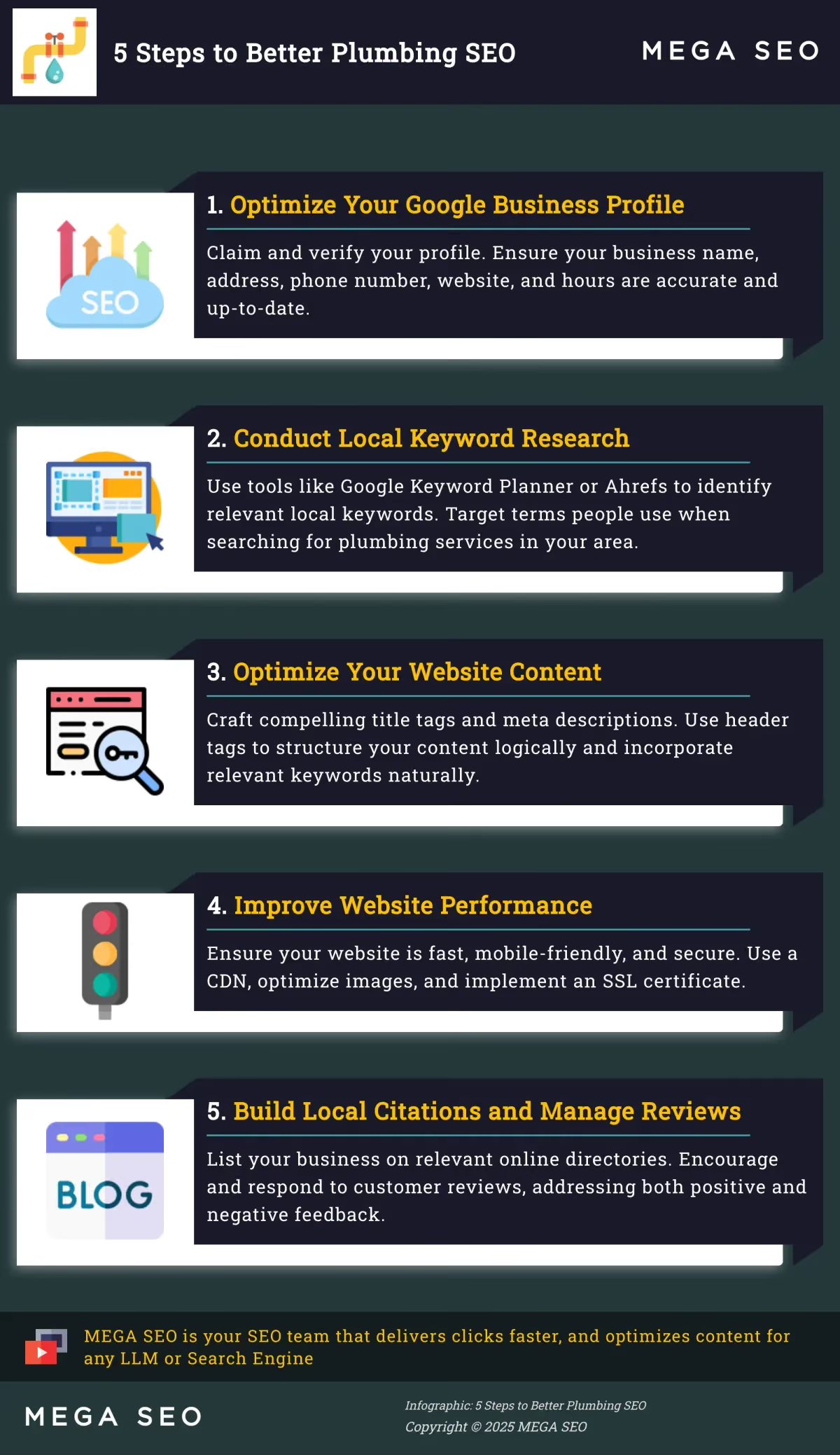
Your Google Business Profile is your digital storefront. It’s often the first thing people see when they search for local services. Make sure your profile is complete and accurate, including your business name, address, phone number, website, hours of operation, and service area. Add photos of your work and your team to build trust and showcase your professionalism. A complete and optimized Google Business Profile is essential for ranking well in local search results. Encourage satisfied customers to leave Google reviews–positive reviews are a powerful signal for both Google and potential clients.
How to Build Citations and Manage Online Reviews
Think of local citations as online mentions of your business. These mentions, which include your business name, address, and phone number (NAP), appear on websites like Yelp, Angie’s List, and industry-specific directories. Consistent NAP information across these platforms helps build credibility with search engines. Use data aggregators like Data Axle and Localeze to distribute your business information widely. You can also use tools like Ahrefs’ Link Intersect tool to discover other relevant directories where your competitors are listed. Beyond citations, actively manage your online reviews. Make it easy for happy customers to share their feedback by providing direct links or QR codes. Addressing negative reviews professionally can also demonstrate your commitment to customer satisfaction.
How to Find and Use Local Keywords
Keyword research is the foundation of any successful SEO strategy. For plumbers, understanding what terms people use when searching for plumbing services is essential. Think beyond generic terms like “plumber.” Consider more specific, locally focused keywords like “drain cleaning in [your city]” or “water heater repair near me.” Incorporate these keywords naturally throughout your website content, including page titles, headings, and body text. With terms like “plumbers near me” receiving hundreds of thousands of searches each month, targeting the right local keywords can significantly impact your visibility and connect you with customers actively seeking your services. Tools like Ahrefs can help you identify relevant keywords and understand search volume and competition.
How to Optimize Your Plumbing Website's Pages
On-page SEO is the foundation of a strong online presence. It’s about optimizing the elements within your website to improve search engine rankings and user experience. For plumbers, this means making it easy for potential customers to find your services when they search online.
Writing Titles and Descriptions That Get Clicks
Title tags and meta descriptions are crucial for on-page SEO. Think of your title tag as your website’s headline on search engine results pages (SERPs). It tells search engines and users what your page is about. Your meta description provides a brief summary, enticing users to click through to your website. Make sure your title tags and meta descriptions accurately reflect your content and include relevant keywords, like “emergency plumbing repair” or “drain cleaning services.” Keep them concise, engaging, and benefit-driven to encourage clicks and improve your click-through rate. For a deeper dive into title tags and meta descriptions, check out this SEO guide.
How to Use Headers to Organize Your Content
Using header tags (H1, H2, H3, etc.) effectively structures your content, making it easier for both users and search engines to understand. Think of your H1 tag as the main title of your page, followed by H2s for subheadings, H3s for sub-subheadings, and so on. This hierarchy helps organize your content logically. For example, on a page about drain cleaning, your H1 might be “Professional Drain Cleaning Services,” followed by H2s like “Signs You Need Drain Cleaning” and “Benefits of Professional Drain Cleaning.” This structured approach makes it easier for search engines to understand the context of your content and rank your pages accordingly. Learn more about optimizing your website’s structure with MEGA SEO’s customized posts.
Using Schema Markup to Stand Out in Search Results
Schema markup, a type of microdata, helps search engines understand your site’s content better. It provides additional context about your business, services, and location. For plumbers, this might include information like your business name, address, phone number, service areas, and customer reviews. Implementing schema can enhance your visibility in search results by enabling rich snippets, which are enhanced search results with additional information. These rich snippets can include star ratings, customer reviews, and other details that make your listing stand out. Schema markup can significantly improve your click-through rate and drive more qualified traffic to your website. Explore MEGA SEO’s free tools to help implement schema markup effectively.
Technical SEO: A Health Check for Your Website
Technical SEO often gets overlooked, but it’s the foundation of a successful SEO strategy. Think of it as building a solid house—you need a strong structure before you start decorating. For plumbers, this means ensuring your website is easily accessible and performs well for both users and search engines. A technically sound website improves user experience, which can lead to more leads and higher conversions.
How to Speed Up Your Site and Make It Mobile-Friendly
In today’s on-the-go world, people search for plumbers on their phones more than ever. Your website needs to load quickly and display correctly on any device. A slow site can frustrate potential customers and cause them to look elsewhere. Optimize your website’s images, use a content delivery network (CDN), and minimize unnecessary code to improve your site speed. Make sure your website design is responsive, adapting seamlessly to different screen sizes. Google’s research shows that as page load time goes from one second to three seconds, the probability of a bounce increases 32%.
Helping Google Find and Understand Your Website
Search engines use bots to discover and index your website’s pages. If these bots can’t access your content, your site won’t show up in search results. Create a clear sitemap to guide search engines through your website’s structure. Regularly check your robots.txt file to ensure you’re not accidentally blocking important pages. Tools like Ahrefs Webmaster Tools can help you monitor your SEO health and identify any crawl errors. This ensures search engines can easily access and understand your content, improving your chances of ranking higher.
Why a Secure Website (SSL) is a Must-Have
Security is paramount online, especially when dealing with customer information. An SSL certificate encrypts data transmitted between your website and users, protecting sensitive information. This builds trust with your customers and signals to search engines that your site is safe. HTTPS is a ranking factor for Google, meaning secure sites are favored in search results. Implementing SSL is a simple yet effective way to improve both security and SEO.
How to Create Content That Ranks and Converts
Content is king, especially in SEO. A smart content strategy attracts potential customers, establishes you as a local expert, and improves your search engine rankings. This section covers creating SEO-friendly content that works for your plumbing business.
Finding Content Topics Your Customers Care About
Think about the questions your customers ask. What are their plumbing pain points? What information do they search for online? These questions form the basis of your content strategy. Consider topics like “How to fix a leaky faucet,” “Common causes of low water pressure,” or “Choosing the right water heater.” These address specific problems homeowners face and position you as a helpful resource. For more content ideas, check out ServiceTitan’s guide to plumbing SEO. By focusing on practical, informative content, you’ll attract organic traffic from people actively seeking plumbing solutions.
How to Plan Your Content with a Calendar
Once you have a list of topics, organize them into a content calendar. This helps you maintain a consistent posting schedule and ensures you’re covering various relevant subjects. A content calendar also lets you plan content around seasonal plumbing issues, like winterizing pipes or addressing common summer problems. This forward-thinking approach keeps your content fresh and timely. Remember, a balanced SEO strategy incorporates on-page, technical, and off-page optimization, with high-quality content and backlinks playing a crucial role, as highlighted in Ahrefs’ comprehensive SEO guide.
How to Optimize for Featured Snippets and Voice Search
People searching online often look for quick answers. Featured snippets, those concise summaries at the top of search results, are prime real estate for your content. Structure your content to directly answer common plumbing questions using clear headings, bullet points, and concise language. This makes your content user-friendly and increases its chances of appearing as a featured snippet. Similarly, optimize for voice search by using natural, conversational language reflecting how people ask questions verbally. Think about how someone might ask about a plumbing issue using a voice assistant and tailor your content accordingly. Consider using tools like Ahrefs’ Keywords Explorer to discover low-competition, high-traffic topics.
Optimizing for AI Search Tools
Modern SEO isn't just about ranking on Google. It also helps your content show up in AI answers from tools like ChatGPT. The good news is that the work you do for featured snippets and voice search directly helps here. AI tools look for clear, well-structured content that directly answers common questions. Using natural language and organizing articles with clear headings and bullet points makes it easy for these systems to find and use your information. Implementing schema markup is another powerful technique, as it provides search engines with structured data about your services. This positions your business as a reliable source, increasing the chances that an AI will recommend your services. Our SEO tools can help automate the creation of this structured content, ensuring you're prepared for the future of search.
How to Find the Right Keywords for Your Plumbing Business
Keyword research is the foundation of any successful SEO strategy. For plumbers, it’s about identifying the terms potential customers use when searching online for plumbing services. Understanding these search terms helps you tailor your website content and attract the right audience.
Finding Keywords with the Right Tools
Keyword research tools provide valuable data on search volume, competition, and related keywords. Start with free tools like Google Keyword Planner to understand basic search trends. For more advanced features, consider Ahrefs for competitive analysis and in-depth keyword research as your business grows. These tools help you discover which plumbing services are in high demand and how competitive those keywords are. Learn more about using these tools in ServiceTitan’s guide to plumbing SEO.
Understanding What Your Customers Are Searching For
Knowing what people search for is only half the battle; understanding why they search is equally important. Search intent reveals the motivation behind a search. Are they looking for information, a specific product, or a local service provider? For plumbers, recognizing search intent is crucial. Someone searching for “emergency plumber near me” has a different intent than someone searching for “how to fix a leaky faucet.” Tailor your content to match the user’s needs. Ahrefs offers a comprehensive guide on understanding search intent for plumbers.
The Power of Long-Tail Keywords for Plumbers
While short-tail keywords like “plumber” or “plumbing services” have high search volume, they’re also highly competitive. Long-tail keywords are longer, more specific phrases that target niche searches. Think “emergency drain cleaning services in [city name]” or “best plumber for water heater repair.” These keywords often have lower search volume but higher conversion rates because they attract users with a specific need. Plumbing Webmasters provides a helpful list of long-tail keywords to get you started. By incorporating long-tail keywords into your website content, you can improve your ranking for relevant searches and attract qualified leads.
How to Build Your Reputation Beyond Your Website
Off-page SEO focuses on activities outside your website that influence your search rankings. For plumbers, this means building your website’s authority and online presence through strategic link building and local partnerships.
Earn Quality Backlinks
Backlinks are links from other websites to yours. Think of them as votes of confidence, signaling to search engines that your website is a credible source. Earning high-quality backlinks from reputable websites, like industry associations or local news outlets, is crucial for improving your site’s authority and search engine rankings. Ahrefs offers a comprehensive guide on backlink strategies for plumbers. Prioritize earning backlinks from authoritative sites within your industry or local area.
How to Build Links Through Local Partnerships
Building relationships with local businesses and organizations can generate valuable backlink opportunities. Consider partnering with hardware stores, contractors, or interior designers. You could explore guest blogging on their websites or participating in community events together. These partnerships not only generate backlinks but also increase your visibility within the local community. Help a Reporter Out (HARO) connects you with journalists and bloggers who might feature your services, leading to valuable media coverage and backlinks.
Creating Content That People Want to Link To
Developing high-quality, informative content that other websites want to link to is a powerful way to earn backlinks naturally. This could include blog posts answering common plumbing questions, detailed guides on plumbing maintenance, or even videos demonstrating DIY repairs. ServiceTitan offers helpful advice on creating effective content for plumbing businesses. When you create valuable content that resonates with your audience, other websites are more likely to reference it and link back to your site. This drives referral traffic and boosts your SEO.
Beyond SEO: A Complete Marketing Strategy for Plumbers
While SEO is a powerful tool for attracting new customers, it’s just one part of a comprehensive marketing plan. To build a truly resilient plumbing business, you need a multi-faceted approach that combines online and offline strategies. This means reaching customers through various channels, from paid ads and social media to traditional branding and word-of-mouth referrals. A well-rounded strategy ensures you’re not just visible in search results but are also building a memorable brand and fostering long-term customer relationships. By diversifying your marketing efforts, you create multiple pathways for new business and strengthen your position in the local market.
Paid Advertising: Google Local Service Ads and Retargeting
Paid advertising can give your business an immediate presence at the top of search results, which is perfect for customers with urgent plumbing needs. Google Local Service Ads are particularly effective, as they feature a "Google Guaranteed" badge that builds instant trust with potential clients. These ads appear above traditional search results and are designed for local service providers. Retargeting is another powerful strategy; it involves showing ads to people who have already visited your website. This keeps your business top-of-mind, reminding potential customers of your services when they are ready to make a decision.
How AI can help manage paid ad campaigns
Managing paid ad campaigns can feel like a full-time job, especially for a busy plumber. This is where AI can make a significant difference. AI-powered platforms can automate the entire process, from creating ad variations to optimizing your budget. For instance, a tool like MEGA AI allows you to upload your content once and then automatically remixes it into hundreds of different ad creatives for platforms like Google and Meta. The system can also analyze performance data in real-time and shift your ad spend to the campaigns that are delivering the best results, ensuring your marketing dollars are used as efficiently as possible. This level of automation frees you up to focus on running your business, not on tweaking ad settings. Learn more about our Paid Ads solutions.
Social Media Marketing for Plumbers
Social media is an excellent platform for connecting with your local community and showcasing your expertise. You can share practical tips, post before-and-after photos of your work, and create short videos demonstrating common plumbing fixes. Engaging with your audience by responding to comments and messages helps build a loyal following. It’s also a great place to encourage happy customers to leave reviews and share their positive experiences. A consistent and helpful social media presence makes your business more approachable and keeps you in front of potential customers even when they don’t have an immediate plumbing issue.
Offline Marketing and Building a Recognizable Brand
Your brand is more than just your online presence. Creating a recognizable brand identity helps you stand out from the competition and builds customer loyalty. This means using a consistent logo, color scheme, and font across all your marketing materials—from your website and social media profiles to your work vans, uniforms, and business cards. When people in your community see your branded van, they should immediately recognize your business. This consistency creates a professional image and makes your company more memorable, which is essential for generating word-of-mouth referrals and repeat business.
Customer Referral Programs
Word-of-mouth remains one of the most powerful marketing tools for any local service business. A formal referral program encourages your satisfied customers to spread the word about your plumbing services. The concept is simple: offer a small reward, like a discount on a future service or a gift card, to any existing customer who refers a new client. This not only shows appreciation for their loyalty but also incentivizes them to become advocates for your brand. Make it easy for them to participate by providing referral cards or a simple online form they can share with friends and family.
Using Lead Generation Sites like Thumbtack and Angi
Websites like Thumbtack and Angi can be a valuable source of new business, as they connect you directly with people who are actively searching for plumbers. These platforms allow you to create a profile, showcase your services, and bid on jobs in your area. While there is often a cost associated with acquiring leads, these sites can be an effective way to fill gaps in your schedule and reach a new customer base. They also provide another avenue for collecting reviews, which can further enhance your online reputation and attract more clients over time.
Building Trust and Retaining Customers
Attracting new customers is important, but the long-term success of your plumbing business depends on building trust and encouraging repeat business. A loyal customer base provides a steady stream of revenue and is more likely to refer your services to others. This requires a focus on delivering exceptional service and proactively managing your reputation. When customers know they can rely on you for quality work and honest communication, they have no reason to look elsewhere for their plumbing needs. This section covers strategies for fostering that trust and keeping your customers coming back.
Proactive Reputation Management
In an industry where trust is paramount, your online reputation can make or break your business. Proactively ask every satisfied customer to leave a review on platforms like Google, Yelp, or Angi. People rely heavily on reviews when choosing a plumber to invite into their home, and a collection of positive feedback serves as powerful social proof. It’s also important to monitor and respond to all reviews, both positive and negative. Thanking customers for their praise and professionally addressing any concerns shows that you value feedback and are committed to customer satisfaction.
Strategies for Customer Retention and Repeat Business
The easiest way to secure repeat business is to provide excellent service on every single job. When a customer has a positive experience, they are far more likely to call you again for future plumbing issues. You can also implement simple retention strategies to stay top-of-mind. Consider sending out annual service reminders for things like water heater maintenance or creating a simple email newsletter with seasonal plumbing tips. Offering a small loyalty discount for returning customers can also go a long way in showing your appreciation and encouraging them to stick with your business for the long haul.
Tracking Your SEO Progress (and What to Avoid)
Knowing how to measure your SEO success is just as important as knowing how to implement it. This means setting up the right tools and tracking your progress. It also means understanding common SEO mistakes so you can avoid them.
Setting Up Your Essential SEO Tracking Tools
To get started, set up Google Analytics and Google Search Console. These free tools offer valuable data about your website’s performance. Google Analytics helps you understand your website traffic and user behavior. Search Console shows you how Google sees your site, including any crawling errors. Both are essential for a successful SEO strategy.
Using Call Tracking to Measure ROI
For a plumbing business, a ringing phone is the sound of new business. But do you know which of your marketing efforts are making that phone ring? This is where call tracking comes in. By assigning unique phone numbers to different marketing campaigns—like your Google Business Profile, your website, or a specific ad—you can see exactly which channels are driving calls. This data is essential for understanding the effectiveness of your marketing strategies and calculating your return on investment (ROI). When you know that a certain blog post or local ad is generating the most leads, you can allocate your marketing budget more wisely, focusing on what truly works to grow your business.
What SEO Metrics Should You Be Tracking?
Once you have your tools in place, start tracking key performance indicators (KPIs). Use Search Console to monitor your keyword rankings and click-through rates. Ahrefs is another helpful tool for tracking rankings and analyzing competitors. Keep an eye on your organic traffic growth in Google Analytics. This shows you how many people are finding your website through search engines. Also, pay attention to user engagement metrics like bounce rate and time on page. These metrics can indicate how well your content resonates with your audience.
Common SEO Mistakes Plumbers Make
While implementing SEO best practices, be aware of common pitfalls that can hurt your rankings. Never buy links. Google penalizes sites that participate in link schemes. Focus on earning high-quality backlinks naturally. Avoid keyword stuffing. This makes your content sound unnatural and provides a poor user experience. Instead, use keywords strategically and focus on creating valuable content. Duplicate content is another issue to avoid. Make sure each page on your site has unique content. For an easier route to high-quality content creation, explore MEGA SEO’s customized posts.
How to Use Data to Refine Your SEO Strategy
Regularly review your SEO data. This helps you understand what’s working and what’s not. Use this information to refine your strategies and improve your results. A comprehensive SEO approach includes on-page optimization, technical improvements, and off-page strategies like link building. By analyzing your data and making adjustments, you can ensure your SEO efforts stay effective and support your business goals. Consider using MEGA SEO’s platform to automate these ongoing SEO tasks and improvements. Consistent monitoring and adjustments are key to long-term success.