Your catering business might offer the most delicious dishes and impeccable service, but if potential clients can't find you online, those talents go unnoticed. Many caterers face this exact challenge: a fantastic offering with limited digital reach. This is where understanding and implementing effective strategies becomes so important. This guide is designed to walk you through the essentials of SEO for Catering Services. We'll cover how to make your website more visible to people actively searching for event catering, wedding menus, or corporate lunch solutions in your area. Think of this as your roadmap to attracting more online inquiries and turning those clicks into confirmed bookings for your business.
Key Takeaways
- Prioritize Your Local Online Presence: Actively manage your Google Business Profile, encourage customer reviews, and maintain consistent business details online to attract nearby catering clients.
- Craft Content Around Client Needs and Keywords: Develop service pages, blog articles, and FAQs that answer potential clients' questions and naturally incorporate the terms they use when searching for catering services.
- Build a User-Friendly and Search-Optimized Website: Focus on a clear site structure, fast loading speeds, and mobile responsiveness to provide a great experience for visitors and improve your search engine visibility.
What is SEO and Why Your Catering Business Needs It
So, what exactly is Search Engine Optimization, or SEO? It’s the practice of improving your website so it appears higher in search engine results—think Google, Bing, and others. Search engines use automated programs, often called bots, to "crawl" websites. As they explore, they gather information and add it to their vast digital index. Then, when someone types a search query, complex algorithms determine how to rank pages based on many factors. These can include the quality of your content, the specific keywords you use, and how well your site works on mobile devices.
Now, you might have a fantastic catering website, but simply having one doesn't mean customers will find it. You need to actively optimize it for search engines so people looking for your services can connect with you. For a catering business, being visible online when local customers are searching is incredibly important. This is where local SEO becomes a key player, focusing on getting your business found by people in your specific service area. Making sure your Google Business Profile is accurate with your name, address, and phone number (NAP), along with appealing photos and positive customer reviews, can significantly help.
A strong online presence is essential today. Effective SEO can greatly improve your catering website's visibility, and even basic SEO strategies can make a noticeable difference. Consider that a huge portion of online experiences start with a search engine, and the top result on Google often gets the lion's share of clicks. If your site is buried on the second page, your chances of being seen drop dramatically. This means SEO isn't just another marketing item on your to-do list; it's a vital strategy for the success and growth of your catering business in our digital world.
Build an Effective SEO Strategy for Your Catering Website
A strong online presence is essential for your catering business to thrive, and a well-planned SEO strategy is the foundation of that presence. Think of it as your detailed recipe for attracting more clients online, guiding every step you take to get noticed. It involves deeply understanding what your potential customers are searching for—the specific words and phrases they use when they need catering for a wedding, a corporate lunch, or a special family gathering. Then, it’s about making sure your website shows up prominently when they look. This isn't just about sprinkling a few keywords here and there; it's a comprehensive approach. This strategy considers how your site is built from a technical standpoint, the quality and relevance of the content you share, and how you connect with your local community online. To succeed in the competitive catering industry, you need a carefully crafted and consistently applied SEO plan. By developing a clear strategy, you can significantly improve your visibility in search results, making it easier for the right clients to find you and ultimately draw in more event bookings. Remember, regularly reviewing and adjusting your strategy is key to ensuring your catering SEO remains effective and continues to drive business growth in an ever-changing digital landscape.
Optimize Your On-Page Elements
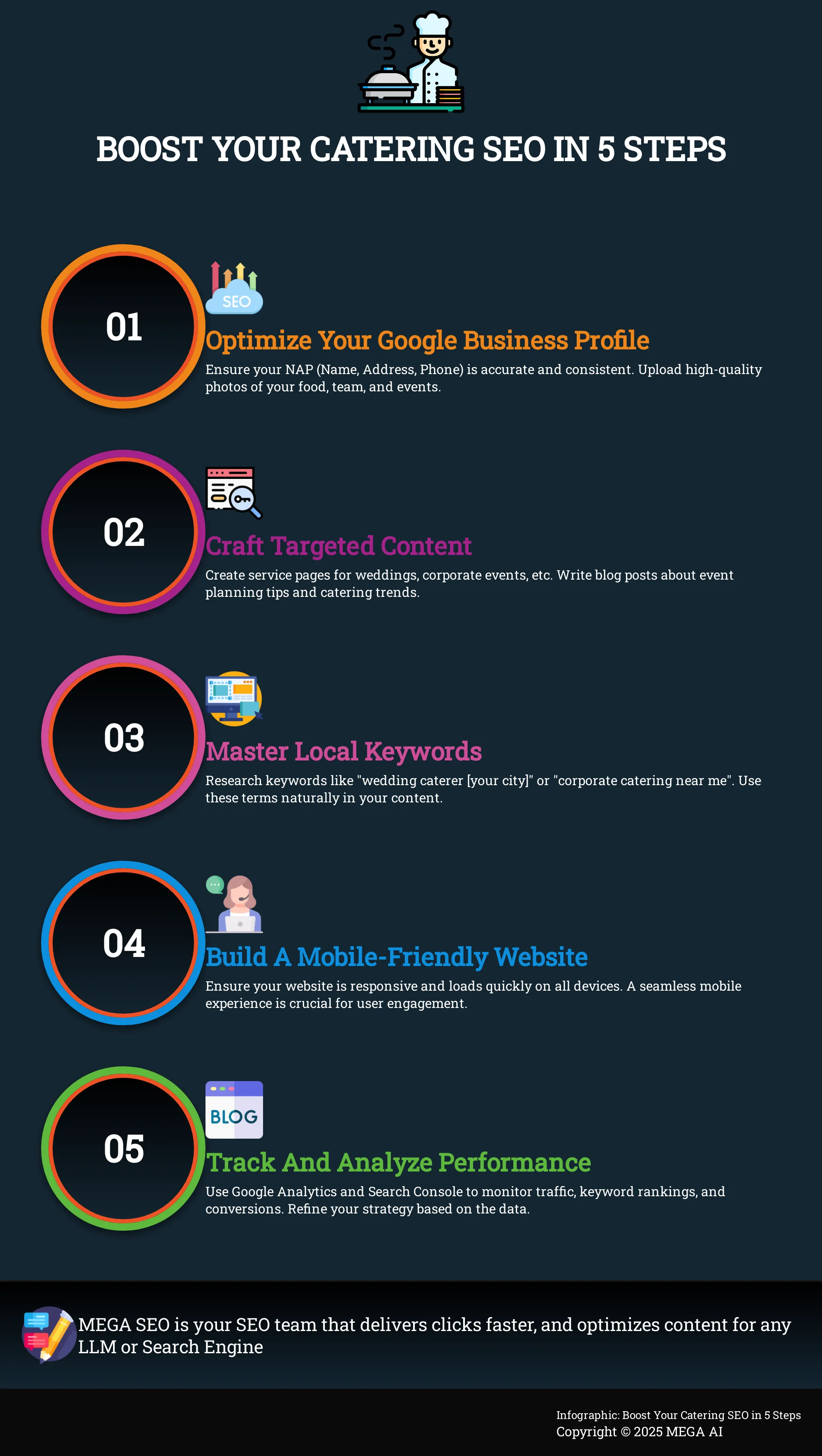
Optimizing your on-page elements means fine-tuning the content and HTML source code of your website's pages. This starts with thorough keyword research to identify the terms and phrases your ideal clients use when searching for catering services. Think about what someone planning a wedding, corporate event, or private party would type into Google.
Once you have your keywords, integrate them naturally into your page titles, headings (H1s, H2s, etc.), meta descriptions, and body content. It's important to use these keywords in a way that makes sense to readers; avoid "keyword stuffing," which is an outdated practice of overusing keywords that can actually harm your rankings. Focus on creating clear, compelling descriptions and content that accurately reflect what each page is about and encourages clicks from search results.
Cover Your Technical SEO Bases
Technical SEO refers to the optimizations you make to your site and server that help search engine spiders crawl and index your site more effectively. Even small technical errors can impede your rankings, making your site less visible. Key aspects include ensuring your website loads quickly, has a clear sitemap for search engines to follow, and uses a robots.txt file correctly to guide web crawlers.
Regularly reviewing your website's technical health is crucial. This includes checking for broken links, ensuring your site is secure with HTTPS, and making sure its structure is logical. A technically sound website provides a solid foundation for all your other SEO efforts, helping your content get discovered and ranked. Think of it as ensuring your kitchen is clean and organized before you start cooking a gourmet meal.
Create Content Tailored to Catering Clients
Your website content should speak directly to the needs and desires of potential catering clients. Catering businesses often provide the culinary and service expertise for a wide range of events, from intimate private parties to large corporate gatherings and memorable weddings. Your content needs to showcase this versatility and professionalism. Consider what information a client needs when choosing a caterer: they're looking for taste, reliability, and experience.
Develop content that highlights your unique offerings, such as specialized menus (vegan, gluten-free), types of events you excel at (e.g., fine dining experiences, casual buffets), and what makes your service stand out. Blog posts offering event planning tips, detailed service pages for different occasions, and galleries showcasing past events can be very effective. This tailored content not only attracts clients but also helps establish your authority in the catering field.
Master Local SEO for Your Catering Business
For catering businesses, your local community is your primary market. Most of your clients will be searching for services right in their neighborhood or city. This is where mastering local SEO becomes absolutely essential. Think of local SEO as making sure your catering business shows up prominently when potential customers nearby search for "caterers near me," "event catering [your city]," or "wedding caterer [your neighborhood]." It’s about connecting with the people actively looking for the delicious food and excellent service you provide, right where you are.
Getting your local SEO right means more visibility in local search results, on maps, and in directories. This translates directly into more inquiries, more bookings, and a stronger reputation in your community. It’s not just about being found; it’s about being chosen. When someone is planning an important event, they want a reliable, reputable local caterer. A strong local online presence builds that trust even before they contact you. We'll explore how to optimize your Google Business Profile, build valuable local connections through citations and backlinks, and leverage the power of customer reviews to make your catering service the top choice in your area. These steps will help you attract more local customers and grow your business effectively.
Optimize Your Google Business Profile
Your Google Business Profile (GBP) is arguably your most important tool for local SEO. It’s that free profile that appears in Google Maps and the local pack of Google Search results. Think of it as your digital storefront. Keeping this profile accurate and engaging is key. Start with the basics: ensure your business name, address, and phone number (NAP) are correct and consistent everywhere online. Upload high-quality photos of your food, your team in action, and past events you’ve catered – visuals are incredibly persuasive. Regularly update your business hours, especially for holidays. You can also use GBP to share posts about special offers, new menu items, or upcoming events, keeping your profile fresh and informative for potential clients.
Build Local Citations and Backlinks
Beyond your Google Business Profile, you need to establish your presence across the local web. This is where local citations and backlinks come into play. Citations are mentions of your business's name, address, and phone number (NAP) on other websites, like local directories (think Yelp, Yellow Pages, or your local Chamber of Commerce site), industry-specific portals, and community forums. Consistency in your NAP across all these listings is crucial. Backlinks, on the other hand, are links from other local websites back to yours. These could come from a local food blogger who reviewed your service, a venue you partner with, or a community event you sponsored. Both citations and quality backlinks signal to search engines that your business is legitimate and well-regarded in your local area, helping to improve your online authority and search rankings.
Use Customer Reviews for Local SEO
Customer reviews are pure gold for local SEO and for your catering business in general. Think about it – when you’re looking for a service, don’t you often check the reviews first? Positive reviews build trust and social proof, significantly influencing potential customers' decisions. They also play a role in your local search ranking; Google sees businesses with many positive reviews as more credible and popular. Actively encourage your happy clients to leave feedback on your Google Business Profile, Yelp, or other relevant review sites. Make it easy for them by providing a direct link. It's also important to respond to all reviews, both positive and negative. Thank customers for their praise and address any concerns professionally and constructively. This shows you value feedback and are committed to customer satisfaction.
Find the Right Keywords for Your Catering Business
Finding the right keywords is like choosing the perfect ingredients for a signature dish; it’s essential for attracting the right crowd. When potential customers search online for catering services, you want your business to appear prominently. This means understanding the exact words and phrases they type into search engines. It might sound a bit technical, but it's a straightforward process once you grasp the basics. Think of it as learning your customers' language. By identifying these key terms, you can tailor your website content to meet their needs directly, making it easier for them to find you and, ultimately, choose your services. This focused approach ensures your marketing efforts are efficient and effective, drawing in clients who are genuinely interested in what you offer.
Tools and Techniques for Keyword Research
To kick things off, you'll want to identify the right keywords and phrases your potential customers are using. This involves a bit of detective work. Start by brainstorming terms related to your services. What would someone type into Google if they needed catering for a wedding, a corporate event, or a private party in your area? Consider variations and synonyms.
Several tools can help with this process. Some are free, like Google Keyword Planner, while others are subscription-based, offering more detailed analytics. These tools can reveal search volumes, suggest related keywords, and show you how competitive certain terms are. For businesses looking to streamline this, platforms like MEGA AI offer automated keyword research, simplifying the task of finding relevant terms and analyzing their potential to attract customers. The goal is to compile a solid list of keywords that accurately reflect your services and what your audience is searching for.
Identify High-Value Catering Keywords
Once you have a list of potential keywords, it's time to pinpoint the high-value ones. Generic terms like "caterer" might seem appealing due to high search volume, but they are often very competitive and may not attract the most qualified leads. Instead, focus on more specific keywords that indicate a clearer intent. For instance, terms like "corporate catering [your city]," "wedding catering packages," or "event caterers near me" are much more targeted.
According to Ahrefs, caterers should identify specific keywords people use when actively searching for services, such as "how much does catering cost." These types of keywords often attract users who are further along in the decision-making process. High-value keywords strike a balance between decent search volume, relevance to your specific offerings, and an indication that the searcher is looking to hire a caterer. Analyzing these factors will help you prioritize keywords that are most likely to convert searchers into clients.
Use Long-Tail Keywords for Catering Niches
Don't underestimate the power of long-tail keywords, especially if you operate in specific catering niches. Long-tail keywords are longer, more specific phrases that searchers use when they are closer to a point of purchase or have a very specific need. For example, instead of "catering," a long-tail keyword might be "gluten-free wedding catering for 100 guests in [your city]." While these terms typically have lower search volumes individually, they often have higher conversion rates because they attract highly qualified leads.
Ahrefs notes that a specific phrase like "how much does catering a wedding cost" can receive hundreds of monthly searches. Targeting such specific keywords related to your services is generally more effective than relying solely on broad terms. If you specialize in vegan catering, organic menus, or specific types of cuisine, incorporating these details into your long-tail keywords will help the right customers find you. This targeted approach ensures your content speaks directly to the needs of your ideal client.
Develop Content Strategies to Attract and Engage Clients
Once you have a solid grasp of the keywords your potential clients are searching for, the next step is to create content that genuinely meets their needs and answers their questions. Effective content does more than just help you appear in search results; it builds trust with your audience, provides valuable information, and gently guides potential customers toward choosing your catering services. Think of your website as your digital storefront, and your content as the friendly, knowledgeable associate ready to assist everyone who visits. The primary aim is to offer real value, making your catering business the clear choice when they're ready to plan an event.
A comprehensive content strategy will incorporate various types of information, from detailed descriptions of your services to inspiring visual showcases of your work. By consistently publishing high-quality, relevant material, you not only improve your search engine optimization efforts but also establish your catering business as an authority in your field. This approach helps attract organic traffic and keeps visitors engaged on your site, significantly increasing the likelihood of them becoming loyal clients.
Write Informative Blog Posts and Articles
Creating blog posts and articles that center on the keywords and phrases your ideal customers are actually using is a cornerstone of a strong content strategy. Begin by researching topics that genuinely resonate with your audience. Consider the questions they frequently ask, the challenges they encounter when planning events, or the type of inspiration they might be seeking. For example, you could develop pieces on "Top 10 Wedding Food Trends for the Season," "How to Plan a Memorable Corporate Luncheon on a Budget," or "Exploring Sustainable Catering Practices for Modern Events."
This kind of content helps your website show up when people search for these specific topics. More importantly, it positions your catering business as a helpful and knowledgeable resource. When potential clients find your articles useful and informative, they are much more likely to remember your brand and consider your services when they need a caterer. Regularly publishing fresh, valuable content also signals to search engines that your website is active and current.
Design Compelling Service Pages
Your service pages are absolutely vital for turning interested website visitors into actual paying clients. Instead of relying on a single, generic "services" page, it's far more effective to create dedicated pages for each distinct offering. This could include pages like "Wedding Catering Excellence," "Corporate Event Catering Solutions," "Private Party Catering Packages," or "Festive Holiday Catering Menus." This approach allows you to precisely target specific keywords and provide detailed, relevant information for each unique service. For instance, a page focused on wedding catering can delve into menu customization options, the tasting session experience, and how you coordinate with venues.
Each service page should clearly outline what you offer, highlight the benefits of choosing your catering for that particular type of event, and articulate what makes your approach stand out. Be sure to include compelling descriptions, high-quality images that showcase your food and presentation, and clear calls to action, such as "Request a Custom Quote" or "View Our Wedding Catering Packages." Well-structured service pages make it simple for potential clients to find exactly what they're looking for and understand how you can meet their specific event requirements.
Craft Engaging FAQs and How-To Guides
Proactively addressing common questions can significantly enhance the user experience on your website and contribute positively to your SEO performance. Think about creating a comprehensive FAQ page or developing detailed how-to guides that tackle frequent inquiries your team receives. Topics such as "Understanding Catering Costs: A Per-Person Breakdown," "What’s Included in Our Standard Catering Packages?", or "Accommodating Dietary Restrictions: Our Process" are excellent starting points for this type of content.
This content not only helps potential clients find quick answers to their pressing questions but also reduces the number of repetitive inquiries your team has to manage. Furthermore, content structured around question-based keywords, like "how much should you tip for a large catering order," can drive valuable, high-intent traffic to your site. By providing thorough, clear, and helpful answers, you build trust and effectively demonstrate your expertise, making potential clients feel more confident and comfortable in choosing your catering services for their important events.
Showcase Your Menus and Event Galleries
For any catering business, visual appeal is incredibly important. Your website should prominently feature high-quality images and, where possible, videos that showcase your food, past events you've catered, and elegant table setups. Create an easily accessible online menu, or perhaps even an interactive menu system, that clearly details your culinary offerings. This allows potential clients to visually explore your dishes and get a tangible feel for your unique style and presentation.
An event gallery that highlights your work at various functions—such as weddings, corporate gatherings, and private parties—can be an extremely persuasive tool. These visuals offer concrete proof of your capabilities, creativity, and attention to detail. Ensure that all your images are professionally shot and properly optimized for web viewing to maintain fast loading times and provide a smooth user experience. This type of visual content not only engages visitors effectively but also provides easily shareable material for your social media platforms, further extending your reach and brand visibility.
Optimize Your Website Structure and Navigation
Think of your catering website as your digital storefront and kitchen combined. Just like a physical space, it needs to be well-organized, easy for visitors to move through, and efficient. Optimizing your website's structure and navigation isn't just about looking good; it's fundamental to how search engines like Google understand your content and how easily potential clients can find what they need. A clear structure helps search engines crawl your site more effectively, indexing all your important pages, from your delicious menus to your event galleries. This, in turn, can significantly improve your search rankings.
Moreover, a user-friendly navigation system ensures that visitors have a positive experience. If someone lands on your site looking for corporate catering options, they should be able to find that information in just a few clicks. A confusing layout can lead to frustration and lost business. We'll explore how to create a site that both search engines and your future clients will appreciate. For businesses looking to streamline these technical aspects, platforms offering automated SEO improvements can help identify and address structural issues, ensuring your site is primed for performance.
Create a User-Friendly Site Architecture
When it comes to your website's architecture, simplicity is key. Your goal is to make it effortless for visitors to find information about your catering services. Start with a clear hierarchy for your pages. Essential sections usually include a homepage, an "About Us" page detailing your story and expertise, comprehensive menu pages (perhaps categorized by event type or cuisine), service pages (e.g., wedding catering, corporate events, private parties), a gallery showcasing your beautiful food and event setups, and an easy-to-find contact page.
As FoodStorm's Beginner's Guide to Better Catering Website SEO Performance suggests, "Keep it simple, mobile-friendly, and fast-loading. Include essential sections: company info, online menu/ordering, and high-quality food photos." This approach ensures that users, whether on a desktop or mobile device, can quickly access what they need. This leads to a better experience and signals to search engines that your site is valuable and user-centric.
Implement Smart Internal Linking
Internal links are the pathways that connect one page on your website to another. They play a crucial role in helping search engines discover your content and understand the relationship between different pieces of information on your site. Good internal linking also helps distribute "link equity" (ranking power) throughout your site. For instance, a blog post about "Summer Wedding Food Trends" could link to your wedding catering service page and specific menu items suitable for summer events.
This not only provides value to your readers by guiding them to relevant information but also strengthens the SEO of the linked pages. A well-thought-out internal linking strategy makes your site more cohesive and easier for users to explore. While building high-quality backlinks from other reputable sites is important for your overall online presence, a strong internal linking structure first ensures your own content is well-connected and discoverable.
Improve Site Speed and Performance
In our fast-paced digital world, patience is thin, especially when someone is hungry and looking for catering options. A slow-loading website can be a major deterrent, causing potential clients to leave before they even see your offerings. Site speed is also a confirmed ranking factor for Google. Therefore, optimizing your website's speed and overall performance is critical. This includes compressing images to reduce file sizes without sacrificing quality, leveraging browser caching so repeat visitors experience faster load times, and minimizing code.
Ensuring your website performs well on mobile devices is particularly important. As TouchBistro highlights in their restaurant SEO tips, "Make sure your website looks great on phones and tablets. Most people browse the internet on their phones, and Google prioritizes mobile-friendly sites." A fast, responsive design contributes significantly to a positive user experience and better search rankings. Tools within comprehensive SEO platforms can often help analyze and improve site speed.
Make Your Catering Website Mobile-Friendly
Think about how often you reach for your phone to look something up. Your potential catering clients are doing the same, especially when they're on the go and planning an event. If your website isn't easy to use on a smartphone or tablet, you could be missing out on a significant number of inquiries. A mobile-friendly website isn't just a nice-to-have; it's a fundamental part of providing a good user experience and plays a big role in how search engines like Google rank your site. When your online presence is optimized for mobile, you make it easier for customers to find you and learn about your services, which is crucial for growing your catering business.
Many people will first encounter your catering business through their mobile devices. Ensuring they have a positive experience from that very first click can make all the difference. This means your site needs to load quickly, be easy to read, and simple to use on a smaller screen. Let's look at how you can ensure your catering website works beautifully on any device, focusing on responsiveness and overall user experience.
Ensure Mobile Responsiveness
Mobile responsiveness means your website automatically adjusts its layout, images, and text to fit the screen it's being viewed on, whether it's a desktop, tablet, or smartphone. This is key for keeping visitors engaged. A simple, mobile-friendly design that loads quickly is essential. Your site should clearly present vital information such as your company details, online menus or ordering options, and, of course, high-quality photos of your food. When your site adapts smoothly to different devices, users can easily find what they need, which encourages them to stay longer and explore your offerings. Many modern website themes are built to be responsive, but always test your site on various devices to be sure.
Improve Mobile Page Speed and User Experience
Beyond just looking good, your website needs to perform well on mobile devices. Most people browse the internet on their phones, and a slow-loading site is a quick way to lose a potential customer. Google also prioritizes sites that are mobile-friendly and fast. Focus on improving your mobile page speed by optimizing images so they load quickly without losing quality, minimizing code, and using browser caching. The overall user experience on mobile is also critical. Ensure buttons are easy to tap, text is readable without zooming, and navigation is straightforward. A seamless experience makes it more likely for visitors to contact you or place an order, directly impacting your bottom line.
Use Social Media to Support Your Catering SEO
Think of social media as more than just a place to share beautiful photos of your culinary creations. It's a dynamic tool that can significantly support your catering business's SEO efforts. When used strategically, platforms like Instagram, Facebook, and Pinterest can help drive traffic to your website, increase your brand's visibility, and send positive signals to search engines about your relevance and authority in the catering world. It’s about creating a cohesive online presence where your website and social media profiles work together to attract and engage potential clients.
By actively engaging with your audience and sharing valuable content, you're not just building a community; you're also creating pathways that lead customers back to your primary online hub—your website. This synergy is key to a well-rounded digital marketing approach. Let's explore how you can make your social media activity count towards better search rankings.
Integrate Social Signals into Your SEO Strategy
Social signals are the shares, likes, comments, and overall engagement your content gets on social media. While not direct ranking factors, these signals are important. Strong engagement on your posts can increase brand awareness and drive traffic to your website. When people actively interact with your catering content, it tells search engines your brand is relevant and offers value.
Imagine a potential client seeing a lively discussion on your Facebook post about an event you catered, or many shares of a wedding spread on Instagram. This builds trust. This increased visibility and traffic can indirectly influence your search performance, as more site visitors create opportunities for further engagement or even backlinks.
Use Online Platforms to Distribute Content and Build Authority
Use your social media channels to share valuable content from your catering website, like blog posts, new menus, or event galleries. This helps you reach more people and establish your authority in the industry. Consistently posting engaging content, such as recipes or event planning tips, attracts potential clients and encourages interaction with your brand.
This sharing builds a community and drives traffic to your website, which can improve your search rankings. When more people engage with and share your content, your visibility grows. Sharing client testimonials and event photos also creates a compelling story that showcases your expertise and helps build trust with potential customers, making them more likely to choose your services.
Measure and Analyze Your Catering SEO Performance
Once you've put in the work to optimize your catering website and content, your SEO journey isn't over. Think of it like perfecting a recipe; you taste and adjust as you go. Regularly checking in on your SEO performance is crucial to understand what’s working, what’s not, and where you can make improvements. This ongoing analysis helps ensure your efforts continue to attract potential clients and grow your catering business.
Keeping a close eye on your performance data allows you to make informed decisions rather than guessing what your next steps should be. Are your target keywords bringing in the right audience? Is your website providing a good user experience that encourages visitors to inquire about your services? Answering these questions starts with tracking the right numbers and using the appropriate tools. By consistently measuring your SEO results, you can refine your strategy, adapt to changes in search engine algorithms, and stay ahead of the competition in the bustling catering market.
Key Metrics to Track for Catering
To understand how well your SEO efforts are paying off, you’ll want to focus on a few core metrics. First, keep an eye on your organic traffic. This tells you how many people are finding your website through search engines like Google, without clicking on ads. An increase here generally means your visibility is improving. Next, monitor your keyword rankings. Knowing where your site appears for important search terms, like "wedding caterer in [your city]" or "corporate event catering," shows if you're reaching your target audience. Finally, track conversion rates. This could be the percentage of website visitors who fill out an inquiry form, call your business, or download a menu. Ultimately, this metric shows if your SEO is translating into actual business leads. Regularly reviewing these figures helps you avoid common SEO pitfalls and refine your approach.
Tools for Monitoring and Reporting SEO Progress
Fortunately, you don’t need to be a data scientist to track your SEO progress. Several user-friendly tools can provide valuable insights. Google Analytics is an indispensable tool for understanding how users interact with your website. You can see where your traffic comes from, which pages are most popular, how long visitors stay, and your conversion rates. Another essential is Google Search Console. This platform helps you monitor your site's performance in Google search results, identify technical issues, see which search queries bring users to your site, and submit sitemaps.
Using these tools together gives you a comprehensive view of your SEO health and helps you identify the right keywords that potential customers are using. Many businesses also find value in platforms like MEGA AI, which can help automate the tracking and optimization of your SEO strategy, simplifying how you gather and act on this important data.
Overcome Common SEO Challenges in Catering
The catering world comes with its own set of SEO puzzles. You're often dealing with fluctuating demand tied to seasons, a vibrant and crowded local market, and search engine guidelines that seem to change just when you've figured them out. Successfully getting your catering business noticed online means meeting these specific challenges head-on with a thoughtful and flexible approach. It’s not just about having a website; it’s about making that website work hard for you. Understanding these common hurdles is the first step to building a stronger online presence that consistently brings in clients. Let's look at how you can tackle these issues.
Address Seasonal Search Trends
Catering demand often ebbs and flows with the calendar – think holiday parties, summer weddings, or graduation season. Your SEO strategy needs to anticipate and align with these seasonal peaks. Start by identifying the keywords your potential customers use during these specific times, like "Thanksgiving catering services" or "outdoor event caterer [your city]." Plan your content, such as blog posts about "Festive Holiday Menu Ideas" or "Tips for Summer Event Catering," well ahead of the curve. This ensures you’re visible when clients begin their search. Using tools for automated keyword research can really streamline finding these seasonal keyword opportunities, helping you prepare your marketing efforts effectively and capture that timely interest.
Stay Competitive in a Crowded Market
The catering scene can be quite lively, making it essential to clearly show what makes your service stand out. Your online presence is your stage to communicate your unique strengths. Do you specialize in intimate fine dining experiences, large-scale corporate events, or perhaps offer unique vegan or gluten-free menus? As The SEO Playbook For Catering Companies points out, "a strong online presence is critical for standing out." Consistently highlight these specializations across your website and marketing materials. Strong local SEO tactics, combined with genuine customer reviews, will further help you connect with clients looking for exactly what you offer.
Adapt to SEO Best Practices
Search engine optimization is not a set-it-and-forget-it task; search engines are always updating how they rank websites. It's important to stay informed about current SEO best practices and steer clear of outdated methods. A common pitfall, as highlighted in a helpful catering SEO guide, is "keyword stuffing," which can actually hurt your site's visibility. Instead, focus on creating high-quality, valuable content that genuinely helps your potential customers. Regularly review your website's technical health and how your content is performing. This proactive approach allows you to adjust your strategy as needed and maintain your search rankings, ensuring your online efforts continue to pay off.
Related Articles
- SEO for Caterers: Grow Your Business with Expert Tips
- SEO for Events Catering: Drive More Bookings
- Optimizing On-Page Elements for Improved SEO Rankings - MEGA SEO | Blog
- Boost Your SEO Strategy: Mastering Crawlability Tips
- Boost Your Rankings: The Ultimate On-Page SEO Guide
Frequently Asked Questions
My catering business gets a lot of clients through word-of-mouth. Do I really need to focus on SEO? Word-of-mouth referrals are wonderful, and they speak volumes about your service. Think of SEO as a way to support and expand on that. When people hear about your catering, they'll often search for you online. A strong SEO presence ensures they find your website easily, can see examples of your work, and get all the details they need. It also helps you connect with new potential clients in your area who are actively looking for catering services but haven't been referred to you yet.
I find all the SEO information a bit much. What's one simple action I can take today to help my catering website show up more in searches? A great and manageable first step is to pay attention to your Google Business Profile. Ensure that all your business information – like your name, address, phone number, and operating hours – is completely accurate and consistent. Upload some attractive photos of your food, your team, and past events you've catered. This profile is often what local customers see first in search results, so keeping it current and engaging can make a noticeable difference.
How can I figure out the actual words or phrases people are using when they search online for catering services like mine? Start by thinking like your potential customers. If you were planning a wedding, a corporate event, or a private party, what terms would you type into a search engine? Consider specific services you offer, such as "gluten-free event catering [your city]" or "boxed lunch delivery for offices." You can also observe the language your competitors use. For deeper insights, tools like Google Keyword Planner can offer suggestions, or platforms such as MEGA AI can automate this research process for you.
Is it more effective to create a few very detailed pages about my different catering services, or should I be writing many blog posts? Both types of content are valuable and serve slightly different functions. Your detailed service pages are essential for visitors who want to understand specific offerings, like your wedding catering packages or corporate event solutions. Blog posts, however, give you a space to share your expertise, answer common client questions, and attract individuals who are in the earlier stages of planning an event. A balanced approach involves having clear, comprehensive service pages as your website's foundation, complemented by regular, valuable blog content that supports those core offerings.
My website looks fine on my desktop computer, but someone mentioned it was tricky to use on their phone. Does this actually impact my SEO? Yes, it certainly does. A significant number of people use their mobile devices to search for services, including catering. If your website isn't easy to read and navigate on a smaller screen, visitors are more likely to leave and look elsewhere. Search engines like Google prioritize mobile-friendly websites in their rankings because they aim to provide users with a good experience. Making sure your site is responsive and performs well on mobile is important for both your potential clients and your search visibility.