
When a potential guest searches for a place to stay in your town, the first results are often dominated by large booking sites like Expedia and Booking.com. With their massive budgets, it can feel impossible to compete for attention. However, you have a powerful advantage: your local expertise and unique charm. A smart approach to SEO for Bed & Breakfasts allows you to leverage that advantage and carve out your own space in search results. It’s about showing up for the specific searches that high-value guests are making. This guide will show you how to build your online authority and attract travelers directly, turning your small B&B into a strong competitor.
Key Takeaways
- Prioritize Your Local Digital Footprint: Your most valuable guests are searching for places in your specific area. A fully optimized Google Business Profile, content centered on local attractions, and consistent business information across online directories are essential for capturing their attention.
- Turn Your Website into a Booking Engine: A fast, mobile-friendly site is non-negotiable. Combine this technical foundation with compelling room descriptions and a simple navigation structure to guide potential guests smoothly from their initial search to a direct booking.
- Become the Local Expert Through Content: Create helpful guides and blog posts about your town's events, attractions, and hidden gems. This not only attracts travelers in their planning stages but also establishes your authority, making it easier to earn valuable links from local partners and travel sites.
Why SEO is a Must for Your Bed & Breakfast
As a Bed & Breakfast owner, your focus is on creating an unforgettable guest experience. But before you can welcome guests, they need to find you. Search engine optimization, or SEO, is the process that makes your B&B visible to travelers searching online for a place to stay. It’s not just about having a website; it’s about ensuring that website appears on the first page of Google when a potential guest searches for "B&B in [your town]." A solid SEO strategy helps you connect with these travelers at the exact moment they are planning their trip, putting your property front and center.
What is search engine optimization?
SEO is the practice of improving your website to increase its visibility in search engine results. Think of it as making your website as helpful and clear as possible for both search engines and potential guests. When someone searches for a place to stay, search engines like Google want to provide the most relevant, trustworthy results. SEO involves a series of technical and creative tasks—from optimizing your site’s speed to writing descriptive content about your rooms and local area. The goal is to signal to search engines that your B&B is a top-tier answer to a traveler's query, helping you rank higher than your competitors.
How SEO gets you more direct bookings
The primary benefit of a strong SEO strategy is driving more direct bookings. When travelers find your website through a search engine, they book directly with you, which means you keep 100% of the revenue instead of paying hefty commissions to online travel agencies (OTAs). This organic traffic is sustainable; once you achieve high rankings for your target keywords, your website can attract a steady stream of potential guests without ongoing ad spend. An effective SEO plan turns your website into your most valuable and profitable marketing channel, building a direct relationship with your guests from the very first click.
Why you need to compete with third-party platforms
Large booking sites like Expedia and Booking.com dominate search results because of their massive marketing budgets. While listing your property on these platforms is important for visibility, relying on them completely can eat into your profits and limit your brand control. SEO allows you to build your own online presence and compete for valuable direct traffic. When your B&B’s website ranks alongside the big OTAs, you give travelers the option to book directly. This not only saves you money on commissions but also allows you to own the guest relationship from the start, offering a more personalized experience that OTAs can’t match.
How to Find the Right Keywords for Your B&B
Keyword research is about understanding the exact words and phrases potential guests type into Google when they’re planning a trip. Getting this right is the foundation of your entire SEO strategy. It’s not about guessing what people are looking for; it’s about using data to connect your B&B with travelers who are actively searching for a place just like yours. By targeting the right terms, you ensure your website shows up at the very moment a guest is ready to book.
This process goes beyond just finding popular phrases. It involves digging into the specifics of what makes your property and your location desirable. Think about the unique experiences you offer that a large hotel chain can't replicate. Are you known for your farm-to-table breakfast, your proximity to a famous hiking trail, or your historic architecture? Each of these features is a potential keyword that can attract your ideal guest. A solid keyword strategy acts as a roadmap for all your content, from your homepage and room descriptions to your blog posts about local events. It informs what you write and how you write it, making sure every word on your site works to bring in more direct bookings.
What is guest search intent?
Every search has a purpose behind it. Understanding this guest search intent helps you create content that meets their needs at each stage of their planning. A guest looking for “things to do in Asheville” is in an informational phase, while someone searching for “book a B&B in Asheville” is transactional and ready to spend money. Your goal is to capture both. Create blog posts for informational searches and make sure your booking pages are optimized for transactional keywords. This approach ensures you’re a helpful resource for travelers, building trust that leads directly to more bookings.
How to research local keywords
As a local business, your biggest advantage is your location. You can outrank large travel sites by focusing on specific, local keywords. Think about what makes your area unique. Guests might search for “bed and breakfast near [local attraction]” or “historic inns in [your neighborhood].” You can use free tools like Google Keyword Planner to find these terms, but the real work is in mapping them to your website pages. A dedicated SEO service can automate this research, identifying the local phrases that will bring the most qualified traffic directly to your site and saving you hours of work.
Find long-tail keywords that convert
Long-tail keywords are longer, more specific phrases that show a guest is close to making a decision. While fewer people search for them, they have much higher conversion rates. Instead of a broad term like “Vermont B&B,” a long-tail keyword might be “pet-friendly B&B in Stowe with a fireplace.” This level of detail attracts your ideal guest. Brainstorm what makes your property special—is it adults-only, historic, or perfect for romantic getaways? Use these features to build long-tail keywords that speak directly to the guests you want to host. You can book a demo to see how an AI agent uncovers these high-value phrases for your business.
How to Optimize Your B&B Website
Your website is your digital front door. It’s where potential guests get their first impression and decide whether to book a stay or look elsewhere. A beautiful design is important, but for your website to consistently attract direct bookings, it needs a solid technical foundation that both search engines and users can rely on. Optimizing your site means making it fast, easy to use on any device, and simple for Google to understand. These technical details are often where business owners get stuck, but they are critical for ranking in search results and turning visitors into guests. A well-optimized site works for you around the clock, ensuring you’re visible when travelers are searching for a place to stay.
Cover your technical SEO basics
Think of technical SEO as the plumbing and wiring of your website. You don’t always see it, but it needs to work correctly for everything else to function. This means ensuring search engines can easily crawl and index your site without running into broken links or confusing signals. A proper technical SEO audit looks at your site structure, security, and mobile-friendliness. It also involves fixing issues like incorrect canonical tags, which tell Google which version of a page is the main one, and ensuring your sitemap is up to date. These foundational fixes help search engines understand your website, which is the first step toward ranking higher.
Optimize for mobile travelers
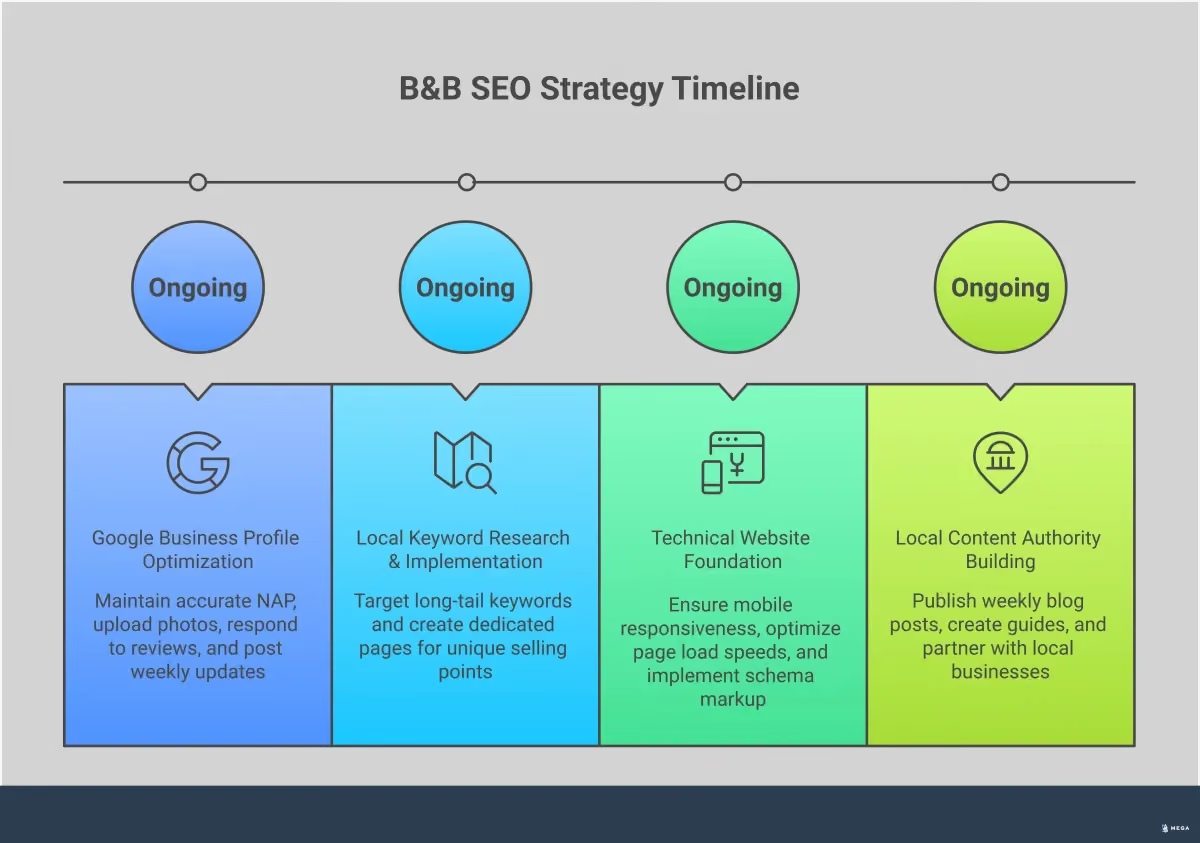
The majority of travelers use their smartphones to research and book accommodations. If your website is difficult to navigate on a mobile device, you’re losing bookings. A mobile-friendly website isn’t just a nice-to-have; it’s essential. Every page, from your homepage to your booking engine, should load quickly and be easy to use on a small screen. Text should be readable without pinching and zooming, and buttons should be large enough to tap easily. Google prioritizes mobile-friendly sites in its search results, so a poor mobile experience will hurt your visibility and your bottom line.
Improve your site speed and user experience
A slow-loading website is a booking killer. If your site takes more than a few seconds to load, potential guests will likely leave before they even see your rooms. Site speed is a critical ranking factor for Google because it directly impacts user experience. Simple things like large, uncompressed images can dramatically slow down your pages. A thorough SEO service will perform PageSpeed Insights checkups and optimize elements to ensure your site is fast and responsive. A smooth, quick experience keeps users engaged and signals to search engines that your site is high-quality.
What are the core on-page SEO elements?
On-page SEO refers to optimizing the individual pages of your website to tell search engines what your content is about. This helps you rank for the right keywords. The most important on-page elements include your page titles, meta descriptions (the short text snippets that appear in search results), headings, and image alt text. Each of these should incorporate your target keywords naturally. For example, a page title like “Charming B&B in Asheville | The Mountain View Inn” is much more effective than just “Home.” Consistently optimizing these elements across your site creates a clear, cohesive message for both users and search engines.
Use schema markup to stand out in search results
Schema markup is a type of code you add to your website to help search engines understand your content on a deeper level. For a B&B, this is a powerful tool. By using LodgingBusiness schema, you can feed Google specific details like your address, phone number, price range, and guest ratings. This information can then appear as “rich results” directly on the search page, making your listing more eye-catching and informative. Implementing schema can be technical, but it gives you a significant advantage by helping you stand out from competitors and encouraging more clicks.
What Local SEO Strategies Work for B&Bs?
For a bed and breakfast, your local community and the travelers visiting it are your lifeblood. Local SEO is the practice of making your business more visible in local search results, especially on Google Maps and for searches that include "near me." When a potential guest searches for "b&b in [your town]," you want to be the first name they see. This isn't about chasing complex algorithms; it's about providing clear, consistent, and helpful information to both search engines and future guests.
Getting these local signals right is fundamental to a healthy booking calendar. It builds trust with travelers before they even click on your website and ensures you show up when they are actively looking for a place to stay. These strategies focus on optimizing your digital presence in your specific geographic area, from your Google profile to the content you create about local happenings. While these tasks require ongoing attention, they are some of the most effective ways to attract direct bookings and reduce reliance on third-party booking sites.
Optimize your Google Business Profile
Think of your Google Business Profile (GBP) as your digital welcome mat. It's often the first interaction a potential guest has with your B&B, displaying your location, photos, reviews, and booking information directly in search results. A complete and active profile is a powerful signal to Google that your business is legitimate and relevant. Make sure you fill out every section, upload high-quality, recent photos of your rooms and common areas, and keep your hours and contact information accurate. Responding to reviews and using the Q&A feature also shows you're an engaged owner. MEGA AI’s local SEO agent can manage and optimize your profile continuously, ensuring it stays fresh and accurate.
Build local citations and directory listings
A local citation is any online mention of your B&B's name, address, and phone number (NAP). Consistency across these listings is key. When Google finds the same NAP information for your business on multiple trusted websites, it reinforces the credibility of your location and contact details. Start by ensuring your B&B is listed correctly on major travel platforms like Expedia and Booking.com. Then, move on to local directories, such as your local chamber of commerce or tourism board website. Manually managing these listings can be tedious, but it’s a foundational step in building your local search authority.
How to manage your online reviews
Online reviews are the modern-day word-of-mouth. They provide the social proof that many travelers need before making a booking decision. A strategy for encouraging and managing reviews is essential. Actively ask satisfied guests to leave a review after their stay. More importantly, you should read and reply to every review you receive, both positive and negative. For positive reviews, a simple thank you goes a long way. For negative feedback, respond professionally by acknowledging the issue, apologizing, and offering a way to discuss it offline. This shows prospective guests that you care about their experience and take feedback seriously.
Create content based on your location
Your website content should do more than just describe your rooms; it should sell the experience of visiting your location. Create blog posts and guides about what makes your area special. Write about the best local hiking trails, a guide to seasonal festivals, or a list of your favorite nearby restaurants. This type of content not only helps guests plan their trip but also helps you rank for keywords related to those attractions. By becoming a resource for local information, you attract visitors who are already interested in your area. Our SEO agent can generate this localized content for you, keeping your site full of useful information that draws in the right kind of traffic.
How to Create Content That Drives Bookings
Content is the bridge between a potential guest's search and a confirmed booking on your site. It's how you show them what makes your B&B special before they even arrive. The right content strategy doesn't just attract traffic; it attracts the right kind of guests—the ones who will love their stay and leave glowing reviews. This involves more than just pretty pictures. It's about creating useful, engaging articles and descriptions that answer questions and build excitement for a visit. An effective content plan addresses what potential guests are looking for at every stage, from initial research to the moment they are ready to book.
Write blog posts that attract the right guests
A blog is your opportunity to connect with guests on a personal level. Think about the questions you hear all the time and turn them into helpful posts. You can share stories about your B&B’s history, highlight unique features, or offer insider tips on making the most of a local visit. By creating content that addresses specific interests, like "A Romantic Weekend Getaway in [Your Town]" or "Family-Friendly Activities Near [Your B&B]," you attract travelers who are already looking for the exact experience you offer. This approach helps build a relationship with potential guests before they even book a room.
Craft compelling room and amenity descriptions
Your room descriptions are your most important sales pages. Go beyond a simple list of features and paint a picture of the experience. Instead of saying "queen bed," describe the "plush queen bed with crisp, high-thread-count linens." Mention the morning sun streaming through the window or the quiet corner perfect for reading. The same goes for amenities. Don't just list "free Wi-Fi." Explain how it's "fast, reliable Wi-Fi, perfect for streaming a movie or catching up on emails." This kind of persuasive copy helps guests imagine themselves staying with you, making them much more likely to book directly.
Publish guides to local attractions
Position your B&B as the local expert by creating guides to the area. This type of content is incredibly valuable to travelers in the planning stage. You can write about the "Best Hiking Trails Within 10 Miles," "A Guide to Local Wineries," or "The Top 5 Antique Shops in [Your Town]." These guides keep potential guests on your website longer, signaling to search engines that your site is a useful resource. It also shows that you care about their entire trip, not just their stay. A dedicated SEO agent can help identify these local topics and generate content that establishes your authority in the region.
Plan your content for every season
Travel demand changes with the seasons, and your content should reflect that. A proactive content plan ensures you have relevant articles ready for every time of year. In the fall, you could publish a guide to the best places for viewing autumn leaves. In the summer, write about local swimming spots or outdoor festivals. This strategy helps you capture search interest year-round, not just during your peak season. Planning your topics with a content calendar keeps you organized and ensures a steady flow of fresh, timely information that attracts travelers no matter when they are planning their trip.
Common SEO Mistakes to Avoid
Getting started with SEO can feel like learning a new language, and it’s easy to make a few wrong turns. For a busy bed and breakfast owner, some common mistakes can undo all your hard work, making it harder for guests to find you. Knowing which pitfalls to avoid is just as important as following best practices. It helps you build a strong, sustainable online presence that consistently attracts direct bookings.
Think of your SEO strategy as the foundation of your B&B's digital home. A few cracks in the foundation can cause significant problems later on. By steering clear of these common errors, you ensure your efforts are productive and that you're building a site that both guests and search engines will love. Let's walk through four frequent missteps and how you can avoid them to keep your SEO on the right track.
Keyword stuffing and over-optimization
It’s tempting to repeat your main keywords as many times as possible, hoping it will signal to search engines what your page is about. This practice, known as keyword stuffing, does more harm than good. Search engines are sophisticated enough to understand the topic of your content without seeing "charming B&B in Napa Valley" in every other sentence. Instead of helping you rank, this tactic makes your writing sound unnatural and can lead to penalties. Focus on creating genuinely useful content that answers a traveler's questions. When you write for people first, you’ll find that relevant keywords fit in naturally, which is exactly what Google’s guidelines recommend.
Neglecting mobile users
Most travelers plan and book their trips from their smartphones. If your website is difficult to use on a mobile device, you’re losing bookings. A site that requires pinching and zooming to read text or tap on links creates a frustrating experience. Your website must have a responsive design that adapts perfectly to any screen size. Beyond usability, site speed is a major factor. If your pages take too long to load on a mobile connection, impatient travelers will simply leave and book with a competitor. You can check your site’s performance with Google’s Mobile-Friendly Test to see where you stand and identify areas for improvement.
Ignoring local search signals
As a bed and breakfast, your business is tied to a specific location. This makes local SEO your most powerful tool for attracting guests. A common mistake is failing to send clear local signals to search engines. You won't appear in results for searches like "bed and breakfast near me" or "places to stay in Savannah" if your website doesn't emphasize your location. Make sure your city and neighborhood are mentioned naturally on your homepage, in your room descriptions, and in your blog posts about local attractions. Optimizing for local search is a core part of a successful strategy, helping you connect with travelers actively looking for accommodations in your area. Our AI-powered SEO agent specializes in this, ensuring your B&B gets seen by the right local searchers.
Poor website structure and navigation
Your website should be more than a digital brochure; it needs to be an efficient booking tool. If potential guests can't easily find what they're looking for—like room availability, photos, or contact information—they will get frustrated and leave. A confusing or illogical navigation menu is a major roadblock for both users and search engines. A well-organized site with a clear structure makes it simple for visitors to explore your property and for search engines to crawl and index your pages. Plan your website’s architecture so that your most important pages are easy to find, creating a smooth path from discovery to booking.
How to Build Authority with Strategic Links
Think of links from other websites as votes of confidence. When a reputable travel blog or local business links to your B&B's website, they are telling search engines that your site is a valuable and trustworthy resource. This is a core component of SEO known as link building. The more high-quality "votes" you get, the more authority your website builds, which helps you rank higher in search results for relevant keywords.
However, not all links are created equal. A link from your city’s official tourism website carries much more weight than a link from an unrelated, low-quality directory. The goal is to earn links from relevant and respected sources within the travel, hospitality, and local community spheres. This process requires a strategic approach, involving outreach, relationship building, and creating content worth linking to. It can be a time-consuming part of any SEO strategy, but the long-term payoff in organic traffic and direct bookings is significant. While you focus on building local relationships, an SEO agent can manage the technical outreach and acquisition process.
Earn backlinks from the hospitality industry
Start by looking for link opportunities within your own industry. When other reputable websites in the travel and hospitality space link to you, it sends a strong signal to search engines that your B&B is a legitimate and trusted establishment. A great place to begin is with your local or regional tourism board; being included in their official directory is a powerful endorsement. You can also research travel bloggers who write about your area and invite them for a stay. A positive review on their blog often includes a valuable backlink to your site. These links build trust and directly expose your B&B to an audience that is already interested in travel.
Find local partnership opportunities
Your local community is one of your greatest assets for building links. Team up with nearby businesses that complement the guest experience, such as restaurants, tour operators, wineries, or antique shops. You can create a "Local Guide" or "Our Partners" page on your website featuring these businesses and then reach out to let them know. This creates a natural opportunity to ask if they would add a link to your B&B on their own site. These local partnerships not only generate valuable backlinks but also strengthen your community ties and provide a better experience for your guests, who will appreciate the curated recommendations.
Use guest-generated content for links
Encourage your guests to share their experiences on social media by creating photo-worthy spots around your property and using a unique hashtag. When guests post photos and tag your B&B, it increases your visibility. While a social media tag isn't a direct backlink, this activity can lead to them. A guest who runs their own travel blog might write about their stay and link to your website. You can also share guest stories and photos on your own blog or social media channels (with permission, of course). This fosters a sense of community and shows appreciation, which can inspire guests to share your B&B with their own online networks.
How to Measure Your SEO Success
SEO isn't a "set it and forget it" task. To know if your efforts are paying off, you need to track your performance. Measuring success helps you understand what’s working, what isn’t, and where to focus your energy next. It transforms your marketing from a guessing game into a clear strategy that directly contributes to more bookings and a healthier business. By keeping an eye on the right data, you can make informed decisions that attract more guests and reduce your reliance on third-party booking sites.
What key metrics should you track?
To get a clear picture of your SEO performance, focus on the metrics that directly impact your business goals. Start with revenue from direct bookings, as this is the ultimate measure of success. You should also track goal completions, such as how many visitors fill out your contact form or sign up for your newsletter. Monitor your organic traffic to see how many people are finding your site through search engines like Google. Finally, keep an eye on your keyword rankings for important terms like “B&B in [your city]” or “charming inn near [local landmark].” These four metrics provide a complete view of how your SEO is translating into real-world results.
Which tools can you use to monitor performance?
Several tools are available to help you monitor your SEO health. Google Analytics is essential for tracking website traffic, user behavior, and booking conversions. Google Search Console offers insights into how Google sees your site, showing you which keywords you rank for and highlighting any technical issues. For more advanced keyword research and competitor analysis, tools like Ahrefs or Semrush are industry standards. While you can use these tools to piece together a performance report, an automated platform can consolidate this data, saving you time and making it easier to see what’s working.
When should you adjust your strategy?
SEO is a long-term strategy, and results don’t happen overnight. It often takes several weeks or even months to see significant movement in traffic and rankings. Consistency is key, as small, regular updates can lead to major gains over time. If you’ve been implementing changes for a few months and aren’t seeing progress, it may be time to reassess your approach. An effective SEO service will continuously monitor performance and make adjustments for you, such as updating content after a Google algorithm change or optimizing pages to improve click-through rates. This ensures your strategy stays effective without requiring constant manual intervention.
How to Get Started with SEO Support
As a bed and breakfast owner, you’re already juggling a dozen different roles. Becoming a search engine optimization expert on top of everything else can feel like an impossible task. The good news is, you don’t have to do it all yourself. Getting support can free you up to focus on what you do best: creating an amazing guest experience. The key is finding the right kind of help that fits your business needs and budget, whether that’s through automation, a consultant, or a full-service platform.
When to consider SEO automation
If SEO and content writing aren't your strong suits, you’re not alone. Many B&B owners find these tasks time-consuming and complex. This is where automation can be a game-changer. Automated platforms handle the technical details and content creation, ensuring your website is optimized to attract guests without requiring you to learn keyword research. An AI-powered SEO agent can autonomously plan, launch, and optimize your campaigns. This means it can write blog posts about local attractions, fix technical site errors, and update your pages to rank higher, all while you manage your property.
How to choose the right SEO solution
When looking for support, you need a solution that understands the hospitality industry and focuses on driving direct bookings. For many small properties, hiring a traditional agency is too expensive for the return. Instead, look for a solution that offers transparent results and is built for local businesses. An ideal partner will execute on strategy, not just give you recommendations. Our AI SEO Agent functions as your entire SEO team, handling everything from technical audits to content generation. You can even book a demo to see how it works for your specific B&B before committing.
What to budget for SEO as a small business
Budget is a primary concern for any small business. While some SEO services can be costly, it’s important to think about the return on investment. You can calculate your potential cost per new guest to see if a service is worthwhile. The formula is simple: divide the total cost of the service by the number of new bookings it generates. For example, if a service costs $700 for the year and brings in 11 new bookings, your cost to acquire each guest is about $64. With transparent pricing, you can easily calculate this value and see how quickly the service pays for itself.