
Many B2B technology firms excel at innovation but may not fully realize the power of search engines to fuel their growth. If your online presence isn't strategically optimized, you could be missing out on a consistent flow of high-intent prospects. SEO for B2B Tech is the key to unlocking this potential, transforming your website into a magnet for businesses actively seeking your expertise. It’s about making sure that when a company searches for a solution you provide, your name is prominently featured. We'll explore how to build a robust SEO foundation, from identifying high-value keywords to creating content that resonates with a technical audience.
Key Takeaways
- Target B2B Tech Buyers Precisely: Understand their specific needs and buying journey to identify the exact search terms they use, focusing on keywords that signal a readiness to engage.
- Build Authority with Purposeful Content and a Solid Site: Develop valuable content that directly addresses your B2B tech audience's challenges and showcases your expertise, ensuring your website is technically sound and easy for them to use.
- Integrate, Track, and Adapt Your SEO Strategy: Connect your SEO efforts with other marketing channels, consistently measure your performance with key metrics, and remain prepared to adapt your approach as search trends change.
SEO for B2B Tech: What It Is and Why It’s Essential
Search Engine Optimization (SEO) for B2B technology companies is all about making sure your business shows up when potential clients are looking for solutions like yours. While the core principles of how search engines rank websites remain the same, B2B SEO has its own distinct flavor compared to selling directly to consumers (B2C). The main difference really comes down to who you're trying to reach and the specific keywords they're using. You're not casting a wide net for individual shoppers; instead, you're targeting businesses with very specific, often quite technical, needs. A good tip is to look at keywords with a high cost-per-click (CPC) in paid advertising – these often signal strong buyer intent, meaning the searcher is likely further along in their decision-making process.
So, why should B2B tech companies prioritize SEO? For starters, it’s incredibly effective at attracting the right kind of visitors to your website – people who are actively searching for the specialized products or services you offer. This is especially important because B2B sales cycles are typically longer and involve several decision-makers. Getting your solution in front of them early and consistently is key. SEO provides a sustainable way to achieve this, often proving more cost-effective over time than relying solely on paid ads. Beyond just traffic, a strong SEO presence helps build your company's credibility and positions you as an authority in your specific tech niche. When your website consistently appears in top search results, it sends a powerful message of trustworthiness and expertise. This increased visibility naturally leads to more website visits and, importantly, more qualified sales leads. While SEO is a powerful tool on its own, it often works best as part of a well-rounded marketing strategy, complementing your other efforts to reach your target audience effectively.
Unique SEO Hurdles for B2B Tech Companies
If you're in the B2B tech space, you already know your marketing playbook looks a bit different. The same is true for your Search Engine Optimization (SEO) strategy. While the fundamentals of SEO—like keywords and quality content—still apply, B2B tech companies face a unique set of hurdles that can make getting found online a more intricate process. Your audience isn't typically making quick, individual purchasing decisions. Instead, you're often engaging with committees of experts, each with their own set of technical requirements and concerns, all looking for specific, high-stakes solutions. This means your approach to appearing in search engine results needs to be far more nuanced and precisely targeted than in many B2C contexts.
You're not just trying to attract a high volume of clicks; you're aiming to connect with businesses embarking on a journey to solve complex operational problems or achieve significant strategic goals. The path from initial awareness to a final sale is often longer and involves multiple touchpoints. Understanding these distinct challenges, from the nature of your audience to the complexity of their buying process, is the crucial first step toward building an SEO strategy that truly delivers results. It’s about ensuring your innovative tech solutions reach the right decision-makers at precisely the right moments in their evaluation process. For businesses looking to streamline these efforts, platforms offering SEO automation can provide significant advantages in managing these complexities. Let's look at what sets B2B tech SEO apart and how to address its specific demands.
B2B vs. B2C SEO: Key Differences to Know
The most significant way B2B tech SEO diverges from B2C (business-to-consumer) approaches lies squarely with the audience. When you're selling software or tech services to other businesses, you're not talking to an individual making a personal purchase. Instead, you're addressing a group of stakeholders, often from different departments, each with specific needs and questions. This leads to a B2B sales funnel that is generally longer and more complex. Keywords in the B2B tech world also tend to have lower search volumes than their B2C counterparts. This doesn't mean they're less valuable; it just means your keyword research needs to be incredibly precise to capture that high-intent, niche traffic. It’s about quality over sheer quantity.
Work with Complex Buyer Journeys and Long Sales Cycles
The journey a business takes before purchasing a tech solution is rarely short or simple. SaaS SEO, for example, is unique because it must cater to these extended sales cycles and often highly technical decision-makers. Potential customers are not just browsing; they are actively searching for solutions to specific, often intricate, problems. Your SEO strategy needs to acknowledge this by providing valuable content that guides them through each stage of their multi-step evaluation process, from initial problem awareness to comparing vendors and making a final decision. The goal is to build trust and position your company as a knowledgeable partner. Effective B2B SEO ensures your website appears prominently when these businesses search for products or services like yours, ultimately leading to more qualified website visits and, eventually, sales.
Core Parts of a Strong B2B Tech SEO Strategy
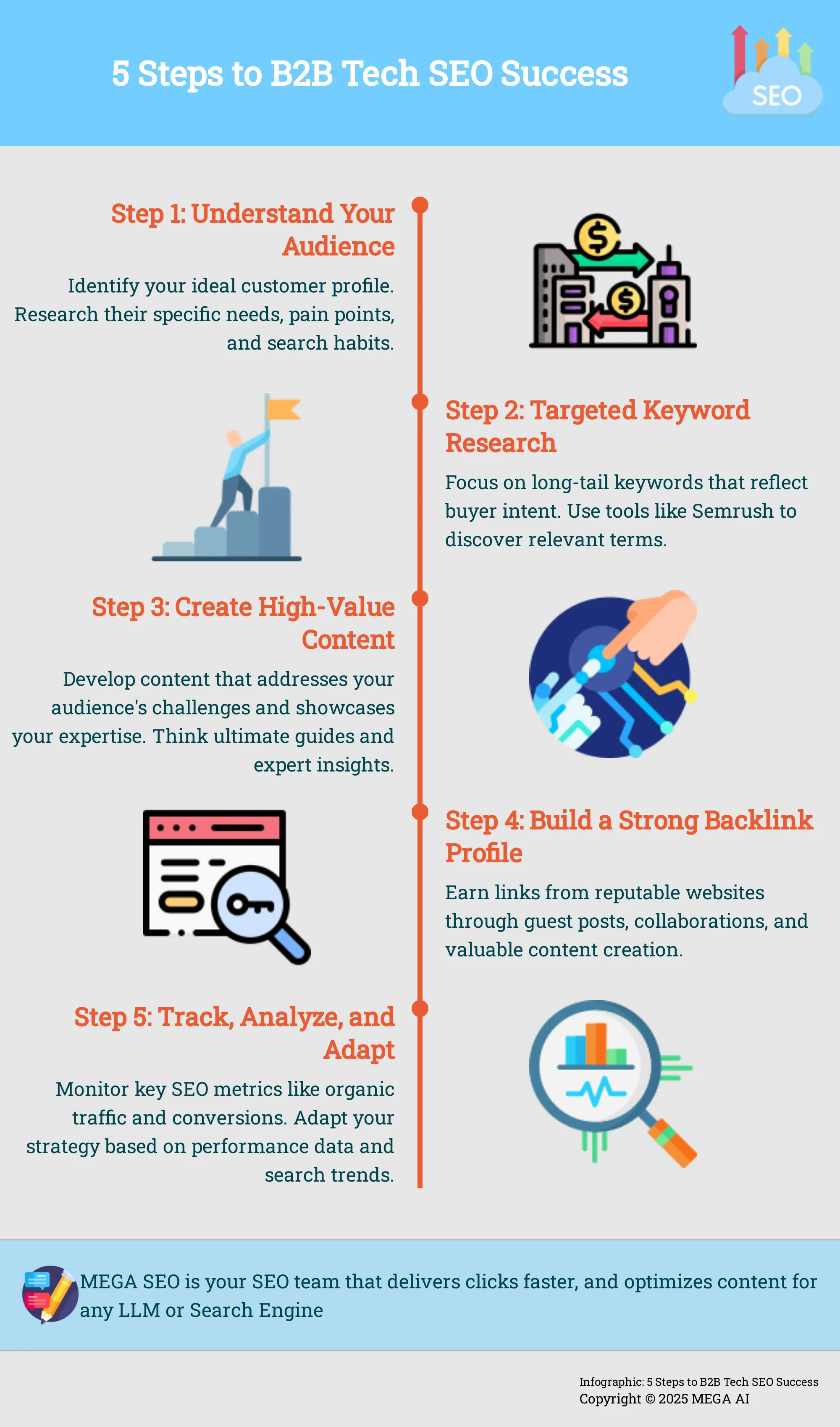
Building a successful B2B tech SEO strategy isn't about finding one magic bullet. Instead, it's about assembling several key components that work together to improve your visibility and attract the right audience. Think of it like building a powerful machine; each part needs to be well-designed and properly integrated for the whole system to function optimally. When these core elements are in place and working effectively, you'll be well on your way to making a significant impact in search results for your niche.
The path to effective B2B tech SEO involves a deep understanding of your specific audience, crafting content that speaks directly to their needs, and ensuring your website is technically sound for search engines. It’s a continuous process of refinement and adaptation, especially in the dynamic tech landscape. We'll explore four fundamental pillars: pinpointing the right keywords, optimizing your on-page elements, developing a valuable content plan, and conducting essential technical SEO checks. Mastering these areas will provide a robust foundation for your SEO efforts, helping you connect with businesses actively searching for your solutions. Platforms like MEGA AI can also streamline many of these processes, offering automated keyword research and content optimization to help you stay competitive.
Find the Right Keywords for Your B2B Tech Niche
For B2B tech companies, keyword research goes beyond simply chasing high search volumes. It’s about identifying the specific terms your ideal customers use when they're looking for solutions like yours. Often, this means focusing on keywords with a higher cost-per-click (CPC), as these can indicate stronger buyer intent, even if the search volume seems low. The goal is to connect with decision-makers who are further along in the buying cycle and more likely to convert.
It's important to consider the search intent behind the keywords. Is someone looking for general information, comparing different solutions, or are they ready to make a purchase decision? Understanding this intent allows you to tailor your content more effectively, ensuring your efforts attract qualified leads rather than just general traffic. This targeted approach is key to an efficient B2B SEO strategy.
Optimize Your On-Page Elements Effectively
Once you've identified your target keywords, the next step is to integrate them naturally into your website's content. Each page, especially your key service or product pages, should focus on a primary keyword phrase that accurately reflects its core topic. This involves creating unique, comprehensive content – ideally over 500 words – that thoroughly addresses the user's query and provides substantial value.
Strategically place your main keyword in important on-page elements like the H1 heading, title tag, URL, and meta description. However, it's crucial to avoid keyword stuffing, as this can harm your search rankings and detract from the user experience. Instead, focus on creating clear, concise, and visually appealing landing pages that guide visitors towards taking the next step while offering genuine information.
Develop a Content Plan Your B2B Tech Audience Values
In B2B tech, content is a cornerstone, but only if it truly resonates with your specific audience. Your content plan should aim to establish your brand as a thought leader and a reliable source of information within your industry. This involves creating high-quality content that addresses your audience's pain points and questions, even if it's on "shoulder topics"—subjects related to your industry but not directly selling your product. Think about crafting ultimate guides or in-depth resources that provide immense value and showcase your expertise.
A well-structured content strategy, often built around topic clusters, can significantly improve your SEO performance. This approach involves creating a central "pillar" page for a broad topic and linking out to more specific "cluster" content pieces. This not only helps search engines understand your site's structure and authority on a subject but also keeps users engaged by providing comprehensive information at every stage of their buyer journey.
Key Technical SEO Checks for B2B Websites
Underpinning all your content and keyword efforts is the technical health of your website. If search engines can't easily crawl, understand, and index your site, even the most brilliant content might go unnoticed. Before diving deep into content creation, it's wise to conduct a thorough technical SEO audit. This includes checking for issues like broken links (404 errors), ensuring you have an up-to-date XML sitemap, and verifying that your analytics are correctly configured to track your progress.
Other critical aspects include using HTTPS for security, optimizing for Core Web Vitals to ensure a good user experience, and maintaining a clear internal linking structure. Pay attention to site speed, mobile-friendliness, and avoiding duplicate content. Keeping your website's code clean and adhering to web standards will make it easier for search engines to process and rank your pages effectively, ensuring your valuable content reaches its intended audience.
How to Pinpoint and Select Top Keywords for B2B Tech
Identifying the right keywords is fundamental to a strong B2B tech SEO strategy. It’s about more than just attracting visitors; it’s about connecting with the specific decision-makers and influencers actively searching for the solutions your business offers. B2B tech often involves niche terms compared to broader B2C searches, so your approach must be precise and focused on understanding user intent. Let's look at how to find those valuable keywords that can link you directly to your ideal clients.
What is B2B Tech Buyer Intent?
Understanding B2B tech buyer intent means figuring out the "why" behind a search query. What specific problems are your potential customers trying to solve? In the B2B landscape, "B2B keywords often have lower search volume, requiring precise keyword research," as Semrush highlights. This lower volume isn't a drawback; it signifies an opportunity for highly targeted engagement. Because "conversion rates tend to be lower in B2B," the focus shifts to attracting "high-quality, targeted traffic." B2B buyers are thorough and "value demonstrated thought leadership, so showcasing expertise is crucial." Your chosen keywords should reflect this, targeting terms that indicate a search for detailed information or solutions to complex business challenges.
Use Long-Tail Keywords to Reach Specific B2B Buyers
Long-tail keywords are longer, more specific phrases that potential B2B clients use, especially when they are further along in their decision-making process or have a very distinct need. An example might be "AI-powered SEO tools for small marketing agencies" rather than just "SEO tools." While these terms individually might show lower search numbers, they often lead to better conversion rates because they capture very specific intent. It's a good practice to "focus on keywords with high CPC, indicating buyer intent, even if search volume is low," a strategy recommended by Backlinko. You can discover these phrases by observing Google Autocomplete suggestions or by analyzing the keywords your competitors are successfully using.
Helpful Tools for B2B Tech Keyword Discovery
The right tools can make your B2B tech keyword discovery much more efficient. Platforms like Semrush offer features such as the Keyword Magic Tool to help you "find relevant keywords, focusing on search intent (informational, navigational, commercial, transactional)." Grasping this intent is vital for creating content that meets user needs at every stage. For a clearer picture of your ideal customer, consider using resources like HubSpot's Make My Persona. Additionally, leveraging automated keyword research can uncover valuable opportunities. Remember to "use a variety of keyword research tools" and "prioritize high CPC keywords, even with lower search volume," as these often point to strong commercial interest.
Create High-Impact Content for B2B Tech SEO
When it comes to a strong B2B tech SEO strategy, your content really is the heart of it all. This is how you’ll connect with potential customers, show off your industry know-how, and help them through what can often be a pretty involved decision. B2B tech buyers are looking for more than just a quick fix; they need solid solutions for complex issues and, just as importantly, partners they can count on for the long term. So, your content needs to be consistently informative, insightful, and genuinely helpful, offering real value every step of the way.
Think of your content as the bridge between your technical solutions and your audience's specific needs. It’s your chance to explain complex features in terms of clear benefits they'll appreciate. You want to show them, not just tell them, how you can make a real difference to their business. This means going beyond basic product descriptions. Focus on creating a wealth of resources—like articles, whitepapers, and case studies—that educate, inform, and build confidence. For B2B tech companies, great content is what turns an online searcher into an informed lead, and then into a loyal customer. Using tools for automated content generation can make this much easier, helping you create quality material that speaks to your audience and helps your SEO.
Solve Customer Problems with Your Content
Your B2B tech audience is usually looking for answers to specific problems. Your content needs to meet them right there, addressing their pain points directly. A great way to do this is by creating high-quality content on "shoulder topics"—these are subjects related to your product but not a direct sales pitch. For example, if you offer cybersecurity software, a shoulder topic could be "best practices for remote team data security." These articles, along with comprehensive ultimate guides, are key for attracting and keeping your audience interested. A "business casual" writing style—professional but still easy to read—helps make complex topics more understandable.
This approach shows you're a helpful resource, not just someone trying to sell something. When you consistently offer valuable information that helps people understand and solve their challenges, you build trust. This makes it much more likely they'll think of your solutions when they're ready to buy. Good SEO strategies help make sure people can find this useful content.
Build Authority with Expert-Led Content
B2B tech buyers are savvy. They want to be sure you not only know your product inside and out but are also a recognized leader in your field. B2B buyers really value demonstrated thought leadership. So, showing your expertise through well-researched, insightful content is key to building authority. This isn't just about basic explanations; it's about offering in-depth analysis, fresh perspectives, and information supported by data.
Think about creating content that highlights your team's experts, shares original research, or offers commentary on industry trends. This might include white papers, detailed case studies, or webinars. When your content consistently shows a high level of expertise, it gives potential clients confidence that they're working with a credible and capable company. This authority plays a big part in their decisions, especially for significant tech investments. MEGA AI's SEO tools can help get this expert content in front of the right people.
Tailor Content for Each Stage of the Buyer's Journey
It's really helpful to understand the B2B buyer's journey: Awareness, Consideration, and Decision. Your content should align with these stages. For Awareness, when buyers are just identifying a problem, use broader informational keywords for blog posts like "What is X technology?" or "Signs you need Y solution."
In the Consideration stage, buyers are weighing their options. Content such as comparison guides, case studies, and detailed product explanations works well here. For the Decision stage, focus on high-intent keywords like "software," "system," or "pricing" for your product pages or demo requests. B2B content is typically more informative than B2C, reflecting the research involved. Tailoring your content this way meets buyers where they are, giving them the information they need to move forward, and perhaps book a demo to see your solution.
Smart Link Building Tactics for B2B Tech
Building a strong backlink profile is a cornerstone of any successful B2B tech SEO strategy. Think of backlinks as votes of confidence from other websites; the more high-quality votes you have, the more authoritative your site appears to search engines. This authority can significantly improve your search rankings, driving more organic traffic to your site. For B2B tech companies, where trust and credibility are paramount, a thoughtful link-building approach is especially important. It’s not just about quantity; the relevance and quality of the linking sites matter immensely. Let's explore some smart tactics to acquire these valuable backlinks.
Earn Links Through Guest Posts and Industry Collaborations
One effective way to build relevant backlinks is by contributing guest posts to other reputable websites within your industry. When you share your expertise on another platform, you typically get a link back to your own site, often in your author bio. This not only helps with link acquisition but also positions you and your company as thought leaders in your specific B2B tech niche. Look for opportunities to collaborate with complementary businesses or industry influencers. Joint webinars, co-authored white papers, or even participating in expert roundups can also lead to valuable backlinks and increased visibility. These collaborations extend your reach and build relationships that can foster more organic linking opportunities down the line.
Develop Content That Naturally Attracts Links
Creating exceptional content is perhaps the most sustainable way to earn backlinks. When you produce resources that are genuinely valuable and informative, other websites will naturally want to link to them as references. Consider developing comprehensive "ultimate guides" on topics crucial to your audience or creating in-depth content on "shoulder topics"—subjects related to your product or service but not directly selling it. For instance, if you sell project management software, an ultimate guide to agile methodologies or an insightful article on remote team productivity could attract a lot of shares and links. The key is to provide so much value that others see your content as an essential resource for their own audiences.
Use PR to Gain Quality Backlinks
Public relations efforts can be a goldmine for high-quality backlinks. Think beyond traditional press releases and focus on digital PR strategies. This could involve getting your company or its experts featured in industry publications or online news outlets. Another powerful tactic is to create helpful tools or calculators that solve a specific problem for your target audience—these often get linked to repeatedly. Don't overlook the potential of partner pages; if you have business partners, see if they have a section on their website where they list or link to their collaborators. These PR-driven links often come from authoritative sources, which can significantly enhance your site's credibility in the eyes of search engines.
Track and Understand Your B2B Tech SEO Performance
Putting your B2B tech SEO strategy into action is a fantastic first step, but the work doesn’t stop there. To truly know if your efforts are paying off and to find areas for improvement, you need to consistently track and understand your performance. Think of it as a regular health check for your website’s visibility. This ongoing analysis helps you refine your approach, ensuring you’re always moving in the right direction and getting the best possible results from your SEO investment.
Important SEO Metrics to Monitor
When you start digging into your website's performance, a few key numbers will tell you a lot about how your SEO is doing. It's a good idea to use website analytics to track your website's performance. This includes keeping an eye on your organic traffic (how many people find you through search engines), bounce rate (how many visitors leave after viewing just one page), and conversion rates (how many visitors complete a desired action, like signing up for a demo).
Don't forget about your backlink profile. The more links you have from high-quality, relevant sites, the more credible your site appears to search engines, so tracking your backlink profile is crucial. It’s also wise to analyze your sales process and key metrics like customer lifetime value to see how SEO impacts your bottom line.
Tools for Analyzing Your SEO Success
Manually sifting through all this data can feel overwhelming, but thankfully, there are excellent tools available to simplify the process. For a comprehensive overview, many businesses use tools like Google Analytics to track website performance. It offers deep insights into user behavior, traffic sources, and how effectively you’re achieving your conversion goals. This information is invaluable for understanding what’s working and what needs a bit more attention.
Platforms such as Semrush provide a suite of tools to streamline B2B SEO. You can conduct keyword research, perform site audits, and undertake competitive analysis for a clear view of your SEO standing. For example, Semrush's Keyword Magic Tool helps find relevant keywords, ensuring your content meets your B2B audience's search intent.
Make SEO Work with Your Other B2B Tech Marketing
Your B2B tech SEO strategy shouldn't operate in a vacuum. To get the best results, it needs to be woven into your broader marketing efforts, especially content marketing and paid search. When these channels work together, they create a powerful synergy that can significantly improve your online presence and lead generation. Think of it as a team effort where each player supports the others, leading to a stronger overall performance.
Align Your SEO and Content Marketing Efforts
SEO and content marketing are intrinsically linked; one really can't thrive without the other. Your SEO research uncovers what your B2B tech audience is searching for—their questions, pain points, and the solutions they seek. Your content marketing then delivers the answers through valuable, engaging material. Focus on creating high-quality content that not only targets your core product keywords but also explores related "shoulder topics." These comprehensive guides and insightful articles can establish your expertise and attract a wider, relevant audience.
A well-structured content strategy, often organized using topic clusters, is highly effective for B2B SEO. This involves creating a central pillar page for a broad topic, which then links to several cluster pages covering specific subtopics in more detail. This approach helps search engines understand the depth of your knowledge on a subject. Remember, the goal is to provide genuinely useful information that addresses user needs at every stage of the buyer journey. Platforms like MEGA AI can help you generate and optimize content that is both search-engine friendly and truly valuable to your readers.
Combine SEO and Paid Search for Stronger Results
While SEO is a powerful long-term play for organic growth, combining it with paid search can yield immediate benefits and crucial data. Paid search campaigns, such as those run on Google Ads or LinkedIn, allow you to quickly test the effectiveness of different keywords and messaging with your target B2B tech audience. The insights gained from these campaigns—which terms drive clicks and conversions—can then be used to refine your SEO keyword strategy and content focus.
This integrated approach means you can capture demand from potential customers actively looking for solutions like yours, leading to more website visits and, ultimately, sales. SEO builds sustainable, often more cost-effective, traffic over time, while paid search can provide an initial visibility surge, support specific campaigns, or test new market segments. Using a platform like MEGA AI, which offers both SEO and Paid Ads capabilities, allows you to coordinate these efforts seamlessly, ensuring your marketing budget is spent effectively and your messages are consistent across channels.
Tackle Common B2B Tech SEO Obstacles and Look Ahead
Getting your B2B tech company to show up prominently in search results is a rewarding goal, but it’s not always a straight path. You’ll likely encounter a few common hurdles along the way. Many B2B tech offerings are inherently complex, making them tricky to explain in a way that’s both clear for potential customers and optimized for search engines. There's also the constant balancing act between implementing SEO best practices and ensuring your website visitors have a genuinely helpful and smooth experience. And if there's one thing that's certain in the world of SEO, it's change. Search engine algorithms evolve, user search habits shift, and new technologies emerge, requiring you to stay agile.
Successfully addressing these challenges means understanding them and having a proactive approach. It’s about building a resilient SEO strategy that can adapt. This involves not just focusing on keywords and backlinks, but also on the quality of your content, the technical health of your site, and the overall journey you provide for your audience. Thinking ahead and anticipating shifts in the digital landscape will also serve you well. For instance, leveraging tools that can help automate content updates or optimize for various platforms can give you a significant edge, allowing you to focus on strategy while the system handles some of the ongoing maintenance. The key is to be informed, flexible, and always prioritize delivering value to your audience.
Explain Technical Details and Complex Products Clearly
B2B technology can be intricate, and explaining its nuances effectively is a common challenge. Your audience, which includes technical decision-makers, is looking for solutions, but they also need to understand how your product works and why it’s the right fit. The goal is to guide buyers through a multi-stage journey and build trust, not overwhelm them with jargon. Break down complex features into clear benefits. Use analogies or real-world examples to make abstract concepts more tangible. Focus on creating content that educates and empowers, showing that you understand their problems and have a straightforward solution. This clarity will not only resonate with potential customers but also help search engines better understand and rank your offerings.
Find the Right Balance: SEO and User Experience
It’s easy to get so focused on SEO tactics that the user experience takes a backseat, but these two elements should work hand-in-hand. Google increasingly prioritizes content and websites that offer a positive user experience, looking at factors like Core Web Vitals and E-E-A-T (Experience, Expertise, Authority, Trustworthiness). This means your site should be easy to use, load quickly, and provide genuinely valuable information. Stuffing keywords awkwardly into your text or creating confusing site structures for the sake of search engines can backfire. Instead, aim to create high-quality, user-focused content where keywords fit naturally. A seamless experience keeps users engaged and signals to search engines that your site is a reliable resource.
Adapt to an Ever-Changing Search World
The digital marketing landscape, especially SEO, is in constant motion. What worked last year might not be as effective today. While SEO can be a cost-effective way to acquire customers long-term, its success hinges on adapting to these changes. This means staying informed about algorithm updates and evolving search trends. Building a well-structured content strategy using topic clusters and consistently earning quality backlinks remain fundamental. Embracing tools that help maintain and re-optimize your existing content, like an AI-powered maintenance agent, can also help you stay current without needing to manually overhaul everything each time Google makes a shift. Flexibility and a commitment to continuous learning are key.
Related Articles
- Top B2B SEO Tools for Effective Keyword Research
- B2B Keyword Research: The Ultimate Guide (2024)
- SEO Strategy: Overcome Invisible Barriers & Drive Growth
- Unlocking B2B Success: Marketing Automation Strategies
- What Is the Hardest Part of SEO? (Experts Weigh In)
Frequently Asked Questions
What's the main thing that sets B2B tech SEO apart from selling to individual consumers? The biggest distinction really comes down to who you're trying to reach. When you're marketing to other businesses, especially with tech solutions, you're usually talking to a team of people who are making a significant, often technical, decision together. This means your keywords will be more specific, and the journey they take from finding you to becoming a customer is typically much longer than someone making a quick individual purchase.
Why should I focus on long, specific keyword phrases for my B2B tech company? Those longer, more specific phrases, what we call long-tail keywords, are incredibly valuable because they signal that the searcher has a very clear idea of what they need. While fewer people might search for "AI-driven cybersecurity for financial institutions" compared to just "cybersecurity," the person using the longer phrase is much further along in their buying process and more likely to be a qualified lead for your specific B2B tech solution.
My company’s tech products are pretty complicated. How do I write about them for SEO without confusing people or oversimplifying? It's a common challenge. The key is to translate complex technical features into clear, tangible benefits for your potential customers. Think about the problems your product solves for them. Using real-world examples or analogies can make intricate concepts easier to grasp. Your content should aim to educate and empower, showing you understand their challenges and can offer a straightforward solution, which also helps search engines understand what your page is about.
How can I make sure my SEO efforts improve my website for actual users, not just for search engines? That’s a great question because SEO and user experience should always go hand-in-hand. Search engines are getting smarter and increasingly favor websites that provide a genuinely good experience for visitors. This means your site should be easy to use, load quickly, and offer truly helpful information. Instead of forcing keywords where they don't belong, focus on creating high-quality content where those terms fit naturally because they accurately describe what your audience is looking for.
SEO rules seem to be constantly changing. How can I build a B2B tech SEO strategy that lasts? You're right, the search landscape is always evolving. The best way to build a lasting strategy is to focus on the fundamentals: consistently create high-quality, valuable content that truly serves your audience, and earn authoritative backlinks. Staying informed about major algorithm updates is important, but a solid foundation built on user needs and genuine expertise tends to weather these changes well. Tools that help maintain and update your content can also be very helpful in keeping things fresh.