
Your company is developing the next breakthrough in vehicle connectivity or pioneering new safety features. But are the right people finding you online? A great website isn't enough if it remains invisible to decision-makers and early adopters. This is the core challenge of AutoTech SEO. It’s the practice of shaping your online presence so your business appears when people search for the solutions you provide. We’ll show you how to translate complex technical features into search-friendly content and pinpoint the exact terms your audience uses to find you.
Key Takeaways
- Target Precisely and Optimize Technically: Identify the specific AutoTech keywords your ideal customers use and ensure your website’s technical setup allows search engines to easily find and understand your content.
- Craft Compelling Content and Maximize Visibility: Produce valuable AutoTech information that addresses user needs, optimize it for local, mobile, and voice search, and build relationships to earn authoritative backlinks.
- Measure Results and Adapt Proactively: Regularly analyze your SEO performance using key metrics, stay informed on emerging AutoTech search trends, and continuously refine your approach to improve rankings and engagement.
What is AutoTech SEO?
Search Engine Optimization, or SEO, is the practice of enhancing your website so it appears more prominently when people use search engines like Google. When we apply this to the automotive technology sector, we’re talking about AutoTech SEO. This field is broader than just car dealerships; it covers a wide array of innovations such as electric vehicles (EVs), autonomous driving technology, in-car infotainment systems, connected car features, and the intricate software and components that power these advancements. Essentially, AutoTech SEO means carefully shaping your website’s content, structure, and online authority to attract businesses and consumers who are looking for information or specific solutions within this cutting-edge automotive landscape.
Consider it as building a digital storefront that clearly showcases your expertise in a particular AutoTech area. This involves optimizing your site with the right keywords people are searching for, creating valuable content that answers their questions, ensuring your website is technically sound so search engines can easily understand it, and building relationships across the web to strengthen your site’s credibility. For any business operating in this dynamic industry, a well-executed AutoTech SEO strategy is key to effectively connect with your target audience, whether they are looking for the newest EV charging infrastructure, advanced driver-assistance systems (ADAS), or innovative automotive software platforms.
Why AutoTech SEO is Essential
In the highly competitive and rapidly evolving AutoTech industry, SEO is not just a nice-to-have; it’s a fundamental requirement for success. A vast majority of both B2B decision-makers and consumers conduct thorough online research before committing to a purchase or adopting a new technology. If your AutoTech business isn’t visible in these crucial search results, you are missing a significant opportunity to engage with potential customers and partners.
A strong SEO strategy ensures your AutoTech company appears when individuals are actively searching for the very solutions you provide. This heightened online visibility can directly translate into more inquiries, higher quality leads, and sustained business growth. While SEO is a powerful strategy on its own, it also works hand-in-hand with other marketing efforts, like paid advertising campaigns, to create a more comprehensive and effective online presence.
AutoTech SEO: Challenges & Opportunities
The AutoTech sector comes with its own set of SEO challenges. The field is incredibly competitive, with numerous innovative companies all working to capture attention. Websites often need to explain complex technical details, which can make creating straightforward, SEO-friendly content tricky. Moreover, technology in this space changes quickly, meaning your website content can become outdated if it’s not regularly reviewed and updated. Staying on top of these changes and ensuring your website performs well, especially if it includes many images or advanced features, requires consistent effort.
However, these challenges also open up exciting opportunities. Because AutoTech is specialized, you can target specific, niche keywords that often indicate a strong intent to purchase or partner. There’s a real chance to establish your business as a leading voice by producing content that educates your audience on new and emerging technologies. Understanding how users search for AutoTech solutions allows you to tailor your content with precision. While a robust SEO strategy does require ongoing work, particularly as search engine algorithms evolve, the right approach can help you adapt and make the most of these opportunities.
Setting Realistic SEO Expectations
It's natural to want to see results quickly, but it's important to view SEO as a long-term investment in your company's growth. Unlike paid advertising, which stops delivering traffic the moment you turn it off, SEO builds sustainable online authority that pays dividends over time. A comprehensive strategy is what separates fleeting visibility from lasting success. This approach ensures your AutoTech company is consistently found by people actively looking for your solutions, which leads to more inquiries, higher-quality leads, and sustained business growth.
Think of SEO's impact as a snowball effect. Initial efforts, like fixing technical issues or publishing a few blog posts, might seem small. But over time, these actions build on each other. As you consistently create valuable content, earn backlinks, and maintain a technically sound website, your momentum grows. This cumulative process is what drives significant, long-term improvements in your search rankings. Managing all these moving parts can be complex, which is why an end-to-end SEO platform can help streamline your efforts and ensure every component of your strategy works together effectively.
Timeline for Results
While some technical SEO fixes can yield quick improvements, you can generally expect to see more substantial results within a three to six-month timeframe. During the first few months, your focus will be on building a solid foundation—auditing your site, conducting keyword research, and creating initial content. As this content gets indexed and starts to attract attention, you'll begin to notice an uptick in rankings and traffic. The most significant, steady gains often appear after the six-month mark, as your site's authority grows and the cumulative effect of your work takes hold.
SEO is not a one-time project; it requires ongoing attention to maintain and improve your rankings. You need to regularly analyze your performance, stay current with emerging AutoTech search trends, and adapt your strategy accordingly. Search engine algorithms are always changing, and your content may need to be updated to stay relevant. Tools that can automatically update existing articles to improve their performance or re-optimize them after a Google update can be invaluable for ensuring your efforts continue to deliver results over the long run.
Craft an Effective AutoTech SEO Strategy
Crafting an effective AutoTech SEO strategy is fundamental to standing out in a rapidly evolving industry. It’s more than just having a website; it’s about ensuring potential customers discover you when they are actively searching for the innovative solutions your business provides. Whether you specialize in advanced driver-assistance systems (ADAS), electric vehicle (EV) charging infrastructure, connected car platforms, or fleet management software, a robust SEO plan acts as your digital compass, guiding relevant traffic to your virtual doorstep. This means moving beyond basic website setup and diving into a multifaceted approach that aligns your online presence with how your target audience seeks information and makes decisions.
A comprehensive AutoTech SEO strategy isn’t a single task but a collection of interconnected practices. It begins with deeply understanding your target audience—their challenges, their search habits, and the specific terms they use. From there, it extends to meticulously optimizing your website’s content and structure, making it both user-friendly and easily interpretable by search engines like Google. Furthermore, creating and distributing high-value content that addresses industry pain points and showcases your expertise is crucial for building authority and attracting organic interest. Finally, a technically sound website ensures that all your optimization efforts aren’t hindered by performance issues. Addressing these core components systematically will lay a strong foundation for sustainable online growth and help you connect with more customers in the competitive AutoTech landscape. Success here requires ongoing effort and adaptation, as the digital landscape and search engine algorithms are always changing.
Research AutoTech Keywords
The first step in any solid SEO plan is understanding what your potential customers are searching for. For AutoTech, this means conducting thorough keyword research with a special focus on long-tail keywords. These longer, more specific phrases like “AI-powered predictive maintenance for trucks” or “best app for EV charging station locator” often indicate a user is further along in their buying journey and has a clearer intent.
Targeting these specific searches helps you attract more relevant traffic, which can lead to higher conversion rates. Think about the problems your AutoTech solution solves and the precise language your ideal customer uses to describe those needs. Tools like MEGA AI can automate parts of this research, helping you uncover valuable keyword opportunities efficiently and build a targeted list.
Short-Tail vs. Long-Tail Keywords
It's helpful to understand the two main types of keywords: short-tail and long-tail. Short-tail keywords are broad, high-volume search terms, usually one to three words long, like “electric vehicles” or “automotive software.” While they attract a lot of traffic, it’s often from people in the early stages of research. Long-tail keywords, on the other hand, are longer and more specific phrases, such as “level 2 EV home charging station installation” or “fleet management software for small businesses.” These searches are less frequent, but the user typically has a much clearer and more immediate need.
For most AutoTech companies, a strategy that includes long-tail keywords is more effective. While the search volume is lower, the intent behind these queries is significantly higher. You connect with potential customers who are actively seeking the specific solutions you offer, which helps you attract more relevant traffic and can lead to better conversion rates. An automated SEO platform can help you efficiently identify these high-intent, long-tail phrases that your competitors might be overlooking, giving you a strategic advantage in a crowded market.
Master On-Page Optimization
Once you know your target keywords, it’s time to weave them into your website. On-page optimization involves refining your website’s content and structure to improve its ranking in search results and enhance the user experience. This includes carefully placing keywords in your page titles, meta descriptions, headers (H1-H6 tags), image alt text, and URLs. According to Abstrakt Marketing Group, this process is crucial for search engines to easily understand and index your content effectively.
It’s also important to avoid common on-page pitfalls such as missing meta tags, poorly constructed URL structures, or keyword cannibalization, where multiple pages on your site compete for the same keyword. Ensuring your images are optimized for size and relevance, and that your headings are used hierarchically and correctly, also plays a significant role in how search engines perceive your site’s relevance and overall quality.
Meta Titles and Descriptions
Your meta title and description are the first things a potential customer sees in the search results, acting as the digital billboard for each page on your website. The meta title is the clickable headline, while the meta description is the short summary underneath. These elements serve a dual purpose: they tell search engines what your page is about and persuade users to click your link over a competitor’s. For your AutoTech business, this means crafting a title that is clear, descriptive, and includes your main keyword. As experts at Tekmetric advise, you should "Make sure the main title of your page (the headline) includes your most important keywords" to improve relevance. Aim to keep titles under 60 characters and descriptions around 150-160 characters to ensure they display correctly on search engine results pages.
An effective meta description does more than just summarize your content; it creates compelling copy that drives action. Your description should accurately reflect the page's information while highlighting the value a visitor will receive. For an AutoTech page about fleet management software, you could mention benefits like "real-time tracking" or "reduced operational costs." This approach helps improve your click-through rate (CTR), which is an important signal to search engines about your page's relevance. Continuously refining these elements is key, and tools like MEGA AI’s Maintenance Agent can help optimize existing content by identifying opportunities to improve CTR, ensuring your listings stand out and attract qualified traffic.
Create & Market AutoTech Content
High-quality content is the engine of your AutoTech SEO strategy. Creating valuable and engaging materials such as informative articles, detailed case studies, how-to videos, or insightful blog posts about automotive technology trends helps establish your credibility and attract potential customers. For instance, content about “the future of autonomous driving sensors” or “comparing telematics solutions for small fleets” can draw in a specialized and interested audience.
DealerAuthority highlights that content about vehicles and related local information builds trust and authority. “It’s not just about creating content sporadically; consistency in producing fresh, helpful material is key—and leveraging an AI content generation service can help maintain quality and cadence without overwhelming your internal resources. Using a content calendar can help you plan and maintain a regular publishing schedule. This keeps your audience engaged and signals to search engines that your site is an active, valuable, and up-to-date resource in the AutoTech space.
Cover AutoTech Technical SEO
Technical SEO forms the foundation of your website’s search performance. It involves optimizing the technical aspects of your site, such as its loading speed, mobile-friendliness, overall site architecture, and the use of schema markup. These elements ensure that search engines can efficiently crawl, understand, and index your website’s content. A site that loads quickly and works seamlessly on all mobile devices provides a better user experience, a factor that search engines increasingly reward.
Regularly using tools like Google Search Console, Screaming Frog, or Semrush can help you identify and fix issues such as crawl errors, slow page speeds, mobile usability problems, and broken links. Maintaining a technically sound website is essential for your content to be discovered and ranked effectively. Platforms like MEGA AI can assist with technical SEO improvements, simplifying what can often be a complex but critical aspect of your overall strategy.
Core Web Vitals
Core Web Vitals are a set of specific metrics that Google uses to measure the real-world user experience of a webpage. These metrics evaluate three key aspects of your site's performance: loading speed, interactivity, and visual stability. A site that loads quickly and works seamlessly on all mobile devices provides a better user experience, a factor that search engines increasingly reward. For an AutoTech company showcasing complex products or data-heavy case studies, ensuring a smooth experience is critical. Optimizing for these vitals helps keep visitors engaged and signals to Google that your site is high-quality and user-friendly, which can positively influence your search rankings.
XML Sitemaps
An XML sitemap is essentially a roadmap of your website that you provide to search engines. This file lists all the important pages on your site, helping crawlers like Googlebot find and understand your content more efficiently. For AutoTech companies with extensive websites—featuring detailed product specifications, technical documentation, and a growing blog—a sitemap is crucial. It ensures that all your valuable pages are discovered and indexed, not just the ones linked from your main navigation. You can submit your sitemap through Google Search Console, which helps you monitor its status and identify any potential crawl errors, making it a fundamental part of maintaining a technically sound website.
Combine SEO with Paid Ads
While SEO is a long-term strategy for building organic authority, it works best when paired with paid advertising. Paid ads, like pay-per-click (PPC) campaigns, offer immediate visibility and allow you to appear at the top of search results quickly. Using both strategies together helps your AutoTech business show up in multiple places on the search results page, capturing traffic from both paid and organic listings. This dual approach reinforces brand credibility and broadens your reach. You can also use paid campaigns to test the effectiveness of different keywords. If a term performs well and drives conversions in your ads, you can then confidently incorporate it into your long-term SEO content plan, creating a more efficient and data-driven marketing funnel.
Win Locally with AutoTech SEO
For AutoTech businesses, many of your customers are right around the corner, searching for services “near me.” This is where local SEO shines, helping you connect with these highly motivated buyers. Think of it as putting your business on the digital map of your community. When someone in your area needs a specific auto part, a repair, or a new tech upgrade for their vehicle, you want to be the first name they see. A strong local SEO strategy ensures that when potential customers search for automotive services, your business appears prominently in local search results, on maps, and in relevant directories. This targeted approach not only drives foot traffic but also builds brand recognition within your service area. Effectively managing your local online presence can seem like a lot, but breaking it down into key areas makes it manageable. Plus, leveraging the right SEO tools can simplify the process significantly, allowing you to focus on serving your customers while your online presence works for you.
Optimize Your Google Business Profile
Your Google Business Profile (GBP) is one of the most powerful free tools for local SEO. Consider it your digital storefront on Google Search and Maps. As experts at Tekmetric note, “Optimizing your Google My Business profile is crucial for local SEO success. Ensure that your business information is complete and accurate, including your address, phone number, and business hours. This helps potential customers find you easily and improves your visibility in local search results.” To get started, claim and verify your listing. Then, meticulously fill out every section: your business name, address, phone number (NAP), website, hours of operation, services offered, and relevant categories. Add high-quality photos of your business, products, and team. Regularly use Google Posts to share updates, special offers, and news. Encourage customers to ask questions via the Q&A feature and provide prompt, helpful answers. A well-maintained GBP makes it easy for customers to find and choose your AutoTech business.
Manage Local Citations & Directories
Beyond your Google Business Profile, your presence in other online directories and citation sites plays a vital role in your local visibility. Local citations are mentions of your business’s Name, Address, and Phone number (NAP) on other websites. As Sixth City Marketing highlights, “Local SEO is vital for auto services, as many customers search for services based on their location. Claiming your business on relevant directories such as Yelp and ensuring consistent NAP (Name, Address, Phone Number) information across all platforms can significantly enhance your local search rankings.” Consistency here is absolutely key; even small variations in your NAP can confuse search engines and potential customers. Make sure your information is identical across all platforms, from major directories like Yelp and Bing Places to industry-specific automotive directories. Regularly auditing and updating these listings helps build trust with search engines and makes it easier for local customers to discover your business when they need your services.
Use Reviews for Local SEO Success
Online reviews are a cornerstone of local SEO and act as powerful social proof. They significantly influence both your search rankings and the decisions of potential customers. According to Invoca, “Encouraging customer reviews is essential for building your online reputation and improving your search rankings. Positive reviews not only enhance credibility but also influence potential customers’ decisions, making them more likely to choose your services.” Actively encourage your satisfied customers to leave reviews on your Google Business Profile, Yelp, and other relevant platforms. You can make this process easier for them by providing direct links. It’s equally important to monitor and respond to all reviews, both positive and negative. A thoughtful response to a negative review can often turn a situation around and shows prospective customers that you value feedback and are committed to excellent service. These genuine endorsements can be the deciding factor for many people choosing an AutoTech provider.
Optimize for AutoTech Mobile & Voice Search
The way people look for automotive information is constantly changing. More and more, they’re using their smartphones, tablets, and voice assistants to find everything from local dealerships to car reviews and maintenance tips. This shift means your AutoTech business needs to be easily discoverable on these platforms. If your website isn’t optimized for mobile devices or your content isn’t ready for voice search, you could be missing out on a significant portion of your potential audience.
Think about your own search habits. When you need quick information on the go, you likely reach for your phone. Similarly, asking a voice assistant a question is becoming second nature for many. For AutoTech companies, this means focusing on a seamless mobile experience and content that answers questions naturally. It’s about meeting your customers where they are, with the information they need, in the format they prefer. Prioritizing mobile and voice search isn’t just a good idea; it’s a fundamental part of a strong AutoTech SEO strategy that helps you connect with today’s tech-savvy consumers.
Prioritize Responsive Design & Page Speed
A smooth mobile experience starts with responsive design. This means your website should automatically adjust to fit any screen size, whether it’s a smartphone, tablet, or desktop. Many people search for cars and related services on their mobile devices, so a site that’s difficult to use on a smaller screen will quickly turn them away. Ensure your navigation is clear, buttons are easy to tap, and text is readable without zooming.
Beyond looks, page speed is critical. Users expect websites to load almost instantly, especially on mobile. Slow loading times can lead to high bounce rates and can negatively impact your search engine rankings. Optimizing images, leveraging browser caching, and minimizing code are all steps you can take to improve your site’s speed. A fast, responsive website provides a better user experience, keeping potential customers engaged and making it easier for them to find what they need from your AutoTech business.
Adapt Content for Voice & Structured Data
As voice search becomes more popular, the way you create and structure content needs to adapt. People tend to use longer, more conversational phrases when they speak their queries rather than type them. Think about the questions your customers might ask, like “Where’s the nearest electric vehicle charging station?” or “What are the best safety features in a family SUV?” Your content should aim to answer these types of questions directly.
To help search engines understand and serve your content for voice queries, implement schema markup. This structured data provides context about your pages, making it easier for search engines to identify relevant information for specific voice commands. Focus on creating valuable, user-friendly content that naturally incorporates keywords and their variations, rather than just stuffing keywords. Understanding the user’s intent—whether they’re looking for information, directions, or to make a purchase—is key to crafting content that performs well in both traditional and voice search.
Build Links & Partnerships in AutoTech
Beyond optimizing your own website, building a strong network of incoming links and strategic partnerships is a powerful way to signal your authority to search engines. Think of high-quality backlinks as votes of confidence from other reputable sites in the AutoTech space or your local community. These endorsements can significantly improve your search rankings and drive relevant traffic. When other credible sources point to your website, search engines like Google see this as a strong indicator that your content is valuable and trustworthy. This isn’t just about quantity; the quality and relevance of the linking sites matter immensely.
For AutoTech businesses, this means focusing on connections within the automotive industry, local community partners, and authoritative publications. These partnerships can take many forms, from co-marketing initiatives with complementary businesses to guest contributions on industry blogs, or features in local news outlets. Developing a strategy to earn these links and foster these relationships is a crucial component of a comprehensive SEO approach. It’s about creating a web of trust and authority around your brand. Let’s explore how you can create assets that naturally attract these valuable links and proactively build relationships that benefit your online presence.
Create Linkable AutoTech Assets
The foundation of earning quality backlinks is to create content that others find genuinely useful and want to share. For AutoTech businesses, this means developing resources that offer real value to your audience. Consider producing engaging videos that showcase new models or explain complex car features, detailed infographics that simplify vehicle comparisons, or informative articles about vehicle maintenance, local driving guides, or even community events your business supports.
As Dealer Authority highlights, “Creating valuable content about cars and local attractions builds credibility and attracts customers.” When you invest in high-quality content marketing, you not only engage potential buyers but also build assets that other websites, bloggers, and local organizations will be eager to link to, establishing your site as a go-to resource.
Develop Outreach & Forge Partnerships
Once you have valuable assets, the next step is to let the right people know about them and actively seek out collaborations. Proactive outreach is key. Identify relevant automotive blogs, industry news sites, local business directories, and community organizations. Share your best content with them, suggesting how it might be valuable to their audience.
According to Abstrakt Marketing Group, “Getting high-quality links from other relevant websites boosts a dealership’s online reputation and search ranking.” Don’t underestimate the power of local connections either. Encourage customer reviews on various platforms and consider partnering with complementary local businesses for cross-promotion. These efforts not only build a robust backlink profile but also enhance your dealership’s visibility and credibility within your target market.
Measure & Improve SEO Performance
Getting your AutoTech SEO strategy up and running is a fantastic first step, but the journey doesn’t end there. Think of it like owning a sophisticated piece of machinery – your car, for instance. It needs regular maintenance, performance checks, and occasional tune-ups to ensure it operates at its peak. Your SEO strategy is no different. To keep it performing optimally and delivering the results you need, you’ll want to consistently measure its effectiveness and make data-driven adjustments. This isn’t just about fixing what’s broken; it’s about proactively seeking opportunities for enhancement.
This continuous cycle of measurement and improvement is what separates a good SEO strategy from a great one. It allows you to truly understand what resonates with your AutoTech audience, which tactics are driving valuable traffic, and where your efforts might be falling short. By regularly analyzing your performance, you can refine your approach, allocate your resources more effectively, and ultimately, achieve a stronger return on your investment. In the fast-paced AutoTech world, staying agile and responsive to both market changes and search engine updates is key, and a commitment to ongoing optimization is your best tool for doing just that. This proactive stance ensures you’re not just keeping up, but staying ahead.
Track AutoTech SEO KPIs
Knowing what to measure is the first step to understanding your SEO success. Key Performance Indicators (KPIs) are your dashboard lights, signaling how well your AutoTech SEO engine is performing. You’ll want to track metrics like website traffic (sessions and users), how long visitors stay on your pages, and bounce rate, which tells you if your content is engaging. Conversion rates are also crucial, as they show how many visitors are taking desired actions, like booking a test drive or requesting a quote.
Don’t forget to monitor your search rankings for target keywords and keep an eye on your domain rating and backlink profile. Understanding and responding to customer behavior through these metrics is vital, as a well-rounded SEO strategy considers both on-page and off-page factors. Tools like Google Analytics and Google Search Console are invaluable for gathering this data, offering deep insights into user behavior and how they find you.
Domain Rating
Domain Rating, often called Domain Authority, is a score developed by SEO software companies to predict how well a website might rank in search results. This metric is calculated primarily based on the quality and quantity of backlinks pointing to your site. A higher score suggests a stronger, more authoritative online presence, which is often a direct result of your link-building and partnership efforts. This metric is particularly useful for competitive analysis, allowing you to see how your AutoTech business stacks up against others. Monitoring your Domain Rating helps you gauge the effectiveness of your off-page SEO, which, alongside on-page factors, is a critical part of a well-rounded strategy for improving your online visibility.
Call Tracking
In the automotive world, many important conversations still happen over the phone. While online forms are valuable, a significant number of potential customers prefer to call directly to ask questions or schedule appointments. This is why call tracking is an essential KPI for your AutoTech SEO. By using unique phone numbers for your organic search traffic, you can directly measure how many calls your SEO efforts are generating. As Invoca highlights, while most car buyers research online, a majority still prefer to call. Tracking these calls helps you see which SEO tactics are most effective and can even uncover new keyword opportunities by analyzing what customers discuss during their conversations.
Use Essential AutoTech SEO Tools
To effectively track those KPIs and make smart adjustments, you’ll need the right set of tools in your garage. SEO tools are fundamental for monitoring your performance and making data-driven decisions. Platforms like Google Search Console and Google Analytics provide a wealth of information about your website’s traffic, user engagement, and how search engines see your site. For more in-depth analysis, tools such as Semrush or Screaming Frog can help you identify technical issues like crawl errors, slow page speed, or broken links, and also assist in optimizing for mobile usability.
These tools also play a significant role in ongoing keyword research, helping you discover long-tail keywords that target specific customer searches. And if managing all this data feels overwhelming, platforms like MEGA AI can simplify the process by automating SEO tasks and providing clear insights, allowing you to focus on strategic improvements.
Understanding Advanced SEO Principles
Once you have the fundamentals in place, it’s time to look at the more advanced principles that can set your AutoTech business apart. SEO is not a static field; it evolves as search engines become more sophisticated in how they understand and rank content. Moving beyond basic keyword placement and technical fixes means focusing on the quality, trustworthiness, and future-readiness of your online presence. These advanced concepts are what truly build long-term authority and help you adapt to changes in how people search for information, ensuring your strategy remains effective as the digital landscape shifts.
E-E-A-T: The Quality Standard
Google’s primary goal is to provide users with the most reliable and helpful results. To do this, it assesses content based on a set of quality standards known as E-E-A-T, which stands for Experience, Expertise, Authoritativeness, and Trustworthiness. This framework is especially important in the AutoTech industry, where information can be highly technical and have significant safety or financial implications. For example, an article reviewing advanced driver-assistance systems should demonstrate real-world experience and technical expertise to be considered a credible source by both users and search engines.
Building E-E-A-T involves consistently publishing well-researched content written by qualified experts, securing mentions from other authoritative industry sites, and ensuring your website is secure and provides clear contact information. It’s about proving that your business is a legitimate and trustworthy leader in its field. As noted in one automotive SEO guide, Google uses these qualities to decide how good and reliable your website is. A strong focus on E-E-A-T is a long-term investment that builds a resilient online reputation.
White Hat vs. Black Hat SEO
In the world of SEO, strategies are often categorized as either "white hat" or "black hat." White hat SEO refers to ethical, sustainable practices that align with search engine guidelines. This approach focuses on creating a positive user experience by producing high-quality, relevant content, earning backlinks naturally, and optimizing your site’s technical performance. It’s about building a valuable resource that deserves to rank well. For an AutoTech company, this means publishing insightful case studies, detailed product specifications, and helpful industry analysis that genuinely serves your audience.
Conversely, black hat SEO involves tactics that attempt to manipulate search engine rankings in ways that violate their guidelines. These methods include keyword stuffing, buying links, and using hidden text. While these tricks might offer a short-term gain, they carry a significant risk of severe penalties, including having your site removed from search results entirely. A professional and sustainable strategy always uses good, honest methods. It’s about creating helpful content that builds long-term trust with both search engines and your customers, avoiding risky shortcuts that can damage your brand’s reputation.
Generative Engine Optimization (GEO)
The way people search is evolving with the rise of AI-powered search engines and conversational assistants. This has given rise to a new field: Generative Engine Optimization (GEO). GEO is the practice of optimizing your content to be found, understood, and featured within AI-generated search results, like Google’s Search Generative Experience (SGE). Instead of just aiming for a blue link on a results page, the goal is to have your content cited as a primary source within the AI’s summarized answer.
This requires a shift in strategy. GEO prioritizes creating clear, concise, and highly authoritative content that directly answers specific user questions. It also heavily relies on strong E-E-A-T signals and structured data to help AI models easily parse and trust your information. As more people use AI for search, ensuring your website is optimized for these platforms is crucial for future visibility. Staying ahead means using tools that can update and re-optimize your content not just for traditional search, but for the new conversational and generative platforms that are shaping the future of discovery.
Stay Current: AutoTech SEO Trends
The AutoTech landscape is constantly evolving, and so are the search engine optimization strategies that help your business get found. To keep your AutoTech company visible and competitive, it’s important to stay informed about emerging SEO trends. Paying attention to these shifts allows you to adapt your approach, reach your target audience more effectively, and ultimately drive more qualified leads. Staying ahead means understanding how search engines are changing and what users expect, ensuring your marketing efforts remain impactful and don’t fall behind competitors who are quick to adopt new methods. This proactive stance is key to sustained growth in a dynamic industry.
Two significant trends shaping AutoTech SEO right now are the increasing role of artificial intelligence and machine learning, and the continued dominance of video content. Understanding how to incorporate these elements can give you a distinct advantage. Let’s look at how you can integrate these trends into your AutoTech SEO efforts to maintain a strong online presence and connect with potential customers in meaningful ways. These aren’t just fleeting fads; they represent fundamental shifts in how people find and consume information online, making them critical for your long-term success in the competitive AutoTech market. Adapting to these trends will help you build a more resilient and effective online strategy, ensuring your AutoTech business continues to attract and engage the right audience. Ignoring these can mean missing out on valuable opportunities to connect with potential buyers and establish thought leadership.
Explore AI & Machine Learning in SEO
Artificial intelligence (AI) and machine learning are fundamentally changing how SEO works, helping search engines deliver more personalized and accurate results. For your AutoTech business, AI can be a powerful ally. You can use AI-driven tools for more effective keyword research, to refine your content, and gain predictive insights into market shifts. Platforms like MEGA AI leverage AI for SEO to automate these tasks, making sophisticated strategies more accessible.
AI also excels at understanding user intent, which is crucial for creating content that truly resonates. By analyzing search patterns, AI tools help you figure out what potential customers are looking for when they search for AutoTech solutions. This allows you to tailor your content strategy more precisely, ensuring your website provides the answers your audience needs. This deeper understanding can lead to higher engagement and better conversion rates.
Implement Video SEO for AutoTech
Video content continues to be a powerhouse in digital marketing, and it’s especially impactful in the AutoTech industry. Think about it: videos are perfect for showcasing vehicle features, explaining complex technologies, or offering virtual test drives. To make the most of this, you need a solid video SEO strategy. This involves more than just creating great videos; you also need to optimize your video titles, descriptions, and tags with relevant keywords. This optimization helps search engines understand what your videos are about, increasing their chances of appearing in search results.
Incorporating video into your AutoTech SEO strategy does more than just improve your visibility. Videos are highly engaging and can significantly increase the time visitors spend on your site, which is a positive signal to search engines. Furthermore, search engines often favor video content in their results pages. By consistently producing and optimizing high-quality videos, you not only connect better with your audience but also improve your chances of ranking higher for your target AutoTech keywords.
Avoid Common AutoTech SEO Pitfalls
Even with a thoughtfully designed AutoTech SEO strategy, some frequent missteps can slow your progress. Consider these pitfalls as unseen obstacles on your path to better online visibility. Recognizing them is the initial step to navigating around them effectively. These issues can vary, from technical errors happening behind the scenes that stop search engines from discovering your content, to on-page problems that might deter potential customers.
In the dynamic AutoTech sector, where consumers actively research their next vehicle, service, or technological advancement, you cannot let avoidable mistakes weaken your SEO efforts. These are not just small setbacks; they can substantially affect your rankings, website traffic, and your overall ability to connect with your intended audience. The positive aspect is that many of these typical errors are well-known and, with some understanding, completely avoidable. By knowing what to look for, you can ensure your website operates smoothly, performs well in search results, and offers a positive experience for visitors. This proactive stance will help you sustain your momentum and reach your AutoTech SEO objectives more efficiently. MEGA AI offers SEO services that can help identify and rectify many of these common issues, ensuring your site is optimized for peak performance.
Prevent Technical SEO Oversights
A core part of SEO involves making sure search engines can effectively find and interpret your website. As the experts at Ahrefs note, “If Google can’t crawl your content, it can’t see what’s on the page. If you’ve accidentally blocked Google from indexing your site or its pages, it’s impossible to rank.” This highlights how crucial it is that your valuable content isn’t hidden by technical issues. Common problems include incorrect robots.txt files, ‘nofollow’ tags on important internal links, or issues with your sitemap.
To keep these potential issues in check, it’s a good practice to regularly audit your website’s technical health. TechFee suggests you can “use tools like Google Search Console, Screaming Frog, or Semrush to find issues, then fix crawl errors, improve speed, optimize mobile usability, and clean up broken links.” Addressing these technical SEO oversights ensures search engines have an unobstructed path to your AutoTech content, enabling proper indexing and ranking.
Improve UX & Content Quality
Beyond the technical aspects, the experience your website provides to users and the quality of your content are critically important. Search engines strive to deliver the best results, which includes sites that are user-friendly and offer substantial information. It’s vital to “avoid common SEO mistakes like keyword stuffing and poor mobile optimization that can harm your search rankings.” Filling your pages with keywords to try and rank higher often has the opposite effect, creating a poor user experience and risking penalties.
Instead, as TechFee advises, “focus on user-friendly, valuable content rather than overloading keywords.” Your content should primarily serve your audience, answering their questions within the AutoTech field. Additionally, “mistakes like broken links can cause problems for a website’s search engine rankings” and also frustrate your visitors. Regularly checking for and fixing broken links, ensuring your site is mobile-responsive, and creating genuinely useful AutoTech content are fundamental to offering a positive user experience that search engines will recognize.
Launch Your AutoTech SEO Strategy
Launching your AutoTech SEO strategy is a significant step, much like designing and building a cutting-edge vehicle. It requires a clear blueprint—your initial plan—and then consistent, careful maintenance to ensure it performs optimally and keeps you ahead in a crowded field. The AutoTech industry itself is characterized by rapid innovation, from electric vehicles to autonomous driving and connected car technologies. Your SEO approach must mirror this dynamism to effectively capture the attention of businesses and consumers seeking these advanced solutions. It’s not enough to simply set up a few keywords and hope for the best; true success comes from a proactive and adaptive mindset that understands the nuances of this specialized sector.
This commitment to ongoing refinement is crucial. As you gather performance data and as the market shifts—with new technologies emerging and customer preferences changing—your strategy will need to adapt. A well-structured plan provides the foundation, but continuous improvement is the engine that drives sustained growth in your online visibility and helps you connect meaningfully with your target audience. Think about how quickly search terms can change as new AutoTech features become mainstream. Staying on top of these trends is paramount. For businesses looking to streamline these complex processes, platforms like MEGA AI offer comprehensive SEO services that automate key tasks, from keyword research to content optimization, freeing you to concentrate on strategic oversight and business development.
Develop & Execute Your SEO Plan
A well-thought-out SEO plan is your roadmap to success in the competitive AutoTech industry. Start with thorough keyword research, paying close attention to long-tail keywords that reflect specific customer searches, like “fleet management AI solutions” or “best lidar sensors for autonomous vehicles.” This precision helps you attract a highly qualified audience that is actively looking for specialized AutoTech offerings.
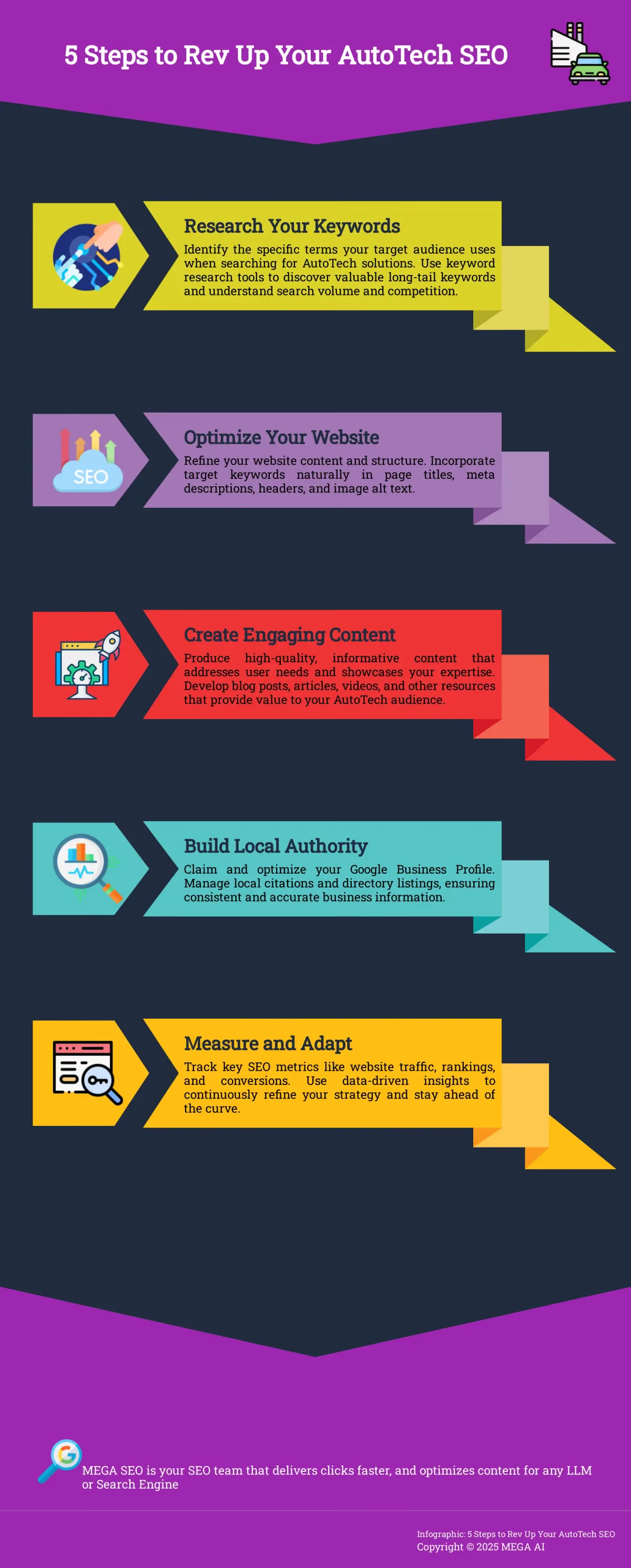
Next, focus on creating high-quality website content. This isn’t just about text; incorporate engaging videos demonstrating your technology, clear images of your products, and informative articles discussing industry trends or case studies. This type of valuable content establishes your credibility and draws in potential customers, positioning your business as a knowledgeable leader in the AutoTech space.
Optimize Continuously & Stay Ahead
SEO isn’t a task you complete once; it’s a long-term commitment that requires consistent attention and optimization. Understanding how your customers and prospects behave online is key. Are they engaging with your technical whitepapers. How long do they spend on pages detailing your software solutions. Answering these questions helps you refine your strategy to better meet their needs.
Regularly audit your website’s technical health. Use technical SEO tools to find and fix issues like slow page speed, broken links, or problems with mobile usability, ensuring your site is accessible and user-friendly. Maintaining these technical aspects ensures search engines can easily crawl and index your site, and that users have a positive experience. This ongoing process of monitoring, analyzing, and adjusting is what will keep your AutoTech business competitive. For businesses looking to simplify this, MEGA AI provides tools that can help maintain and update your content for optimal performance.