
Managing a comprehensive SEO strategy is a significant undertaking, especially for the lean teams at startups and small businesses. Between keyword research, content creation, technical audits, and link building, the workload can feel overwhelming. This is where a modern approach becomes essential. By leveraging AI and automation, you can streamline repetitive tasks and gain data-driven insights more efficiently. This allows your team to focus on high-level strategy instead of getting lost in the weeds. This guide explores how to implement a smarter, more scalable strategy for SEO for AdTech that gives you a competitive edge without draining your resources.
Key Takeaways
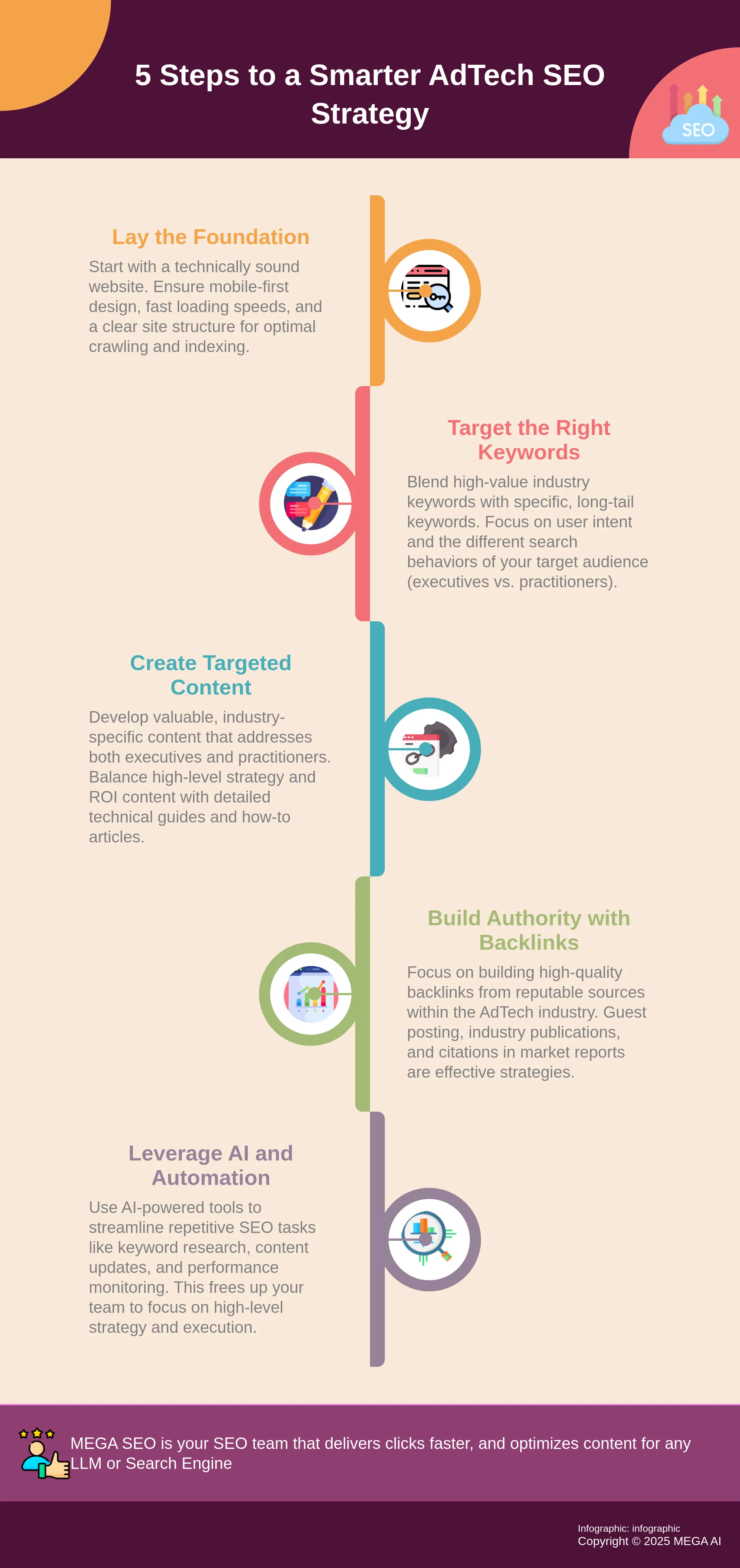
- Create Content for Every Role: Your audience includes both executives and practitioners. Develop content that addresses high-level strategy and ROI for leaders, as well as technical, in-depth guides for the hands-on users of your platform.
- Build a Strong Technical and Authoritative Foundation: Success in AdTech SEO requires more than just keywords. Prioritize a technically sound, mobile-first website and build high-quality backlinks from industry-specific sources to establish credibility with search engines.
- Leverage AI to Increase Your Agility: The AdTech industry and SEO best practices are always changing. Use AI-powered tools to automate time-consuming tasks like keyword research and content updates, allowing you to adapt your strategy quickly and maintain a competitive edge.
Why SEO Matters for AdTech Companies
In the competitive advertising technology landscape, standing out is essential. Search Engine Optimization (SEO) is a critical channel for AdTech companies because it directly connects you with potential clients at the exact moment they are searching for solutions. Unlike outbound marketing, which interrupts potential customers, a strong SEO strategy pulls in qualified leads who are already looking for your services. This process of inbound lead generation is fundamental for sustainable growth in a crowded digital advertising space.
Effective SEO improves your visibility in search engine results, making your brand the answer to a user's query. When a media buyer, marketing director, or CMO searches for a new demand-side platform or a solution to optimize ad spend, you want your company to appear on the first page. A well-executed strategy ensures you are not just visible, but are seen as a credible and authoritative voice in the industry. This builds trust and drives high-intent traffic to your site, laying the groundwork for new partnerships and sales.
Unique SEO Challenges in AdTech
The AdTech industry presents distinct SEO hurdles. The market is incredibly competitive, and the high cost of paid advertising makes a strong organic presence more valuable. A significant challenge is understanding the different search behaviors of your target audience. For example, a media buyer might search for technical platform features, while a CMO is more likely to look for high-level strategy and ROI case studies. Creating content that speaks to these varied roles is key. A common pitfall is producing content that doesn't align with user intent, which can cause you to lose valuable leads.
How SEO Drives Growth and Visibility
A successful SEO strategy does more than just increase website traffic; it directly contributes to sales and lead generation. By focusing on high-quality keyword research, you can attract visitors who are actively looking for the specific solutions you offer. This targeted approach ensures the traffic you receive is relevant and more likely to convert. When your content precisely answers a potential client's question or solves their problem, you establish credibility and guide them through the sales funnel. This focus on relevance is what turns a searcher into a customer, making keyword research a vital component for driving real business growth.
Key SEO Strategies for AdTech
Building a strong SEO foundation is essential for any AdTech company looking to attract the right audience and establish authority. The AdTech space is crowded and highly technical, which means a generic approach to SEO simply won't cut it. Your strategy needs to be precise, targeting the specific pain points and search habits of your potential customers, from media buyers to ad operations managers. A successful plan involves a multi-faceted approach that combines on-page optimization, technical soundness, and off-page authority building.
Each of these components plays a distinct role in how search engines perceive your website and how potential customers find you. On-page SEO is about making your content clear and relevant to specific search queries. Technical SEO ensures your site provides a seamless experience for both search engine crawlers and human visitors, removing any barriers to access. Finally, link building acts as a powerful signal to search engines that your site is a trusted and authoritative resource within the AdTech community. Getting these elements right helps you connect with high-intent prospects actively searching for the solutions you provide. It’s about creating a sustainable engine for organic growth that consistently delivers qualified leads to your pipeline.
Optimize Your On-Page Elements
On-page SEO is about making your content clear to both search engines and users. This starts with targeting the right keywords. For an AdTech company, you should focus on terms like "AdTech solutions," "Demand Side Platform," and "Programmatic Advertising" to improve organic traffic. These keywords should appear naturally in your page titles, headings, meta descriptions, and body content. The goal is to signal relevance to search engines for the queries your ideal customers are using. A well-optimized page directly answers a user's question, making your site a valuable resource and encouraging them to engage further.
Address Technical SEO
A technically sound website is the foundation of any successful SEO strategy. You can have the best content in the world, but if search engines can't crawl your site or users have a poor experience, your rankings will suffer. Common pitfalls that can derail your SEO efforts include ignoring competitor strategies and having a poor site architecture. A logical site structure not only helps search engine bots understand your content hierarchy but also improves user navigation and engagement. Regularly auditing your site for issues like slow page speed, broken links, and mobile-friendliness is critical for maintaining a strong technical base.
Build Links in the AdTech Space
Off-page SEO, particularly link building, is how you build authority and trust with search engines. Think of a backlink as a vote of confidence from another website. Building high-quality backlinks from reputable sites, engaging on social media, and managing your online reputation are essential for off-page SEO. In the AdTech industry, this could mean getting featured in industry publications, guest posting on relevant blogs, or being cited in market reports. These link-building strategies not only enhance your site's authority but also drive valuable referral traffic from an audience that is already interested in your niche.
Use AI for SEO Automation
Managing all the moving parts of a comprehensive SEO strategy can be time-consuming, especially for lean teams. This is where AI can make a significant impact. AI-powered tools can automate repetitive tasks, analyze large datasets, and provide actionable insights to inform your strategy. For example, MEGA AI offers automated keyword research, which is crucial for identifying commercially valuable keywords that can drive organic traffic to AdTech websites. By leveraging AI, you can streamline everything from content creation and technical audits to link-building outreach, allowing your team to focus on high-level strategy and execution.
Create Content That Drives AdTech SEO
Content is the engine of your AdTech SEO strategy. To attract and convert a sophisticated audience, you need a library of resources that directly addresses their complex challenges. Your content should serve different members of the buying committee, from high-level executives to hands-on practitioners. By creating targeted, high-value content, you not only improve your search rankings but also build the trust and authority needed to turn readers into customers. Be strategic, focusing on topics that demonstrate your expertise and provide genuine solutions.
Develop Valuable, Industry-Specific Content
In the AdTech world, generic content gets ignored. Your audience is looking for specific answers to technical questions, so your content must be tailored to their needs. Focus on creating in-depth articles and guides around core industry topics. For example, you can develop content around terms like "programmatic advertising," "demand-side platforms (DSPs)," or "ad verification." This approach ensures the organic traffic you attract is highly qualified and actively searching for the solutions you offer. Your website becomes a resource hub that provides clear, authoritative answers to the industry’s most pressing questions.
Balance Technical and Non-Technical Topics
The people who buy AdTech solutions hold different roles, and your content needs to speak to all of them. A Chief Marketing Officer (CMO) is interested in ROI and strategic advantages, while an ad ops professional wants to know about implementation. Effective AdTech SEO requires creating content that addresses the unique search behavior of these different roles. Create high-level reports for decision-makers and detailed, how-to guides for the practitioners who will use your product daily. This balanced approach meets the needs of the entire buying committee, guiding them through their decision-making process.
Establish Thought Leadership for SEO Benefits
Consistently publishing high-quality content that thoroughly covers a topic does more than just help you rank for keywords. It positions your company as a thought leader in the AdTech space. When you become the go-to source for reliable information, you build trust with your audience. This authority translates into powerful SEO benefits, like earning natural backlinks, increasing social shares, and building brand recognition. Establishing thought leadership is a long-term play, but it creates a sustainable competitive advantage that is difficult for others to replicate, reinforcing your search engine authority.
How to Do Keyword Research for AdTech
Effective SEO begins with understanding what your audience is searching for. In a specialized field like AdTech, this means getting inside the heads of marketers, publishers, and agency professionals. Keyword research isn't just about finding popular terms; it's about mapping your services to the specific problems your customers are trying to solve. A balanced approach that combines broad industry terms with specific, problem-oriented phrases will lay the groundwork for content that attracts and converts the right audience. Tools that automate keyword research can simplify this process, helping you identify opportunities you might otherwise miss and build a strong foundation for your entire strategy.
Find High-Value Industry Keywords
Targeting foundational industry terms is crucial for establishing your presence. These are the keywords that define your space. For AdTech, this includes terms like "demand-side platform," "programmatic advertising," and "ad exchange." While these keywords can be competitive, ranking for them signals to both search engines and potential customers that you are a credible player in the market. This strategy helps you capture traffic from users who are actively researching AdTech solutions. Think of these as the pillars of your content strategy; they establish your relevance and authority in the industry, forming a strong base upon which you can build more specific topics.
Focus on Long-Tail Keywords
While high-value keywords are important, long-tail keywords are where you can find highly qualified traffic. These longer, more specific phrases—like "how to choose a supply-side platform" or "programmatic advertising for mobile apps"—are used by people who are closer to making a decision. Because these queries are so specific, the user intent is much clearer. This allows you to create targeted content that directly addresses their needs, leading to higher engagement and conversion rates. Effective keyword research helps you uncover these valuable phrases and attract visitors who are actively seeking the solutions you provide.
Optimize for Voice Search
The way people search is changing, with more users relying on voice assistants. This trend favors conversational, question-based queries. To capture this traffic, your keyword strategy should include phrases people would speak rather than type, such as "What is real-time bidding?" or "How do I get started with programmatic ads?". Creating content that provides direct, clear answers to these questions is key. This often means structuring articles with FAQ sections or using headings that mirror common questions. A successful approach to optimizing keyword research for voice search requires a deep understanding of your audience's pain points and curiosities.
Measure and Analyze Your SEO Performance
Implementing SEO strategies is only half the battle. To ensure your efforts are effective, you need to consistently measure and analyze your performance. This process turns raw data into clear insights, showing you what’s working, what isn’t, and where you should focus your resources next. For AdTech companies, where the landscape is competitive and technical, tracking performance is essential for making informed decisions that lead to sustainable growth. By establishing a routine for monitoring your SEO, you can adapt your strategy with precision and stay ahead of the curve.
Key Metrics to Track
To understand your SEO success, you need to focus on the right numbers. Start by tracking your keyword rankings to see where you appear in search results for your target terms. From there, monitor organic traffic to measure how many people are finding your site through search engines. It’s also important to watch your click-through rate (CTR), which tells you how compelling your search listings are to potential visitors. Ultimately, the most critical metric is conversions. Are visitors signing up for demos or downloading white papers? These actions show that your SEO is not just attracting traffic, but attracting the right traffic. Success depends on creating high-quality content that addresses the specific needs of your audience.
Tools to Monitor SEO Performance
A variety of tools can help you keep a close eye on your SEO performance. Platforms like Google Search Console are essential for monitoring how Google sees your site, providing data on clicks, impressions, and technical issues. For more in-depth analysis, many marketers turn to comprehensive SEO software. Tools like SEMrush or Ahrefs are excellent for tracking keyword rankings, analyzing backlinks, and researching competitors. When you’re just starting, you can identify keywords with high relevance and manageable competition using Google Keyword Planner. While these tools are powerful for manual analysis, integrated platforms like MEGA AI’s SEO automation can handle much of this monitoring, consolidating your data and saving you valuable time.
Make Data-Driven Decisions
The data you collect is only useful if you act on it. Use your performance metrics to make strategic adjustments. Analyze your keywords and prioritize them based on search volume, competition level, and relevance to your products. If you notice a set of pages or keywords is driving a significant portion of your traffic and conversions, it’s a signal to double down on what’s working. This approach is often called the Pareto Principle in SEO, where a small percentage of your efforts generate most of your results. By identifying and focusing on these critical contributors, you can achieve better outcomes more efficiently. Regularly review your data to find these high-impact opportunities and refine your content accordingly.
How to Overcome Common AdTech SEO Challenges
The AdTech industry presents a unique set of hurdles for marketers. The landscape is not only technically complex but also highly competitive and constantly evolving. Getting your SEO strategy right means navigating these challenges with a clear plan. By focusing on differentiation, simplifying complex topics for your audience, and staying agile, you can build a resilient SEO foundation that drives consistent growth. Let's look at how to tackle these common obstacles head-on.
Stand Out in a Competitive Market
The AdTech space is crowded, making it difficult to capture your audience's attention. Visibility in search results is essential for generating inbound leads, but you're competing with established players and new startups alike. To cut through the noise, you need a precise keyword strategy. Focus on terms that signal high purchase intent, such as "programmatic advertising platforms" or "demand side platform for small business." A targeted approach helps you attract qualified traffic that is more likely to convert. Using an AI-powered SEO platform can help you discover these valuable keywords and monitor your competitive positioning, ensuring your voice is heard.
Simplify Complex Industry Topics
AdTech is filled with jargon and intricate concepts that can alienate parts of your audience. A media buyer searches for different information than a CMO does. Your content must bridge this gap by translating technical features into clear, tangible benefits. Successful AdTech SEO hinges on creating content that speaks directly to the pain points of each specific role. Instead of just explaining what your technology does, show how it solves a problem, saves time, or improves ROI. This user-centric approach makes your content more accessible and valuable, helping you connect with a broader range of decision-makers.
Adapt to Rapid Industry Changes
What works in SEO today might not work tomorrow, especially in a fast-moving field like AdTech. Search engine algorithms are updated frequently, and user expectations shift just as quickly. One of the most common SEO mistakes is creating content that doesn't match user intent. A successful strategy requires continuous monitoring and agility. Regularly review your content's performance and be prepared to update articles to reflect new industry trends or changes in search behavior. Automated tools can help by identifying opportunities to refresh existing content, ensuring it remains relevant and continues to rank well over time.
Advanced SEO Techniques for AdTech
Once you have a solid foundation of on-page optimization, technical SEO, and quality content, it's time to explore more advanced strategies. In the competitive AdTech landscape, these techniques can be the difference between blending in and standing out. They go beyond basic keyword targeting to improve how search engines interpret your site and how users experience it. While they can be more technical to implement, the payoff in organic visibility and user engagement is well worth the effort. These aren't just nice-to-haves; they are critical components of a mature SEO program that aims for market leadership.
These strategies focus on communicating more effectively with search engines, reaching a global audience, and catering to the modern user's browsing habits. By implementing structured data, you can help search engines understand your content on a deeper level, which can lead to more prominent search results. For AdTech companies with a global footprint, an international SEO strategy is essential for connecting with customers in their own language and region. Finally, with mobile traffic dominating the web, a mobile-first approach is no longer optional. Platforms with SEO automation can simplify the process of implementing and managing these technical elements, making them more accessible for teams of any size and helping you scale your efforts without needing a large technical team.
Implement Structured Data and Schema
Think of structured data as a vocabulary that helps you describe your site's content to search engines in a way they can easily understand. By adding this code, known as schema markup, to your website, you provide explicit clues about the meaning of your page. Structured data helps search engines understand the content of your site better, which can lead to improved visibility in search results. For an AdTech company, this could mean using SoftwareApplication schema for your product pages or Article schema for your blog posts. This can help you earn rich snippets in search results—the enhanced listings with ratings, FAQs, or other details that make your link more appealing and can improve your click-through rate. You can use Google's Rich Results Test to see what enhancements your pages are eligible for.
Use International SEO for Global Reach
The AdTech industry is global, and your SEO strategy should reflect that. If you serve customers in multiple countries or languages, you need to signal this to search engines. International SEO is essential for businesses looking to expand their reach across different countries and languages. This involves optimizing your website for various regions and languages, ensuring that your content is relevant and accessible to a global audience. Key practices include using hreflang tags to indicate the correct language or regional URL for a piece of content. This ensures that a user in Germany sees your German-language page, while a user in Spain sees the Spanish version, creating a better experience and sending strong relevance signals to Google. Properly managing a multi-regional site is critical for sustainable global growth.
Adopt a Mobile-First Strategy
Google primarily uses the mobile version of a website for indexing and ranking—a practice known as mobile-first indexing. With the increasing use of mobile devices for browsing, adopting a mobile-first strategy is crucial. This means designing your website with mobile users in mind, ensuring fast load times and a responsive design that enhances user experience. For AdTech professionals who are often on the go, a seamless mobile experience is an expectation. Your site should be fast, easy to use on a small screen, and fully functional without requiring users to pinch and zoom. Focusing on a strong mobile experience not only aligns with Google's best practices but also serves your audience better, which can lead to higher engagement and conversion rates.
Future-Proof Your AdTech SEO Strategy
The AdTech industry and search engine algorithms are constantly evolving. A strategy that works today might be less effective tomorrow. To build lasting success, you need an approach that anticipates change and adapts, ensuring your efforts continue to deliver results over the long term. This means focusing on emerging trends, technical excellence, and a sustainable process.
Stay Ahead of AdTech SEO Trends
Visibility in search results is essential for inbound lead generation in the competitive AdTech market. To maintain that visibility, you have to keep up with industry trends and how people search for them. Keywords and topics shift as new technologies and regulations emerge. Staying current requires monitoring industry conversations and updating your content strategy accordingly. Focus on core terms like "programmatic advertising" and "demand-side platform," but also be ready to target newer, more specific phrases as they gain traction. AI-powered tools can help by identifying these emerging keywords and even automatically updating your content to reflect the latest industry language and search patterns.
Prepare for Core Web Vitals
User experience is a critical ranking factor for Google. Core Web Vitals are a set of specific metrics that measure a page's loading performance, interactivity, and visual stability. A poor user experience, such as a slow-loading page or elements that shift around unexpectedly, can harm your rankings. One of the most common SEO pitfalls is creating content that doesn't match what users are looking for, which can lead to high bounce rates and poor performance on these vitals. Ensuring your site is technically sound and delivers a smooth experience is fundamental. This means optimizing images, streamlining code, and ensuring your site is responsive on all devices.
Build a Sustainable, Long-Term Strategy
SEO is an ongoing process, not a one-time project. To achieve sustainable growth, you need a consistent, long-term strategy that addresses all facets of SEO, including on-page, off-page, and technical elements. This requires a commitment to regularly creating valuable content, building quality backlinks, and performing technical audits. A key part of a sustainable plan is aligning your content with user intent, which is crucial for earning higher rankings. Using an AI-driven platform like MEGA AI can help you maintain this momentum by automatically updating and re-optimizing existing articles, ensuring your content stays relevant and continues to perform well long after it's published.
Top SEO Tools and Platforms for AdTech
Choosing the right tools can make a significant difference in the success of your SEO strategy. For AdTech companies, a good toolset helps you analyze the competitive landscape, find valuable keywords, and create content that resonates with a technical audience. These platforms provide the data and automation needed to stay ahead in a fast-moving industry. They help you move from a reactive approach to a data-informed one, allowing you to pinpoint what’s working for your competitors and where you have opportunities to get ahead.
The AdTech space is filled with complex jargon and niche topics, making content creation and optimization particularly challenging. The right tools can simplify this process, whether it's by automating keyword research, generating outlines for technical articles, or tracking your performance against specific business goals. They also provide the necessary insights to build a strong backlink profile and address technical SEO issues that could hold your site back. Using a combination of these platforms allows you to build a comprehensive strategy that covers all bases, from on-page and off-page SEO to technical health and content performance. Below are some of the top tools and platforms that can support your AdTech SEO efforts, from all-in-one suites to specialized automation platforms.
MEGA AI
For AdTech companies that need to produce high-quality, specialized content at scale, MEGA AI is a powerful asset. It automates the creation of SEO-friendly content, which is a huge advantage when you need to maintain a consistent publishing schedule and address complex industry topics. The platform’s SEO features can streamline your entire content marketing workflow, from keyword research to generation and optimization. This allows your team to focus on high-level strategy while the tool handles the heavy lifting of content production, helping you improve search rankings and establish a strong online presence efficiently.
SEMrush
SEMrush is a comprehensive SEO suite that offers robust features for keyword research, site audits, and competitor analysis. For AdTech companies, its ability to provide deep insights into market trends and competitor strategies is invaluable. You can use it to see what keywords your rivals are ranking for and identify gaps in their content that you can fill. The platform’s analytics also help you track the effectiveness of your SEO campaigns over time, making it a vital tool for making data-driven decisions and achieving sustainable growth in a crowded market.
Ahrefs
Ahrefs is widely known for its exceptional backlink analysis and keyword research tools. In the competitive AdTech sector, understanding your competitors' backlink profiles is crucial for building your own authority. Ahrefs allows you to see exactly where your competitors are getting links, giving you a roadmap for your own outreach efforts. Its tools also help you discover high-value keywords and content gaps, enabling you to refine your content strategy for better visibility and engagement. Using these insights helps you create content that directly addresses the needs of your target audience.
Moz
Moz provides a suite of SEO tools that are especially useful for tracking keyword rankings and optimizing your on-page elements. Its interface is user-friendly, making it a great option for AdTech companies that may not have a large, dedicated SEO team. Moz’s tools can help you identify opportunities for improvement and monitor the impact of your optimization efforts. This is essential for demonstrating ROI and ensuring your strategy remains effective in a competitive industry. The platform also offers extensive educational resources to help your team stay current on SEO best practices.
Google Search Console
Google Search Console is a free, essential tool for any company serious about SEO. It offers direct insights into how Google sees and indexes your website, highlighting technical issues, indexing status, and search performance data. For AdTech firms that depend on organic traffic for leads, this information is critical. You can use it to find and fix errors that might be hurting your rankings and understand which queries are driving traffic to your site. Making data-driven decisions helps you steadily improve your visibility in search results.
Related Articles
- SEO Beyond Backlinks: Adapting to AI
- Adapting SEO Strategies for a Post-Google Landscape
- Is SEO Better Than Google Ads? Here’s the Real Deal
- Top SEO Site Audit Tools for 2024: Free & Paid
- Effective Content SEO Strategies for Your Website
Frequently Asked Questions
I'm running a small AdTech company with a limited team. Where should I focus my initial SEO efforts? Start with a solid foundation. First, ensure your website is technically sound so search engines can easily crawl and understand it. This means having a logical site structure and fast page speeds. Then, focus your content efforts on a few core pages that target specific, problem-oriented keywords. Instead of trying to cover everything, create in-depth content that solves a distinct problem for your ideal customer. This targeted approach will deliver more impact than spreading your resources too thin.
How do I create content for both technical users and executive decision-makers? This requires a balanced content strategy. For executive buyers, focus on high-level content like case studies, industry reports, and articles that translate technical features into clear business benefits like ROI and strategic advantages. For the hands-on practitioners, create detailed how-to guides, implementation walkthroughs, and technical documentation. The key is to ensure these different content types are linked, allowing each audience to find the level of detail they need while understanding the full value of your solution.
Is it better to target broad keywords like 'programmatic advertising' or more specific long-tail keywords? A successful strategy uses both, but they serve different purposes. Broad, high-volume keywords are important for building long-term authority and brand visibility, but they are also highly competitive. Long-tail keywords, like "how to reduce ad spend with programmatic," attract users who are further along in their research and closer to making a decision. For a new or growing company, focusing on long-tail keywords can deliver more qualified traffic and quicker wins while you build the authority needed to compete for broader terms.
How often should I be updating my content to keep up with the AdTech industry? There isn't a magic number, as your update schedule should be driven by performance and relevance rather than a calendar. The AdTech space moves quickly, so you should regularly review your key content pieces. If you notice a drop in rankings or traffic, or if a new industry trend emerges, it's time for a refresh. The goal is to ensure your content remains the most accurate and comprehensive resource available for that topic.
My website is technically sound, but I'm still not ranking. What am I missing? A technically healthy website is the price of admission, but it doesn't guarantee a top spot. If your technical SEO is solid, the issue likely lies with your content or authority. Ask yourself if your content truly answers the user's question better than the pages that are currently ranking. Also, consider your site's authority. Search engines see backlinks from other reputable websites as votes of confidence, so a lack of high-quality links could be holding you back.