
Ranking high in search engine results is the goal. It’s how you attract organic traffic, drive conversions, and establish your brand as an industry leader. But how do you get to that coveted top spot? The answer lies in a solid search engine optimization (SEO) strategy. This guide walks you through the core principles, providing actionable SEO best practices to improve your website’s ranking. From keyword research and content creation to technical optimization and link building, we’ll cover what you need to know to succeed in the competitive world of search and attract more qualified leads.
Key Takeaways
- SEO is essential for online visibility: From keyword research to technical optimization, SEO helps search engines understand and showcase your website to the right audience.
- Prioritize user experience: A positive user experience, including fast loading times and engaging content, is crucial for both SEO and keeping visitors on your site.
- Stay adaptable and informed: The SEO landscape is constantly changing. Keep learning, experimenting, and refining your strategies to maintain a strong online presence.
What is SEO and Why Does it Matter?
SEO, or search engine optimization, is the practice of improving your website’s visibility on search engine results pages (SERPs). When someone searches online for a product, service, or information, search engines like Google work to provide the most relevant results. SEO helps your website rank higher in these results, driving more organic traffic to your site. Essentially, it’s about making your website attractive to search engines so they’ll showcase it to a larger audience.
Think of it this way: when you search for something online, you rarely venture past the first page of results. SEO aims to get your website onto that valuable first page, ideally near the top. This increased visibility is essential for any business, regardless of size, because it connects you with more potential customers.
SEO is crucial for several reasons. First, it helps you reach your target audience at the precise moment they’re searching for what you offer. You’re providing a solution when they need it, rather than interrupting them with ads. A well-optimized website can rank higher in search results, leading to increased traffic and improved conversion rates. Learn more about how SEO best practices can dramatically improve your website’s performance with this helpful guide from Semrush.
Second, SEO offers a cost-effective approach compared to paid advertising. While paid ads can deliver fast results, organic traffic from SEO creates long-term, sustainable growth. SEO Chatter provides a compilation of case studies showcasing SEO’s effectiveness and affordability. Investing in SEO builds a foundation for consistent traffic without the continual cost of paid campaigns, a significant advantage for startups and small businesses.
Finally, SEO is key to strengthening your overall online presence. It’s not just about driving traffic; it’s about positioning your brand as a leader in your industry. A website that ranks well tells potential customers you’re a trusted source of information and expertise. Google’s SEO Starter Guide offers a solid understanding of the fundamentals and emphasizes SEO’s importance for online success. By understanding and using SEO best practices, you significantly improve your visibility to your target audience, driving growth and achieving your business goals.
The Three Pillars of SEO: On-Page, Off-Page, and Technical
To achieve higher rankings in search engine results, it’s essential to understand and implement the three pillars of SEO: On-Page, Off-Page, and Technical SEO. Think of these as three legs of a stool—each one is critical for stability.
On-Page SEO
On-Page SEO focuses on optimizing individual web pages to rank higher and earn more relevant traffic from search engines. It’s all about making your content easily digestible for both users and search engine crawlers. Key practices include creating high-quality, informative, and engaging content that satisfies user intent and provides genuine value. Think about what questions your audience is asking and answer them thoroughly. This approach ensures your content meets their needs and keeps them engaged. Optimizing your existing content is just as important. MEGA AI can help you identify areas for improvement and automatically update your articles to enhance their performance.
Keyword optimization is another crucial aspect of On-Page SEO. Identify relevant keywords your target audience uses when searching for information related to your website. This helps align your content with what users are actively searching for, increasing the likelihood of your pages appearing in search results. MEGA AI offers automated keyword research tools that can simplify this process, helping you discover valuable keywords and incorporate them strategically.
Finally, pay close attention to your meta tags and URLs. Write clear, concise, and unique titles, and craft compelling meta descriptions to influence how your pages appear in search results. Use descriptive URLs that are easy to understand, group similar pages in directories, and minimize duplicate content to enhance user experience and search engine understanding.
Off-Page SEO
Off-Page SEO refers to actions taken outside of your own website to impact your rankings within search engine results pages (SERPs). It’s about building your website’s authority and reputation. One of the most important strategies is backlink building. Earn high-quality backlinks from reputable websites to signal to search engines that your site is authoritative and trustworthy. Think of backlinks as votes of confidence from other sites. Learn more about best practices to improve your backlink profile.
Promoting your content on social media is another valuable Off-Page SEO tactic. Increase visibility and drive traffic to your website by engaging with your audience. This can lead to more shares and, ultimately, more links back to your site.
The foundation of effective Off-Page SEO is creating content worth linking to. Focus on developing high-quality, informative, and shareable content that other people will naturally want to reference. This organic link building is vital for building a strong backlink profile.
Technical SEO
Technical SEO involves optimizing your website’s infrastructure to help search engines crawl and index your site more effectively. It’s the behind-the-scenes work that ensures your website is easily accessible. A key component of Technical SEO is performance monitoring. Use Google Search Console to monitor your website’s performance, identify crawl errors, and submit sitemaps. Many of these tasks can be streamlined with AI automation for SEO, reducing manual work and ensuring consistency at scale.. Semrush offers a comprehensive guide on SEO best practices, including technical SEO tips.
Ensure Google sees your site as users do. Google should be able to access all site elements, including CSS and JavaScript. This allows search engines to fully understand and index your content.
Finally, prioritize website loading speed. Optimize your site’s performance to improve user experience and SEO rankings. A fast-loading site is crucial for retaining visitors and providing a positive browsing experience. MEGA AI can help automate many of these technical SEO improvements, ensuring your website is optimized for search engine crawlers. Request a demo to see how MEGA AI can transform your SEO strategy.
Keyword Research: The Foundation of Effective SEO
Keyword research is the cornerstone of any successful SEO strategy. It’s the process of discovering the search terms people use when looking for information, products, or services related to your business. Understanding these search terms, and how people use them, allows you to create content that resonates with your target audience and ranks well in search results. Without proper keyword research, your content might miss the mark and fail to attract the right visitors.
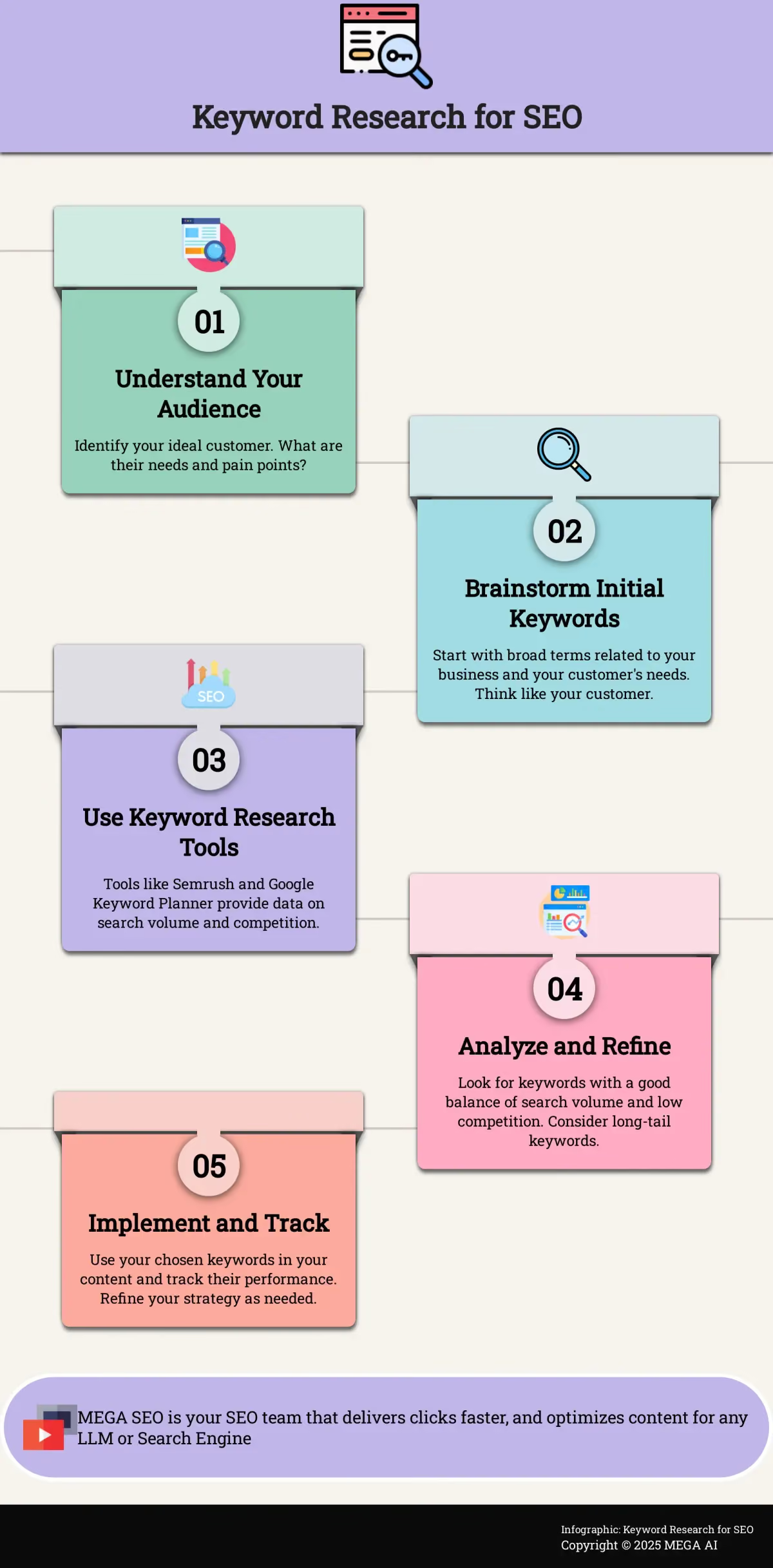
Find the Right Keywords: Tools and Techniques
Effective keyword research involves more than just brainstorming a few terms related to your industry. It requires using the right tools and techniques to identify relevant keywords and assess their competitiveness. Start by considering your ideal customer. What problems are they trying to solve? What words would they use to describe their needs? These initial ideas will serve as a starting point for your research.
Next, use keyword research tools like Semrush’s Keyword Magic Tool or Google Keyword Planner to expand your list and gather data. These tools provide valuable insights into search volume (how often a keyword is searched), keyword difficulty (how hard it is to rank for a keyword), and related keywords. This data helps you prioritize which keywords to target and understand the competitive landscape. The goal isn’t just to find keywords with high search volume; it’s to find keywords that align with your business goals and have a realistic chance of ranking. As Semrush advises in their SEO best practices, don’t stuff keywords into your content; use them naturally.
Long-Tail vs. Short-Tail Keywords: Making the Right Choice
Understanding the difference between long-tail and short-tail keywords is crucial for a balanced keyword strategy. Short-tail keywords are broad terms, usually one or two words, with high search volume. For example, “shoes” is a short-tail keyword. While these keywords have a large audience, they are highly competitive and may not attract the most qualified leads. Someone searching for “shoes” could be looking for anything from running shoes to designer heels.
Long-tail keywords are longer, more specific phrases, typically three or more words, that target a niche audience. An example of a long-tail keyword is “best running shoes for marathon training.” As AIOSEO points out, long-tail keywords are usually less competitive and can attract more qualified traffic because they indicate higher purchase intent. Someone searching for “best running shoes for marathon training” is clearly interested in a specific type of shoe and is likely closer to making a purchase. A well-rounded keyword strategy incorporates both long-tail and short-tail keywords, as discussed by HawkSEM.
Use short-tail keywords to capture a broader audience and build brand awareness, and use long-tail keywords to target specific niches and drive conversions. This balanced approach ensures your content is optimized for various search intents, increasing your chances of ranking higher and attracting the right customers.
Use Related Keywords for Context
Beyond your primary keyword, it's important to use related keywords to provide context. These are terms and phrases that are semantically connected to your main topic. For example, if you're writing about "startup SEO," related keywords might include "keyword research for new businesses," "building backlinks," and "technical SEO basics." Including these terms helps search engines get a fuller picture of your content's subject matter. As Google's own SEO starter guide explains, this practice helps them understand the context of your content better, which can improve your rankings. This approach also creates a more comprehensive resource for your readers, answering questions they might have and keeping them engaged with your page.
On-Page SEO Best Practices
On-page SEO involves optimizing elements on your website to improve search engine rankings and user experience. Think of it as setting up a welcoming, informative storefront for both search engines and visitors. This is where MEGA AI excels, automating many of these crucial on-page optimizations.
Optimize Title Tags and Meta Descriptions
Title tags and meta descriptions are crucial for attracting clicks from search results. Think of your title tag as a concise, compelling headline that accurately reflects your page’s content. Keep them under 60 characters and include your primary keyword near the beginning. A well-written meta description, while not a direct ranking factor, can significantly influence click-through rates. Make it clear, concise, and unique, enticing users to visit your page. MEGA AI can automatically generate and A/B test title tags and meta descriptions, optimizing for maximum CTR.
Meta Description Length Guidelines
When crafting meta descriptions, keep them under 160 characters. This length ensures your full description appears in search results without getting cut off, giving users the complete picture of what your page offers. While not a direct ranking factor, a well-written meta description can significantly influence your click-through rates. It should be a clear, concise, and unique pitch that entices users to visit your page. Including your primary keyword near the beginning of the description also helps enhance its relevance and appeal.
Create SEO-Friendly URLs and Use Header Tags Effectively
URLs should be descriptive and easy to understand. Use hyphens to separate words, creating clean URLs that reflect the page’s content. Organize similar pages within directories, and avoid duplicate content to enhance user experience and SEO. Header tags (H1-H6) structure your content logically. Each page should have one H1 tag that accurately reflects the page’s topic, similar to the title tag. Use H2-H6 tags to break down your content into digestible sections, improving readability.
Place Your Primary Keyword Strategically
Once you've identified your primary keyword, its placement within your content is critical. Search engines pay close attention to the words that appear early on a page to quickly determine its topic. Make sure your main keyword shows up near the beginning of your content, ideally within the first 25 words. This placement sends a strong signal to Google that your page is highly relevant to that specific search term. It also immediately confirms for visitors that they’ve landed on the right page, which can improve engagement metrics like time on page and reduce bounce rates.
Keyword optimization is about more than just placement; it's about aligning your content with what your audience is actively looking for. By strategically placing your primary keyword, you help search engines connect your content with user intent. While this is a fundamental practice, it's one that's easy to overlook when you're focused on creating valuable information. Tools like MEGA AI can help by generating content that naturally incorporates keywords in the most effective locations, ensuring your on-page SEO is solid from the start.
Optimize Your Images
Images are essential for creating engaging content, but they also play a significant role in SEO. Large, unoptimized images can slow down your website's loading speed, which is a major ranking factor, especially on mobile devices. A slow site frustrates users and can negatively impact your search rankings. Before uploading an image, make sure it has a descriptive filename (e.g., "on-page-seo-checklist.jpg" instead of "IMG_4567.jpg"). This simple step provides search engines with valuable initial context about the image's content, helping them index it correctly.
Alt text, or alternative text, is another vital component of image optimization. This short, descriptive text serves two main purposes: it makes your content accessible to visually impaired users who use screen readers, and it helps search engines understand what an image is about. As Forbes notes, good alt text can also help your images rank in Google Image Search, driving additional traffic to your site. Always write a concise, accurate description for each image, incorporating relevant keywords where it feels natural to do so.
Optimize Content for Featured Snippets and User Intent
Creating high-quality, original content is paramount for SEO success. More importantly, your content should satisfy user intent. Ask yourself: what information are users seeking when they type in a specific query? Provide comprehensive, helpful, and reliable information that directly answers their questions. By anticipating user needs and crafting your content accordingly, you increase your chances of ranking well and appearing in featured snippets, those coveted position-zero search results. MEGA AI’s content generation tools can help you create content optimized for both search engines and user intent. Our platform also analyzes existing content, identifying opportunities to add information that better addresses user queries and improves the chances of capturing featured snippets.
Content Quality: The Cornerstone of SEO Success
Content quality reigns supreme in the world of SEO. It’s the bedrock upon which all your other SEO efforts are built. Without top-notch content, even the most technically optimized website might struggle to gain traction. This section explores why content quality matters and how to create content that resonates with both users and search engines.
Create High-Quality, Engaging Content
Google’s own SEO Starter Guide stresses the importance of compelling and useful content. Consider what your target audience wants and create content that provides thorough and clear answers. Write simply and directly, ensuring your content is fresh and original. Anticipating user search terms is crucial—think about what they might type into a search engine to find information like yours. Backlinko experts confirm that crafting in-depth content that outshines the competition requires dedication, but higher rankings are a worthwhile reward. Remember, your content should not only inform but also engage, encouraging visitors to explore your site further.
How Long Does It Take to Create Quality Content?
Creating quality content is a significant time investment, and there’s no one-size-fits-all answer. While a basic 500-word post might take a few hours, a more detailed, research-heavy article of over 1,500 words can easily take six to eight hours or even longer. This effort is part of a long-term strategy, as it typically takes six to twelve months of consistent content creation to see significant SEO results. The focus should always be on quality over speed. Creating comprehensive content that satisfies user intent is what ultimately helps you rank. To accelerate this process, platforms like MEGA AI can automate the initial research and drafting, allowing you to focus on refining the content and adding your unique expertise.
The Importance of E-A-T (Expertise, Authoritativeness, Trustworthiness)
Google clarifies that E-A-T isn’t a direct ranking factor, but it’s still a vital element for content creators. E-A-T signals help Google gauge the credibility of your content, especially for topics requiring trust and accuracy. Showcasing expertise, building authority through reputable backlinks, and establishing trustworthiness through transparent practices all contribute to a positive website perception. Ultimately, satisfying user search intent is the most critical factor for ranking, and high-quality content plays a major role in achieving that, as highlighted by Semrush.
Understanding E-E-A-T as a Concept, Not a Direct Ranking Factor
While E-E-A-T (Experience, Expertise, Authoritativeness, and Trustworthiness) isn't a direct ranking signal that Google's algorithms can measure, it's a core concept in their Search Quality Rater Guidelines. These guidelines are what human reviewers use to assess the quality of search results, and that feedback helps Google refine its algorithms. Think of E-E-A-T as a framework for creating credible content. You can demonstrate these qualities by featuring author bios from experts, citing reputable sources, and securing backlinks from authoritative sites in your industry. This focus on credibility helps you build a trustworthy brand reputation and create content that genuinely serves your audience, which is what search engines ultimately aim to reward.
Develop a Content Strategy that Aligns with User Needs
A winning content strategy begins with understanding your audience. What problems do they face? What solutions are they seeking? Thorough keyword research helps identify relevant topics and build a content calendar that addresses those needs. Examining SEO case studies provides valuable insights into how businesses have successfully aligned their content with user needs to achieve remarkable results. For small businesses, a well-defined content strategy can be transformative, helping improve online visibility, target the right audience, and drive higher traffic and revenue, as discussed in this guide. Make your content shareable, encouraging users to spend more time on your site and spread the word. Consider using MEGA AI’s content generation features to streamline this process.
Off-Page SEO: Build a Strong Backlink Profile
Off-page SEO refers to all the activities you perform outside your website to improve your search engine rankings. It’s about building your website’s authority and reputation across the web. The most crucial aspect of off-page SEO is link building—getting other reputable sites to link back to yours. Think of backlinks as votes of confidence from other websites. The more high-quality backlinks you have, the more trustworthy your site appears to search engines.
The Continued Importance of Backlinks
Backlinks continue to be a powerful signal for search engines. Think of them as votes of confidence from other sites. When a reputable website links to your content, it tells search engines that your page is a valuable and trustworthy resource. The more high-quality "votes" you accumulate, the more authority your website builds in the eyes of Google. This is why focusing on earning links from authoritative sources within your industry is a core part of any effective off-page SEO strategy. The foundation for this is creating content that people genuinely want to reference and share.
White Hat Link Building Strategies
Earning high-quality backlinks from reputable websites is essential. It signals to search engines that your site is authoritative and trustworthy. Focus on creating valuable content that others will naturally want to link to, as recommended by AIOSEO. Some effective white hat link building strategies include:
- Guest Blogging: Contribute high-quality content to other blogs in your industry. This gets your name and brand out there and earns you a valuable backlink.
- Broken Link Building: Find broken links on relevant websites and suggest your content as a replacement. This helps the website owner fix a broken link, and you gain a backlink.
- Resource Link Building: Create comprehensive resources, like guides or original research. Make them valuable enough that others in your niche will want to link to them. Partnerships and outreach, as highlighted by Backlinko, are also effective ways to build relationships and earn backlinks.
- Partnerships and Outreach: Build relationships with other websites in your niche. Reach out to influencers and webmasters and explore opportunities for collaboration.
Create Link-Worthy Content with a "Hook"
The foundation of effective off-page SEO is creating content that is genuinely worth linking to. To do this, your content needs a "hook"—a compelling element that makes it stand out and provides unique value. This could be original research, a controversial opinion, a comprehensive guide that's better than anything else out there, or a powerful case study with surprising results. The goal is to produce high-quality, informative, and shareable content that other people in your industry will naturally want to reference. This kind of organic link building is the key to developing a strong backlink profile that search engines will reward.
Content Formats That Naturally Attract Links
Certain content formats are more effective at attracting backlinks because they provide immense value in a digestible way. Comprehensive resources, like ultimate guides or original research reports, are prime examples. When you create the go-to guide on a specific topic, others will link to it as a definitive source. Similarly, content that includes original data or statistics is highly linkable, as journalists and other bloggers will cite your findings. Other powerful formats include free tools, templates, and visually appealing infographics. These assets are not only useful but also easy to share, often leading to natural backlinks as people recommend them to their own audiences.
The Role of Social Signals in SEO
While social signals may not be a direct ranking factor, they still play a role in your overall SEO strategy. Promoting your content on social media platforms can increase its visibility and drive traffic to your website. A strong social media presence can indirectly influence SEO in several ways:
- Increased Brand Awareness: Active social media engagement builds brand recognition and authority, which can make people more likely to link to your site. Distributing your content on social media, as discussed by SEO Chatter, can lead to increased engagement and backlinks.
- Content Distribution: Social media is a powerful channel for distributing your content and reaching a wider audience. This can lead to more backlinks and shares.
- Driving Traffic: Social media can be a significant source of traffic to your website. While not a direct ranking factor, increased traffic can signal to search engines that your site is engaging and relevant.
Avoid and Manage Bad Backlinks
While building your backlink profile, quality is far more important than quantity. Bad backlinks, which often come from spammy or irrelevant websites, can actively harm your site's authority and search engine rankings. It's essential to be selective and regularly audit your backlink profile to identify these potentially harmful links. Think of it as quality control for your website's reputation. This proactive approach signals to search engines that your site is trustworthy and deserves a higher ranking.
If you find bad backlinks, you can use tools to disavow them, which tells search engines to ignore these links when assessing your site. However, the best defense is a good offense. The foundation of effective Off-Page SEO is creating content worth linking to. By producing high-quality, informative content, you attract good backlinks and mitigate the impact of any bad ones. This not only builds your site's authority but also helps dilute the impact of any unavoidable bad links you might acquire over time.
Technical SEO: Make Your Site Search Engine Friendly
Technical SEO often gets overlooked, but it’s the foundation upon which all your other SEO efforts are built. Think of it as building a house – if the foundation is shaky, the rest of the structure won’t stand for long. Technical SEO ensures search engines can easily crawl, index, and understand your website.
Check if Your Site is Indexed
Before you can optimize, you need to confirm that search engines can even find your site. The quickest way to do this is with a simple site search. Just type site:yourwebsite.com into the Google search bar. If your pages show up, you’re indexed. If not, it’s time to investigate. Your next stop should be Google Search Console, a free tool that offers a detailed look at your site's health. It helps you monitor your indexing status, identify crawl errors that might be blocking search engines, and submit sitemaps to guide them. As Google’s guide explains, helping search engines find your content is the first critical step. Make sure crawlers can access all your site’s elements, including CSS and JavaScript, so they can understand and index your pages correctly.
Optimize Site Speed and Mobile-First Indexing
Site speed is paramount. A slow website frustrates users and can lead to a higher bounce rate, signaling to search engines that your site isn’t providing a good experience. Use PageSpeed Insights to check your website speed and identify areas for improvement. Simple changes like compressing images and using a lightweight website theme can make a big difference. Ensure your website is mobile-friendly. With mobile-first indexing, Google predominantly uses the mobile version of your site for indexing and ranking. A secure website (HTTPS) is also essential for both user trust and SEO. Google should be able to access all elements of your site, including CSS and JavaScript files. Use the URL Inspection Tool in Google Search Console to check how Google views your pages.
Why Site Speed Matters
In a world of instant gratification, a slow-loading website is a major turn-off for visitors. If your page takes too long to load, users are likely to leave before they even see your content. This action, known as a bounce, sends a negative signal to search engines. A high bounce rate suggests that your site offers a poor user experience, which can harm your rankings. Google prioritizes websites that provide a seamless and positive experience, and page speed is a critical component of that. Fast loading times keep users engaged, reduce bounce rates, and demonstrate to search engines that your site is a high-quality resource worth showing to more people.
How to Improve Your Website's Loading Speed
Improving your site's speed doesn't have to be overly complicated. A great first step is to run a test using a tool like Google PageSpeed Insights. This will give you a performance score and a list of specific recommendations. Common culprits for slow speeds include large, uncompressed images and heavy website themes. Compressing your images before uploading them and choosing a lightweight theme can make a significant impact. Also, remember that Google uses mobile-first indexing, meaning it primarily looks at the mobile version of your site for ranking. Ensuring your site is fast and responsive on mobile devices is essential for your overall SEO performance.
Implement Structured Data for Better Visibility
Structured data helps search engines understand the content on your pages. It’s like providing Google with a detailed map of your website. This makes it easier for search engines to categorize and display your content in search results. This can lead to rich snippets, which are enhanced search results with additional information. Rich snippets can include images, ratings, and prices. Schema.org provides a vocabulary you can use to mark up your pages with structured data. While it might seem technical, many plugins and tools can simplify the implementation process. Conducting a comprehensive technical SEO audit can uncover hidden issues affecting your site’s visibility. Addressing these issues can significantly improve your search engine rankings and organic traffic.
Handle Duplicate Content Correctly
Duplicate content happens when the same or very similar content appears on multiple URLs. This can confuse search engines, forcing them to choose which version to rank, which might not be the one you prefer. According to Google's guidelines, it's best to ensure each piece of content lives at a single, unique URL. If you have multiple pages with identical content, you have a couple of options. You can use a 301 redirect to permanently send users and search engines from a duplicate page to the main one. Alternatively, you can use a canonical tag (`rel="canonical"`) to tell search engines which URL is the primary version that should be indexed and ranked.
Use Link Tags like "nofollow" Appropriately
Not all links are created equal, and sometimes you need to tell search engines not to pass your site's authority to a page you're linking to. This is where the "nofollow" tag comes in. By adding `rel="nofollow"` to a link, you instruct Google not to associate your site with the linked page. This is particularly important for user-generated content, like blog comments, or for any links you don't fully endorse. As the Google SEO Starter Guide explains, using this tag helps protect your site's reputation. For sponsored links or ads, it's best to use the `rel="sponsored"` tag to be even more specific about the nature of the link.
User Experience and SEO: An Inseparable Duo
User experience plays a crucial role in SEO. As Backlinko points out in their SEO best practices, if people quickly leave your site after finding it on Google, the search engine might assume your site isn’t helpful. This means that a good user experience is essential for higher rankings. After all, search engines want to offer their users the best possible results. A site with a poor user experience won’t meet that standard. Optimize your site with MEGA AI for a better user experience.
Reduce Bounce Rate and Increase Dwell Time
Two key metrics reflecting user experience are bounce rate and dwell time. Bounce rate measures the percentage of visitors who leave a page without taking any action, like clicking a link or filling out a form. Dwell time, on the other hand, measures how long a visitor spends on a page before returning to the search results. Decreasing your bounce rate and increasing dwell time signal to search engines that your content is engaging and relevant.
How do you improve these metrics? Start by making sure your website is easy to use. Clear navigation, a clean layout, and fast loading times are essential. Most importantly, your content should be high-quality, relevant to the search query, and easy to read. Think about using visuals like images and videos to break up text and keep visitors interested. Internal links to other relevant pages on your site can also encourage visitors to explore further, increasing their dwell time. Request a demo to see how MEGA AI can help.
Avoid "Pogo-sticking"
Pogo-sticking happens when a user clicks on your site from the search results, doesn’t find what they need, and immediately hits the back button to return to the search page. This quick exit signals to search engines that your page might not be a good answer to the user's query. As experts point out, this behavior can harm your rankings because search engines prioritize providing the best possible results. A site that users quickly abandon doesn't meet that standard, making a positive user experience a non-negotiable part of modern SEO.
To keep visitors on your page, focus on two main areas: site usability and content quality. First, make sure your website is easy to use with clear navigation, a clean design, and fast loading times. Second, your content must be high-quality and directly relevant to the search query that brought the user to your page. Use visuals like images and videos to break up long blocks of text and keep readers engaged. Tools like MEGA AI's Maintenance Agent can help by identifying opportunities to add new, relevant information to existing articles, ensuring your content stays fresh and fully addresses user intent, which encourages visitors to stick around.
Optimize for Core Web Vitals
Beyond the basics of a good user experience, technical aspects also play a significant role. Core Web Vitals, a set of metrics focusing on page speed, responsiveness, and visual stability, are now crucial ranking factors. As Alltopstartups highlights in their discussion of SEO challenges, optimizing for these metrics is essential in today’s competitive landscape. This can be complex, but tools like MEGA AI can simplify the process, helping you stay ahead of the curve and maintain a strong search presence. Learn more about how MEGA AI can help you optimize your site for Core Web Vitals and other technical SEO aspects.
Measuring SEO Success: Key Metrics and Tools
Knowing how to measure your SEO success is crucial. You need to understand what’s working, what’s not, and how to adjust your strategies for better results. This section covers key metrics and tools to help you track your SEO performance effectively.
Set Realistic SEO Goals
Before diving into metrics, define clear, achievable goals. A well-defined SEO strategy starts with understanding your baseline. Where do you currently stand in terms of rankings, traffic, and conversions? Analyze your website’s past performance to get a sense of what’s realistic. For example, expecting to rank number one for a highly competitive keyword overnight isn’t practical. Instead, aim for incremental improvements over time. Set SMART goals: Specific, Measurable, Achievable, Relevant, and Time-bound. This approach provides a roadmap for success and helps you stay focused. Remember, SEO is a marathon, not a sprint.
Understand that SEO Takes Time
One of the most important things to grasp about SEO is that it’s a long-term commitment, not a quick fix. While some changes might show results in a few hours, Google notes that it can take several months for significant impacts to appear in search results. This gradual process is about building a solid foundation for consistent, organic traffic over time. Unlike paid campaigns that stop delivering traffic the moment you stop paying, investing in SEO creates a sustainable asset for your business. It requires patience and a consistent effort to see meaningful returns, but the payoff is a steady stream of qualified visitors without the recurring cost of ads.
The SEO landscape is also in constant motion. Search engines frequently update their algorithms, which means strategies that work today might need adjustments tomorrow. This requires continuous learning and adaptation to maintain and improve your rankings. As many seasoned SEO professionals will tell you, you're always learning and adjusting your approach. This ongoing process of monitoring, testing, and refining is where the real work lies. Automating parts of this process, like tracking keyword performance or updating existing content to keep it fresh, can help manage the long-term effort required for success and ensure your strategies evolve with the search engines.
Use Google Search Console and Analytics for Insights
Two invaluable tools for measuring SEO success are Google Search Console (GSC) and Google Analytics (GA). Google Search Console helps you monitor how Google views your site. You can identify technical errors, submit sitemaps, and see which keywords are driving traffic. Think of GSC as your direct line of communication with Google, providing essential feedback on your website’s health and visibility. Google Analytics, on the other hand, focuses on user behavior. It provides data on website traffic, bounce rates, conversion rates, and more. By combining insights from both GSC and GA, you gain a comprehensive understanding of how users find and interact with your site. This data is invaluable for refining your SEO strategy and making informed decisions. For example, if you notice a high bounce rate for a specific page, it might indicate a problem with the content or user experience. Use these tools to identify areas for improvement and track the impact of your SEO efforts.
Key Reports to Monitor in Google Search Console
Inside Google Search Console, the Performance report is your go-to for understanding traffic drivers. It shows you the exact queries people use to find your site, along with clicks, impressions, and click-through rates (CTR). This data is invaluable for seeing which keywords are performing well and where you have opportunities to improve. For instance, if a page gets many impressions but has a low CTR, it might mean the title tag isn't compelling enough. This is where a tool like MEGA AI’s Maintenance Agent can be a game-changer, as it helps improve the CTR of existing content by automatically testing and updating titles.
Beyond performance, the Page Indexing report is critical for your site's technical health. It tells you which pages Google has successfully indexed and, more importantly, flags any errors that prevent pages from appearing in search results. Regularly checking this report, along with the Sitemaps and Experience reports, gives you a clear picture of your site’s overall SEO health. This proactive monitoring helps you identify and fix issues before they can negatively impact your rankings, ensuring your site remains visible and accessible to search engines.
Stay Ahead: Adapt to SEO Trends and Algorithm Updates
SEO isn’t a set-it-and-forget-it activity. Search engines like Google and Bing regularly update their algorithms and ranking factors. Staying informed about these changes is crucial for maintaining and improving your search rankings. One of the biggest SEO challenges for businesses is keeping up with these shifts. Search engines are constantly tweaking their ranking factors to improve user experience and deliver relevant search results.
Think of Google’s algorithm updates as opportunities to improve your website and content. When you adapt to these changes, you show search engines that your site provides a valuable experience for users. This can lead to higher rankings, increased visibility, and more organic traffic. Organic search drives a significant portion of website traffic, making SEO essential for online success.
How can you stay ahead of the curve? Here are a few tips:
- Follow industry blogs and news: Subscribe to reputable SEO publications and follow industry experts on social media. This will help you stay informed about the latest trends and algorithm updates.
- Use SEO tools: Several tools can help you track your website’s performance, identify technical SEO issues, and monitor keyword rankings. MEGA AI offers comprehensive SEO services to automate many of these tasks, including keyword research, content generation, and link building. Technical SEO is becoming increasingly important, and specialized expertise can be invaluable.
- Analyze your website data: Regularly review your website’s traffic, bounce rate, and other key metrics to understand how users are interacting with your content. This data can help you identify areas for improvement and optimize your website for better performance. Consider the best SEO practices to address challenges effectively.
- Experiment and adapt: Don’t be afraid to try new SEO strategies and tactics. The SEO landscape is constantly evolving, so it’s important to be flexible and willing to adapt your approach as needed.
- Maintain and improve existing content: Regularly review and update your existing content to ensure it remains relevant and informative. MEGA AI’s Maintenance Agent can help you improve clickthrough rates, identify opportunities to add new content, and re-optimize existing content for any platform or search engine.
By staying informed, using the right tools, and adapting to change, you can ensure your website continues to perform well in search results and attract organic traffic. Learn more about how MEGA AI can help you stay ahead of the curve by booking a demo or exploring our pricing.
Common SEO Myths to Dispel
As you learn more about SEO, you’ll likely encounter a lot of conflicting or outdated advice. The digital landscape changes quickly, and what worked years ago might not be effective today. It’s important to separate fact from fiction to build a strategy that delivers real results. Dispelling these common myths will help you focus your efforts on what truly matters for improving your search rankings and attracting the right audience to your website.
One of the most persistent myths is that SEO is a one-time task. The reality is that SEO isn’t a set-it-and-forget-it activity. Search engines like Google constantly update their algorithms and ranking factors to provide better results for users. This means your SEO strategy must be an ongoing process of monitoring, testing, and adapting. Regularly updating your content to keep it fresh and relevant is crucial for maintaining your rankings. This is where tools like MEGA AI’s Maintenance Agent become invaluable, as it can automatically update articles to improve performance and keep them aligned with current best practices.
Another common misconception is that stuffing your content with keywords will improve your rank. In the early days of search engines, this tactic might have worked, but today it can do more harm than good. Modern search engines prioritize high-quality, natural-sounding content that provides a good user experience. Instead of forcing keywords into your text, use them naturally within well-written, informative content that genuinely helps your reader. The focus should always be on creating value for your human audience, not just for search engine crawlers.
Finally, many people believe that the more backlinks a site has, the better it will rank. While backlinks are a critical part of SEO, quality is far more important than quantity. A few high-quality links from trusted, authoritative websites in your industry are much more valuable than hundreds of low-quality links from irrelevant or spammy sites. Think of it as a vote of confidence; a link from a reputable source tells search engines that your content is trustworthy. As many seasoned SEO professionals will tell you, it's better to focus on earning a handful of great links than to accumulate a large number of poor ones.
Getting Started: How to Practice and Specialize in SEO
Diving into the world of SEO can feel overwhelming, but getting started is more accessible than you might think. The key is to move from theory to practice. Reading about SEO is a great start, but the real learning happens when you start applying these concepts and seeing how they work in a real-world environment. These practical first steps will help you build a solid foundation of skills and confidence, setting you on a path to becoming a proficient SEO practitioner.
Start Your Own Website to Experiment
One of the best ways to learn SEO is to create your own website to use as a personal lab. This gives you a low-risk sandbox where you can experiment with different strategies without the pressure of working on a client’s or employer’s site. Pick a topic you’re passionate about, whether it’s a hobby or a niche interest, and build a simple site around it. You can practice everything from keyword research and content creation to implementing technical SEO fixes and building backlinks. This hands-on experience is invaluable because it allows you to see the direct impact of your actions on rankings and traffic, helping you understand what works and what doesn’t.
Consider Focusing on a Niche
The field of SEO is vast, covering everything from technical site audits and local search to e-commerce optimization and content strategy. Trying to master everything at once can be difficult. Instead, consider specializing in one or two specific areas. For example, you could become an expert in technical SEO for Shopify stores, content strategy for B2B SaaS companies, or local SEO for small businesses. By focusing on a niche, you can develop deep expertise that makes you a more valuable and sought-after professional. This specialized knowledge allows you to provide more effective solutions and command higher rates for your services.