
Think of a traditional SEO and digital marketing agency as an outsourced marketing department. You pay a monthly fee, and in return, a team of specialists manages your online presence, from technical SEO to running your Google Ads. It’s a proven model, but it comes at a steep price—often between $5,000 and $20,000 per month. Now, consider a new kind of team member: an AI agent. This agent can perform the same core tasks—keyword research, content creation, ad optimization, and technical fixes—but it works 24/7 without getting tired. It’s a shift from hiring a human team to deploying an autonomous system that delivers results faster and at a fraction of the cost.
Key Takeaways
- Evaluate the Traditional Agency Model: Agencies provide dedicated human expertise and strategy, but this service often comes with high monthly costs, slower project timelines, and less visibility into the day-to-day work.
- Understand AI as an Agency Alternative: AI-powered platforms act as autonomous agents that execute the core functions of an agency—like content creation, technical SEO, and ad management—at a lower cost and with greater speed.
- Choose Based on Your Business Priorities: The right decision depends on your budget, growth goals, and how much control you want. If affordability, scalability, and direct oversight are your main concerns, an AI solution is a strong alternative to the traditional agency structure.
What is an SEO and digital marketing agency?
An SEO and digital marketing agency is a team of experts you hire to manage and grow your online presence. Think of them as an outsourced marketing department. Their primary goal is to help your business get found by more customers online, whether through search engines like Google, social media platforms, or paid advertising campaigns. For many small and local businesses, partnering with an agency is the standard way to handle the specialized work of digital marketing. This allows business owners to focus on their core operations while the agency handles strategy, execution, and analysis to drive more traffic, leads, and sales.
What they do
At its core, an agency’s role is to implement various digital marketing services to help your business grow. This usually starts with search engine optimization (SEO), which involves a range of activities to help your website rank higher in search results. They also often manage digital advertising campaigns, like Google Ads or Meta ads, to get your message in front of a targeted audience quickly. The goal is to create a comprehensive strategy that builds your brand’s visibility and attracts the right kind of customers. They take on the technical tasks, creative work, and data analysis required to make your online marketing effective.
The limits of the traditional model
While agencies have been a reliable option for years, the traditional model has its drawbacks, especially for small businesses. The most significant barrier is cost. Full-service agencies often charge monthly retainers that are out of reach for many startups and local shops. Beyond price, the process can be slow, with long onboarding times and layers of communication that delay execution. This is one of the key obstacles to shifting from older methods to a more agile digital approach. Many business owners also find a lack of transparency, making it hard to see exactly what work is being done and how it impacts their bottom line.
What services do SEO and digital marketing agencies offer?
A digital marketing agency acts as an external team dedicated to growing your online presence. For small businesses without the time or in-house expertise, agencies offer a structured way to plan and execute marketing strategies. Their goal is to attract more customers and drive revenue by managing various online channels. This approach allows business owners to focus on their core operations while experts handle the complexities of digital promotion. An agency brings together specialists in different fields, from SEO technicians to creative copywriters, providing a level of skill that can be difficult and expensive to build internally.
Most full-service agencies cover a few core areas. They handle the technical work of getting your website seen by search engines, create and manage advertising campaigns, produce content to engage your audience, and track all the data to measure results. While the specific offerings can vary, they generally fall into four main categories: search engine optimization (SEO), paid ads management, content marketing, and analytics. Each service plays a distinct role in building a comprehensive digital strategy, working together to turn online traffic into tangible business growth.
Search engine optimization (SEO)
Search engine optimization is the process of helping your business get found on search engines like Google. An agency’s SEO service typically covers three key areas. First is technical SEO, which involves making sure your website is structured correctly so search engines can easily crawl and index it. Next is on-page SEO, where they research relevant keywords and optimize your website’s content to rank for those terms. Finally, they handle off-page SEO, which often includes building high-quality backlinks from other websites to establish your site’s authority. The ultimate goal is to increase your organic traffic and visibility without paying directly for ads.
Paid ads management
While SEO focuses on organic traffic, paid advertising delivers immediate visibility by placing your business in front of potential customers. Agencies manage campaigns on platforms like Google Ads, Meta, and LinkedIn. This service includes researching keywords, defining target audiences based on demographics and interests, and creating compelling ad copy and visuals. A significant part of their job is to continuously monitor campaign performance, A/B test different ad variations, and adjust budgets to ensure you get the best possible return on your ad spend. This hands-on management helps maximize your investment and drive targeted traffic to your site.
Content marketing
Content marketing is the engine that powers both SEO and paid advertising. Agencies help businesses create and distribute valuable content, such as blog posts, articles, videos, and social media updates. This content is designed to attract, engage, and retain a clearly defined audience. For SEO, well-researched blog posts can help you rank for important keywords. For paid ads, compelling ad copy and visuals are essential for capturing attention. A strong content strategy establishes your brand as a credible authority in your industry, builds trust with potential customers, and gives them a reason to keep coming back to your website.
Analytics and reporting
To demonstrate their value and refine their strategy, agencies rely on analytics and reporting. They use tools like Google Analytics to track key performance indicators (KPIs), such as website traffic, conversion rates, and cost per acquisition. This data provides insight into what’s working and what isn’t. Agencies typically provide clients with regular reports that summarize campaign performance and outline the progress made toward business goals. This process is meant to provide transparency and ensure that marketing efforts are directly contributing to real growth, allowing for data-driven decisions on future strategies and budget allocation.
What to look for in an SEO and digital marketing agency
Choosing an SEO and digital marketing agency is a significant decision for your business. The right partner can act as an extension of your team, driving growth and delivering a clear return on investment. But with so many options available, it’s important to know what to look for. A great agency does more than just execute tasks; it builds a strategy based on your unique goals. As you evaluate potential partners, focus on four key areas: their experience, their business practices, their communication style, and the technology they use.
Expertise and track record
An agency’s past performance is the best indicator of its future success. Look for a team with a proven track record of helping businesses similar to yours achieve their goals. Don’t just take their word for it; ask for detailed case studies that show real data and outline the strategies used. Client testimonials and online reviews can also provide insight into what it’s like to work with them. A reputable agency will be proud to share its successes and connect you with past clients. Their main objective should be to help you generate more leads and sales, and they should have the history to prove they can do it.
Transparent pricing and contracts
Clarity is key when it comes to contracts and pricing. Be wary of agencies that push you into long, complicated agreements. A confident agency will often offer flexible, month-to-month contracts because they believe their results will keep you around. Before signing anything, make sure you receive a detailed proposal that clearly outlines the scope of work, deliverables, and all associated costs. This helps you avoid surprise fees and ensures you know exactly what you’re paying for. Understanding different agency pricing models can also help you find a structure that fits your budget and business needs.
Communication and reporting
A good agency operates as a true partner, and that requires consistent communication. You should know who your main point of contact is and how often you can expect to hear from them. Regular updates and clear, concise reporting are essential for tracking progress. The agency should use analytics to show how their efforts are translating into tangible growth for your business. Ask to see a sample report to ensure it focuses on the key performance indicators (KPIs) that matter most to you, like leads, sales, and website traffic, not just vanity metrics.
Technology and tools
The best digital marketing agencies use modern technology to work efficiently and stay ahead of the curve. Ask about the tools they use for analytics, project management, and campaign optimization. Forward-thinking agencies are already using AI to improve their strategies. AI-powered tools can help automate repetitive tasks, analyze data to predict trends, and even assist with content creation. An agency that invests in technology demonstrates a commitment to delivering the best possible results and maximizing the efficiency of your marketing spend.
How much does an SEO and digital marketing agency cost?
Understanding the cost of hiring an agency is a critical step for any small business. Prices can vary dramatically based on the agency's size, location, and the scope of services you need. While a typical marketing agency can cost anywhere from $5,000 to $20,000 per month, the final price tag depends on their pricing structure. Getting familiar with the common models helps you compare proposals and find a partner that fits your budget. It also gives you a baseline for evaluating more modern, cost-effective alternatives.
Common pricing models
Agencies typically use a few standard pricing structures to bill for their services. You might encounter hourly rates, which are best for small, specific tasks or consulting sessions. For a defined project with a clear start and end, like a website launch or a new campaign setup, they’ll likely use a project-based fee. Another option is a performance-based model, where the agency’s payment is tied to hitting specific goals, like generating a certain number of leads. The most common structure for ongoing work like SEO and paid ads management, however, is the monthly retainer, which provides consistent support for long-term growth.
Monthly retainers
A monthly retainer is a fixed fee you pay every month for a pre-defined set of services. This is the preferred model for most businesses looking for sustained digital marketing efforts. Retainers for a full-service agency often start around a few thousand dollars per month and can go much higher. This fee typically covers strategy development, content creation, campaign management, and regular reporting. The benefit of a retainer is that it allows the agency to become a true partner, deeply understanding your business and continuously optimizing your campaigns over time. It creates a predictable marketing budget and ensures your digital presence is always being actively managed and improved.
Hidden fees to watch for
When you’re evaluating an agency proposal, what you see isn’t always what you get. It’s important to ask about potential extra costs that might not be included in the monthly retainer. Some agencies charge a one-time setup fee to onboard you as a client. Others may pass on the costs of essential marketing software and tools. You should also clarify if services like content creation, video production, or ad spend management fees are included or billed separately. To avoid surprises, always ask for a detailed scope of work and a transparent breakdown of all potential charges. This is where clear, all-inclusive pricing can make a significant difference.
What results can you expect from an agency?
Partnering with a digital marketing agency is a big step, and it’s important to have a clear picture of what to expect. Results aren't instant and can vary widely based on your industry, budget, and the agency's expertise. Generally, marketing efforts are split between long-term strategies that build foundational growth and short-term tactics that drive immediate traffic.
Search engine optimization (SEO) is a marathon, not a sprint. It focuses on building sustainable, organic traffic over time. On the other hand, paid advertising can deliver results almost immediately, but that traffic stops as soon as you turn off your ad spend. A good agency will help you balance both, creating a strategy that delivers quick wins while building a strong foundation for the future. Understanding the typical timelines and metrics for each will help you set realistic goals and measure success.
SEO result timelines
SEO is an investment in your business’s long-term health. Because it involves earning trust from search engines and users, you won’t see a dramatic spike in traffic overnight. Most businesses start to see meaningful movement in keyword rankings and organic traffic within six to 12 months. According to industry experts, it can take up to two years to secure top rankings for competitive terms.
The first few months are typically focused on foundational work, like technical audits, keyword research, and developing a content strategy. While you might see some early signs of progress in three to six months, the most significant impact on leads and sales comes later. This timeline is why consistency is so important for any SEO strategy.
Paid ads performance metrics
Unlike the slow burn of SEO, paid advertising offers immediate feedback. As soon as your campaigns are live, you can start tracking traffic, clicks, and engagement. An agency will focus on key performance indicators (KPIs) to measure the effectiveness of your ads and optimize them for better results.
Common metrics include Click-Through Rate (CTR), Cost Per Click (CPC), and Conversion Rate. The most important metric, however, is usually Return on Ad Spend (ROAS), which tells you how much revenue you’re generating for every dollar spent. A skilled agency can quickly test different ad creatives, audiences, and bidding strategies to improve your ROAS and ensure your paid ads budget is working as hard as possible.
How to set realistic goals
The key to a successful agency partnership is setting clear, realistic goals from the start. Before you sign a contract, you need to define what success looks like for your business. Are you trying to increase website traffic, generate more leads, or drive direct sales? Your primary objective will shape the entire marketing strategy.
Your budget also plays a huge role in the results you can expect. An agency can achieve more with a larger budget, so be transparent about what you can afford. Have an open discussion about what is achievable within your financial constraints. This conversation will help you and the agency align on expectations and create a plan that fits your specific needs, ensuring you understand the value you're getting for your investment.
How AI is changing digital marketing
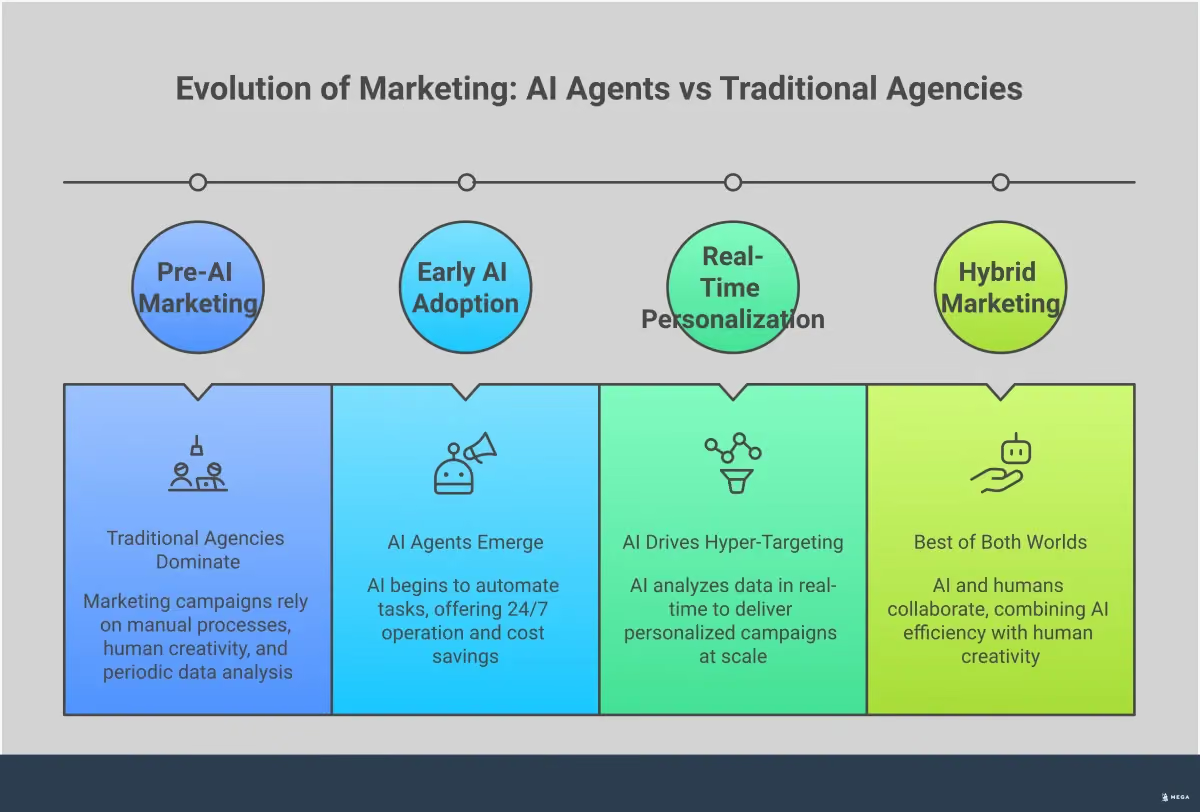
Artificial intelligence is reshaping the digital marketing landscape from the ground up. It’s moving beyond simple tools to become a strategic partner, capable of executing complex campaigns autonomously. For small businesses, this shift opens up opportunities that were once only accessible through expensive agency retainers. AI handles the heavy lifting, from initial research to ongoing optimization, making high-level marketing more efficient and accessible.
Automating tasks and optimization
AI excels at automating the repetitive, time-consuming tasks that form the foundation of any marketing strategy. Instead of spending hours on keyword research, content drafting, or technical site audits, you can deploy an AI agent to handle it all. Generative AI in SEO is transforming the field by streamlining content creation and identifying the best optimization opportunities automatically. This means your website can get fresh, relevant content and technical fixes without you needing to become an expert. It frees you up to focus on the bigger picture of your business, knowing the essential marketing groundwork is consistently being done.
Deeper data analysis
One of AI’s biggest strengths is its ability to analyze massive datasets and identify patterns that would be impossible for a human to spot. This capability turns marketing from a guessing game into a data-driven science. AI tools can process market trends, competitor performance, and customer behavior to inform your content strategy and predict what will resonate next. This level of predictive analytics allows your business to be proactive rather than reactive, creating campaigns that are aligned with emerging trends before they even hit the mainstream. You get the insights of a data science team without the overhead.
Real-time performance adjustments
The digital market moves fast, and AI provides the agility to keep up. Unlike a traditional model where you might wait weeks for a performance report, AI makes instant adjustments based on live data. If a paid ad campaign is underperforming, an AI agent can automatically pause it and reallocate the budget to a more successful one. This real-time optimization ensures your marketing spend is always working as efficiently as possible. Similarly, an AI can update existing blog posts to improve click-through rates, constantly refining your assets for maximum impact.
Common challenges of switching to AI marketing
Adopting any new technology involves a period of adjustment, and switching to AI for your marketing is no different. While modern platforms are designed to be intuitive, it’s helpful to understand the potential hurdles so you can plan for a smooth transition. These challenges aren't roadblocks but rather signposts on the path to a more efficient marketing strategy. Knowing what to expect can help you move from a traditional approach to an automated one with confidence.
The main areas to consider are getting the system set up with the right data, giving your team time to adapt to a new way of working, and understanding the role you play in guiding the AI. Let's break down what each of these involves.
Implementation and data needs
AI-powered marketing runs on data. For an AI agent to make smart decisions about your SEO or ad campaigns, it needs access to clean, accurate information. If your customer data is disorganized or your website analytics are incomplete, the AI’s performance might be limited at first. Before you begin, it’s a good idea to ensure your foundational data sources, like Google Analytics, are set up correctly. The good news is that platforms like MEGA AI are built to integrate directly with the tools you already use, which simplifies the technical setup and helps the system access the data it needs to start working effectively.
Team learning curve
Switching from manual marketing tasks to overseeing an AI agent requires a mental shift. Instead of spending hours on keyword research or campaign setup, your role changes to one of strategy and review. This can feel unfamiliar at first. The challenge isn't just learning a new dashboard; it's learning to trust the automation and focus your energy on bigger-picture goals. This marketing transformation allows you to move from being a task-doer to a strategist, guiding the overall direction while the AI handles the day-to-day execution. It’s a new skill, but one that frees up significant time for growth.
The need for human oversight
AI is a powerful tool, but it’s not a replacement for your business expertise. Effective AI marketing relies on human oversight to set goals, define the brand voice, and make final strategic decisions. You still need to review performance and ensure the AI’s actions align with your objectives. For instance, MEGA AI’s SEO agent offers an Autopilot mode for full automation, but it also provides a transparent task manager where you can review and approve every action. This human-in-the-loop approach ensures you remain in control, using the AI to execute your vision, not replace it. Maintaining this balance is key to getting the best results.
Why businesses are switching to AI marketing automation
The shift from traditional agencies to AI-powered platforms is a strategic move for businesses looking to gain efficiency, control, and a competitive edge. For small businesses and startups, the high costs and slow pace of the agency model can be a major roadblock to growth. AI marketing automation removes these barriers by offering a more direct, scalable, and transparent way to manage digital marketing.
Instead of relying on human-only teams for every task, businesses can leverage AI to handle complex data analysis, content creation, and campaign optimization around the clock. This allows them to move faster, make smarter decisions, and see a clearer return on their investment. The core reasons for this switch come down to three key advantages: significant cost savings, accelerated results, and complete control over the marketing process.
Lower costs than traditional agencies
One of the most compelling reasons businesses make the switch is the dramatic reduction in cost. Traditional agencies have significant overhead—salaries, office space, and administrative costs—which are passed on to clients through hefty monthly retainers. AI marketing automation platforms eliminate much of this manual overhead. By automating tasks like keyword research, content generation, and technical fixes, an AI agent can deliver what might cost an agency thousands a month for a fraction of the price. This makes high-level SEO services and paid ads management accessible to small businesses and startups that previously couldn't afford it.
Faster results and scalability
In digital marketing, speed is a competitive advantage. AI agents operate 24/7, analyzing data and executing tasks in real time without the delays of human workflows. While an agency might take weeks to research, write, and publish a set of articles, an AI can generate high-quality, optimized content at scale in a matter of hours. This ability to harness machine learning for predictive analytics allows for proactive strategy adjustments, not reactive ones. For a growing business, this means you can scale your marketing efforts instantly without needing to hire more people or increase your agency retainer.
Full transparency and control
Many businesses feel left in the dark by traditional agencies, receiving monthly reports without seeing the day-to-day work. AI marketing platforms change this dynamic by offering complete visibility into every task. You can see exactly what your AI agent is working on, from fixing a technical SEO issue to launching a new ad creative. Platforms like MEGA AI even offer an "Autopilot" mode for full automation, while still giving you the power to review and approve every action. This level of control ensures the strategy always aligns with your business goals and gives you the confidence that your marketing budget is being put to effective use.
AI agents vs. traditional marketing agencies
Choosing between an AI platform and a traditional agency comes down to how you want to manage your marketing efforts, what you can afford, and how much control you want. Both can deliver results, but they operate on fundamentally different models. An agency provides human expertise and strategic oversight, while an AI agent offers autonomous execution and data-driven optimization at a fraction of the cost. For small businesses, this distinction is critical.
An AI-powered platform like MEGA AI is designed to act as a replacement for a traditional team, handling everything from strategy to execution. It occupies a unique space between expensive, full-service agencies and complex DIY tools that require a lot of hands-on time. The right choice depends on your specific business needs, budget, and long-term growth goals.
Service and workflow
A traditional agency workflow is built on human communication. It involves kickoff meetings, weekly check-ins, and monthly reports. Strategy is developed through collaborative brainstorming, and execution happens on the agency’s timeline. While you get dedicated human experts, this process can be slow, and you often have limited visibility into the day-to-day tasks being completed.
AI agents operate differently. Instead of waiting for a report, you get a real-time dashboard showing exactly what tasks are in progress. Platforms like MEGA AI use an AI-powered task management system that plans and executes work autonomously. You can set it to "Autopilot Mode" for fully hands-off management or review and approve tasks manually. This workflow provides complete transparency and allows for much faster execution, as the AI can analyze data and make adjustments instantly.
Pricing and value
The most significant difference for many small businesses is the cost. Traditional agencies typically charge a monthly retainer that can range from $5,000 to over $20,000. This price covers the salaries of their expert team, overhead, and profit margins. While you get a dedicated team, the high cost can be a major barrier for startups and local businesses.
AI marketing platforms operate on a software-as-a-service (SaaS) model, making them far more affordable. For example, MEGA AI offers plans that are 60-85% lower than the cost of a typical agency. The value comes from efficiency. An AI agent can perform the work of an entire marketing team—keyword research, content creation, technical fixes, and ad optimization—without the associated headcount. This allows you to access what the company calls “$20,000/month of agency value” at a much more accessible price point.
Required skills and expertise
Working with an agency requires you to be a good client. You need to understand their reports, provide clear feedback, and hold them accountable for results. While you don't do the work yourself, you still need a solid grasp of marketing principles to manage the relationship effectively.
On the other hand, a common misconception is that AI platforms require deep technical expertise. While some AI tools are complex, platforms like MEGA AI are built for accessibility. The system is designed to be an autonomous agent that you direct, not a complicated tool you have to operate. You can add tasks by sending an email, and the AI handles the rest. This model removes the need for you to become an SEO or paid ads expert, allowing you to focus on your business while the AI manages your growth. You can book a demo to see how the platform simplifies these complex marketing functions.
How to choose: Agency vs. AI
Making the right choice between a traditional agency and an AI-powered platform comes down to your specific business goals, budget, and how you prefer to work. Both paths can lead to growth, but they offer different experiences and trade-offs. Let's break down how to decide what's best for you.
Assess your needs and budget
First, consider the financial investment. Traditional marketing agencies often work on a monthly retainer, which can cost anywhere from $5,000 to $20,000 per month. This fee covers their team's time, expertise, and overhead. For many small and local businesses, this is a significant expense. AI-powered platforms offer a more predictable and affordable model. For example, MEGA AI provides full-service SEO and paid ads management at a fraction of that cost. Before making a decision, map out your marketing budget and review the platform's pricing to see what you can realistically allocate each month.
Understand the trade-offs
Agencies provide a dedicated human team for strategy and execution. This can be valuable if you need extensive hand-holding or operate in a field where personal relationships are key. The trade-off is often slower execution and less transparency into daily tasks. AI-powered tools offer a different value proposition. They use data to make decisions and can execute hundreds of tasks with incredible speed and efficiency. This approach to AI-powered SEO offers real-time adaptability that traditional methods can struggle to match. The choice comes down to whether you value a human-led strategic partnership more than autonomous, high-speed execution.
Choose the right path for your goals
The best strategy often combines human insight with AI efficiency. For many small businesses, this means using an AI agent to handle the heavy lifting—like content creation, technical fixes, and ad optimization—while you focus on high-level strategy and customer relationships. If you’re a local business, you can let an AI agent manage your online presence while you build community trust offline. Ultimately, if your goal is to scale quickly and efficiently without a large budget, an AI platform is a powerful choice. To see how it works in practice, you can book a demo and explore the capabilities firsthand.