
For many small business owners, running paid ad campaigns feels like a complex, full-time job. The strategy behind those ads, sem search engine marketing, is incredibly powerful for driving immediate traffic, but managing it can be overwhelming. It’s a direct way to get in front of customers, but the constant bidding and optimization require expertise. At MEGA AI, our AI-powered growth agent, the Ads Agent, autonomously handles your campaigns so you can focus on your business. In this guide, we’ll cover the fundamentals of SEM, giving you the foundational knowledge to understand how a well-run paid search strategy can deliver powerful results.
Key Takeaways
- Prioritize SEM for immediate traffic: Use paid search to get in front of customers right away. It’s the fastest way to drive targeted visitors to your site, especially while your long-term SEO strategy is still building momentum.
- Make relevance your competitive advantage: Search engines reward ads that closely match user intent. By aligning your keywords, ad copy, and landing page, you can achieve better ad positions and lower costs, even against competitors with larger budgets.
- Connect your ad spend to business results: Set up conversion tracking from day one to measure what matters—leads, sales, or calls. Use this data to continuously optimize your campaigns and ensure every dollar you spend contributes directly to your goals.
What is Search Engine Marketing (SEM)?
Search Engine Marketing, or SEM, is a digital marketing strategy that increases a website’s visibility in search engine results pages (SERPs) through paid advertising. Think about the last time you searched for something on Google. The listings at the very top, often marked with an “Ad” or “Sponsored” label, are the result of SEM. Businesses pay to have their websites appear for specific search queries, putting them directly in front of potential customers who are actively looking for their products or services. These ads can take many forms, from simple text-based ads to more visual product listings, also known as Shopping ads.
This approach is incredibly powerful for small and local businesses that need to connect with a ready-to-buy audience quickly. Unlike organic search strategies that can take months to show results, a well-run SEM campaign can start driving traffic almost immediately. It’s a direct way to compete for attention and capture demand at the most critical point in the customer journey. At Gomega, our AI-powered growth agent autonomously plans, launches, and optimizes your paid advertising campaigns, handling all the complexities so you can focus on your business. We manage everything from keyword bidding to ad creation, ensuring your message reaches the right people at the right time.
The Core Components of SEM
At its heart, SEM revolves around a few key components that work together. The most common model is Pay-Per-Click (PPC), where you bid on keywords and pay the search engine a small fee each time someone clicks your ad. This process involves keyword research to find the terms your audience is using, bidding on those terms in an auction-style system, and creating compelling ad copy that encourages clicks. Another critical piece is audience targeting, which allows you to show your ads to specific demographics, locations, and interest groups, ensuring your budget is spent on reaching the most relevant people.
SEM’s Role in Your Marketing Plan
SEM is not a standalone tactic; it’s a vital part of a comprehensive marketing plan. It works best when used alongside Search Engine Optimization (SEO), which focuses on earning unpaid, organic traffic. While SEO builds your brand’s long-term authority and credibility, SEM provides immediate visibility and traffic. This combination allows you to dominate the search results page, appearing in both the paid and organic sections. SEM is perfect for generating leads quickly, promoting special offers, or testing new product ideas, as it helps build brand awareness and drives highly motivated visitors directly to your website.
How Does SEM Work?
Search engine marketing operates like a real-time auction that happens every time someone types a query into a search bar. When a user searches for something relevant to your business, search engines instantly run an auction to decide which ads to show and in what order. This process happens billions of times a day.
To participate, you tell the search engine which keywords you want to target and how much you’re willing to pay for a click on your ad. But it’s not just about having the highest bid. Search engines also want to show users the most relevant and helpful ads. This is where factors like ad quality and landing page experience come into play. Understanding these core components helps you create campaigns that are both cost-effective and successful.
Understanding the Ad Auction and Bidding
At its core, SEM runs on an ad auction system. When a user searches for a keyword you’re targeting, your ad enters an auction with other advertisers bidding on that same keyword. You set a maximum bid, which is the most you’re willing to pay for a single click. However, you often pay less than your maximum bid—just enough to outrank the advertiser below you. This bidding process is automated, but your strategy determines its effectiveness. You can choose different bidding strategies based on your goals, whether that’s driving clicks, impressions, or conversions.
The Importance of Ad Rank and Quality Score
Your ad’s position isn’t determined by your bid alone. Search engines use a metric called Ad Rank to figure out where your ad appears on the page. Ad Rank is calculated using your maximum bid and your Quality Score. Your Quality Score is a rating of the quality and relevance of your keywords, ad copy, and landing page. A higher Quality Score can lead to better ad positions and lower costs per click. This means a small business with a highly relevant ad can potentially outrank a larger company with a bigger budget but lower relevance. Focusing on quality is key to making your budget go further.
Structuring Your Campaigns for Success
A well-organized account is the foundation of a successful SEM strategy. Your campaigns should be structured logically, often mirroring the structure of your website or business offerings. For example, a local bakery might have separate campaigns for “Wedding Cakes,” “Birthday Cakes,” and “Daily Pastries.” Within each campaign, you create ad groups that contain tightly themed keywords and corresponding ads. This campaign structure ensures your ads are highly relevant to the user’s search query, which improves your Quality Score and helps you manage your budget more effectively.
SEM vs. SEO: What’s the Difference?
Search engine marketing (SEM) and search engine optimization (SEO) both aim to get your business found on search engines like Google, but they go about it in very different ways. While SEM is technically a broad term that includes SEO, most marketers use “SEM” to refer specifically to paid advertising and “SEO” to describe organic, or unpaid, strategies.
Think of it this way: SEM is the paid route to visibility, while SEO is the organic path. One gets you immediate results by paying for placement, and the other builds long-term value and trust. Understanding how they differ helps you create a balanced strategy that drives both immediate traffic and sustainable growth. At MEGA AI, our AI agents handle both sides of this equation: the Ads Agent manages your Paid Ads, and the SEO Agent builds your organic presence with SEO.
Paid vs. Organic Results
When you search for something on Google, you see two types of results. The listings at the very top, marked with a “Sponsored” tag, are paid ads. This is the domain of SEM. Businesses bid on keywords to have their ads appear here, paying each time someone clicks. It’s a direct way to get in front of potential customers right when they’re searching for what you offer.
Below the ads, you’ll find the organic results. These are the websites that Google’s algorithm has determined are the most relevant and authoritative answers to the search query. Earning a spot here is the goal of SEO. It involves optimizing your website, creating high-quality content, and building credibility over time. You don’t pay for clicks, but you invest in the long-term health of your site.
Comparing Timelines and Costs
The most significant difference between SEM and SEO comes down to speed and investment. SEM delivers immediate visibility. As soon as your ad campaign is approved, you can start appearing at the top of search results and driving traffic to your site. The cost is direct and ongoing—you pay for every click your ad receives. When you stop paying, your ads disappear.
SEO is a long-term strategy. It can take several months of consistent effort to see your site climb the rankings for competitive keywords. The investment is in resources like content creation, technical site improvements, and building backlinks. While you don’t pay for clicks, the upfront work is significant. The payoff is a sustainable source of traffic that continues to deliver value long after the initial investment.
How to Choose the Right Strategy for You
You don’t have to choose between SEM and SEO. The most effective approach for most small businesses is to use both in tandem. SEM is perfect for generating immediate leads, testing new product offers, and gathering valuable keyword data quickly. You can use it to drive traffic while your long-term SEO efforts gain momentum.
Use SEO to build your brand’s authority and create a lasting digital asset. A strong organic presence builds trust with customers and becomes a reliable source of traffic that isn’t dependent on a daily ad budget. The data from your SEM campaigns can even inform your SEO strategy by revealing which keywords convert best. A coordinated plan ensures you capture demand now while building for the future.
Why Use SEM for Your Small Business?
Search engine marketing is a powerful tool for small businesses. It helps you compete with larger players by placing your brand directly in front of customers at the exact moment they’re searching for what you offer. Unlike strategies that take months to show results, SEM delivers immediate impact. It gives you complete control over who sees your ads, how much you spend, and what message you deliver. For a small business, this level of control and speed is critical for growth.
SEM allows you to test offers, find new customers, and generate revenue quickly, all while gathering valuable data about your market. You can start with a small budget, see what works, and scale your investment based on real performance data. This flexibility is perfect for businesses that need to be nimble and make every dollar count. Instead of waiting for organic rankings to build, you can start driving traffic and sales right away. An AI-powered agent like the Ads Agent can manage your paid advertising campaigns, handling everything from keyword bidding to ad creation, so you can get in front of the right audience from day one without a steep learning curve.
Gain Immediate Visibility and Traffic
While building your organic presence through SEO is a vital long-term goal, it doesn’t happen overnight. SEM offers a solution for the here and now. As soon as your ad campaign is approved and live, your business can appear at the top of search engine results pages (SERPs). This provides an immediate stream of traffic from potential customers actively searching for your products or services. For a new business launch, a seasonal promotion, or any situation where you need to generate leads quickly, the speed of SEM is a significant advantage. It bridges the gap while your long-term SEO efforts gain momentum.
Target Your Ideal Customers with Precision
One of the biggest challenges for small businesses is making sure their marketing budget reaches the right people. SEM excels at this by offering precise targeting options. You can show your ads to users based on the specific keywords they type, their geographic location, their age, and even their past browsing behavior. For example, a local bakery can target ads to people within a five-mile radius searching for “custom birthday cakes.” This level of precision ensures you aren’t wasting money on an audience that isn’t interested. You can reach customers who have a clear intent to buy, leading to more qualified traffic and higher conversion rates.
Measure Your ROI and Track Performance
With many marketing channels, it can be difficult to know if your investment is actually paying off. SEM is different. Every aspect of your campaign is trackable, giving you clear insights into your return on investment (ROI). You can monitor key metrics like impressions, clicks, click-through rate (CTR), and conversions. This data shows you exactly which ads and keywords are driving sales and which ones need improvement. This transparent performance tracking allows you to make informed decisions, optimize your ad spend for better results, and confidently calculate your marketing ROI. It removes the guesswork and puts you in control of your growth.
Common SEM Mistakes to Avoid
Search engine marketing delivers fast results, but a few common missteps can quickly drain your budget. Getting your campaigns right from the start means avoiding these pitfalls. By focusing on a solid keyword strategy, a seamless user experience, smart budget management, and consistent tracking, you can make sure your investment works for you.
Choosing the Wrong Keywords
Your campaign hinges on targeting the right keywords. A common mistake is choosing terms that are too broad or don’t match customer intent. For example, a local bakery bidding on “cake” faces huge competition. Focusing on “custom birthday cakes in Brooklyn” attracts a more qualified audience. It’s also critical to use negative keywords to filter out irrelevant searches. A strong keyword strategy is the foundation of any successful campaign, ensuring you reach people ready to buy.
Neglecting Your Landing Page
Getting the click is only half the battle. If your landing page is confusing, slow, or doesn’t match the ad’s promise, visitors will leave. This wastes your ad spend and loses a potential customer. Your landing page must have a clear connection to your ad copy and provide a simple user experience. Make sure your headline is compelling, your call-to-action is obvious, and the page is optimized for mobile. The goal is to make it easy for visitors to take the next step.
Mismanaging Your Ad Budget
Setting a budget and hoping for the best leads to overspending. Without active management, you can burn through funds on underperforming keywords or ads. It’s important to monitor your bids and adjust them based on what’s working, allocating more budget to campaigns that drive conversions. This is where automation helps. An AI-powered tool like MEGA AI’s Paid Ads Agent can autonomously reallocate your budget in real time, ensuring every dollar is spent effectively.
Forgetting to Track Performance
If you aren’t tracking your results, you’re flying blind. You need data to understand what’s working and where to make improvements. The most critical mistake is failing to set up conversion tracking. Without it, you see clicks, but you won’t know which ads are generating leads or sales. Make sure you have conversion tracking properly installed from day one. This allows you to measure key metrics and optimize your campaigns for profitability, not just clicks.
The Anatomy of a Successful SEM Campaign
A successful SEM campaign is like a well-oiled machine with several moving parts working together. When you get the formula right, you can attract high-quality traffic and generate leads almost immediately. But if one component is off, the entire system can stall. It’s not just about picking a few keywords and throwing money at them. You need a thoughtful approach that covers everything from the initial search to the final click. This means aligning what a user is looking for with an ad that speaks to their need, and a landing page that fulfills the ad’s promise.
The four core pillars of any strong SEM campaign are keyword selection, ad copy, landing page experience, and budget management. Each one builds on the last to create a seamless path for your potential customers. Think of it this way: your keywords get you in front of the right people, your ad copy convinces them to click, your landing page persuades them to act, and your budget strategy ensures you’re doing it all profitably. Getting these four elements right is the difference between an ad campaign that drains your budget and one that becomes a reliable source of new business. We’ll break down each of these components so you can build a campaign that delivers results.
Researching and Selecting Keywords
Your entire campaign hinges on choosing the right keywords. These are the words and phrases your ideal customers type into search engines when they’re looking for what you offer. The goal is to find terms with high purchase intent, meaning the searcher is ready to make a decision. For example, a local bakery would have more success with “custom birthday cakes near me” than with “how to bake a cake.” The first shows a clear need, while the second is just looking for information. You can use tools like Google Keyword Planner to start, but the real work is in understanding your customer’s mindset. A strong keyword strategy focuses on relevance and intent to attract qualified buyers, not just casual browsers.
Writing and Testing Ad Copy
Once you have your keywords, you need compelling ad copy to grab the searcher’s attention. Your headline and description should directly address the user’s search query and offer a clear solution. Make it engaging, relevant, and specific. Mention what makes you unique, whether it’s free shipping, a special discount, or 24/7 service. It’s also important to continuously test different versions of your ads. This practice, known as A/B testing, helps you discover which messages resonate most with your audience. An AI-powered tool like MEGA AI’s Ads Agent can create ad copy and test hundreds of variations automatically, finding the top performers without the manual effort.
Optimizing Your Landing Page
The click is just the beginning. After a user clicks your ad, they arrive on your landing page, and this is where the conversion happens. Your landing page must deliver on the promise made in your ad. If your ad promotes a 20% discount on running shoes, the landing page should prominently feature that offer and make it easy to purchase the shoes. This consistency is crucial for building trust and improving your Ad Rank. A clean design, clear call-to-action, and mobile-friendly layout are all essential for a high-performing landing page. Make the experience as smooth as possible to guide visitors toward taking the desired action.
Managing Your Budget and Bidding Strategy
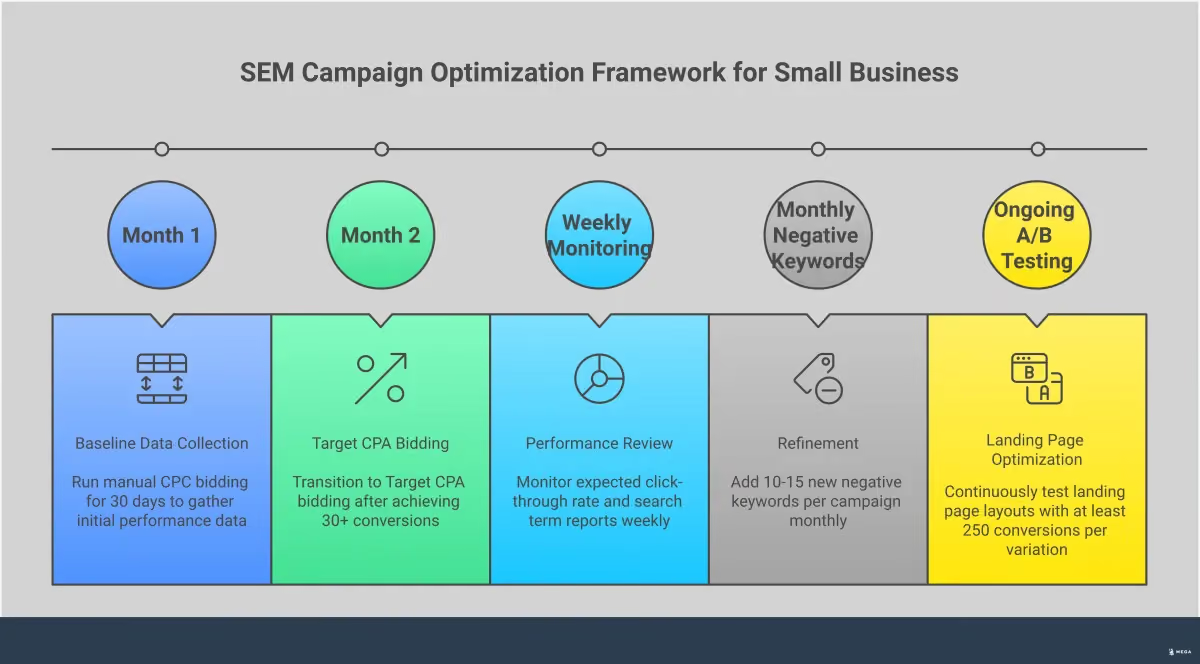
Effectively managing your budget is what makes your SEM campaign sustainable. You need to decide how much you’re willing to pay for each click (your bid) and how much you want to spend daily. For small businesses, starting with a manual bidding strategy can be a good way to learn the ropes. However, as you scale, automated bidding can save time and improve performance by adjusting your bids in real-time based on conversion data. This is where an AI agent shines. The Ads Agent’s Autopilot mode can manage your bids and reallocate your budget across campaigns to ensure every dollar is working as hard as possible to achieve your goals.
Choosing the Right SEM Platform
When you think of search ads, Google is probably the first name that comes to mind. While it’s the biggest player, it isn’t the only one. The right platform for your business depends on where your target audience spends their time and what your campaign goals are. For many small businesses, a multi-platform approach yields the best results by capturing different segments of the market.
Understanding the landscape is the first step. Google Ads offers unmatched reach, while other platforms like Microsoft Advertising can provide access to a different demographic, often at a lower cost. Then there are social media ad platforms that can complement your search strategy. The key is to choose the platforms that align with your audience and budget, and have a solid plan for managing your campaigns across them.
Getting to Know Google Ads
Google Ads is the dominant platform in search engine marketing, and for good reason. It allows your ads to appear across Google’s massive network, including search results, YouTube, Gmail, and millions of other partner websites. When a user searches for a keyword you’re targeting, your ad has a chance to show up. You then pay when someone clicks on that ad, which is the basis of the pay-per-click (PPC) model. Because of its enormous user base, Google Ads is often the starting point for businesses looking to gain immediate visibility and drive traffic.
Exploring Microsoft Advertising and Other Platforms
While Google holds the largest market share, it’s smart to also consider Microsoft Advertising. This platform serves ads on the Bing, Yahoo, and DuckDuckGo search engines. The main advantage here is often less competition, which can lead to lower ad costs and a better ad position for your budget. For small businesses, this can be a cost-effective way to reach a slightly different, often older demographic. By advertising on both Google and Microsoft, you can cover nearly the entire US search market. Beyond search, platforms like Meta and LinkedIn offer powerful targeting for different kinds of campaigns.
How to Manage Multi-Platform Campaigns
Running ads on Google, Microsoft, and social media at the same time can get complicated. Each platform has its own interface, rules, and best practices. Juggling budgets, ad creative, and performance tracking across all of them is a significant time commitment. This is where automation becomes essential. An AI-powered tool can manage your campaigns across every platform from one place. For example, MEGA AI’s Paid Ads agent, the Ads Agent, can launch, manage, and optimize your ads on Google, Meta, LinkedIn, and more, automatically shifting your budget to the best-performing channels.
How to Build a Winning SEM Strategy
A successful SEM campaign doesn’t happen by accident. It starts with a clear plan that connects your business objectives to your advertising efforts. While it might sound complex, a winning strategy boils down to three core steps: defining your goals, knowing your audience, and using data to make smart adjustments. This framework helps you spend your budget wisely and ensures your ads are working as hard as you are.
Think of your strategy as a roadmap. Without it, you’re just spending money on ads and hoping for the best. With a plan, every keyword you choose, every ad you write, and every dollar you bid has a purpose. For small businesses, where every resource counts, this strategic approach is what separates a costly experiment from a profitable marketing channel. It ensures your message reaches the right people at the moment they’re searching for what you offer.
Set Clear Campaign Goals and KPIs
Before you spend a single dollar, you need to decide what you want to achieve. What action do you want someone to take after clicking your ad? Your answer defines your campaign goal. For a local service business, the goal might be getting more phone calls. For an ecommerce store, it’s likely driving online sales. Other common goals include generating leads through a contact form or increasing newsletter sign-ups.
Once you have a goal, you need a way to measure it. That’s where Key Performance Indicators (KPIs) come in. KPIs are the specific metrics you track to see if you’re hitting your target. For example, if your goal is to generate leads, your KPIs could be the number of form submissions and your cost per submission. Setting clear marketing objectives and corresponding KPIs gives you a benchmark for success and helps you justify your ad spend.
Research and Define Your Target Audience
One of the biggest advantages of SEM is its precision. You can show ads to specific groups of people based on their location, interests, and what they search for. To do this effectively, you need a deep understanding of your ideal customer. Who are they? Where do they live? What problems are they trying to solve when they turn to a search engine?
For local businesses, this is especially important. You want to ensure your ads reach potential customers in your service area, not on the other side of the country. By creating a detailed profile of your target audience, you can tailor your keywords and ad copy to resonate with their needs. This focus makes your campaigns more relevant, improves your ad performance, and prevents you from wasting money on clicks from people who are unlikely to become customers.
Track Performance and Optimize Your Campaigns
SEM is not a “set it and forget it” channel. Launching your campaign is just the beginning. The real work lies in monitoring your results and making data-driven adjustments. Without tracking your performance, you won’t know which keywords are driving sales, which ads are falling flat, or how to improve your campaigns over time. Regularly reviewing your KPIs helps you identify what’s working and what isn’t.
Based on what the data tells you, you can continuously optimize your campaigns. This might involve pausing low-performing keywords, testing new ad copy, or adjusting your bids. For many small business owners, this ongoing management can be time-consuming. This is where automation can help. MEGA AI’s Paid Ads agent, the Ads Agent, can autonomously manage and optimize your campaigns, reallocating your budget in real time to ensure your money is always working toward your goals.
Ready to Start Your First SEM Campaign?
Getting your first search engine marketing campaign off the ground involves a few key decisions. You’ll need to think about your budget, your resources, and the first concrete steps to take. Breaking it down makes the process much more manageable.
Planning Your Budget
For small businesses, every marketing dollar counts. The main challenge is finding the right balance; spending too little means missing opportunities, while spending too much can waste resources. A good starting point is to define what a new customer is worth to your business and work backward from there.
Begin with a modest, test-and-learn budget that you’re comfortable with. This allows you to gather data on what works without a major financial commitment. As you see positive results and a clear return on investment, you can scale your spending with confidence. A well-planned marketing budget focuses on performance, ensuring your ad spend directly contributes to your growth goals.
Deciding Between DIY and Professional Help
Managing an SEM campaign yourself can be rewarding, but it requires significant time and expertise. Many business owners find they lack the hours for deep keyword research or the knowledge to optimize bids effectively. This is where you weigh your options: Do you have the time to learn and manage it in-house, or is it better to hire an agency or freelancer?
There’s also a third path. AI-powered platforms can act as a full-service solution, handling the complex tasks for you. For example, MEGA AI’s Paid Ads agent, the Ads Agent, autonomously plans, launches, and optimizes your campaigns across platforms like Google and Meta. This approach gives you professional-grade management without the traditional agency overhead, letting you focus on running your business.
Your Next Steps to Get Started
Once you have a budget and have decided on your management approach, you can take the first practical steps. The goal is to build a solid foundation for a campaign that gets your business in front of the right audience.
Here’s what to focus on first:
- Define your goals: What do you want to achieve? This could be generating leads, driving online sales, or increasing phone calls to your local business.
- Identify your audience: Who are you trying to reach? Get specific about their demographics, interests, and what problems they’re trying to solve.
- Conduct keyword research: Brainstorm the search terms your potential customers are using.
- Set up your ad account: Create an account on your chosen platform, like Google Ads, and link it to your website.
With these elements in place, you’ll be ready to book a demo and see how an AI agent can bring your strategy to life.