
Your content strategy needs an update. The reason is the rapid integration of AI into search engines, which changes how your audience finds you. Instead of just scanning a list of links, users are getting direct, synthesized answers to their questions. To remain visible, your content must be structured to become a source for these AI-generated responses. This requires a strategic shift from focusing on keywords to satisfying user intent, from ranking on a page to being cited in an answer, and from manual optimization to leveraging AI-powered tools. This article provides a practical roadmap for adapting your content creation process for this new reality.
Key Takeaways
- Prioritize content that answers questions directly: AI search engines look for comprehensive, authoritative information to build their responses, so aim to be the definitive source on your topic.
- Structure your content for AI interpretation: Use technical SEO like schema markup and clear headings to help AI understand your articles. This makes it easier for search engines to pull your information for direct answers.
- Use AI as a strategic partner: Let AI tools handle repetitive tasks like research and content updates. This frees you to focus on high-level strategy and adding the unique expertise that builds brand authority.
What is SearchGPT and How Does It Work?
Think of SearchGPT as a new kind of search engine from OpenAI, the same team behind ChatGPT. Instead of presenting a list of links for you to sort through, it uses artificial intelligence to scan the web and deliver a direct, summarized answer to your question. This tool combines real-time web data with its advanced AI, aiming to make your search experience more efficient and conversational. You can ask it a question in natural language, and it provides a concise response pulled from multiple sources.
This signifies a major shift from the traditional search we’ve all grown accustomed to. For users, it means getting information faster. For businesses and content creators, it changes the rules of the game. The focus is no longer just on ranking for specific keywords but on becoming a trusted, authoritative source that an AI engine will reference. This new landscape requires a different approach to SEO, one that prioritizes high-quality, comprehensive content that an AI can easily understand and present to users.
A key feature of SearchGPT is that it includes links to its sources, allowing users to dig deeper into the original content. This is a critical detail for publishers. OpenAI has stated its initial strategy is to support publishers by driving traffic to their sites, rather than immediately introducing a new ad-revenue system. This evolving relationship between AI search and content creators is what we'll be watching closely, as it will shape the future of how information is discovered and consumed online.
How AI is Changing Search
The familiar list of blue links is evolving. AI is transforming search from a simple query-and-response system into a dynamic, conversational experience. Instead of just pointing you to potential answers, AI-powered search engines like SearchGPT aim to deliver direct, comprehensive answers synthesized from real-time web data. This fundamentally changes how users find information and how your content gets discovered.
This shift means traditional SEO practices are also being reshaped. The focus is moving away from simply ranking for keywords and toward creating content that directly satisfies user needs. AI-driven search rewards comprehensive, valuable articles that provide clear, authoritative answers. To stay competitive, your content strategy must prioritize quality and relevance above all else. You can use AI tools for SEO to help re-optimize your existing articles to meet these new standards and identify gaps in your content.
To succeed in this new landscape, you need to help AI understand your content. Implementing structured data, like schema markup, gives search engines a clear roadmap of what your page is about. This helps them pull your information for rich snippets and direct answers, which can improve your visibility and engagement. The goal of these new search models is not to replace publishers but to drive more engaged, incremental traffic to them by highlighting the most useful information. This makes the relationship between search engines and content creators more collaborative than ever.
What Publisher Partnerships Mean for Content
As AI search engines evolve, the relationship between the technology and the content creators who fuel it becomes the central story. These are not just one-way streets where AI scrapes information. Instead, we're seeing the formation of complex partnerships that will dictate how content is discovered, credited, and monetized. For publishers, marketers, and business owners, understanding this dynamic is key to building a future-proof content strategy.
The success of AI search depends on access to high-quality, reliable information, which publishers provide. In return, publishers need visibility and traffic to sustain their businesses. This mutual dependency is shaping a new digital ecosystem where the rules of engagement are being written in real time. The focus is shifting toward collaboration, defining how traffic flows, who has control over visibility, and what new financial models might emerge. Staying ahead means preparing for these changes with adaptable SEO strategies and the right tools.
How publishers can gain more traffic
The biggest question for any publisher is whether AI search will replace them or send them valuable traffic. Early indications suggest the goal is the latter. For instance, OpenAI's approach with its SearchGPT prototype is reportedly designed to drive incremental traffic to publishers. The focus is on creating a system where users are encouraged to click through to the original source for deeper information.
This model positions AI search as a discovery layer, not a final destination. For your content to get that click, it needs to be compelling enough to make users want more. This means your headlines, summaries, and featured snippets must be optimized for engagement. The AI's summary might answer the "what," but your article should be the definitive source for the "how" and "why," creating a clear path for user engagement and site visits.
Who controls content visibility?
A major concern for creators is losing control over how their content is used. Fortunately, publishers are not without agency in this new landscape. You retain a significant degree of control over whether your content appears in AI search results. This is typically managed by giving or denying access to the web crawlers or search bots that these AI models use to gather information.
By using directives in a robots.txt file, you can specify which bots are allowed to crawl your site and which are not. This gives you leverage and allows you to opt-out if the terms of the partnership are not favorable. This control ensures that publishers can protect their intellectual property and make strategic decisions about where their content appears, making them active participants in the AI search ecosystem rather than passive bystanders.
Understanding revenue-sharing models
While driving traffic is the immediate focus, the conversation is already expanding to include direct financial compensation. The potential development of a SearchGPT Console and new revenue-sharing models for publishers could reshape the industry's financial underpinnings. This wouldn't be a new concept; other platforms have successfully built ecosystems around this idea.
For example, YouTube's Partner Program shares a significant portion of ad revenue with its creators, providing a sustainable income stream that incentivizes high-quality video production. A similar model for AI search could involve sharing revenue from ads displayed alongside AI-generated answers that are based on a publisher's content. This would create a direct financial incentive for creators to produce the authoritative, in-depth content that AI models need to function effectively.
How Will SearchGPT Reshape SEO?
The arrival of AI-powered search engines like SearchGPT marks a significant shift in how people find information online. Instead of simply presenting a list of links, these platforms synthesize information from multiple sources to provide a direct, conversational answer. For marketers and content creators, this changes the entire game. The strategies that worked for traditional search engines need a serious update.
This isn't about abandoning SEO but evolving it. The core goal remains the same: connecting your audience with valuable information. However, the how is different. Your content is no longer just competing for a spot on a results page; it's competing to be included as a trusted source within an AI-generated summary. This requires a renewed focus on clarity, authority, and creating content that is so helpful and well-structured that an AI can easily understand and reference it. The new landscape rewards depth and expertise over keyword-stuffing and technical tricks. It’s a move toward a more authentic and user-centric approach to search.
Why high-quality content matters more than ever
In an AI-driven search world, the quality of your content is non-negotiable. AI models are designed to find and present the most helpful, comprehensive information available. According to Forbes, "GPT-driven search rewards comprehensive, valuable content that directly addresses user needs." This means thin, surface-level articles that are written just to rank for a keyword will become obsolete. Your content must provide genuine value, answer questions thoroughly, and demonstrate true expertise on the subject. The focus is shifting from quantity to quality, pushing creators to produce in-depth resources that serve as the definitive answer for a user's query. MEGA AI's SEO tools can help by identifying content gaps and suggesting updates to ensure your articles remain comprehensive and authoritative.
Focus on user intent and semantic search
To succeed with AI search, you have to think beyond individual keywords and focus on the "why" behind every query. Understanding user intent is critical. Are users looking to learn something, make a purchase, or find a specific website? Your content needs to align directly with that goal. This is where semantic search comes in. It’s the ability of a search engine to understand the context and relationships between words, not just their literal definitions. As Forbes notes, "Understanding user intent and leveraging semantic search will be crucial for publishers to ensure their content is discoverable and relevant." Your content strategy must be built around answering the underlying questions your audience is asking, using natural language that reflects how they actually think and speak.
Transitioning from SEO to Generative Engine Optimization (GEO)
The evolution from traditional search to AI-powered answers requires a new mindset and a new acronym: Generative Engine Optimization (GEO). As one industry publication puts it, this shift indicates a move from traditional SEO practices to optimizing for AI-driven search experiences. While SEO focuses on ranking your website in a list of search results, GEO is about optimizing your content to be used as a source for the AI's generated answer. This involves structuring your content with clear headings, using Q&A formats, and providing concise, data-backed information that an AI can easily parse and cite. You can learn more about how to rank in OpenAI's new search engine and start preparing your content for this new reality.
How Smaller Creators Can Compete
The rise of AI-powered search can feel intimidating, especially for smaller creators and businesses competing against brands with massive budgets. But this shift also levels the playing field in some surprising ways. Agility, authenticity, and deep expertise are becoming more valuable than ever. By focusing on your unique strengths, you can carve out a space where you not only survive but thrive.
Overcome resource and visibility challenges
Small businesses often grapple with limited resources, making it tough to compete with the sheer output of larger companies. Instead of trying to match their volume, focus on high-impact strategies that build genuine connections. One effective approach is to pursue local influencer collaborations to strengthen community ties and increase visibility. Partnering with creators who already have the trust of your target audience is a smart way to get your brand in front of the right people without a huge ad spend. This approach builds authentic social proof and helps you stand out in a crowded market.
Address content saturation and algorithm bias
With AI tailoring results based on user history, the fight for organic visibility is becoming more intense. Since generative search models often lack traditional ad slots, strong SEO efforts are absolutely critical. To cut through the noise, you need to move beyond generic content. Focus on creating hyper-specific articles, videos, and resources that answer the detailed questions your audience is asking. This is your chance to become the go-to expert in a narrow field, making your content a valuable asset that AI is more likely to surface for relevant queries.
Stay competitive with these strategies
Implementing the right strategies can significantly affect your visibility in search results. Start by focusing on your local presence. A well-optimized Google Business Profile, complete with up-to-date information and photos, is essential for attracting nearby customers. Another powerful tool is social proof. Actively encouraging customer reviews and testimonials builds trust with both potential buyers and search engines. These authentic endorsements are signals of quality and authority that can give you an edge over competitors who neglect their online reputation.
Use niche expertise to your advantage
You can’t outspend the giants, but you can out-expert them. Your deep knowledge of a specific subject is your greatest competitive advantage. Just as brands partner with micro-influencers to reach highly engaged, specific audiences, you should position your business as a micro-expert. Don’t just sell a product; teach your audience everything about it. This focused expertise helps you build a loyal following and creates content that AI search engines will value for its depth and authority when answering complex user questions. You can book a demo to see how AI tools can help you scale your niche content production.
How to Prioritize and Create Content for AI Search
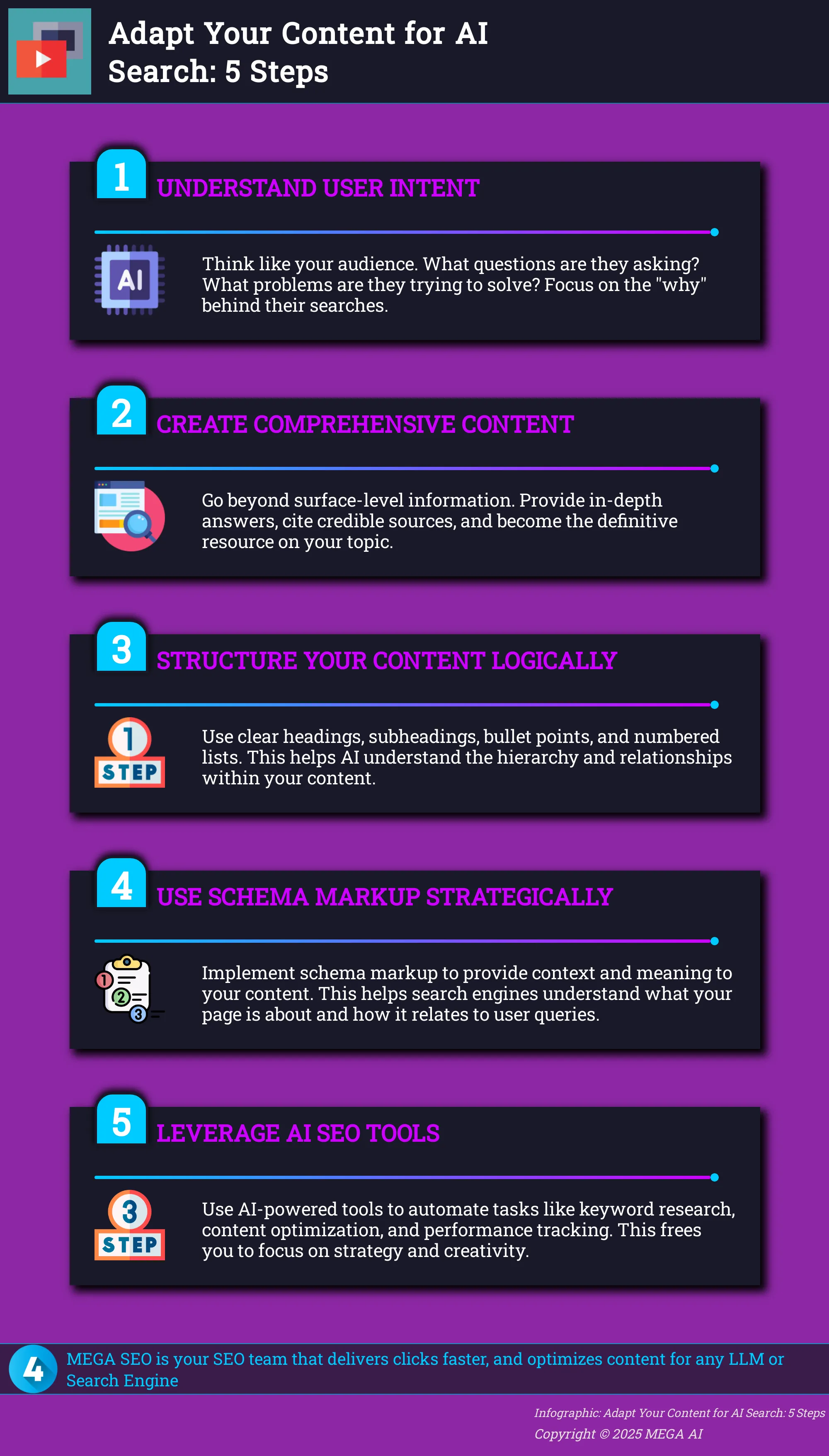
As AI reshapes the search landscape, your content strategy needs to adapt. The core principles of creating valuable content remain, but the way AI engines discover, interpret, and present information requires a more refined approach. It’s no longer just about matching keywords; it’s about satisfying complex, conversational queries with authoritative and comprehensive answers. This means shifting your focus from simply ranking on a results page to becoming a cited source within an AI-generated response.
To succeed, you need to think like both a librarian and a storyteller, organizing information logically while presenting it in a way that resonates with human users and AI algorithms alike. This involves a deeper understanding of user intent, a commitment to quality over quantity, and the strategic use of data to guide your every move. The goal is to create content so useful and well-structured that AI search engines see it as an indispensable resource for answering their users' questions. With the right SEO tools, you can automate much of this process, from identifying topics to optimizing content for this new era.
Find the balance between publishers and niche experts
The rise of AI search creates a new dynamic between large-scale publishers and specialized niche experts. While major publishers may benefit from potential revenue-sharing models and direct partnerships with AI developers, niche creators have a distinct advantage: deep, focused expertise. AI values specificity and authority, which allows smaller players to carve out a space by providing detailed, expert-level answers that broader publications might overlook. The key is to find your unique angle and own it completely, becoming the go-to source for a specific topic. This balance ensures the search ecosystem remains diverse and valuable for users.
Prioritize authority, relevance, and personalization
Users are interacting with search in a more conversational way, asking longer and more detailed questions. This behavior rewards content that is not only relevant but also demonstrates clear authority. Your content must directly address user needs with comprehensive, trustworthy information. To build this authority, focus on creating in-depth articles, citing credible sources, and showcasing your expertise. According to Forbes, this shift makes prioritizing authority and relevance essential for standing out in a crowded digital space and becoming a trusted voice in your field.
Focus on quality, comprehensiveness, and user value
As AI search engines begin to integrate sponsored links and ads directly into generated answers, the line between organic and paid content may blur. In this environment, the most effective way to stand out is to produce content of exceptional quality and comprehensiveness. Your goal should be to provide so much real user value that your content becomes the definitive answer to a user's query. This means going beyond surface-level information to create resources that are genuinely helpful, well-researched, and easy to understand. Content that truly serves the user is more likely to be featured and trusted.
Create data-driven, audience-focused content
Understanding your audience is fundamental to creating content that performs well in AI search. Adopting a data-driven approach allows you to move past guesswork and produce content that aligns with the specific needs and interests of your target users. Analyze search trends, user questions, and engagement metrics to identify the topics that matter most to your audience. This strategy, as noted by Entrepreneur, is accessible to businesses of all sizes and is crucial for enhancing relevance. By focusing on your audience's needs, you create content that is naturally optimized for the conversational queries common in AI search.
Adapt Your SEO Strategy for AI Search
As search engines integrate generative AI, your SEO approach needs to evolve with them. This doesn't mean throwing out everything you know. Instead, it's about refining your focus and doubling down on the strategies that align with how AI models find and present information. The core principles of providing value remain, but the technical execution requires a few adjustments. By adapting your strategy, you can ensure your content remains visible and relevant in this new search landscape.
Focus on user experience and intent
AI-driven search is all about providing direct, comprehensive answers. This means your content must get straight to the point and thoroughly address the user's needs. Think less about keyword density and more about conversational relevance. GPT-driven search rewards valuable content that directly solves a problem or answers a question. A practical way to help AI understand your content is by using structured data, like schema markup, which can help your pages appear in rich snippets with details like FAQs or reviews.
Use AI tools for content optimization
To keep up with AI search, it makes sense to use AI in your own toolkit. While SEO remains essential, the focus is shifting toward optimizing content specifically for AI-driven engines. These platforms need to see that your content is not only relevant but also structured for easy interpretation. AI-powered SEO platforms can automate keyword research and content updates, ensuring your articles stay fresh and competitive. For instance, MEGA AI's SEO tools can analyze and re-optimize your existing content, making sure it aligns with the latest search engine algorithms and user behaviors.
Emphasize local SEO and niche expertise
For small businesses, local SEO is becoming even more critical. AI search aims to provide hyper-personalized results, and that includes location. If you're a local business, strengthening your local signals—like your Google Business Profile and local citations—is a must. This helps you attract nearby customers who are searching with immediate intent. At the same time, establishing yourself as an expert in a specific niche gives you a competitive edge. AI models are designed to find authoritative sources, and deep knowledge in one area is more valuable than shallow knowledge in many.
Build authority and trust in your niche
Authority is the currency of AI search. You can build it by consistently creating high-quality, well-researched content that demonstrates true expertise. Think about collaborating with recognized figures in your field, as even micro-influencers can signal credibility within a specific community. Earning backlinks from reputable websites and ensuring your content is factually accurate are also key components of building E-E-A-T. When an AI model sees that other authoritative sources trust your content, it's more likely to feature it in search results.
What to Know About AI Search Ethics
As AI reshapes how we find information, it also brings up important ethical questions. For publishers, creators, and marketers, understanding these issues is key to building a sustainable strategy. The conversation around AI ethics isn't just academic; it directly impacts content visibility, audience trust, and the fairness of the digital landscape. As we adapt to these new technologies, keeping ethical considerations at the forefront helps ensure the new ecosystem is equitable for creators and provides genuine value to users.
Address bias, fairness, and transparency
AI models learn from the vast amounts of data they are trained on. If that data contains biases, the AI can unintentionally learn and amplify them. This raises critical questions about fairness in AI-generated content. To build trust, we need a commitment to transparency in how these models are trained and what data they use. As a creator, you can advocate for this by supporting platforms that are open about their processes. Understanding that AI bias is a real challenge helps you critically evaluate the tools you use and the content that AI search engines surface, ensuring your own work remains fair and representative.
Why responsible AI development is crucial
The rapid introduction of generative AI into search has significant implications for publishers and content creators. While these tools can provide quick answers, their disruptive potential is massive. This is why responsible AI development is so important. It’s about more than just technical accuracy; it involves creating systems with ethical guardrails to mitigate harm and build user trust. When developers prioritize ethical considerations, they create a more stable and reliable environment for everyone. This focus on responsibility helps ensure that the value creators provide is recognized and that the information ecosystem remains healthy and dependable for users.
Prepare for the next phase of search
The shift to AI-driven search is not a future event—it's happening now. This transition introduces new dynamics in how information is sourced, synthesized, and presented to users. For publishers and marketers, sitting on the sidelines isn't an option. It's essential to proactively adapt to these changes by learning how AI impacts content visibility and user engagement. This means rethinking traditional SEO and focusing on strategies that align with how AI engines evaluate and rank content. By preparing for this next phase of search, you can position your content to thrive in a new environment and continue connecting with your audience effectively.
How the SEO Professional's Role is Changing
As AI reshapes the search landscape, the day-to-day responsibilities of an SEO professional are also transforming. The focus is shifting from manual, repetitive tasks to high-level strategy and technical understanding. Instead of being replaced by AI, the modern SEO professional uses it as a powerful partner to achieve better results, faster. This evolution requires a new set of skills and a willingness to adapt to different ways of measuring success.
Develop AI literacy and technical skills
To succeed, you no longer need to just understand search engines; you need to understand the AI that powers them. As GPT-driven search modifies how results are delivered, your SEO approach must also change. This means developing a solid level of AI literacy. You don’t need to be a machine learning engineer, but you should grasp how large language models work, what kind of data they use, and how they generate answers. This knowledge helps you create content that is more likely to be featured in AI-generated summaries and build strategies that align with the new technology.
Balance automation with human creativity
AI is excellent at processing data and automating tasks like keyword research and initial content drafting. But it can’t replicate genuine human creativity, empathy, or brand voice. The future of SEO lies in balancing automation with human oversight. AI-powered search aims to understand user intent and deliver high-quality content that directly addresses user needs. Your role is to guide the AI, refine its output, and add the unique insights and storytelling that resonate with your audience. Using an end-to-end SEO platform frees you from tedious work so you can focus on these high-impact, strategic activities.
Adapt to new performance metrics
Traditional metrics like keyword rankings are becoming less central as AI search evolves. Generative AI offers a new layer of visibility, but it’s not a direct replacement for organic search. Success now involves looking at a broader set of performance indicators. You’ll need to track how your content appears in AI-generated answers and measure the quality of the publisher traffic it drives. The emphasis is shifting toward user engagement, brand authority, and how effectively your content satisfies a user’s query within the search results page itself. This requires a more nuanced approach to performance analysis, using AI search data to understand your true impact.
Make the Switch to AI-Powered Search
Transitioning your strategy for an AI-driven search world doesn't mean starting from scratch. It’s about building on the foundation you already have and being smart about how you adapt. The shift from traditional SEO to what some are calling Generative Engine Optimization (GEO) is an evolution, not a revolution. It requires a thoughtful approach that combines proven principles with a willingness to experiment. By focusing on what truly matters—your audience—you can prepare your content for the next generation of search. This means staying informed, testing new tactics, and leaning on tools that can help you make the change smoothly.
Maintain core SEO principles during the change
While AI search engines like Perplexity and Google’s SGE introduce new ways for users to find information, the core principles of good SEO still hold true. Creating high-quality, relevant, and authoritative content that genuinely helps your audience is more important than ever. Search engines, whether traditional or AI-powered, are designed to satisfy user intent. Your goal remains the same: be the best answer to a user's question. Continue to focus on building topical authority and demonstrating your expertise. These fundamentals are what AI models rely on to generate trustworthy and useful responses. An effective SEO strategy will always prioritize the user first.
Adapt and experiment gradually
The move toward AI-driven search is a significant change, and it’s okay to approach it with a mindset of experimentation. You don’t need to overhaul your entire content strategy overnight. Instead, start by gradually adapting. Pick a few high-performing articles and try optimizing them for conversational, long-tail keywords that mimic how a person would ask a question. Test different content formats, like adding concise summaries or FAQ sections that AI can easily pull for direct answers. Using a tool that can re-optimize existing content for different platforms allows you to test what works for AI search without disrupting your current SEO efforts. Track your results, learn from them, and slowly apply what works across more of your content.
Why you need to keep learning
In a rapidly changing digital landscape, your greatest asset is your ability to learn and adapt. AI-powered search is centered on deeply understanding user intent and delivering content that directly meets their needs. As these systems become more sophisticated, staying competitive will depend on your commitment to continuous learning. Follow industry news, pay attention to how search results are changing, and explore new tools designed for this new era. The goal isn't to become an AI expert, but to understand how you can use these advancements to better serve your audience and grow your online presence.
Related Articles
- GPTs Explained: Types, Uses, and Future Trends
- SearchGPT: The Future of SEO and Its Transformative Impact
- Adapt Your SEO Strategy to Keep Up With AI Changes
- How Google's AI Impacts Publishers (and What You Can Do)
- AI Content for SEO: Benefits, Risks & Best Practices
Frequently Asked Questions
What is the main difference between traditional search and AI search? Traditional search engines give you a list of links, leaving you to find the answer yourself. AI search, like SearchGPT, does the work for you by scanning multiple sources and providing a direct, summarized answer to your question, often with links to the original content it used.
How should I start optimizing my content for AI search engines? Begin by shifting your focus from individual keywords to answering user questions completely. Create in-depth, high-quality articles that demonstrate true expertise on a topic. Structuring your content with clear headings and using schema markup can also help AI models understand and cite your information more easily.
Will AI search take traffic away from my website? While it's a valid concern, the goal of many AI search platforms is to act as a discovery tool, not a replacement for websites. They often cite their sources, driving more engaged and qualified traffic to publishers who provide the best information. Your content must be compelling enough to make users want to click through for deeper insights.
What is Generative Engine Optimization (GEO) and how is it different from SEO? Think of it as the next step. While traditional SEO focuses on getting your website to rank highly in a list of search results, GEO focuses on optimizing your content to be selected and featured as a source within the AI's generated answer. The goal is to become the authoritative information the AI relies on.
As a small business, how can I stay competitive in this new AI search environment? Your biggest advantage is your specialized knowledge. Instead of trying to compete with large companies on volume, focus on becoming the go-to expert in your specific niche. AI search values depth and authority, so creating detailed content that answers very specific questions can make you a more valuable source than a larger, more generalist site.