
SEO is a long game, but that doesn't mean it has to be a slow one. When you partner with a traditional search engine optimization seo agency, you're often told to wait four to six months before expecting to see meaningful results. In that time, your competitors are moving, and Google’s algorithm could change completely. This slow, methodical pace can feel frustrating when you need to generate momentum now. What if you could get the same strategic work done, but twice as fast? This article breaks down the operational differences between a classic agency and an AI-powered SEO platform, showing how automation can accelerate your growth.
Key Takeaways
- Understand the operational model: Traditional agencies rely on manual human labor, which ties your growth directly to their billable hours and overhead. AI platforms operate as a "Service-as-a-Software," automating execution to deliver faster results at a lower, more predictable cost.
- Prioritize transparency and agility: The agency model often involves communication delays and slow reactions to algorithm changes. An AI platform provides a transparent, real-time view of all tasks and can adapt your strategy instantly, ensuring your SEO is always optimized for current conditions.
- Choose based on your primary need: If your goal is consistent and scalable execution of core SEO tasks—like content creation, technical optimization, and reporting—an AI platform is the more efficient choice. An agency may fit if you require high-level creative strategy and have a larger budget to support a human-led team.
What is an SEO Agency?
An SEO agency is a company you hire to improve your website's visibility in search engine results. Think of them as an external marketing team focused entirely on getting your business found on platforms like Google. When potential customers search for products or services you offer, the agency's goal is to make sure your website appears as high up on the results page as possible. They handle the complex and ever-changing work of search engine optimization, so you can focus on running your business.
Typically, an agency team includes account managers, strategists, and specialists who work on different aspects of your online presence. They use their expertise to analyze your website, find opportunities for growth, and execute strategies designed to attract more organic traffic. This traditional model relies on human expertise to interpret data, create content, and make technical adjustments. It’s a service-based relationship where you pay for the time, knowledge, and actions of their team. The process often involves regular meetings, manual reporting, and a strategy that unfolds over several months.
What SEO Agencies Do
At its core, an SEO agency provides a suite of services to improve your search rankings. This starts with foundational work like keyword research to understand what terms your audience is searching for. From there, they focus on optimizing your website's content and structure to align with those keywords. This can include writing new blog posts, refining product descriptions, and making technical improvements to your site's speed and mobile-friendliness. Agencies also manage off-site factors, such as building a reputable backlink profile to signal your site's authority to search engines. The goal is a custom plan that addresses your specific business needs.
The Traditional Agency Model vs. AI Platforms
The main difference between a traditional agency and an AI-powered SEO platform comes down to how the work gets done. A traditional agency relies on human specialists to manually analyze data, create strategies, and execute tasks. This process can be effective but is often limited by the team's capacity and can be slow to adapt. In contrast, an AI SEO platform uses algorithms and machine learning to automate these processes. It can analyze massive datasets in seconds, identify optimization opportunities in real time, and even generate or update content automatically. This shifts the focus from manual labor to strategic oversight, allowing for faster execution and more data-driven decisions.
How Does a Typical SEO Agency Work?
When you partner with a search engine optimization (SEO) agency, you’re hiring a team of specialists to manage your online presence. While every agency has its own unique flavor, most follow a structured process designed to build your search visibility over time. Understanding this workflow helps you know what to expect from the partnership, from the initial kickoff call to the monthly performance reports. It’s a human-powered approach that relies on expertise, manual execution, and consistent communication to achieve your goals.
The Standard Agency Process
The agency relationship typically begins with a deep dive into your business. This discovery phase involves a comprehensive technical SEO audit of your website, an analysis of your competitors, and initial keyword research to understand where your opportunities lie. Based on these findings, the agency develops a strategic roadmap. This plan outlines the specific actions they’ll take, such as creating a content calendar, fixing site errors, and planning a backlink strategy. Once you approve the plan, the execution phase begins, where the agency’s team gets to work creating content, optimizing pages, and building your site’s authority.
Timelines and Deliverables to Expect
SEO is a long-term strategy, not an overnight fix. With a traditional agency, it generally takes about four to six months to start seeing meaningful results from their efforts. This is because it takes time for search engines to crawl, index, and re-evaluate your site after changes are made. Throughout the engagement, you can expect to receive regular deliverables. These often include detailed keyword ranking reports, a content production schedule, technical health audits, and monthly summaries that track key performance indicators. The pace is methodical, built around a cycle of planning, execution, and analysis managed by the agency team.
How Agencies Communicate and Report Progress
Communication is central to the agency model. You’ll likely be assigned a dedicated account manager who serves as your main point of contact. Progress is usually discussed during scheduled weekly or bi-weekly calls and through email updates. To keep you informed, agencies provide regular performance reports. A good agency will deliver clear, detailed reports that show how their efforts are translating into results, focusing on metrics like organic traffic growth, keyword ranking improvements, and conversion rates. This reporting cycle ensures you have a consistent view of how your investment is performing and what the agency plans to tackle next.
What Does an SEO Agency Really Cost?
Understanding the financial commitment of hiring an SEO agency is a critical step for any small business. The pricing isn't always straightforward, and what you pay can vary widely based on the agency's size, location, and the scope of work. While the goal is always to generate a positive return, it’s important to first get a clear picture of the potential investment and what it includes. Knowing the common pricing structures and potential extra fees will help you evaluate proposals and find a partner that fits your budget.
Common Pricing Models
When you start getting quotes from SEO agencies, you'll likely encounter a few standard pricing structures. The most common is the monthly retainer, where you pay a fixed fee each month for a consistent set of services. This model is popular because it allows for ongoing optimization and strategy adjustments. You might also see project-based pricing for specific, one-time tasks like a website migration or a technical SEO audit. Less frequently, agencies charge hourly rates for consulting or offer performance-based pricing, where their fee is tied to specific results. Each model has its pros and cons, so it’s important to understand which one aligns best with your business goals.
Are There Hidden Costs?
A common frustration for businesses is discovering that an agency's initial quote doesn't cover everything. The base price might not include essential services like content creation, acquiring backlinks, or in-depth technical fixes. These are often treated as add-ons, which can significantly increase your monthly bill. Before signing a contract, ask for a detailed breakdown of exactly what services are included. It’s crucial to clarify if there are separate charges for content, link-building campaigns, or any other activities required to execute the strategy. This transparency helps you avoid surprises and accurately budget for your SEO investment.
Calculating the ROI for a Small Business
Ultimately, the cost of an SEO agency is only worthwhile if it generates a positive return on investment (ROI). To figure this out, you need to look beyond just traffic numbers. The key is to connect SEO efforts to actual business results. You can start by tracking the increase in your organic traffic, but you also need to measure the conversion rate of that traffic—how many visitors take a desired action, like filling out a form or making a purchase. By understanding the average value of a customer, you can calculate the real financial return from your SEO spending. A successful strategy should lead to a measurable increase in leads and sales for your business.
What Results Can You Expect from an SEO Agency?
Hiring an SEO agency is a significant investment of both time and money. The ultimate goal is to see a return on that investment through more traffic, more leads, and more sales. But what does that journey look like, and what should you realistically expect along the way? Understanding the typical timelines, key metrics, and the difference between an agency’s pitch and its performance is crucial for any small business owner. It helps you hold your agency accountable and know if your strategy is on the right track.
How Long Until You See Results?
Patience is a key part of any SEO strategy. Unlike paid ads, which can generate traffic immediately, organic search results take time to build. Generally, you can expect to wait around four to six months before seeing meaningful results from an agency’s efforts. This delay happens because search engines need time to crawl, index, and understand your new and updated content. Building your site's authority and earning backlinks also doesn't happen overnight. An agency’s initial months are often spent on audits, research, and foundational work that sets the stage for future growth, so consistent progress is more important than immediate spikes in traffic.
Key Performance Indicators (KPIs) to Watch
While you wait for major results, you can track several key performance indicators (KPIs) to ensure things are moving in the right direction. Beyond just an increase in website visits, you should monitor your keyword rankings for terms relevant to your business. Are you appearing higher in search results for the products or services you offer? Another critical metric is the organic conversion rate—how many visitors from search are turning into customers or leads. An effective SEO strategy should also focus on technical aspects like page load time and building a healthy backlink profile, as these are foundational to long-term success.
Agency Promises vs. Reality
Many agencies promise to get your business on the first page of Google. While that is the goal, it’s important to approach these claims with a healthy dose of realism. No one can guarantee a number one spot. The reality is that SEO is a competitive and ongoing process. Some agencies may focus on vanity metrics that look good in a report but don't actually contribute to your bottom line. The best partners are transparent about their process and focus on metrics that directly impact your revenue. It’s essential to find a partner that is set up to help you make money from search, not just rank for obscure keywords.
What Are the Common Downsides of SEO Agencies?
While partnering with an SEO agency can be the right move for some companies, the traditional model comes with a few common challenges. For small businesses and startups where every dollar and every day counts, these issues can create significant friction. Understanding the potential downsides of the agency model helps you ask the right questions and find a partner—or a platform—that truly fits your business goals. The most frequent problems tend to fall into three main categories: communication, resource limitations, and the speed of adaptation.
Communication and Transparency Gaps
In a typical agency setup, your main point of contact is an account manager who acts as a go-between for you and the specialists doing the work. This structure can create communication delays and make it difficult to get quick answers. More importantly, it can lead to a lack of transparency. You might receive a monthly report summarizing performance, but getting a clear, real-time view of what tasks are being worked on can be a challenge. For business owners who want to stay informed, this gap can be frustrating. An effective SEO strategy requires complete visibility into the day-to-day execution, not just a high-level summary after the fact.
Limits on Scaling and Resources
An agency's output is directly tied to its team's available hours. Their work relies on manual research, content creation, and outreach, which means their capacity is finite. If you want to scale your SEO efforts—like doubling your content output or launching a major technical audit—the agency needs to assign more people to your account. This limitation directly impacts your growth, as scaling up often comes with a significant increase in agency fees. For small businesses, this model can feel restrictive, forcing you to pace your growth according to the agency's resources and your budget rather than the market opportunity in front of you.
Slow Adaptation to New Strategies
The world of SEO is constantly changing. Google releases major algorithm updates multiple times a year, shifting the rules for what it takes to rank well. A traditional agency’s response to these changes is often manual and time-consuming. The team has to research the update, develop a new strategy, get client approval, and then begin the slow process of implementing changes across your website. This delay can leave your site vulnerable to traffic drops while competitors who adapt more quickly gain an advantage. In a competitive market, the ability to react and adjust your strategy in days, not months, is a critical factor for success.
How Do AI Platforms Solve Common Agency Problems?
Traditional SEO agencies can be a powerful resource, but their model often comes with inherent challenges like slow communication, opaque processes, and high overhead costs. For small businesses, these issues can turn a promising investment into a source of frustration. AI-powered platforms are built to directly address these pain points by fundamentally changing how SEO work gets done.
Instead of relying on manual processes and human-only teams, an AI platform automates the heavy lifting of SEO, from technical audits to content creation. This isn't just about using a few AI tools; it's about deploying a complete system that handles strategy and execution. At MEGA AI, we call this our "Service-as-a-Software" model. Our AI agents don't just provide recommendations; they autonomously plan and execute the tasks needed to hit your goals. This approach offers a faster, more transparent, and cost-effective alternative to the traditional agency structure, giving you the power of a full marketing team without the associated delays and expenses. By handling the repetitive and data-intensive work, AI frees up your time to focus on running your business, confident that your SEO is being managed proactively and efficiently.
Adapting to Algorithm Changes in Real Time
Search engine algorithms are constantly evolving. When Google releases an update, a traditional agency needs time to analyze the changes, develop a new strategy, and manually implement it across your site. This delay can cause your rankings to drop while you wait for a response. AI platforms, on the other hand, are designed for agility. Trained on massive datasets, they can detect the impact of algorithm updates almost instantly. An AI agent can then re-optimize your content and technical SEO in real time, ensuring your strategy is always aligned with the latest best practices. This proactive approach keeps you competitive without the lag time of manual analysis and implementation.
Automating Content Optimization
Content is the foundation of SEO, but for agencies, it’s often the biggest bottleneck. The process of researching, writing, editing, and optimizing content requires significant human effort, which limits how quickly they can scale your strategy. AI platforms remove this constraint by automating content workflows. An AI agent can perform keyword research, generate high-quality articles, and even update existing content to improve its performance. For example, MEGA AI’s SEO agent can identify articles with declining click-through rates and rewrite titles to make them more compelling. It also finds opportunities to add new, relevant information to existing posts, keeping your content fresh and comprehensive without any manual intervention from your team.
Providing Clear, Transparent Reporting
One of the most common complaints about SEO agencies is a lack of transparency. Business owners often receive a monthly report but have little insight into the day-to-day work being done. This can make it difficult to understand what you're paying for and whether the strategy is actually moving forward. AI platforms solve this by offering complete visibility into all activities. With MEGA AI, you can see every task your agent is working on, from fixing a technical issue to publishing a new blog post. This transparency builds trust and gives you a clear understanding of how your investment is contributing to your growth, eliminating the "black box" experience for good.
Simplifying Complex SEO Technology
SEO involves a lot of technical jargon and complex tasks, from managing site architecture to optimizing for Core Web Vitals. For a small business owner, this can be overwhelming. While agencies have specialists to handle this, you’re paying for their time and expertise. AI platforms simplify this complexity by automating technical SEO. An AI agent can conduct site audits, identify issues, and implement fixes without requiring you to understand the underlying code. This makes powerful, enterprise-level SEO strategies accessible to businesses of all sizes. You get the benefit of deep technical expertise without needing to hire a specialist or become one yourself.
Why Are AI-Powered SEO Platforms More Cost-Effective?
When you compare the monthly invoice from an AI platform to a traditional agency, the price difference is often clear. But the real cost-effectiveness of an AI-powered approach goes much deeper than the sticker price. It’s about maximizing your return by fundamentally changing how SEO work gets done. Traditional agencies bill for hours, people, and overhead. AI platforms deliver results through technology, which operates on a different scale. This means you're not just buying a cheaper service; you're investing in a more efficient system for growth.
An AI-powered service like MEGA AI is built on a "Service-as-a-Software" model, which combines the strategic execution of an agency with the efficiency of software. This approach is designed to deliver comprehensive SEO services at a fraction of the cost—often 60% to 85% lower than a comparable agency retainer. The savings come from eliminating manual bottlenecks, scaling efforts intelligently, and reducing the administrative friction that inflates agency fees. Instead of paying for meetings and manual report-building, your investment goes directly into the tasks that drive rankings and traffic. You end up paying for outcomes, not just activity.
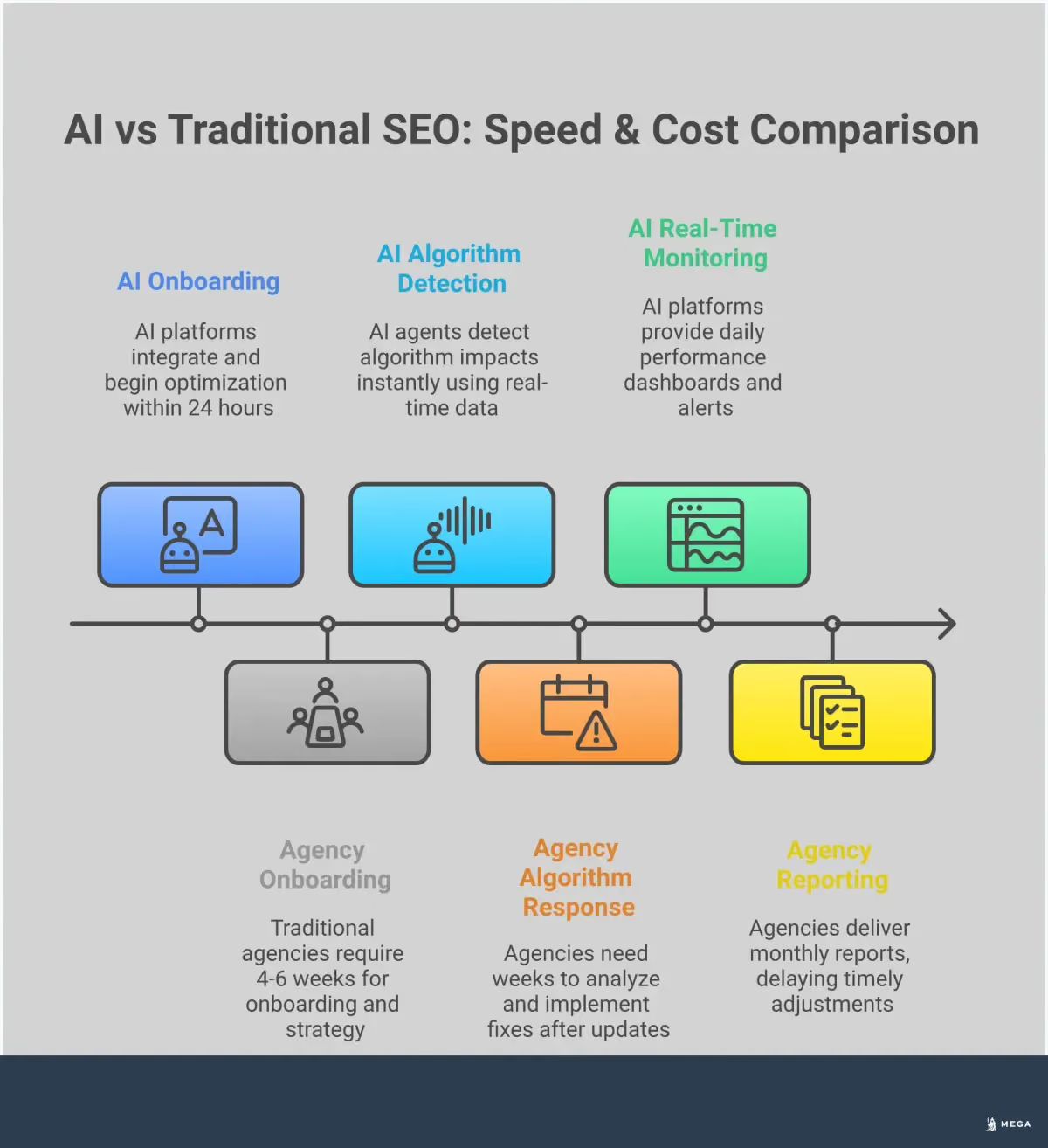
The Advantage of Speed and Efficiency
One of the biggest hidden costs of traditional SEO is time. Agencies rely on human analysts to research keywords, audit websites, and track performance, all of which are time-consuming manual processes. An AI platform can analyze massive datasets in minutes, identifying opportunities and implementing changes almost instantly. This ensures your strategy isn't based on a report that's already a week old; it's adapting in near real-time to algorithm changes and market shifts.
This speed directly impacts your bottom line. Instead of waiting months for an agency to build momentum, an AI agent can begin optimizing your site and generating content within 24 hours. With MEGA AI, many users see meaningful organic traffic growth much faster, with some achieving results twice as fast by enabling autopilot mode. Faster results mean a quicker return on your investment.
How to Scale Without Increasing Headcount
As your business grows, so do your SEO needs. You need more content, more keywords to target, and more pages to optimize. With a traditional agency, scaling up often means a contract renegotiation and a higher monthly fee to cover the additional human resources. This model ties your growth directly to increased spending.
AI platforms break this linear relationship. An AI agent can scale its output without needing to hire more people. It can generate hundreds of articles, optimize thousands of pages, and manage a complex internal linking structure without slowing down or requiring a bigger budget. This allows you to pursue ambitious growth without your marketing costs spiraling. Our flat-fee pricing means you can scale your SEO efforts aggressively while keeping costs predictable.
Reducing Communication Delays and Overhead
A significant portion of any agency fee covers account management: the emails, phone calls, and weekly status meetings required to keep you in the loop. While communication is important, these activities don't directly contribute to your search rankings. They are administrative overhead, and you are the one who pays for it.
AI platforms replace lengthy meetings with transparent, real-time dashboards. You can see exactly what tasks are being performed, what content is being created, and how your metrics are improving at any time. This gives you complete visibility without the back-and-forth. If you want to see this level of transparency in action, you can book a demo to see how an AI agent works. This streamlined process saves you valuable time and ensures your investment is focused on execution, not just communication.
How to Choose Between an Agency and an AI Platform
Making the right choice for your SEO comes down to understanding what your business truly needs. It’s a decision between a traditional service model and a technology-driven one, and each has its place depending on your goals, budget, and how involved you want to be.
Evaluate Your Business Needs and Resources
The first step is to look at your internal resources and business goals. Traditional SEO agencies offer human expertise and strategic thinking, which can be valuable if you need a hands-on partner for creative brainstorming. However, this model often comes with high costs and slower execution times.
For small businesses, startups, and local businesses where time and budget are tight, an AI-powered platform presents a more efficient path. AI SEO platforms are built to analyze massive amounts of data and execute tasks at a scale that a human team can't match. If your primary need is getting the work done—keyword research, content creation, technical fixes, and link building—an AI agent can manage these tasks autonomously, freeing you up to focus on running your business.
Key Questions to Ask Before You Decide
Before making a choice, consider your desired level of involvement. Do you have the time to manage an agency relationship, or would you prefer a system that handles the work for you? While it's a common myth that AI can replace human experts entirely, the right platform functions as more than just a tool.
Ask yourself these questions:
- What is my budget? AI platforms can be 60% to 85% more affordable than a traditional agency retainer.
- How fast do I need to move? An AI agent can start executing tasks within 24 hours, while an agency may take weeks to onboard and develop a strategy.
- Do I need an execution engine or a creative partner? If you need a team to implement a strategy and deliver results, an autonomous AI agent is built for that purpose.
Understand the Integration Requirements
An agency will need access to your website and analytics, but their team will perform the work manually. This process relies heavily on human communication, which can lead to delays. An AI platform, on the other hand, integrates directly with your content management system (CMS).
Platforms like MEGA AI offer seamless integrations with popular systems like WordPress, Shopify, Webflow, and HubSpot. This direct connection allows the AI agent to make real-time adjustments, publish new content, and apply technical fixes automatically. As search engine algorithms change, an integrated AI can adapt instantly, while an agency might wait for the next monthly meeting to discuss a plan. This ensures your SEO strategy is always current and optimized for performance.
How to Measure SEO Performance Effectively
Measuring your SEO performance is about more than just watching your website traffic go up. It’s about understanding if your efforts are attracting the right people and turning them into customers. Without clear measurement, you’re essentially investing time and money without knowing if it’s paying off. Effective tracking tells you what’s working, what isn’t, and where to focus your energy next. It transforms SEO from a mysterious art into a predictable science that drives your business forward.
For a small business, this is especially important. You don’t have the budget to waste on strategies that don’t deliver. By focusing on the right metrics, getting timely data, and ensuring you own that data, you can make smart decisions that directly contribute to your growth. It’s the difference between guessing and knowing. A solid measurement plan helps you connect your SEO activities to real business outcomes, like more leads and sales. This approach ensures your SEO investment is a reliable engine for your business, not just a line item on your budget. It gives you the confidence to know that every dollar spent on SEO is working hard for you.
The Metrics That Define Success
To understand if your SEO is working, you need to look at a few key metrics together. The most important ones are organic traffic, keyword rankings, conversion rates, and bounce rate. Organic traffic shows how many people find your site through search engines. Keyword rankings tell you where your site appears in search results for specific terms. A higher ranking means more visibility.
However, traffic and rankings don't tell the whole story. You also need to track conversion rates, which measure how many visitors take a desired action, like filling out a contact form or buying a product. Finally, bounce rate shows the percentage of visitors who leave your site after viewing only one page. A high bounce rate might indicate that your content isn't matching what searchers are looking for.
Real-Time Analytics vs. Monthly Reports
The speed at which you get performance data can make a huge difference. Traditional agencies often operate on a monthly reporting cycle. This means you might wait weeks to find out that a strategy isn’t working or that a Google algorithm update has affected your rankings. By the time you get the report, you’ve already lost valuable time and potential customers. This delay makes it difficult to adapt quickly to the ever-changing SEO landscape.
In contrast, AI-powered platforms provide real-time analytics. You can see how your site is performing day by day, allowing you to make immediate, data-driven decisions. If a keyword starts to drop, you can address it right away. This agility is a significant advantage, as it allows you to optimize your website for maximum visibility continuously. You can see how this works and understand the impact of making faster, more informed choices.
Who Owns Your Performance Data?
It’s a question many business owners don’t think to ask, but it’s critical: who owns your performance data? When you work with some traditional SEO agencies, they may consider the analytics accounts and the data collected to be their property. If you decide to part ways, you could lose access to all your historical performance data. This leaves you starting from scratch, unable to learn from past successes or failures.
This is a key area where AI platforms differ. When you use a service like MEGA AI, you typically have full ownership and access to your analytics and performance metrics. The data is yours to keep, regardless of your future plans. This transparency ensures you always have a clear understanding of your SEO history and can use those insights to inform your strategy moving forward, whether you continue with the platform or not.
Choosing the Right Path for Your Business
Making the right decision for your SEO comes down to understanding your goals, resources, and timeline. Both traditional agencies and AI platforms aim to get you more visibility, but they operate very differently. An agency provides human-led services, while an AI platform offers a technology-driven solution. The best choice depends on what your business needs to achieve sustainable growth. Let's look at what truly drives SEO success and how to decide which model fits your company.
What Drives Long-Term SEO Success
Long-term SEO success isn't about chasing short-term tricks; it's built on a foundation of consistent, high-quality work. This means creating content that genuinely helps your audience, maintaining a technically sound website, and adapting to constant search engine updates. The key is the ability to process vast amounts of data to understand what's working and what isn't. While traditional SEO focuses on making a website visible, modern AI-powered SEO also optimizes content to appear in new formats, like AI-generated answers. This adaptability is critical for staying relevant and maintaining your rankings over time.
When to Choose an Agency vs. an AI Platform
An agency might seem like the default choice if your current efforts are stalled and you need a completely new strategy. The human element can be valuable for high-level creative direction. However, for most small businesses, the constraints are time and budget. Agencies come with high monthly retainers and often move at a slower pace. An AI platform is a better fit if you need a comprehensive, full-service solution that executes quickly and affordably. An AI agent can manage everything from keyword research to content creation and technical fixes, delivering results without the overhead of a traditional agency model.