
You spend significant time creating valuable content, and syndication offers a fantastic way to extend its reach. However, simply pushing content out isn't enough; you need to ensure it’s working effectively for you on other platforms while protecting your original site's SEO. Screaming Frog SEO Spider provides the deep technical insights necessary to manage this process. It helps you audit your own content to select the best candidates for syndication and then monitor how these pieces perform. If you're wondering how to use Screaming Frog for content syndication to make data-driven decisions and refine your approach, you're in the right place. We'll explore how this tool helps you analyze critical elements, from on-page factors to link health, for a successful syndication plan.
Key Takeaways
- Audit Your Site Before Sharing: Use Screaming Frog to get a clear picture of your website's technical setup and content organization, so you know your articles are in top shape for syndication.
- Choose Syndication Content Wisely: Combine Screaming Frog's crawl data with analytics insights to identify your most successful articles, ensuring you select proven performers for wider distribution.
- Manage Your Syndication Systematically: Employ Screaming Frog to develop a clear syndication plan, check that partner sites correctly feature your content, and regularly review performance to keep your strategy effective.
What is Screaming Frog? And How It Improves Your Content Syndication
If you're looking to get serious about your content syndication efforts, you'll want a robust tool in your corner. Meet Screaming Frog SEO Spider, a powerful website crawler that acts like a detective for your website's SEO health. Think of it as a program that meticulously goes through your website, page by page, much like search engine bots do. This is incredibly useful whether your site is small or a sprawling enterprise where checking every page manually would be a monumental task. For content syndication, this means you can efficiently check if all your carefully crafted content is set up correctly to be found and valued, no matter where it's published.
So, how does this nifty crawler specifically help with getting your content seen on other platforms? Screaming Frog excels at analyzing crucial on-page elements like titles, meta descriptions, and headers. When you syndicate content, you want to ensure it maintains strong SEO practices across every channel. This tool helps you perform thorough content audits to keep those elements optimized for visibility. It also assists in verifying that tracking codes, such as Google Analytics, are correctly implemented on all syndicated pieces. This way, you can accurately measure how your content performs everywhere it lives. Plus, its visualization features, like crawl tree graphs, give you a clear picture of your site's structure, helping you spot technical SEO issues that might hinder your syndication success and make smarter decisions about where to distribute your content.
How to Set Up Screaming Frog for Effective Content Audits
Getting Screaming Frog ready for a content audit might seem a bit technical at first, but a few key setup steps can make a huge difference in the quality of data you gather. Properly configuring your crawl and optimizing the settings for content-specific analysis will give you a clear view of your website's content landscape. This initial setup is foundational for uncovering actionable insights that can refine your content strategy and improve your SEO performance. Let’s walk through how to get started.
Configure Your First Crawl
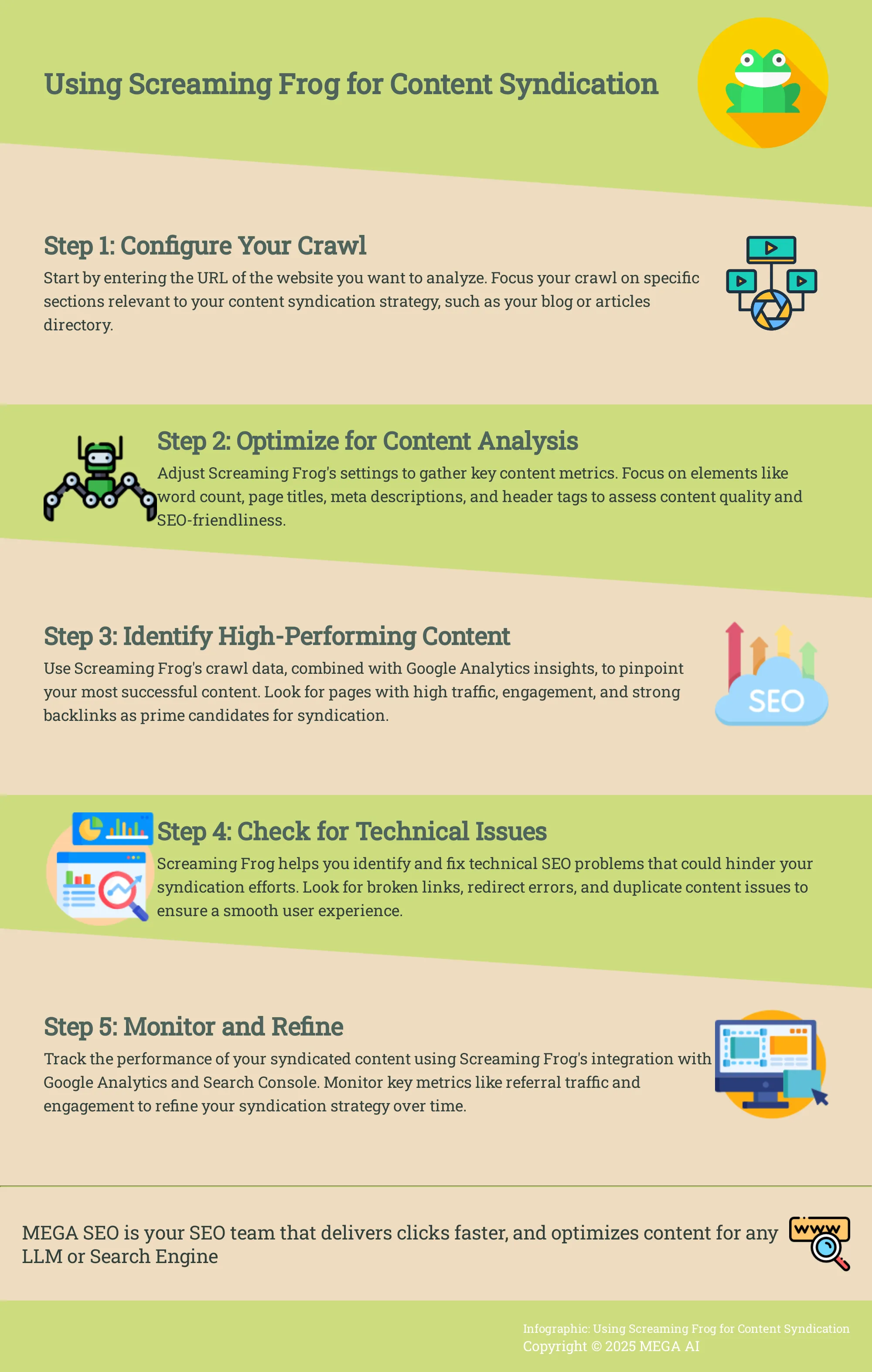
To kick things off, you'll input your website's URL into the designated field at the top of the Screaming Frog interface. If you've used the tool before, clicking the down arrow next to this field conveniently shows a list of URLs you've previously crawled. By default, Screaming Frog is set to crawl "All Subdomains," meaning it will explore your entire site. However, you might want to narrow the focus. You can easily change this setting to crawl just a specific URL or a particular subfolder, which is handy for targeted audits.
Remember, conducting a thorough content audit is an essential first step before you can confidently make SEO recommendations. This initial crawl configuration ensures you're gathering the precise data needed for an effective audit, whether you're looking at a single blog section or your entire domain. This focused approach helps you manage the scope of your audit and get to the insights faster.
Optimize Settings for Content Analysis
Once you've defined your crawl scope, optimizing Screaming Frog’s settings for content analysis will help you extract the most relevant information. For instance, you can configure the spider to verify your Google Analytics implementation by having it crawl your site and identify all pages containing the GA tracking code. This is a great way to ensure your analytics data is accurate and comprehensive.
Beyond analytics, you can adjust settings to focus on elements crucial for a content audit, such as word count, page titles, meta descriptions, and header tags. These configurations allow you to perform a detailed Screaming Frog content audit, which is invaluable for enhancing your website's SEO and overall content strategy. Taking the time to fine-tune these settings means the data Screaming Frog collects will directly inform your efforts to identify strong content, find gaps, and plan improvements.
Explore Key Screaming Frog Features for Content Syndication
Screaming Frog is a really versatile tool, and when it comes to content syndication, it has some standout features that can make your life a lot easier. Think of it as your technical detective, helping you understand your own content landscape and ensuring that when you share your work, it’s set up for success. Using these features effectively means you can gather precise data, keep your content looking good and functioning well on partner sites, and help search engines find and properly credit your original pieces. It’s all about making informed decisions and maintaining quality control, even when your content lives beyond your own website. Let's walk through a few of the most impactful features for your syndication strategy.
Use Custom Extraction for Targeted Data
One of Screaming Frog’s most useful tools for content syndication is its 'custom extraction' capability. This feature lets you pinpoint and pull very specific pieces of information directly from web pages. Imagine you need to quickly gather all the original publication dates, author names, or even count the number of H2 headings on a series of articles. For your syndication efforts, this means you can efficiently collect data like original post dates or bylines. This information is crucial for ensuring proper attribution and keeping your syndicated content organized and consistent across different platforms, making tracking much simpler.
Identify Broken Links and Redirects
A smooth user experience is always important, and it’s especially critical when your content is featured on other websites through syndication. Screaming Frog is excellent at pinpointing issues such as broken links that lead to 404 error pages, or redirects that aren't working as they should. When you syndicate your articles, you want to be confident that any links within that content, or any links pointing back to your original work, are fully functional. Regularly using the crawler on your own site, and if possible and with permission, on your syndication partners' sites, helps you catch and fix these problems quickly. This maintains the quality of your content and prevents readers from hitting dead ends.
Generate XML Sitemaps for Better Content Discovery
For search engines to effectively find and index all your content, including the versions that are syndicated on other platforms, XML sitemaps are a key component. Screaming Frog can generate these XML sitemaps, which essentially provide a clear roadmap for search engine crawlers. When your content is published elsewhere, making sure these new locations are easily discoverable is important for visibility. While your primary focus will be on the sitemap for your own website, understanding how sitemaps function can also guide conversations with your syndication partners about how they ensure content visibility, which ultimately benefits your overall SEO.
Analyze Content Structure and Hierarchy
Before you decide which pieces of content are best suited for syndication, it’s helpful to have a clear understanding of your own website's architecture. Screaming Frog offers visualization tools, like crawl tree graphs, that allow you to see how your content is organized and how different pages connect to one another. This kind of structural analysis can highlight your strongest, most authoritative content pillars or, conversely, show you which valuable pages might be unintentionally buried deep within your site. Knowing this helps you select the most impactful articles for your syndication strategy and understand how they fit into your broader content plan.
How to Conduct a Full Content Audit with Screaming Frog
Alright, let's talk about doing a full content audit. I know, it can sound like a huge, daunting task, but trust me, with a tool like Screaming Frog, it becomes much more manageable. Think of Screaming Frog as your super-organized assistant that meticulously goes through your website, giving you a clear picture of all your content. This isn't just about spotting what's broken; it's a fantastic way to find those hidden gems—your best-performing articles or pages that are perfect for sharing more widely through content syndication. A solid audit shows you what’s resonating with your audience, what needs a bit of a polish, and where you can make smart changes to get your content in front of more eyes.
When you really get into the nitty-gritty of your site’s structure and all those on-page details, you can clearly see which content pieces are ready for the spotlight and what tweaks could make them even more effective for syndication. This means looking at everything from how healthy your pages are technically to how well your actual content is doing. For startups, small businesses, and marketing agencies trying to make a bigger splash online—perhaps even using tools like MEGA AI's SEO platform to streamline their efforts—a detailed content audit is the foundation of any strong content plan. It means that when you decide to syndicate your content, you’re doing it with confidence, knowing your choices are backed by solid data. So, let’s walk through how you can use Screaming Frog to do just that and get your syndication strategy off to a flying start.
Evaluate On-Page SEO Elements
First up, let's look at your on-page SEO elements. Screaming Frog is brilliant for helping you get a handle on things like your page titles, meta descriptions, and H1 tags. These aren't just random bits of text; they’re super important signals to search engines telling them what your content is all about. Plus, they play a big part in whether someone actually clicks on your link in the search results. Screaming Frog crawls your site and lays out all this data neatly, so you can quickly spot any missing titles, duplicated meta descriptions, or H1s that are off-kilter. Making sure these are unique, engaging, and optimized for each page is key. This doesn't just help your original content perform better; it makes it much more appealing when you syndicate it elsewhere.
Assess Your Internal Linking Strategies
Next, think about how your content is connected internally. This is just as vital as how each individual page is optimized. Screaming Frog is a fantastic tool for analyzing your internal linking structure, showing you which pages are getting lots of internal link love (signaling their importance) and which ones might be a bit lonely or hard to find. Good internal linking helps search engines find all your great content and understand how it all fits together. For your visitors, it means a smoother journey through your site, encouraging them to stick around and explore. When you're planning your content syndication, knowing your internal link landscape helps you pick out strong pages whose content will likely do well when shared, and ensures any syndicated pieces link back effectively.
Find High-Performing Content to Syndicate
Your website probably has some real star content pieces already – those articles or pages that attract good traffic, get people talking, or rank well for important keywords. Screaming Frog, especially when you pair it with insights from Google Analytics and Search Console (more on that later), helps you pinpoint these winners. It’s not just about traffic numbers; you can also look for pages with strong backlinks or high engagement. Screaming Frog also helps you spot any duplicate content issues on your site, like identical titles or descriptions. Fixing these means you’re always sharing unique, valuable information. Identifying these top-tier, original assets lets you put them at the front of the line for your syndication efforts because they’ve already proven they connect with an audience.
Uncover Content Gaps and Opportunities
A thorough content audit with Screaming Frog isn’t only about reviewing what you’ve already got; it’s also a great way to see what might be missing. As you analyze your current content and its performance, you’ll start to notice gaps in your topics or opportunities to create fresh, valuable material. For example, you might find some subjects are only briefly covered, or that popular pages could be beefed up with more detail. This kind of detective work is essential for a strong content marketing strategy. When you identify these gaps, you can create targeted content that truly meets a need, and these new pieces can become powerful assets for syndication, reaching new audiences interested in those specific areas.
Develop Content Syndication Strategies with Screaming Frog Data
Once you've gathered all that rich data from your Screaming Frog audit, it's time to put it to work building smart content syndication strategies. Think of Screaming Frog as your behind-the-scenes detective, uncovering clues that tell you exactly how to get your content seen by wider audiences on other platforms. It’s not just about randomly sharing your articles; it’s about making informed decisions that lead to better visibility and engagement. This tool helps you understand the technical health and content landscape of your own site, which is foundational before you even consider pushing content elsewhere.
Using the insights from your crawl, you can pinpoint which pieces of content are prime candidates for syndication, understand how to prepare them for different platforms, and even track their performance over time. This data-driven approach takes the guesswork out of syndication. Instead of hoping for the best, you’ll be actively shaping a strategy designed for success. We're moving beyond simply pushing content out and into a more refined process of strategic distribution. This means you can allocate your resources more effectively, focusing on content that has the highest potential to perform well when syndicated. You'll know which articles resonate most with your current audience, which ones have strong SEO foundations, and which might need a little tweaking to shine on a new stage. This clarity allows for a more targeted and ultimately more successful syndication plan.
Optimize Content for Syndication Platforms
Syndication platforms often have unique ways to display and categorize content. To ensure your articles look their best and are easily found, optimizing them for each platform is key. Screaming Frog is a valuable tool here, especially for handling structured data. As Screaming Frog's own documentation notes, you can "test and validate structured data using the Screaming Frog SEO Spider." This step is crucial because many syndication platforms rely on structured data to correctly interpret and showcase your content. Structured data essentially labels your content—identifying it as an article, recipe, or product—so platforms can present it accurately. Getting this right improves how your content appears on partner blogs, news aggregators, or sites like Medium, ensuring technical details are correct before syndication.
Create Your Content Syndication Roadmap
A thorough content audit using Screaming Frog provides the foundation for a strategic syndication roadmap. You move beyond guesswork, using concrete data to see which articles perform well and which need refinement before reaching a broader audience. As Brandwell AI suggests, "Conducting a content audit can help you identify which pieces of content are performing well and which need improvement, allowing you to create a strategic roadmap for syndication." This roadmap informs your decisions about what, where, and when to syndicate. For instance, an audit might highlight a high-engagement blog post with strong organic traffic as ideal for syndication, or it might flag thin content needing an update. This focused approach helps you maximize your content marketing efforts.
Monitor Changes Over Time
Content syndication requires ongoing attention to understand its impact and refine your strategy. You'll want to monitor how your syndicated content performs and how your site metrics evolve. Screaming Frog excels at this continuous analysis. Flow Agency notes that "Screaming Frog allows you to track changes over time by crawling your website repeatedly." This feature is key to observing the outcomes of your syndication. Regular crawls help you watch how syndicated pieces are indexed, if they generate referral traffic, and if new technical issues, like broken links, arise. This consistent monitoring ensures your content stays optimized for search engines and user experience across platforms, allowing you to adapt, reinforce successes, and correct issues for sustained value from your syndication.
How to Integrate Screaming Frog with Analytics Tools
Screaming Frog gives you an incredibly detailed look at your website's technical health and on-page content. It’s like having a comprehensive inventory of everything on your site. But to make truly informed decisions, especially about content syndication, you need to see how that content performs in the real world. That’s where integrating Screaming Frog with your analytics tools becomes so powerful. By merging Screaming Frog's crawl data with user behavior insights from Google Analytics and search performance metrics from Google Search Console, you get a complete picture. This allows you to move beyond raw data to build an actionable strategy.
This combined view is especially useful for content syndication. You can pinpoint not just what content you have, but also how it’s resonating with your audience and how visible it is in search. This means you can make data-driven choices about which articles to syndicate, rather than relying on guesswork. Connecting Screaming Frog to APIs for tools like Google Analytics and Search Console significantly enhances your crawl analysis. You’ll understand which pages attract visitors, which ones lead to conversions, and which might need some work, all within the context of your site's overall structure. This holistic approach helps you make smarter decisions, ensuring your content syndication efforts are targeted and efficient, saving valuable time and resources.
Combine Data with Google Analytics
When you connect Screaming Frog with Google Analytics, you can overlay crucial user behavior metrics onto your detailed crawl data. Think about seeing your list of URLs from Screaming Frog, but now with added columns showing page views, average session duration, and bounce rates for each. This integration helps you understand exactly how visitors are engaging with the content you’ve audited.
Setting this up involves linking Screaming Frog to the Google Analytics API. After connecting, you can import data for specific timeframes, audience segments, and key metrics. This allows you to analyze content performance effectively, identifying which original articles are most engaging (making them strong candidates for syndication) or how syndicated content is driving traffic. It adds that vital layer of understanding user interaction to your technical audit.
Get Better Insights with Search Console Integration
By integrating Screaming Frog with Google Search Console, you gain direct insight into how your content is performing in Google's search results. While Google Analytics focuses on on-site user behavior, Search Console shows you how people discover your content through search—metrics like impressions, clicks, click-through rates (CTR), and average ranking positions. Bringing this information into Screaming Frog lets you see which of your crawled URLs are appearing in search, which ones are earning clicks, and which might be technically sound but still struggling with visibility.
This connection is incredibly useful for your content syndication strategy. It helps you spot content that already has search momentum or identify pieces that aren't getting the organic attention they could. Screaming Frog’s API facilitates this combination of crawl data with search analytics, providing a richer dataset to inform which content pieces will have the greatest impact when syndicated.
Visualize Data in Google Data Studio
After you’ve enriched your Screaming Frog crawl data with insights from Google Analytics and Search Console, the next step is presenting this information clearly. Google Data Studio (now Looker Studio) is a great free tool for this. You can export your comprehensive dataset from Screaming Frog and then import it into Looker Studio to build custom dashboards and reports. This helps you visualize trends, compare key performance metrics, and share important findings with your team or clients in an accessible way.
For your content syndication efforts, picture a dashboard that displays your top original articles—ranked by traffic, engagement, and search clicks—alongside their current syndication status or potential. You can create visual reports to monitor how your syndicated content contributes to your broader marketing goals over time. This visual method simplifies spotting patterns, measuring the success of your syndication, and making informed adjustments to your approach.
Master Advanced Screaming Frog Techniques for Content Syndication
Once you're comfortable with the basics, Screaming Frog offers some powerful advanced features that can significantly refine your content syndication efforts. These techniques help you dig deeper into your site's data, automate processes, and tackle common syndication challenges with more precision. Let's look at a few ways you can use these advanced capabilities to get even more out of your syndication strategy.
Automate Content Audits with Screaming Frog's API
For ongoing content syndication, regularly auditing your content's performance and technical health is key. Screaming Frog can help you automate parts of this process by connecting to the Google URL Inspection API. This integration allows the SEO Spider tool to access indexing status, coverage issues, rich results information, and mobile usability data directly. Imagine quickly checking if your original articles are properly indexed before you syndicate them, or monitoring how Google views your syndicated pages. Setting this up means you can gather crucial insights more efficiently, freeing up time to focus on strategy rather than manual data collection. This is particularly useful for large-scale syndication where manual checks become impractical.
Use Regular Expressions for Advanced Data Extraction
Regular expressions, or regex, can seem a bit technical at first, but they are incredibly useful for extracting very specific pieces of information from your website during a crawl. When it comes to content syndication, you might use regex to find pages that mention specific syndication partners, check for correct implementation of canonical tags pointing back to your original content, or even verify that attribution links are present and correctly formatted. For instance, Screaming Frog makes it easier to verify Google Analytics implementation by finding all pages containing the GA code snippet; you can adapt this same principle to search for any specific code or text pattern relevant to your syndication agreements. This level of detail helps ensure your syndication efforts are technically sound and properly credited.
Overcome Common Challenges in Content Syndication Analysis
Content syndication, while beneficial, can present challenges like potential duplicate content issues if not handled correctly. Screaming Frog is a valuable tool for identifying these problems. You can use it to find pages with similar content, check for proper canonicalization, and even test and validate structured data, which helps search engines understand the relationship between original and syndicated pieces. If you're concerned about duplicate content, Screaming Frog helps you pinpoint areas to address. For example, you can check if rel=canonical tags are correctly implemented on syndicated versions, pointing back to your original article. Understanding how to run a Screaming Frog content audit effectively will help you make sense of the data and implement necessary changes to keep your syndication strategy healthy and performing well.
Measure and Improve Your Content Syndication Efforts
Once your content is syndicated, the next step is to see how it's doing and find ways to improve. Think of it as a cycle: share, measure, learn, and adjust. This helps you understand what connects with new audiences and how to maximize your content's reach.
Focus on These Key Metrics
To understand your syndication impact, track key numbers. Start with referral traffic: how many visitors come from syndicated platforms? Google Analytics helps here. Also, note engagement on syndication sites—comments, shares, or views.
Screaming Frog is great for specifics. Its 'custom extraction' feature lets you pull data like publication dates or authors from web pages, aiding inventory and performance tracking. The free version suits small sites (under 500 URLs), while the paid one offers more. Also, monitor brand mentions and backlinks from syndicated content for visibility insights.
Create Effective Reports for Stakeholders
Presenting data clearly is as important as collecting it. Concise reports effectively show your content syndication's value. Instead of just sharing raw spreadsheets, aim to tell a compelling story with your findings, making the impact clear.
Visuals can make a significant difference. Visualizing data with charts and graphs to illustrate trends in referral traffic, engagement, or lead generation from syndicated content makes the information much easier to digest. When working with spreadsheets, consider using conditional formatting to highlight important information, such as high-performing syndicated articles or platforms that aren't delivering as expected. This helps stakeholders quickly identify successes and areas needing attention, ensuring your reports provide actionable insights.
Iterate Your Strategy Using Screaming Frog Insights
The data you gather is crucial for refining your syndication strategy. Analyzing what works helps you make smarter future decisions. If certain platforms consistently drive quality traffic, prioritize them or tailor more content for their audience.
Screaming Frog lets you analyze content beyond keywords and traffic, offering insights into publishing frequency and author performance. This deeper analysis reveals patterns, like which author or format gets more engagement. For a fuller picture, Screaming Frog's API allows integration with tools like Google Analytics, enriching your understanding of content performance post-syndication and helping you continuously improve.
Best Practices: Using Screaming Frog for Your Content Syndication Strategy
To really make your content syndication efforts count, it’s helpful to have a solid process with Screaming Frog. This tool can give you a clear picture of how your content appears across the web and where you can make improvements. Think of it as your technical SEO assistant for syndication, helping you keep everything organized and effective.
One of the first things you'll want to do is identify duplicate content. When you syndicate content, there's always a risk of search engines seeing it as duplicated, which can dilute your SEO value. Screaming Frog helps you find instances of duplicate page titles, meta descriptions, or even entire chunks of content. By spotting these, you can take steps to ensure each syndicated piece is properly attributed or canonicalized, keeping your original content as the authority. This ensures your site presents a unique experience to search engines and users.
Another powerful approach is using Screaming Frog's 'custom extraction' feature. This lets you pull very specific pieces of information from web pages where your content is syndicated, like publication dates or author attributions. This is incredibly useful for checking if your syndication partners are presenting your content correctly and consistently. You can also connect Screaming Frog to APIs like Google Analytics and Search Console. This brings in performance data, allowing you to see how your syndicated content is actually doing in terms of traffic and engagement, helping you refine which platforms are worth your effort. Don't forget about sitemap management; Screaming Frog can help automate checks to ensure your syndicated content is discoverable. Finally, using conditional formatting in your exported spreadsheets can help you quickly spot issues like missing canonical tags or incorrect attributions, making your review process much more efficient.
Related Articles
- How to Use Screaming Frog: Mobile Optimization Guide
- Affordable Ahrefs Alternatives: Cost-Effective SEO Solutions
- Best SEO Tracking Tools to Boost Your Rankings
- Top 15 Automatic SEO Tools for Agencies (2025)
- SEO Tech Audit: A Comprehensive Guide for 2024
Frequently Asked Questions
I'm just starting with content syndication. How can Screaming Frog help me avoid common mistakes? Screaming Frog acts like a pre-flight check for your content before you send it out to other platforms. It helps you spot technical issues on your own site, like broken links or messy page titles, that could make your content look less professional when syndicated. It also helps you understand your content's structure, so you're sharing pieces that are already well-organized and SEO-friendly, giving them a better chance to perform well elsewhere.
My website isn't huge. Is Screaming Frog still useful for my content syndication efforts? Absolutely. Even for smaller sites, Screaming Frog helps you maintain quality control. It can quickly crawl your pages to ensure essential elements like meta descriptions and header tags are in good shape. This means when you syndicate your content, you're putting your best foot forward, ensuring consistency and making it easier for new audiences and search engines to understand what your content is about, no matter the size of your site.
What's one simple Screaming Frog feature that can make a big difference in how my syndicated content is perceived? The ability to check for broken links is incredibly valuable. When you syndicate content, any broken links within that article reflect poorly on you, even if it's on someone else's site. Regularly using Screaming Frog to find and fix these on your original content ensures that when it's shared, readers have a smooth experience, which maintains the quality and credibility of your work.
How does Screaming Frog help ensure my original content gets the credit it deserves when I syndicate it? Screaming Frog can help you check for the correct implementation of canonical tags. These tags tell search engines which version of a piece of content is the original. By using the crawler, you can verify that syndicated versions of your articles correctly point back to your site, which is important for SEO and for establishing your site as the authoritative source.
Beyond checking my own site, can Screaming Frog give me insights into how my content appears on syndication partner sites? While you primarily use Screaming Frog on sites you control, its custom extraction feature can be very insightful. If you have permission or access, you could theoretically use it to check specific elements on partner pages where your content is featured, like whether attribution links are present or if publication dates are correctly displayed. This helps you monitor consistency and ensure your syndication agreements are being met.