
If you’ve ever heard your sales team say marketing leads are low-quality, or your marketing team complain that sales isn’t following up, you’ve seen misalignment firsthand. This friction isn’t just an internal issue; it directly impacts your revenue and growth. As one business owner noted, "I'm noticing about 60% of the leads are bad... and then 20 are qualified, good leads." When teams operate in silos, you waste resources and create a disjointed experience for your customers. This guide provides actionable steps to unify your teams, creating a single, efficient growth engine for your business.
Key Takeaways
- Establish a single source of truth: Unify your teams around a shared dashboard with agreed-upon, revenue-focused metrics and clear definitions for what makes a lead qualified.
- Automate the lead qualification process: Implement a lead scoring model and integrate your tools to automatically identify sales-ready prospects, ensuring a fast and efficient handoff.
- Create a consistent feedback loop: Establish a formal process for sales to share front-line customer insights with marketing, enabling continuous refinement of campaigns and messaging.
Why Does Sales and Marketing Alignment Matter?
If you’ve ever heard your sales team say marketing leads are low-quality, or your marketing team complain that sales isn’t following up, you’ve seen misalignment firsthand. This friction isn’t just an internal issue; it directly impacts your revenue and growth. When your teams operate in silos, you waste resources, miss opportunities, and create a disjointed experience for your customers.
Sales and marketing alignment is a shared system of communication, strategy, and goals that allows both teams to operate as a single, unified organization. When your teams are on the same page, marketing can focus on generating high-quality leads that meet the specific criteria set by the sales team. This means sales spends its time talking to prospects who are genuinely interested and ready to buy, which shortens the sales cycle and increases close rates.
The alternative is costly. When teams work from inconsistent data, it leads to ineffective strategies and wasted ad spend. Marketing might celebrate a high volume of leads, but if those leads don't convert, the effort is wasted. As one of our customers noted about their leads before using an AI agent, "I'm noticing about 60% of the leads are bad, not qualified... and then 20 are qualified, good leads." Alignment fixes this by focusing everyone on the same goal: generating qualified pipeline.
Ultimately, creating a collaborative workflow is about building a smarter, more efficient growth engine. With effective feedback loops, sales insights can refine marketing campaigns in real time, while marketing data can help the sales team prioritize outreach. This continuous improvement cycle ensures your entire organization is working together to attract, engage, and convert your ideal customers.
What Is Sales and Marketing Alignment?
Sales and marketing alignment is a shared system of communication, strategy, and goals that enables marketing and sales to operate as one unified organization. Instead of working in separate silos, both teams collaborate toward the common goal of generating revenue. Marketing focuses on attracting and nurturing the right prospects, while sales guides those qualified leads through the final stages of the buying process. For small businesses and startups, this unity is essential for growth. It ensures every dollar spent on paid ads and every hour invested in SEO contributes directly to the bottom line, turning marketing into a predictable revenue driver.
The Traditional Disconnect
In many companies, sales and marketing operate in different worlds. This is where the traditional disconnect begins. Silos form when there’s no consistent way for these teams to collaborate, leading to friction and missed opportunities. Marketing might generate a high volume of leads without understanding what makes a prospect truly qualified, leaving the sales team to sift through contacts who aren't a good fit. This often results in a disorganized handoff where valuable leads fall through the cracks. Sales complains that marketing leads are poor quality, while marketing feels its hard work is being ignored.
How Alignment Changes Everything
When sales and marketing teams join together on strategy, they can develop a collaborative workflow that drives real results. With a shared understanding of the ideal customer, marketing can focus on generating high-quality leads that the sales team is genuinely excited to pursue. This means the content, keywords, and ad campaigns are all designed to attract prospects who are more likely to convert. The result is a seamless and consistent customer journey. Prospects receive targeted messaging that speaks to their needs, and the transition from marketing to sales feels natural and helpful, improving conversion rates and shortening the sales cycle.
The Hidden Costs of Misaligned Teams
When sales and marketing teams operate in separate silos, the friction creates tangible problems that impact your budget, revenue, and brand reputation. These issues often fly under the radar, disguised as "the cost of doing business," but they are preventable. Understanding these hidden costs is the first step toward building a more collaborative and profitable growth engine for your company. From wasted ad dollars to frustrated customers, the consequences of poor alignment are too significant to ignore.
Wasted Marketing Spend
Your marketing team works hard to generate leads, but what happens if those leads go nowhere? When there’s no clear process for moving prospects from marketing to sales, opportunities get dropped, and your marketing budget is wasted. A lack of communication creates a broken feedback loop. If the sales team doesn’t share which leads are converting, the marketing team can’t refine its paid advertising campaigns or content strategy. They continue spending money on channels that attract unqualified prospects, while high-potential leads are overlooked. This cycle of inefficiency burns through your budget without contributing to revenue growth.
Lost Sales Opportunities
The handoff from marketing to sales is a critical moment where many deals are lost. When teams use different systems or inconsistent data, crucial context gets lost in translation. A sales representative might receive a lead without knowing which marketing campaign attracted them or what content they engaged with. This lack of information makes it impossible to tailor the conversation, leading to a generic pitch that falls flat. This inconsistent data is a primary cause of ineffective sales strategies. Every qualified lead that isn't followed up on promptly and with the right context is a direct loss of potential revenue.
Inconsistent Customer Experience
Your customers don’t see your internal departments; they see a single brand. When sales and marketing are misaligned, that brand experience becomes fragmented and confusing. Imagine a customer receives a marketing email promoting a specific feature, only to have a sales rep on a call seem completely unaware of it. These disconnects erode trust and make your business appear disorganized. These internal silos create inconsistent messaging that damages the customer journey. A poor experience not only costs you the initial sale but also harms your long-term reputation and reduces the chances of repeat business or referrals.
How to Create a Single Source of Truth
The foundation of any aligned sales and marketing strategy is a single source of truth. This is a centralized place where both teams can access the same data, track the same goals, and see the same customer journey. Without it, marketing celebrates lead volume while sales complains about lead quality, and neither team has the data to understand the other's perspective. This disconnect leads to friction, missed opportunities, and wasted resources. When your teams operate from different playbooks, you end up with an inconsistent customer experience and a leaky sales funnel.
Creating a single source of truth means breaking down data silos. Instead of marketing living in Google Analytics and sales living in a CRM, you bring that information together. When everyone is looking at the same dashboard, conversations shift from "your leads are bad" to "how can we improve lead quality at this stage of the funnel?" This shared understanding is where real growth begins. Platforms like MEGA AI are built on this principle, offering a central dashboard that integrates data sources to give you a complete picture of your marketing and sales performance. It provides the clarity needed for both teams to work together toward a common objective: revenue.
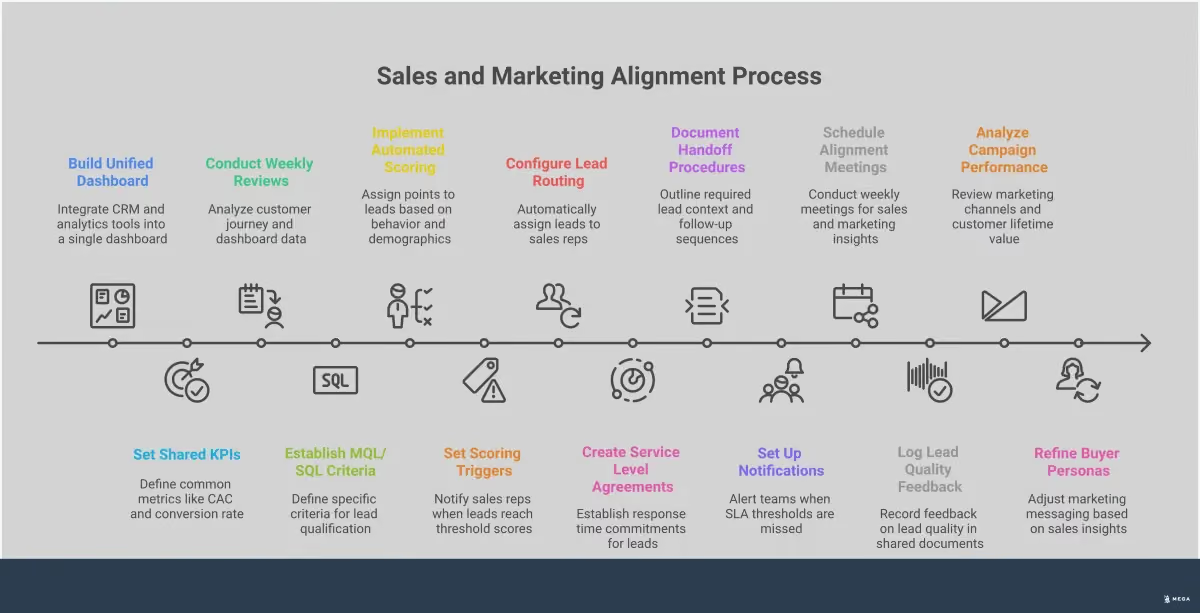
Unify Your Data and Dashboards
The first step is to get all your critical data into one place. When your teams use the same tools and look at the same reports, they can collaborate more effectively and speed up their workflow. This isn't just about convenience; it's about creating a shared reality. A unified dashboard should show the entire customer lifecycle, from the initial ad click or blog post view to the final purchase and beyond. This visibility helps both teams understand how their efforts contribute to the bottom line. By integrating tools like your CMS, Google Analytics, and CRM, you can finally see the whole story instead of just isolated chapters. This allows you to track a lead’s journey from a specific SEO campaign all the way to a closed deal.
Agree on Shared Metrics
For alignment to work, both teams must be measured by the same stick. While marketing might track cost-per-click and sales tracks deals closed, the most important metrics are the ones you share. Both teams need to align around revenue goals to ensure they are working toward the same outcome. Instead of focusing on vanity metrics, prioritize shared KPIs like Customer Acquisition Cost (CAC), lead-to-customer conversion rate, and marketing-originated revenue. When marketing is judged on how much revenue their campaigns generate—not just how many leads—their goals naturally align with the sales team's objectives. This shared accountability fosters a collaborative environment where both teams are invested in the final result.
Define Clear Handoff Points
A clear handoff process prevents qualified leads from falling through the cracks. This starts with sales and marketing jointly defining what makes a lead "sales-ready." You need to establish concrete criteria for a Marketing Qualified Lead (MQL) and a Sales Qualified Lead (SQL). An MQL might be someone who downloaded an ebook, while an SQL has requested a demo. Once these definitions are set, you can build a process for a smooth transition. This includes creating effective feedback loops where sales can inform marketing about lead quality, helping to refine targeting and messaging over time. This ensures that marketing efforts are consistently generating leads that the sales team can successfully close.
What Makes a Successful Handoff?
Think of the handoff as a relay race. Marketing runs the first leg, attracting a prospect and nurturing their interest. The handoff is the critical moment the baton—a qualified lead—is passed to the sales team to run the final leg and close the deal. A clumsy exchange can cost you the race. A successful handoff, however, feels seamless to the customer and equips the sales team with everything they need for a meaningful conversation.
This is where your alignment efforts pay off. It’s not just about forwarding an email address. A great handoff transfers valuable context: what content the lead engaged with, what pain points they have, and where they are in their buying journey. This process ensures that warm leads don’t go cold waiting for a follow-up and that sales reps can skip the generic questions and get straight to solving the customer’s problem. When marketing and sales have a clear, agreed-upon process, the entire revenue engine runs more smoothly.
Establish Clear Communication
Effective handoffs are built on a foundation of clear and continuous communication. It starts with both teams agreeing on a universal definition of a qualified lead. Marketing needs to know exactly what criteria a lead must meet before they are ready for a sales conversation, and sales needs to trust that the leads they receive are genuinely prepared. This shared understanding is often formalized in a Service Level Agreement (SLA), a document that outlines the commitments each team makes to the other.
An SLA specifies the number and quality of leads marketing will deliver and the speed and depth with which sales will follow up. This simple pact eliminates finger-pointing and creates mutual accountability. It transforms the relationship from one of competing priorities to a collaborative partnership focused on a shared objective: driving revenue.
Create Consistent Messaging
The journey from prospect to customer should feel like one continuous conversation. When a lead moves from a marketing campaign to a sales call, the messaging they encounter must be consistent. Any disconnect between the promises made in an ad or blog post and the solution presented by a salesperson can create confusion and erode trust. If your marketing highlights ease of use, your sales team should be ready to demonstrate it.
To achieve this, marketing should proactively share campaign materials, target audience insights, and key talking points with the sales team. This ensures everyone is telling the same story and reinforcing the same value proposition. A consistent brand voice across all touchpoints makes your company appear more professional and reliable, making the sales team’s job much easier. It assures the customer they are in the right place and that your company understands their needs.
Set Response Time Expectations
In sales, speed matters. A lead’s interest is at its peak the moment they fill out a form, download a guide, or request a demo. The longer you wait to follow up, the more that interest fades. Studies have shown that the odds of making contact with a lead decrease dramatically within the first hour. A slow response not only risks losing the lead to a competitor but also signals that you don’t value their time.
Your sales and marketing SLA should include a clear and ambitious standard for lead response time. This ensures that every qualified lead receives prompt attention. Technology can be a huge asset here. Integrating your marketing automation platform with your CRM can trigger instant notifications to the sales team when a new lead comes in. This removes manual delays and empowers your sales reps to engage with prospects while their interest is still high, dramatically improving conversion rates.
How to Build an Automated Lead Qualification System
Once you have a steady stream of leads coming from your marketing efforts, the next challenge is figuring out which ones are worth the sales team's time. An automated lead qualification system acts as a filter, systematically identifying your most promising prospects so your sales team can focus on conversations that are likely to convert. This is where sales and marketing alignment becomes a true force multiplier.
Instead of marketing sending over every single lead and sales wasting time on unqualified contacts, both teams work together to define what a "good" lead looks like. This shared understanding is then built into an automated process. The result is a more efficient pipeline where marketing delivers higher-quality opportunities and sales can operate at peak performance. For small businesses, this efficiency isn't just a nice-to-have; it's essential for sustainable growth. It ensures your limited resources are spent on activities that directly contribute to revenue.
Define Your Ideal Customer Profile
The foundation of any effective lead qualification system is a clear Ideal Customer Profile (ICP). Your ICP is a detailed description of the perfect customer for your business. It goes beyond basic demographics to include firmographics like company size and industry, along with their specific pain points, goals, and buying behaviors. To build your ICP, start by looking at your best current customers. What do they have in common? What problems did your product or service solve for them?
By analyzing customer data, you can identify patterns that define your most valuable accounts. This profile becomes the benchmark against which all new leads are measured. When both sales and marketing agree on the ICP, it ensures everyone is targeting the same type of customer from the very first touchpoint.
Create a Lead Scoring Model
A lead scoring model is a system you create to rank leads based on their sales-readiness. You assign points to leads based on various attributes, including their demographic information, company details, and online behavior. For example, a lead from your target industry might get 10 points, while a visit to your pricing page could add another 5. The goal is to create a threshold score that, once reached, signals the lead is qualified and ready for a sales conversation.
This model should be a collaborative effort. Marketing understands lead behavior, while sales knows which characteristics typically lead to a closed deal. When both teams contribute, you create a more accurate system for generating high-quality leads that the sales team is eager to receive.
Automate the Qualification Process
With your ICP defined and your lead scoring model in place, you can automate the entire process. Using marketing automation software or a CRM, you can set up rules that automatically assign scores to leads as they interact with your business. When a lead’s score crosses the predetermined threshold, the system can instantly assign them to a sales representative and send a notification.
This automation removes manual work and prevents good leads from falling through the cracks. It allows you to streamline the lead qualification process, ensuring a fast and seamless handoff from marketing to sales. This frees up your teams to focus on what they do best: marketing can concentrate on attracting more ideal customers, and sales can focus on building relationships and closing deals.
Use Data to Improve Targeting and Personalization
When sales and marketing teams operate on different assumptions, they end up speaking different languages. Data acts as a universal translator. It grounds your strategy in reality, moving conversations away from what you think customers want and toward what their actions show they need. Using data effectively allows both teams to focus on the same targets with a shared understanding of who they are and what they care about.
This data-driven approach is not just for large corporations. With the right tools, small businesses can also harness customer information to create highly effective campaigns. When marketing uses data to refine its targeting, it sends more qualified leads to sales. In turn, sales can use the same insights to personalize their outreach and close deals more efficiently. This creates a powerful cycle where each team’s efforts make the other’s more effective. An AI-powered system like MEGA AI can help you manage your campaigns and gather the data needed to make these informed decisions without requiring a dedicated analyst. By automating data collection and analysis, you free up both teams to focus on what they do best: creating compelling messages and building customer relationships.
Segment Customers to Align Efforts
A one-size-fits-all message rarely works. Customer segmentation is the practice of dividing your audience into groups based on shared characteristics, such as demographics, purchase history, or location. By analyzing customer data, you can create targeted marketing campaigns tailored to these specific segments. For a local business, this could mean sending a special offer to repeat customers or running ads targeted to a specific neighborhood. This personalization makes marketing efforts more relevant, leading to higher engagement and better-quality leads for the sales team. When both teams agree on these key segments, they can coordinate their efforts and ensure a consistent experience from the first ad to the final sale.
Let Behavioral Insights Drive Strategy
Understanding what your customers do is just as important as knowing who they are. Behavioral data tracks how people interact with your business—the pages they visit on your website, the emails they open, and the ads they click. By analyzing these behaviors, you can create personalized experiences that align with what customers are looking for. For example, if a prospect visits your pricing page multiple times, sales can be alerted to follow up with a relevant offer. This allows both teams to tailor their approach based on a customer's demonstrated interest and stage in the buying journey, making every interaction more timely and effective.
Optimize Campaigns with Sales Feedback
Your sales team is on the front lines, speaking directly with prospects every day. They have invaluable, real-world feedback on what messaging resonates and what questions people ask most often. Creating a simple feedback loop for sales to share these insights with marketing is critical for alignment. This can be as simple as a shared document or a recurring meeting. This qualitative data helps refine buyer personas, adjust ad copy, and create more relevant content. When marketing campaigns are shaped by direct customer conversations, they perform better and deliver leads that are more prepared for the sales process.
Use Technology to Bridge the Gap
Technology acts as the connective tissue between your sales and marketing efforts. The right tools don't just automate tasks; they create a shared system where information flows freely between teams. This eliminates manual data entry, reduces the chance of leads falling through the cracks, and gives everyone a clear view of the entire customer journey. When your tech stack is integrated, your teams can stop debating data and start focusing on strategy and building customer relationships. This is where you can bridge the gap from a marketing-qualified lead to a sales-ready opportunity without missing a beat.
Key CRM Integrations
Your Customer Relationship Management (CRM) system should be the central source of truth for all customer data. When your marketing tools operate in silos, valuable context is lost. A sales rep might see a new lead but have no idea they arrived from a specific ad campaign or downloaded a guide on your website. Integrating your marketing platforms directly into your CRM is crucial. This ensures every touchpoint, from an initial ad click to a blog visit, is logged in the contact's record. This gives your sales team the background they need to have smarter, more relevant conversations and tailor their approach effectively.
Effective Marketing Automation
Marketing automation is about more than just scheduling emails. It’s about building intelligent workflows that streamline the handoff from marketing to sales. When a potential customer fills out a form from one of your paid ad campaigns, automation can instantly score that lead based on predefined criteria, assign it to the correct sales representative, and create a follow-up task in your CRM. This process eliminates manual lead routing and ensures a fast response time, which is critical for conversion. Automation also helps nurture leads who aren't quite ready to buy, keeping your brand top-of-mind until they signal they're ready for a sales conversation.
Shared Analytics Dashboards
When marketing and sales teams pull data from different sources, they often end up with different stories about performance. Marketing might focus on lead volume, while sales is concerned with lead quality. A shared analytics dashboard brings everyone onto the same page. By tracking the entire customer journey in one place—from the first website visit generated by your SEO efforts to the final sale—both teams can see what’s truly working. This transparency fosters better communication and helps everyone understand their direct impact on revenue. It shifts the conversation from "my numbers" versus "your numbers" to "our numbers."
How to Measure Your Alignment Efforts
Once you’ve established shared goals and processes, you need a way to track your progress. Measuring your alignment efforts isn’t about adding more tasks to your plate; it’s about making sure your hard work is translating into real business growth. The right metrics move the conversation away from "what did marketing do?" and "what did sales do?" to "what did we achieve together?"
Effective measurement requires looking beyond surface-level numbers like website traffic or the number of sales calls made. Instead, you need to connect marketing activities directly to revenue. When both teams are looking at the same data, it becomes easier to identify what’s working, fix what isn’t, and make strategic decisions that benefit the entire company. This is where a unified platform can make a difference, providing a single dashboard to track performance from the first click to the final sale.
Focus on Revenue-Based Metrics
The most effective way to ensure sales and marketing are on the same page is to tie their efforts to the ultimate business goal: revenue. While metrics like lead volume and conversion rates are important, they don’t tell the whole story. To truly measure alignment, both teams need to focus on revenue goals and outcomes.
Start tracking metrics like Customer Acquisition Cost (CAC), marketing-originated revenue, and the length of your sales cycle. When marketing sees how their campaigns impact the cost to acquire a customer, they can better optimize their spend. When sales understands which channels produce the most profitable deals, they can provide more valuable feedback. This shared focus on revenue ensures everyone is working toward the same bottom line.
Monitor Lead Quality
A common point of friction between sales and marketing is the quality of leads. Sales teams often feel they receive too many unqualified leads, while marketing feels their efforts are unappreciated. Alignment solves this by shifting the focus from lead quantity to lead quality. The goal is for marketing to generate high-quality leads that are more likely to convert, making the entire sales process more efficient.
To measure this, track the lead-to-customer conversion rate. This metric tells you what percentage of leads generated by marketing ultimately become paying customers. A rising conversion rate is a strong indicator that your teams are aligned on your ideal customer profile and that marketing is successfully attracting the right audience through channels like SEO and Paid Ads.
Track Customer Lifetime Value
Great alignment doesn’t just help you win new customers; it helps you win the right customers. Tracking customer lifetime value (CLV) helps both teams understand the long-term impact of their work. CLV measures the total revenue a business can expect from a single customer account throughout the business relationship. It encourages a shift from short-term wins to sustainable, long-term growth.
When you know which marketing channels or campaigns bring in customers with the highest CLV, you can double down on those efforts. This creates a powerful feedback loop where sales insights about customer success and retention help refine marketing strategies. By focusing on CLV, both teams are motivated to attract, close, and retain customers who will provide the most value over time.
How to Maintain Alignment for the Long Term
Achieving sales and marketing alignment is not a one-time project you can check off a list. It’s an ongoing commitment that requires consistent effort and communication to maintain. Once you’ve established a single source of truth and defined your handoff processes, the real work begins: turning those new habits into a sustainable part of your company culture. This is where many businesses stumble, as initial enthusiasm gives way to old routines.
Maintaining alignment means treating it as a core business function, just like accounting or customer support. It involves creating systems that encourage collaboration and adapt to change. When marketing understands the long-term nature of SEO and sales gets the immediate impact of Paid Ads, both teams can work together to build a balanced growth strategy. This shared understanding ensures that sales has a predictable pipeline while marketing builds a durable foundation for future growth. The key is to build a framework that supports this partnership long after the initial alignment push is over, making collaboration the default mode of operation.
Understand Timelines for Different Channels
A common source of friction between sales and marketing is a misunderstanding of timelines. The sales team often operates on monthly or quarterly quotas and needs a steady flow of qualified leads now. Marketing, however, balances short-term lead generation with long-term brand building. An SEO strategy, for example, can take months to deliver meaningful traffic, while a paid search campaign can generate leads within hours. Both teams need to synchronize their efforts by understanding and respecting these different timelines. Marketing should communicate expected results for each channel, so the sales team knows when to expect leads from various initiatives. In return, sales can provide feedback on lead quality from short-term campaigns, helping marketing optimize its strategy for both immediate and future success.
Create Ongoing Feedback Loops
For alignment to last, communication can't be a one-way street. You need to establish consistent, ongoing feedback loops where sales and marketing can share insights and learn from each other. This ensures that marketing efforts stay relevant to what’s actually happening in sales conversations and that the sales team is equipped with the best possible messaging and materials. These feedback loops can take many forms, such as weekly check-in meetings, a shared Slack channel for real-time updates, or having sales leaders sit in on marketing planning sessions. The goal is to create a space where sales can report on lead quality, share common customer objections, and highlight content gaps. This direct feedback allows marketing to quickly refine campaigns and create content that addresses the needs of potential customers.
Adapt to New Business Needs
Your market, customers, and business goals are not static, and your alignment strategy shouldn't be either. Long-term success depends on your teams’ ability to adapt together as the business evolves. A new competitor might enter the market, your company might launch a new product, or your ideal customer profile could shift. When these changes happen, sales and marketing must be prepared to adjust their shared strategy. Maintaining open communication channels is crucial for staying agile. Schedule regular reviews of your shared goals, lead scoring models, and service-level agreements (SLAs) to ensure they still make sense for the business. By building flexibility into your process, you empower both teams to respond to new opportunities and challenges collaboratively instead of retreating into their respective silos.