
The SEO world is in constant motion, and the recent Google Spam Update is another clear indicator of this evolution. Alongside algorithmic shifts, the rise of Artificial Intelligence is profoundly reshaping how we approach tasks like link building. Understanding these interconnected developments is key to crafting a forward-thinking strategy. This article will delve into how AI tools, like those offered by MEGA AI, can streamline your efforts in content creation and analysis, helping you build the high-quality, relevant links that Google values. We'll explore how to adapt your methods, embrace new technologies responsibly, and ensure your link-building practices are effective now and in the future.
Key Takeaways
- Earn Links Through Value and Authenticity: Center your efforts on creating exceptional content and fostering genuine connections to gain high-quality backlinks that align with Google's stricter spam guidelines.
- Employ a Mix of Ethical Link Strategies: Broaden your approach beyond a single tactic by creating compelling content, engaging in digital PR, contributing valuable guest posts, and analyzing competitor successes.
- Continuously Monitor and Adapt Your Plan: Regularly track your link-building impact on traffic and rankings, using this data to refine your strategy and ensure it supports your business objectives.
What is Google's Spam Update and How Does It Affect Link Building?
If you've been keeping an eye on the SEO landscape, you're probably aware of Google's recent spam update. Matt Diggity highlighted that "Google just released a Google spam update that had a huge impact on the search results." This isn't just a minor adjustment; it's described as "another evolution of the AI known as spam brain." Understanding this update is key because it directly shapes how we should approach link building. Google is essentially sharpening its ability to identify and neutralize links it deems manipulative, pushing us towards strategies that are cleaner and more focused on genuine value.
This update underscores Google's ongoing commitment to delivering high-quality, relevant search results to users. For those of us working in SEO, it’s a strong reminder to prioritize ethical and sustainable link-building methods. The era of trying to outsmart the system with low-quality links is fading fast. The emphasis now is squarely on earning links through excellent content, authentic outreach, and building real relationships. If your current SEO strategy already centers on these principles, you're likely well-positioned. If not, this is an excellent opportunity to refine your approach.
What SpamBrain AI Targets
So, what exactly is SpamBrain looking for? According to Matt Diggity, "Spam brain is Google's AI based spam prevention system... it fights against a lot of stuff hack size light spam black hat cloaking but more importantly stuff like unnatural links." This focus on unnatural links is particularly important because it can affect a wide range of websites, even those that might not consider their practices to be overtly "black hat."
SpamBrain is designed to detect patterns indicating that links were not editorially given or naturally earned. It's constantly learning and becoming more adept at spotting various manipulative tactics. This means that any link intended to artificially inflate a site's authority, rather than reflect genuine endorsement, is at risk of being identified. The system aims to uphold the quality of search results by ensuring that links are true signals of credibility and relevance, as outlined in Google's spam policies.
What Happens if You Use Manipulative Link Building?
Google's stance is quite firm: "Any links that are intended to manipulate rankings and Google search results may be considered link spam." This includes well-known tactics such as "buying or selling links" and "excessive link exchanges." Using "automated programs to generate links" is also clearly flagged as problematic. These methods are viewed as direct attempts to game search rankings rather than earn them.
Since about 2016, Google's approach has often been to devalue or ignore most of these spammy links, rather than always resorting to manual penalties. As Matt Diggity notes, with such updates, "ranking may change as spammy links are neutralized and any credit passed by these unnatural links are lost." This means if your site benefited from such links, that benefit will likely disappear, potentially causing a drop in your search visibility. It really highlights the necessity of cultivating a link profile that appears natural and is built on merit.
Why Quality Backlinks Matter More Than Ever
With Google's algorithms constantly evolving, especially with updates targeting spammy practices, the focus on quality backlinks has become absolutely critical. It's no longer about accumulating a sheer volume of links; instead, the emphasis is on acquiring links that genuinely endorse your content and signal trustworthiness to search engines. Many businesses invest in link building without a clear understanding of its true impact or without setting specific, measurable goals. This approach can lead to wasted resources and, even worse, potential penalties if not done carefully.
Successfully building a strong backlink profile means doing your homework and consistently tracking your overall SEO performance. Think of each quality backlink as a vote of confidence from another website, telling Google that your content is valuable and authoritative. In a digital landscape where credibility is key, these high-quality endorsements can significantly influence your search engine rankings and drive organic traffic to your site. Therefore, understanding what constitutes a quality backlink and how to earn them is more important than ever for sustainable SEO success. It's about playing the long game, focusing on genuine relationships and value.
What Makes a Backlink High-Quality Now?
So, what exactly elevates a backlink from just a link to a high-quality one in the eyes of Google? At its heart, exceptional content is the foundation. As experts often note, "High-quality content is at the core of any effective link-building strategy, but it’s also one of the hardest parts to execute well." This means your articles, blog posts, and resources need to be informative, engaging, and offer real value to the reader—making others naturally want to reference your work.
Beyond the content itself, a high-quality backlink typically comes from a reputable and relevant website. Consider the authority of the linking domain – is it a well-respected voice in your industry? Also, assess its relevance. A link from a site that closely aligns with your niche carries more weight than one from an unrelated source. The context of the link matters too; it should appear naturally within the content, not forced or out of place.
How to Balance Link Relevance and Authority
When you're evaluating potential backlink opportunities, you'll often find yourself weighing a site's authority against its relevance to your content. It's a crucial balancing act. According to SEO expert Matt Diggity, links provide three key signals to Google's ranking algorithm: power (authority), relevance, and trust. To truly succeed and achieve strong rankings, you ideally need all three of these elements working in your favor.
A link from a very high-authority website might seem like a big win, but if that site has absolutely no connection to your industry or topic, its impact could be diluted. Conversely, a link from a smaller, niche-specific blog that's highly relevant to your content can be incredibly valuable, even if its domain authority isn't through the roof. Aim for a healthy mix, but always lean towards relevance when making tough choices. A relevant link, even from a site with moderate authority, often provides a clearer signal to Google about what your content is about and who it's for.
Check Your Referring Domains to Outbound Links Ratio
Here’s a more technical, yet practical, tip for assessing the health of a potential linking site, or even your own: look at the ratio of its incoming referring domains to its outbound linked domains. Some SEO professionals, like Matt Diggity, suggest a specific benchmark: "I like to make sure that the amount of incoming referring domains divided by the amount of outbound link domains is greater than 0.12."
While this isn't a hard-and-fast rule set by Google, it can be a useful indicator when you're prospecting for backlinks. A site that links out excessively to many different domains without having a proportionate number of sites linking back to it might be perceived as less discerning or potentially engaging in link schemes. A healthy ratio suggests that the site is earning links naturally and is a credible source itself. Keeping an eye on this metric can help you prioritize outreach to higher-quality sites that are more likely to pass on positive signals.
Build Links Effectively After the Spam Update
The Google Spam Update has certainly prompted many of us to re-evaluate our link-building strategies. It's clear that the old ways of prioritizing quantity over quality are not just ineffective but can now actively penalize your website. The encouraging part is that building links effectively and safely is still very much within reach. It simply calls for a more strategic, thoughtful, and user-centric approach. Instead of chasing every possible link, the emphasis has shifted towards earning high-quality, relevant backlinks that genuinely reflect your content's authority and value. This means stepping away from manipulative tactics and embracing methods that build authentic credibility.
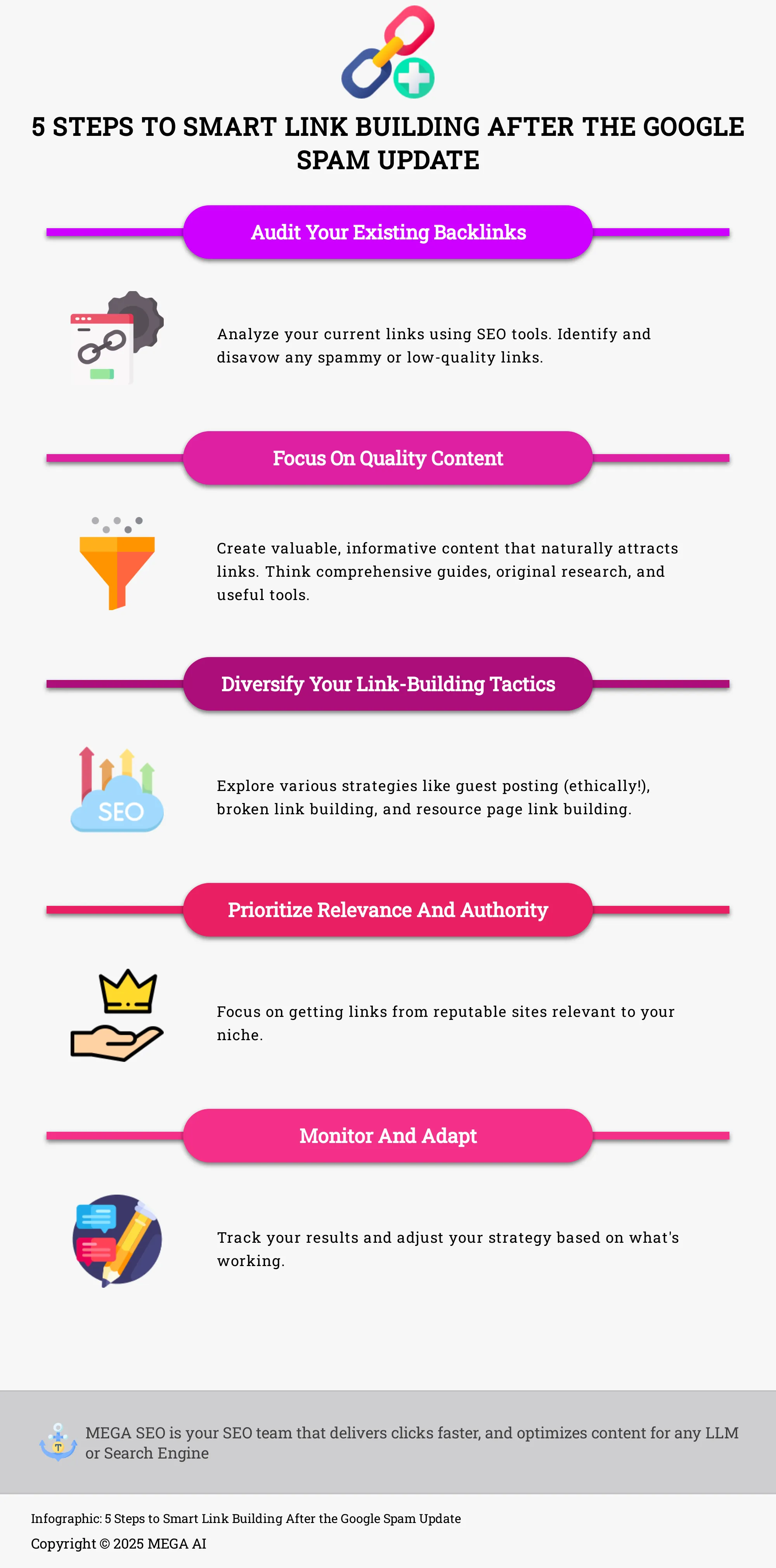
Consider link building now as a natural byproduct of creating exceptional content and cultivating genuine connections within your industry. It’s about offering so much value that other sites genuinely want to reference your work. This section will guide you through several practical strategies to develop a robust, resilient backlink profile that aligns with Google's guidelines. We'll explore how to create content that naturally attracts links, utilize digital PR, guest post ethically, and discover opportunities by examining what your competitors are doing. By understanding and applying these modern link-building techniques, you can continue to enhance your site's authority and organic traffic, even in this evolving digital landscape.
Create Content That Earns Links
At the core of any successful link-building effort, particularly after the Spam Update, is outstanding content. Your primary aim should be to produce "link-worthy content"—pieces so informative, unique, or valuable that other website owners and content creators naturally want to cite them as a resource. This could take the form of comprehensive guides, original research findings, insightful case studies, or innovative free tools. When your content genuinely assists your audience or presents a fresh perspective, it becomes a natural magnet for backlinks.
Concentrate on understanding your audience's pain points and interests. What questions are they frequently asking? What problems are they attempting to solve? Crafting content that directly addresses these needs will not only connect with your readers but also significantly increase the likelihood of others linking to it. Remember, "by understanding link-building basics, setting clear goals, creating link-worthy content, and tracking results, small businesses can build a sustainable, high-quality link profile that supports long-term growth."
Use Digital PR and Reactive Outreach
Digital PR is an excellent method for earning high-authority backlinks by getting your brand or content featured in online publications. An effective tactic within digital PR is reactive outreach. This involves responding to requests from journalists or writers who are seeking expert sources or specific information for their articles. Platforms like Help a Reporter Out (HARO) or Quoted are very useful for this. As one expert pointed out, "Reactive PR is when you're reacting to high-quality, high-trust link opportunities... Both of these platforms allow you to supply quotes to journalists; in turn, your quotes end up in high-trust websites."
By providing timely and insightful responses, you can secure mentions and links from reputable news sites and blogs, which can substantially boost your site's credibility. This approach centers on offering genuine value and expertise, aligning perfectly with Google's preference for authentic link-building practices.
Guest Post Ethically on Reputable Sites
Guest posting can still be a worthwhile link-building tactic, provided it's approached ethically and with a strong focus on quality. The key is to contribute genuinely useful content to reputable websites within your niche, rather than simply trying to obtain a link from any available source. Your guest post should offer real value to the host site's audience. It's vital that "in every article you get a link; it just doesn't look like a guest post. It should look like the owner of the blog wrote it."
This means the content must be well-written, original, and seamlessly integrated with the host blog's style and subject matter. The link back to your site should also appear natural and contextually relevant, perhaps within the body of the text or in an author bio that clearly indicates your affiliation. Steer clear of low-quality sites or those that openly sell links, as these can be significant red flags for Google. Instead, focus on building relationships with established, respected blogs in your field.
Try Broken Link Building and Resource Page Tactics
Broken link building is a smart strategy that involves identifying broken (404) links on other websites, creating content that would serve as a suitable replacement for that dead link, and then contacting the site owner to suggest your content as an alternative. This approach is beneficial because you're offering a solution to a problem for the webmaster—fixing a broken link enhances their user experience and site quality.
Similarly, resource page link building entails finding curated lists of helpful resources on other sites within your niche. If you have a piece of high-quality content that would be a valuable addition to such a page, you can reach out and suggest it. As has been noted, "High-quality content is at the core of any effective link-building strategy." Both tactics depend on having excellent content that genuinely merits being linked to, making them a white-hat way to acquire quality backlinks.
Find Opportunities by Analyzing Competitor Backlinks
Understanding where your competitors are acquiring their links can reveal a wealth of opportunities for your own link-building initiatives. By using SEO tools to analyze their backlink profiles, you can identify websites that are already linking to content similar to yours. This provides you with a preliminary list of potential link prospects to approach. Look for patterns: Are they obtaining links from specific types of sites, such as industry blogs, news outlets, or resource pages?
This analysis isn't about directly copying their strategy, but about understanding the competitive landscape and finding relevant sites that might also be interested in your unique, high-quality content. "Measuring link building success is all about conducting research and tracking your overall SEO." This research phase is essential for identifying high-potential targets and refining your outreach strategy. Tools like MEGA AI's SEO platform can be invaluable for this kind of in-depth competitive analysis.
How to Measure and Improve Link Quality
After Google's spam updates, understanding the true value of your backlinks is more critical than ever. It's not enough to simply acquire links; you need a solid process to measure their impact and continuously improve their quality. This means moving beyond vanity metrics and focusing on how links contribute to your actual SEO performance and business objectives. Effective measurement involves a combination of the right tools, clear objectives, and ongoing analysis of your backlink profile. By consistently evaluating where your links come from, how they appear, and what results they drive, you can refine your strategy to build a resilient and authoritative online presence. This section will walk you through the essential steps to gauge your link-building success and enhance the quality of your connections. We'll cover the tools you need for prospecting and analysis, the key performance indicators (KPIs) to monitor, how to assess the quality of link sources, the importance of natural-looking links, and finally, how to track the tangible results in organic traffic and keyword rankings. Adopting these practices will help you build a link profile that not only withstands algorithm changes but actively propels your website's growth.
Tools for Link Prospecting and Backlink Analysis
To effectively build and manage your backlink profile, you'll need a good set of tools. These platforms are essential for both discovering new link opportunities and scrutinizing your existing backlinks. They allow you to conduct research by identifying websites that might be a good fit for outreach, examining where your competitors are getting their links, and assessing important metrics like domain authority or domain rating. Using these tools empowers you to make informed, data-driven decisions about your link-building activities, ensuring your efforts are targeted and efficient rather than based on guesswork. This systematic approach is fundamental to building a high-quality backlink profile.
KPIs to Measure Link Building Success
Before you even begin a link-building campaign, it's vital to define clear goals. Knowing what you want to achieve will guide your strategy and help you measure success accurately. Key Performance Indicators (KPIs) you should track include the number of new, high-quality referring domains you acquire, improvements in your website's authority scores (like Domain Authority or Domain Rating), and, most importantly, tangible increases in organic traffic and better keyword rankings for your target pages. Regularly monitoring these KPIs will provide clear insights into which link-building tactics are effective and where adjustments might be needed in your approach.
Evaluate Link Source Quality and Traffic Potential
It's a fundamental truth in link building: not all links carry the same weight. When you're evaluating a potential website to get a link from, several factors come into play. Consider how relevant the site's content is to your own niche; a link from a closely related site is generally more valuable. Look at its domain authority or domain rating as an indicator of its overall strength and trustworthiness. Crucially, assess the amount of organic traffic the site receives – a link from a site with genuine, engaged visitors has more potential to send referral traffic and signal authority to search engines. High-quality, well-maintained content on the linking site is also a strong positive signal.
Make Sure Your Links Look Natural
Google places significant value on links that appear to be genuine endorsements from other websites. This means your backlinks should be integrated seamlessly and naturally within relevant, high-quality content. The anchor text—the clickable words that form the link—should make sense in the context of the surrounding text and ideally use a variety of terms, not just exact match keywords. Avoid any practices that make links look forced, such as stuffing them into unrelated content or excessively optimizing anchor text with the same keywords repeatedly. A well-crafted website with valuable information will naturally attract better quality links because site owners will be more inclined to work with you.
Track Organic Traffic and Keyword Rankings
While metrics like the number of new referring domains and authority scores are important indicators, the ultimate measures of your link-building success are tangible improvements in your organic traffic and keyword rankings. Consistently monitor how your website's rankings for your target keywords change over time. Are you moving up in the search results for terms that matter to your business? Also, pay close attention to whether you see an increase in organic visitors to the specific pages you're building links to. It’s important to remember that significant SEO results from link building often take time to fully manifest, sometimes six months or more.
Avoid These Common Link-Building Mistakes Post-Update
Navigating link building after a Google update, like the Spam Update, means being extra careful about your strategies. Some old tactics that might have worked in the past are now riskier than ever and can seriously harm your SEO efforts. For startups and small businesses especially, a penalty can be a significant setback. Google's algorithms, particularly with enhancements like SpamBrain, have become increasingly sophisticated at identifying and penalizing unnatural link patterns. This means that shortcuts or attempts to game the system are more likely to backfire, potentially leading to ranking drops or even manual actions that can be difficult to recover from. To keep your website in good standing and ensure your hard work pays off, it's crucial to steer clear of practices that Google views as manipulative. Focusing on genuine, quality-driven link building will always be the safer and more effective approach for sustainable success. Understanding what not to do is just as important as knowing what to do. Let's look at a few common pitfalls to avoid so you can build a strong and resilient backlink profile that supports long-term growth. This proactive approach will help you maintain your rankings and build a trustworthy online presence, adapting to the ever-evolving search landscape. For digital marketing agencies, guiding clients away from these pitfalls is a key part of providing value and ensuring their campaigns deliver lasting results.
Don't Use Paid Links or Too Many Reciprocal Links
It might seem like a quick win, but paying for links or engaging in excessive reciprocal linking can land you in hot water with Google. As Matt Diggity points out, "Buying or selling links is a No-No whether that be exchanging money for links or exchanging a service for links." This includes scenarios where content is exchanged primarily for a link, which can blur the lines with some guest posting practices if not handled carefully. Google's guidelines are clear that links should be editorially earned, not purchased. While a few natural reciprocal links between relevant sites might be fine, systematic link exchanges aimed at manipulating rankings are a red flag. Focus on creating value that earns links organically; this is a cornerstone of sustainable SEO.
Keep Your Anchor Text Natural
The words you use to link to your site, known as anchor text, play a role in how search engines understand your content. However, over-optimizing anchor text with exact match keywords can look manipulative. Google considers "any links that are intended to manipulate rankings" as potential link spam. Instead of stuffing keywords, aim for natural and diverse anchor text. This includes using your brand name, descriptive phrases, or even generic anchors like "click here" or "learn more" when appropriate. A natural anchor text profile looks varied and reflects how people would genuinely link to your content. This approach is much safer and more sustainable than trying to force keyword-rich anchors everywhere, ensuring your efforts contribute positively to your site's authority.
Get Links from High-Traffic Websites
Not all links are created equal, and links from websites with genuine traffic tend to carry more weight. As research highlighted by Matt Diggity suggests, "If you get a link from one of these rare sites with traffic, there's a high chance it's not going to be ignored." In fact, focusing on links from quality websites with traffic showed an 87% chance of a ranking improvement in tests. This makes sense: a link from a site that people actually visit and engage with is more likely to be seen as a genuine endorsement. When evaluating potential link sources, look beyond just domain authority; consider if the site has an active audience and receives real traffic. These are the links that can truly make a difference to your visibility.
Link Building for Small Businesses: Overcome Common Challenges
Link building can often feel like an uphill battle, especially when you're a small business managing numerous priorities and facing competitors with more extensive resources. But this doesn't mean you can't succeed. With a smart and persistent approach, even smaller businesses can develop a strong backlink profile that helps drive traffic and improve search engine rankings. Many of the obstacles are common, and there are effective ways to address them. Let's explore how to tackle these link-building challenges and transform them into growth opportunities.
What to Do About Limited Resources and Budgets
When your budget is tight and your team is lean, every resource must be used wisely. It's easy to think effective link building is out of reach, but the key is to focus on efficiency and impact. "High-quality content is at the core of any effective link-building strategy," and while creating it "is also one of the hardest parts to execute well," it's where you can truly make a mark without a huge spend. Concentrate on developing exceptionally valuable, unique content—like in-depth guides or original insights—that people naturally want to reference and share. Using tools that assist with tasks like keyword research can also free up your valuable time for outreach and building relationships.
How to Compete with Bigger, Established Websites
Facing large, established websites with seemingly endless resources can be intimidating. However, your smaller size can be an advantage, offering agility and the ability to connect on a more personal level. Begin by ensuring your own website is in excellent shape. As industry voices note, "Make a great website and then focus on your link-building – people will be much more willing to work with you." A professional, user-friendly site builds essential credibility. Instead of directly competing for broad, high-traffic keywords, identify niche areas or long-tail keywords where you can establish your authority. Focusing on local SEO can also be particularly effective for small businesses, allowing you to build meaningful connections within your community.
Diversify Your Traffic Sources and Link Strategies
Relying on a single method for link building can leave your business vulnerable. A diversified approach is more resilient and sustainable. We understand that "Link building can be a game-changer for small businesses looking to enhance their online presence," and this impact is amplified when you broaden your tactics. Don't limit yourself to just one strategy like guest blogging. Explore other avenues such as finding broken link opportunities, getting listed on resource pages, and engaging in digital PR. Remember, "Developing a successful link strategy requires time, effort, and consistent optimization." This ongoing commitment to a varied approach will help you build a robust backlink profile that can adapt and continue to deliver results for your business.
Adapt Your SEO Strategy for Lasting Success
The digital landscape is always shifting, and Google's updates are a constant reminder that our SEO strategies need to be agile and forward-thinking. To build a resilient online presence, especially when it comes to link building, it’s about playing the long game. This means focusing on sustainable practices that not only please search engines but, more importantly, serve your audience well. Adapting your approach ensures your efforts today continue to pay off tomorrow, helping you build a strong foundation that can weather algorithm changes and keep your business growing. Let's look at how you can refine your strategy for enduring success.
Prioritize User Experience and Quality Content
At the heart of any successful, long-term SEO and link-building effort is a commitment to your audience. Creating high-quality content that genuinely helps, informs, or entertains your readers is paramount. As experts note, "Focusing on creating valuable, informative, and engaging content will not only attract links but also enhance user experience." Think about what your audience is searching for and aim to provide the best possible resource. When users find your content useful, they're more likely to engage with it and share it.
Consistently producing and maintaining such material can be a significant undertaking. This is where leveraging smart tools can make a difference. For instance, platforms like MEGA AI can assist with content generation and optimization, ensuring your articles are not only well-written but also structured to perform well in search. By focusing on user experience and the inherent quality of your material, you're building assets that earn links organically.
Align Link Building with Your Marketing Goals
Link building shouldn't exist in a vacuum; it needs to be an integral part of your broader marketing strategy. Before you even think about acquiring a single backlink, take a step back and clarify what you want to achieve. Are you aiming to increase brand awareness, drive traffic to specific product pages, or establish your site as an authority in your niche? Setting clear, measurable goals will guide your link-building activities.
This "alignment ensures that your link-building efforts contribute directly to your overall marketing objectives." Once your objectives are clear, you can develop a link-building plan that directly supports them. This means identifying the right kind of websites to get links from and creating content that resonates with both their audience and yours. Regularly tracking your results against your initial goals will show you what's working and where you might need to adjust.
Balance Automation with Real Relationship Building
In the world of SEO, efficiency is key, and automation certainly has its place. Tools can help streamline repetitive tasks like identifying potential link prospects or tracking your backlink profile. This can free up valuable time, allowing you to focus on more strategic aspects of your campaign. For example, MEGA AI's SEO automation features can handle much of the heavy lifting in keyword research and content maintenance, making your workflow smoother.
However, it's crucial to remember that link building, at its core, is about connecting with other people. "While automation can help streamline some processes, building genuine relationships is crucial for effective link-building." People are more willing to link to you if they trust you and see value in what you offer. So, use automation wisely to enhance your efforts, but always prioritize authentic communication for sustainable success.
What's Next for Link Building in SEO?
The world of SEO, and link building within it, is constantly evolving. To keep your strategies effective, it’s important to look ahead at what’s changing and how new technologies are influencing best practices. Staying informed allows you to adapt and continue building a strong backlink profile that supports your website's growth.
Spot Emerging Trends and Prepare for Algorithm Changes
SEO is a field that's always on the move. If you work in digital marketing or run a business, you know that keeping up with Google's algorithm updates is a big part of the job. These changes can sometimes feel like a rollercoaster, bringing both opportunities for growth and moments of, let's be honest, a bit of head-scratching. Staying informed isn't just a good idea; it's essential for making sure your link-building efforts continue to deliver results. Think of it as keeping your finger on the pulse of the industry so you can adapt your strategies proactively rather than reactively. Understanding these updates helps you anticipate shifts and keep your website performing well.
How AI is Shaping Link Building and SEO
One of the most significant shifts we're seeing is the growing role of Artificial Intelligence. We all know that fantastic, high-quality content is the heart of any successful link-building strategy. But let's face it, consistently creating that top-notch content can be one of the toughest parts of the puzzle. This is where AI is starting to make a real difference. AI tools can help streamline content creation, identify link-worthy topics, and even assist in outreach. When you have a great website filled with valuable content, people are naturally more inclined to link to you. AI can help you build that strong foundation more efficiently, freeing you up to focus on building genuine relationships and strategic partnerships. Platforms are now emerging that can automate SEO tasks, including content optimization, which directly supports link-building efforts by ensuring your content is discoverable and valuable.
Create Your Comprehensive Link-Building Plan
Alright, now that we've covered the ins and outs of safe and effective link building after Google's Spam Update, it's time to put that knowledge into action. A solid plan is your roadmap to success, ensuring your efforts are focused and yield the best results. Think of it like this: you wouldn't start a road trip without a destination and a map, right? The same applies to building high-quality backlinks.
A well-thought-out plan helps you stay on track, measure your progress, and adapt to the ever-changing SEO landscape. It’s about being intentional with every link you pursue. This means understanding not just how to build links, but why you're building them and what specific outcomes you expect. By creating a comprehensive strategy, you move from scattered tactics to a cohesive approach that genuinely contributes to your website's authority and visibility. Let's look at how to build a plan that works for your business.
Develop a Strategy Tailored to Your Business Goals
Before you even think about reaching out for your first backlink, take a step back and ask: what are we trying to achieve? Your link-building efforts should directly support your broader business objectives. Are you aiming to increase sales for a specific product, drive sign-ups for a new service, or establish your brand as a thought leader in your niche? It's essential to define clear goals before starting any link-building campaign, as this clarity will guide every decision you make.
Once your goals are clear, you can identify the key pages on your website that will help you achieve them. Then, you can focus on creating link-worthy content for those pages – content that provides real value and naturally attracts attention. By understanding the basics of link building and setting these clear objectives, you can build a sustainable, high-quality link profile that supports your long-term growth. This strategic approach ensures every link contributes meaningfully to your overall success.
Monitor and Adjust Your Link-Building Efforts Continuously
Link building isn't a one-and-done task; it's an ongoing process that requires consistent attention and refinement. Think of it like tending a garden – you plant the seeds, but you also need to water, weed, and adjust based on how things are growing. Similarly, you need to regularly measure your link building success by tracking key performance indicators (KPIs). These might include the number of new referring domains, the authority of those domains, changes in your organic traffic, and improvements in keyword rankings for your target pages.
Keeping a close eye on these metrics will tell you what’s working and what’s not. Perhaps guest posting on industry blogs is yielding great results, but your resource page efforts are falling flat. This data allows you to make informed decisions and adjust your strategy accordingly. Maybe you need to refine your outreach messaging or target different types of websites. The digital landscape is always shifting, so a willingness to adapt is key to maintaining momentum. Utilizing comprehensive SEO tools can simplify the tracking of these crucial metrics, helping you stay on top of your performance and make timely adjustments.
Related Articles
- Link Building 101: Definition, Types & Best Practices
- Link Building Strategies: The Complete Guide
- Link Building Strategies: The Ultimate Guide (2024)
Frequently Asked Questions
I'm worried my past link-building efforts might be considered spammy. What's the first step I should take? If you're concerned about your existing backlink profile, the best first step is to conduct a thorough audit. Use SEO tools to examine where your links are coming from. Look for patterns that might align with what Google considers manipulative, such as a high volume of links from low-quality or irrelevant sites, or an over-optimized anchor text profile. Understanding what you're working with is key before deciding on any corrective actions.
How long does it usually take to see positive results from ethical link-building practices? Building high-quality links is a long-term strategy, so patience is important. While minor positive signals might appear sooner, significant improvements in rankings and organic traffic from ethical link building typically take several months, sometimes six months or even longer, to fully materialize. It depends on your industry, competition, and the consistency of your efforts.
Is it still worth trying to get links from directories or forums after the Spam Update? It really depends on the quality and relevance of the directory or forum. General, low-quality directories that exist solely for link building are best avoided. However, niche-specific, well-moderated directories or forums where your ideal audience actively participates can still offer some value, not just for potential links but also for brand visibility and referral traffic. The key is to be highly selective and prioritize genuine engagement over just dropping a link.
With AI becoming more prevalent, can I just automate all my link building now? AI tools can certainly help streamline parts of the link-building process, like identifying potential prospects or analyzing data. However, link building is fundamentally about building relationships and demonstrating value to other humans. The outreach and relationship-building aspects still benefit greatly from a personal touch and genuine communication, which AI can support but not fully replace.
If I'm a small business with a tiny budget, what's the one link-building activity I should focus on? If you have limited resources, your best bet is to focus on creating truly exceptional, valuable content that naturally attracts links. This could be a comprehensive guide, original research, or a unique tool relevant to your audience. While it requires effort upfront, high-quality content serves as a long-term asset that people will want to reference, share, and link to organically, which is the most sustainable approach.