
Want to connect your products with eager buyers? As a reseller, reseller keywords are crucial for getting your listings seen. They're the words and phrases shoppers use, and knowing how to use them is your secret weapon. This guide dives into everything about reseller keywords, from the basics to advanced tricks for keyword optimization for distributors. We'll cover different keyword types, tailoring strategies for various marketplaces, and give you the resources to boost your sales. Let's get started.
Key Takeaways
- Use precise keywords: Prioritize long-tail keywords to connect with buyers actively searching for specific products. Incorporate location-based keywords for local selling and niche terms for specialized inventories.
- Optimize product listings for each marketplace: Combine relevant keywords with compelling descriptions that highlight benefits and features. Tailor your approach for each platform, understanding the nuances of eBay, Amazon, Poshmark, and others.
- Regularly review and adapt your keyword strategy: Track keyword performance metrics like CTR and conversions. Refine your approach based on data, staying agile and responsive to market changes and emerging trends. Consider tools like MEGA SEO to automate updates and stay ahead of the competition.
What Are Reseller Keywords?
Reseller keywords are the terms online shoppers use to find the specific products you’re selling. They’re the connection between your inventory and potential buyers. Think of them as the language of online marketplaces—if you speak it fluently, you’ll attract more customers and sales. Just like any effective communication, choosing the right words is crucial. The terms you use in your product titles and descriptions directly impact how easily buyers can find your items.
Understanding Reseller Keywords and Their Importance
Keywords are the foundation of search engine optimization (SEO) for resellers. SEO is the practice of optimizing your listings to rank higher in search results on platforms like eBay, Amazon, Poshmark, and Mercari. Higher rankings mean more visibility for your products, leading to increased traffic and more sales. Using relevant keywords in your listings significantly improves the chances of buyers finding what you’re offering.
Reseller Keywords vs. General Keywords: What's the Difference?
While the principles of keyword research apply across the board, reseller keywords have some key differences. General keywords tend to be broader, focusing on general product categories. For example, “electronics” is a general keyword. Resellers, however, need to be more specific. Instead of “electronics,” a reseller might use long-tail keywords like “vintage Sony Walkman” or “refurbished iPhone 11.” Long-tail keywords, being more specific, target a niche audience with a clear intent to purchase. This precision is what connects you with buyers actively searching for your exact product. The more specific you are, the easier it is for the right buyers to find you. Regularly monitoring your keyword rankings helps you understand how your SEO efforts are performing and identify areas for improvement. This is especially important for resellers, as trends and demands can shift quickly.
What Distributors Need to Know About Keyword Optimization
Distributors play a crucial role in the supply chain, connecting manufacturers with retailers and other businesses. In today's digital world, effective keyword optimization is essential for distributors to reach their target audience and drive sales. By understanding how customers search for products, distributors can tailor their online presence to attract more leads and establish themselves as industry leaders. Explore free SEO tools to kickstart your keyword optimization journey.
Why Keyword Optimization is Crucial for Distributors
Keyword optimization is the backbone of a successful online strategy for distributors. It's the process of researching, analyzing, and selecting the right keywords to use in your website content, product descriptions, and online marketing materials. Effective keyword optimization helps search engines understand what your business offers, allowing them to connect you with potential customers actively searching for those products or services. For distributors, this translates to increased visibility, higher website traffic, and ultimately, more sales. Consider leveraging MEGA SEO's automated keyword research tools to streamline this process and uncover valuable keyword opportunities. Learn more about keyword research and other SEO resources.
Reaching Local Customers
For distributors, local SEO is paramount. Many customers search for local suppliers, especially when dealing with bulky or specialized products. Optimizing your website and online presence for location-based keywords ensures that your business appears in search results when potential customers in your area are looking for what you offer. This includes using city and region names in your website content, meta descriptions, and online directory listings. Think like your customer. If you were searching for a specific product in your area, what terms would you use? Incorporate those terms into your keyword strategy. Request customized SEO support to target your local audience effectively.
Building Brand Authority
Beyond attracting customers, keyword optimization plays a vital role in building brand authority. By creating high-quality, informative content that targets relevant keywords, distributors can position themselves as experts in their field. This involves developing blog posts, articles, videos, and other resources that address customer questions and provide valuable insights. When your content consistently ranks well for relevant keywords, it builds trust with potential customers and establishes your brand as a reliable source of information. This can significantly influence purchasing decisions and foster long-term customer loyalty. MEGA SEO's content generation features can assist in creating optimized content that resonates with your target audience. Book a demo to see how MEGA SEO can help.
Understanding the Distributor's Customer Journey
The customer journey for distributors often involves multiple stages, from initial research to final purchase. Understanding these stages and the keywords associated with each is crucial for effective targeting. By tailoring your keyword strategy to each phase, you can connect with potential customers at the right moment and guide them towards a purchase.
Research Phase Keywords
In the research phase, potential customers are exploring their options and gathering information. They may be using broad keywords to understand the different types of products available. For distributors, this means targeting informational keywords that answer common customer questions and provide valuable insights. For example, a distributor of industrial equipment might target keywords like "types of industrial pumps" or "benefits of using hydraulic systems." Ranking well for these research-driven keywords can position your business as a trusted resource and increase visibility to potential buyers. Use MEGA SEO's keyword research tools to identify relevant informational keywords and gain a competitive edge.
Comparison Phase Keywords
Once potential customers have a better understanding of their options, they move into the comparison phase. Here, they're actively comparing different products and brands, looking for the best fit for their needs. Distributors should focus on keywords that highlight the unique features and benefits of their products. This might include comparison keywords like "product A vs. product B" or "best industrial pumps for high-pressure applications." Providing detailed product comparisons and reviews can help influence purchasing decisions in your favor. Let MEGA SEO analyze your competitors' keywords to identify opportunities for differentiation and targeted comparison content.
Purchase Phase Keywords
Finally, when customers are ready to buy, they use transactional keywords that indicate a clear purchase intent. These keywords often include terms like "buy," "order," or "purchase." Distributors should optimize their product pages and checkout process for these purchase-oriented keywords to ensure a seamless buying experience. This includes making it easy for customers to find pricing information, shipping details, and secure checkout options. A smooth and efficient purchase process can significantly improve conversion rates and drive sales. MEGA SEO can help optimize your product pages for transactional keywords, ensuring that your business is visible to customers ready to make a purchase. Contact us to learn more.
Exploring Different Types of Reseller Keywords
As a reseller, choosing the right keywords is crucial for driving targeted traffic to your listings. Different types of keywords cater to various search intents and customer demographics. Understanding these nuances can significantly impact your visibility and sales.
Short-Tail vs. Long-Tail: Choosing the Right Keywords
Short-tail keywords are generally one or two words, like “vintage dress.” They’re broad and cast a wide net, attracting a large volume of searches. However, this also means high competition and less qualified leads. Someone searching for “vintage dress” could be looking for anything from a 1920s flapper dress to a 1990s slip dress. Learn more about keyword strategy on the Ahrefs blog.
Long-tail keywords, on the other hand, are more specific, typically three or more words, such as “1950s vintage swing dress size medium.” These keywords target a niche audience with a particular need. While they attract lower search volume, the traffic they bring is highly qualified and more likely to convert into sales. Think of long-tail keywords as laser-focused, attracting buyers who know exactly what they want.
Using Localized and Niche Reseller Keywords
For resellers operating locally or specializing in a particular product category, incorporating location and niche-specific keywords is essential. Localized keywords include a location, like “vintage furniture Chicago,” targeting buyers in a specific geographic area. This is particularly useful for items that are difficult or expensive to ship, or for resellers who offer local pickup or delivery. For more information on local SEO, visit WordStream.
Niche-specific keywords focus on a particular product category or characteristic, such as “mid-century modern furniture” or “handmade ceramic mugs.” These keywords help attract buyers interested in your specific offerings, increasing the chances of a sale. By combining localized and niche keywords, like “handmade jewelry Brooklyn,” you can further refine your targeting and reach the most relevant customers.
Location-Based Keywords for Distributors
In the competitive world of reselling, using location-based keywords is key for connecting with local buyers. Localized keywords, such as "vintage furniture Chicago," not only target customers in specific geographic areas, but also boost visibility for products that might be difficult or pricey to ship. This tactic is especially helpful for resellers offering local pickup or delivery options, aligning perfectly with buyers seeking convenience and speed.
As MEGA SEO points out, “Localized keywords, like 'vintage furniture Chicago,' target buyers in a specific geographic area. This is particularly useful for items that are difficult or expensive to ship, or for resellers who offer local pickup or delivery.” This approach lets distributors tap into an often-missed market segment, maximizing their sales potential. For more in-depth information on distribution and SEO, check out this resource.
Combining localized keywords with niche-specific terms refines targeting even further. For example, "handmade jewelry Brooklyn" specifies both the product and the location, making it simpler for potential customers to find precisely what they want. This precise targeting ensures your products are seen by the most interested buyers, as highlighted by MEGA SEO.
Capitalizing on Seasonal and Trending Keywords
Capitalizing on seasonal trends and current events can give your sales a significant boost. Seasonal keywords, such as “Halloween costumes” or “winter coats,” target buyers looking for specific items during a particular time of year. Plan your inventory and keyword strategy in advance to maximize visibility during peak seasons. Use Google Trends to identify emerging trends and learn about keyword performance to inform your keyword choices.
Trend-based keywords tap into current market interests, like “Y2K fashion” or “cottagecore decor.” Staying on top of trends and incorporating relevant keywords into your listings can help you attract buyers looking for the latest must-have items.
How to Optimize Your Reseller Keywords
Now that you understand the different types of reseller keywords, let’s discuss how to use them effectively. This involves careful research, strategic placement, and ongoing monitoring. MEGA SEO helps automate these time-consuming tasks, freeing you to focus on other aspects of your business.
Researching High-Impact Reseller Keywords
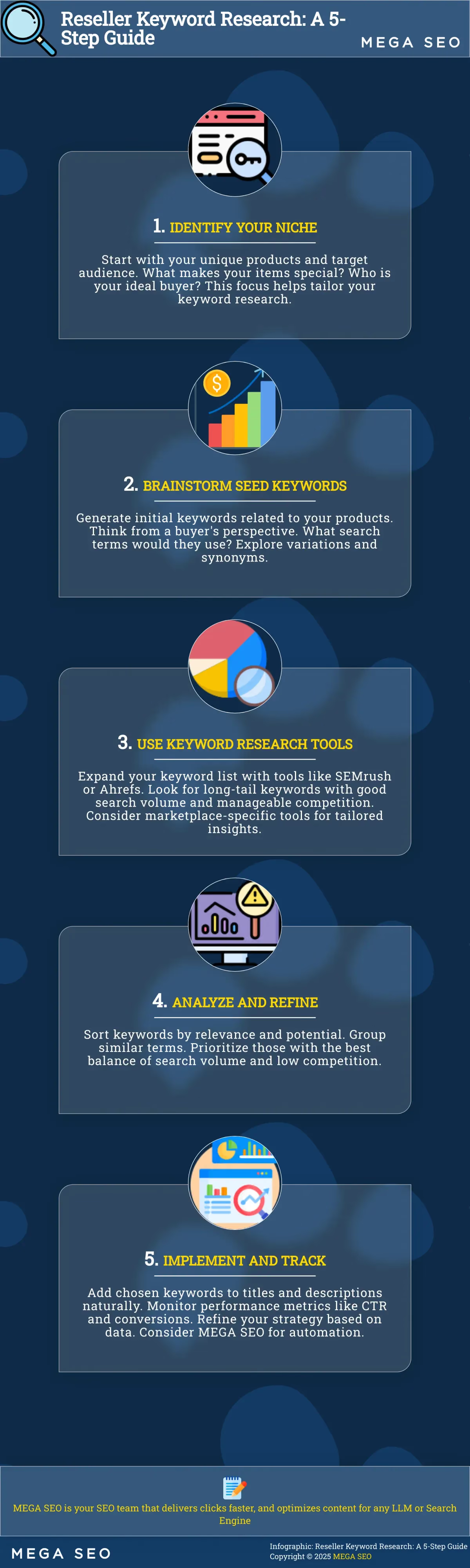
Start by identifying relevant keywords with a high search volume. Prioritize keywords with a balance of high search volume and manageable competition. Consider using long-tail keywords, as they often have less competition and can attract highly targeted traffic. Tools like SEMrush provide data on search volume, keyword difficulty, and competitor analysis. Tracking your keyword rankings over time is crucial for monitoring performance, and SEMrush offers this feature as well. MEGA SEO’s automated keyword research tools streamline this entire process, providing you with valuable keyword data and insights.
Adding Keywords to Titles and Descriptions
Once you’ve identified your target keywords, incorporate them strategically in your product titles and descriptions. A clear, concise title with relevant keywords helps search engines understand your offerings. Craft compelling product descriptions that naturally incorporate your chosen keywords, highlighting the benefits and features of your products. Remember, your descriptions should appeal to both search engines and potential buyers. MEGA SEO can help you generate optimized titles and descriptions, ensuring your products are easily discoverable by customers.
Balancing Keyword Density and Readability
While using keywords is important, avoid keyword stuffing. Overusing keywords makes your content sound unnatural and may even hurt your search ranking. Focus on creating high-quality, informative content that is easy to read and provides value to your customers. Strive for a natural flow and balance between keyword optimization and readability. Monitor your keyword rankings and performance metrics, such as clickthrough rate (CTR) and conversions, to gain insights into what’s working and adjust your strategy as needed. Measuring keyword performance is an ongoing process. MEGA SEO’s Maintenance Agent can automatically update your content, ensuring it remains optimized for search engines while maintaining a natural, reader-friendly style.
Understanding Keyword Stuffing
Types of Keyword Stuffing to Avoid
Keyword stuffing is the practice of overusing keywords in your product listings in an attempt to manipulate search engine rankings. It can manifest in several ways, such as repeating the same keyword multiple times in a title, cramming keywords into a description without regard for readability, or using irrelevant keywords just because they have high search volume. This tactic can backfire and harm your visibility. For example, imagine a listing for a vintage dress that repeats the phrase "vintage dress" excessively. This not only makes the description clunky but also signals to search engines that you’re prioritizing manipulation over user experience.
Consequences of Keyword Stuffing
Search engines like Google are sophisticated enough to detect keyword stuffing. Not only does it make your listings difficult to read for potential customers, but it can also lead to penalties from search engines, lowering your rankings and making it harder for people to find your products. Customers are more likely to leave websites that are hard to read, further impacting your site's performance. Focus on providing value and a positive user experience instead of trying to game the system. A poorly written, keyword-stuffed listing can damage your credibility and deter potential buyers.
Best Practices to Avoid Keyword Stuffing
The key to effective keyword usage is relevance and moderation. Research and select keywords that accurately reflect your products and align with what your target audience is searching for. Use a variety of related terms and phrases to avoid repetition. A good rule of thumb is to keep your keyword density—the percentage of times a keyword appears on a page—between 1-3%. Tools like MEGA SEO’s free tools can help you analyze keyword density and optimize your listings for readability and search engine performance. Remember, writing for humans is just as important as writing for search engines.
Optimizing Your Google Business Profile
The Impact of Images on Your Google Business Profile
Your Google Business Profile is a powerful tool for attracting local customers. One of the most effective ways to optimize your profile is by adding high-quality images. Studies show that businesses with 100 or more images on their Google Business Profile see a significant increase in customer engagement, including a 520% increase in phone calls and a 1065% increase in website clicks. Showcase your products, storefront, and team to create a compelling profile that attracts potential buyers. Consider using professional photos to enhance your brand image and make a lasting impression.
Website Speed and Mobile-Friendliness
Why Website Speed Matters
In today’s fast-paced world, website speed is paramount. Users expect websites to load quickly, and if your site takes too long, they’ll likely abandon it. Research indicates that over half of users will leave a website if it takes longer than three seconds to load. This can significantly impact your bounce rate and ultimately affect your search engine rankings. Prioritizing website speed is essential for providing a positive user experience and maximizing your online visibility. A slow website can frustrate potential customers and lead to lost sales.
Mobile-First Indexing and Responsive Design
With the majority of online traffic coming from mobile devices, Google now uses mobile-first indexing. This means Google primarily uses the mobile version of your website for indexing and ranking. Therefore, having a mobile-friendly website is no longer optional—it’s a necessity. Responsive design, which allows your website to adapt seamlessly to different screen sizes, is the best approach for ensuring your site looks and functions flawlessly on any device. This is crucial for reaching the widest possible audience and maximizing your online presence. Test your website on various devices to ensure a consistent user experience.
Creating Valuable Content for Distributors
Blog Posts
Creating valuable content is a cornerstone of a successful SEO strategy. Blog posts are an excellent way to provide informative and engaging content that answers customer questions, establishes your expertise, and drives traffic to your website. Focus on topics relevant to your industry and target audience, incorporating relevant keywords naturally throughout your writing. MEGA SEO can help you create customized blog posts optimized for search engines and designed to resonate with your target audience. Consider creating a content calendar to plan and schedule your blog posts effectively.
Videos
Videos are a highly engaging content format that can capture attention and convey information effectively. When creating videos for your business, focus on user search intent. What questions are your customers asking? What problems are they trying to solve? Create videos that address these needs and optimize them with relevant keywords in the title, description, and tags. This will help your videos rank higher in search results and attract more viewers. Use tools like YouTube Analytics to track video performance and identify areas for improvement.
Infographics
Infographics are a visually appealing way to present complex information in a digestible format. They can be highly shareable, increasing your brand’s reach and visibility. Like blog posts and videos, infographics should be created with user experience in mind. Focus on providing valuable information that answers customer questions and positions your business as a knowledgeable resource. Incorporate relevant keywords naturally within the infographic text and optimize the image file name and alt text for search engines. Promote your infographics on social media and other relevant platforms to maximize their impact.
Tailoring Keyword Strategies for Each Marketplace
Each online marketplace has its own quirks. Keywords that work well on eBay might not perform as well on Amazon, Poshmark, or Mercari. Understanding these nuances is key to maximizing your visibility and sales. Let’s break down how to adjust your keyword approach for different platforms.
Optimize Keywords for eBay and Amazon
On marketplaces like eBay and Amazon, competition is fierce. You’re vying for attention not only from other resellers, but also from established brands. Thorough keyword research is essential. Tools like SEMrush can be invaluable for your keyword research. Knowing what your competitors are ranking for allows you to refine your own strategy and target high-value search terms. This data-driven approach is crucial for building a successful SEO campaign on these competitive platforms. Remember to use these insights to adjust your product titles and descriptions to align with what buyers are searching for.
Keyword Strategies for Niche Platforms (Poshmark, Mercari, etc.)
Niche platforms like Poshmark and Mercari often have a more specific audience. Think about the language your target buyer uses on these platforms. It’s likely more conversational and less formal than on Amazon. While keyword research is still important, focus on incorporating those keywords naturally within your descriptions. For example, placing keywords in your title, the first sentence of your description, and at the end can improve visibility. Don’t just list features; highlight the benefits and use descriptive language that resonates with the platform’s users. Think about the specific styles, brands, and trends that are popular on each platform. Using niche-specific keywords related to these trends can help you connect with the right buyers. Regularly monitoring your keyword performance and adjusting your strategy based on the results is crucial.
Improving Poor-Performing Keywords in Google Ads
Even with careful planning, some keywords might not perform as well as expected. This is normal! Regularly reviewing and adapting your keyword strategy is key to a successful Google Ads campaign. Google Ads provides robust reporting tools to help you identify and improve underperforming keywords.
Analyzing Search Terms and Using Filters
Start by identifying keywords that aren’t bringing in the clicks or conversions you’d hoped for. Google Ads’ reporting tools make this easy. Use filters to narrow down your keywords by metrics like Quality Score, click-through rate (CTR), and bid estimates. This helps you quickly pinpoint low-performing keywords that need attention. For example, a low CTR might indicate that your ad copy isn’t resonating with users searching for that particular keyword.
Improving Quality Score and Click-Through Rate (CTR)
Once you’ve identified underperforming keywords, focus on improving their relevance. Make sure your keywords accurately reflect the products or services you offer. Use more specific, multi-word keywords instead of single, general words. For instance, “women’s vintage leather boots size 8” is much more effective than simply “boots.” This precision helps Google understand exactly what you’re selling and match your ads with the right searches, ultimately improving your Quality Score and CTR. A higher Quality Score can also lower your ad costs.
Using Automated Rules in Google Ads
Google Ads offers automated rules to streamline campaign management. You can set rules to automatically pause or adjust bids on keywords based on specific performance criteria. This saves you time and ensures you’re consistently optimizing your campaigns. For example, you could create a rule to automatically pause keywords with a CTR below a certain threshold, preventing wasted ad spend on ineffective terms. Regularly review and adapt your automated rules to stay aligned with your overall campaign goals. Learn more about automated rules and how they can improve your workflow.
Understanding Keyword Types and Search Intent
Understanding the different types of keywords and their corresponding search intent is crucial for creating effective content and ad campaigns. By aligning your content with what users are actually searching for, you increase the chances of attracting qualified leads and driving conversions. Semrush offers a helpful guide to understanding the different types of keywords.
Informational Keywords
Informational keywords are used when people are looking to learn something. Think “how to restore antique furniture” or “best practices for reselling vintage clothing.” Content targeting these keywords should be detailed, answer frequently asked questions, and cite reliable sources. The goal is to provide valuable information that establishes you as a trusted resource in your niche.
Navigational Keywords
Navigational keywords are used when users are looking for a specific website or page. Examples include “MEGA SEO blog” or “eBay login.” Ensure your brand name and product names are included in your keyword strategy to capture these searches. This helps users easily find your website or specific product pages when they’re already familiar with your brand.
Commercial Keywords
Commercial keywords are used by people researching products or services before buying. Examples include “best vintage camera brands” or “compare online reselling platforms.” Content targeting these keywords should compare products, offer reviews, and answer questions potential buyers might have. The goal is to influence their purchasing decision by providing helpful information and showcasing your expertise.
Transactional Keywords
Transactional keywords show a clear intent to buy. Think “buy vintage Chanel handbag” or “discount designer shoes online.” These keywords are highly valuable because they indicate a customer is ready to purchase. Make sure your product pages and ads targeting these keywords are optimized for conversions, with clear calls to action and a seamless checkout process.
Mixed Search Intent and the Buyer Journey
Sometimes, a keyword can have mixed intent. For example, someone searching for “vintage watches” might be looking for information on vintage watches, browsing different styles, or ready to buy a specific model. Understanding the potential range of intent behind a keyword is important for crafting content that caters to different stages of the buyer journey. You might offer informative content alongside product listings to capture users at various stages of the buying process.
Keyword Distribution for App Store Optimization (ASO)
While this article primarily focuses on reseller keywords for online marketplaces, the principles of keyword optimization also apply to App Store Optimization (ASO). If you have a mobile app for your reselling business, ASO is crucial for improving its visibility in app store search results. Learn more about ASO best practices directly from Apple.
Where to Place Keywords in App Metadata
Strategically place keywords in your app's title, subtitle, and keyword field. The app title is the most important element for ASO, so include your most relevant keywords here. Use the subtitle to further elaborate on your app's functionality and incorporate additional keywords. The keyword field allows you to list relevant keywords that aren't included in your title or subtitle.
The Importance of Natural Language in ASO
Just like with website SEO, avoid keyword stuffing in your app metadata. Use natural language and focus on creating a compelling description that highlights the benefits of your app. This not only improves your ASO but also encourages users to download and engage with your app.
Keywords Resellers Use
Resellers operate in a competitive landscape, and using the right keywords is essential for success. SEO is paramount for resellers, as higher rankings in search results lead to increased visibility and sales. SEO.ai offers valuable insights into SEO for resellers.
Top Keywords for Resellers
The most effective keywords for resellers are often long-tail keywords that specify the brand, product type, condition, and other relevant details. Examples include “vintage Levi’s 501 jeans men’s size 32” or “refurbished Nintendo Switch console with warranty.” These specific keywords target buyers actively searching for particular items, increasing the likelihood of a sale.
Benefits of SEO for Resellers
SEO offers numerous benefits for resellers. By optimizing your product listings and online presence, you can attract more qualified leads, increase sales, and build a stronger brand reputation.
Easy SEO Tips for Resellers
Implementing effective SEO practices doesn’t have to be complicated. Here are some easy tips for resellers to improve their online visibility:
Claiming Your Google Business Profile and Bing Places for Business
If you have a physical store or offer local pickup, claiming your Google Business Profile and Bing Places for Business is essential. This allows your business to appear in local search results, connecting you with customers in your area.
Keyword Research for Resellers
Use SEO tools like SEMrush or Ahrefs to research relevant keywords your target audience uses. Identify keywords with high search volume and low competition for optimal results.
Content Creation for Resellers
Create high-quality content, such as detailed product pages and informative blog posts, addressing reseller needs and questions. This establishes you as a trusted resource and improves your search engine rankings.
Website Optimization for Resellers
If you have a website, optimize it for search engines by incorporating relevant keywords in your page titles, descriptions, and content. Ensure your website is mobile-friendly and loads quickly for a positive user experience.
Link Building for Resellers
Build high-quality backlinks to your website from reputable sources. This improves your website's authority and search engine rankings. Ahrefs offers a comprehensive guide to link building.
Technical SEO for Resellers
Address any technical SEO issues on your website, such as broken links, slow loading times, and duplicate content. This ensures your website is easily crawlable and indexable by search engines.
Utilizing SEO Tools
Tools like SEMrush provide valuable data on search volume, keyword difficulty, and competitor analysis. Use these tools to inform your keyword strategy and track your progress.
Considering Professional SEO Help
If you’re struggling with SEO, consider hiring a professional SEO consultant or agency. They can provide expert guidance and support to help you achieve your SEO goals.
Essential Keyword Research Tools and Resources
Effective keyword research is the foundation of any successful SEO strategy. A wealth of tools and resources are available to help resellers identify the terms their target audience uses. Let’s explore some popular options:
Top Keyword Research Tools for Resellers
Several versatile keyword research tools cater to a broad range of SEO needs. These platforms often offer features beyond keyword identification, such as competitor analysis and rank tracking.
SEMrush is a comprehensive suite that helps online sellers discover profitable keywords and build a successful SEO campaign. Its features include competitor analysis, keyword tracking, and robust reporting tools. Ahrefs, another popular choice, offers similar functionalities, allowing users to analyze backlinks, research keywords, and audit their website’s SEO performance. Moz Keyword Explorer focuses on providing actionable keyword suggestions, SERP analysis, and insights into keyword difficulty. These tools empower resellers to understand the competitive landscape and make informed decisions about their keyword strategy. Knowing which keywords your competitors rank for can help you identify opportunities and refine your approach.
Beyond simply identifying keywords, understanding their performance is crucial. Tracking and analyzing long-tail keywords helps resellers capitalize on specific opportunities and enhance their SEO and marketing efforts. This involves monitoring keyword rankings, click-through rates, and conversion data to refine your approach over time.
MEGA SEO for Keyword Research and Content Generation
When it comes to optimizing your reseller business, leveraging tools like MEGA SEO can significantly enhance your keyword research and content generation efforts. MEGA SEO provides automated keyword research tools that streamline the process of identifying high-impact keywords, allowing you to focus on other critical aspects of your business. This frees up your time to concentrate on sourcing inventory, managing customer relationships, or other tasks essential to your business's growth. As noted in our comprehensive SEO guide, finding relevant, high-volume keywords is the first step. Prioritize keywords with a good balance of high search volume and manageable competition. Consider using long-tail keywords, as they often experience less competition and can attract highly targeted traffic.
Incorporating keywords effectively into your product titles and descriptions is crucial for visibility. Think of your product titles as the first impression you make on potential buyers. Clear, concise titles with relevant keywords help both search engines and customers quickly understand what you’re offering. MEGA SEO assists in generating optimized titles and descriptions, ensuring your products are easily discoverable. Our guide emphasizes this, stating, “Once you’ve identified your target keywords, incorporate them strategically in your product titles and descriptions.” Compelling product descriptions that naturally incorporate your chosen keywords, highlighting benefits and features, are also essential. Remember, your descriptions should appeal to both search engines and potential buyers.
Moreover, maintaining a balance between keyword density and readability is essential. No one wants to read a wall of keywords. Focus on creating high-quality, informative content that is easy to read and provides value to your customers. Strive for a natural flow and balance between keyword optimization and readability. MEGA SEO emphasizes creating reader-friendly content. We advise, “While using keywords is important, avoid keyword stuffing. Overusing keywords makes your content sound unnatural and may even hurt your search ranking.” Monitor your keyword rankings and performance metrics, such as clickthrough rate (CTR) and conversions, to gain insights into what’s working and adjust your strategy as needed. MEGA SEO’s Maintenance Agent can automatically update your content, ensuring it remains optimized for search engines while maintaining a natural, reader-friendly style.
Finding the Best Marketplace-Specific Keyword Tools
While general keyword research tools offer a broad overview, marketplace-specific tools provide tailored insights for resellers operating on platforms like eBay, Amazon, Poshmark, and Mercari. These tools consider the unique search algorithms and user behavior within each marketplace.
Monitoring your keyword rankings provides insights into how your SEO efforts are performing and helps identify opportunities to improve. You can set up keyword tracking in Google Analytics or use a third-party tool like Keyword.com to uncover more data insights — such as share of voice, related keyword suggestions, and historical SERP performance. Effective keyword research tracking is an ongoing process that involves consistently monitoring, analyzing, and refining your keyword strategy. Resources like Keyword Search offer guidance on developing and maintaining a robust keyword strategy. These specialized tools often offer features like competitor analysis within the marketplace, listing optimization recommendations, and trend identification.
Common Reseller Keyword Mistakes to Avoid
Smart keyword choices are essential for any reseller. A poor keyword strategy can mean lost sales, even if you have great products. This section covers some common keyword mistakes and how to avoid them.
Keyword Stuffing and Other Keyword Pitfalls
Overusing broad keywords can actually hurt your SEO efforts. Think about it: if you’re selling vintage purses, simply using a term like “purses” isn’t enough. You’ll be competing with countless other sellers. Instead of relying solely on generic terms, focus on incorporating long-tail keywords that are more specific to what you offer, like “vintage leather shoulder bag.” This attracts a more targeted audience interested in exactly what you sell. Avoid keyword stuffing, which means cramming as many keywords as possible into your product titles and descriptions. Search engines penalize this, and it makes your listings look spammy.
Why You Shouldn't Neglect Long-Tail Keywords
Thorough keyword research is a must for resellers. Think of long-tail keywords as conversational phrases a shopper might use. Someone looking for a specific pair of sneakers is more likely to search for “men’s Nike Air Max 90 size 10” than just “sneakers.” Tools like eBay’s Completed Listings or Google Trends can help you identify these valuable long-tail keywords. They often have less competition and can lead to higher conversion rates because they attract buyers actively looking for what you offer. Consider using MEGA SEO’s keyword research tools to simplify this process.
Staying Up-to-Date on Keyword Trends and Updates
The world of SEO is constantly evolving. Regularly analyze your keyword rankings and keep an eye on the search engine results pages (SERPs). Are your top keywords still driving traffic? Are new keywords emerging in your niche? Tracking your competitors’ keywords is also a smart move. This ongoing analysis provides valuable insights to optimize your content and improve your rankings. Staying on top of trends and algorithm updates is crucial for an effective SEO strategy. MEGA SEO’s Maintenance Agent can help automate these updates, ensuring your content remains optimized.
Measuring and Analyzing Your Keyword Performance
After implementing your reseller keywords, the next crucial step is measuring and analyzing their performance. This process helps you understand what’s working, what’s not, and how to refine your strategy for better results. It’s an ongoing process that informs your decisions and maximizes your return on investment.
Tracking Key Metrics for Keyword Success
Understanding keyword performance is crucial for crafting effective search engine optimization (SEO) strategies. Keep a close eye on several key metrics to gain valuable insights:
- Click-through rate (CTR): This metric shows how often people click on your product listing after seeing it in search results. A higher CTR indicates a compelling title and description. Review your product listings if your CTR is low and consider A/B testing different titles and descriptions.
- Impressions: This is the number of times your product listing appears in search results. High impressions suggest good visibility, but pair this metric with CTR to get the full picture. If impressions are low, revisit your keyword research and ensure you’re targeting relevant terms with tools like those offered by MEGA SEO.
- Clicks: This metric tracks the number of times shoppers click on your listing. While clicks are positive, they need to translate into sales. Analyze which keywords are driving clicks but not conversions. Consider revisiting your keyword research if clicks are low.
- Conversions: This is the ultimate goal—turning clicks into sales. Track which keywords lead to the most purchases. This data helps you identify your most valuable keywords and double down on those that drive sales.
- Keyword rankings: Monitor where your products rank for your target keywords. Higher rankings generally lead to more visibility and clicks. Tools like Keyword.com can help you track ranking changes over time. Consider using MEGA SEO’s Maintenance Agent to automatically update your content to improve CTR and rankings.
By monitoring these metrics, you can identify high-performing keywords and those needing improvement. This data-driven approach ensures you’re focusing your efforts on the most effective strategies.
Using Performance Data to Refine Your Keyword Strategy
Ongoing keyword monitoring is only effective if you use the insights you gain to adjust your SEO strategy. Regularly review your keyword data and make necessary adjustments. Here’s how:
- Refine keyword targeting: If certain keywords aren’t generating impressions or clicks, consider replacing them with more relevant terms. Look for related keywords with higher search volume or less competition. MEGA SEO’s automated keyword research tools can help identify valuable keywords.
- Optimize product listings: If your CTR is low, experiment with different titles, descriptions, and images. A/B testing can help you identify what resonates best with your target audience.
- Adjust bidding strategies (if applicable): On platforms like eBay and Amazon, you might adjust your bidding strategy based on keyword performance. Increase bids for high-converting keywords and decrease them for underperforming ones.
- Expand on high-performing keywords: If certain keywords are driving significant traffic and conversions, explore related long-tail keywords to further capitalize on those opportunities. This allows you to reach a wider audience while maintaining relevance.
- Stay updated on trends: Keyword trends change constantly. Regularly review your keyword strategy and incorporate new relevant terms. Tools like Google Trends can help you identify emerging search terms. Use MEGA SEO’s Maintenance Agent to automatically update your content based on the latest trends and algorithm updates.
By consistently analyzing your keyword performance data and making data-driven adjustments, you can refine your strategy over time and achieve better results. Remember, SEO is an ongoing process, and staying adaptable is key to success.
Future Trends in Reseller Keywords
The Impact of Voice Search and AI on Keywords
The rise of voice search and AI is transforming online shopping. As AI rapidly evolves, voice search is becoming more conversational. This shift impacts product searches, leading to longer, more natural queries. For example, typing “reseller shoes” becomes “Where can I find affordable reseller running shoes near me?” when using voice search. This emphasis on conversational, long-tail keywords is crucial for resellers. Optimizing for voice search means focusing on natural language and anticipating customer questions. MEGA SEO helps you research these long-tail keywords and incorporate them into your product listings. AI-powered insights can also analyze speech patterns to uncover hidden keywords and predict future search trends, giving you an edge. Explore MEGA SEO’s keyword research tools to get started. Learn more about AI and voice search.
Adapting to Marketplace Algorithm Changes
Staying ahead of marketplace algorithms is an ongoing challenge. Marketplaces like eBay and Amazon constantly refine their algorithms to improve search relevance and user experience. Voice and AI-powered search influence product ranking and display, requiring resellers to adapt their keyword strategies. Regularly reviewing and updating your keywords is essential. MEGA SEO’s Maintenance Agent automates this process, ensuring your content remains optimized even after algorithm updates. Whether optimizing for a specific platform or adjusting to the latest Google update, MEGA SEO can re-optimize your content to maintain visibility and drive sales. Request a demo to see how it works.
Building a Winning Reseller Keyword Strategy
A well-defined keyword strategy is essential for reseller success. It’s not enough to simply find relevant keywords; you need a plan to implement and adapt them over time. This involves understanding your target audience, tracking keyword performance, and staying on top of market trends.
Developing a Comprehensive Keyword Approach
Keyword research is an ongoing process. Effective keyword research tracking involves consistently monitoring, analyzing, and refining your approach. Start by identifying a core set of relevant keywords, considering both short-tail and long-tail variations. Then, categorize these keywords based on product categories, brands, or seasonal trends. This organized approach makes it easier to track performance and identify areas for improvement. Regularly review your keyword rankings to understand how your SEO efforts are performing and find opportunities to optimize your listings.
Staying Agile and Responsive in the Reseller Market
The online marketplace is constantly evolving. Staying ahead requires flexibility and data-driven decisions. Track key metrics like clickthrough rate (CTR), impressions, clicks, conversions, and keyword rankings. Tools like SEMrush can help you monitor these metrics and compare your performance to competitors. Use this data to understand which keywords drive the most traffic and sales. If certain keywords aren’t performing well, adjust your strategy. Experiment with new keywords and refine your existing ones based on market trends and customer behavior. This agile approach will ensure your keyword strategy remains effective and relevant, helping you maintain a competitive edge. MEGA SEO can automate many of these tasks, freeing up your time. Book a demo to see how MEGA SEO can help you create a winning keyword strategy.