
Creating excellent content is only half the battle; ensuring it reaches the right audience effectively is equally crucial. Content repurposing is a strategic approach to amplify your message and significantly enhance your online presence. By transforming a successful blog post into an engaging video series, or a detailed webinar into shareable infographics, you create multiple opportunities for your audience to connect with your expertise. This method not only broadens your reach across diverse platforms but also strengthens your SEO efforts. With tools like MEGA AI simplifying the process, you can make every content piece work harder and smarter for your business.
Key Takeaways
- Start with your best-performing, timeless content: Pinpoint the articles, videos, or guides that already resonate with your audience and have lasting relevance, then creatively reformat them for different platforms and user preferences.
- Build a smart repurposing system, not just one-off tasks: Develop a clear, repeatable workflow for finding, adapting, and sharing your content, using data to inform your decisions and tools to make the process smoother and more effective.
- Customize content for each platform to truly connect: Recognize that each channel has its own audience and best practices, so adapt your repurposed material to fit naturally, which helps increase interaction and visibility.
What is Content Repurposing?
Content repurposing is a smart strategy to get more mileage out of the content you’ve already poured your effort into. It’s about working smarter, not just harder, to expand your reach and reinforce your message across different channels. This approach allows you to connect with varied segments of your audience where they are most active. Let's explore what this practice involves and why it's so beneficial for your content strategy.
What It Is & Why It's Important
At its core, content repurposing is the practice of taking an existing piece of content and adapting it for use in different formats or on other platforms. For instance, a detailed blog post that performed well in organic search results can be transformed into an engaging infographic for social media, a script for a short video, or a segment in a podcast episode. This isn't about simply copying and pasting; it's about thoughtfully reimagining your content to suit a new context and audience.
The importance of repurposing lies in its efficiency and ability to extend the lifespan and impact of your original work. Instead of constantly being on the content creation treadmill, you can strategically reuse proven assets. This helps reinforce your key messages, reach people who might have missed the original piece, and present information in a format that might be more appealing or accessible to a different part of your audience.
Benefits for Creators & Businesses
Repurposing content offers a wealth of advantages for both individual creators and businesses. One of the most significant benefits is the ability to reach a wider audience. People consume content in diverse ways; some prefer reading articles, others enjoy watching videos, and many listen to podcasts during their commute. By transforming your content into various formats, you cater to these different preferences and expand your potential reach significantly.
Beyond audience growth, repurposing is a fantastic way to save time and resources—a crucial factor for startups and small businesses operating with lean teams. It also plays a role in strengthening your SEO performance. Presenting your expertise in multiple formats across different platforms can lead to more backlinks, increased social signals, and better overall visibility in search engine results. This consistent presence helps to showcase your expertise and build authority in your niche.
Why Repurpose Content for Greater Reach?
Creating great content takes time and effort. So, why let a fantastic blog post or an insightful video collect digital dust after its initial launch? Repurposing content is all about taking that valuable piece you’ve already created and transforming it into new formats to connect with a wider audience, extend its lifespan, and get more mileage out of your hard work. It’s a smart approach that allows you to work more efficiently, ensuring your best ideas reach more people across different platforms. Think of it as giving your content multiple lives, each one tailored to a new stage or a new audience. This strategy isn't just about filling your content calendar; it's about strategically amplifying your message and maximizing the return on your initial content investment. By reimagining your existing assets, you can reinforce your key messages, cater to diverse learning preferences, and keep your brand consistently visible without constantly reinventing the wheel.
Expand Reach & Visibility
One of the most compelling reasons to repurpose content is to significantly broaden your audience. Not everyone consumes information in the same way or on the same platforms. Some people love reading in-depth articles, while others prefer watching short videos or listening to podcasts. As Day by Day Digital notes, "By repurposing high-quality content and presenting it in unique forms on new channels, you can create engaging social media posts, eye-catching infographics, and even YouTube videos from your existing blog posts." This means your core message can penetrate new demographics and communities you might not have reached with the original format alone. "Repurposing content across different platforms is a powerful strategy to amplify your reach and make the most out of your existing content," according to 8 Ways. This multi-format approach ensures your valuable insights are accessible and engaging to a much larger group of people.
Save Time & Resources
Let's be honest, consistently producing entirely new, high-quality content is a demanding task, especially for startups and small businesses. Repurposing offers a brilliant solution to this challenge. Instead of the constant pressure to generate fresh ideas from scratch, you can leverage the research and effort you've already invested. As Klap points out, "Instead of creating content from scratch each time, these tools let you adapt a single piece; like a blog post, video, or podcast, into multiple shareable assets." This efficiency is a game-changer. Springzo also highlights that "Content repurpose is a powerful and cost-effective strategy that can significantly benefit your brand's content marketing efforts." By streamlining your content creation, you free up valuable time and budget that can be allocated to other critical areas of your business.
Improve SEO Performance
Repurposing content isn't just about reaching more people directly; it also plays a vital role in enhancing your search engine optimization (SEO). When you create multiple pieces of content around a core topic, you increase your chances of ranking for a wider variety of relevant keywords. Social Peak Media explains that "Repurposed content helps strengthen SEO by creating multiple assets around a single topic, allowing brands to rank for various keywords and increase organic visibility." This approach helps establish your authority on the subject. Furthermore, as Semrush states, "Updating and repurposing content leads to content marketing success." This can involve refreshing older, successful posts with new information and in new formats, signaling to search engines that your content is current and valuable. It also creates more opportunities for internal linking, which helps search engines understand the structure of your site.
How to Spot Content Gold: Identifying What to Repurpose
Before you begin transforming your existing content into new formats, it’s important to identify which pieces offer the most potential. Not every article or video is a prime candidate for repurposing. The goal is to find those "gold nuggets"—the content that has already demonstrated its value or has the inherent qualities to perform well in a different context. Think of this as a strategic selection process within your content library. By focusing your efforts on the most promising assets, you can use your time more effectively and increase the likelihood of successful repurposing outcomes. Let's look at how to pinpoint these valuable pieces.
Analyze Top-Performing Content
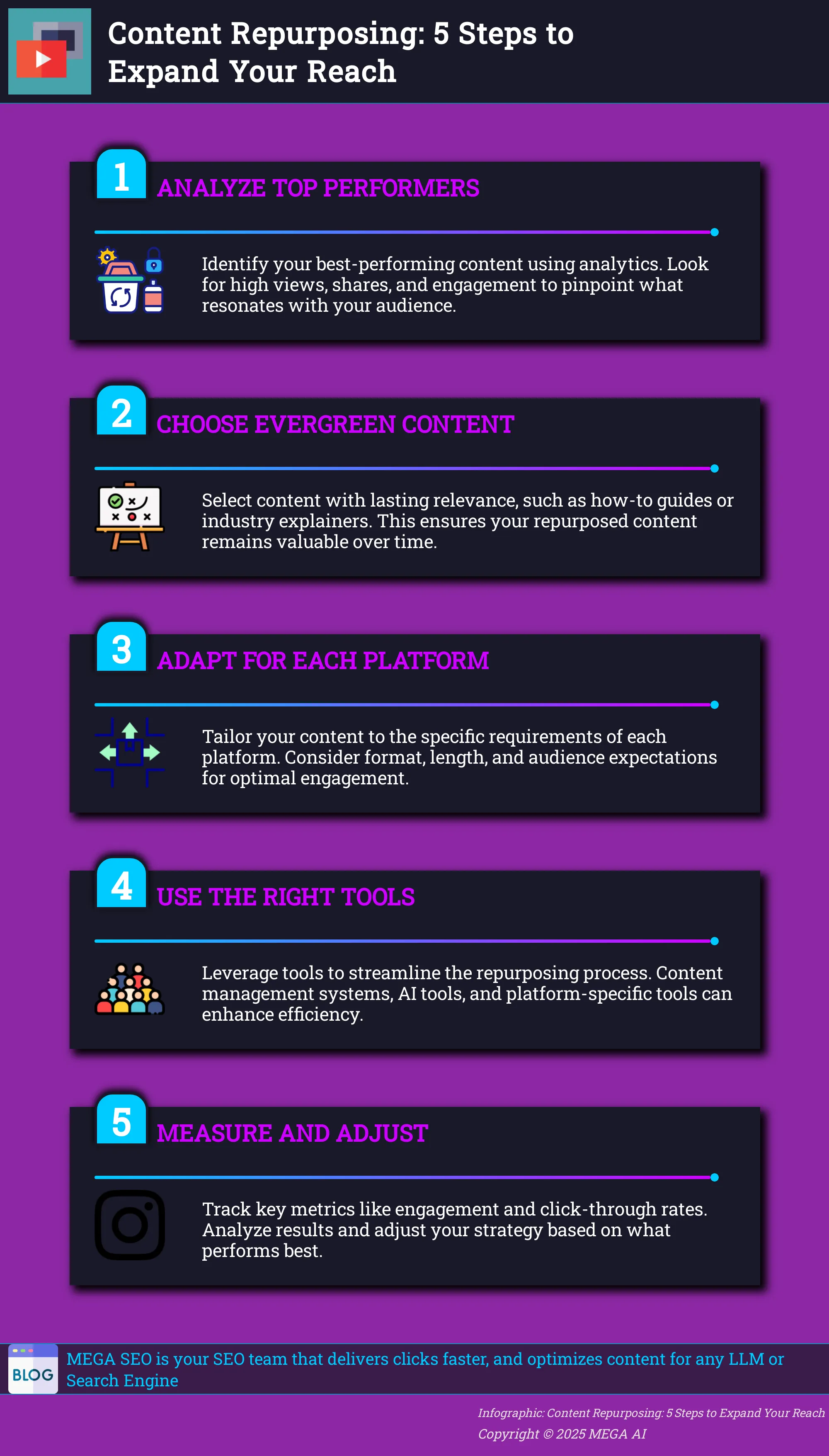
Your analytics dashboard is an excellent starting point for identifying repurposing opportunities. Examine which of your blog posts, videos, or social media updates have historically achieved the best results. Look for content that has garnered significant views, shares, comments, or generated a high number of leads. These are your established performers. By repurposing this high-quality content and presenting it in fresh ways, you can extend its lifespan and introduce it to new segments of your audience. For instance, a well-received blog post can be effectively transformed into an engaging infographic, a series of informative social media updates, or even the basis for a short video script. The audience has already validated its appeal; you are simply offering it a new platform to shine.
Evergreen vs. Time-Sensitive Content
As you review your content inventory, distinguish between evergreen and time-sensitive material. Evergreen content retains its relevance and value to your audience over an extended period. Examples include comprehensive "how-to" guides, foundational industry explanations, or detailed case studies. This type of content is ideal for repurposing because its depth and relevance endure. In contrast, time-sensitive content, such as articles about specific past events or limited-time promotions, typically has a shorter window for effective repurposing. While it might offer immediate engagement, prioritizing your evergreen pieces means you are investing your repurposing energy into assets that will continue to provide value for a longer duration.
Use Audience & Engagement Data
Beyond simply looking at overall views, it's beneficial to examine your audience and engagement data more closely. Which topics genuinely connect with your readers or viewers? What types of content tend to spark discussions or encourage widespread sharing? Analytics tools can help you identify patterns in your audience's preferences. For example, you might find that list-based articles are frequently shared, or that videos explaining complex subjects maintain high viewer completion rates. This information offers valuable insights into the formats and topics most likely to succeed when repurposed. Understanding what your audience already engages with allows you to make more informed decisions about what content to transform and the best ways to adapt it.
Smart Strategies for Effective Content Repurposing
Adapt Content Across Platforms
Effectively extend your content's life by adapting it for different platforms. Consider where your audience spends their time and what content types they prefer there. "Repurposing content across different platforms is a powerful strategy to amplify your reach," and the key is to understand your audience and tailor content to each platform's specific format. This ensures your message resonates effectively everywhere. For instance, key statistics from a comprehensive report can become engaging tweets, or a customer testimonial from a case study could be a compelling, concise LinkedIn update, reaching users where they are most active.
Transform Formats (e.g., Blog to Video)
Don't confine your great ideas to a single format. Transforming content into various mediums helps reach different audience segments preferring varied consumption methods. "By repurposing high-quality content and presenting it in unique forms... you can create engaging social media posts... and even YouTube videos from your existing blog posts." A detailed blog post, for instance, can be the foundation for an explainer video or podcast. This approach caters to diverse preferences and gives content fresh life. Some tools can even simplify video creation from text, making it more accessible.
Update & Refresh Older Content
Your existing content library is a valuable asset, often holding untapped potential. Instead of always creating entirely new pieces, look for older content that performed well or remains relevant but could benefit from a refresh. Updating statistics, adding new insights, incorporating recent examples, or optimizing for new keywords can make an old post new again. This is particularly useful for SEO, as search engines favor current information. Tools like MEGA AI's SEO features can even help automate parts of this process by identifying areas for improvement and suggesting additions to existing articles.
Tailor to Platform Requirements
Copying content verbatim across platforms rarely yields top results. Each social media site or blog has unique rules and audience expectations. It's a common misstep to ignore that you should "ensure that you adjust for each social media platform's format and audience." Instead, always tailor your repurposed piece: adjust image dimensions for Instagram versus Twitter, shorten text for Facebook previews, or use platform-specific features like polls or stories. This attention to detail demonstrates platform understanding and can significantly improve engagement, making your content feel native to each environment.
Key Best Practices for Smart Content Repurposing
Repurposing content is a smart move, but doing it effectively requires a thoughtful approach. It’s not just about copying and pasting; it’s about strategically transforming your existing assets to reach new audiences and reinforce your message. By following a few key best practices, you can ensure your repurposed content works hard for you, extending its lifespan and impact. This means paying attention to how your brand shows up, how you mix old with new, the specific needs of each platform, and being open to trying different content styles. Getting these elements right can make a significant difference in how well your repurposed content performs and how much value you get from your initial content creation efforts.
Maintain Brand Consistency
When you repurpose content, it’s essential that your audience still recognizes you. Maintaining brand consistency means that whether someone sees your content as a blog post, an infographic, or a short video, your brand's voice, style, and visual identity should remain clear and coherent. Think of it as ensuring your brand has a recognizable personality, no matter where it shows up. This helps build trust and familiarity with your audience.
To achieve this, establish clear brand guidelines that cover everything from your logo usage and color palette to your tone of voice and messaging. When you transform a blog post into social media snippets, for example, ensure the language reflects your established brand voice and the visuals align with your aesthetic. "By repurposing high-quality content and presenting it in unique forms on new channels," you can create varied assets like "engaging social media posts, eye-catching infographics, and even YouTube videos from your existing blog posts," all while reinforcing your brand identity.
Balance Repurposed & Original Content
While repurposing content is an excellent way to maximize your efforts and resources, it’s important to strike a healthy balance with creating fresh, original material. Your audience appreciates new perspectives and insights, and consistently publishing original content keeps them engaged and demonstrates your ongoing expertise. Repurposing helps you fill your content calendar efficiently, but it shouldn't be your only strategy.
Think of your content strategy as a well-rounded meal; repurposed content can be the reliable, nutritious staples, while original content adds the exciting new flavors. "Content creation is an ongoing process... that doesn't start from zero every time." This means you can intelligently weave repurposed pieces into your schedule, perhaps by updating an old favorite with new data or turning a comprehensive guide into a series of focused articles. This approach ensures you’re consistently providing value without overextending your creative team or your budget.
Optimize for Each Platform
A common misstep in content repurposing is treating all platforms the same. "Simply copying and pasting content across platforms without considering each platform's unique audience and format can lead to missed opportunities for engagement." Each social media channel, blog, or video platform has its own set of rules, audience expectations, and best-performing content types. What resonates on LinkedIn might fall flat on TikTok, and a long-form blog post needs significant adaptation to become an engaging Instagram carousel.
Take the time to understand the nuances of each platform you’re targeting. This includes adjusting image dimensions, video lengths, caption styles, and the use of hashtags. For instance, a detailed research report could be summarized into key bullet points for Twitter, visualized as an infographic for Pinterest, and discussed in-depth in a video for YouTube. Tailoring your content ensures it feels native to the platform, which can significantly improve its visibility and interaction rates.
Experiment with Different Formats
Don't be afraid to get creative when thinking about how to repurpose your content. The more varied the formats you use, the wider the audience you can potentially reach. People consume information in different ways; some prefer reading, others watching videos, and some listening to podcasts. "By effectively repurposing a single piece, such as a blog post, into various formats like infographics, videos, or podcasts, you can engage a larger audience across different social media platforms."
Consider all the possibilities. A successful webinar could be transcribed into a blog post, with key quotes turned into social media graphics. A series of customer testimonials could become a compelling video. A data-rich article might be perfect as an interactive quiz or a downloadable checklist. Experimenting with formats not only extends the life of your content but also helps you discover new ways to connect with your audience and provide value in fresh, engaging ways. This exploration can also provide valuable insights into what resonates most with different segments of your audience.
Essential Tools to Make Content Repurposing Easier
Repurposing content might sound like a lot of extra work, but with the right tools, it can be a surprisingly smooth process. Think of these tools as your helpful assistants, ready to transform your best content into new formats and get it in front of more eyes. Let's look at some categories of tools that can make your content repurposing efforts much more manageable and effective.
Content Management Systems
A solid Content Management System (CMS) is fundamental to any effective content strategy, particularly when repurposing is involved. Think of your CMS as the central hub for your digital content; it helps you organize, manage, and publish everything from blog posts to website pages. For repurposing, a capable CMS lets you quickly find existing content, see which pieces perform best, and then modify them for new uses. Instead of digging through old files, your content is neatly sorted and searchable. The right system allows you to maximize your content's potential by simplifying how you transform pieces for different platforms. This level of organization is crucial for efficiently locating and reworking your best material.
AI-Powered Repurposing Tools
Artificial intelligence is no longer just a buzzword; it's a practical helper for content creators. AI-powered repurposing tools can significantly cut down the time and effort involved in transforming your content. For instance, some tools can take a lengthy blog post and automatically generate multiple social media updates, complete with relevant captions and hashtags. This means you can create social content in minutes, not hours. Platforms like MEGA AI use artificial intelligence for tasks such as automated keyword research and content generation. These capabilities are also a huge asset when you're looking to refresh or re-angle existing pieces for new audiences or platforms. Such tools can analyze your original content and suggest new ways to present it, or even help you create variations tailored for specific channels.
Analytics & Tracking Software
How do you know which content is worth repurposing? That's where analytics and tracking software come in. These tools give you the data you need to understand what resonates with your audience. By looking at metrics like page views, engagement rates, and conversion rates, you can pinpoint your star performers. For example, analytics can show you which blog posts get the most comments or which videos have the highest watch time. This information is invaluable because it helps you decide what content to reuse and how to adapt it for other platforms. As an example, some analytics tools help you identify which content performs best on each platform, making your repurposing decisions much more strategic and data-driven rather than based on guesswork.
Platform-Specific Tools (e.g., Canva, Lumen5)
Once you've identified what to repurpose and how, you'll often need tools to help with the actual transformation. Platform-specific tools are designed to make creating content for particular channels much easier. For instance, if you want to turn a data-heavy blog post into an engaging infographic, a tool like Canva offers templates and design elements to do just that. Similarly, if you're looking to convert an article into a short video for social media, platforms like Lumen5 are built for this exact purpose. Some marketing teams have effectively used tools like Lumen5 to turn blog posts into videos, showing the power of such specialized applications. These tools often have intuitive interfaces and pre-set formats that align with the best practices of each platform, helping you create professional-looking content without needing to be a design or video editing expert.
Are Your Efforts Paying Off? How to Measure Repurposing Success
So, you've put in the effort to repurpose your content, spinning that brilliant blog post into a snappy video, an engaging infographic, or a series of insightful social media updates. That’s a fantastic start. But how do you know if all that work is actually making a difference? Simply putting content out there in new forms isn't enough; you need to understand its impact. Measuring the success of your repurposed content is key to refining your strategy, ensuring you’re investing your time and resources wisely, and ultimately, getting more eyes on your brand. When you optimize your content effectively, you want to see those results reflected in your metrics.
Think of it like this: you wouldn't launch a new product without tracking sales, right? The same principle applies to your content. By digging into the data, you can see which repurposed formats resonate most with your audience, which platforms deliver the best engagement, and where you might be missing opportunities. This isn't about getting bogged down in numbers for the sake of it. It's about gaining clear insights that empower you to make smarter decisions, reach a wider audience, and get the maximum return on your content creation efforts. Understanding these metrics helps you prove the value of your content marketing and justify continued investment in repurposing. Let's explore how you can effectively track whether your repurposing strategy is hitting the mark.
Key Performance Indicators (KPIs)
To understand if your repurposed content is performing well, you first need to decide what "performing well" actually means for your goals. This is where Key Performance Indicators, or KPIs, come in. These are specific, measurable metrics that tell you how your content is doing. For repurposed content, you might track things like engagement rates (likes, shares, comments), click-through rates (CTRs) from a social post to your website, conversion rates if the content is tied to a specific offer, or overall reach and impressions. It's helpful to utilize analytics tools to gather this data, as they can help you identify which pieces of content are truly connecting with your target audience and ensure your repurposing efforts are effective.
Compare Original vs. Repurposed Performance
One of the most insightful ways to measure success is to compare how your original piece of content performed against its repurposed versions. For instance, did the video summary of your blog post get more shares than the original article? Did the infographic version drive more traffic to a landing page? By transforming existing content into different formats and distributing it across various platforms, you aim to reach a wider audience. Comparing these performances side-by-side gives you concrete evidence of what’s working best, which formats your audience prefers for certain types of information, and on which platforms they are most receptive. This comparison helps you understand the unique value each repurposed piece brings.
Adjust Strategy Based on Data
The data you collect from your KPIs and performance comparisons isn't just for show; it's your roadmap for future success. If you notice that short video clips repurposed from longer webinars are getting significantly more engagement on LinkedIn, that’s a clear signal to produce more of that type of content for that platform. Conversely, if a text-based summary of a podcast episode isn't gaining traction on Instagram, you might reconsider that approach. It's important to choose the right format and platform for repurposing. By continuously measuring performance and understanding your audience's preferences, you can make informed adjustments to your strategy, ensuring your message is effectively communicated and your efforts are always optimized.
Oops! Common Repurposing Mistakes and How to Dodge Them
Content repurposing sounds like a fantastic shortcut, doesn't it? The idea of taking one brilliant piece of content and multiplying its reach across various platforms is certainly appealing. It’s a cornerstone of efficient content marketing, allowing you to reach new audiences and reinforce your message. While it's an incredibly smart strategy to get more value from your efforts, it's not always a straightforward copy-paste job. Think of it this way: you wouldn't wear the same outfit to a casual brunch that you'd wear to a formal business meeting. Your content deserves that same thoughtful adaptation to fit its surroundings for optimal reception.
The good news is that the common pitfalls in repurposing are quite avoidable once you recognize them. It really comes down to being intentional and strategic in how you re-imagine and redistribute your existing assets. Instead of simply duplicating content, which often falls flat, a bit of planning can make a world of difference. By understanding the unique characteristics of different platforms and how audiences engage with them, you can ensure your repurposed pieces truly connect and perform. Let's explore some of the most frequent missteps and, more importantly, how you can gracefully sidestep them. This approach will help you effectively maximize your content's impact without needing to create something entirely new every single time, saving you valuable resources in the process.
Mistake: Not Adapting Content per Platform
One of the most frequent errors is treating all online spaces as identical. As the team at Springzo aptly notes, "Simply copying and pasting content across platforms without considering each platform's unique audience and format can lead to missed opportunities for engagement." Every social network, blog, or video-sharing site possesses its own distinct culture, preferred content styles, and user expectations. For instance, a comprehensive, long-form article from your blog won't directly translate into a compelling, concise Instagram caption or a brief LinkedIn update. To avoid this, always research the specific platform you're targeting. Consider how users consume information there – are they seeking quick visuals, detailed analyses, or interactive elements? Then, thoughtfully reshape your core message to align with that environment.
Mistake: Overlooking Audience Engagement
It's easy to become engrossed in the mechanics of repurposing and lose sight of the very people you're trying to connect with. Creatorly Media puts it well: "One of the biggest mistakes I see folks making with repurposing is when they just take a piece of content in its current format and post it on a new platform without tailoring it to the audience." The audience you interact with on TikTok likely has different expectations and engagement patterns than your email list subscribers or your followers on X. Before you repurpose, pause to consider the specific segment of your audience you're addressing on that particular platform. What are their primary concerns, their interests, and what type of communication style resonates most effectively with them? Customizing your message, even in small ways, can significantly improve how your audience receives and interacts with your content.
Mistake: Neglecting Performance Measurement
If you aren't tracking how your repurposed content is doing, you're essentially operating without a map. As Column Content accurately states, "Not tracking results is a critical error that can prevent you from understanding what works and what doesn’t in your content strategy." Without this data, you won't know if transforming that blog post into a video series was a worthwhile endeavor, or if those quote graphics on Instagram are actually generating traffic or leads. To dodge this, establish clear metrics for each piece of repurposed content. These could include engagement rates, click-through rates, or conversion figures. Regularly review these analytics to discern what’s resonating with your audience and identify areas where you might need to refine your approach for future repurposing initiatives.
Mistake: Ignoring Platform Best Practices
Each online platform operates with its own set of unwritten rules and established best practices that successful content creators adhere to. What helps a video gain traction on YouTube differs from what makes a post popular on LinkedIn. As the experts at 8 Ways explain, "What works on Instagram might not resonate on LinkedIn, and a blog post may need a different approach when transformed into a video. Ignoring these nuances can lead to ineffective content." To avoid this pitfall, dedicate some time to understanding the best practices for each platform you intend to use. This includes aspects like ideal image dimensions, optimal video lengths, effective hashtag strategies, and appropriate posting times. Following these guidelines helps your content feel native to the platform, thereby increasing its chances of being seen and appreciated by the intended audience. Many platforms even offer their own creator resources filled with valuable tips.
Building Your Repurposing Engine: Create a Sustainable Workflow
Making content repurposing a regular, effective part of your strategy, rather than just an occasional task, really comes down to having a solid system in place. Imagine you're building an engine for your content; once it's set up and running smoothly, it can produce fantastic results with less ongoing effort. A sustainable workflow means you stop reinventing the wheel each time you want to give a piece of content new life. Instead, you'll have a clear, repeatable process that not only saves you precious time but also reduces stress, all while ensuring a consistent flow of valuable content across all your different channels.
This isn't about piling more tasks onto your already full plate. It’s truly about working smarter, not just harder. When you establish a dedicated workflow, you can more easily spot those golden repurposing opportunities, efficiently transform your best-performing assets, and consistently connect with new segments of your audience. This kind of systematic approach is key to maintaining high quality and keeping your brand voice consistent, regardless of how many different formats or platforms you're working with. A well-designed repurposing engine helps you get the absolute most out of every single piece of content you create. It ensures your hard work keeps delivering results long after you first hit 'publish,' creating a steady rhythm that supports your overall content marketing goals and keeps your brand visible and engaging for your audience.
Develop a Repurposing Schedule
One of the foundational steps in building your repurposing engine is to get organized with a dedicated schedule. Just as you meticulously plan your original content, your repurposing efforts deserve the same attention. This involves setting specific dates and deadlines for transforming existing pieces into fresh formats. When you integrate repurposing tasks directly into your main content calendar, it naturally becomes a regular part of your routine, not just something you remember to do when you have spare time.
This structured approach helps you maintain a steady stream of engaging content across all your platforms without feeling rushed or overwhelmed. You might decide to set aside a particular day each week, or perhaps a specific week each month, solely for repurposing activities. This kind of predictability is great for allocating your resources effectively and ensures your top-performing content gets the extended lifespan it truly deserves, continually working to attract and engage your audience.
Set Realistic Goals
Before you jump into repurposing, take a moment to clearly define what success will look like for these efforts. Setting realistic, measurable goals is crucial because they will guide your strategy and allow you to accurately track your impact. Your repurposing goals should always align with your broader marketing objectives, whether that’s aiming to increase website traffic, generate more leads, or build stronger brand awareness on new platforms. Think carefully about what you want each specific repurposed piece to achieve.
To set truly effective goals, it’s essential to understand your audience on each platform and then tailor your content to fit the specific formats and expectations of those channels. For instance, a clear goal for repurposing a detailed blog post into a series of engaging Instagram carousels might be to increase post engagement by 20% on that platform. Consistently measuring your performance against these defined goals will help you refine your approach over time and ensure your message is always communicated effectively.
Integrate into Content Strategy
For content repurposing to deliver its full potential, it needs to be woven into the very fabric of your overall content strategy, rather than being treated as an occasional add-on. This means you should start thinking about repurposing opportunities right from the moment you begin planning new content. For example, when you're outlining a new blog post, also take a few minutes to brainstorm how that same core information could be effectively transformed into a compelling video, an easy-to-digest infographic, or an engaging podcast episode.
By embedding repurposing into your strategy from the outset, you make the entire process significantly more efficient and purposeful. This approach ensures you’re creating foundational content pieces that are rich and versatile enough to be spun out into multiple formats. This, in turn, maximizes your reach and helps you get the best possible return on your investment in creating that original content. This proactive mindset allows you to consistently leverage your best assets across a variety of channels.
Streamline Your Process
To ensure your repurposing engine runs smoothly, it’s essential to streamline your process. This involves looking at your current methods, identifying inefficiencies, and finding ways to transform content more quickly without sacrificing quality. A common mistake is simply copying content from one platform to another. Truly effective repurposing means adapting it to suit the new format and audience.
Consider creating reusable templates for different types of repurposed content, like video scripts from blog posts or social media graphic layouts. Batching similar tasks, such as creating all graphics for a month's social posts at once, saves significant time. Leveraging tools that can automate aspects of content optimization or reformatting can also enhance efficiency, allowing you to focus on creatively adapting your message.
Level Up Your Strategy: Advanced Repurposing Techniques
Once you've got a handle on the basics of repurposing, it's time to explore some more sophisticated ways to get the most out of your content. These advanced techniques can help you connect with new segments of your audience, encourage deeper interaction, and ensure your original work continues to deliver value long after it's first published. Think of it as taking your content from a simple melody to a full orchestral piece, reaching more people in more ways. By strategically reusing and reformatting your best assets, you can significantly extend their lifespan and impact.
Transform Visual Content
One of the most engaging ways to repurpose your blog content is by turning key points from blog posts into visually appealing infographics. Think about those data-rich articles or detailed how-to guides you’ve created. An infographic can simplify complex information and make it much more digestible for your audience, which often increases the likelihood of shares and engagement, especially on visual platforms like Pinterest or Instagram. You can also convert presentation slides into standalone graphics for social media or pull compelling quotes from articles and overlay them on eye-catching images. This approach not only caters to visual learners but also makes your content more memorable.
Leverage User-Generated Content
Encouraging your audience to create content related to your brand can provide a wealth of authentic material and fresh perspectives. User-generated content (UGC) might include customer reviews, photos of them using your product, or social media posts where they share their experiences. Repurposing this content, always with permission, can significantly enhance engagement and build a stronger sense of community. You could feature customer photos on your product pages, share positive testimonials in your email newsletters, or create a "customer spotlight" series on your blog. This not only saves you content creation time but also acts as powerful social proof for potential customers.
Create Content Series from Single Pieces
Your most comprehensive pieces of content, like in-depth webinars, detailed guides, or extensive research reports, are goldmines for repurposing. Instead of letting them be a one-time event, break them down into a series of smaller, related content pieces. For example, a single hour-long webinar can be transformed into several focused blog posts, a series of short video clips highlighting key takeaways for TikTok or Instagram Reels, a downloadable PDF checklist, or a collection of insightful quote graphics for Twitter and LinkedIn. This strategy allows you to maximize the value of a single substantial effort by distributing its core messages across various formats and platforms over time, keeping your audience engaged.
Optimize SEO Across Platforms
When you repurpose content for different platforms, remember that each channel has its own audience expectations and search algorithms. Simply copying and pasting content rarely yields the best results. Instead, you should optimize your repurposed content for SEO on each specific platform. This means adapting keywords for how users search on YouTube versus Google, structuring your blog post for readability and Google's featured snippets, or using relevant hashtags on Instagram. For businesses looking to maintain and improve their existing content's performance, tools like MEGA AI’s Maintenance Agent can identify new content to add to existing articles or re-optimize them for different search engines, ensuring your message resonates effectively everywhere.
Related Articles
- Unlock Your Content Potential: The Null Hypothesis
- Top Tips to Improve Content Quality & SEO Performance
- The Ultimate Guide to Content Marketing in 2024
- Crafting Compelling, Original Content for SEO Success
- Repurpose Video Into Blog Posts With These Smart Tools
Frequently Asked Questions
What's the real difference between just reposting content and actually repurposing it? Think of reposting as simply sharing the exact same item again. Repurposing, on the other hand, is about thoughtfully transforming your original content. This means you might change its format, adjust the angle for a different audience, or present it on a new platform in a way that feels fresh and adds new value. It’s more about reimagining your content than just re-sharing it.
I'm a small business owner with limited time. How can I make repurposing efficient? The key is to start smart and build a system. Begin by identifying your top-performing content—the pieces that already resonated well with your audience. Then, think about quick transformations, like pulling key quotes from a blog post for social media graphics or outlining a short video script based on its main points. Using templates for common formats and batching similar tasks, like creating all your social images for the week at once, can also make the process much more manageable.
How do I know if a piece of content is "good enough" to repurpose? Your existing analytics are your best friend here. Content that has already shown strong performance, such as high views, significant shares, or lots of comments, is an excellent candidate for repurposing. Also, consider your evergreen content—those pieces that remain relevant and valuable over time. If your audience found it useful in its original form, they're likely to appreciate it when presented in a new way.
Can repurposing content actually help my website rank better on Google? Yes, it can definitely contribute to better SEO. When you create multiple pieces of content around a central theme, you naturally increase your opportunities to rank for a wider variety of related keywords. Repurposing also allows you to build more internal links between your content, which helps search engines understand your site's structure and authority on a topic. Presenting valuable information in different formats can also attract more backlinks from other sites.
What's a common mistake people make when they start repurposing, and how can I avoid it? A frequent oversight is not tailoring the content to the specific platform where it's being shared. What works wonderfully as a detailed blog post might not be effective as a short Instagram caption or a LinkedIn update if it's just copied directly. To avoid this, always consider the unique audience, format expectations, and best practices of each platform. Take the time to adapt your message so it feels native and engaging in its new environment.