
Building a successful remote team is like building a house; it requires a solid foundation. Without it, things can quickly become unstable. In a remote setting, that foundation is built on trust, clear communication, and well-defined processes. You can't rely on informal chats to keep everyone aligned. Instead, you need a deliberate structure that empowers everyone to do their best work autonomously. This guide provides the blueprint for creating that structure. We'll cover how to define roles with a RACI matrix, standardize workflows with SOPs, and establish objective metrics that ensure everyone is working toward the same goals.
Key Takeaways
- Measure results, not presence: Shift your management focus from tracking online activity to measuring tangible outcomes. Define success with clear Key Performance Indicators (KPIs) to give your team the autonomy and clarity they need to deliver their best work.
- Systematize your operations for clarity: Eliminate confusion and empower your team by documenting key processes. Use tools like a RACI matrix to define roles and Standard Operating Procedures (SOPs) to create a reliable playbook for routine tasks.
- Foster trust through intentional communication: Build a resilient remote culture by creating structured opportunities for connection. Prioritize psychological safety and use practices like regular check-ins and skip-level meetings to ensure everyone feels heard, supported, and valued.
What is a high-performing remote team?
When your team is spread out across different locations, measuring success looks different than it does in a traditional office. You can't rely on seeing who is at their desk or who stays late. Instead, a high-performing remote team is defined by its results, resilience, and connection. These teams don't just manage to get work done despite the distance; they thrive because of the systems they have in place.
Building this kind of team doesn't happen by accident. It requires a deliberate shift away from management styles that depend on physical presence. The focus moves from tracking hours to measuring outcomes, from casual hallway chats to structured communication, and from assumed knowledge to documented processes. A truly effective remote team is built on a foundation of trust, clarity, and shared goals, where every member understands their role and how their work contributes to the bigger picture. This structure empowers individuals to do their best work autonomously while staying perfectly aligned with the rest of the team.
Defining high performance
In a remote setting, high performance is about consistently achieving excellent results while maintaining strong communication and a healthy team culture. It’s the ability to stay productive, innovative, and connected, even when team members are physically apart. These teams are defined not by their activity, but by their output and their ability to solve problems collaboratively.
This means going beyond just completing tasks. A high-performing remote team proactively identifies challenges, adapts to change quickly, and holds each other accountable for shared goals. They have a rhythm of communication that keeps everyone in sync without overwhelming them with unnecessary meetings. Ultimately, performance is measured by the team’s ability to deliver on its objectives and contribute to the company's growth, all while fostering a supportive and engaging work environment.
Key characteristics of successful remote teams
Successful remote teams share a few common traits that set them apart. First and foremost is a high level of trust, which is built through clear communication and consistent follow-through. They overcome challenges like time zone differences by establishing clear expectations for response times and using the right collaboration tools to keep work moving forward.
These teams also prioritize the well-being of their members, recognizing that emotional health is crucial for long-term success. They create opportunities for social connection to build the cohesion that might otherwise be missing. Finally, they are committed to continuous improvement. This includes providing regular training on new software and refining remote work best practices, ensuring everyone has the skills and resources they need to excel.
Why traditional management approaches fail remotely
Managing a team you can see every day is fundamentally different from leading a team spread across different locations. Traditional management often relies on physical presence—walking the office floor, impromptu desk-side chats, and observing body language in meetings. When your team goes remote, these methods become obsolete, and trying to replicate them virtually often backfires.
Forcing old habits into a new work model can lead to micromanagement, employee burnout, and decreased productivity. Instead of trying to monitor activity, the focus must shift to outcomes. High-performing remote teams are built on a foundation of trust, clarity, and intentional processes, not on recreating the in-office experience online. Understanding where traditional methods fall short is the first step toward building a framework that actually works for a distributed team.
The visibility trap
When you can't physically see your team working, it's easy to fall into the visibility trap. This can go one of two ways: managers either feel a need to constantly check in, leading to micromanagement, or employees feel their contributions go unnoticed, leading to disengagement. This is one of the most common remote team challenges businesses face. Success in a remote setting isn't about proving you're at your desk; it's about the quality and timeliness of your work. Relying on presence as a proxy for performance creates anxiety and undermines the trust that is essential for a remote team to thrive.
Communication breakdowns
In an office, so much communication happens organically. You can ask a quick question across the room, hash out an idea by the coffee machine, or read the room during a meeting. Remote work removes these spontaneous interactions, creating significant communication barriers. Without the benefit of in-person cues, messages can be misinterpreted, and information can get siloed within different chats or channels. Effective remote communication doesn't just happen; it has to be designed with clear guidelines, the right tools, and consistent routines to ensure everyone stays informed and connected, preventing small misunderstandings from becoming major roadblocks.
Accountability gaps
When an employee gets stuck on a task in an office, they can quickly get help. Remotely, that same person might wait days for their next one-on-one with a manager, losing valuable time. This isn't a failure of the employee; it's a failure of the system. Without clear roles, documented processes, and accessible resources, accountability becomes blurry. Team members need to know who is responsible for what, how decisions are made, and where to find information independently. Effective remote collaboration depends on creating a structure where progress isn't dependent on a manager's constant availability.
How small businesses can overcome remote team challenges
Shifting to a remote or hybrid model introduces a new set of operational hurdles. Without the structure of a shared office, small businesses can struggle with inconsistent technology, fragmented communication, and a weakened sense of team unity. These aren't just minor inconveniences; they can directly impact productivity, morale, and your ability to grow. The key is to be intentional about building the infrastructure that supports your team, no matter where they are. By addressing the core challenges of resources, cohesion, and communication head-on, you can create a remote environment that is just as effective and connected as an in-person one.
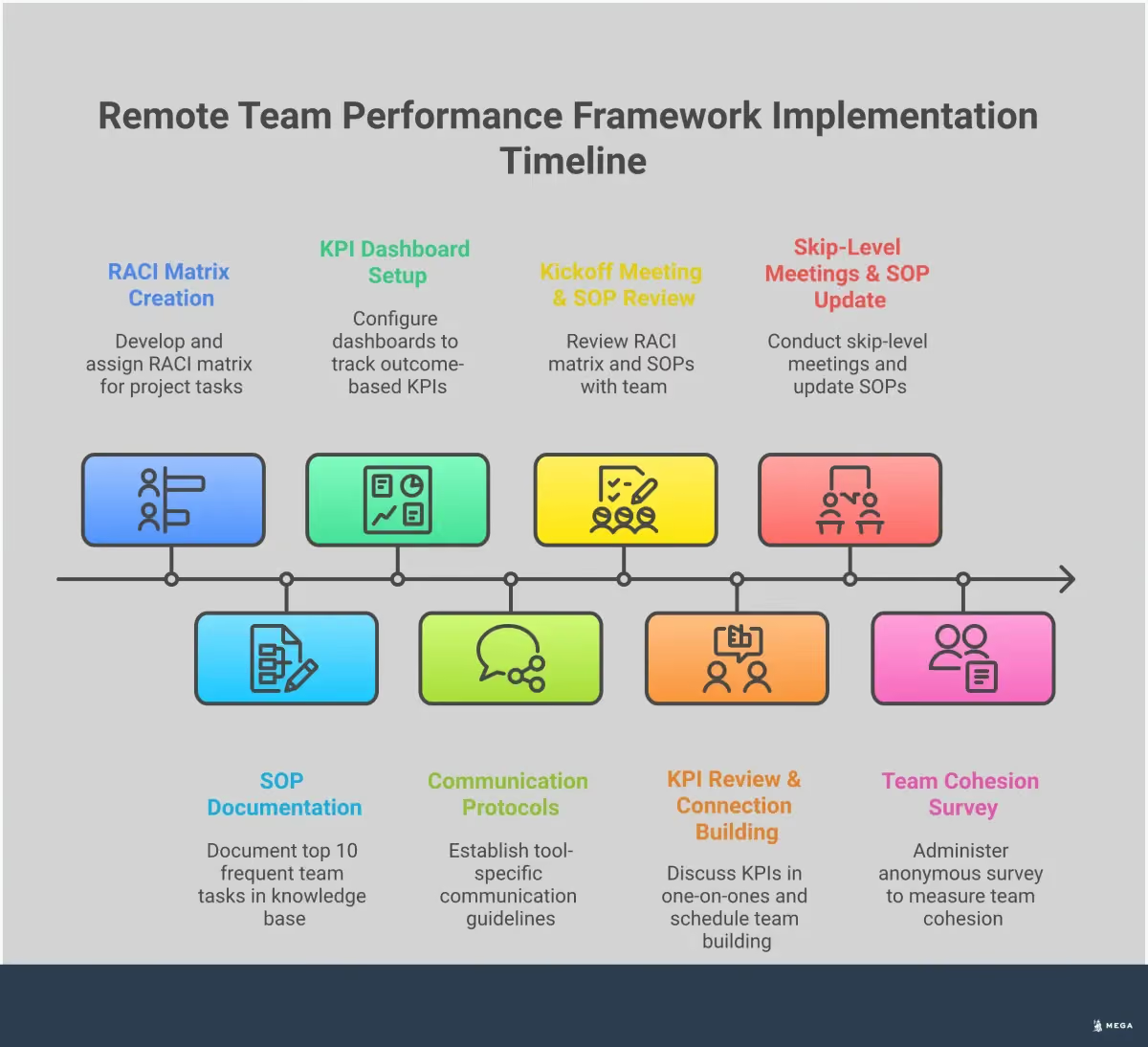
Resource and technology barriers
When your team works from different locations, you lose control over their work environment. Inconsistencies in technology and equipment can quickly become a major hurdle for IT and a source of frustration for employees. One team member might have a slow internet connection, while another lacks a proper monitor, creating an uneven playing field. To solve this, establish a clear remote work policy. You can either provide a standard equipment package or offer a technology stipend for employees to purchase approved gear. This ensures everyone has the necessary tools to perform their jobs effectively and securely, creating a more robust remote support strategy without needing direct access to hardware.
Maintaining team cohesion
In a remote setting, you can’t rely on spontaneous watercooler chats to build rapport. Team cohesion requires a deliberate effort. When employees feel disconnected, their emotional health can suffer, and collaboration breaks down. Prioritizing social well-being helps build stronger, more supportive teams. You can foster connection by scheduling regular, informal video calls with no agenda other than catching up. Creating dedicated channels in your chat app for non-work topics like hobbies or pets also gives people a space to interact personally. Simple recognition features that allow peers to celebrate each other’s wins can also make employees feel seen and valued, strengthening bonds across the distance.
Creating communication guidelines
Overcoming communication barriers is one of the most significant challenges of managing a remote team. Without in-person cues, messages can be misinterpreted, and information can get lost. Establishing clear guidelines is essential for keeping everyone aligned. Start by defining the purpose of each tool. For example, use a platform like Slack for quick questions, a project management tool like Trello for task updates, and email for formal or external communication. Setting expectations around response times helps manage workloads and prevents burnout. This structure reduces confusion and ensures that effective communication remains a priority.
Build intentional connections in a remote environment
When your team works remotely, the casual conversations that build rapport in an office don't happen on their own. You have to create them intentionally. Building strong connections is a foundational element of a high-performing team, as it builds trust and improves collaboration. It helps everyone feel like part of a cohesive unit, even when they are miles apart. The key is to be deliberate in how you foster these relationships.
Create structured touchpoints
In a remote setting, you can't rely on spontaneous chats to build team bonds. Instead, you need consistent opportunities for connection. This means establishing structured communication protocols that go beyond project updates. Consider starting daily stand-ups with a non-work-related question or scheduling weekly virtual events where work talk is off-limits. Investing in good collaboration tools is also important, but the focus should remain on the human element. These planned interactions ensure everyone has a regular chance to connect personally, which strengthens trust and makes collaboration feel more natural.
Foster psychological safety
Psychological safety is the belief that you won't be punished for speaking up with ideas, questions, or mistakes. In a remote environment, where it’s harder to read social cues, creating this safety is critical. When team members feel safe, they are more likely to innovate and solve problems together. Prioritizing mental health is a key part of this, as it helps create a healthier and more productive work environment. As a leader, you can model vulnerability by admitting your own mistakes, actively soliciting different opinions, and establishing clear guidelines for respectful feedback.
Improve dynamics with skip-level meetings
Skip-level meetings, where a senior leader meets with employees without their direct manager present, are a powerful tool for remote teams. They provide a direct line of communication that can uncover insights that might not otherwise surface. For employees, it’s a chance to share their perspective with senior leadership and feel heard. For leaders, it offers an unfiltered view of team morale and operational issues. Some experts consider quarterly skip-level meetings a non-negotiable for understanding how things are really going. These conversations build trust and show that leadership is invested in every team member's experience.
How does a RACI matrix improve clarity?
In a remote team, you can’t just lean over a cubicle to ask who’s handling a specific task. This distance can create ambiguity, leading to duplicated work or projects falling through the cracks. A RACI matrix is a simple yet powerful tool that brings clarity to your projects by defining exactly who is involved in each task and what their role is. It’s a chart that maps out tasks against team members, assigning one of four roles to each person for every item on the list.
The acronym RACI stands for:
- Responsible: The person doing the work.
- Accountable: The person who owns the work and is ultimately answerable for its success.
- Consulted: The people who provide input and expertise.
- Informed: The people who need to be kept up-to-date on progress.
By creating this chart at the start of a project, you establish a single source of truth for your team’s responsibilities. It removes guesswork and ensures everyone is aligned on expectations from day one. This framework is fundamental for any business, but it becomes especially critical for maintaining momentum and efficiency in a remote environment where clear, documented communication is key to success.
Define roles and responsibilities
The primary function of a RACI matrix is to eliminate confusion about who does what. Each role is distinct and helps structure the workflow. The person who is Responsible is the doer. The Accountable person is the owner; there should only be one “A” per task to avoid confusion. Those who are Consulted are in the loop for their opinions, while those who are Informed simply receive updates.
As business leader Nick Avaria puts it, "Every agency needs a RACI matrix... you need to implement a RACI matrix in your own company." This simple act of assigning roles ensures that every part of a project has a clear owner and that everyone involved understands their specific contribution.
Implement a RACI matrix for decision-making
A RACI matrix is more than just a task list; it’s a framework for efficient decision-making. When your team hits a crossroads, the matrix immediately clarifies who has the final say—the person who is Accountable. This prevents decision paralysis, where progress stalls because no one is sure who should make the call.
It also ensures the right people are involved in the process. The ‘Consulted’ role guarantees that subject matter experts provide their input before a decision is finalized, leading to more thoughtful and well-rounded outcomes. Once a decision is made, the ‘Informed’ list tells you exactly who needs to be updated. This structured approach makes your decision-making process faster, more transparent, and more effective.
Improve accountability with clear roles
When roles are clearly defined, accountability naturally follows. Team members know precisely what they are responsible for delivering, and project owners understand what they are accountable for overseeing. This clarity fosters a sense of ownership and eliminates the tendency to pass the buck when challenges arise. Instead of wondering who dropped the ball, the team can quickly identify the issue and work with the responsible person to find a solution.
This structure, combined with practices like regular check-ins, ensures everyone is accountable for their contributions. It creates a high-trust environment where team members can rely on each other to fulfill their roles, which is essential for any high-performing remote team.
Establish standard operating procedures (SOPs)
When your team is in an office, it’s easy to overlook the small, informal ways knowledge is shared. A quick question over a cubicle wall or a casual chat in the kitchen can solve problems in minutes. In a remote setting, those opportunities disappear. This is why standard operating procedures (SOPs) are not just helpful; they are essential for a high-performing remote team.
Think of SOPs as your team’s shared playbook. They are documented, step-by-step instructions on how to perform routine tasks. When someone is unsure how to do something, they don’t have to wait for their next one-on-one with a manager to get unstuck. Instead, they can consult the playbook. This autonomy is critical for maintaining momentum and productivity. Creating clear SOPs ensures that everyone on the team, whether they started yesterday or two years ago, has the information they need to execute their work consistently and effectively. It reduces ambiguity, minimizes errors, and frees up managers from answering the same questions repeatedly.
Document processes for remote access
The first step in creating useful SOPs is documenting how your team accesses and uses its core tools. This goes beyond simply sharing login credentials. Your documentation should outline which platform is used for what purpose. For example, specify that Microsoft Teams is for daily check-ins and quick questions, Trello is for tracking project progress, and Zoom is for weekly team meetings.
Effective remote collaboration depends on everyone understanding the technology stack. Your documentation should be a central, living resource that details the workflow for each tool. This prevents information from getting lost in siloed conversations and ensures new hires can get up to speed quickly without having to ask where to find things.
Standardize processes for your team
Once you’ve documented your tools, the next step is to standardize the core processes your team follows. In an office, you can roll your chair over to ask a colleague for help. Remotely, an employee can get stuck on a simple process question for hours, or even days, waiting for an answer. Standardizing your workflows prevents these productivity-killing bottlenecks.
Start with your most frequent and critical tasks. Document the exact steps for things like submitting a new design request, publishing a blog post, or onboarding a new client. These high-performing remote teams build SOPs to create a predictable and efficient environment where everyone knows what is expected of them. This consistency makes work easier to manage, review, and hand off between team members.
Create knowledge management systems
Your documented processes are only useful if your team can easily find them. A knowledge management system is a central hub where all your SOPs, guides, and company information live. This could be a dedicated wiki in a tool like Notion, a well-organized Google Drive folder, or a section within your project management platform. The specific tool matters less than the commitment to keeping it organized and accessible.
This central repository becomes the single source of truth for your team. To keep it effective, schedule regular reviews to update documents as processes evolve. Holding brief training sessions on new software or updated workflows helps everyone use these remote work resources effectively. This practice ensures your knowledge base remains a valuable, living asset rather than an outdated archive.
Why objective metrics and KPIs are essential
In a traditional office, it’s easy to equate presence with productivity. You can see who is at their desk and who seems busy. When your team is remote, that visibility disappears, and trying to replicate it through constant check-ins or activity monitoring leads to micromanagement and erodes trust. The solution is to shift your focus from managing activity to measuring outcomes. This is where objective metrics and Key Performance Indicators (KPIs) become your most valuable management tools.
By establishing clear, data-driven goals, you create a framework for success that works for everyone. For managers, it provides a reliable way to track progress and performance without hovering over employees. For team members, it offers clarity and autonomy. They know exactly what they need to achieve and are empowered to figure out the best way to get there. This approach transforms performance conversations from subjective assessments into objective discussions based on tangible results. It builds a culture of accountability and ownership, where the entire team is focused on moving the business forward. For small businesses, leveraging tools like an AI-powered SEO agent can automate the tracking of these metrics, delivering clear reports on outcomes like traffic growth and lead generation.
Focus on outcomes, not activity
In a remote environment, simply completing tasks isn't enough. The focus must shift from work output to the actual results that work produces. As consultant Nick Avaria puts it, judging people on whether they are simply "doing the work" is no longer a sufficient measure of performance. The more important question is whether that work is achieving the desired outcome.
This means moving away from tracking hours and to-do lists and toward monitoring metrics that directly impact your business. Instead of counting how many blog posts your content writer produces, measure the organic traffic those posts generate. Rather than tracking the number of sales calls made, focus on the conversion rate. This outcome-oriented mindset empowers your team to think strategically and take ownership of their results.
Key performance indicators (KPIs) for remote teams
To measure outcomes effectively, you need to define them with clear metrics. Key Performance Indicators (KPIs) are the specific, quantifiable values that show whether you are achieving your business objectives. For every goal, you need a corresponding metric to track it. If your objective is to improve customer loyalty, your primary KPI might be the customer churn rate.
For a small business, relevant KPIs could include customer acquisition cost (CAC), return on ad spend (ROAS), or website conversion rate. These numbers provide an unbiased look at what’s working and what isn’t. Choosing the right KPIs is critical; they should directly reflect your most important goals. A solid framework for setting KPIs can help you identify the metrics that truly matter for tracking progress and making informed decisions.
Align team and company goals
KPIs are most powerful when they connect individual efforts to the company's larger mission. This alignment creates what Nick Avaria calls "triple net wins," where an individual's success also creates a win for the client and the business. When team members understand how their work contributes to the bigger picture, their motivation and engagement increase.
For example, if a company's primary goal is to grow revenue, a marketing team’s KPI might be to generate more qualified leads. An individual marketer’s KPI could then be to improve the conversion rate on a key landing page. This clear line of sight shows every person how their daily tasks directly support the organization's success. It fosters a sense of shared purpose and ensures the entire team is working together toward the same goals.
What is the triple-net-wins approach?
The triple-net-wins approach is a framework for setting goals that align the success of your clients, your company, and your individual team members. Instead of creating separate objectives for each part of the business, you design goals where achieving one automatically benefits the other two. It’s about creating a system where everyone is pulling in the same direction because a win for one is a win for all.
This model is particularly effective for remote teams, where you can’t measure performance by observing activity. It shifts the focus from tracking hours worked to measuring meaningful outcomes. When an employee achieves their objective, it should directly contribute to a client’s success and, in turn, the company’s growth. This creates a powerful cycle of shared purpose and motivation, ensuring that every task is tied to a larger, mutually beneficial goal.
Define success for clients, your team, and individuals
In a remote environment, you can't judge performance based on who looks the busiest. Success must be defined by clear, measurable outcomes. The first step in the triple-net-wins approach is to establish objectives and key performance indicators (KPIs) that are understood and shared across the board. This means moving away from ambiguous goals and creating a concrete definition of what a "win" looks like for everyone involved.
For a client, success might be a 20% increase in qualified leads. For your business, a corresponding goal could be maintaining a 95% client retention rate. For the individual employee, success could be tied to mastering the skills needed to achieve that client’s lead goal, which also supports their professional development. When these definitions of success are interconnected, every action an employee takes has a clear purpose.
Set objectives that benefit everyone
The core of this framework is creating objectives that produce a win for all three stakeholders simultaneously. When an employee achieves a goal, it should be an automatic victory for the client and the company as well. This alignment fosters a collaborative environment where team members are intrinsically motivated because their personal success is directly linked to the value they create for others.
For example, you could set an objective for a marketing specialist to reduce a client's ad spend by 15% while maintaining the same number of conversions. When they achieve this, the client wins by saving money. The company wins by having a happier, more loyal client. And the employee wins by demonstrating valuable expertise, which could lead to a promotion, bonus, or greater responsibility.
Use proactive indicators to track performance
To manage performance effectively, it’s better to use proactive indicators that predict future outcomes rather than reactive metrics that only show what has already happened. Metrics like customer churn are lagging indicators; by the time you see the number, the customer is already gone. The triple-net-wins approach relies on leading indicators to get ahead of potential problems.
A great example is the Net Promoter Score (NPS), which measures customer satisfaction. A low NPS score is a proactive indicator that a client is unhappy and at risk of churning. By monitoring this, you can intervene and address their concerns before they decide to leave. Focusing on these forward-looking metrics allows you to be predictive instead of reactive, ensuring you can sustain high performance over the long term.
Essential tools for managing a remote team
The right technology stack is the backbone of any high-performing remote team. These tools aren’t just about replicating an office environment online; they’re about creating a more efficient, transparent, and connected way of working. When you equip your team with the right platforms, you reduce friction, clarify expectations, and empower everyone to do their best work, no matter where they are. The goal is to build a digital workspace that supports your processes and culture.
Project management and collaboration platforms
A centralized project management tool is non-negotiable for a remote team. It serves as the single source of truth for all tasks, deadlines, and project progress, eliminating confusion and the need for constant status updates. These platforms ensure that productivity and communication remain at the forefront of your operations. When everyone can see who is responsible for what and when it’s due, accountability becomes clear. This visibility helps team members manage their own workloads and understand how their contributions fit into the bigger picture. Popular collaboration tools like Asana, Trello, and ClickUp provide the structure needed to keep projects on track and everyone aligned.
Communication and workflow tools
Effective communication requires a mix of real-time and asynchronous tools. Platforms like Slack or Microsoft Teams are great for quick questions and informal team chats, while video conferencing tools like Google Meet or Zoom are essential for face-to-face discussions. It’s important to establish clear guidelines for which tool to use for different types of communication. This prevents important information from getting lost in a sea of casual messages. By defining your communication workflows, you can ensure that urgent matters are addressed promptly while allowing for deep, focused work without constant interruptions. This balance is key to maintaining both productivity and team connection.
Use automation to streamline operations
Automation is a small business’s best friend, especially in a remote setting. By automating repetitive tasks, you free up your team’s time and mental energy to focus on more strategic, high-impact work. You can automate everything from sending follow-up emails and scheduling social media posts to generating weekly performance reports. This not only improves efficiency but also reduces the chance of human error. For instance, using AI-powered agents for your SEO and marketing campaigns can handle the complex work of keyword research, content updates, and budget optimization, allowing your team to focus on overall strategy. Implementing automation helps you scale your operations without scaling your workload.
Sustain high performance long-term
Setting up the right frameworks is just the beginning. To keep your team performing at a high level, you need a strategy for long-term growth and resilience. High-performing teams don't happen by accident; they are cultivated through consistent effort, adaptation, and a focus on the people doing the work. As your business evolves, your management approach must evolve with it. Building a sustainable system for remote performance means creating a culture of continuous improvement, clear communication, and genuine support. This approach ensures your team not only meets its goals today but is also equipped to handle the challenges of tomorrow. For small businesses, this is especially important. You can't afford high turnover or dips in productivity. By investing in sustainable practices, you create a stable foundation that allows your team to thrive, innovate, and drive consistent results without constant oversight. It’s about moving from reactive problem-solving to proactive team development.
Implement continuous feedback loops
In an office, feedback can happen organically. Remotely, you have to be much more intentional. Waiting for an annual review is too slow; you need consistent, structured channels for communication to flow in all directions. This helps you catch small issues before they become big problems and ensures everyone feels heard. One effective method is implementing skip-level meetings, where you meet directly with your team members' direct reports. These meetings provide a different perspective on team dynamics and individual morale, giving you a more complete picture of how things are going and where you can offer better support.
Adapt your frameworks as your business grows
The processes that worked for your first few hires won't scale as your team expands. As your business grows, you need to formalize your operations to maintain clarity and efficiency. This is where standard operating procedures (SOPs) become critical. In a remote environment, an employee can't just turn to a colleague for a quick question. Without clear, documented processes, people can get stuck and lose momentum. Creating a central knowledge base with well-defined SOPs for key tasks ensures everyone knows how to get things done correctly and consistently. This documentation empowers your team to work autonomously and reduces the time you spend answering repetitive questions.
Build a resilient remote culture
Long-term performance is built on a foundation of psychological safety and well-being. Remote work can feel isolating, so building a resilient culture means actively combating the common remote work challenges like burnout and disconnection. This involves more than just virtual happy hours. It means prioritizing open communication, encouraging team members to set boundaries, and providing resources for mental health support. When your organization prioritizes social and emotional well-being, you create an environment where people feel safe to take risks, ask for help, and support one another. This collective resilience is what allows a team to navigate obstacles and sustain high performance over time.