
In real estate investing, online visibility is key. A strong SEO strategy is how you connect with potential clients searching for investment opportunities. This guide breaks down SEO for real estate investors, offering practical tips to boost your online presence. We'll cover keyword research, content strategy, technical SEO, and link building to help you attract qualified leads and grow your business.
Key Takeaways
- SEO drives real estate success: Attract buyers and sellers organically with a strong online presence built through effective SEO.
- Combine on-page, off-page, and local SEO: Optimize your website, build quality backlinks, and focus on local SEO tactics to maximize your reach.
- Create and optimize high-quality content: Provide valuable, user-focused content and optimize it for search engines with relevant keywords and a seamless user experience. Continuously monitor and adapt your strategy to stay ahead in the dynamic real estate market.
What is SEO and Why Does it Matter for Real Estate Investors?
In the competitive real estate investing world, a strong online presence is essential. Search engine optimization (SEO) is the key to unlocking that potential, driving targeted traffic to your website and generating valuable leads. This section explores the fundamentals of SEO and its impact on your real estate investment business.
Why Organic SEO is Crucial for Real Estate Investors
Organic SEO is the cornerstone of a successful online presence for real estate investors. Unlike paid advertising, which requires continuous investment, organic SEO builds a sustainable foundation for long-term growth. It’s about creating valuable content and optimizing your website to rank higher in search engine results pages (SERPs). This increased visibility translates directly into more qualified leads and, ultimately, higher returns.
Higher ROI Compared to Paid Ads
One of the most compelling reasons to prioritize organic SEO is its superior return on investment. Organic search results have a much higher click-through rate (27.6%) than paid ads (3.17%), according to Surfer SEO. This significant difference in engagement translates to a dramatically better ROI: 748% for organic SEO versus just 36% for paid campaigns. By focusing on organic strategies, you're attracting visitors actively searching for what you offer, making them much more likely to become clients.
Increased Brand Awareness and Protection
Beyond immediate returns, organic SEO plays a vital role in building and protecting your brand. High-quality, SEO-driven content positions you as a trusted authority in real estate investing. This enhances your brand visibility and protects it from being overshadowed by affiliates, as noted by Siteimprove. When potential clients search for investment opportunities, your authoritative content ensures they find you, building trust and credibility for long-term client relationships.
Targeting High-Intent Users
Organic SEO connects you with users actively seeking real estate investment opportunities. Optimizing your website and content with relevant keywords attracts high-intent users more likely to engage with your services. Siteimprove also emphasizes how SEO integrates with other marketing efforts. Incorporating contact forms, newsletters, and other lead generation tools creates multiple ways for potential clients to connect, maximizing your reach and conversion potential. Tailoring your content to buyers’ and sellers’ specific needs further refines this targeting, attracting the right audience at the right time. For example, content addressing common real estate investing questions can attract and engage potential clients.
A platform like MEGA SEO can automate your SEO, from keyword research and content generation to optimization and maintenance, simplifying the process of attracting and converting these high-intent users. Book a demo to see how MEGA SEO can help grow your real estate investing business.
Real Estate SEO: The Fundamentals
SEO for real estate involves improving your website’s visibility on search engines like Google. It’s about understanding how people search for properties and tailoring your online presence to match their needs. This includes focusing on relevant keywords, optimizing your website’s loading speed, and building high-quality backlinks. Keywords are the terms people use when searching for properties online, like “condos for sale in Miami.” Optimizing your website for these keywords helps search engines understand your site and rank it accordingly. Site speed is also critical. A slow website can frustrate potential clients and negatively impact your search rankings. Finally, backlinks act as votes of confidence from other websites, signaling to search engines that your site is credible. Learn more about SEO basics and how MEGA SEO can help automate the process.
Attract More Buyers & Sellers with SEO
SEO is powerful for attracting both buyers and sellers. Most property searches—around 78%—begin on search engines, with Google being the most popular. This makes organic search more effective than social media for driving traffic. Since Google accounts for a significant portion of website traffic, ranking highly is crucial for online visibility. By optimizing your website and providing valuable content, you can attract potential buyers. For sellers, strong SEO can position you as a market expert, building trust and leading to more inbound leads. Request a demo to see how MEGA SEO can elevate your real estate SEO strategy.
Your Real Estate SEO Strategy: A Step-by-Step Guide
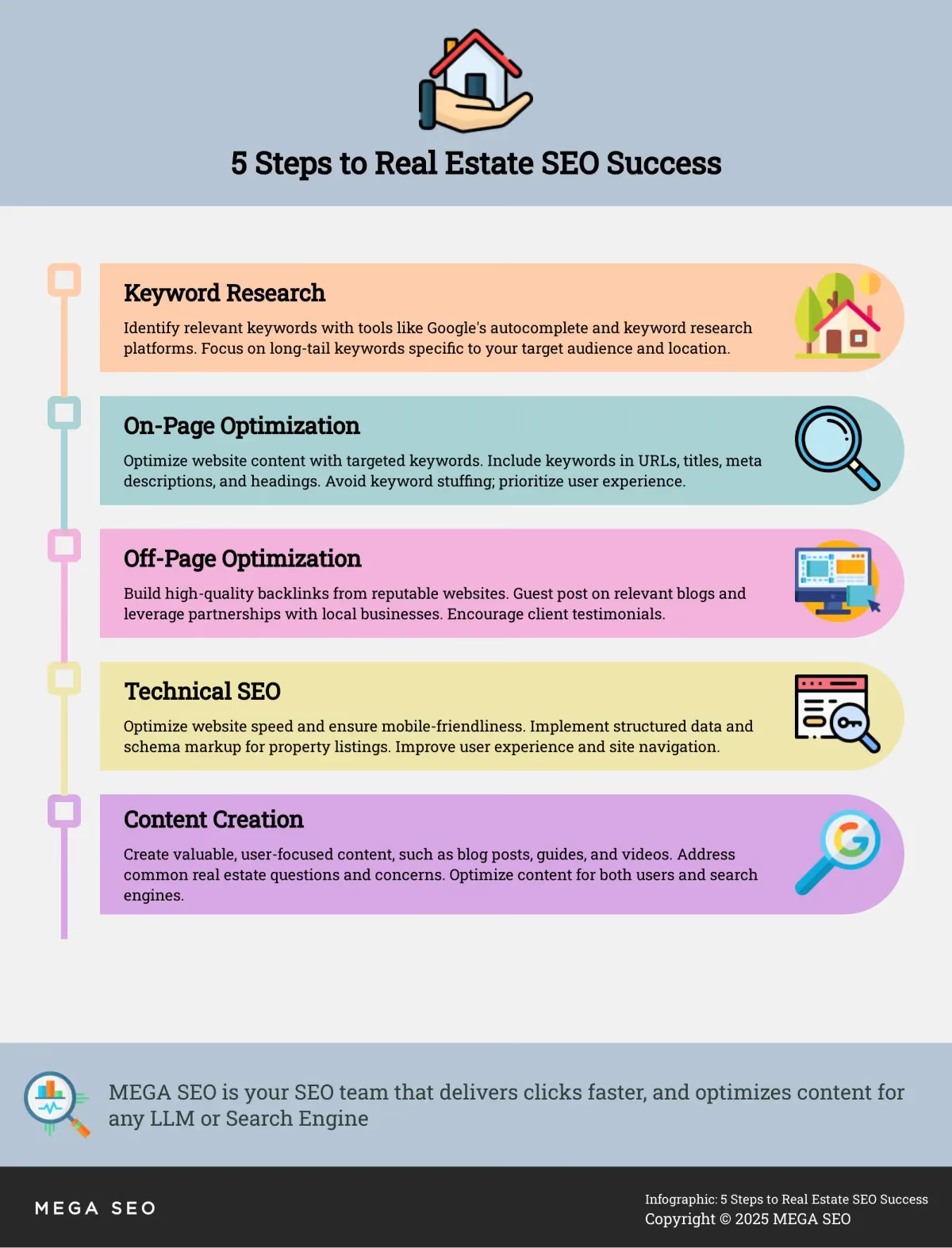
A well-rounded real estate SEO strategy involves a mix of on-page, off-page, and local SEO tactics. Think of it as building a house: on-page SEO is the foundation, off-page SEO is the framing and structure, and local SEO is the finishing touches that make it a home.
On-Page Optimization: Best Practices for Real Estate
On-page SEO focuses on optimizing elements within your website. Start with keyword research. Identify the terms potential clients use when searching for properties or real estate services in your area. MEGA SEO can automate this keyword research, saving you time and effort. Once you have your keywords, integrate them naturally into your website content. This includes URLs, page titles, meta descriptions, headings, and body text. Think like a homeowner: would you stuff your house with unnecessary furniture? The same applies to keywords—avoid keyword stuffing. Instead, focus on creating high-quality, informative content that answers your audience’s questions. Use clear headings, bullet points, and visuals like images and videos to make your content easy to digest. Remember to optimize images with alt text, describing the image for search engines and users.
Understanding User Intent
Understanding user intent is crucial for real estate SEO. It's about figuring out what potential clients are actually looking for when they type something into a search engine. Are they searching for information on investment strategies, browsing available properties, or researching property management services? Recognizing this intent lets you create content that directly addresses their needs. While keywords are still important, they should fit naturally within valuable, informative content. This approach improves the user experience, keeping visitors on your site longer and signaling to search engines that your site offers relevant information. For example, if someone searches for "how to invest in multifamily properties," they're likely looking for educational content, not just a list of properties. Providing a comprehensive guide on this topic would better serve their needs than simply optimizing a page for the keyword "multifamily properties." This user-focused approach, as highlighted in Carrot's guide to SEO for real estate investors, is key to attracting and engaging potential clients. Learn more about creating user-focused content with MEGA SEO.
Optimizing for E-E-A-T
In real estate, trust is everything. Demonstrating Experience, Expertise, Authoritativeness, and Trustworthiness (E-E-A-T) is essential for building that trust online. These qualities are crucial not only for establishing a strong online presence but also for gaining the confidence of both search engines and users. Think about it: would you trust a financial advisor with no proven track record or credentials? The same applies to real estate. Showcasing your experience and expertise through client testimonials, case studies, and detailed market analyses can significantly impact your credibility. Highlighting any professional certifications or affiliations also reinforces your authoritativeness. Finally, ensure your website is secure, easy to use, and transparent about your business practices to build trustworthiness. As Surfer SEO emphasizes in their guide to real estate SEO, E-E-A-T is a cornerstone of a successful online strategy, helping you attract clients and establish yourself as a reputable figure in the real estate market. Explore MEGA SEO's free tools to analyze your website's E-E-A-T signals.
Off-Page SEO: Boost Your Real Estate Visibility
Off-page SEO involves activities outside your website that influence your search engine rankings. A primary focus is building high-quality backlinks from reputable websites. Think of these backlinks as referrals. The more quality referrals you have, the more trustworthy you appear to search engines. Effective backlink strategies include guest blogging on relevant real estate websites and encouraging client testimonials. You can also use HARO (Help a Reporter Out). Just like you wouldn’t cut corners on the structural integrity of your house, avoid purchasing backlinks. This practice can harm your website’s credibility and ranking.
Dominate Local Search: SEO for Real Estate Investors
Local SEO is essential for real estate professionals targeting a specific geographic area. Claim and optimize your Google Business Profile. This is your online storefront, providing essential information like your business name, address, and phone number (NAP). Ensure your NAP is consistent across all online directories. Use schema markup, a type of code that helps search engines understand your website content. Specifically, use RealEstateListing and RealEstateAgent schema to provide context to your property listings and agent profiles. Finally, build local citations by listing your business on relevant online directories. These citations act as additional online references, reinforcing your local presence.
Optimizing Your Google My Business Profile
Your Google Business Profile (GBP) is your digital storefront. It's often the first impression potential clients have of your business. A complete and optimized GBP provides essential information at a glance, like your business name, address, and phone number (NAP). Accuracy and consistency are key; ensure your NAP is identical across all online platforms. Beyond the basics, enrich your profile with high-quality photos and select relevant categories that accurately reflect your services. Encourage satisfied clients to leave reviews—positive reviews build trust and social proof. Respond to reviews, both positive and negative, to show you're engaged. Think of your GBP as a dynamic extension of your physical office, constantly updated. For a deeper dive into local SEO strategies, check out this article on dominating local search.
Leveraging Local Citations and Backlinks
Think of local citations as online referrals for your business. These are mentions of your business name, address, and phone number on relevant online directories. Building consistent citations across reputable directories strengthens your local SEO presence. Start with major directories like Yelp, Bing Places, and industry-specific real estate platforms. Beyond citations, focus on acquiring high-quality backlinks from authoritative websites. Backlinks act as votes of confidence, boosting your website's credibility. Guest blogging, participating in industry forums, and earning mentions in publications are all effective strategies. Just like building a solid reputation takes time, so does building a network of quality citations and backlinks. This resource on off-page SEO offers further insights into building a robust backlink strategy. If you're looking for support with backlink strategies or optimizing your Google Business Profile, consider exploring MEGA SEO's resources page for helpful tools and information.
Keyword Research for Real Estate Investing: A Practical Approach
Keyword research is the foundation of any successful SEO strategy. It’s how you discover what potential clients search for online. In the real estate investing world, this means understanding the terms people use when looking for properties, investment opportunities, or real estate advice. Effective keyword research helps you connect with your target audience when they’re searching for what you offer.
Uncover High-Value Keywords in Real Estate
Thorough keyword research uncovers what your potential clients want, including specific long-tail keywords. This research helps you understand your target audience’s particular needs and interests. For example, instead of just “real estate,” consider more specific terms like “foreclosed properties in Austin” or “multi-family investment opportunities.” The more specific your keywords, the better you can target your ideal client. Improve your real estate SEO by understanding these nuances.
Search Volume vs. Competition: Finding the Sweet Spot
Start with seed keywords—broad terms like “real estate investing”—and then branch out. Explore related keywords using tools like Google’s autocomplete, “People also ask,” and “Related searches.” These features provide valuable insights into actual search engine queries. Utilize keyword research tools to prioritize keywords with decent search volume but low-to-medium difficulty, increasing your chances of ranking higher. This balance is key: you want keywords that people search for, but not so competitive that you can’t rank for them.
The Power of Long-Tail Keywords in Real Estate
Long-tail keywords, which are longer, more specific phrases, attract a more targeted audience. For example, “luxury condos for sale near Central Park” is a long-tail keyword that will attract a specific buyer type. These niche, local keywords are often less competitive, giving you a better chance to rank. Focusing on long-tail keywords is essential for capturing specific search intents and improving your search result ranking. Learn more about SEO for real estate investors. Understand common SEO mistakes to refine your keyword strategy further.
Building Content Hubs for Real Estate SEO
Content hubs are essential for organizing your real estate content and boosting your SEO. Think of them as resource libraries on your website, dedicated to specific topics relevant to real estate investing. These hubs provide valuable information to your audience and help search engines understand your expertise. This improves your search rankings and drives more organic traffic. A well-structured content hub uses pillar pages and supporting pages, creating a network of interconnected content that keeps users engaged.
Start by identifying core topics, or seed keywords, related to real estate investing. These could be anything from "fix-and-flip strategies" to "analyzing investment properties." Each of these core topics becomes a pillar page—a comprehensive overview of the subject. Then, create supporting pages that delve into specific aspects of the pillar page topic. For example, if your pillar page is about "fix-and-flip strategies," supporting pages could cover "finding distressed properties," "estimating renovation costs," or "staging a house for sale." Thorough keyword research is crucial at this stage. Remember to use long-tail keywords to target specific niches.
Once you have your pillar page and supporting pages, link them together internally. This internal linking not only helps users find related information, but also signals to search engines the relationships between your content. This organized structure makes it easier for search engines to crawl and index your website, improving your search visibility. Create valuable, insightful content that satisfies user search intent. Tools like Surfer AI can assist with writing and optimization, but always add a human touch. MEGA SEO can help streamline this process, automating content generation and optimization while allowing you to maintain control.
Create Engaging Real Estate Content that Ranks
Attracting potential clients online involves creating content that resonates with both search engines and users. This means understanding what your target audience is searching for and delivering information that is valuable and engaging.
What Content Works Best for Real Estate SEO?
Producing quality content for a real estate website isn’t just about letting people know about your listings—it’s also about providing useful information. Think about the questions your clients frequently ask. What are their pain points? What kind of advice are they seeking? Address these questions and concerns in your content. Create blog posts, articles, or guides on topics like “First-time homebuyer tips,” “Investing in rental properties,” or “Neighborhood guides.” By offering valuable information, you position yourself as a trusted resource and attract potential clients organically. This approach, recommended by MotoCMS, builds credibility and trust with your audience.
Consider diversifying your content formats. Infographics, checklists, and ebooks can be highly engaging and shareable, expanding your reach.
Optimize Your Real Estate Content: Users First, Search Engines Second
While creating valuable content is crucial, optimizing it for search engines is equally important. Your website content needs to include the words and phrases people use when searching for businesses like yours. This involves conducting thorough keyword research to identify relevant terms that potential clients are using. MEGA SEO offers automated keyword research tools to simplify this process. Incorporate these keywords naturally within your content, including URLs, page titles, meta descriptions, header tags, and body content.
However, avoid keyword stuffing, which can negatively impact your SEO. Surfer SEO provides guidance on incorporating keywords naturally. Focus on creating a positive user experience by ensuring your content is easy to read, informative, and engaging. A well-structured website with clear navigation and relevant internal links also contributes to a better user experience and improved SEO. You can use MEGA SEO to generate customized posts optimized for both users and search engines.
Using Video to Enhance Your Real Estate SEO
Incorporating video content is essential for any successful real estate SEO strategy. Videos offer a dynamic and engaging way to connect with your audience, showcasing properties, providing virtual tours, and sharing valuable insights. Create videos that highlight local amenities, showcase client testimonials, or offer expert advice on real estate investing. Remember to add captions and transcripts to your videos to make them accessible to a wider audience and improve SEO. Carrot suggests using videos to boost engagement and SEO.
Optimize video titles and descriptions with relevant keywords to ensure they rank well in search results. By leveraging video content effectively, you can create a more immersive online experience for potential clients, ultimately driving more leads. Book a demo to see how MEGA SEO can help you optimize your video content for real estate SEO.
Video Optimization Best Practices
Like any other content, videos need optimization to rank well in search results. Here’s how to make your real estate videos shine:
- Keyword Research: Identify relevant keywords related to your video’s topic. Use tools like Ahrefs or SEMrush to discover what your target audience is searching for. Incorporate these keywords naturally in your video title and description.
- Compelling Titles and Descriptions: Craft attention-grabbing titles that accurately reflect your video’s content. Write detailed descriptions that provide context and include relevant keywords. Think of your title and description as your video’s storefront—make them inviting and informative. MEGA SEO can help you generate optimized titles and descriptions.
- High-Quality Thumbnails: Create visually appealing thumbnails that accurately represent your video’s content. A captivating thumbnail can significantly impact click-through rates. Learn more about creating effective thumbnails.
- Video Transcripts and Captions: Always include transcripts and captions. These not only improve accessibility but also provide search engines with more text to crawl, boosting your video’s SEO. MEGA SEO offers tools to help automate this process.
- Promote Your Videos: Share your videos across multiple platforms, including your website, social media channels, and email newsletters. Consider running targeted ad campaigns to reach a wider audience.
- Mobile Optimization: Ensure your videos are mobile-friendly. Most online searches are now conducted on mobile devices, so your videos need to look great on any screen size. Learn more about mobile optimization best practices.
- Video Sitemap: Submit a video sitemap to Google Search Console. This helps Google understand the video content on your website and index it correctly. Learn more about video sitemaps.
By following these video optimization best practices, you can enhance your real estate SEO strategy, attract more potential clients, and ultimately drive more business. Book a demo with MEGA SEO to learn how our platform can automate and streamline your video optimization process.
Technical SEO for Real Estate: What You Need to Know
Technical SEO often gets overlooked, but it’s essential for real estate websites. It ensures search engines can easily crawl, index, and understand your site, directly impacting your search result visibility. A technically sound website also provides a better user experience, leading to higher engagement and conversions.
Optimize Your Real Estate Website for Speed and Mobile
Site speed is crucial, especially for real estate sites. A Google study revealed that a one-second delay in mobile load times can dramatically decrease conversions. A significant portion of real estate website traffic comes from mobile devices, so mobile optimization is critical. Compress images, leverage browser caching, and minimize redirects to improve your site speed. Tools like Google’s PageSpeed Insights can help you pinpoint areas for improvement. For a more streamlined approach, consider MEGA SEO’s automated technical SEO features to handle these optimizations for you. You can learn more by booking a demo.
Structured Data & Schema: Enhance Your Real Estate Listings
Structured data, using schema markup like RealEstateListing and RealEstateAgent, helps search engines understand your content’s context. This can lead to rich snippets in search results, making your listings more attractive and informative. Schema markup provides specific property details, like price, location, and amenities, directly in the search results, increasing click likelihood. This enhanced visibility can give you a competitive edge in crowded real estate markets.
Improve User Experience on Your Real Estate Website
User experience is as important as technical SEO. Focus on creating valuable content that resonates with your target audience. This significantly impacts site performance and attracts motivated sellers and buyers. Ensure your website is easy to navigate, with clear calls to action and a logical structure. A positive user experience encourages visitors to spend more time on your site, signaling to search engines that your content is relevant and engaging, which can boost your search rankings. Consider using MEGA SEO’s free tools to analyze your website’s user experience and identify areas for improvement.
Link Building Strategies for Real Estate Investors
Backlinks—links from other websites to yours—are like votes of confidence. They tell search engines your site is trustworthy and authoritative, boosting your search rankings. For real estate investors, link building involves a mix of strategies.
Guest Posting & Outreach for Real Estate SEO
One proven way to earn backlinks is through guest posting. Find relevant real estate blogs, industry publications, or finance websites that accept guest contributions. Write insightful, valuable articles for their audience, and include a link back to your website. Consider using HARO (Help A Reporter Out) to connect with journalists seeking expert sources. Respond to relevant queries with valuable insights and potentially earn a backlink from a high-authority news website. Getting client testimonials and featuring them on your website can also attract backlinks.
The Power of Partnerships in Real Estate SEO
Collaborating with local businesses can help you gain valuable backlinks and increase your site’s authority. Team up with complementary businesses in your area, such as mortgage brokers, home inspectors, or interior designers. Explore opportunities for cross-promotion, where you link to each other’s websites. Partner with local influencers or real estate bloggers who have a strong online presence. Consider sponsoring their content or collaborating on joint ventures that benefit both parties and naturally generate backlinks.
Build Local Citations to Boost Your Real Estate Presence
For real estate investors, local SEO is paramount. Creating consistent NAP (Name, Address, Phone number) citations across various online directories is crucial for local SEO. List your business on reputable directories like Google My Business, Yelp, and Bing Places. Ensure your NAP information is accurate and consistent across all listings. This helps search engines understand your business location and improves your chances of appearing in local search results.
Competitive Analysis: Learning from the Best
In real estate investing, understanding your competition is crucial for a successful SEO strategy. Analyzing what’s working for top performers helps you identify effective tactics and areas for improvement in your own approach. Start by examining the keywords they target. Tools like Google’s autocomplete and “People also ask” offer insights into the search terms driving traffic to competitor sites. This research helps uncover high-value keywords resonating with your target audience, allowing you to tailor your content accordingly. As noted in our real estate SEO guide, “Thorough keyword research uncovers what your potential clients want, including specific long-tail keywords.”
Analyzing competitors’ backlink profiles reveals link-building opportunities. High-quality backlinks from reputable websites act as endorsements, boosting your site’s authority for search engines. Our guide emphasizes building high-quality backlinks, achievable through strategies like guest blogging and client testimonials. Don’t overlook local SEO. Claiming and optimizing your Google Business Profile is essential for local searches. Consistent Name, Address, and Phone number (NAP) across online directories is crucial for local search visibility. MEGA SEO’s free tools can help analyze competitor strategies and identify areas for improvement.
Measuring Your Real Estate SEO Success
After optimizing your real estate website and content, you need to know if your efforts are paying off. Tracking your SEO performance is crucial for understanding what’s working, what’s not, and how to refine your strategy. This isn’t a set-it-and-forget-it process; consistent monitoring and adjustments are key to long-term success.
Track These KPIs for Real Estate SEO
First, define your Key Performance Indicators (KPIs). These metrics offer quantifiable insights into your SEO performance. Think about what you want to achieve with your SEO strategy. Are you aiming for more website visitors, higher conversion rates (like leads generated), or better search engine rankings for specific keywords? Common KPIs for real estate SEO include:
- Organic traffic: Track how many people visit your website from search engine results pages (SERPs).
- Keyword rankings: Monitor your position in search results for relevant keywords. Are you moving up in the rankings?
- Conversion rates: Measure how many website visitors take a desired action, such as filling out a contact form or scheduling a showing.
- Bounce rate: A high bounce rate (people leaving your site quickly) can signal problems with user experience or content relevance.
- Time on page: Longer time spent on a page suggests users find your content engaging.
By regularly monitoring these KPIs, you can start to see how your SEO efforts impact your business goals. Tools like Google Analytics and Google Search Console can help you track these metrics. Semrush is another popular platform that offers comprehensive SEO tracking and reporting features.
Analyze & Report on Your SEO Performance
Data without analysis is just noise. Use web analytics tools to understand user behavior on your site. Look at which pages are getting the most views, where users are coming from, and how they interact with your content. Pay attention to metrics like bounce rate and time on page to identify areas for improvement. For example, a high bounce rate on a specific page might suggest the content isn’t relevant to the user’s search query or that the page loads too slowly.
Regular reporting is essential to keep track of your progress and inform future SEO strategies. Create reports that summarize your key KPIs and highlight any significant changes or trends. Share these reports with your team or stakeholders to keep everyone informed.
Adapting Your Real Estate SEO Strategy
SEO is a dynamic field. Search engine algorithms change, user behavior evolves, and your competitors are constantly adapting their strategies. What worked last year might not work today. Regularly review your keyword rankings and make adjustments to your content and SEO strategy as needed.
Focus on creating high-quality content that resonates with your target audience. This will not only improve your search rankings but also enhance user engagement and drive conversions. Remember, the goal of SEO isn’t just to rank higher; it’s to attract qualified leads and grow your real estate business. Stay informed about the latest SEO best practices and be prepared to adapt your approach to stay ahead of the curve. Resources like the Moz Blog and Search Engine Journal offer valuable insights and updates on the ever-changing world of SEO.
Common Real Estate SEO Mistakes to Avoid
Even with a solid SEO strategy, real estate investors sometimes make mistakes that can slow their progress. Here are a few common pitfalls to avoid:
Keep Your Real Estate Content Fresh & Updated
SEO is a long-term game that requires ongoing effort. Regularly updating your content is a key factor in success. Fresh content signals to search engines that your website is active and relevant, keeping it aligned with current market trends and search engine algorithms. Consider updating blog posts with new market data, refreshing property listings with the latest details, and adding new client testimonials or case studies. MEGA SEO’s Maintenance Agent can automate these updates, saving you time and resources.
Optimize for Voice Search in Real Estate
Voice search is increasingly popular, and the real estate industry is no exception. Make sure your website is optimized for these voice searches by focusing on comprehensive keyword research and local SEO. People tend to use conversational language in voice searches, so incorporate long-tail keywords and natural-sounding phrases into your website copy. For example, instead of targeting “real estate agent,” consider optimizing for phrases like “sell my house fast Denver” or “best real estate agent near me in Boulder.” Schedule a demo to see how MEGA SEO can help you identify and target these conversational keywords.
Image Optimization for Real Estate Listings
High-quality images are essential for showcasing properties, but they also need to be optimized for search engines. This means using descriptive file names, writing relevant alt text, and including captions whenever possible. Optimizing images improves your website’s visibility in image search results and creates a better user experience. MEGA SEO can automate this process, ensuring your images are always optimized for maximum impact.
Managing Your Online Reputation
In real estate investing, your online reputation is everything. Potential clients research investors and properties online before making decisions. A positive online presence builds trust, while negative reviews or a lack of an online presence can deter clients. Actively managing your online reputation is crucial.
Start by soliciting online reviews, both positive and negative. Encourage satisfied clients to share their experiences on platforms like Google My Business, Yelp, and Zillow. Responding to reviews demonstrates transparency and a commitment to customer satisfaction. Online reviews act as social proof, influencing decisions. A strong collection of positive reviews positions you as a trusted authority.
Engaging with clients through social media and review platforms fosters a community around your brand. Monitor your online presence using tools to track brand mentions, and respond promptly to feedback. MEGA SEO can help automate these tasks, ensuring a consistent online presence.
Staying Ahead of the Curve in Real Estate SEO
The real estate market is dynamic, and so is the digital landscape. To maintain a competitive edge, staying ahead of SEO trends is crucial. This means adapting to algorithm updates, embracing emerging technologies, and integrating SEO with your broader marketing efforts.
Adapting to SEO Algorithm Updates
Search engine algorithms are constantly evolving. One day you’re ranking on page one, and the next, you’re nowhere to be found. Google frequently updates its algorithms to improve search results and user experience. Keeping up with these algorithm updates can feel like a full-time job, but it’s essential for long-term SEO success. Focus on creating high-quality, valuable content that resonates with your target audience. User experience is just as important as technical SEO, so make sure your website is easy to use and offers a positive browsing experience. Prioritize providing helpful information, answering common real estate questions, and offering practical advice. Remember, SEO is a marathon, not a sprint. Consistent effort and a focus on user needs will yield the best results over time.
Using Emerging Tech to Boost Real Estate SEO
New technologies are transforming the real estate industry, and SEO is no exception. Artificial intelligence (AI) is playing an increasingly important role in content creation and optimization. AI writing tools can help streamline the content creation process, but it’s important to use them strategically. AI-generated content should always be reviewed and refined by a human writer to ensure accuracy, clarity, and a personal touch. Tools like MEGA SEO can help you leverage AI for content generation while maintaining quality and relevance. Don’t be afraid to experiment with new technologies, but always prioritize user experience and valuable content.
Leveraging AI for SEO Automation
The real estate industry is fast-paced, and staying on top of SEO best practices requires significant time and effort. AI-powered SEO tools can automate many tedious tasks, freeing you to focus on higher-level strategies and client interactions. Think of AI as your tireless SEO assistant, working behind the scenes to optimize your online presence.
AI can automate various aspects of real estate SEO, from keyword research and content generation to technical SEO improvements and ongoing content maintenance. For example, MEGA SEO can analyze your website and identify technical issues that might be hindering your search rankings. MEGA SEO can also automate keyword research, saving you time and effort, and generate customized posts optimized for both users and search engines. Its Maintenance Agent can even keep your existing content fresh and updated, ensuring your website stays relevant and ranks well in search results. Learn more about how MEGA SEO leverages AI for real estate SEO.
While AI is a powerful tool, remember that human oversight is still essential. Review and refine any AI-generated content to ensure accuracy, clarity, and a personal touch that resonates with your target audience. The best SEO strategies combine the efficiency of AI with the nuanced understanding and expertise of a human real estate professional.
Integrating SEO with Your Digital Marketing Strategy
SEO isn’t a standalone strategy. It should be integrated with your other digital marketing efforts to maximize your reach and impact. Think of SEO as the foundation of your online presence. It drives organic traffic to your website, where visitors can then engage with your other marketing channels, such as email newsletters and social media. Make sure your website is optimized for lead capture, with clear calls to action and easy-to-use contact forms. By connecting your SEO strategy with your overall marketing plan, you can create a cohesive and effective online presence that attracts and converts potential clients. Consider using MEGA SEO to streamline this integration and manage all your SEO needs in one place.