Taking control of your affiliate marketing journey starts with making smart, informed decisions about where to focus your efforts. The niche you choose is the bedrock of your entire strategy. It influences the content you create, the products you promote, and ultimately, your ability to generate income. Many marketers find this initial step daunting, unsure how to distinguish a promising niche from one that might lead to a dead end. This guide is here to simplify that process. We'll provide actionable steps and insights to help you identify, analyze, and validate affiliate niches, empowering you to choose a path that aligns with your goals and offers a clear route to success.
Key Takeaways
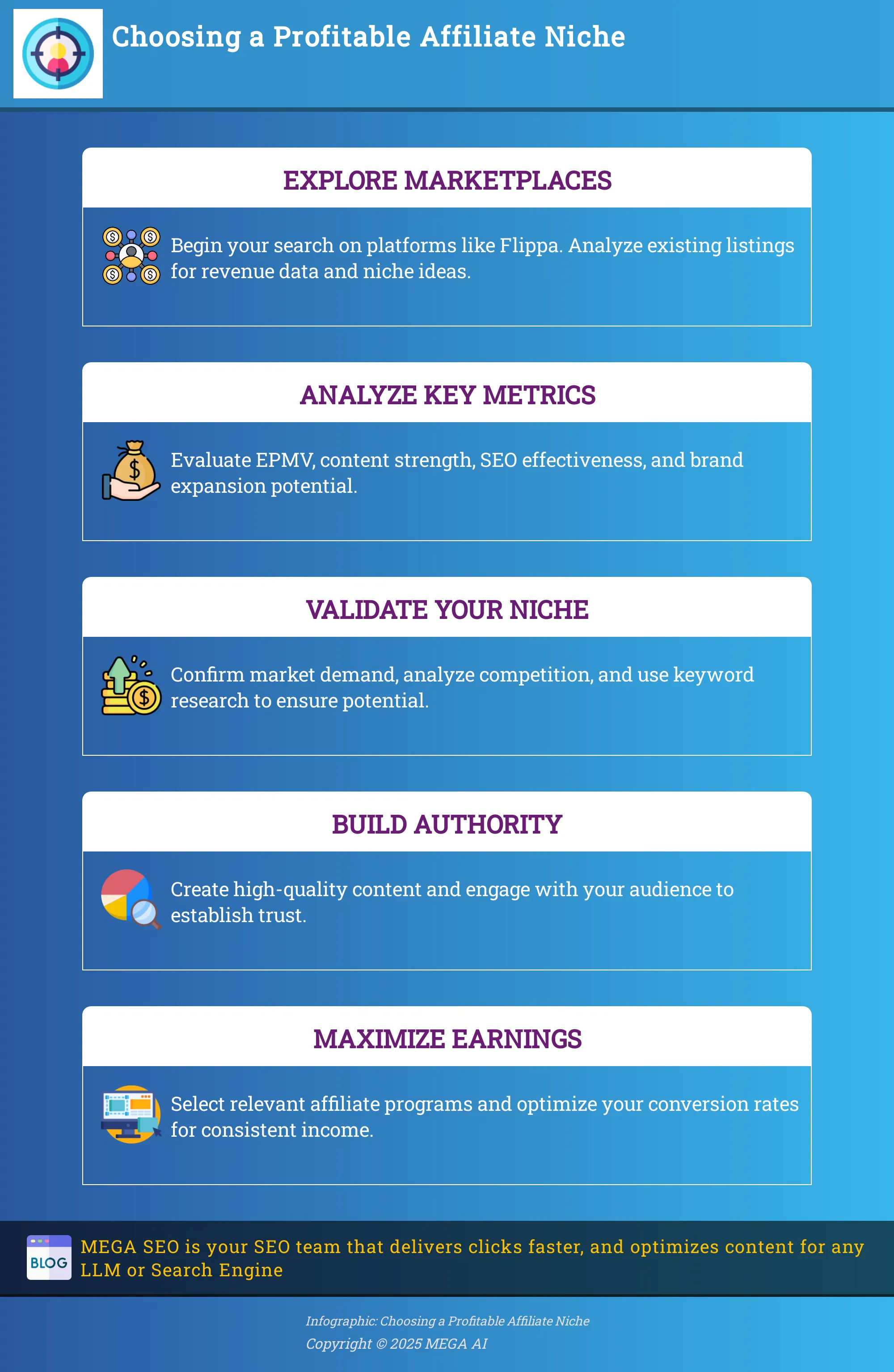
- Leverage website marketplaces for initial niche ideas: Examine sites for sale on platforms like Flippa to gather real-world data on niche performance, revenue, and traffic, guiding your initial selection process.
- Confirm niche viability with thorough analysis and testing: Assess key metrics such as EPMV, analyze the competitive landscape, and use keyword research to verify market demand before investing heavily in a niche.
- Grow your authority and earnings with strategic content and audience connection: Produce high-quality, relevant content consistently, engage authentically with your audience to build trust, and choose affiliate programs that genuinely meet their needs to enhance conversions.
What Are Profitable Affiliate Niches?
So, what exactly makes an affiliate niche "profitable"? Think of profitable affiliate niches as specific corners of the market where there's a clear demand for products or services, and importantly, where companies offer a good commission structure for affiliates like you. These niches often tap into the specific interests and needs of a focused audience. This makes it much easier for you to promote relevant products effectively because you're speaking directly to people who are already looking for what you're offering.
Choosing a niche you're genuinely passionate about or have some expertise in can really make a difference. When you know a subject well, you can create much more valuable and insightful content. This isn't just about churning out articles; it's about building trust with your audience, which is key to long-term success. People are more likely to buy based on recommendations from someone they see as knowledgeable and authentic.
A truly profitable niche strikes a good balance between demand and competition. You want a niche where people are actively looking for solutions, but not one so saturated that it's incredibly difficult to stand out. While high demand with low competition is the dream, it's rare. More often, you'll find niches with healthy demand and manageable competition, where a smart strategy can help you carve out your space. Some consistently strong areas include health and wellness, personal finance, technology, and various lifestyle segments. These fields tend to have a broad audience and a wide array of products you can promote.
Finally, always consider the long-term viability of a niche. Trends come and go, so what's popular right now might not be in a year or two. A bit of research into market trends and consumer behavior can help you identify niches with staying power, ensuring your efforts today continue to pay off down the line. This foresight is crucial for building a sustainable affiliate marketing business.
Use Website Marketplace Analysis to Find Niches
Finding a profitable niche can sometimes feel like you're looking for a specific book in a massive library without a catalog. But, there are smart ways to narrow down your search. One really effective strategy is to look at website marketplaces—places where people buy and sell existing affiliate sites. Think of it as getting an inside look at businesses that are already up and running. These marketplaces are goldmines of information if you know what to look for and how to interpret it. By analyzing sites currently for sale, you can gather real-world data on how different niches perform, the kind of revenue they generate, and where their traffic comes from. This isn't about finding a site to copy directly, but more about understanding the broader landscape and spotting patterns of success that you can adapt.
This method helps you move past just guessing and allows you to base your decisions on actual evidence. You can see which niches are attracting buyers, what kind of earnings are possible, and the types of content that resonate with audiences in those spaces. It’s a practical way to validate your niche ideas before you pour a lot of time and resources into building something from scratch. As you spend time exploring these marketplaces, you’ll start to develop a better sense for promising opportunities and learn to identify niches that not only have current appeal but also show potential for long-term growth. This kind of hands-on analysis can really shorten your learning curve and guide you toward areas where you can build a successful affiliate marketing business.
Reverse Engineer Listings
One of the most straightforward ways to uncover potentially profitable niches is by reverse engineering the listings you find on website marketplaces, with Flippa being a popular example. When sellers list their affiliate websites, they need to provide detailed information to attract potential buyers. This usually includes the website's name, its specific niche, and, crucially, revenue details. As affiliate marketing expert Matt Diggity notes, this information "can be invaluable for understanding what niches are currently performing well." By carefully examining these public listings, you get a direct view of which topics are generating income and how these sites are structured. This gives you a practical, data-driven starting point for your own niche research, grounded in actual market performance.
Focus on Micro Niches
When you're sifting through marketplace listings or just brainstorming potential ideas, it’s often more effective to concentrate on micro niche sites rather than very broad categories. A micro niche is a smaller, more specific segment of a larger market. For instance, instead of a broad niche like "pet care," a micro niche could be "organic grooming products for hypoallergenic dogs." Focusing on these smaller segments allows you to gain a much clearer understanding of your specific target audience and their unique needs. Matt Diggity also highlights that this narrower focus helps you get a better handle on your performance metrics. Furthermore, as Gudweb points out, "by honing in on micro niches, you can better target specific audiences and improve your chances of profitability." This targeted approach can make it significantly easier to create highly relevant content and establish yourself as an authority in a less crowded field.
Key Metrics to Evaluate Niche Profitability
Once you've identified some potential niches through marketplace analysis, the next step is to dig into the numbers. Relying on data rather than gut feelings will help you make more informed decisions and select a niche with a higher chance of success. Several key metrics can offer insights into a niche's potential profitability, helping you understand how much revenue you might generate and the effort required.
Evaluating these metrics involves looking at how well existing sites in the niche are performing, the strength of their content, and their search engine optimization. It also means considering the long-term picture – can this niche support growth and expansion? By systematically assessing these areas, you can build a clearer picture of whether a niche aligns with your financial goals and resources. This analytical approach is fundamental to building a sustainable affiliate marketing business. Platforms like MEGA AI can further streamline this process by automating aspects of SEO analysis and content optimization, allowing you to focus on strategy.
Understand Earnings per 1,000 Page Views (EPMV)
Earnings per 1,000 page views, or EPMV, is a vital metric for assessing how much revenue a niche might generate from its website visitors. Think of it as a measure of how effectively a site turns traffic into income. According to industry research, like insights shared by Matt Diggity, an EPMV ranging from $7 to $32 is generally considered satisfactory. This range provides a useful benchmark when you're evaluating different niches.
If sites in a particular niche consistently show EPMV in or above this range, it’s a positive sign for its monetization potential. A higher EPMV suggests that the traffic within that niche is valuable and that there are effective ways to monetize that traffic, often through affiliate offers, display ads, or product sales. When you're looking at marketplace listings or analyzing competitor sites, try to find or estimate their EPMV to gauge the niche's financial viability.
Analyze Content and SEO Strength
To truly understand a niche's profitability, you need to look closely at the existing content and its SEO performance. For example, in the tire niche, earnings per article can be quite significant. An analysis highlighted in Matt Diggity's research shows that if an article generates $224,000 over its lifetime and there are 543 articles, the average earnings per article would be approximately $44 per month. This kind of calculation helps you see if the content is effectively monetizing traffic.
Look at the top-ranking sites in the niche. What kind of content are they producing? How well is it optimized for search engines? Are there gaps you could fill with higher-quality or better-optimized content? Understanding the current landscape helps you estimate the effort and investment needed to compete. Tools that assist with automated keyword research and content generation can be particularly helpful here, enabling you to create competitive content more efficiently.
Assess Brand Expansion Potential
When choosing a niche, it’s wise to think beyond immediate earnings and consider the potential for brand expansion. Focusing on building category-level authority sites, rather than extremely narrow micro-sites, can offer more flexibility for future growth. This approach, as Matt Diggity also suggests, allows you to branch out into related micro-niches over time, which can diversify your revenue streams and enhance overall growth opportunities.
For instance, if you start with a site about "organic dog food," you might later expand into "dog training treats," "eco-friendly dog toys," or "holistic pet care." This broader scope allows your brand to grow and adapt. Consider if the niche has enough related subtopics or product categories that you could realistically expand into. A niche with strong expansion potential offers a more sustainable long-term business model, allowing you to continuously add new content and explore fresh affiliate partnerships.
Use Flippa for Niche Research
Flippa is a popular marketplace for buying and selling online businesses, including websites, domains, and apps. It's also a fantastic resource for niche research if you know how to look. Think of it as a window into what's currently working and, more importantly, what's making money. By analyzing active listings, you can gather real-world data on various niches, which can save you a ton of guesswork and help you make more informed decisions from the start.
When you're exploring Flippa, you're essentially getting a behind-the-scenes look at established websites. Sellers provide a wealth of information to attract buyers, and this information is incredibly valuable for your research. You can see traffic numbers, revenue details, the age of the domain, backlink profiles, and the monetization methods being used. This allows you to identify trends, understand market saturation, and potentially uncover underserved micro-niches that have strong profit potential. For businesses looking to scale their content, like those using MEGA AI's SEO features for automated keyword research and content generation, understanding these proven niches can significantly streamline your strategy. It’s about working smarter, not just harder, by learning from what’s already successful in the real world, rather than relying solely on theoretical models. This direct insight can be a game-changer for focusing your resources effectively.
Interpret Listing Data
When people list their websites for sale on Flippa, they provide a lot of information to attract buyers. This is great news for researchers. As Matt Diggity notes, sellers often "reveal the name of the website, the niche of the website, as well as how much money it's making." This transparency allows you to assess the potential of various niches based on actual performance data. Look at the revenue sources—is it display advertising, affiliate sales, or direct product sales? This gives you clues about how a niche is typically monetized.
Also, consider the site's age, traffic sources (like organic search or social media), and the kind of content that performs well. This information helps you understand the effort required to succeed. For example, if a site relies heavily on organic traffic, a solid SEO approach is essential. Analyzing this data helps you build a picture of what a successful site in a particular niche looks like.
Calculate Long-term Viability
Beyond current earnings, it's key to understand if a niche offers sustainable income. A helpful metric is earnings per 1,000 page views (EPMV or RPM). As Matt Diggity highlights, "This simple number can help you figure out how lucrative and how challenging a niche is." A higher EPMV generally suggests a more profitable niche for its traffic volume. Calculate it by dividing monthly earnings by monthly page views, then multiplying by 1,000.
Another useful calculation is earnings per article. Consider Matt Diggity's point: "...would you invest into a niche where each time you write an article it ends up being a $44 per month ATM machine?" This helps gauge the return on your content creation. If each piece of content can consistently generate revenue, the niche has strong long-term potential. This data-driven view of content value is exactly what tools like MEGA AI's Maintenance Agent help with by optimizing content for better performance.
How to Validate Your Niche
So, you’ve brainstormed some promising affiliate niche ideas. That’s a great start. But before you dive headfirst into building a website and creating content, there’s a critical step you shouldn’t skip: validating your niche. Think of this as your due diligence phase. It’s where you confirm that your chosen niche has a real potential for success, rather than just being a passion project that might not pay the bills. Skipping this step is a common misstep, and it can lead to a lot of wasted time and effort on a niche that simply doesn’t have the audience or profitability to sustain your affiliate marketing goals.
Proper validation involves looking at your niche from several angles. You're essentially trying to answer key questions: Is there a genuine audience for this? Can I realistically compete? And, importantly, can I make money here? It’s about moving from a gut feeling to a data-backed decision. This process helps you refine your ideas, perhaps pivot slightly, or even decide to pursue a different niche altogether if the signs aren't promising. Taking the time to validate effectively means you're building your affiliate business on a solid foundation, increasing your chances of long-term success and avoiding the frustration of pouring resources into a dead end. The following steps will guide you through how to rigorously test your niche ideas.
Apply Keyword Research Techniques
One of the most practical ways to start validating your niche is by getting familiar with keyword research. This isn't just about finding random terms; it’s about understanding what your potential audience is actively searching for and how competitive those searches are. A clever tactic, shared by Matt Diggity, is to look at successful website marketplaces like Flippa. When sites are sold, sellers often share detailed performance data. You can examine these listings to get a sense of a niche's profitability. Then, armed with this insight, you can use search engine tools to assess the competition level for relevant keywords. This approach allows you to base your decisions on real market data, giving you a clearer picture of niches with high success potential.
Assess Market Demand
While profitability is a key factor, choosing a niche solely based on its money-making potential can be a recipe for burnout if you have no personal interest in the topic. As John Thornhill advises, it's important to select a niche that you're genuinely passionate about or at least knowledgeable in. This personal connection will keep you motivated and help you create authentic content that resonates with your audience. Beyond your own interest, you absolutely must confirm that there's an existing target audience actively looking to purchase products or services within that niche. Conducting thorough market research to understand consumer demand is crucial for ensuring your efforts will find an interested and engaged group of potential buyers.
Analyze Competition Levels
Jumping into a niche that's already crowded with well-established players can make it incredibly difficult to gain traction, especially when you're just starting. It's vital to analyze the competition within your chosen area. Many aspiring affiliate marketers overlook this step, leading to frustration when their content gets buried. Understanding who your competitors are, what strategies they're using effectively, and, importantly, where there might be gaps or underserved segments, allows you to find a unique angle. This doesn't necessarily mean you should avoid any niche with existing competition, but it does mean you need a smart strategy to differentiate yourself and carve out your own space in the market.
Avoid Common Pitfalls in Niche Selection
Choosing the right niche is a foundational step in building a successful affiliate marketing venture. It’s easy to get sidetracked by what seems popular or highly profitable at first glance, but a thoughtful approach can save you a lot of headaches down the road. By understanding a few common missteps, you can make a more informed decision that sets you up for sustainable income and enjoyment. Let's look at some key areas where affiliate marketers often stumble, so you can sidestep these issues from the start.
Don't Ignore Personal Interest
It might sound obvious, but selecting a niche that genuinely interests you is incredibly important. Many aspiring affiliate marketers make the mistake of choosing a niche based only on its earning potential, which, as some experts note, can lead to burnout because they are "not choosing a niche they are passionate about, affecting commissions." While profitability matters, a lack of personal passion can quickly turn content creation into a chore.
Think about your hobbies, subjects you love discussing, or areas where you’re always eager to learn more. When you choose a niche you're passionate about, your enthusiasm will shine through, making your marketing efforts more authentic and effective. This genuine connection helps maintain momentum, especially when results take time to appear.
Don't Overlook Monetization Potential
While passion fuels your efforts, your chosen niche also needs to have a clear path to earning income. It's a common mistake, as industry watchers point out, that "diving head-first into a niche that’s not right for you is another huge affiliate marketing mistake many newbies make." This often happens when enthusiasm overshadows practical financial considerations. Before you commit, research the monetization options thoroughly.
Are there reputable affiliate programs available? What are the typical commission rates? Is there a target audience actively searching for and purchasing solutions in this area? You need a balance; your interest will keep you going, but the niche's commercial viability will ensure your efforts can translate into actual earnings.
Don't Neglect to Test the Niche
Before you invest significant time and resources, it’s wise to test the waters of your chosen niche. This means more than just surface-level research; it involves trying out some of the products or services you intend to promote. As successful affiliates often advise, you should "always test products before promoting to build trust with your audience." This practice not only helps in understanding the market better but also establishes credibility.
Purchasing and using these items allows you to provide honest, firsthand accounts, which is invaluable for building that crucial trust. This testing phase also helps you refine your content strategy. You can start by creating a few pieces of content and promoting a couple of products to see how your audience responds. This initial feedback can guide your decisions and confirm if the niche is a good fit for you long-term.
Tools and Resources for Niche Research
Selecting the right tools is a game-changer when you're digging into niche research. They help you gather crucial data efficiently and make smarter decisions. Two key categories of tools stand out for their ability to give you a real advantage: analytics platforms and dedicated marketing tools. Understanding how to use these can streamline your process and point you toward more profitable ventures.
Use Analytics Platforms
Analytics platforms offer a clear window into how websites within a potential niche are actually performing. When you explore website marketplaces, sellers often provide a wealth of data. Matt Diggity offers valuable insights on choosing successful niches, noting, "When people list their websites for sale on Flippa, they need to give as much information as possible to prospective buyers... you can figure out exactly how difficult it is." This information is incredibly useful for assessing if a niche is worth your time and effort. Another practical tip from Diggity for quickly checking content volume is to type "site:domainname.com" into Google. This simple search reveals how much content a site has published, giving you a better sense of the competition.
Use Marketing Tools
For affiliate marketers, marketing tools are not just helpful; they are fundamental for establishing your presence. Overlooking search engine optimization (SEO) is a frequent misstep. As highlighted in a guide on common affiliate marketing mistakes, "Ignoring SEO is a big mistake... Use marketing tools to enhance visibility." Effective SEO helps your content get discovered by individuals actively searching for the products or information you provide. Beyond just being seen, it's about building your reputation. Establishing yourself as an authority means consistently delivering value and staying informed about trends in your niche. Utilizing effective marketing tools, including platforms that can help automate your SEO efforts or simplify content creation, is key to achieving this and understanding the foundational pillars of affiliate marketing.
Build Authority in Your Chosen Niche
Once you've identified a promising niche, the next step is to establish yourself as a trusted voice within it. Building authority means your audience sees you as a credible source of information and recommendations. This trust is fundamental for affiliate marketing success, as people are more likely to act on advice from someone they respect and believe in. It's about more than just knowing your stuff; it's about consistently proving your value to your audience.
Create High-Quality Content
The cornerstone of building authority is consistently producing high-quality content. This means creating materials that are not only well-written and informative but also genuinely helpful to your audience. When you focus on a specific niche, it becomes simpler to establish yourself as an expert and build that crucial trust. Your content should address your audience's pain points, answer their questions, and provide them with actionable insights. Think of authority as the level of credibility you command; when you have it, your audience listens.
To achieve this, your content needs to be well-researched, original, and tailored to the specific interests of your niche. Regularly publishing valuable articles, guides, or reviews helps solidify your reputation. For instance, platforms like MEGA AI can assist in generating optimized content that resonates with your target audience and search engines, making it easier to maintain a steady flow of high-value material. Remember, building credibility is a key factor for long-term success in any competitive field.
Engage with Your Audience
Creating great content is essential, but authority is also built through connection and interaction. Engaging with your audience helps to humanize your brand and foster a loyal community. This means being present where your audience spends their time, particularly on social media platforms. Consistent and valuable interactions on these channels can significantly contribute to your brand's presence and position you as an authority.
Don't just broadcast your message; actively participate in conversations. Respond to comments, ask questions, and encourage discussions. Leveraging social media effectively allows you to drive traffic and, more importantly, build relationships with your followers. This two-way communication shows that you value your audience's input and are genuinely interested in helping them, which plays a crucial role in the overall success of your affiliate marketing efforts.
Maximize Affiliate Earnings in Your Niche
Once you've identified and validated your niche, the next step is to turn that potential into actual earnings. This involves carefully choosing which affiliate programs to join and then working to ensure your audience converts. It's about making smart choices that align with your niche and your audience's needs, ultimately helping you build a sustainable income stream. Think of it as laying the final, crucial bricks in your affiliate marketing foundation. Success here depends on a thoughtful approach to both program selection and how you present offers to your readers.
Select the Right Affiliate Programs
Choosing the right affiliate programs is fundamental to your success. It’s not just about finding programs with high commission rates; it’s about finding products or services that genuinely resonate with your audience. Many affiliate marketers find that their passion for a niche significantly impacts their ability to connect with potential buyers. When you're enthusiastic about what you're promoting, it shows. Focus on a niche where you have genuine interest and where there's an existing target audience actively looking to make purchases. This alignment makes your promotional efforts feel more authentic and less like a sales pitch, which can lead to better engagement and higher earnings.
Optimize Conversion Rates
After selecting your programs, your focus should shift to optimizing conversion rates. This means encouraging more of your visitors to make a purchase through your affiliate links. A key part of this is building trust and credibility with your audience. Always aim to promote high-quality products or services; if possible, test them yourself before recommending them. When your audience trusts your judgment, they're more likely to act on your recommendations. Consistently providing valuable, honest content helps you build authority in your field. This reputation is invaluable in a competitive market and directly influences how effectively you can convert your audience into affiliate sales.
How MEGA AI Helps with Affiliate Marketing
If you're an affiliate marketer, you understand that creating compelling content and ensuring it reaches the right audience are central to your success. This is where a platform like MEGA AI can really support your efforts. Our tools are designed to streamline many of the time-consuming aspects of affiliate marketing, allowing you to dedicate more energy to strategy and building partnerships.
One of the primary ways MEGA AI assists is through automated content creation. Consider the ability to quickly generate drafts for product reviews, comparison articles, or even social media updates that promote your affiliate links. This isn't just about producing content faster; it's about consistently developing the varied material needed to engage different segments of your audience. Furthermore, our platform helps with automated keyword research and can assist in building effective internal and external linking strategies. This ensures your affiliate content targets terms your potential customers are actually searching for and is well-structured for search engines, giving your reviews a better chance to rank and attract organic traffic.
Beyond initial content development, MEGA AI's Maintenance Agent helps keep your existing affiliate articles performing well. It can identify opportunities to update content for improved click-through rates or expand articles with new, relevant information to enhance their search rankings. This ongoing optimization is quite important in the competitive affiliate landscape. By using AI-powered insights, you can make more informed decisions about which products to promote and how to best position your content for better conversions. If you're interested in seeing how these features can integrate into your strategy, you might consider booking a demo to see the platform in action.
Related Articles
- Proven Affiliate Marketing Strategies to Maximize Profits
- Keyword Optimization for Distributors: The Ultimate Guide
- Specialized SEO Agency: Dominate Your Niche Market
- How to Create a Niche Website for Profit in 2024
- How to Optimize Your Blog for Monetization: A 2025 Guide
Frequently Asked Questions
If I'm just starting out, what's a good first step to find a niche that could actually make money? A great starting point is to look at website marketplaces where affiliate sites are sold. Sellers often share revenue details, which gives you real-world insight into what topics are currently generating income. This helps you move beyond guessing and see what's already proven to be profitable for others.
I've found a niche I like, but there are already some big players. Should I just give up on it? Not necessarily. Instead of trying to compete head-on with established giants across a broad topic, see if you can find a smaller, more specific segment within that niche—often called a micro niche. Focusing on a very particular audience or problem can help you stand out and build authority more easily, even if the larger niche has competition.
Besides looking at what other sites earn, how can I get a feel for a niche's real earning potential before I commit too much time? Think about the products or services you could promote. Are there well-regarded affiliate programs available with decent commission structures? Also, consider if people in that niche are actively looking to buy solutions. A quick search for relevant keywords can show you if there's search volume, indicating active interest.
I'm worried about picking a niche and then realizing it's not working out. How much "testing" should I do before going all in? It's smart to test the waters. Before building a huge website, try creating a few pieces of high-quality content around your chosen niche. Promote a couple of relevant affiliate products and see how your audience responds and if you can generate any initial interest or sales. This early feedback can tell you a lot without requiring a massive upfront investment.
The post mentions MEGA AI for content. How specifically can it help once I've chosen my affiliate niche? Once you have your niche, MEGA AI can assist you in creating the content needed to attract your audience. For example, it can help with automated keyword research to find what people are searching for in your niche, and then assist in generating drafts for articles or product reviews. It can also help optimize your existing content to perform better in search results.