
Writing a title that gets clicks can feel like a mystery. You see competitors with catchy headlines and wonder how they do it. The good news is that it’s not magic; it’s a skill you can learn. An effective title is built on a few core principles: it must be clear, include the right keywords, and tap into a reader's psychology. Whether you’re using numbers, asking a question, or creating a curiosity gap, there are proven formulas that work. This article demystifies the process, providing a straightforward guide to writing titles that consistently perform, helping you get your valuable content the attention it deserves.
Key Takeaways
- Lead with Keywords, Write for People: Place your main keyword near the start of your title to signal relevance to search engines, but craft the full headline to be clear and compelling for your human audience.
- Use Psychology to Spark Interest: Frame your title as a question addressing a reader's pain point, use numbers to promise a structured format, or create a curiosity gap to make your content irresistible.
- Prioritize Clarity to Build Trust: An effective title accurately reflects your article's content. Avoid clickbait and confusing jargon to set clear expectations, which builds credibility and reduces bounce rates.
What Makes a Blog Post Title Effective?
Think of your title as the front door to your blog post. It’s the first thing your audience sees, and it has the tough job of convincing them to step inside. A weak title can stop a great article from ever being read, while a strong one invites readers in and sets the stage for the value you’re about to provide. An effective title isn't just a label; it's a strategic tool that balances clarity, search engine optimization, and human psychology. It needs to be clear enough to tell people exactly what they'll get, but compelling enough to make them want it.
A great title communicates the main idea without any confusion. It also includes keywords that align with what your audience is searching for. Integrating the right terms helps your content get discovered on search engines, connecting your solution directly to a user's problem. Tools designed for automated keyword research can simplify this process by identifying the exact phrases your target audience uses. But a title is more than just a string of keywords. It needs to resonate with a person, not just an algorithm.
This is where emotional appeal and curiosity come into play. The most effective titles often spark an emotion or create a knowledge gap that makes the reader want to learn more. By hinting at a solution, revealing a surprising fact, or asking a relatable question, you can make your title irresistible. Strive for originality to stand out from the countless other articles competing for attention. A unique and engaging title promises a fresh perspective and makes your content feel essential, turning a casual scroller into an engaged reader.
Optimize Your Title with Keywords
A great title serves two masters: the search engine and the human reader. Before you can capture a reader's attention, you first have to show up in their search results. This is where keywords come in. By finding and using the right keywords, you create a direct line between what people are looking for and the solutions your content provides. Think of your title as the most important on-page signal you can send to Google about your article's topic. It’s the first piece of information an algorithm uses to understand and rank your page.
Effective keyword research is the foundation of this process. It ensures you’re writing about topics people are actively searching for, not just what you think they want to read. Once you have your target keyword, the next step is to weave it into a title that is both optimized for search and compelling enough for a person to click. It’s a balancing act, but getting it right means more visibility, higher click-through rates, and more qualified traffic to your site. This isn't just about stuffing keywords in; it's about strategically placing them within a headline that also speaks directly to your audience's needs and interests.
Place Keywords Strategically
Your title’s primary job for SEO is to tell Google what searches your content should rank for. The best way to do this is to place your main keyword in the title, preferably as close to the beginning as possible. For example, if your keyword is "succulent care tips," a title like "Succulent Care Tips: A Beginner's Guide" is stronger than "A Beginner's Guide to Great Houseplants and Succulent Care Tips." Keeping the keyword phrase together also helps search engines understand the context more clearly. This simple placement makes a significant difference in how Google categorizes and serves your content to users.
Balance SEO with Readability
While keywords are essential for search engines, your title ultimately needs to appeal to a person. A headline packed with keywords but lacking clarity or intrigue will discourage potential readers from clicking, no matter how high you rank. Your title is the first impression a user has of your content. It should be clear, concise, and spark just enough curiosity to earn the click. The goal is to find the perfect blend of a keyword-optimized phrase and a compelling, human-friendly message. A title that achieves this balance will perform well with both algorithms and audiences.
Use Psychology to Write Engaging Titles
Beyond keywords, the most effective titles tap into human psychology. They understand what motivates a person to click. It’s not just about telling people what your article is about; it’s about making them feel like they need to know what’s inside. This means creating a connection, sparking an emotion, or triggering a sense of curiosity that can only be satisfied by reading your content. Think of your title as the first step in a conversation with your reader. Is it inviting? Does it promise a solution to a problem they’re facing or offer a new perspective they haven’t considered? When you get this right, your title does more than just describe; it persuades.
A psychologically compelling title can dramatically improve your click-through rate (CTR), a key signal to search engines that your content is valuable. A higher CTR tells Google that your page is a good match for a user's query, which can help your rankings over time. Tools like MEGA AI’s Maintenance Agent are designed to help with this by identifying and updating existing content to improve CTR. By understanding the core principles of what makes people engage, you can craft headlines that not only rank well but also draw in a loyal readership. It’s about blending the art of human connection with the science of SEO to create something truly effective.
Create Curiosity and Interest
One of the most powerful psychological tools is the curiosity gap. This is the space between what someone knows and what they want to know. Your title should create this gap by hinting at valuable information without giving everything away. The goal is to make the reader feel a slight sense of intrigue, compelling them to click to get the full story. A title that effectively sparks curiosity presents a puzzle that the reader instinctively wants to solve.
For example, instead of "A Guide to Project Management," you could write "The One Project Management Mistake Most Teams Make." The first title is descriptive, but the second creates an immediate question in the reader's mind: "What is that mistake, and are we making it?" This approach makes your content feel exclusive and essential.
Use Power Words and Emotional Triggers
Certain words carry more weight than others. These "power words" are persuasive and can trigger an emotional response in the reader, making your title more compelling. Words like "Proven," "Effortless," "Essential," "Secret," or "Ultimate" add a layer of authority and value to your headline. They make a promise to the reader that the content will be impactful and worth their time. Tapping into emotional appeal helps your content stand out in a crowded search results page.
Integrating these words naturally is key. For instance, "Tips for Better Sleep" becomes "7 Essential Tips for Better Sleep Tonight." The addition of "Essential" and "Tonight" adds urgency and importance. MEGA AI’s content generation tools can help you find and incorporate these high-impact words, ensuring your titles are both SEO-friendly and psychologically engaging.
Write Numbered Titles That Convert
Numbered titles, often called listicles, are a powerful way to attract clicks. They set clear expectations and promise a structured, easy-to-digest format. When you get the title right, you've won half the battle for a reader's attention. From there, tools like MEGA AI's Maintenance Agent can help you optimize the content itself to improve rankings and click-through rates over time. This approach combines a compelling headline with continuously improved content to maximize your traffic.
Why Numbered Lists Work
Our brains are wired to love predictability. A numbered title tells a reader exactly what they’re getting: a specific number of tips, steps, or reasons. This clarity reduces cognitive load and makes the content feel less intimidating and more scannable. A strong title invites readers in, making them eager to explore what follows because they know the structure and the value they can expect. This format creates a sense of order and completion, which is inherently satisfying and makes people more likely to click through from the search results page.
How to Use Numbers in Your Titles
Using numbers effectively is more than just adding a digit to your headline. The key is crafting engaging titles that stand out from the rest. Be specific with your number—"7 Ways to..." is often more compelling than "Ways to...". Studies have shown that odd numbers can feel more authentic and less like a perfectly rounded, generic marketing figure. Most importantly, ensure your title accurately reflects the content. If you promise 11 tips, deliver 11 tips. This simple act builds trust and encourages readers to see you as a reliable source, making them more likely to return.
Write Clear and Concise Titles
While a clever or witty title can be tempting, clarity should always be your top priority. Your title is the first promise you make to a reader, and its primary job is to accurately communicate what your article is about. A confusing or vague title creates friction, making potential readers pause and wonder if your content is actually what they’re looking for. In a crowded digital space, that moment of hesitation is often all it takes for them to scroll past your article and choose a competitor's. This is why a straightforward title often outperforms a mysterious one.
Your goal is to craft a title that is both informative and easy to understand at a glance. Think of it as a clear signpost on a busy highway; it needs to deliver its message quickly and effectively. It should tell readers exactly what they will gain by investing their time in your content. This approach not only attracts the right audience—people genuinely interested in your topic—but also builds trust from the very first interaction. When a title accurately reflects the content, readers feel confident clicking through because they know what to expect. This initial trust is the foundation for turning a one-time visitor into a loyal reader or even a customer.
Keep Your Titles Brief
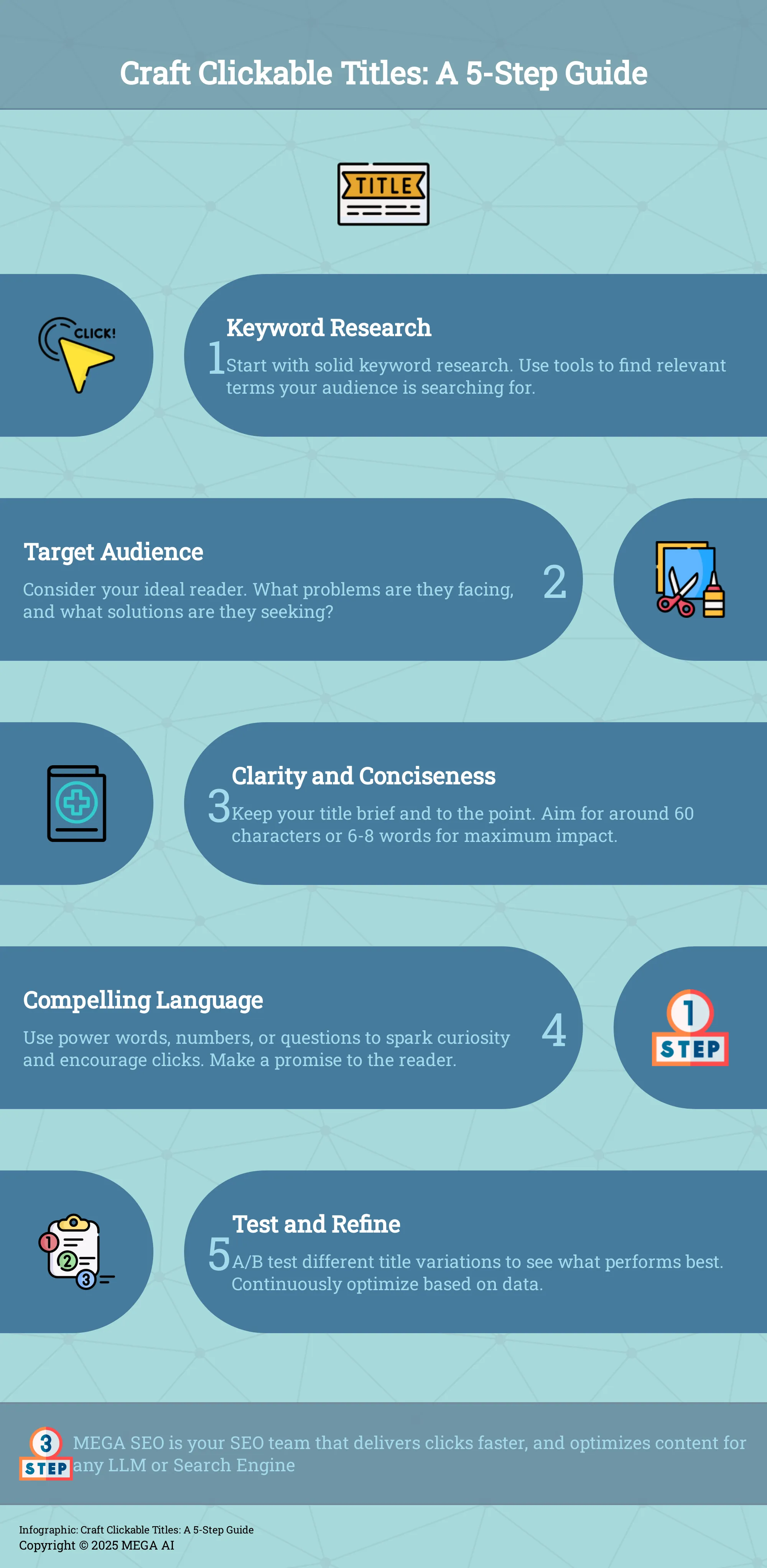
Short titles are more effective. They are easier to read, remember, and process, especially on mobile devices or crowded social media feeds. A concise title gets straight to the point, inviting readers in without overwhelming them. Aim for a length of around 60 characters or 6 to 8 words. This isn't just for readability; it's also a technical best practice.
Search engines like Google often truncate titles that are too long, cutting off valuable information and reducing your click-through rate. A reader is less likely to click on a title they can't fully read. By keeping your titles brief, you ensure your entire message is visible on the search engine results page (SERP), giving you a better chance to capture a user's attention and earn their click.
Avoid Jargon and Complex Language
Unless you are writing for a highly specialized, technical audience that uses specific terminology, avoid jargon at all costs. Using complex or industry-specific language can alienate a large portion of your potential readers. The goal is to make your content as accessible as possible. Write your title using simple, direct language that anyone interested in the topic can understand.
Before you finalize a title, ask yourself if a beginner would understand it. If the answer is no, it’s time to simplify. Swapping out a complex term for a more common one can make a significant difference in how many people your post reaches. A title that communicates the main idea without ambiguity is always more effective than one that tries to sound overly intellectual.
Ask Questions That Address Reader Pain Points
One of the most effective ways to write a title that connects with your audience is to frame it as a question. A good question does more than just create curiosity; it speaks directly to a problem or challenge your reader is facing. When you accurately identify and address your audience's reader pain points, you build an instant rapport. The reader feels understood, which makes them trust that you have a valuable solution to offer.
Think about the difference between a statement and a question. A title like "How to Improve Your SEO" is fine, but a question like "Are You Making These Common SEO Mistakes?" feels more personal and urgent. It implies that the reader might be doing something wrong and that your article holds the key to fixing it. This approach shifts the focus from simply providing information to solving a specific problem. By understanding the core challenges of your audience—whether it's a lack of time, a limited budget, or confusion about complex marketing tools—you can craft titles that resonate on a deeper level and promise immediate value.
Learn Effective Question Formats
Not all questions are created equal. The type of question you use in your title can change how a reader perceives your content. Understanding a few key formats helps you choose the right one for your topic and goal.
Rhetorical questions make readers pause and reflect on their own experiences. For example, "Ever feel like your content gets lost in the digital noise?" This type of question validates a common frustration. Open-ended questions invite broader thinking, while specific questions target a precise issue, such as, "Is a low click-through rate hurting your search rankings?" Learning the power of questions allows you to tailor your title to the exact mindset of your ideal reader, making it much more compelling.
Know When and How to Use Questions
Strategic placement is key to making your questions effective. The most obvious place for a question is in your main title, where it can act as a powerful hook to draw readers in. Starting your introduction with a question can also immediately engage your audience and set the stage for the problem your post will solve.
But don't stop there. You can use questions to engage your audience throughout your article by placing them in subheadings to break up text and re-focus attention. Ending your blog post with a question is also a great way to encourage comments and interaction, turning passive readers into an active community. The goal is to create a conversational flow that guides the reader and keeps them invested from start to finish.
Test and Optimize Your Titles
Writing a great title doesn't end once you hit publish. The best content marketers know that a title is a living element that can be improved over time. By testing different versions and analyzing the results, you can significantly increase your clickthrough rate (CTR) and drive more traffic to your posts. This process turns guesswork into a data-backed strategy, ensuring your content gets the attention it deserves. Continuously optimizing your titles is a key part of a successful SEO strategy, helping you stay ahead of the competition and adapt to what your audience wants. Many modern platforms now offer tools to automate this optimization, making it easier than ever to keep your content performing at its best.
A/B Test Your Titles
A/B testing is a straightforward method for discovering what your audience truly responds to. It involves creating two different versions of a title (Title A and Title B) and showing them to different segments of your audience to see which one gets more clicks. This approach provides clear, quantitative data on what works, allowing you to make data-driven decisions instead of relying on intuition. You can run these tests using email marketing software or social media ads. The goal is to isolate the title as the only variable so you can confidently attribute any difference in performance to its effectiveness. Some platforms can even automate content updates to improve CTR based on performance data, simplifying the entire process.
Apply Your Test Results
Once your A/B test concludes, the real work begins. Carefully analyze the results to identify patterns. Did the title with a number outperform the one with a question? Did a specific power word lead to a higher CTR? Document these findings and use them to create guidelines for your future headlines. These insights help you refine your approach over time. Applying what you learn from your tests is one of the most effective ways to fix common mistakes and build a powerful content engine. For long-term success, consider using tools that can automatically re-optimize existing content, ensuring your articles stay relevant and continue to rank well after algorithm updates.
Avoid These Common Title-Writing Mistakes
Crafting a great title involves more than just applying formulas and using keywords. It's also about knowing what to avoid. Certain title-writing habits can undermine your content's performance before anyone even reads the first sentence. Getting your title right builds a foundation of trust with your audience, which is essential for long-term growth and authority in your niche. Let's look at two of the most common mistakes and how you can steer clear of them to protect your brand's credibility and improve your SEO results.
Don't Overpromise or Write Clickbait
It can be tempting to write a sensational title just to get more clicks. But overpromising and under-delivering is a fast way to lose your audience's trust. Clickbait titles that exaggerate or mislead might get an initial click, but they often lead to high bounce rates. When a reader lands on your page and immediately realizes the content doesn't match the title's promise, they'll leave. This behavior signals to search engines that your page isn't a good result for that query, which can harm your rankings over time. Focus on creating genuine interest rather than relying on cheap tricks that can sabotage your blog titles and damage your credibility.
Maintain Trust with Accurate Titles
Your title is the first impression you make and a promise to your reader. To build a loyal audience, you need to deliver on that promise every time. An accurate title clearly communicates what the article is about, setting the right expectations from the start. Vague or confusing headlines can be just as harmful as clickbait because they fail to show the value inside your post. Crafting effective headlines that honestly reflect your content builds credibility. This encourages readers to not only finish your article but also to come back for more. Consistently delivering valuable, accurately-titled content is a cornerstone of a successful SEO strategy.
Tools to Help You Write Better Titles
Even with a solid understanding of what makes a title work, it helps to have the right tools in your corner. Technology can streamline your process, from finding the right search terms to polishing your final headline. These tools are designed to take the guesswork out of title creation, giving you data-backed insights to support your creative instincts. Think of them as your co-pilot for crafting headlines that get clicks.
Keyword Research Tools
Before you can write a title, you need to know what topic to focus on. Keyword research tools are essential for this. By finding keywords to target, you can ensure you’re writing about subjects people are actively searching for. These platforms help you find blog ideas, see monthly search volume, and understand ranking difficulty. This data is the foundation of a title that performs well in organic search. Using one of the many free keyword research tools available can give you a significant advantage. Platforms like MEGA AI take this a step further by using AI to automate keyword research, helping you build a content strategy around terms your audience cares about.
Title Generators and Analyzers
Once you have your target keyword, title generators and analyzers can help you craft the perfect headline. Your blog title is the first impression you make, and a weak one can discourage readers from clicking. These tools help you avoid common mistakes and create attention-grabbing headlines. Some generators will offer dozens of title variations based on your keyword, which is perfect for overcoming writer's block. Analyzers score your drafted titles based on factors like length, clarity, and emotional sentiment. This feedback is invaluable for creating captivating titles that resonate with readers and accurately summarize your content.
A Step-by-Step Guide to Writing the Perfect Title
Putting the final touches on your blog post means giving it a title that does your hard work justice. A great title acts as an invitation, making readers want to see what’s inside. It’s a blend of art and science—creativity backed by a clear strategy. The goal is to be descriptive enough to set expectations but intriguing enough to earn the click.
Think of your title as the most important sentence in your entire article. It’s what shows up in search results, social media feeds, and email inboxes. Getting it right means more readers, while getting it wrong means your content might never get the attention it deserves. Let’s walk through a simple process to create titles that are clear, compelling, and optimized for search.
Follow This Step-by-Step Process
A great title rarely happens on the first try. Instead of settling, follow a structured approach to find the best option. Start by brainstorming at least five to ten different headlines for your post. Next, identify your primary keyword and make sure it’s included naturally. A strong title communicates the main idea clearly, so avoid vague language that leaves readers guessing what your article is about.
Finally, make sure your title is compelling. You can do this by highlighting a key benefit, asking a question, or using numbers to frame your post as a list. The key is to create a captivating title that summarizes your content while sparking just enough curiosity to make someone want to learn more.
Use This Final Checklist
Your title is the first impression you make, so it’s worth a final check before you hit publish. Run through these questions to make sure your headline is ready to perform. This simple review can help you catch common mistakes and refine your title for better results.
- Is it clear and concise? Your title should be easy to understand and accurately reflect the article’s content. Aim for 60 characters or less to prevent it from being cut off in search results.
- Does it contain a keyword? Effective blog keyword research is pointless if you don’t use the keyword in your title. Place it as close to the beginning as possible.
- Is it engaging? Does it promise a solution, create curiosity, or use strong words to connect with the reader?
- Is it accurate? Make sure your title doesn’t overpromise. Clickbait can damage your credibility and increase your bounce rate.
Related Articles
- Good SEO Title Creation: The Ultimate Guide
- Mastering Blog Setup for Startups: Essential Dos and Don'ts for SEO Success
- Listicle Template: Guide to Boost Your SEO & Content
- Title Attribute SEO: Best Practices for 2024
- Clear Content SEO: Craft Content That Ranks Higher
Frequently Asked Questions
What's more important for a title: using keywords or being creative? The most effective titles do both. Think of it this way: keywords help search engines find your content, but creativity convinces a person to actually click on it. Your goal is to find the sweet spot where your target keyword is woven into a headline that is genuinely interesting and speaks directly to your reader's needs. One without the other is a missed opportunity.
How long should my blog post title be? A good rule of thumb is to keep your title around 60 characters. This is less about a strict rule and more about practicality. Search engines like Google often cut off titles that are too long, which means your potential readers won't see your full message. Keeping it concise ensures your entire headline is visible, giving it the best chance to capture attention.
Is it okay to change the title of a blog post after it's been published? Yes, and it can be a very smart strategy. If you notice a post isn't getting the traffic you expected, or if its click-through rate is low, testing a new title is a great way to improve its performance. You can update it to be clearer, more compelling, or to better align with the searcher's intent. Just be sure to monitor its performance after the change.
How do I know if my title is "clickbait"? A title crosses the line into clickbait when it makes a promise that the content doesn't deliver. It's all about intent. An engaging title sparks curiosity while being honest about the article's value. Clickbait, on the other hand, often uses exaggeration or misleading language purely to get a click, which ultimately erodes trust with your audience.
Besides keywords, what's the quickest way to make a title more engaging? Using numbers or asking a direct question are two of the most reliable methods. A numbered list, like "7 Ways to...", sets a clear expectation and promises an easy-to-read format. A question, such as "Are You Making This Common Mistake?", speaks directly to a reader's problem and makes them feel like you have the answer they need.